

All Blogs

Charcoal Uses in Industry

Charcoal Uses in Industry: 10 Critical Applications Beyond the Grill

The Charcoal Uses in Industry span steel production, water purification, pharmaceuticals, agriculture, cosmetics, and emerging green-energy applications. Globally, the charcoal market reached 73.17 million tonnes in 2025 and is projected to hit 105.23 million tonnes by 2034. The grill is not driving that growth. The industry is.

Why do Industries Still Rely on Charcoal in 2025?

Charcoal is a high-carbon, low-sulphur, low-ash fuel and reducing agent derived from renewable biological sources. Those three properties together are extremely difficult to replicate with fossil alternatives at comparable cost. Carbon content of 75 to 85% in quality industrial-grade charcoal gives it chemical purity that metallurgical coke from coal simply cannot match for certain smelting applications.

It is also increasingly relevant to companies under carbon accounting pressure. Because charcoal is biomass-derived, its combustion emissions are classified differently under Kyoto and Paris Agreement accounting rules compared to fossil fuels. That regulatory advantage is reshaping procurement decisions across multiple heavy industries right now.
Charcoal Uses in Industry

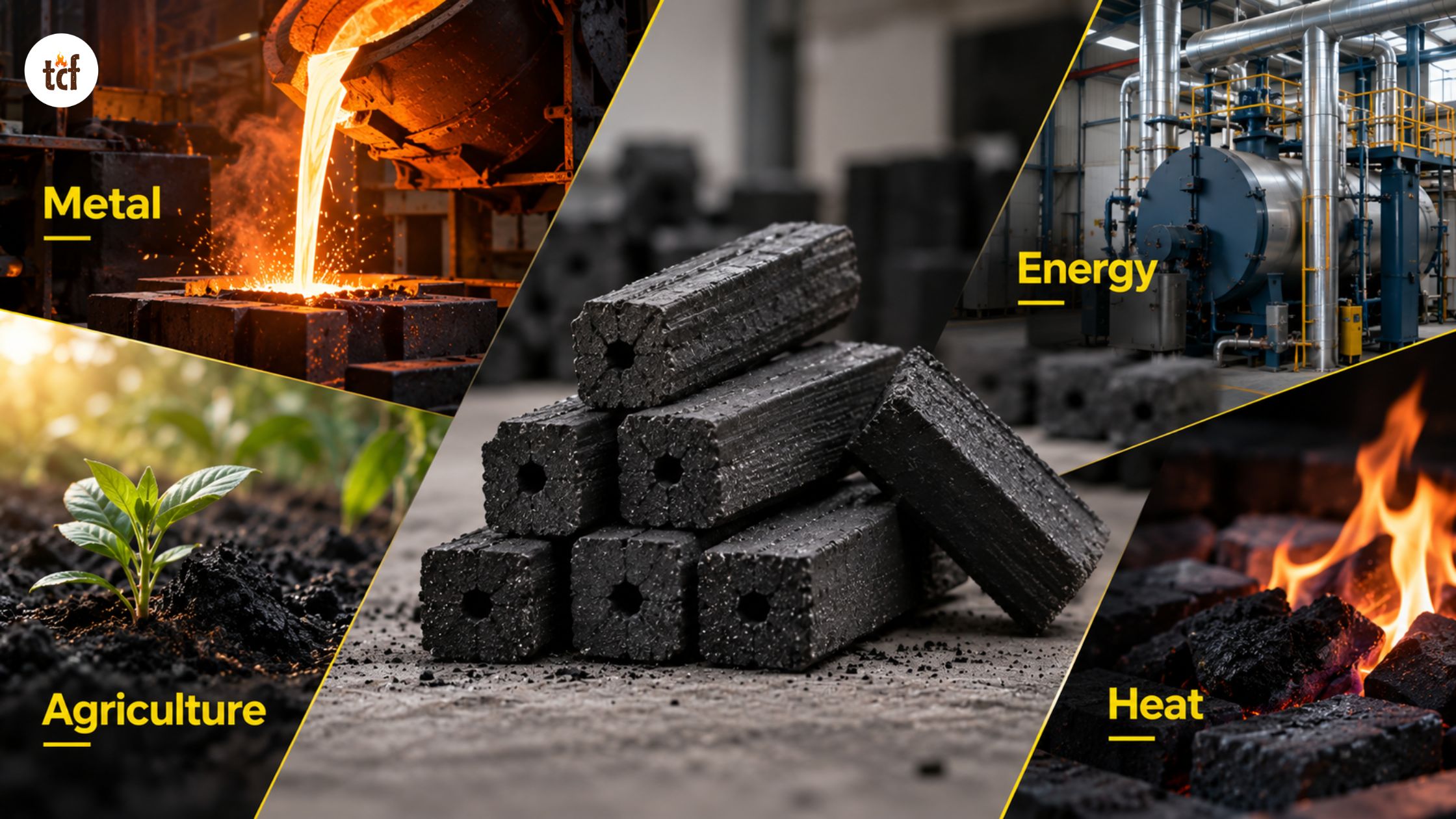
1. What role does charcoal play in steel and pig iron production?

This is the largest single industrial use of charcoal by volume, and Brazil is the only country in the world still producing pig iron in charcoal-fired blast furnaces at commercial scale.

Brazil is a global leader in steel production using charcoal as a reducing agent, benefiting from climate and soil conditions that encourage rapid biomass production. Brazilian steelmaker Gerdau, with 250,000 hectares of managed eucalyptus forest, is the world’s largest producer of plant-based charcoal.

In a blast furnace, charcoal acts as a reducing agent, stripping oxygen from iron ore to produce metallic iron and replacing metallurgical coke derived from coal. Some sources estimate that Brazil’s use of biochar in replacing coal has reduced the sector’s emissions intensity from blast furnace operations by approximately 0.4 tCO2e per tonne of crude steel. In early 2024, Gerdau reported an emissions intensity of 0.86 tonnes CO2e per tonne of steel produced across its operations.

The specification requirement in this application is demanding: fixed carbon above 75%, ash below 3%, and sufficient mechanical strength to survive the burden pressure inside the furnace without fragmenting. This is not BBQ charcoal. It is an engineered industrial product from dedicated biomass supply chains. For the full breakdown of what fixed carbon, ash content, and other parameters mean in practice, see our charcoal grades explained guide.

2. How is charcoal used as a feedstock for activated carbon?

Charcoal is the primary raw material from which activated carbon is produced. Activated carbon is charcoal that has undergone secondary steam or chemical activation, increasing its internal surface area to approximately 500 to 1,500 m² per gram. That surface area is what gives it exceptional adsorption power.

The global activated carbon market was valued at USD 5.62 billion in 2025 and is projected to reach USD 11.9 billion by 2034, exhibiting a CAGR of 8.8% during the forecast period (Fortune Business Insights, 2025). Charcoal is the starting material for the entire market.

Charcoal is the reducing agent and fuel. Activated carbon is the adsorption medium. They share the same starting material but serve completely different functions. For more on what differentiates standard charcoal from specialist carbon products, see our types of charcoal guide.

Coconut shell charcoal is the preferred feedstock for premium activated carbon production. Its dense, microporous structure after carbonisation produces activated carbon with a tighter pore size distribution than wood-derived alternatives. This is one reason coconut charcoal briquettes wholesale commands a premium in both wholesale and industrial markets.

3. Why is charcoal critical for water purification?

Water treatment held the largest revenue share of the activated carbon market in 2025 at 42.5%, driven by escalating global concerns over clean drinking water and increasingly stringent water quality regulations (Grand View Research, 2025).

Activated carbon derived from charcoal removes organic contaminants, chlorine, pesticides, pharmaceutical residues, PFAS compounds, and heavy metals from water. Municipal water utilities across Europe, North America, and Asia are increasing activated carbon usage to meet progressively stricter drinking water standards, particularly for PFAS removal.

The industrial scale of this application is significant. Over 400,000 metric tonnes of activated carbon was utilised in the sewage treatment sector in 2022 alone. This is one of the most consistent long-term demand drivers for high-specification charcoal feedstock globally.

4. How does the pharmaceutical industry use charcoal?

Activated charcoal derived from high-purity charcoal feedstock is a recognised pharmaceutical agent. In emergency medicine, oral activated charcoal is administered within one hour of toxic ingestion to adsorb poisons and drug overdoses in the gastrointestinal tract before systemic absorption occurs.

The pharmaceutical and healthcare treatment segment is a growing application area, with significant usage in hemodialysis treatments and pharmaceutical processing. Beyond emergency toxicology, pharmaceutical-grade activated carbon is used in drug purification processes, decolourisation of active pharmaceutical ingredients (APIs), and manufacturing of medications for digestive conditions.

The specification requirements in pharmaceutical applications are among the strictest in any industry, with USP or BP-certified purity required. The raw material quality of the charcoal feedstock is therefore a direct commercial differentiator in this segment.

5. What is biochar and how is it used in agriculture?

Biochar is charcoal produced specifically for application as a soil amendment. It is not a chemically separate material. It is the same carbonised biomass product applied for agricultural purposes, though production specifications differ based on the desired soil performance properties.

The global biochar market was valued at USD 695.68 million in 2025 and is projected to grow at a CAGR of 13.4% from 2026 to 2034, driven by increasing use in soil enhancement, carbon sequestration, and sustainable agriculture (Polaris Market Research, 2025).

When incorporated into soil, biochar improves water retention, increases cation exchange capacity (the soil’s ability to hold and release plant nutrients), and supports microbial activity. It is highly stable, persisting in soil for hundreds to thousands of years. This stability is what makes it relevant to carbon credit markets.

In 2025, Google signed an agreement with Indian supplier Varaha to purchase carbon credits from a project transforming agricultural waste into biochar. The agreement is one of the largest biochar transactions ever recorded and the first for Google in India’s carbon dioxide removal market (Transparency Market Research, 2025).

For more context on the bamboo charcoal segment that feeds directly into the biochar market, see our bamboo charcoal market size analysis.

6. How is charcoal used in cosmetics and skincare?

Activated charcoal derived from bamboo or coconut shell is now a mainstream ingredient in skincare formulations, particularly facial cleansers, masks, and toothpastes. Its mechanism is purely adsorptive: the porous surface binds to sebum, pollutants, and surface bacteria on skin, which are then removed when the product is rinsed off.

Bamboo charcoal specifically dominates the cosmetics application in Asia. Chinese, Korean, and Japanese skincare brands have driven significant innovation in bamboo charcoal formulations. The fine particle size achievable from bamboo-derived activated carbon makes it compatible with the texture requirements of premium skincare products.

For buyers interested in the bamboo charcoal supply chain and what makes this feedstock distinctive, see our wholesale bamboo charcoal category and our detailed guide on how bamboo charcoal is made.

7. What is charcoal’s role in sugar refining and food processing?

Raw cane sugar contains colour bodies, organic impurities, and off-flavours that must be removed before producing the white refined product. Granular activated carbon, derived from charcoal feedstock, is the standard industrial decolourant in sugar refining operations worldwide.

Dissolved raw sugar passes through beds of granular activated carbon, which adsorbs colour molecules, organic acids, and other non-sucrose components. The result is the colourless sucrose solution that is then crystallised into refined white sugar.

Sugar refining sits at the intersection of food-grade activated carbon applications and represents consistent, large-volume industrial demand that receives very little coverage in mainstream charcoal industry discussions. Food and beverage processing accounted for approximately 12.4% of activated carbon revenues in 2025 and is forecast to achieve the highest application CAGR of 9.1% through 2034 (DataIntelo, 2025).

Charcoal Uses in Industry

8. How is charcoal used in air purification and emission control?

Activated carbon’s effectiveness in adsorbing volatile organic compounds (VOCs), sulphur compounds, and other hazardous air pollutants makes it a critical component in flue gas treatment, solvent recovery systems, and automotive emission control technologies.

Industrial facilities use activated carbon beds to capture solvent vapours before atmospheric release, meeting environmental permit requirements. Automotive evaporative emission control systems in petrol vehicles use small canisters of activated carbon to capture fuel vapour from the fuel tank, preventing hydrocarbon emissions when the engine is off.

Residential air purifiers using activated carbon filters address indoor air quality concerns including odours, cooking fumes, and VOC off-gassing from furniture and building materials. This consumer-facing application drives significant volume at the lower end of the activated carbon specification range.

9. What is charcoal’s role in gold recovery and mining?

Activated carbon is the standard medium for recovering gold from leach solutions in the carbon-in-pulp (CIP) and carbon-in-leach (CIL) gold extraction processes. Crushed ore is treated with a cyanide or thiosulphate solution that dissolves gold, and activated carbon granules are then added to adsorb the dissolved gold complex.

Major gold mines across Africa, Australia, and the Americas run continuous CIP/CIL circuits processing thousands of tonnes of ore per day. Activated carbon in this application is a consumable that is continuously regenerated and replaced on a scheduled basis.

The specification requirement for mining-grade activated carbon prioritises hardness (resistance to attrition in the process circuit) and adsorption capacity, rather than the food-grade purity criteria that apply in water treatment or pharmaceutical applications. It is a meaningfully different product specification to the charcoal used in any other industrial segment.

Also read – stainless steel grade 304 vs 316

10. How is charcoal contributing to industrial decarbonisation?

This is the newest and fastest-developing industrial application for charcoal. It sits at the intersection of materials science, energy policy, and carbon accounting.

Several industrial processes that have historically relied on fossil carbon are investigating charcoal as a partial biogenic substitute for coal and coke. These include silicon metal production for solar panels and semiconductors, ferro-alloy smelting, and cement production. Silicon metal is utilised broadly across industries including electronics, solar power generation, and metallurgy, and charcoal’s role as a reducing agent in silicon production is cited directly in industrial charcoal market analyses.

The core commercial logic is identical to steel: biogenic carbon from managed forestry has a different greenhouse gas accounting treatment than fossil carbon. As the EU Carbon Border Adjustment Mechanism (CBAM) phases in, industrial buyers in emission-intensive sectors have a financial incentive to substitute biogenic charcoal for fossil alternatives where technically feasible.

This creates an entirely new category of B2B demand for high-specification industrial charcoal that does not exist in the consumer BBQ market at all.

What Types of Charcoal are Used in Industrial Applications?

The charcoal used in industrial settings is specified very differently from the product sold to retail consumers. The table below summarises the key distinctions by application.

ApplicationCharcoal typeKey specification
Steel and pig iron productionHardwood lump or biomass charcoalFixed carbon 75%+, ash below 3%, high mechanical strength
Activated carbon productionCoconut shell, bamboo, or hardwoodDense feedstock, low ash, consistent fixed carbon
Water treatmentActivated carbon (granular or powder)High surface area, 500 to 1,500 m²/g
PharmaceuticalsActivated carbon (pharmaceutical grade)USP/BP certified purity
Agriculture and biocharAny biomass charcoalpH, surface area, pore distribution for soil type
Sugar refiningGranular activated carbonFood-grade certified, high adsorption capacity
Gold recoveryHardened granular activated carbonHigh hardness, high adsorption rate
Air purificationActivated carbon (granular or pellet)VOC adsorption capacity, pore size profile
CosmeticsBamboo or coconut activated carbonFine particle size, food and cosmetic grade purity
Green steel and decarbonisationBiomass charcoal (biochar injection)Fixed carbon, low sulphur, certified biogenic origin

For buyers sourcing charcoal at wholesale scale for commercial or industrial purposes, our bulk charcoal page and charcoal distributor supplier page cover available product categories. To understand the manufacturing process behind industrial-grade products, see our charcoal manufacturing guide.

Related reading: types of charcoal, charcoal manufacturing, how charcoal briquettes are made, bamboo charcoal market size, what is lump charcoal made of, and our charcoal distributor supplier page.

External sources:

FAQ – Charcoal Uses in Industry

What is the most important industrial use of charcoal by volume?

Steel and pig iron production is the largest single industrial use of charcoal by volume. Brazil alone consumed 8.7 million tonnes of charcoal for industrial purposes in a peak year, with pig iron production accounting for approximately 84.9% of that total. The metallurgical sector globally drives demand for high-specification, high-fixed-carbon charcoal at a scale that dwarfs all other industrial applications combined.

Is industrial charcoal the same as BBQ charcoal?

No. Industrial-grade charcoal is produced to tighter specifications, with fixed carbon content above 75%, ash below 3%, and controlled mechanical properties that standard BBQ charcoal does not need to meet. The raw material, kiln method, and production controls differ significantly. Some manufacturers produce both grades from separate production lines, but the products are not interchangeable in industrial applications.

What makes coconut shell charcoal preferred for activated carbon production?

Coconut shell charcoal has a naturally dense, microporous structure after carbonisation. When activated, this structure produces a pore size distribution particularly effective for adsorbing small organic molecules, which is what water treatment and pharmaceutical applications require. The resulting activated carbon from coconut shell has higher hardness, lower ash, and better adsorption efficiency per unit weight than wood-derived alternatives in most liquid-phase applications.

How does biochar differ from standard charcoal?

Biochar and charcoal are the same material chemically: both are carbonised biomass produced by pyrolysis. The difference is in the production specification and intended use. Biochar is produced to optimise agronomic performance properties including pore structure for water retention, pH characteristics, and surface chemistry for nutrient exchange. Standard BBQ or industrial charcoal is produced to optimise heat output, fixed carbon content, or hardness. The same facility can produce both, but the kiln parameters and feedstock selection differ by application.

Which countries produce the most industrial charcoal?

Brazil is the undisputed leader in metallurgical charcoal production. Indonesia is the largest exporter of charcoal overall, with production focused on coconut shell and hardwood products for BBQ, shisha, and activated carbon feedstock markets. China produces significant volumes of bamboo charcoal for industrial and cosmetics applications. For a full breakdown of origin by product type, see our top countries exporting charcoal guide.

Can charcoal replace coal in industrial processes?

Partially, and this is an active area of industrial development. Charcoal can substitute for metallurgical coke in blast furnaces, as Brazil demonstrates at scale. It is also being trialled as a partial replacement for coal in silicon metal production and ferroalloy smelting. Full replacement is not currently practical in most processes due to the volume of charcoal required. Partial substitution of 10 to 30%, however, is both technically feasible and commercially relevant for companies under carbon accounting pressure.
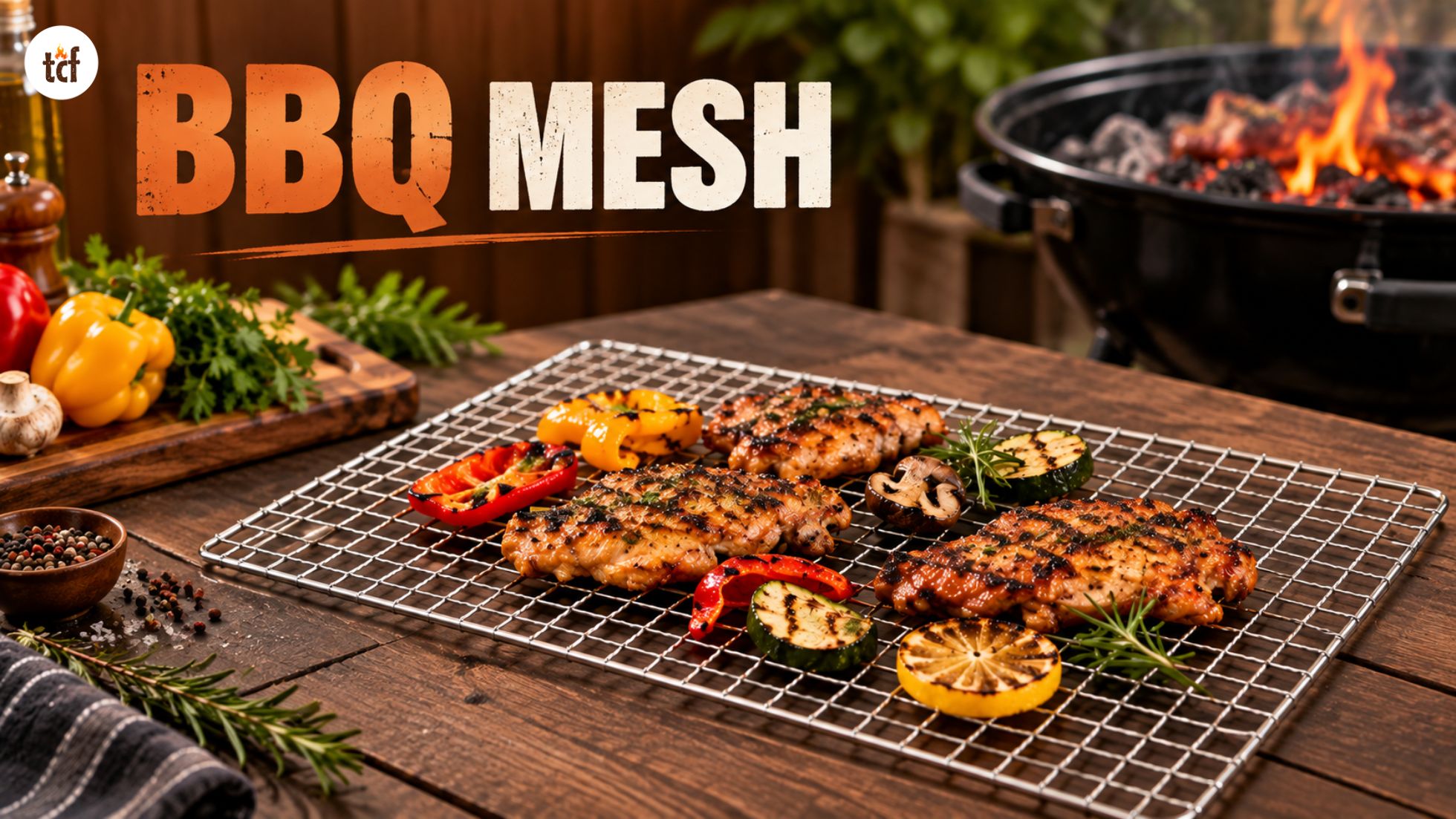
NSF certified Stainless Steel Grill Grates for Restaurant Charbroilers

NSF-certified Stainless Steel Grill Grates for Restaurant Charbroilers

NSF-certified stainless steel grill grates: NSF certification for a charbroiler applies to the equipment as a complete unit under NSF/ANSI 4, not to a grate sold on its own. What matters when you’re buying replacement or upgrade grates is the material: 304 stainless steel, evaluated under NSF/ANSI 51, meets food equipment standards for durability and corrosion resistance. A grate stamped “stainless steel” with no grade specified, or loosely marketed as “NSF certified” without a material certificate to back it up, deserves a closer look before it goes anywhere near a commercial kitchen.

Here’s what the certification actually covers, why the steel grade matters more than the NSF label alone, and what to check before you order.

What NSF certification on a charbroiler actually means

NSF/ANSI 4 is the standard covering commercial cooking and hot food holding equipment as a whole, sanitation, cleanability, and construction requirements for the full unit. When a charbroiler is sold as “NSF certified,” that certification was earned by the complete assembled equipment, not by an individual replacement grate purchased separately later.

Grates and other food-contact components are separately evaluated under NSF/ANSI 51, the standard specifically for food equipment materials. This is the certification that actually matters when you’re sourcing grates on their own; it confirms the material itself meets food-contact safety and durability requirements, independent of whatever full unit it eventually gets installed in.

NSF certified stainless steel grill grates - CTA

Why the stainless steel grade matters more than the label

This is where a real buyer-protection issue shows up, and it’s common enough to be worth taking seriously. 304 stainless steel, sometimes labeled 18/8 for its 18% chromium and 8% nickel content, is the internationally recognized standard for commercial food-contact surfaces, and it’s the grade FDA and NSF standards expect for equipment with direct food contact.

201 stainless steel looks similar on a polished surface and is often marketed as “food grade” too, sometimes at 20 to 30% below 304 pricing. The problem is compositional: 201 reduces nickel content and increases manganese to cut cost, which measurably reduces corrosion resistance. Under continuous high-heat, high-moisture charbroiler conditions, that difference shows up fast, suppliers marketing 201 as food grade commonly see visible rust appear within a year of installation, a real operational and hygiene problem, not just a cosmetic one.

FDA regulation 21 CFR 175.300 recognizes stainless steel as safe for food contact specifically when chromium content is 16% or higher. 304’s 18% chromium clears that threshold with room to spare. 201’s lower, variable chromium content makes it a materially weaker choice for a surface that’s in direct, repeated contact with food under heat.

What to actually request from a supplier

  • A Material Test Certificate (MTC) with a heat number; this documents the actual chemical composition of the specific batch of steel, not just a generic grade claim. A supplier who can’t produce one, or offers a certificate with no heat number, is a real red flag.
  • NSF/ANSI 51 documentation for the material itself, separate from any NSF/ANSI 4 certification the full charbroiler unit might carry.
  • Confirmation of grade, 304 specifically, in writing, not just “stainless steel” as a generic descriptor on a spec sheet or product listing.
  • Independent verification through NSF’s own certified product listings, rather than relying solely on a supplier’s own claim of certification.

A practical note on 304’s limits

304 stainless is the right call for charbroiler grates specifically, but it’s worth knowing its limits too. At extremely high sustained temperatures, above roughly 1,500°F, 304 can begin to discolor or scale. For the grate itself, this rarely matters in normal commercial charbroiler operation. For a firebox or other structural component exposed to more extreme, sustained heat, some manufacturers specify a different gauge or grade specifically to manage warping risk over years of continuous use. If you’re specifying a full charbroiler build rather than just replacement grates, confirm the grade used in each component, not just the grate.

Sourcing grill hardware alongside your fuel supply

If you’re outfitting a charbroiler setup and sourcing fuel at the same time, our round BBQ grill net covers our current stainless mesh grate accessory range, and our restaurant-grade charcoal specifications guide covers what to require from a fuel supplier with the same rigor you’d apply to equipment sourcing.

This article is for general informational purposes and isn’t a substitute for equipment compliance advice. NSF standards and material certification requirements can be updated; confirm current specifications directly with NSF and your equipment supplier before finalizing a purchase.

Frequently asked questions – NSF certified stainless steel grill grates

Does “NSF certified” on a grill grate mean the same thing as NSF certification on the whole charbroiler?

No. Full equipment certification (NSF/ANSI 4) applies to the assembled unit. A grate sold separately should be evaluated against NSF/ANSI 51, the food equipment materials standard, since it’s a component, not a complete appliance.

Is 201 stainless steel ever acceptable for restaurant equipment?

It can be, in dry, low-corrosion-risk zones like some service counters or dry storage fixtures. For a charbroiler grate, which sees continuous heat and moisture exposure, 304 is the standard for a reason, and 201 substituted in without disclosure is a legitimate quality and hygiene concern.

How can I verify a supplier’s stainless steel grade claim?

Request a Material Test Certificate with a heat number, which documents the actual tested composition of that specific batch. A supplier unwilling or unable to provide this for a claimed 304 product is worth questioning further.

Why does chromium content matter for food-contact stainless steel?

Chromium is what forms the passive oxide layer that gives stainless steel its corrosion resistance. FDA regulation recognizes stainless steel as food-safe specifically at 16% chromium or higher, which is why 304 (18% chromium) clears the bar comfortably while lower grades sit closer to, or under, that threshold.

Can 304 stainless steel grates handle full charbroiler heat without issue?

Generally yes, for normal commercial charbroiler operating conditions. Discoloration or scaling risk becomes a real factor only at sustained temperatures well above typical charbroiler grate exposure, more relevant to firebox construction than the grate surface itself.

Stainless Steel Grade 304 vs 316 Cooking Grates_ Durability Data and Which to Choose

Stainless Steel Grade 304 vs 316 Cooking Grates: Durability Data and Which to Choose

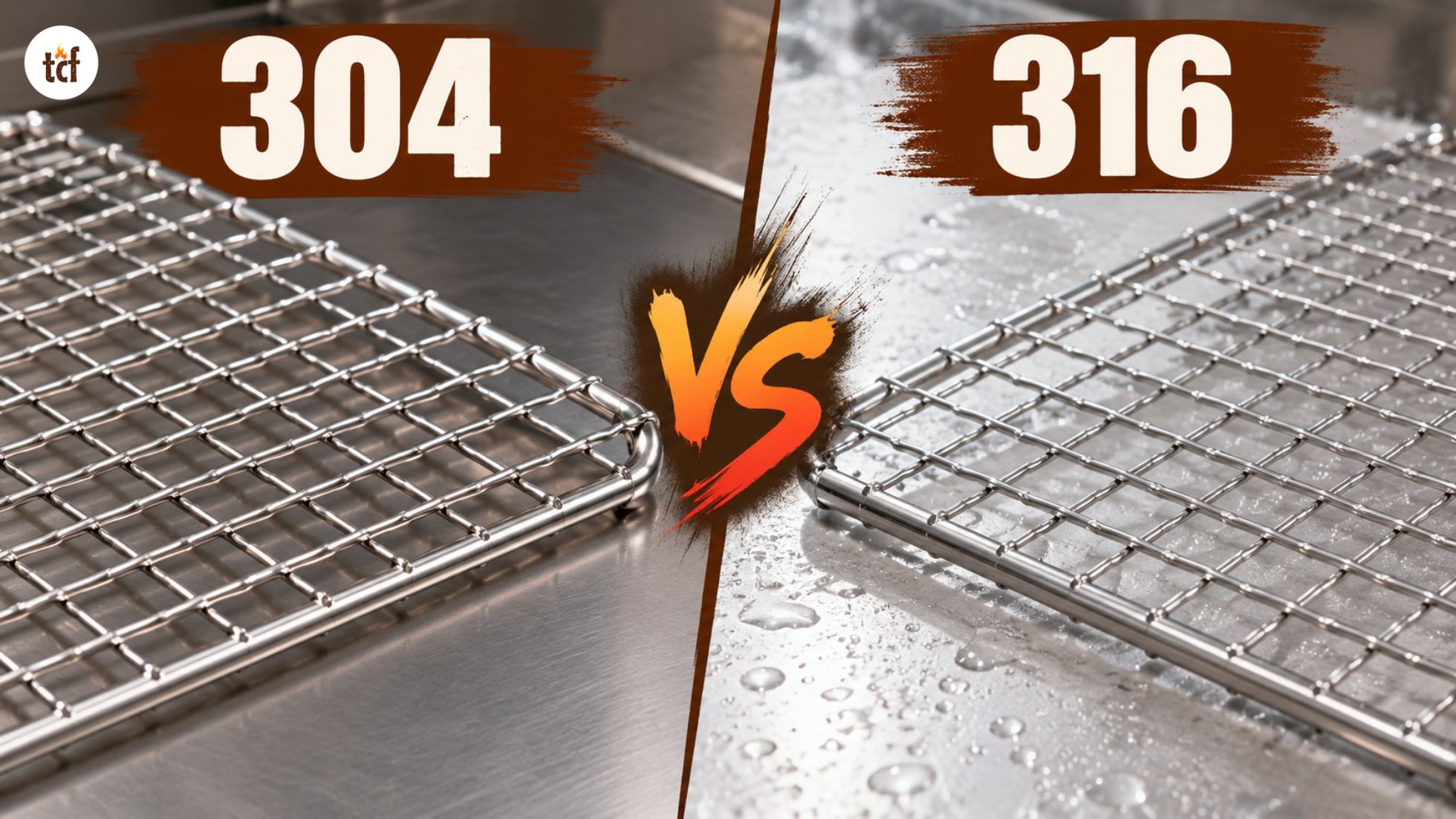
Stainless Steel Grade 304 vs 316 Cooking Grates: Grade 316 stainless steel cooking grates outlast Grade 304 in chloride-heavy environments because of one element: molybdenum. The 2 to 3% molybdenum content in 316 raises its pitting resistance index from approximately 18 to 20 (Grade 304) to 24 to 28, giving it the ability to handle chloride concentrations up to 2,000 ppm before pitting begins, compared to Grade 304’s threshold of around 100 ppm. For most inland buyers, 304 is sufficient. For coastal installations, 316 is a meaningfully different material in the conditions that matter most.

What Actually Separates Stainless Steel Grade 304 vs 316 Cooking Grates?

Both grades are austenitic stainless steels from the 300-series family. Both form the same corrosion-resistant passive film, which is a thin, self-repairing layer of chromium oxide that blocks moisture and oxygen from reaching the base metal. The difference is what happens when that film is attacked by chloride ions.

Grade 304 contains 18 to 20% chromium and 8 to 10.5% nickel, with no molybdenum. Grade 316 contains 16 to 18% chromium and 10 to 14% nickel, with 2 to 3% molybdenum added.

Molybdenum enhances the electrochemical stability of the passive film, specifically improving its resistance to chloride-induced breakdown, which is the mechanism behind pitting and crevice corrosion. Without it, chloride ions penetrate weak points in the film, create microscopic anodic dissolution sites, and initiate a self-accelerating pit that is very difficult to halt once started.

PropertyGrade 304Grade 316
Chromium18–20%16–18%
Nickel8–10.5%10–14%
Molybdenum0%2–3%
PREN (Pitting Resistance Equivalent)18–2024–28
Chloride tolerance before pitting~100 ppm~2,000 ppm
Pitting onset in 3% NaCl solution~15–20°C~25–30°C
Oxidation resistance (continuous use)Up to ~870°C (1,598°F)Comparable; better under cyclic heat
Tensile strength (annealed, min.)515 MPa (75,000 psi)515 MPa (75,000 psi)
Cost premium vs 304BaselineTypically 15–40% higher

Data sourced from ATI Materials ASTM A240 datasheet and independent engineering analyses by MakerStage and Besser Cast.

Stainless Steel Grade 304 vs 316 Cooking Grates

What Is the PREN and Why Does It Matter for Cooking Grates?

The Pitting Resistance Equivalent Number (PREN) is the standard index metallurgists use to compare stainless steel grades for chloride environments. The formula is PREN = %Cr + 3.3(%Mo) + 16(%N). The 3.3 multiplier on molybdenum reflects how disproportionately effective it is at resisting pitting relative to chromium alone.

For Grade 304 with no molybdenum, a mid-range ASTM A240 composition (19% Cr, 0% Mo, 0.05% N) produces a PREN of approximately 19.8. For Grade 316 with 2.5% Mo (17% Cr, 2.5% Mo, 0.05% N), the PREN reaches approximately 26.1. That is a roughly 30 to 44% improvement in chloride pitting resistance from a single alloying addition.

For cooking grate buyers, PREN translates directly into service life in outdoor environments. Higher PREN means the grate can withstand higher chloride concentrations from salt air, brine marinades, chemical sanitisers, and sea spray before the first signs of pitting appear. Once pitting begins on a stainless grate, the damage is irreversible.

Also read – Top 5 FAQs about buying charcoal

How Does Each Grade Perform on the Grill?

Heat Performance: Both Grades Handle BBQ Temperatures Comfortably

Standard charcoal and gas grilling produces surface temperatures typically in the range of 200 to 500°C under normal use. Both Grade 304 and Grade 316 handle this range without difficulty, as oxidation issues in stainless steel begin to appear only at sustained temperatures approaching 870°C (1,598°F) in continuous use.

Grade 304 can resist oxidation up to approximately 870°C continuously and around 925°C intermittently. Grade 316 performs comparably in this range and offers marginally better resistance to cyclic heat stress in corrosive combustion environments. For standard residential or commercial BBQ use, neither grade approaches its thermal limits, so heat performance is not the differentiating factor when choosing between the two grades for cooking applications.

Where Grade 316 does offer a meaningful advantage near heat is in combined chloride-and-heat conditions. A built-in outdoor grill on a coastal deck, for example, faces salt air at the same time as repeated thermal cycling. At elevated temperatures, chloride attack on stainless passive films accelerates. Grade 316’s higher PREN provides more margin in this combined stress scenario.

Corrosion Performance: The Critical Divergence

Grade 304 performs reliably in standard backyard environments where chloride exposure is limited to normal atmospheric moisture, standard cooking acids, and routine cleaning. Quality 304 stainless steel grates, properly maintained, should last 10 to 15 years under these conditions.

In coastal or chloride-heavy environments, the picture changes significantly. Coastal exposure can reduce the effective lifespan of Grade 304 grates by 30 to 50% relative to inland use. The critical proximity threshold identified consistently across grill industry guidance is within approximately 5 km (3 miles) of saltwater. Inside this zone, Grade 304’s 100 ppm chloride threshold is regularly exceeded by ambient sea air alone, and pitting on exposed grate surfaces typically becomes visible within 3 to 5 years.

Grade 316 holds its passive film at chloride concentrations up to approximately 2,000 ppm, which is a 20-fold improvement over Grade 304 at the same threshold. According to ATI Materials’ technical data, Grade 316 performs without evidence of corrosion in standard salt spray tests that would visibly attack Grade 304 within the same period.

Does the Type of Charcoal Used Affect Grate Corrosion?

This is a practical question that rarely appears in materials comparisons. The answer is yes, though the mechanism runs through ash chemistry rather than combustion itself.

Charcoal ash is alkaline and hygroscopic. Ash left on grates between uses draws ambient humidity and creates an electrolytic environment on the metal surface. In coastal locations, this ash-moisture layer can concentrate chlorides from sea air, creating a localised high-chloride environment directly on the grate surface. This accelerates pitting on Grade 304 significantly faster than open air exposure alone.

Premium charcoal products with very low ash output generate less residue per cook than high-ash alternatives. Coconut shell briquettes from our coconut charcoal briquettes wholesale range typically produce just 2 to 4% ash by weight, compared to 5 to 10% from lower-grade wood charcoal. For the full comparison between charcoal types and their ash characteristics, see our wood vs coconut charcoal guide.

Cleaning grates after every session and allowing them to cool before covering removes the ash-moisture pathway almost entirely, meaningfully extending service life for both grades. For Grade 304 grates in near-coastal environments, post-session cleaning is not optional maintenance. It is a material protection measure.

Who Should Choose Grade 304, and Who Should Choose Grade 316?

This is the practical question most buyers need answered, and the answer follows a relatively binary logic.

Choose Grade 304 if the grill or cookstation is installed more than 5 km from the coastline, is not regularly exposed to heavy sea air, uses standard marinades and cleaning products without heavy chlorinated agents, and will be covered or protected from standing moisture between uses. In these conditions, Grade 304 delivers an excellent combination of hygiene, durability, and value. Most residential BBQ installations globally fall into this category, and it is the grade used in the vast majority of quality-tier grill products from established manufacturers.

Choose Grade 316 if the installation is within 5 km of saltwater or in a marine environment, the grill is built into a coastal outdoor kitchen with limited protection from salt air, heavy chlorinated sanitisers are used regularly (common in commercial kitchens), or the installation is a permanent fixture that will not be stored or protected between uses over a multi-year service life. The 15 to 40% cost premium for Grade 316 grates becomes straightforward economics when a Grade 304 grate would need replacing in 4 to 6 years rather than lasting 10 to 15.

Commercial charcoal restaurant kitchens running continuous service with heavy brine exposure or frequent chemical sanitisation represent a specific case where Grade 316 is the correct specification regardless of geographic location. Buyers sourcing bulk charcoal for restaurants running high-volume operations should factor grate specification into the total cost of service setup from the outset.

What About Grade 430 and Other Stainless Grades?

Buyers comparing stainless grate options will encounter Grade 430 on budget-tier products. Grade 430 is a ferritic stainless steel containing approximately 17% chromium and no nickel or molybdenum. It is magnetic, has lower corrosion resistance than either 304 or 316, and is not suitable for outdoor use in anything other than dry, protected environments. It is used in entry-level grills primarily because it is cheaper to produce, not because it performs comparably. Grill industry data consistently show 430 developing visible surface deterioration within 18 to 36 months in humid or coastal conditions.

Grade 443, a ferritic grade with higher chromium content, offers corrosion resistance approaching 304 with lower thermal expansion, which is relevant for components subject to repeated heating cycles. It is used in some commercial BBQ applications but is less common in grate specifications than the 300-series grades.

For charcoal-based cooking where direct flame and extended heat cycles are standard, the 300-series grades (304 and 316) remain the specification benchmark across the industry.

How Does Gauge (Thickness) Relate to Grade in Durability?

Grade specification and metal gauge are separate variables that both affect grate durability, and they compound each other. A thin 304 grate degrades faster than a thick 304 grate in the same environment. A thin 316 grate may outlast a thin 304 grate in chloride conditions but will still underperform a thick 304 grate in standard inland use.

For cooking grate durability specifically, gauge matters because thicker rods resist physical warping under repeated thermal cycling, hold heat more evenly during cooking, and provide more material before corrosion penetrates to a structurally significant depth. Commercial-grade cooking grates typically run 6mm rod diameter or heavier. Residential grates at 4 to 5mm are adequate for home use but will show heat distortion and corrosion progression faster than commercial spec equivalents in the same material.

Buyers evaluating a Grade 316 grate against a Grade 304 grate of the same gauge are making a pure environment-driven decision. Buyers comparing grates of different gauges are making a combined environment-and-construction decision, and cheaper Grade 316 at a lighter gauge may not outperform heavier Grade 304 in standard conditions. The grade and the gauge need to be evaluated together.

Stainless Steel Grade 304 vs 316 Cooking Grates

What Charcoal Works Best With Stainless Grates?

Beyond ash content, the charcoal type affects how consistently the grate reaches and holds the temperatures where stainless performs optimally. Dense, slow-burning fuels deliver sustained, even heat with fewer temperature spikes, which is easier on the metal over time than rapid cycles of extreme heat and cooling.

High fixed-carbon charcoal, including quality bulk lump charcoal and charcoal briquettes wholesale, burns consistently within the temperature range that both 304 and 316 handle without stress. Lower-quality charcoal with high volatile matter and poor fixed carbon content burns unevenly, creates more temperature variance, and generates more ash residue per session, all of which increase the maintenance burden on any grate regardless of grade.

For a detailed breakdown of what the key charcoal quality parameters mean in practice, see our charcoal grades explained guide. For buyers supplying restaurants or foodservice operations where grate performance and longevity are operational costs, our best charcoal for grilling guide covers fuel selection by cooking application.

FAQ – Stainless Steel Grade 304 vs 316 Cooking Grates

Is Grade 316 stainless steel worth the extra cost for cooking grates?

It depends entirely on the installation environment. In inland residential settings with normal atmospheric conditions, the 15 to 40% cost premium of Grade 316 over Grade 304 delivers no meaningful performance benefit, as Grade 304 will last 10 to 15 years with proper care. In coastal environments within 5 km of saltwater, the cost premium is justified by a service life that is 30 to 50% longer than Grade 304 would provide under the same conditions.

What is the PREN, and why does it matter for BBQ grates?

The Pitting Resistance Equivalent Number (PREN) quantifies a stainless steel’s resistance to chloride-induced pitting corrosion. Grade 304 scores approximately 18 to 20, and Grade 316 scores approximately 24 to 28. The higher the PREN, the greater the chloride concentration the steel can withstand before pitting begins. For outdoor cooking grates exposed to salt air, brine, or chlorinated cleaning agents, a higher PREN directly translates to a longer surface life.

Can I use Grade 304 grates near the ocean?

Grade 304 can be used in coastal environments, but expect accelerated surface degradation. The practical threshold most grill industry professionals cite is 5 km from saltwater. Inside this zone, 304’s chloride tolerance is routinely exceeded by ambient salt air, and visible pitting typically appears within 3 to 5 years. Regular post-session cleaning to remove ash and residue, combined with dry storage between uses, extends service life. For permanent outdoor installations within 5 km of the coast, Grade 316 is the correct long-term specification.

Does charcoal ash damage stainless steel grates?

Ash itself does not corrode stainless steel directly, but it is hygroscopic and draws moisture from the air. In coastal environments, ash-moisture accumulation on grate surfaces concentrates ambient chlorides from sea air, creating a localised accelerant for pitting on Grade 304. Choosing low-ash charcoal and cleaning grates after each session removes this risk almost entirely. Coconut shell briquettes generating 2 to 4% ash are significantly easier on grates than high-ash wood alternatives in this regard.

What is the minimum thickness recommended for stainless steel cooking grates?

Commercial kitchens typically specify rod diameters of 6mm or heavier for durability under continuous service. For residential use, 4 to 5mm rod diameter grates in Grade 304 are adequate for standard conditions. Grade and gauge are both relevant when evaluating grates: a heavy-gauge 304 grate in a standard environment will outperform a light-gauge 316 grate in the same location.

Is Grade 316 used in any mainstream charcoal grills?

Grade 316, sometimes labelled marine-grade stainless, is used by premium grill manufacturers specifically for coastal or harsh-environment models. Blaze’s Premium Marine Grade LTE grill specifies 316 stainless steel throughout, including grates, hood, and flame tamers. These products carry a price premium that reflects both the material cost difference and the market they are designed for. For most standard charcoal grill applications, 304 remains the industry specification.

Top 5 FAQs About Buying Charcoal

Top 5 FAQs About Buying Charcoal

FAQs About Buying Charcoal: Buying charcoal in bulk raises the same 5 questions almost every first-time buyer asks: minimum order size, cost per ton, which product type to choose, what paperwork is needed, and how to know a supplier is legitimate. These aren’t trivial details; getting any one of them wrong typically shows up later as a delayed shipment, a rejected container, or a supplier relationship that doesn’t hold up past the first order.

Quick answers below, each with enough context to actually act on, and each linking to a deeper guide if you need the full picture.

1. What’s the minimum order quantity for bulk charcoal?

Generally, one full container load, commonly starting around 10 to 20 tons for a 20ft container depending on product type and packaging density. Pricing and production are structured around container economics, so orders below that threshold usually carry a per-ton premium; a partial container still costs the supplier close to the same amount to produce and ship as a full one.

The exact tonnage varies more than most first-time buyers expect. Dense coconut shell briquettes can load closer to 20 tons in a 20ft container, while lighter lump wood charcoal might top out around 10 to 14 tons in the same space, since charcoal often hits its volume limit before its weight limit. If you’re ordering custom packaging or a private label run, MOQ can shift again based on packaging format and any minimum print-run requirements from your supplier’s packaging line.

Our charcoal container loading guide breaks down exact tonnage by product type, and our private label charcoal packaging guide covers MOQ specifically for custom-branded orders.

Top 5 FAQs about buying charcoal

2. How much does bulk charcoal cost per ton?

It depends heavily on grade, product type, and where you’re importing to; duty, freight, and compliance costs vary enough by destination that a single number is misleading. A quote that looks cheaper FOB from one supplier can easily land more expensive than a slightly higher quote from another once freight, insurance, duty, and destination fees are added, especially when origin-specific tariffs are involved.

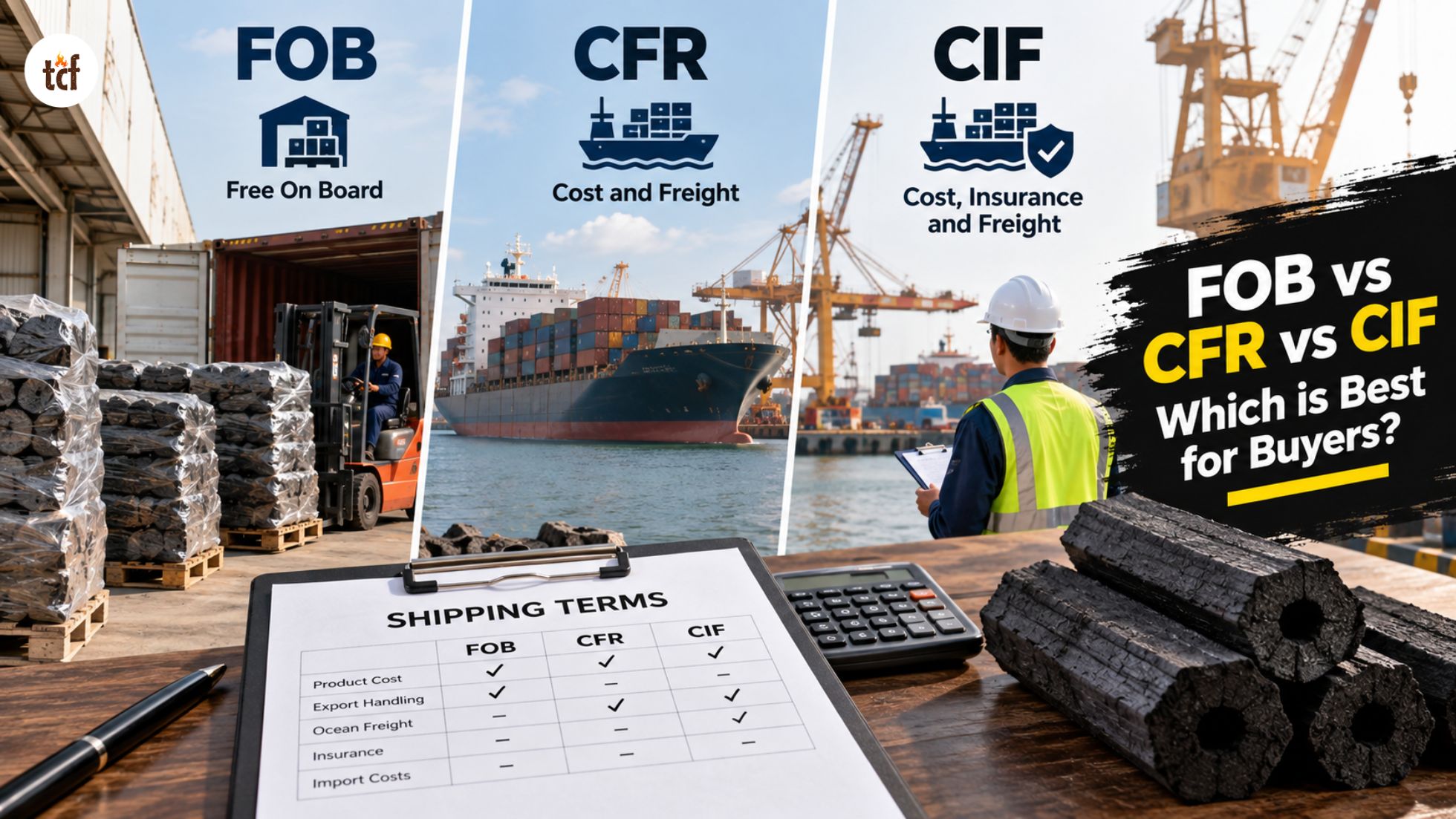
This is also where buyers most often get caught comparing quotes that aren’t actually comparable: an FOB price and a CIF price aren’t the same kind of number, and neither includes destination-side charges like customs duty, port handling, or inland delivery unless you specifically ask. Our FOB vs. CIF pricing guide explains how to normalize quotes so you’re comparing like for like, and our landed cost calculation guide walks through full worked examples across different destination markets so you can see exactly where your money goes beyond the product price itself.

3. Should I buy lump charcoal or briquettes for bulk resale?

It depends on your end customer. Lump suits buyers prioritizing high heat and authentic flavor: restaurants, premium retail, anyone chasing a hard sear or a clean wood taste. Briquettes suit buyers who need long, predictable burn time at a lower cost, catering, high-volume BBQ retail, and anywhere a customer wants a fire that doesn’t need constant attention.

Many wholesale buyers stock both rather than picking one, since the two products serve genuinely different customer segments instead of competing for the same sale. A distributor selling into both restaurant supply and retail BBQ channels is usually better positioned to carry both than specializing narrowly in one. Our lump charcoal vs. briquettes guide covers the full performance comparison, including burn time, peak temperature, and ash output side by side.

4. What documentation do I need to import charcoal?

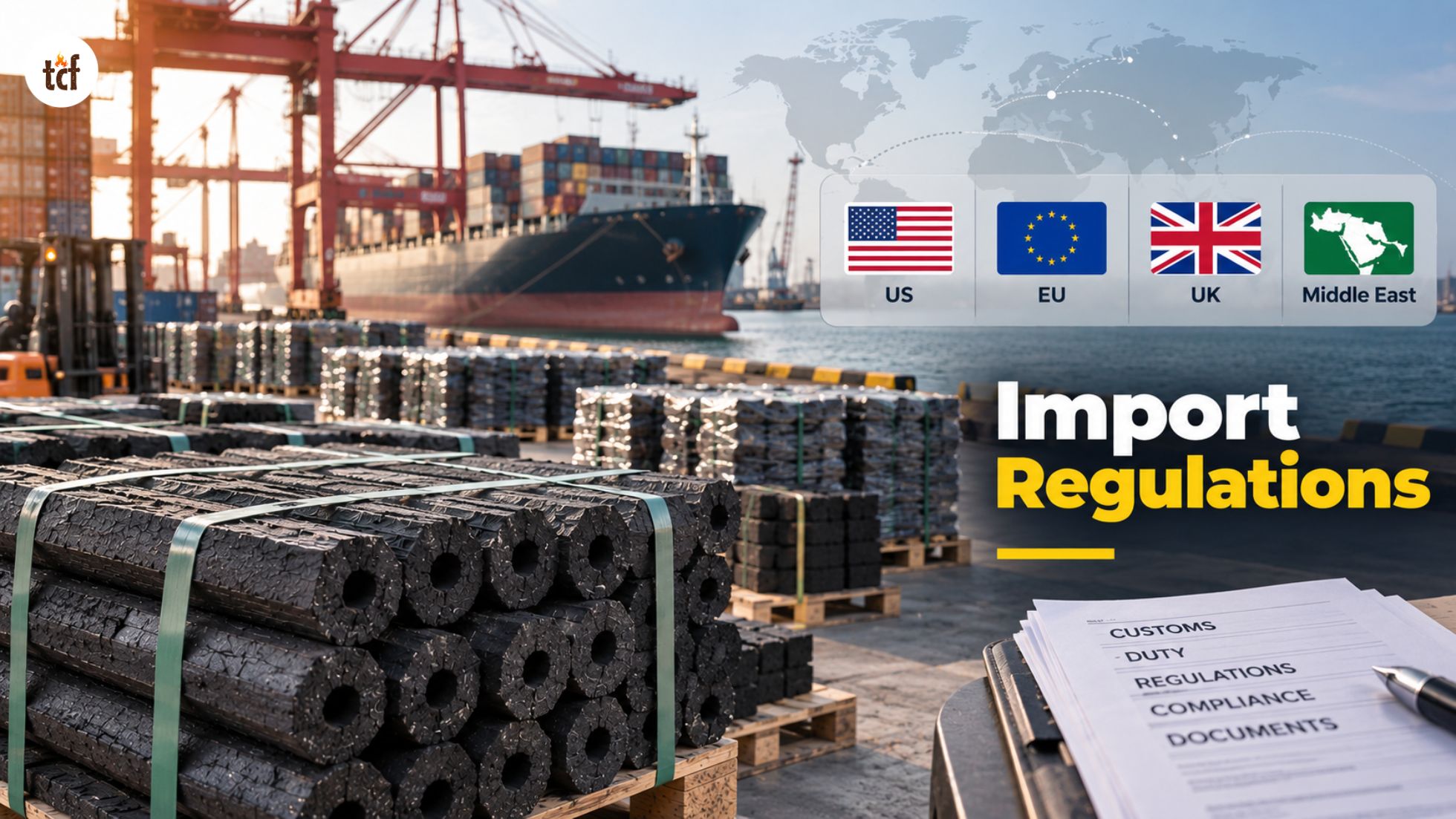
At minimum: a commercial invoice, packing list, bill of lading, certificate of origin, and correct HS code classification. Charcoal falls under HS heading 4402 worldwide, though the exact subheading depends on raw material (bamboo, coconut shell, or wood). Getting the classification wrong doesn’t just risk a paperwork delay; it can trigger the wrong duty rate or an unexpected customs review.

Charcoal also ships as Dangerous Goods (UN1361, Class 4.2) due to its self-heating risk, which adds weathering records, packing-day temperature documentation, and a formal Dangerous Goods Declaration on top of standard import paperwork. This isn’t optional or origin-specific; it applies to sea-freight charcoal shipments globally as of the current IMDG enforcement rules. Our charcoal HS codes guide covers classification in full, and our charcoal dangerous goods shipping guide covers the compliance requirements specific to charcoal.

5. How do I know if a charcoal supplier is legitimate?

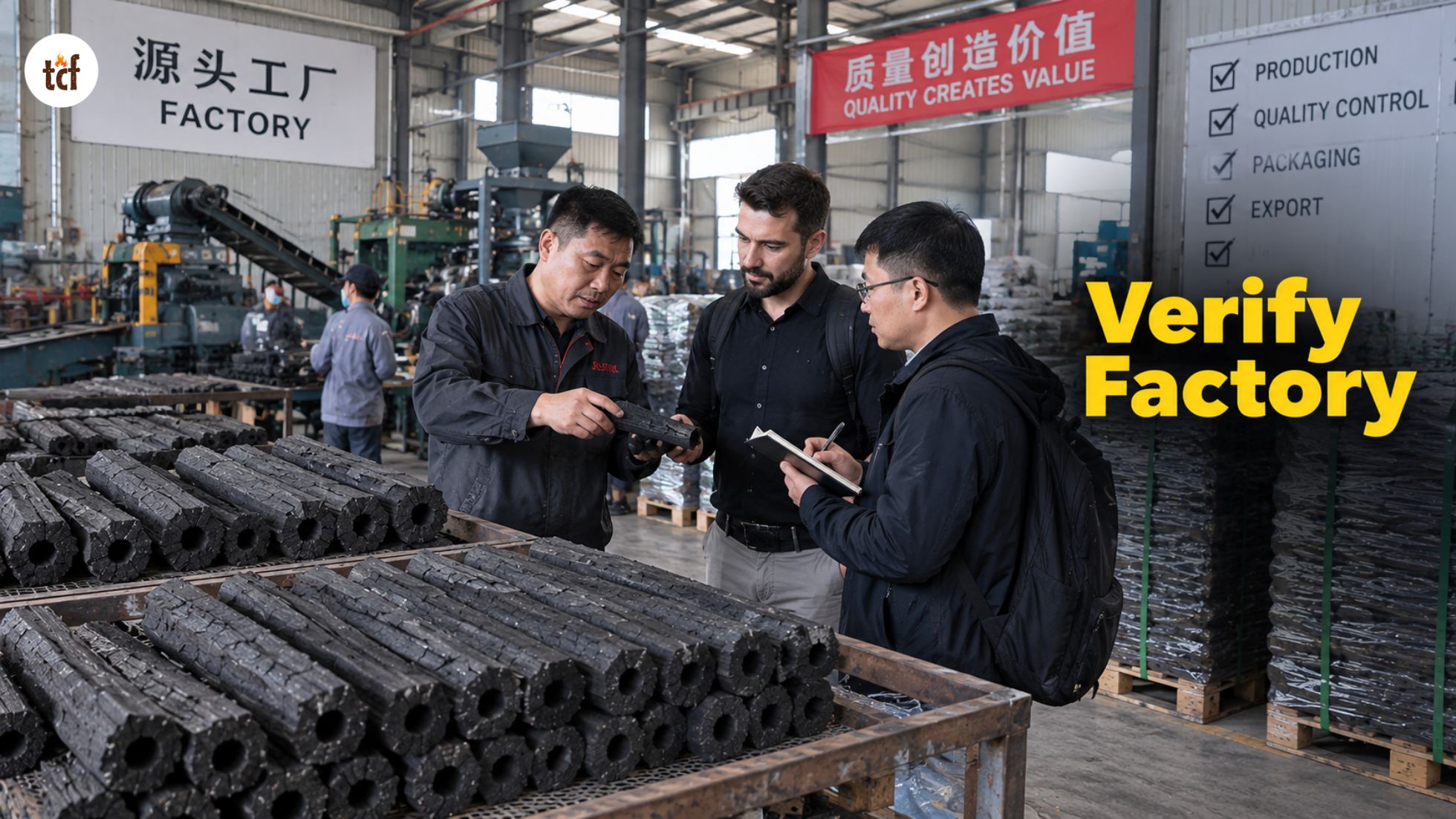
Check whether you’re actually dealing with a manufacturer rather than an undisclosed trading company; this affects pricing, quality consistency, and how reliably compliance documentation gets produced. A quick check of a supplier’s registered business scope, or a live video call showing the actual production facility, tells you more in 10 minutes than a polished sales deck ever will.

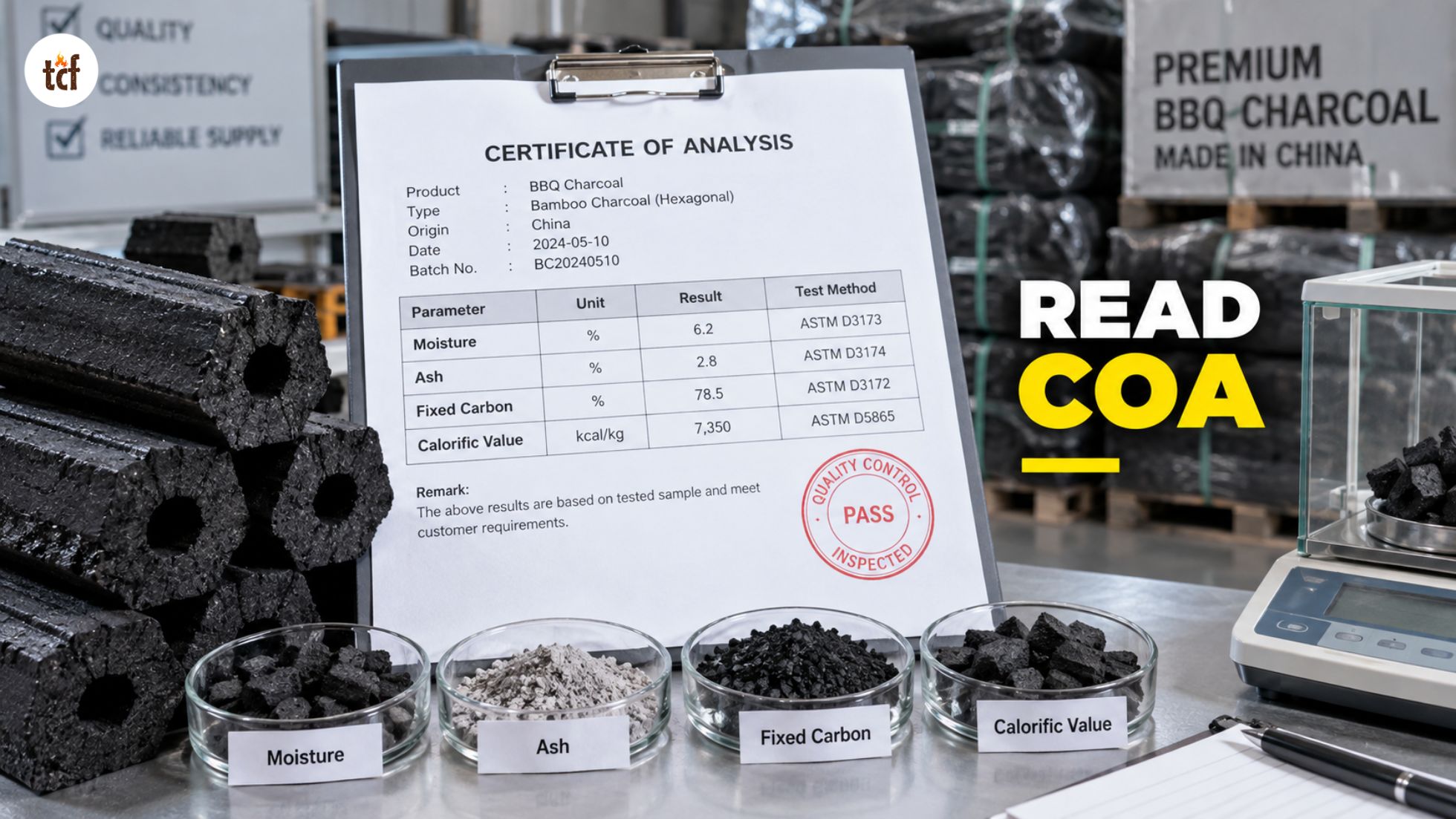
Beyond factory status, request a Certificate of Analysis tied to your specific shipment, not a generic spec sheet, and verify any certifications independently rather than trusting a logo or claim at face value. Certificate fraud using real inspection company branding is a documented risk in commodity trade, so a few minutes spent verifying a certificate number against the issuing body’s own database is worth the effort, especially on a first order. Our charcoal supplier verification checklist and our guide on verifying a Chinese charcoal factory cover exactly how to run these checks before committing to an order.

Quick reference

QuestionShort answer
MOQ~1 full container, 10-20 tons for a 20ft depending on product
Cost per tonVaries by grade, origin, and destination; compare landed cost, not just FOB
Lump or briquettesMatch to end customer; many buyers stock both
Core documentationInvoice, packing list, bill of lading, certificate of origin, correct HS code, plus Dangerous Goods paperwork
Supplier verificationConfirm manufacturer status, request a shipment-specific COA, verify certifications independently

Where to go deeper

For the full picture on sourcing, logistics, and supplier assessment in one place, our charcoal bulk buying guide ties all of the above together. It’s worth reading in full before your first order; most of the costly mistakes in bulk charcoal sourcing come from skipping one of these 5 questions rather than getting the answer wrong.

How Long Do Charcoal Briquettes Last

How Long Do Charcoal Briquettes Last?

How Long Do Charcoal Briquettes Last? Properly stored, unopened charcoal briquettes typically last 2 to 3 years. Self-igniting or “match-light” briquettes are the exception; their ignition chemical starts evaporating the moment the bag is opened and can stop working reliably within 6 to 12 months. The charcoal itself doesn’t actually expire; it’s elemental carbon, chemically inert. What kills a bag of briquettes over time is moisture, not the calendar.

Here’s what actually determines whether your briquettes are still good, and how to tell before you’re standing at the grill with a bag that won’t light.

Why charcoal doesn’t technically “expire”

Charcoal is mostly fixed carbon, produced by burning off water, sap, and volatile compounds during carbonization. There’s nothing left in properly made charcoal to spoil, rot, or chemically break down the way food does. A bag of pure lump charcoal, kept bone dry, will burn essentially the same 10 years from now as it does today.

Briquettes complicate this slightly, because they’re not pure carbon. They’re compressed charcoal dust bound together with starch, sometimes with additional additives like nitrate accelerants or ash-whitening agents. Those additional ingredients are what actually create a practical shelf life, not the charcoal itself.

How long do charcoal briquettes last?

The real enemy: moisture, not time

Charcoal, lump or briquette, is porous by design; that’s exactly what makes it burn well. That same pore structure pulls moisture straight out of humid air, even through a sealed bag over time, and definitely through a torn or loosely closed one. Wet charcoal won’t light reliably, and if it gets wet enough, it can crumble apart entirely.

Briquettes are more vulnerable to this than lump charcoal specifically because of the starch binder, starch absorbs moisture more readily than pure carbonized wood. This is the core reason briquettes are generally rated for a shorter practical shelf life than lump charcoal, even though both are ultimately affected by the same underlying issue.

The real exception: self-igniting (match-light) briquettes

This is the one type of charcoal that genuinely has something close to an expiration date, because it’s not just charcoal; it’s charcoal pre-treated with a volatile ignition accelerant, commonly a petroleum-based solvent, designed to evaporate and ignite on contact with a flame.

That volatility cuts both ways. A patent filing investigating match-light alternatives tested Kingsford Match Light briquettes stored in a sealed bag, and found the charcoal was no longer capable of being match-lit after just one day of storage once removed from its original commercial packaging. Sealed and unopened, match-light charcoal typically holds its ignition properties for around 1 to 2 years, but once opened, that window shrinks dramatically. If you’re buying match-light charcoal, treat “keep it sealed until use” as a real instruction, not a suggestion.

Also read – Which Burns Longer: Lump Charcoal vs Charcoal Briquettes?

Signs your briquettes have actually gone bad

  • They crumble easily under light pressure, rather than holding their compressed shape
  • A musty or damp smell when you open the bag
  • Visible clumping or a chalky, soft texture, signs of significant moisture absorption
  • They won’t hold a flame even after extended lighting attempts, as opposed to just taking a bit longer to catch

If a bag shows the first 2 signs, moisture has already gotten in significantly; drying it out further may help, but performance is unlikely to fully recover.

How to actually extend shelf life

  • Keep the bag sealed and airtight. Roll or clip the top tightly after each use rather than leaving it open between grilling sessions.
  • Store in a cool, dry location, away from direct sunlight and away from damp areas like an uncovered shed floor or a basement without a dehumidifier.
  • Consider a dedicated airtight container for opened bags, a lidded bin or tub keeps out humidity far better than the original paper bag once it’s been opened and reused multiple times.
  • Avoid storing near a water source or in a garage with high seasonal humidity swings, temperature-driven condensation inside a sealed bag can introduce moisture even without an obvious leak.

Can damp charcoal be revived?

Sometimes, for briquettes and lump charcoal that have absorbed moisture but haven’t started crumbling, laying the pieces out in direct sun for a full day can drive off some of the absorbed moisture and restore usability. If the charcoal is already crumbling or visibly clumped, drying it out generally won’t bring back reliable performance, at that point it’s more efficient to replace the bag.

Choosing the right briquette for your storage conditions

If you’re stocking briquettes for extended periods, standard (non-self-igniting) briquettes hold up meaningfully better in storage than match-light varieties, worth factoring in if you’re buying in bulk ahead of a season rather than restocking weekly. Our pillow-shaped charcoal briquettes page covers current specs for standard briquette product built for consistent, predictable performance, in the grill and in storage.

How long do charcoal briquettes last?

Quick reference

TypeTypical shelf life (sealed, dry storage)Main degradation risk
Lump charcoalEffectively indefinite if kept dryMoisture absorption only
Standard briquettes2-3 yearsMoisture absorption via starch binder
Self-igniting (match-light) briquettes1-2 years sealed, much shorter once openedAccelerant evaporation, plus moisture

Frequently asked questions – How Long Do Charcoal Briquettes Last?

Does charcoal actually expire?

No, not chemically. Charcoal is mostly elemental carbon, which doesn’t spoil or break down over time on its own. What determines practical usability is moisture exposure and, for self-igniting charcoal specifically, evaporation of the ignition accelerant.

How long do unopened charcoal briquettes last?

Commonly 2 to 3 years if stored sealed, dry, and out of direct sunlight. This isn’t a hard cutoff, it’s a practical estimate based on how quickly moisture typically finds its way in even through packaging.

Why do match-light briquettes go bad faster than regular briquettes?

Because they’re treated with a volatile ignition accelerant designed to evaporate on contact with flame. That same volatility means it can partially evaporate in storage too, testing has shown match-light charcoal can lose its ability to ignite with just a match within as little as a day once removed from sealed packaging.

How can I tell if my charcoal has gone bad?

Look for crumbling under light pressure, a musty smell, or a chalky, soft texture. Charcoal that’s merely slow to light but otherwise intact usually just needs a longer lighting time, not replacement.

Does lump charcoal last longer than briquettes?

Generally yes, since lump charcoal has no starch binder to absorb moisture the way briquettes do. Kept genuinely dry, lump charcoal can remain usable indefinitely, while briquettes have a more finite practical shelf life even under good storage conditions.

Why Briquettes Burn Longer Than Lump Charcoal

Why Briquettes Burn Longer Than Lump Charcoal: The Combustion Science

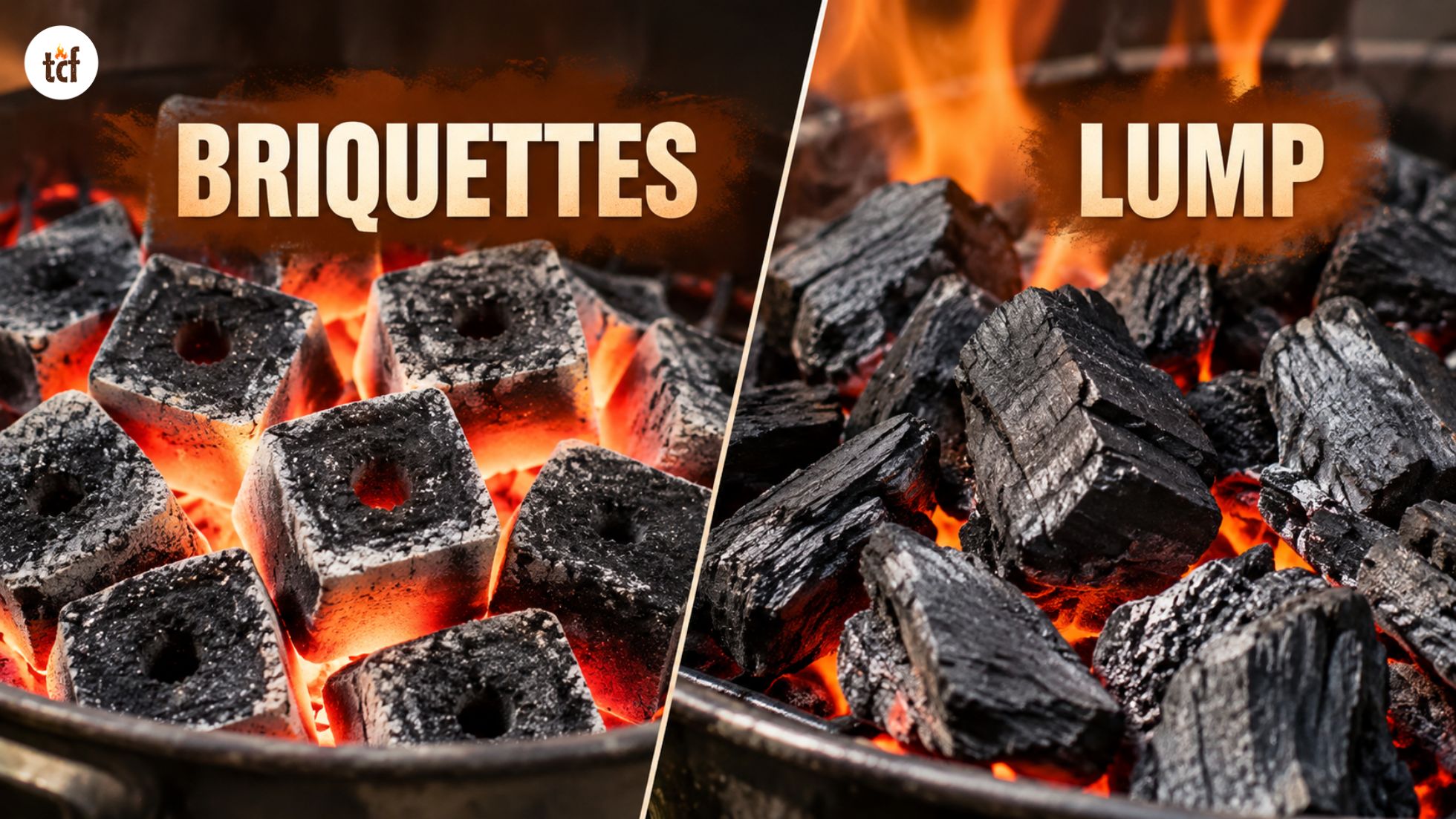
Why Briquettes Burn Longer Than Lump Charcoal? Charcoal briquettes typically burn 3 to 5 hours at a steady temperature. Lump charcoal burns hotter but faster, usually 1 to 2 hours. The counterintuitive part is that lump actually contains more potential energy per gram; briquettes just release theirs more slowly. Here’s the actual mechanism behind that, not just the burn-time numbers.

The surprising part: lump has more energy per gram, but burns out faster

When researchers at the USDA Forest Products Laboratory ran controlled bomb calorimeter tests, comparing lump and briquettes in isolation, they found lump charcoal had a genuinely higher heat of combustion, more stored energy per gram than briquettes. That’s the opposite of what the burn-time difference would suggest at first glance.

But energy content per gram isn’t the same as burn rate, or total burn time for a given volume. A full chimney of briquettes gives roughly 2.5 to 3.5 hours of usable cooking heat (temperatures above 300°F), compared to roughly 40 minutes to 2 hours for the same volume of lump. The explanation isn’t about which fuel has more energy; it’s about how fast each one releases it.

Why briquettes burn longer than lump charcoal

Why briquettes burn longer: 3 mechanisms working together

Non-combustible fillers act as a thermal buffer. Briquettes are roughly 50 to 70% fixed carbon, with the remainder made up of binders, limestone, and sometimes borax. These non-carbon components don’t contribute energy; they absorb heat and physically slow the combustion reaction down. Lump charcoal, by contrast, runs 75 to 90% fixed carbon, almost pure combustible material with nothing to moderate the burn rate.

Uniform density means uniform, predictable combustion. Every briquette is compressed to the same shape and density, so every piece in a chimney burns at roughly the same rate. Lump charcoal varies wildly; a dense chunk of oak might burn for 90 minutes, while a thin sliver from the same bag burns out in 15. That inconsistency isn’t just about predictability; it’s part of why lump as a whole burns through faster: the smaller, thinner pieces combust quickly and don’t sustain the pile the way uniformly-sized briquettes do.

Restricted airflow slows oxygen consumption. Lump charcoal’s irregular shapes create large air gaps between pieces, allowing rapid, relatively uncontrolled airflow and fast combustion. Briquettes’ uniform blocks pack more tightly, restricting oxygen flow through the pile and preventing the fuel from consuming itself as quickly.

Also read – Shisha lounge supply guide

Why lump burns hotter, even though it burns out faster

The same fixed carbon advantage that makes lump burn out faster is what makes it burn hotter while it’s going. With almost no non-combustible material diluting the fuel, lump releases its stored energy in a shorter window, which shows up as a higher peak temperature. Premium lump charcoal has been measured reaching 1,200 to 1,400°F at the coal surface in controlled chimney tests, a 200 to 400°F advantage over briquettes that matters directly for a fast, hard sear.

What this means for how you actually use each fuel

  • Choose briquettes for long, low-and-slow sessions, brisket, pork shoulder, anything running multiple hours where a steady, predictable temperature matters more than peak heat.
  • Choose lump charcoal for quick, high-heat searing, steaks, burgers, chops, where you want maximum temperature and don’t need the fire to last more than an hour or so.

For a fuller breakdown of how these two fuels compare across lighting time, flavor, and ash production- not just burn duration- our lump charcoal vs. briquettes guide covers the complete picture, including Consumer Reports’ testing on peak temperature differences between the two.

Frequently asked questions – Why Briquettes Burn Longer Than Lump Charcoal?

Does lump charcoal really contain more energy than briquettes?

Yes, per gram, in isolation. Bomb calorimeter testing by USDA Forest Products Laboratory researchers found lump charcoal has a higher heat of combustion than briquettes. The longer burn time of a full volume of briquettes comes from a slower release rate, not a larger total energy store.

Why do briquettes burn more predictably than lump charcoal?

Because every briquette is compressed to the same size and density, so combustion proceeds at a consistent rate across the whole pile. Lump charcoal’s naturally irregular piece sizes mean some chunks burn out much faster than others.

What’s actually in briquettes that slows the burn down?

Non-combustible material, commonly limestone and starch-based binders, that make up roughly 30 to 50% of a briquette’s composition. These components absorb heat without releasing energy, acting as a thermal buffer that moderates the combustion rate.

Is lump charcoal’s higher peak temperature always an advantage?

Only for high-heat, short-duration cooking like searing. For long cooks, briquettes’ lower but steadier heat output is generally the better fit, since peak temperature matters less than temperature consistency over several hours.

How much longer do briquettes actually burn compared to lump?

Commonly around double, roughly 3 to 5 hours for briquettes versus 1 to 2 hours for lump, though exact figures vary by brand, airflow setup, and how the charcoal is arranged.

For Further Readings:

calculate the landed cost of bulk charcoal
esg and supply chain reporting
bulk charcoal manufacturer in china
wholesale bbq charcoal buying guide
Wholesale bamboo shisha charcoal
sustainable bamboo charcoal sourcing

Shisha Lounge Supply Guide

Shisha Lounge Supply Guide: Charcoal Types, Burn Time, and Safety Considerations for Operators

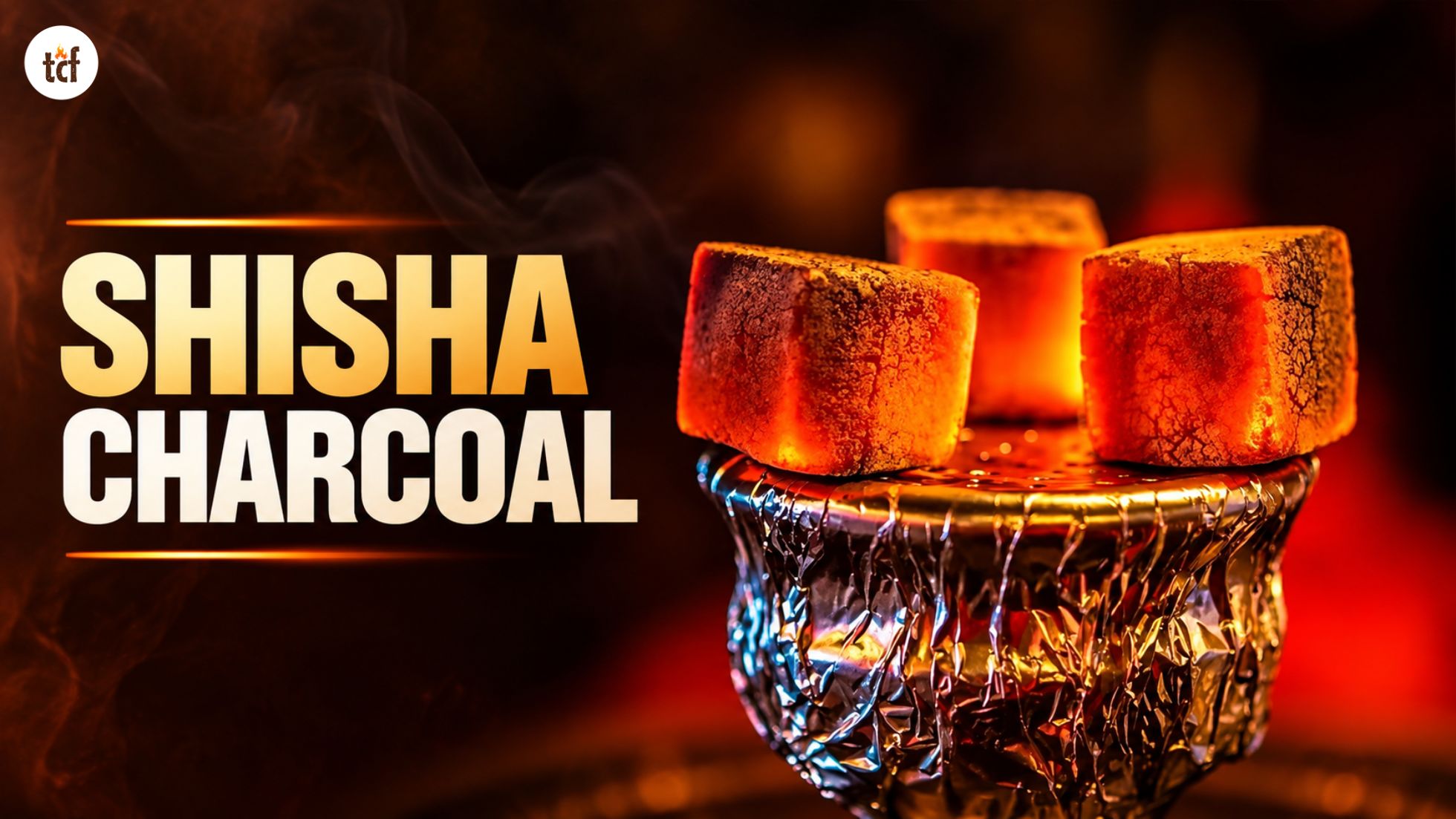
Shisha Lounge Supply Guide: Natural coconut shell charcoal is the standard fuel for serious shisha lounge operations, chosen over quick-light and pistachio/wood alternatives because it preserves flavor purity and maximizes session length, both of which affect table turnover and customer retention directly. But fuel choice is only half the operational picture. Ventilation, burner station handling, and disposal protocols carry real legal exposure for an indoor business burning charcoal continuously; this isn’t a “nice to have”; it’s what keeps a lounge open after an inspection.

Here’s what operators actually need to get right across sourcing, burn management, and safety compliance.

Charcoal types: how they actually compare for lounge operations

Natural coconutPistachio/woodQuick-light
Core materialCompressed coconut shellsCarbonized wood or pistachio shellsWood base treated with sulfur/potassium nitrate
Ignition time8-15 minutes, requires electric coil or gas burner8-12 minutes, requires burner30-60 seconds, torch or lighter
Operational fitIndustry standard, low maintenanceNiche or regional alternative, works for traditional setupsNot recommended for lounge use
Flavor impactCompletely neutral, preserves the tobacco’s flavor profileMostly neutral, can carry a mild earthy noteChemical or metallic, alters the smoke’s taste

Quick-light charcoal is worth calling out specifically as something to avoid in a lounge setting despite its convenience. It releases volatile chemical aromas during ignition and leaves a heavier, flaky ash that shows up on the table, both details discerning guests notice and associate with a lower-quality operation.

Shisha lounge supply guide

Burn time and heat management

High-grade natural coconut cubes, commonly in 25mm or 26mm sizes, typically last 75 to 120 minutes per piece, enough to cover a standard guest session without frequent, labor-heavy coal changes.

Two specs matter most when sourcing in bulk:

  • Fixed carbon: prioritize product specifying 75 to 85%+ fixed carbon. Higher fixed carbon translates directly to a longer, more efficient burn and fewer table touchpoints for staff during a shift. Our charcoal grades guide covers how this figure is measured and what separates A-grade from lower grades specifically for shisha use.
  • Ash content: target below 3%. Low ash prevents airflow blockage in heat management devices and cuts down on fine dust landing on lounge furniture or drifting toward guests.

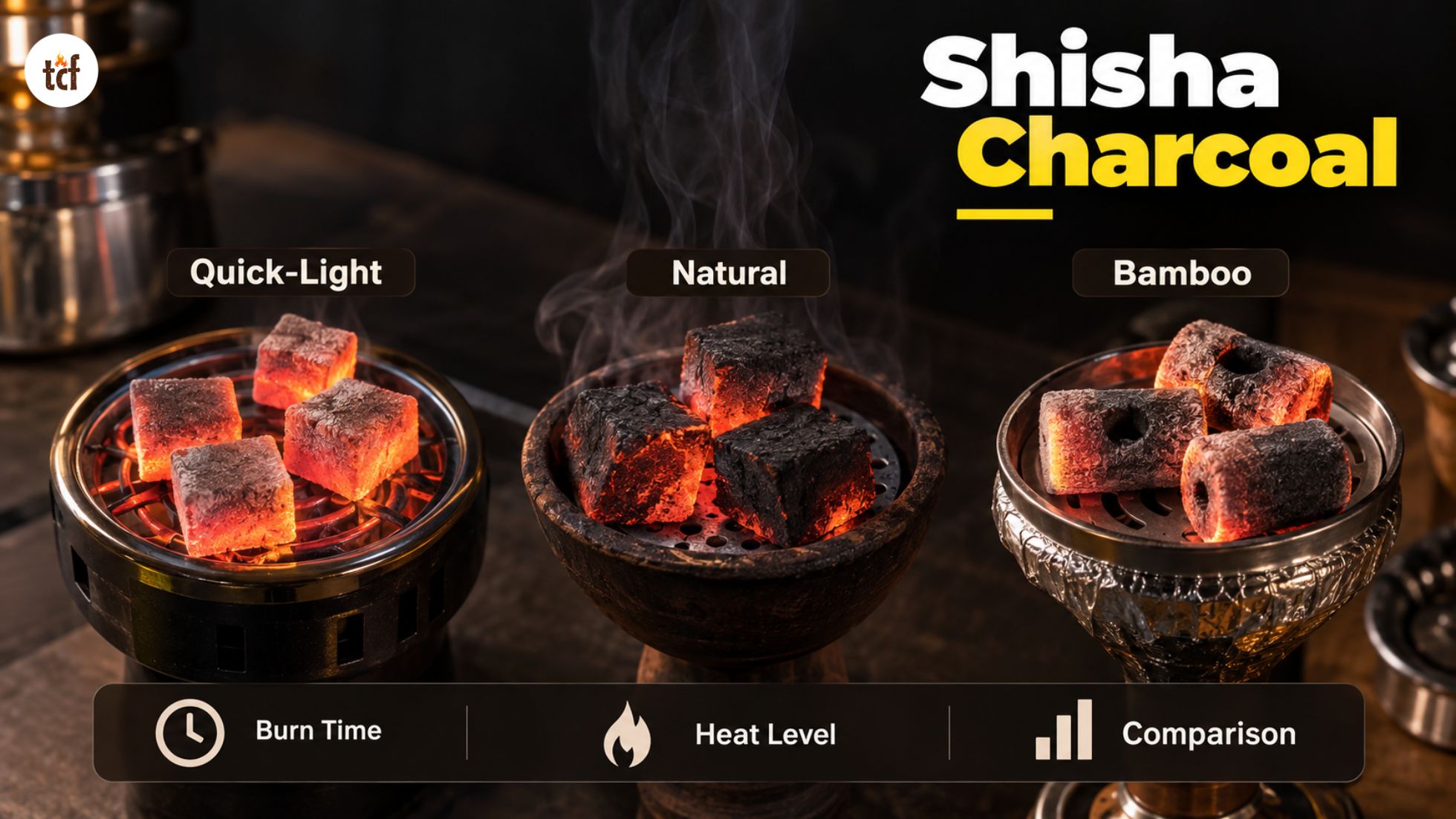
For a fuller comparison of burn performance across coconut, bamboo, and quick-light charcoal specifically, our shisha charcoal burn time and heat comparison breaks the numbers down side by side.

Ventilation and carbon monoxide: the compliance issue that actually closes lounges

Because hookah lounges burn charcoal continuously indoors, they draw real scrutiny from fire departments and health boards, and this isn’t hypothetical risk. In 2022, Winnipeg’s Fire Paramedic Service confirmed, through its own records, that it had ventilated 2 downtown hookah lounges after measuring carbon monoxide readings of 55 and 86 parts per million, both above the threshold where US federal workplace safety standards require action.

For reference, OSHA’s permissible exposure limit (PEL) for CO is 50 ppm averaged over 8 hours, with NIOSH recommending a stricter 35 ppm time-weighted limit and a 200 ppm ceiling that should never be exceeded even briefly. A lounge running anywhere near these numbers on a normal night, not just during an isolated incident, has a ventilation system that isn’t doing its job.

What this means operationally:

  • Install a dedicated commercial exhaust system rated for continuous CO output. Standard restaurant HVAC is rarely sufficient for continuous indoor combustion at lounge volume.
  • Mount commercial-grade CO detectors throughout the floor and kitchen, wired into the building’s emergency alarm system, not standalone units that only alert staff physically nearby.

Also read – BBQ charcoal vs. briquettes

Burner station safety

  • Use industrial-rated equipment: dedicated 1000W+ electric coil burners or heavy-duty gas infrared ranges built for commercial shisha operations, not consumer-grade equivalents.
  • Train staff on coal spacing: placing coals tightly together creates a heat vortex for faster, more even lighting, but leave a buffer zone around the edge of the burner plate to prevent coals rolling off during service.
  • Enforce a “no black spots” rule before serving: coals should be fully glowing and flipped, with a light gray ash coating, before they reach a table. Serving a partially lit coal accelerates toxic CO off-gassing directly into the guest’s hose; this is a direct safety issue, not just a quality one.

Safe handling and disposal

  • No customer contact with coals, ever. House rules should explicitly forbid guests from adjusting or touching coals themselves. All heat management should go through staff using heavy-duty, long metal tongs.
  • Transport lit coals in covered, wind-shielded metal carriers. Never carry an individual lit coal openly across a busy floor.
  • Quench every spent coal fully at close. A water-filled metal or stainless bin for end-of-night disposal is the only reliable way to eliminate the risk of a smoldering coal causing a trash bin fire after the lounge is closed and unstaffed.

Storage: the detail that’s easy to overlook

Raw coconut shell charcoal absorbs ambient humidity readily. Store wholesale bulk pallets in dry, elevated storage, away from high-moisture prep kitchen areas. Damp charcoal doesn’t just burn poorly; it sparks more aggressively when lit, which is a real hazard for whichever staff member is handling ignition.

Sourcing for lounge operations

For current bulk coconut shell and bamboo shisha charcoal specs, sizing, and private label options for lounge house brands, our wholesale hookah charcoal page has the full product range available for quote.

This article is for general informational purposes and isn’t legal or safety compliance advice. Fire, health, and ventilation regulations vary by jurisdiction; confirm current local requirements with your fire marshal and health authority before finalizing lounge operating procedures.

Shisha lounge supply guide

Frequently asked questions

What’s the industry-standard charcoal for a shisha lounge?

Natural coconut shell charcoal, chosen for its neutral flavor impact, low ash, and long, steady burn compared to quick-light or pistachio/wood alternatives. It requires a coil or gas burner to ignite, unlike quick-light, but the trade-off is a cleaner, more consistent session.

How long does premium shisha charcoal actually burn?

High-grade coconut cubes at 25mm or 26mm typically last 75 to 120 minutes, enough to cover most guest sessions without frequent coal replacement.

What CO level should trigger concern in a lounge?

OSHA’s workplace exposure limit is 50 ppm over 8 hours, and NIOSH recommends staying under 35 ppm as a stricter safety margin. A real-world case in Winnipeg saw lounges ventilated by fire crews after readings of 55 and 86 ppm, well above safe operating levels, underscoring that this isn’t a theoretical risk.

Why is quick-light charcoal discouraged in lounge settings?

Its chemical accelerant produces off-flavors and a noticeable chemical smell during ignition, and it leaves heavier, flakier ash than natural charcoal, both of which discerning guests notice and associate with lower quality.

What ash content should bulk shisha charcoal buyers look for?

Below 3%. Higher ash content causes airflow blockage in heat management devices and creates more fine dust landing on furniture and near guests, a real issue at commercial table volume.

BBQ Charcoal vs Briquettes What Restaurant and Grill Brands Should Stock, and Why

BBQ Charcoal vs Briquettes: What Restaurant and Grill Brands Should Stock, and Why

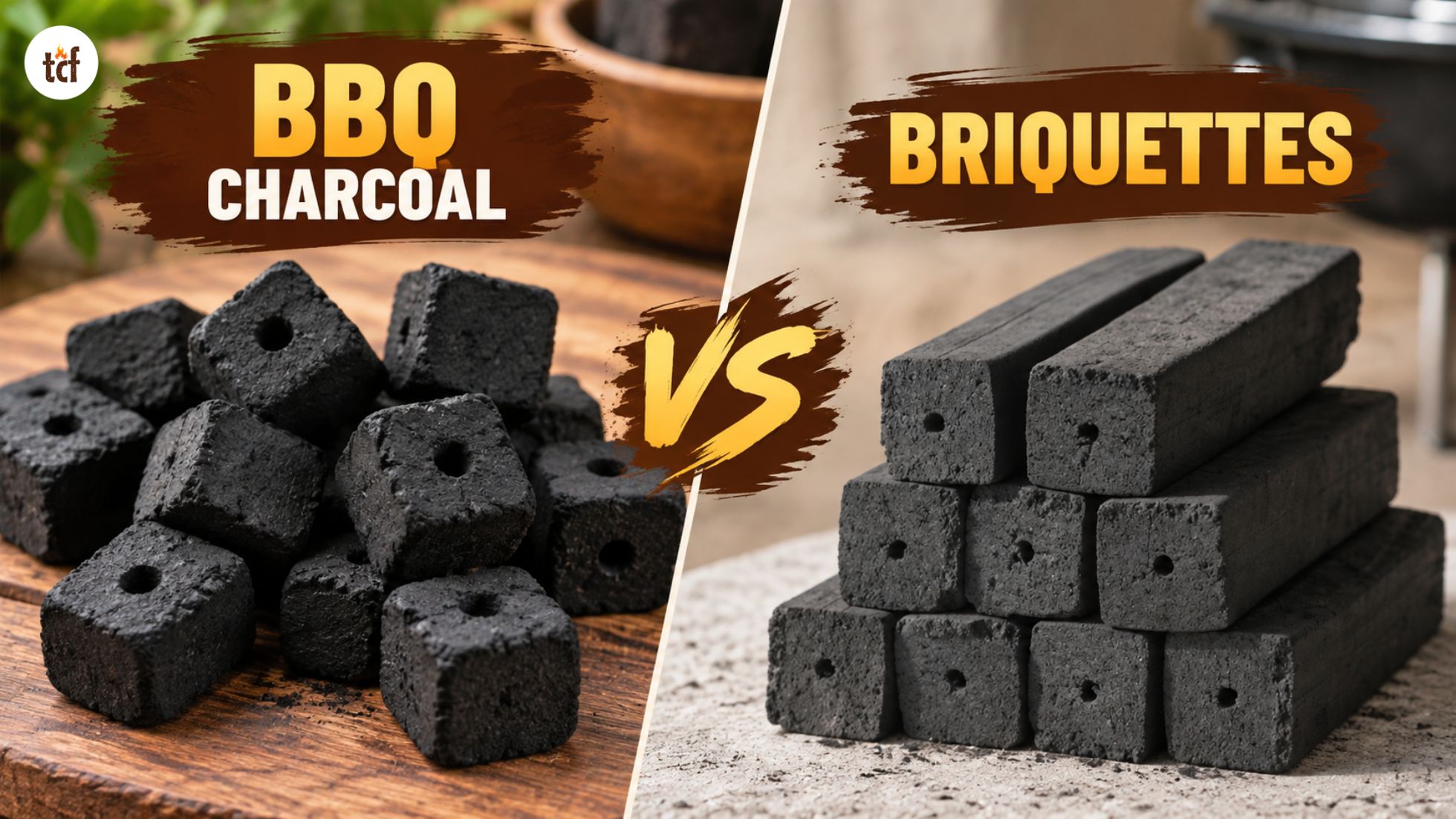
BBQ charcoal vs briquettes: Most restaurant and grill operations shouldn’t choose one fuel over the other; they should stock both, matched to specific equipment and menu items. Lump charcoal belongs wherever a dish needs searing heat and fast response: ceramic kamados, Josper and Mibrasa charcoal ovens, open-fire grills. Briquettes belong wherever a kitchen needs a long, steady, predictable burn: offset smokers, gravity-fed rigs, high-volume catering.

This isn’t a “which is better” question; it’s a procurement question tied directly to your equipment list and menu. Here’s how to think about it as a stocking decision rather than a preference.

Why BBQ charcoal vs briquettes is an equipment question first, a preference question second

Our lump charcoal vs. briquettes comparison covers the underlying performance data in detail: lump runs 40 to 50°F hotter on average with peaks around 800 to 1,000°F; briquettes plateau lower but burn 30 to 40% longer per pound. For a home griller, that’s a preference decision. For a restaurant or grill brand managing multiple pieces of equipment across a menu, it’s an allocation decision, and the answer is usually “both,” not “either.”

BBQ charcoal vs. briquettes

Match fuel to equipment, not to opinion

Ceramic kamado grills, Josper and Mibrasa charcoal ovens, open-fire Santa Maria grills: these are built around lump charcoal specifically, not as a preference but as a functional requirement. Josper’s own equipment documentation restricts fuel to charcoal only, and their commercial ovens are designed to run in the 580 to 670°F range on the fast ignition and airflow responsiveness that lump provides. Briquettes’ lower peak heat and slower response to airflow adjustment work against exactly what these ovens are built to do.

Large offset smokers, gravity-fed smokers, high-volume catering rigs: these want the opposite profile, a long, steady, low-maintenance burn that doesn’t need constant attention or refueling mid-service. Briquettes’ uniform shape and predictable combustion rate are the operational advantage here, not a compromise.

Also read – sustainable bamboo charcoal sourcing

What this means for menu items specifically

  • Lump charcoal: ribeyes, skewers, seafood, wood-fired pizza, direct-heat chicken thighs, anything where a hard sear and fast temperature response matter more than a multi-hour cook
  • Briquettes: brisket, pork shoulder, ribs, pulled pork, anything running 6 hours or more where consistent temperature matters more than peak heat

The cost and labor side of the decision

Briquettes cost less per pound than lump charcoal and burn longer, which matters directly on high-volume, long-cook menu items where fuel cost scales with cook time. A single load lasting 2 to 3 hours versus 45 to 90 minutes for lump isn’t just a convenience; on an 8 to 12 hour smoke, it’s the difference between checking the fire once versus repeatedly through a shift.

Lump charcoal costs more, but it also produces less ash, which has a real labor-cost implication during a busy dinner service: less mid-shift cleanout, and less risk of airflow blockage slowing the line at the exact moment speed matters most.

A practical allocation framework

If you run…Stock…Because…
Ceramic kamado, Josper/Mibrasa oven, open-fire grillLump charcoalFast ignition, high peak heat, low ash, quick airflow response
Offset smoker, gravity-fed smoker, catering rigBriquettesLong, steady, predictable burn with minimal refueling
Mixed equipment across multiple stationsBoth, allocated by stationMatches fuel to what each piece of equipment actually needs

The hybrid approach some commercial kitchens use

Some commercial pitmasters run a blended ratio, commonly around 70% briquettes to 30% lump, inside smokers specifically. The briquettes provide a reliable, long-burning base for the full cook, while the lump adds bursts of higher heat and a stronger wood flavor layered on top. This isn’t necessary for every operation, but it’s worth testing if you want more of lump’s flavor profile without giving up briquettes’ burn-time reliability on long cooks.

Building this into your fuel procurement

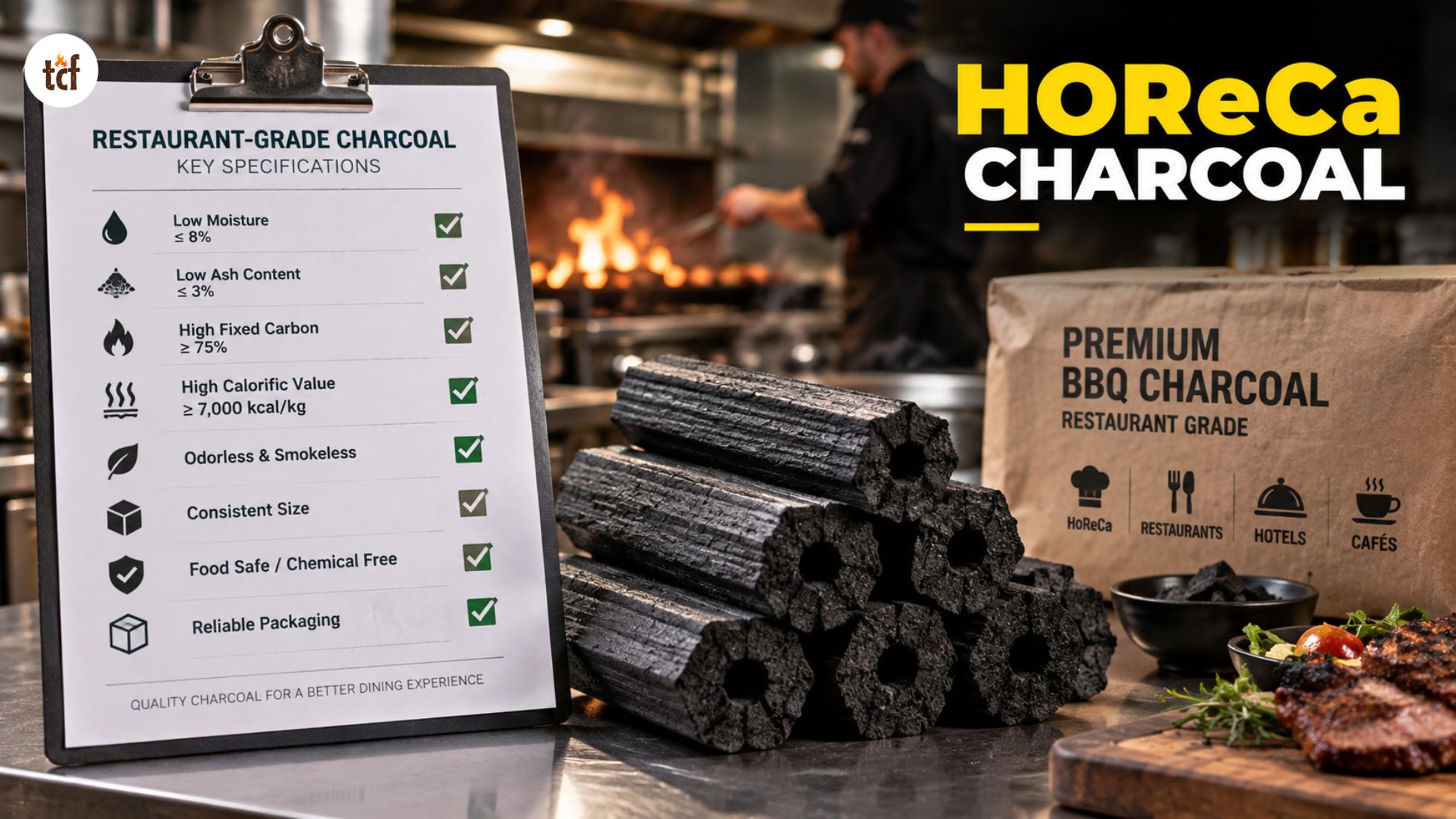
Once you’ve mapped fuel type to equipment, the next question is sourcing consistency, since a supplier who can’t hold the same spec shipment to shipment undermines the whole point of standardizing your fuel program. Our restaurant-grade charcoal specifications guide covers what to require in writing: fixed carbon, ash, moisture, and batch-to-batch consistency, regardless of which fuel type you’re stocking.

Also read – Wholesale bamboo shisha charcoal

Sourcing fuel for a multi-format kitchen

If you’re stocking both lump charcoal and briquettes across different equipment, our bulk lump charcoal and pillow-shaped charcoal briquettes pages cover current specs and packaging formats for both, and our bulk charcoal for restaurants page covers how we structure supply for operations running more than one fuel type across their equipment lineup.

BBQ Charcoal vs Briquettes

Frequently asked questions

Should a restaurant only stock one type of charcoal?

Generally not, if the menu and equipment mix calls for both high-heat searing and long, steady cooks. Most multi-format restaurants and grill brands get better results by assigning fuel types by station or equipment rather than standardizing on one.

Why do charcoal ovens like Josper and Mibrasa require lump charcoal specifically?

These ovens are engineered around lump charcoal’s fast ignition and airflow responsiveness to reach and hold their operating temperature range efficiently; briquettes’ slower response and lower peak heat work against that design.

Is briquette charcoal cheaper to run in a high-volume kitchen?

Generally yes, both in raw fuel cost per pound and in longer burn time per load, which reduces how often staff need to manage or replace fuel during long cooks or high-volume service.

What’s the 70/30 hybrid ratio used for?

Some commercial smoker operations blend roughly 70% briquettes to 30% lump charcoal, using briquettes for a stable, long-burning base and lump to add extra heat intensity and flavor on top.

Does lump charcoal really produce less ash than briquettes?

Yes, and this has an operational impact beyond just cleanup time; excess ash buildup can restrict airflow in a grill or smoker, which slows recovery time exactly when a busy service needs consistent heat.

Sustainable Bamboo Charcoal Sourcing

Sustainable Bamboo Charcoal Sourcing: What Buyers Should Know About Eco Claims and Documentation

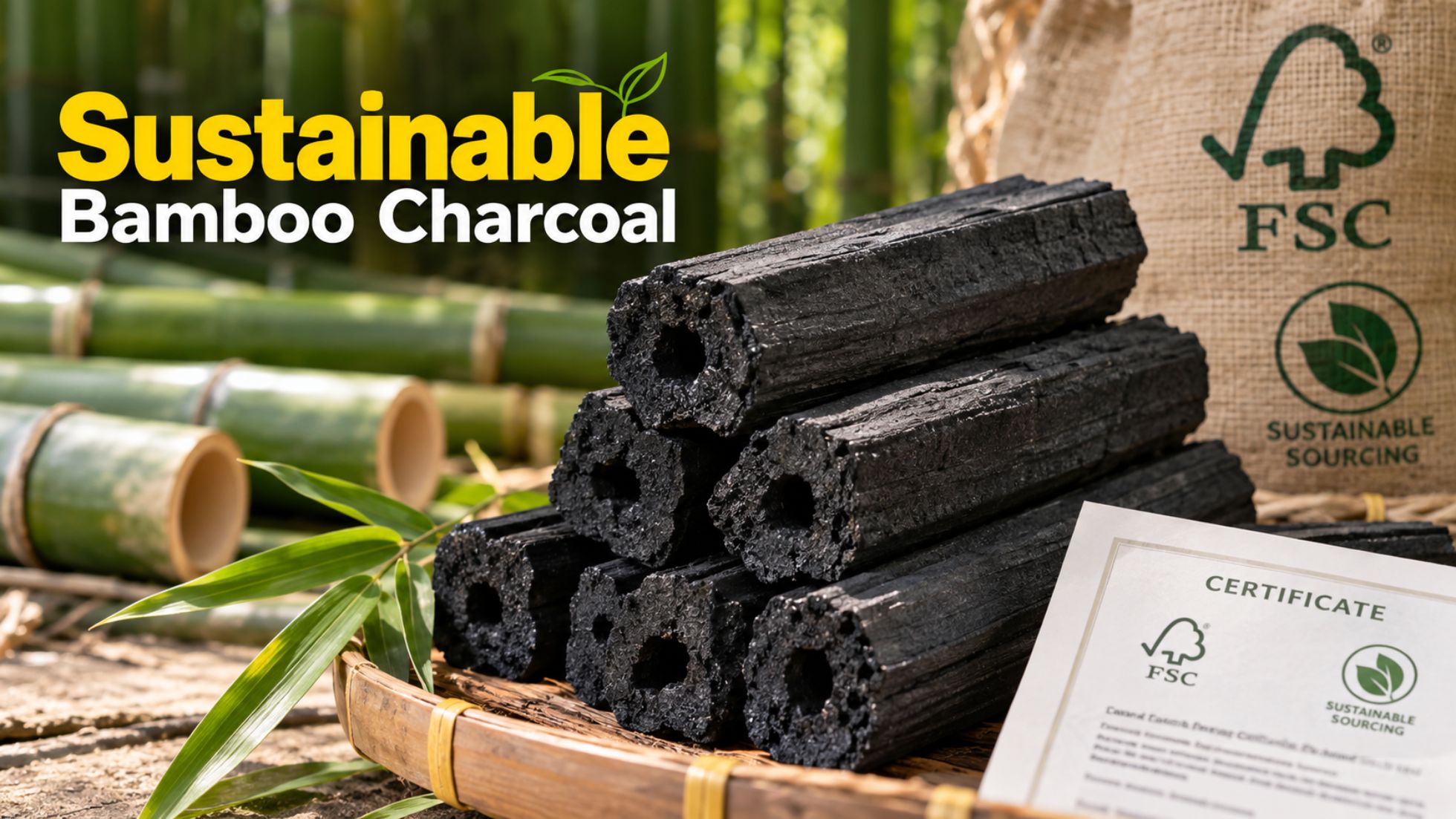
Sustainable Bamboo Charcoal Sourcing: Bamboo charcoal is a genuinely renewable fuel source because bamboo regrows from the same root system after harvest; the parent plant is never killed, unlike hardwood charcoal, which requires felling a tree that took decades to mature. That said, “eco-friendly” isn’t a label you can put on packaging without evidence behind it anymore, especially for EU-bound retail, where new rules banning unsubstantiated environmental claims take effect from September 2026.

Here’s what actually makes bamboo charcoal a stronger sustainability story than hardwood, and what documentation you need before making that claim yourself.

Why bamboo charcoal is considered more sustainable than hardwood charcoal

Bamboo reaches harvestable maturity in 3 to 5 years. Hardwood trees typically take 20 to 80 years, depending on species and region. That difference alone makes bamboo’s carbon cycle dramatically faster: a bamboo plantation can be harvested repeatedly across a single hardwood tree’s growth window, without ever killing the parent plant, since bamboo regenerates from its existing root system rather than needing replanting.

This also matters for soil and land impact. Because the root system stays intact through repeated harvests, managed bamboo plantations help prevent the soil erosion that comes with clear-cutting hardwood stands. Sourcing from a managed plantation system, rather than unmanaged or wild-harvested forest, is the specific detail that separates a genuinely lower-deforestation-risk supply chain from one that just uses “bamboo” as a marketing word.

Does FSC certification apply to bamboo charcoal, and how do you verify it?

FSC (Forest Stewardship Council) certification verifies that wood or bamboo raw material comes from a responsibly managed source, audited independently rather than self-declared. Not every supplier holds FSC certification even when they source from managed plantations, some provide plantation sourcing documentation without a formal FSC certificate specifically.

If FSC certification matters for your supply chain sustainability requirements or ESG reporting obligations, ask your supplier directly and request the certificate number, then verify it independently through FSC’s own public database rather than accepting a claim or logo at face value. This is good practice regardless of supplier, certification fraud and unverifiable sourcing claims aren’t rare in this category.

How does bamboo charcoal reduce deforestation compared to hardwood?

Hardwood charcoal typically requires felling trees that take 20 to 80 years to mature, a direct contributor to deforestation in many tropical sourcing regions. Bamboo, harvested every 3 to 5 years from a managed plantation with its root system left intact, represents a structurally different sourcing model, one where repeated harvest doesn’t require repeated forest clearing.

Sourcing bamboo charcoal from a managed plantation system is inherently lower deforestation-risk than sourcing hardwood from regions with weak forestry oversight. That said, “bamboo” alone isn’t a guarantee, wild-harvested or unmanaged bamboo sourcing exists too, which is exactly why plantation-specific sourcing documentation matters more than the raw material name.

Is charcoal from China compliant with EU environmental and import regulations?

Chinese charcoal exported to the EU needs to meet several requirements together, not just one. A phytosanitary certificate is standard practice to address pest risk in wood-derived products, most manufacturers provide this with every shipment.

Separately, and more consequentially, buyers importing charcoal (HS 4402) into the EU need to comply with the EU Deforestation Regulation (EUDR), which becomes mandatory from December 30, 2026 for large and medium operators. Our EUDR Due Diligence Statement guide covers what this actually requires, geolocation data, a risk assessment, and a DDS reference number submitted through TRACES NT. Plantation-based sourcing documentation is a meaningful part of building that risk assessment, since it establishes a traceable, non-wild-harvested origin.

Sustainable bamboo charcoal sourcing

What is HACCP certification, and does charcoal need it?

HACCP (Hazard Analysis and Critical Control Points) is a food safety management framework. Charcoal itself isn’t food, but charcoal used directly in food preparation, grilling, and smoking is increasingly subject to food safety scrutiny in regulated retail and foodservice markets. Some European and North American supermarket and restaurant buyers now request HACCP-adjacent documentation from their fuel suppliers as part of broader supply chain risk management.

Not every charcoal manufacturer holds this certification. If it’s a requirement for your specific buyer or market, confirm availability directly rather than assuming it’s standard.

Also read – Wholesale bamboo shisha charcoal

Are buyers actually shifting toward bamboo and coconut shell charcoal for sustainability reasons?

Yes, this is a clear and growing pattern, particularly among European supermarket chains, eco-label retail brands, and corporate restaurant groups operating under ESG commitments. Bamboo and coconut shell charcoal, both sourced from renewable or byproduct material rather than felled hardwood, carry a genuinely lower deforestation-risk profile and are increasingly favored by buyers who need to satisfy EU sustainability regulation and back up consumer-facing sustainability claims with something real.

What about the carbon footprint of sea freight vs. local sourcing?

This is worth answering carefully, because it’s an easy claim to overstate. Sea freight generally carries a lower per-ton carbon footprint than air freight, and in some cases can compare favorably to locally produced charcoal made through less efficient production methods or from higher-carbon raw material streams. But “can compare favorably” is not the same as “always does,” the actual answer depends heavily on production efficiency at origin, shipping distance, vessel type, and what exactly the local alternative is being compared against.

If sea freight carbon footprint is relevant to your sourcing decision or a claim you intend to make publicly, request specific lifecycle or emissions data from your supplier rather than relying on a general industry pattern. This isn’t just good practice, it’s becoming a legal requirement for making the claim at all, covered next.

Can you actually market bamboo charcoal as “eco-friendly” or “chemical-free” in the EU?

Only if you can substantiate the claim. This is genuinely important context that’s easy to miss: while the EU’s proposed Green Claims Directive was formally withdrawn by the European Commission in June 2025, a separate law, the Empowering Consumers for the Green Transition Directive (Directive 2024/825, also called EmpCo or ECGT), is already adopted and applies from September 27, 2026, regardless of what happens to the withdrawn proposal. It bans vague, generic environmental claims that can’t be demonstrated with evidence.

What this means practically: a “chemical-free” or “eco-friendly” claim on retail packaging needs to be backed by real documentation, not just be technically true in a general sense. If your bamboo charcoal genuinely contains no chemical accelerant, binder, or additive, pure carbonized biomass, that’s a strong, defensible claim, but you’ll want the composition documentation to back it up if a regulator or retailer ever asks. Our ESG and supply chain documentation guide covers what to request from a supplier to support exactly this kind of claim.

Does chemical-free composition alone make charcoal suitable for eco-label retail?

It’s a strong foundation, but not the whole picture. Charcoal made through carbonization with no chemical additive, binder, or accelerant, pure carbonized bamboo or wood and nothing else, genuinely supports a chemical-free positioning. Our machine-made vs. natural charcoal guide covers why this distinction matters, since not all machine-made charcoal in the broader market is actually free of coal-derived additives, despite sometimes being marketed that way.

For a full eco-label claim, buyers typically also want plantation sourcing documentation, and increasingly, given the regulatory shift described above, some form of verifiable evidence they can point to if the claim is challenged.

A quick documentation checklist for sustainability-positioned sourcing

  • [ ] Plantation sourcing documentation (managed source, not wild-harvested)
  • [ ] FSC certificate number, verified independently, if FSC is specifically required
  • [ ] EUDR Due Diligence Statement reference number, for EU-bound shipments
  • [ ] Composition confirmation: no chemical accelerant, binder, or additive
  • [ ] HACCP documentation, if required by your specific buyer
  • [ ] Any available lifecycle or emissions data, if a carbon-related claim is planned
Sustainable bamboo charcoal sourcing

Frequently asked questions

Is bamboo charcoal always more sustainable than wood charcoal?

Generally yes, given bamboo’s faster regrowth cycle and root-intact harvesting, but this depends on sourcing from an actual managed plantation rather than wild-harvested bamboo. The material alone doesn’t guarantee sustainable sourcing; the sourcing method does.

Does The Charcoal Factory hold FSC certification?

Certification status should be confirmed directly with the supplier and verified against FSC’s own public database using the specific certificate number, rather than assumed from general sourcing claims.

Can I claim my charcoal is “eco-friendly” on EU retail packaging?

Only with substantiation. From September 2026, EU rules under the Empowering Consumers for the Green Transition Directive prohibit vague environmental claims that can’t be backed with evidence, regardless of the now-withdrawn separate Green Claims Directive proposal.

Is sea freight charcoal more carbon-efficient than locally produced charcoal?

It can be, depending on production efficiency and distance, but this isn’t a blanket rule. Request specific data from your supplier if this comparison matters to a sourcing decision or a claim you plan to make.

Wholesale bamboo shisha charcoal

Wholesale bamboo shisha charcoal: a buyer’s guide to grade, size, and burn time

Wholesale bamboo shisha charcoal: Premium bamboo shisha charcoal should carry fixed carbon of 78 to 80% or higher, ash content of 3% or lower, and a minimum burn time of 45 to 60 minutes per piece, with high-grade bamboo commonly reaching 60 to 90 minutes. Beyond the numbers, what actually separates good shisha charcoal from mediocre charcoal is what’s not in it, no chemical accelerant, no binder, no additive.

Here’s what to check across grade, format, and sizing before placing a wholesale hookah charcoal order.

What makes bamboo charcoal good for shisha?

Four things: heat retention, odor, ash, and burn time. Bamboo charcoal’s high fixed carbon content delivers sustained heat retention throughout a session. It produces minimal odor and smoke, critical since any smell interferes directly with tobacco flavor. It generates very low ash. It burns long, reducing how often a lounge or home user needs to manage coals mid-session.

A-grade bamboo charcoal should carry fixed carbon of 80% or higher and ash content of 3% or lower, both key benchmarks for premium shisha use specifically, not just general BBQ quality thresholds. Our charcoal grades guide covers how these thresholds are typically documented and verified across production runs.

Wholesale bamboo shisha charcoal

Quick-light vs. natural charcoal for hookah: what’s the real difference?

Quick-light charcoal contains chemical accelerants, typically potassium nitrate, that let it ignite with a lighter in seconds. It’s convenient, but it produces a chemical taste and burns out faster than natural alternatives.

Natural charcoal requires a coil burner to ignite, taking longer to get started, but it burns longer, cleaner, and with no chemical taste. This is why natural bamboo or coconut shell charcoal is the standard choice for serious hookah lounges and home users who prioritize session quality over convenience. Our shisha charcoal burn time and heat comparison breaks down the full performance gap between quick-light, natural coconut, and bamboo side by side.

What cube sizes are standard for shisha charcoal?

25mm and 26mm cubes are the most common dimensions used for standard shisha heads across the industry. Sizing does affect burn time directly: a 26mm cube holds noticeably more combustible mass than a 25mm cube, which translates to a longer session and, in many cases, slightly higher heat output. Industry sizing guides commonly recommend 25mm for standard bowls and heat management devices, and 26mm for larger bowls or group sessions needing extended heat.

Confirm available sizes and any custom sizing options directly with your supplier’s sales team, since exact dimensions and tolerances can be adjusted per order, particularly for private label runs.

What shapes are available for hookah charcoal?

Cube is the most popular format by far, but it’s not the only one. Common shapes across the hookah market include:

  • Cubes: the industry standard, consistent heat distribution across 6 flat surfaces
  • Flat rounds: maximize surface contact with the bowl for faster initial heat buildup
  • Hexagonal pieces: increased surface exposure compared to cubes, which can improve airflow and combustion completeness
  • Finger or stick formats: less common, used in specific regional markets or specialty applications

Custom shapes can typically be arranged for private label orders if none of the standard formats fit your brand’s positioning.

Does shisha charcoal affect the flavor of tobacco?

Yes, and this is where charcoal quality matters most to a serious buyer. Low-quality charcoal with high ash content, residual chemicals, or poor combustion will impart off-flavors into the smoke, directly undermining whatever flavor profile the tobacco itself is built around.

The fix is straightforward on paper, if not always easy to verify: source charcoal that’s pure carbonized biomass with no chemical accelerant, binder, or additive. Bamboo charcoal produced this way is naturally flavor-neutral, which is the primary requirement serious shisha buyers should be screening for, ahead of price or brand name.

What fixed carbon percentage should shisha-grade charcoal have?

A minimum of 78 to 80%. This is the top end of the market standard for hookah use specifically, higher than what’s typically required for general BBQ charcoal, since shisha charcoal needs to sustain heat over a longer, more consistent session without the peak-heat searing demands of grilling.

What’s the minimum burn time for premium shisha charcoal?

Premium natural bamboo shisha charcoal should burn for a minimum of 45 to 60 minutes per piece under standard hookah use. High-grade bamboo charcoal at 80%+ fixed carbon typically achieves 60 to 90 minutes, which matters directly for commercial hookah lounge operations, where staff time spent managing and replacing coals is a real, recurring operational cost.

This tracks with what’s reported across the broader industry: comparable premium coconut and bamboo shisha charcoal products commonly cite burn times in the 60 to 130 minute range depending on cube size and smoking conditions, consistent with the general pattern that larger, denser, higher-fixed-carbon cubes burn measurably longer.

Can shisha charcoal be private labeled for hookah lounge brands?

Yes. Private label service typically covers your brand, your artwork, with the manufacturer handling production, packaging, and export. This extends to shisha charcoal specifically, packaged for hookah lounge house brands, regional distributors, or retail products, in any language or design your target market requires.

Our private label charcoal packaging guide covers the typical MOQ, lead time, and process for a custom-branded shisha charcoal run specifically, and our broader look at bamboo vs. wood vs. coconut charcoal by market covers why bamboo in particular has become the material of choice for premium hookah lounges chasing the lowest achievable ash spec.

Sourcing wholesale shisha charcoal

For current bamboo and coconut shell shisha charcoal specs, sizing, and pricing, our wholesale hookah charcoal page has the full product range available for quote.

Wholesale bamboo shisha charcoal

Quick spec reference

SpecStandardPremium (A-Grade Bamboo)
Fixed carbon72-78%≥80%
Ash content5%+≤3%
Burn time per piece45-60 min60-90 min
Common cube sizes25mm25mm, 26mm
Ignition methodCoil burner (natural) or lighter (quick-light)Coil burner

Frequently asked questions

Is bamboo or coconut shell charcoal better for shisha?

Both perform well at premium grade. Bamboo tends to achieve the lowest ash content available (3% or under at A-grade), which is why premium lounges chasing the cleanest possible spec increasingly favor it, though coconut shell remains the broader market default in many regions.

Why does quick-light charcoal taste different from natural charcoal?

The chemical accelerant, typically potassium nitrate, used to enable instant lighter ignition can carry through into the smoke, particularly noticeable in the first several minutes of a session before it fully burns off. Natural charcoal avoids this entirely since it contains no accelerant.

What size shisha charcoal should I buy for a commercial lounge?

26mm cubes are generally better suited to commercial use and group sessions, since the larger mass extends burn time and reduces how often staff need to manage coal changes during service. 25mm is the more common choice for standard single-bowl sessions.

Does higher fixed carbon always mean better shisha charcoal?

Generally yes for heat and burn performance, but it should be considered alongside ash content and composition. A charcoal with high fixed carbon but chemical additives can still produce off-flavors, fixed carbon alone doesn’t guarantee flavor neutrality.

Bulk Charcoal Manufacturer in China

Bulk Charcoal Manufacturer in China

The Charcoal Factory is a bulk charcoal manufacturer in China based in Anhui Province, China, not a trading company, supplying importers, distributors, wholesalers, and retail chains across 60+ countries. Below is what buyers actually ask before placing a first container order: manufacturer status, MOQ, private label options, documentation, and payment terms.

Is The Charcoal Factory a manufacturer or a trading company?

A manufacturer. Buying directly from a factory rather than a trading company gives buyers more control over quality, pricing, and customization, since the factory handles production, grading, and quality testing in-house, rather than sourcing finished product from multiple third-party suppliers, which is where inconsistency between shipments tends to creep in.

If you want to verify manufacturer status yourself rather than take a supplier’s word for it, our guide on how to verify a charcoal factory in China is real covers the specific checks worth running, business registry lookups, live video verification, and questions a real factory answers differently than a trader.

Bulk Charcoal Manufacturer in China

Where is The Charcoal Factory located, and where are products manufactured?

Anhui Province, China. Raw materials, bamboo and hardwood, are sourced from managed plantations in the same province, and all manufacturing happens at the company’s in-house production facility. Sourcing raw materials and manufacturing from the same region is part of what supports direct-from-factory pricing without an added sourcing layer.

Our charcoal manufacturing process and production facility pages cover how raw material moves from plantation to finished, export-ready product.

How many countries does The Charcoal Factory export to?

60+ countries, supplying importers, distributors, wholesalers, and retail chains. That export footprint matters if you’re evaluating whether a supplier has real experience navigating your specific region’s import requirements, customs codes, phytosanitary rules, and Dangerous Goods compliance, which vary meaningfully between markets like the US, EU, UK, and the Middle East.

Does The Charcoal Factory offer private label charcoal?

Yes, a complete private label service. Buyers can customize charcoal size, shape, packaging format, and branding elements, with the product built to be retail-ready and aligned with the buyer’s specific market positioning, whether that’s supermarket retail, e-commerce, or wholesale distribution.

Our private label charcoal packaging guide covers the typical process, timeline, and what drives minimum order quantity for a custom-branded run specifically.

What’s the MOQ for bulk charcoal orders?

Generally one 20GP (20-foot general purpose) container, consistent across all product categories on the site. This reflects standard container-driven economics in the charcoal export trade more broadly; production and shipping costs are structured around full container loads, which is why MOQ tends to align with container capacity rather than an arbitrary unit count. Our charcoal container loading guide covers roughly how many tons that translates to, depending on product type and packaging.

What export documentation is provided with every shipment?

Standard documentation included with every shipment:

  • Phytosanitary certificate
  • Certificate of origin
  • Commercial invoice
  • Packing list
  • Bill of lading

A Certificate of Analysis is also available for every A-grade bulk shipment. If you’re unfamiliar with how to interpret a COA once you receive one, our guide on how to read a Certificate of Analysis for charcoal walks through the moisture, ash, fixed carbon, and calorific value figures line by line. For destination-specific documentation requirements beyond what’s standard, our US charcoal import requirements guide covers what else US-bound shipments specifically need.

Does The Charcoal Factory hold FSC certification?

The publicly reviewed pages reference certifications generally but don’t explicitly name FSC. A Certificate of Analysis is confirmed available for every A-grade bulk shipment. If FSC certification specifically is a requirement for your market or buyer (common for European supermarket supply, for instance), contact The Charcoal Factory directly at info@thecharcoalfactory.com to request current certification documentation relevant to your destination.

Where FSC certification is presented, it’s worth verifying the certificate directly through FSC’s own public database rather than taking a logo or claim at face value; this is good practice with any supplier, not specific to this one.

Can I request samples before placing a container order?

A specific sample policy isn’t detailed on the reviewed public pages, but providing samples ahead of a full container order is standard practice across the charcoal manufacturing industry. Contact the team directly via info@thecharcoalfactory.com or WhatsApp to arrange this before committing to a bulk order.

What payment terms does The Charcoal Factory accept?

Specific terms aren’t listed publicly. Typical arrangements with Chinese manufacturers generally include T/T (telegraphic transfer, i.e., bank transfer) and L/C (Letter of Credit), often structured as a deposit against T/T with the balance due before shipment. Our bulk charcoal supply contracts guide covers how payment structure commonly evolves as a supplier relationship matures from a first order to an ongoing one. Confirm your preferred payment structure directly with the sales team, since it isn’t standardized on the website.

Does The Charcoal Factory support long-term rolling supply agreements?

Yes. For long-term clients or recurring orders, the company offers flexible production planning aimed at continuous supply without delays or stock shortages, with a stated focus on long-term partnerships rather than one-off transactions. If you’re structuring a recurring supply relationship, our bulk charcoal supply contracts guide covers what to negotiate on pricing mechanisms, volume commitment, and delivery terms for exactly this kind of arrangement.

Also read – esg and supply chain reporting

Getting started

For current product specs across bamboo, wood, and coconut shell charcoal, our wholesale wood charcoal category page has the full range available for quote. For distributor and importer-specific supply arrangements, our charcoal distributor and supplier page covers how ongoing bulk relationships are structured.

Bulk charcoal manufacturer in China

Frequently asked questions

Is it better to buy charcoal from a manufacturer or a trading company?

Buying direct from a manufacturer generally gives more control over quality consistency, pricing, and customization, since the factory handles production and grading directly rather than sourcing from multiple third parties. It’s worth verifying manufacturer status independently rather than assuming a supplier’s self-description is accurate.

What’s a typical MOQ for bulk charcoal from a Chinese manufacturer?

Commonly, one full container load, generally starting from a 20GP container, since production and export costs are structured around full container economics rather than smaller unit orders.

Does a Certificate of Analysis come with every charcoal shipment?

Availability varies by supplier and grade. For A-grade bulk shipments from The Charcoal Factory specifically, a COA is available; confirm this applies to your specific product and grade when ordering.

Should I request a sample before placing a full container order?

Yes, this is standard and recommended practice across the charcoal manufacturing industry, regardless of which supplier you’re working with, since it lets you verify quality against your spec before committing to bulk volume.

Wholesale BBQ Charcoal Buying Guide Grade

Wholesale BBQ Charcoal Buying Guide: Grades, Fixed Carbon, and Pricing Explained

Wholesale BBQ Charcoal Buying Guide: Fixed carbon content is the single most important number when buying wholesale BBQ charcoal. It’s the percentage of pure carbon left after moisture and volatile matter are removed, and it directly determines how hot, how long, and how cleanly a batch burns. A-grade wood charcoal should carry fixed carbon of 78% or higher; A-grade bamboo charcoal should reach 80% or higher.

Here’s what that number means in practice, how grades break down, and what else to check before committing to a container order.

What is fixed carbon content, and why does it matter?

Fixed carbon is what’s left after a charcoal sample’s moisture and volatile matter are accounted for, it’s the actual combustible carbon driving heat output. Higher fixed carbon means hotter, longer, cleaner burns with less smoke. A-grade wood charcoal from The Charcoal Factory carries fixed carbon of 78% or higher, while A-grade bamboo charcoal reaches 80% or higher. Lower grades carry lower fixed carbon values and are priced accordingly; this single figure is a fast way to sanity-check whether a quote’s grade label matches its actual spec.

Wholesale BBQ charcoal buying guide

What’s the difference between A-grade and B-grade charcoal?

A, B, and C-grade charcoal should be clearly documented and consistently maintained across production runs, not just assigned loosely.

A-GradeB-Grade
Fixed carbon78-80%+Lower
Ash content3-4% or lowerHigher
Size consistencyHighestSomewhat lower
Best suited forPremium retail, restaurant chains, shisha loungesMid-market distribution, bulk industrial use

A-grade is the right call when performance and consistency justify the price. B-grade makes sense where cost matters more than top-end burn performance, bulk industrial use or budget-tier distribution, for instance. Our charcoal grades guide goes deeper on how these thresholds compare across wood, bamboo, and coconut shell specifically.

Lump charcoal vs. briquettes: which is right for restaurants and distributors?

Lump charcoal is irregular in shape, lights faster, burns hotter, and leaves less ash, the preferred choice for restaurants and professional grills chasing authenticity and peak performance. Briquettes, including shaped or machine-made charcoal, are uniform in size, burn longer and more consistently, and are easier to portion, which makes them better suited to retail packaging, catering operations, and shisha use, where predictable heat output matters more than peak sear temperature.

For a deeper breakdown matched to specific cook types, our best charcoal for BBQ by cook type guide covers which format suits searing versus low-and-slow smoking specifically.

What quality tests should happen before shipment?

Every batch should be tested for moisture level, ash content, density, and size uniformity, this is what ensures predictable burn time, clean combustion, and reliable performance shipment to shipment. For premium-grade orders, also request fixed carbon percentage and calorific value (in kcal/kg) on the Certificate of Analysis, not just the basic 4 metrics.

If you’re not sure how to interpret those figures once you receive them, our guide on how to read a Certificate of Analysis for charcoal walks through what each number should look like and what red flags to watch for.

What ash content and moisture level should premium BBQ charcoal have?

A-grade bamboo charcoal should carry ash content of 3% or lower. A-grade wood charcoal should sit at 4% or lower. Moisture content for export-quality charcoal should stay below 5 to 8%, both to ensure stable combustion and for safe sea transit, high moisture on a Dangerous Goods shipment is a real compliance concern, not just a performance issue. Our ash content and moisture specs guide covers ideal ranges in more depth across product types.

Also read – esg and supply chain reporting

How long does A-grade bamboo charcoal burn compared to wood charcoal?

A-grade bamboo charcoal, with its higher fixed carbon (80%+), typically burns 20 to 30% longer than standard hardwood charcoal under similar conditions. Its denser carbon structure also produces more consistent heat output across the full burn cycle, rather than a hot start that tapers off unevenly.

Which grade is best for restaurant chains vs. retail BBQ packaging?

Restaurant chains should prioritize heat output and consistency, A-grade wood or bamboo charcoal is the right call, with high fixed carbon and low ash keeping cooking environments clean during high-volume service. Our restaurant-grade charcoal specifications guide covers what to require from a supplier at that volume specifically.

Retail BBQ packaging has more flexibility, either A or B-grade can work depending on price point, but premium supermarket brands typically use A-grade to justify their retail price positioning.

Is bamboo charcoal better than wood charcoal for grilling?

Both have a real place. Bamboo charcoal offers low-ash, long-burning performance for premium markets, fixed carbon of 80%+ and ash content of 3% or lower at A-grade make it cleaner and longer-burning than many hardwood options. Wood charcoal tends to carry a more traditional smoke flavor preferred in some BBQ cultures. For restaurant and retail buyers focused specifically on performance and cleanliness, bamboo charcoal is generally the stronger choice.

When should a restaurant buyer switch from distributor sourcing to direct container sourcing?

The typical threshold is consuming one 20GP container or more of charcoal every 2 to 3 months. At that volume, factory-direct pricing eliminates distributor margins commonly running 25 to 50%, savings that more than offset the added logistics management direct importing requires. Below that volume, the logistics overhead usually isn’t worth taking on yet, and distributor sourcing remains the more practical choice.

What’s the current wholesale price per ton for BBQ charcoal in 2026?

Wholesale FOB prices for quality bamboo or wood charcoal from China in 2026 typically range from USD 300 to 600 per metric ton, depending on grade (A/B/C), product type (machine-made vs. shaped), and order volume. This tracks with broader 2026 market forecasts: industry pricing analysis projects commercial-grade charcoal moving into the USD 300–500 per ton range this year, driven by rising production costs and tighter export compliance requirements, with export-ready, professionally packed product running toward the higher end of that band. Contact The Charcoal Factory directly for a current quote; pricing moves with raw material costs and shipping rates, and any figure here is a reference point, not a locked quote.

Also read – How to read a Certificate of Analysis for charcoal

A quick spec reference table

SpecA-Grade WoodA-Grade Bamboo
Fixed carbon≥78%≥80%
Ash content≤4%≤3%
Moisture<5-8%<5-8%
Typical burn time vs. standard hardwoodBaseline20-30% longer

Getting current pricing and specs

For up-to-date A- and B-grade specs and current FOB pricing across our BBQ charcoal range, our wholesale BBQ charcoal page has current product details to request a quote against.

Wholesale BBQ charcoal buying guide

Frequently asked questions

What’s the most important spec to check when buying wholesale BBQ charcoal?

Fixed carbon content. It’s the clearest single indicator of burn quality, directly tied to heat output, burn duration, and how cleanly the charcoal burns. Ash content and moisture are the next most important, since both directly affect real-world performance and shipping stability.

Is A-grade charcoal always worth the price premium?

It depends on your end use. For restaurant chains and premium retail, yes, the performance and consistency justify the cost. For bulk industrial use or budget-tier distribution, B-grade often makes more economic sense without materially hurting the end use case.

What MOQ should I expect for wholesale BBQ charcoal from China?

Commonly one 20GP container, since production and export costs are structured around full container loads rather than smaller unit orders.

Should I switch from a distributor to direct container sourcing?

Once you’re consistently ordering the equivalent of one 20GP container every 2 to 3 months, direct sourcing usually pays for itself by eliminating distributor margins of 25 to 50%, even after accounting for the added logistics responsibility.

ESG And Supply Chain Reporting

ESG And Supply Chain Reporting: What Documentation Should Charcoal Buyers Request?

ESG and supply chain reporting: Charcoal buyers should request 3 categories of documentation regardless of whether they’re legally required to: environmental (EUDR Due Diligence Statement, FSC chain of custody, carbon footprint data), social (a SMETA or BSCI audit report, labor and health & safety policy), and governance (verified factory status, business license, anti-corruption policy). Even buyers with no direct legal ESG obligation increasingly need this documentation because their own customers, retailers, hospitality chains, and distributors are asking for it.

Here’s what to request in each category, and why the “we’re too small to need this” assumption is getting riskier every year.

Why this matters even if you’re not legally in scope

The EU’s Corporate Sustainability Due Diligence Directive (CSDDD) now applies only to companies with more than 5,000 employees and over €1.5 billion in global turnover, following the Omnibus I amendments finalized in late 2025, a substantially narrower scope than originally proposed, and it doesn’t take effect until July 2029. Most charcoal importers and distributors fall well outside that threshold.

But that doesn’t mean ESG documentation requests are going away. Large retailers and hospitality groups that are in scope for CSRD (Corporate Sustainability Reporting Directive) need supply chain data from their own suppliers to complete their reporting under ESRS S2 (workers in the value chain) and ESRS E4 (biodiversity), and that requirement flows downstream. If you’re supplying a large European supermarket chain or hotel group, you may be asked to produce documentation your own company isn’t directly required to hold, simply because your customer needs it to complete their own filing.

EUDR is the one regulation in this space that applies regardless of company size, if you’re placing charcoal (HS 4402) on the EU market, the Due Diligence Statement requirement applies to operators and traders, with no small-business exemption.

Environmental documentation

  • EUDR Due Diligence Statement reference number: required for any charcoal entering the EU market from December 2026. Our EUDR Due Diligence Statement guide covers what this document contains and how it’s generated through TRACES NT.
  • FSC chain of custody certificate: verifies sourcing claims through an independent audit trail rather than a supplier’s self-declaration; request the certificate number and confirm it against FSC’s own database.
  • Product Carbon Footprint (PCF) or Scope 3 emissions data: increasingly requested by buyers who need supply chain emissions data for their own sustainability reporting. Not every charcoal manufacturer currently produces this; ask directly rather than assuming it’s unavailable.
  • Geolocation and harvest origin data: the same production-plot data required under EUDR is also useful evidence for any broader deforestation-risk due diligence a downstream customer might request.
ESG and supply chain reporting

Social documentation

  • A SMETA or BSCI audit report: these are the standard third-party social audit frameworks covering labor conditions, working hours, and workplace safety at the actual production facility. Request a report tied to the specific factory you’re sourcing from, not a general industry certification.
  • Labor policy documentation: a written policy addressing child labor and forced labor, ideally with evidence of how it’s actually enforced, not just a policy statement.
  • Health and safety records: relevant specifically for charcoal given its UN1361 Dangerous Goods classification; ask how the factory manages weathering, temperature control, and worker safety around self-heating material. This is both a safety and a documentation question.
  • Wage and working hours documentation: increasingly requested alongside social audits, particularly by buyers supplying markets with stricter supply chain labor disclosure expectations.

Governance documentation

  • Verified factory status: confirm you’re actually dealing with the manufacturer, not an undisclosed trading company reselling another factory’s output. Our guide to verifying a Chinese charcoal factory covers how to check this directly.
  • Business license and registration matching your contract: the legal entity you’re contracting with should match the entity on any certification presented to you.
  • Anti-bribery and anti-corruption policy: increasingly a standard request in RFPs for larger corporate buyers, even where it isn’t yet a legal requirement for the supplier.
  • A sustainability or ESG scorecard, where available: platforms like EcoVadis are commonly used by large buyers to assess supplier sustainability performance across environmental, social, and governance criteria in a single standardized format. Not every charcoal manufacturer will have one, but ask, and treat a supplier’s willingness to pursue one as a signal of how seriously they take documentation generally.

Also read – calculate the landed cost of bulk charcoal

Which framework actually applies to you

FrameworkWho it applies toWhat it requires
EUDRAny company placing charcoal (HS 4402) on the EU market, regardless of sizeDue Diligence Statement, geolocation, risk assessment
CSDDDEU companies with 5,000+ employees and €1.5B+ turnover; non-EU companies with equivalent EU-generated turnoverFull value chain human rights and environmental due diligence
CSRD (ESRS S2/E4)Large EU companies subject to CSRD reportingSustainability reporting, often requiring supply chain data from suppliers
Buyer-driven requirements (EcoVadis, SMETA, BSCI)Any supplier working with a buyer who requests itVaries by buyer, generally social and environmental performance data

The practical reality for most charcoal importers and distributors: you likely don’t fall directly under CSDDD, but EUDR applies regardless of size if you’re EU-bound, and buyer-driven requirements can apply to you the moment a customer asks for them, regardless of what EU law technically requires.

A documentation checklist for your next RFP

  • [ ] EUDR Due Diligence Statement reference number (for EU-bound shipments)
  • [ ] FSC chain of custody certificate, with a checkable license number
  • [ ] Most recent SMETA or BSCI social audit report, tied to the specific production facility
  • [ ] Written labor policy covering child and forced labor
  • [ ] Health and safety documentation, including how Dangerous Goods handling is managed
  • [ ] Business license confirming the contracting entity matches presented certifications
  • [ ] Sustainability scorecard (EcoVadis or equivalent), if available
  • [ ] Product Carbon Footprint or emissions data, if your own reporting requires it

Building ESG documentation into your supplier relationship

Requesting this documentation is most effective when it’s written into the supply agreement itself, not treated as an ad hoc request after a relationship is already established. Our bulk charcoal supply contracts guide covers how to structure quality and compliance clauses with real enforcement mechanisms; the same approach applies well to ESG documentation requirements.

This article is for general informational purposes and isn’t legal or compliance advice. ESG regulatory scope and thresholds have changed significantly and continue to evolve; confirm current requirements with legal counsel before relying on this guide for a compliance determination.

Frequently asked questions

Does a small charcoal distributor need to comply with CSDDD?

Almost certainly not directly. Following the 2025 Omnibus amendments, CSDDD applies only to companies with more than 5,000 employees and over €1.5 billion in global turnover. Most distributors fall well below this threshold, though their larger customers may still request ESG documentation to meet their own obligations.

Is EUDR the same as CSDDD?

No. EUDR is commodity-specific (covering charcoal under HS 4402 along with wood, cocoa, coffee, and others) and applies to any company placing those goods on the EU market regardless of size. CSDDD is a broader human rights and environmental due diligence obligation that applies only to very large companies. The two regimes are complementary, not interchangeable, and a company can be in scope for one without the other.

What’s the difference between CSRD and CSDDD?

CSRD is a reporting obligation, requiring large EU companies to disclose sustainability data. CSDDD is an action obligation, requiring in-scope companies to actually identify and address human rights and environmental risks in their value chain. A company already reporting under CSRD has some overlap with CSDDD’s disclosure elements but still needs to demonstrate actual due diligence action.

Why would my customer ask for ESG documentation if I’m not legally required to provide it?

Because your customer may be legally required to collect it, even if you aren’t required to produce it. Large retailers and hospitality groups reporting under CSRD often need supply chain data from every tier of their supply chain to complete their own filings, which pushes documentation requests down to suppliers regardless of that supplier’s own regulatory status.

Is an EcoVadis score mandatory for charcoal suppliers?

Not by law. It’s a buyer-driven requirement that’s become increasingly common among large corporate buyers as a standardized way to assess supplier sustainability performance. Not having one isn’t a compliance failure, but it can be a competitive disadvantage when bidding against suppliers who do.

How to Calculate the Landed Cost of Bulk Charcoal for a 20ft_40ft

How to Calculate the Landed Cost of Bulk Charcoal for a 20ft/40ft

To calculate the landed cost of bulk charcoal, landed cost equals your FOB or product cost, plus international freight, marine insurance, import duty, destination taxes (VAT or equivalent), port and handling charges, customs broker fees, and inland delivery to your warehouse. For charcoal specifically, add one more line most calculators miss: Dangerous Goods compliance costs, since charcoal ships as UN1361, Class 4.2.

Here’s the full formula, plus 3 worked examples across different destination markets so you can see how the same FOB price lands at very different final costs depending on where you’re importing to.

The landed cost formula

Landed cost = Product cost (FOB) + International freight + Marine insurance + Import duty + Destination taxes (VAT/GST) + Port and handling charges + Customs broker fees + Inland delivery

This structure follows the same core methodology outlined by the US International Trade Administration for determining total export/import price, calculate your CIF value first (cost, insurance, freight), apply duty and tax on that CIF base, then add the destination-side fees that a customs value calculation doesn’t capture.

If you’re buying on CIF terms instead of FOB, freight and insurance are already folded into your quoted price. Our FOB vs CIF charcoal pricing guide covers how to normalize quotes between the two before you start this calculation, since comparing an FOB quote to a CIF quote without adjusting for this first will throw off every number below.

Step 1: Establish your base product cost

Start with your FOB (or CIF) price per ton, multiplied by your container’s actual tonnage. This varies significantly by charcoal type and packaging; our charcoal container loading guide covers typical tonnage ranges, roughly 10 to 20 tons for a 20ft container and 24 to 28 tons for a 40ft, depending on density and packaging format.

Step 2: Add international freight

Ocean freight rates fluctuate with fuel costs, capacity, and season; get a current quote rather than using a figure from a prior shipment. Freight is typically quoted per container, not per ton, so this is a flat addition regardless of how full your container is.

Step 3: Add marine insurance

Marine insurance is commonly calculated as a small percentage of the CIF value, often around 0.3 to 0.5%, though this varies by insurer and coverage level. If you’re buying CIF, confirm what coverage percentage of invoice value is actually included; standard CIF terms often default to a minimum coverage level (commonly 110% of invoice value), which may be lower than what you’d want for a full replacement claim.

How to calculate the landed cost of bulk charcoal

Step 4: Calculate import duty

This is where landed cost varies most dramatically by destination, and where charcoal has a specific wrinkle worth knowing.

  • US: HTS 4402 carries a 0% base duty from most origins. Chinese-origin charcoal is a different story: a September 2025 US Federal Circuit ruling upheld Section 301 tariffs on Lists 3 and 4A as permanent, not a temporary trade measure subject to further challenge. For Chinese bamboo charcoal or machine-made wood briquettes, this can add over $300 per ton on top of a $900/ton FOB price, before freight, insurance, or any other charge.
  • EU and UK: 0% base duty under CN/HS 4402 from most origins.
  • Middle East (GCC): a flat 5% customs duty applied to all origins, including China, with no equivalent to the US’s origin-based tariff differences.

Our charcoal import regulations comparison covers the full duty picture across these markets in more depth.

Step 5: Calculate destination taxes

  • US: no federal VAT/GST equivalent, but state and local taxes may apply depending on destination
  • UK: 20% VAT on the CIF-plus-duty value; VAT-registered businesses can typically recover this through Postponed VAT Accounting
  • EU: VAT rates vary by member state, commonly in the 17 to 27% range, calculated on CIF-plus-duty value
  • Middle East: VAT rates vary by GCC member state, commonly 5 to 15%

Also read – how to verify that a charcoal factory in china is real

Step 6: Add port, handling, and compliance charges

This is the category most landed cost estimates underbudget:

  • Terminal Handling Charges (THC): charged at both origin and destination ports, commonly $100 to $300 per container depending on port
  • Merchandise Processing Fee (MPF), US only: 0.3464% of value, with a minimum of $31.67 and maximum of $614.35 per formal entry
  • Harbor Maintenance Fee (HMF), US only: 0.125% of value on ocean entries
  • Customs broker fee: typically a flat fee per entry, commonly $75 to $200, varies by broker and complexity
  • Dangerous Goods documentation and inspection fees: charcoal-specific, covering the UN1361 Dangerous Goods Declaration, and in some cases a Self-Heating Test fee that’s billed separately from the base product price
  • Inland delivery: trucking from port to warehouse, varies significantly by distance

Worked example 1: 20ft container to the United States (China origin)

Line itemAmount
Product cost (18 tons × $900/ton FOB)$16,200
Section 301 duty (~35% on Chinese bamboo charcoal)$5,670
Ocean freight$2,800
Marine insurance (~0.4% of CIF)$76
MPF (0.3464%, within min/max)$65
HMF (0.125%)$23
Customs broker fee$150
THC (both ports)$400
Inland delivery$600
Estimated landed cost~$25,984
Landed cost per ton~$1,444

Notice that Section 301 duty alone adds more to the total than freight, insurance, and every fee combined. This is exactly why the Federal Circuit ruling matters, it’s not a temporary cost to wait out, it’s now a permanent part of the US landed cost model for Chinese-origin charcoal.

Worked example 2: 40ft container to the UK (non-China origin)

Line itemAmount
Product cost (26 tons × $750/ton FOB)$19,500
Import duty (0% under UK Global Tariff)$0
Ocean freight$3,200
Marine insurance (~0.4% of CIF)$91
VAT (20% on CIF + duty)$4,558
Customs broker fee£150 (~$190)
THC (both ports)$350
Inland delivery$500
Estimated landed cost (VAT recoverable for registered businesses)~$28,239, effective ~$23,681 after VAT recovery

The UK example shows why VAT registration status matters so much to your actual cash cost, a VAT-registered business recovers that 20% through Postponed VAT Accounting, while an unregistered buyer absorbs it as a real cost.

Worked example 3: 20ft container to Saudi Arabia / GCC

Line itemAmount
Product cost (18 tons × $850/ton FOB, coconut shell)$15,300
GCC customs duty (5%, all origins)$765
Ocean freight$1,900
Marine insurance (~0.4% of CIF)$69
VAT (varies by GCC state, ~5-15%)$825 to $2,474
Customs broker fee$150
THC (both ports)$300
Inland delivery$400
Estimated landed cost~$19,709 to $21,358

A reusable formula for your own calculation

$$\text{Landed cost per ton} = \frac{\text{FOB cost} + \text{Freight} + \text{Insurance} + \text{Duty} + \text{Taxes} + \text{Port & handling fees} + \text{Broker fee} + \text{Inland delivery}}{\text{Total tons in container}}$$

Run this calculation before comparing supplier quotes, not after. A lower FOB quote from a China-origin supplier can easily land more expensive than a slightly higher FOB quote from a non-China origin once Section 301 duty is factored in, exactly what worked example 1 shows.

Common mistakes that throw off a landed cost estimate

  • Comparing FOB and CIF quotes directly without adjusting for the freight and insurance CIF already includes
  • Forgetting MPF and HMF on US entries, small individually but a real line item on every formal entry
  • Assuming Section 301 duty is temporary and excluding it from long-term pricing models; the 2025 Federal Circuit ruling closed that door
  • Ignoring Dangerous Goods compliance costs, weathering documentation, DG declarations, and Self-Heating Test fees that some suppliers bill separately from the base quote
  • Using outdated freight rates; ocean freight is volatile enough that a quote from 2 months ago isn’t reliable for a new calculation
How to calculate the landed cost of bulk charcoal

Frequently asked questions

What’s typically the biggest line item in landed cost after product price?

For China-origin charcoal imported into the US, Section 301 duty, often exceeding both freight and every other fee combined. For other origin-destination pairs without special tariffs, ocean freight is usually the largest single line item after product cost.

Is Section 301 duty on Chinese charcoal still temporary?

No. A September 2025 US Federal Circuit ruling upheld Section 301 tariffs on Lists 3 and 4A as legally permanent and not subject to further challenge. Buyers should treat this as a fixed cost, not something likely to be removed.

Does landed cost include the cost of getting the product to my final warehouse, or just to the port?

A full landed cost calculation should include inland delivery from the destination port to your warehouse, not just port arrival. Stopping the calculation at the port understates your real cost.

How much does marine insurance typically add to landed cost?

Commonly around 0.3 to 0.5% of the CIF value, a relatively small line item compared to duty and freight, but still worth including for an accurate total.

How to Verify That a Charcoal Factory in China is real, not a trading company

How to Verify That a Charcoal Factory in China is real, not a trading company

How to verify that a charcoal factory in China is real: Check the supplier’s business scope on China’s official registry (gsxt.gov.cn), it should say “manufacturing” or “production,” not “wholesale” or “import-export.” Then request a live video call of the actual production line, weathering yard, and raw material stockpile, not a pre-recorded tour. A real charcoal factory will show you both without hesitation. A trading company will stall, deflect, or offer to “arrange a visit later.”

Here’s the full verification process, adapted specifically for charcoal, not generic sourcing advice with “charcoal” swapped in.

Why This Matters More for Charcoal Than Most Products

Working with a trading company isn’t automatically bad; some buyers genuinely want the flexibility a trader offers on smaller orders. The problem is not knowing which one you’re dealing with. A trading company marking up a factory’s price by 15 to 30% while presenting itself as the manufacturer means you’re paying a hidden margin with no negotiating leverage to remove it.

For charcoal specifically, there’s an added risk beyond price: quality control and compliance documentation. A trading company sourcing from multiple uncontrolled kilns can’t guarantee consistent moisture, ash, and fixed carbon across shipments the way a single factory with its own weathering and quality process can. And when it comes to UN1361 Dangerous Goods compliance, weathering records, packing-day temperature, and correct packaging, a trader reselling another factory’s output often can’t produce the documentation with the same reliability as the factory that actually controlled the process.

How to verify that a charcoal factory in China is real

Step 1: Check the Business Scope on China’s Official Registry

Every legally registered Chinese company has a business scope filed with the National Enterprise Credit Information Publicity System (GSXT), the government’s own registry, not a paid third-party lookup tool. This is the single most reliable low-effort check, because a supplier can Photoshop a business license PDF, but they can’t fake what’s on file with the government.

Look for terms translating to manufacturing, processing, or production (生产, 加工, 制造) in the registered business scope, ideally with wording specific to charcoal or carbonization. If the scope only shows wholesale or import-export (批发, 进出口), you’re dealing with a trading entity, regardless of what their website or Alibaba listing claims.

Step 2: Request a Live Video Call, not a Recorded Tour

Ask for a real-time video call where you direct what gets shown, not a polished video the supplier already has ready to send. For charcoal specifically, ask to see:

  • The actual carbonization kilns in operation
  • The weathering yard, the covered, open storage area where charcoal sits for a minimum of 14 days before packing, required under current Dangerous Goods regulations. This is a charcoal-specific detail most generic sourcing guides won’t tell you to check, and it’s hard for a trading company without its own production site to fake convincingly
  • Raw material stockpiles matching their claimed product: bamboo culm or dust for bamboo charcoal, coconut shells for coconut shell charcoal, not a generic materials pile that doesn’t match what they’re quoting you

A genuine factory will walk you through this without hesitation. A trading company will often make excuses, claim the “factory is busy,” or try to reschedule indefinitely.

Step 3: Ask Precise Production Questions

Real manufacturers answer specific operational questions quickly and consistently. Traders tend to give vague or inconsistent answers, or need to “check with the factory and get back to you.”

Useful charcoal-specific questions:

  • What carbonization temperature do you run for this product? (Machine-made bamboo charcoal commonly carbonizes in the 800 to 1,000°C range, a factory should know their own process cold.)
  • What’s your daily production capacity in tons?
  • Do you source your own raw material, or purchase dust and shell from third parties?
  • How long is your standard weathering period before packing?

A factory owner or production manager answers these immediately and specifically. A sales rep at a trading company often can’t, because they’re relaying a factory’s claims secondhand.

Step 4: Reverse Image Search their Product Photos

Search their product and factory photos using a reverse image tool. If the same images show up across a dozen unrelated supplier listings, you’re looking at stock photos or a trading company using a factory’s marketing material without being that factory.

Also read – Charcoal import regulations by country

Step 5: Test MOQ Flexibility

Real factories generally have less negotiable minimum order quantities, since a full production run and container booking cost roughly the same regardless of order size; running a smaller batch just loses them money. Trading companies are often more willing to negotiate MOQ down, because they’re not the ones actually bearing production cost.

If a supplier quotes MOQ well below what’s typical for the container-driven economics of charcoal export, commonly 18 tons for a 20ft container, treat that flexibility as a signal worth investigating, not just a selling point.

Step 6: Ask for a VAT Invoice Tied to Production

A specific, effective test, documented in supplier-verification research from inspection professionals: tell the supplier you have a partner in China who can help process an export tax rebate, and ask them to issue a standard VAT invoice. Genuine manufacturers, who are the ones eligible for export tax rebates on their own production, are generally comfortable with this. Trading companies, or very small operations reselling under someone else’s name, often hesitate or decline, since they’re not the actual manufacturing entity of record.

If a supplier presents FSC, ISO 9001, or another certification, confirm the certified entity name matches the company you’re actually contracting with, not a related or partner company. Trading companies sometimes present a partner factory’s certificate as if it were their own. A mismatch between the certificate’s legal entity and your contract’s counterparty is a direct red flag.

Step 8: For larger Orders, commission a third-party Factory Audit

Once you’re moving beyond a sample order into meaningful volume, a factory audit from an inspection company like SGS, Bureau Veritas, or a similar accredited firm is worth the cost. Auditors verify equipment, worker count, and physical production capacity in person, confirming what a video call can only suggest.

A Quick Checklist Before you Commit

  • [ ] Business scope on GSXT shows manufacturing or production, not wholesale or trading
  • [ ] Live video call shown, including kilns, weathering yard, and matching raw material stock
  • [ ] Specific production questions answered precisely and consistently
  • [ ] Product photos don’t appear identically across unrelated supplier listings
  • [ ] MOQ aligns with realistic container-driven charcoal export economics
  • [ ] Certification entity name matches your actual contracting counterparty
  • [ ] Third-party factory audit completed for larger or first-time orders

Where to go From Here

Once you’ve confirmed you’re dealing with an actual manufacturer, the next step is verifying their documentation standards. Our charcoal supplier verification checklist covers what to request beyond factory status, export licenses, FSC certification, and trade history. Our charcoal manufacturing process page shows what a transparent, verifiable production process actually looks like end to end.

This article is for general informational purposes. Verification methods and government registry tools can change; confirm current procedures before relying on any single method as definitive proof of factory status.

How to verify that a charcoal factory in China is real

Frequently Asked Questions

Is it always bad to work with a trading company instead of a factory?

Not necessarily; trading companies can be a reasonable choice for smaller orders or first-time buyers who want flexibility. The real problem is not knowing which one you’re actually dealing with, since that affects pricing, quality consistency, and how reliably compliance documentation gets produced.

What’s the fastest way to check if a Chinese charcoal supplier is a real manufacturer?

Checking the business scope on GSXT (China’s official enterprise registry) takes a few minutes and is hard for a supplier to fake, since it’s public government data, not something they control.

Why does the weathering yard matter as a verification signal specifically for charcoal?

Because charcoal ships as Dangerous Goods under UN1361, and a mandatory weathering period before packing is a real, physical part of the production process. A trading company without its own production site generally can’t convincingly show this during a live video call, making it a charcoal-specific tell that doesn’t apply to most other product categories.

Should I ask for a factory audit before every order?

For a first sample order, usually not necessary. For a full container order or an ongoing supply relationship, a third-party audit is a reasonable cost relative to the order value and catches things a video call alone can miss.

Charcoal Import Regulations by Country

Charcoal Import Regulations by Country: US, EU, UK, and the Middle East, Compared

Charcoal Import Regulations by Country: Every major market classifies charcoal under HS heading 4402 with a 0% base duty, but that’s where the similarity ends. The US adds Section 301 tariffs on Chinese-origin charcoal that can push effective duty above 35%. The EU requires deforestation due diligence under EUDR from December 2026. The UK currently exempts charcoal from its equivalent forest-risk framework. The Middle East applies a flat 5% duty regardless of origin. And both the EU and UK have an outright ban on charcoal from Somalia, tied to international sanctions, not trade policy.

Here’s how the 4 major markets actually compare: customs codes, sustainability rules, dangerous goods requirements, and restricted-origin rules.

Quick Comparison – Charcoal Import Regulations by Country

United StatesEuropean UnionUnited KingdomMiddle East (GCC)
HS/customs codeHTS 4402 (10-digit)CN 4402 (10-digit TARIC)HS 4402 (10-digit)HS 4402
Base duty rate0%0%0%5% (all origins)
China-specific tariffsSection 301, can exceed 35% effectiveNoneNoneNone
Deforestation/legality due diligenceLacey Act declaration (since 2009)EUDR, mandatory from Dec 30, 2026Not currently in scope under Environment Act 2021Not formalized
Product safety standardNone federally mandatedEN 1860-2 (BBQ charcoal)Same EN 1860-2 basis, enforced via UKCA/product regsNot standardized
Dangerous Goods classification (sea freight)UN1361, Class 4.2, mandatoryUN1361, Class 4.2, mandatoryUN1361, Class 4.2, mandatoryUN1361, Class 4.2, mandatory
Sanctioned originSomalia (UN-based restrictions)Somalia, explicit legal prohibitionSomalia, explicit legal prohibitionFollows UN sanctions framework

United States

Charcoal enters under HTS 4402 at a 0% base duty from most countries. The complication is Chinese-origin product, which can carry Section 301 tariffs on top of the base rate, pushing effective duty well above 35% for List 3-affected goods.

The US also requires a Lacey Act Plant and Plant Product Declaration for formal entries, a requirement that’s been in place since Phase III enforcement began in October 2009, not a recent addition. This covers the scientific name, harvest country, and quantity of the wood or plant material.

For the full entry process, ISF filing, Form 7501, MPF and HMF calculations, and Lacey Act declaration details, our US charcoal import requirements guide covers the complete step-by-step process.

Also read – Bamboo charcoal vs. wood charcoal vs. coconut shell charcoal

European Union

The EU classifies charcoal under CN 4402, using a 10-digit TARIC code, with a 0% MFN duty rate for most origins. Countries eligible under the EU’s Generalised Scheme of Preferences can also qualify for 0% with a valid origin declaration.

What sets the EU apart is the regulatory stack layered on top of customs classification: the EU Deforestation Regulation (EUDR), which brings HS 4402 under mandatory due diligence obligations from December 30, 2026 for large and medium operators, and EN 1860-2, the European product safety standard for BBQ charcoal covering fixed carbon, ash, moisture, particle size, and labeling requirements. Non-compliant EUDR shipments risk market refusal or fines starting at 4% of annual turnover.

Our charcoal import regulations in Europe guide covers all 5 EU regulatory layers, customs, EUDR, EN 1860-2, packaging, and IMDG Dangerous Goods requirements, in full detail.

Charcoal import regulations by country

United Kingdom

Post-Brexit, the UK runs its own tariff schedule independently of the EU. Charcoal under HS 4402 carries a 0% duty under the UK Global Tariff, but a 20% import VAT applies on the CIF-plus-charges value; VAT-registered businesses can recover this through Postponed VAT Accounting, limiting the real cost impact to the duty rate itself, which for charcoal is zero.

Here’s the notable gap: while the UK’s Environment Act 2021 introduced its own forest-risk commodity due diligence framework, similar in spirit to the EU’s EUDR, charcoal has not been brought into scope under that framework. Unlike the EU, where HS 4402 sits explicitly inside EUDR’s Annex I, UK importers currently face no equivalent legal requirement to demonstrate deforestation-free sourcing for charcoal specifically. This has drawn criticism from environmental groups, given that a meaningful share of UK charcoal imports originate from higher deforestation-risk countries. Buyers should monitor UK government guidance directly, since scope can change.

Preferential origin also matters more than it might seem: countries sourced under the UK’s Developing Countries Trading Scheme (DCTS) currently benefit from reduced or 0% duty, but scheduled graduations (Indonesia is set to graduate from DCTS on January 1, 2027) will shift some coconut charcoal imports onto standard MFN rates going forward.

Middle East (GCC)

Gulf Cooperation Council states, Saudi Arabia, UAE, Qatar, Kuwait, Bahrain, and Oman, apply a flat 5% customs duty on charcoal under HS 4402, applied uniformly regardless of country of origin, including China. There’s no equivalent to the US’s Section 301 mechanism creating origin-based cost differences here.

The Middle East is also, by volume, one of the largest charcoal import markets globally, driven almost entirely by shisha and hookah demand rather than BBQ or industrial use. Sustainability or deforestation-linked due diligence requirements are less formalized in this region compared to the EU, though buyers supplying larger retail or hospitality chains increasingly request FSC documentation voluntarily, even where it isn’t a legal requirement.

Restricted origin: the Somalia charcoal ban

This is the piece most import guides miss entirely. Both the EU and UK have an explicit legal prohibition on importing charcoal that originates in or has been exported from Somalia, along with related bans on purchasing, transporting, financing, or insuring such shipments. Under UK law (Sanctions Regulations, Part 5, Chapter 5), this is a criminal offence, though a defence exists if the person genuinely didn’t know and had no reasonable cause to suspect Somali origin. The EU’s equivalent restriction traces back to the same underlying UN Security Council framework, put in place specifically to cut off a funding source linked to al-Shabaab.

This matters practically for buyers sourcing from East Africa or through consolidators handling multi-origin African charcoal: verifying actual country of harvest and export, not just the shipping origin on the bill of lading, is a real compliance requirement, not a formality. Transshipment through a third country doesn’t change the underlying legal restriction if the charcoal itself originated in Somalia.

Phytosanitary requirements: often requested, rarely mandatory

Charcoal is a carbonized, processed product, and the pyrolysis process itself typically eliminates the pest and pathogen risk that phytosanitary certificates exist to address. Despite this, phytosanitary certificates are still commonly issued and requested as standard practice across most export markets, more a matter of customs officer familiarity and importer expectation than a strict legal necessity in every jurisdiction.

Confirm with your specific destination country whether a phytosanitary certificate is a hard requirement or a commonly-requested convenience document; requirements vary by country and can change, so this isn’t something to assume based on a prior shipment’s paperwork.

Dangerous Goods: the one requirement that’s identical everywhere

Regardless of destination, charcoal shipped by sea is classified as UN1361, Class 4.2 (spontaneously combustible) under the IMDG Code, and this classification is now mandatory globally as of the January 2026 enforcement date, not something that varies by importing country. Our charcoal dangerous goods shipping guide covers the weathering, packaging, and documentation requirements this triggers, regardless of which of these 4 markets you’re importing into.

Sourcing across multiple markets

If you’re supplying distributors or retail buyers across several of these regions at once, our charcoal supplier verification checklist covers the documentation to request upfront so you’re not scrambling to meet a specific market’s requirements after a shipment is already booked. Our charcoal distributor and importer supply page covers our current export documentation standard, including phytosanitary certificates issued per shipment and additional certification available for buyers entering regulated markets.

This article is for general informational purposes and isn’t a substitute for advice from a licensed customs broker or trade compliance specialist. Duty rates, sanctions lists, and regulatory scope change; confirm current requirements against official government sources before finalizing an import.

Frequently asked questions

Does charcoal have the same HS code in every country?

The first 6 digits (4402, with subheadings .10 bamboo, .20 coconut shell, .90 wood) are internationally standardized. Countries then extend to their own digit length, 10 digits in the US, EU, and UK. Always use the destination country’s full code length on declarations.

Which market has the highest effective duty on charcoal?

The US, specifically for Chinese-origin charcoal subject to Section 301 tariffs, where effective duty can exceed 35%. The base 0% rate under HTS 4402 only applies cleanly to non-Section-301 origins.

Is charcoal subject to deforestation due diligence in every market?

No. The EU’s EUDR brings charcoal into scope from December 2026. The UK’s comparable framework currently does not cover charcoal specifically. The US relies on the Lacey Act, a different mechanism with its own scope and declaration requirements. The Middle East has no equivalent formal requirement at present.

Can I import charcoal from Somalia into the EU or UK?

No. Both jurisdictions have an explicit legal prohibition on importing, purchasing, or transporting charcoal that originates in or was exported from Somalia, tied to international sanctions. This applies regardless of how the shipment is routed.

Bamboo charcoal vs wood charcoal vs coconut shell charcoal

Bamboo charcoal vs wood charcoal vs coconut shell charcoal: which is right for your market

Bamboo charcoal vs wood charcoal vs coconut shell charcoal: Wood charcoal wins for high-heat searing and traditional BBQ. Coconut shell charcoal wins for shisha, hookah, and long cooking sessions where low ash and steady heat matter most. Bamboo charcoal wins for premium lounges, wellness products, and buyers who want the lowest possible ash content available.

There’s no single “best” material; the right answer depends entirely on who’s actually going to use the product. Here’s how to match the charcoal to your market instead of your personal preference.

Quick comparison by spec

Wood charcoalCoconut shell charcoalBamboo charcoal
Fixed carbon (A-grade)72%+Commonly 70-78%75%+
Ash content (A-grade)Up to 5%Roughly 5-10% at standard grade, lower at premium specAs low as 3% or under
Heat outputHigh, fast peakHigh, steadyHigh, very stable
Burn timeShorter, needs replenishingLong, commonly 75-120+ minutes in shisha useLong, comparable to or exceeding coconut
Raw material sourceHardwood (oak, hickory, and similar)Coconut shell, an agricultural byproductBamboo, a fast-growing renewable grass
Primary marketsBBQ, grilling, restaurant searingShisha/hookah, extended cooking, activated carbonPremium shisha, wellness products, high-end grilling

Exact numbers vary by supplier and grade. Our charcoal grades guide breaks down how A, B, and C grade thresholds differ between wood and bamboo, since the same grade label doesn’t mean the same absolute numbers across materials.

Bamboo charcoal vs. wood charcoal vs. coconut shell charcoal

Match the material to your market

BBQ, grilling, and restaurant searing: wood charcoal

Wood charcoal remains the standard for direct-heat cooking because it hits high temperatures fast, which is exactly what a hard sear or a busy dinner service char-broiler needs. If your customers are grill retailers, BBQ restaurants, or foodservice distributors, they already expect and know how to use wood charcoal. It’s also the most widely available and typically the lowest cost per ton of the three.

Shisha, hookah, and lounge settings: coconut shell charcoal

Coconut shell charcoal has become close to a standard in the shisha trade for good reason: long, steady burn, low ash, and a neutral flavor that doesn’t interfere with tobacco taste. Our earlier guide on shisha charcoal burn time and heat covers this in more depth if you’re comparing against quick-light or bamboo specifically for hookah use. If you’re supplying lounges, cafés, or hookah distributors, this is the default expectation in most markets, particularly the Middle East, where coconut shell dominates shisha charcoal demand.

Premium and wellness-adjacent markets: bamboo charcoal

Bamboo charcoal serves 2 distinct buyer types. First, premium hookah lounges chasing the lowest possible ash spec, where bamboo’s structural advantage (commonly 3% ash or under at A-grade) matters more than the price premium. Second, an entirely different market: wellness and lifestyle products, air-purifying bags, skincare, deodorizers, where bamboo’s high surface area and renewable growth story do the selling. Our bamboo charcoal market size guide covers how large that second category has actually become.

Activated carbon and filtration: coconut shell charcoal

If you’re supplying water filtration, air purification, or industrial adsorption markets rather than fuel markets, coconut shell is generally the preferred raw material. Its consistent pore structure and high adsorption capacity have made it close to the industry standard for activated carbon in filtration systems, ahead of both wood and bamboo for this specific application.

Sustainability-forward retail and private label: bamboo or coconut shell

If your brand positioning leans on sustainability, both bamboo and coconut shell have a genuine story: bamboo is one of the fastest-growing plants on Earth and doesn’t require replanting, while coconut shell charcoal uses an agricultural byproduct that would otherwise go to waste. Wood charcoal, by contrast, carries more scrutiny around deforestation and sourcing legality, which is part of why regulations like EUDR exist in the first place.

Also read – How to read a Certificate of Analysis for charcoal

Why ash content differs so much between the three

Ash content is where these 3 materials separate most clearly, and it comes down to raw material structure. Wood charcoal, especially at lower grades, commonly runs 15 to 25% ash. Coconut shell charcoal, denser and lower in mineral content, typically lands lower. Bamboo, with the lowest natural silica content of the three, is capable of the tightest ash specs at premium grade, which is exactly why premium hookah lounges chasing sub-3% ash specs increasingly favor bamboo over coconut shell at the very top end of the quality range.

A decision framework

Ask these 3 questions before choosing a material for your product line:

  1. What’s the end use? Direct-heat cooking favors wood. Extended low-heat sessions favor coconut shell or bamboo. Filtration and adsorption favor coconut shell specifically.
  2. What ash spec does your market actually require? Standard BBQ retail tolerates higher ash than a premium hookah lounge or an activated-carbon filtration buyer.
  3. Does your brand story depend on sustainability positioning? If so, bamboo and coconut shell both offer a stronger renewable or byproduct-based narrative than wood.

Frequently asked questions

Which charcoal burns the cleanest: bamboo, wood, or coconut shell?

Bamboo generally produces the lowest ash at premium grade, commonly 3% or under, followed closely by coconut shell. Wood charcoal, particularly at standard grades, typically produces noticeably more ash than either.

Is bamboo charcoal better than coconut charcoal for shisha?

Both perform well. Bamboo has a slight edge on the lowest achievable ash spec, which matters most for premium lounges. Coconut shell remains the more widely used default across the broader shisha market, particularly in the Middle East.

Why is wood charcoal still preferred for BBQ over bamboo or coconut shell?

Wood charcoal ignites faster and reaches peak heat more quickly, which suits direct-heat searing and fast-turnaround restaurant cooking better than the steadier, longer burn that coconut shell and bamboo are built for.

Which material is best for activated carbon or filtration products?

Coconut shell charcoal is generally the preferred raw material for activated carbon in water and air filtration, due to its consistent pore structure and high adsorption capacity, ahead of both wood and bamboo for this specific application.

How to read a Certificate of Analysis for charcoal

How to read a Certificate of Analysis for charcoal: moisture, ash, fixed carbon, and calorific value explained

How to read a Certificate of Analysis for charcoal? A Certificate of Analysis (COA) reports 4 core numbers for charcoal: moisture, ash, fixed carbon, and calorific value. Moisture and ash should be as low as the spec allows, fixed carbon should be as high as possible, and the calorific value should match or exceed the contract specification. If any number sits outside the range your supplier quoted you before ordering, that’s your leverage point, not something to sort out after the container’s already at sea.

Here’s how to actually read the document, not just skim the summary line.

What a COA is, and what it isn’t

A COA is a lab report confirming what’s actually in a specific batch or shipment of charcoal, tested by either the manufacturer’s in-house lab or an independent inspection company. It’s evidence about one batch, tied to a lot number and test date, not a general claim about what the factory is capable of producing under ideal conditions.

If you’re unfamiliar with how COAs fit into the broader inspection process, our guide on pre-shipment inspection (SGS) for charcoal covers who issues them and when.

How to read a Certificate of Analysis for charcoal

The 4 numbers, and how they relate to each other

These 4 figures aren’t independent measurements taken in isolation; they’re mathematically connected through what’s called a proximate analysis:

Moisture (%): water content in the sample, measured by drying a weighed sample and recording the weight loss. Higher moisture means you’re paying for water weight and getting a slower, less predictable ignition.

Ash (%): the inorganic residue left after the sample is fully combusted. Ash doesn’t burn; it’s dead weight that reduces airflow and increases cleanup. Lower is better, full stop.

Volatile matter (%): gases released when the sample is heated, not always listed as its own line on every COA, but it’s part of the underlying calculation.

Fixed carbon (%): this is the number that actually drives heat output and burn quality. It’s typically calculated by difference:

Fixed carbon = 100 − moisture − ash − volatile matter

This is why a COA showing high fixed carbon but also high moisture should raise a question: if fixed carbon is calculated by subtracting moisture from 100, an unusually high fixed carbon number paired with high moisture doesn’t add up cleanly, and it’s worth asking the lab or supplier to clarify which basis (as-received vs. dry basis) the numbers are reported on.

Calorific value (kcal/kg or MJ/kg): the actual heat energy released during combustion, measured directly using a bomb calorimeter rather than calculated from the other 3 figures. This is the number that most directly answers “how hot does this actually burn?”

Also read – Restaurant-grade charcoal specifications

A worked example

Here’s what a real coconut shell charcoal COA might report:

ParameterResultTest method
Moisture4.5%ASTM D1762
Ash content3.2%ASTM D1762
Fixed carbon78%ASTM D1762 (by difference)
Volatile matter14.3%ASTM D1762
Calorific value7,800 kcal/kgASTM D5865

Reading this: moisture is low (good), ash is low (good), fixed carbon at 78% is high for coconut shell charcoal (very good, premium coconut shell product commonly runs 75%+), and calorific value at 7,800 kcal/kg is a strong result, consistent with what you’d expect given the low moisture and ash. The numbers agree with each other, which is itself a signal the report is internally consistent and credible.

What test methods you should actually see referenced

A COA without a stated test method is close to meaningless; it’s a number with no way to verify how it was produced. Look for references to:

  • ASTM D1762: the standard method for chemical analysis of wood charcoal, covering moisture, volatile matter, ash, and fixed carbon
  • ASTM D5865: standard test method for gross calorific value, typically via bomb calorimeter
  • ISO 18122 / ISO 18123 / ISO 18125: the equivalent international standards for ash content, volatile matter, and calorific value respectively, common on COAs from Asian and European labs

If a COA doesn’t cite a method, or cites a method that doesn’t match what’s actually being measured, treat that as a reason to ask questions before treating the numbers as reliable. The FAO’s technical reference on charcoal quality control notes that charcoal testing standards are largely adapted from coal and coke testing methods, with modifications that should be explicitly stated in the analysis report- another reason a method citation matters, not just a results table.

Red flags to watch for

  • No lot number or loading date: without this, the COA can’t be tied to your specific shipment; it could be a report from an entirely different batch
  • Numbers that don’t reconcile: fixed carbon should roughly equal 100 minus moisture, ash, and volatile matter; if the math is obviously off, ask why
  • No stated test method: a number with no method behind it isn’t verifiable
  • Results suspiciously close to the exact spec threshold, every time: real lab results have natural variation. A supplier whose COAs always land at exactly 8.0% ash on an 8% maximum spec, batch after batch, is worth a harder look
  • A lab you can’t verify: check that the testing lab or inspection company is real and reachable; certificate fraud using real inspection company branding is a documented risk in commodity trade

Also read – Shisha charcoal burn time and heat comparison

How to use this when comparing suppliers

Don’t just compare headline fixed carbon numbers between 2 suppliers’ COAs. Check:

  1. Whether the results are reported on the same basis (as-received vs. dry basis), comparing mismatched bases isn’t a fair comparison
  2. Whether both labs used the same test method; ASTM and ISO methods can produce slightly different results for the same material
  3. Whether the COA is tied to an actual shipment lot, or a general product spec sheet dressed up to look like a batch-specific report

Our guide on charcoal grades covers how these same numbers map to A, B, and C grade classifications, useful once you’re comfortable reading the raw figures and want to translate them into a purchasing decision. Our ash content and moisture specs guide goes deeper on what ideal ranges look like for different end uses.

Putting COA requirements into your contract

A COA is only useful if you’ve actually required one, at the right frequency, before you agreed to buy. Our guide on bulk charcoal supply contracts covers how to write a quality clause that requires a COA per shipment, not just the first sample order, with a defined tolerance band and a resolution path if a batch falls outside it.

How to read a Certificate of Analysis for charcoal

Frequently asked questions

What’s a good fixed carbon percentage for charcoal?

It depends on the material. Premium coconut shell charcoal commonly runs 75% or higher, while wood charcoal grades are often benchmarked slightly lower, around 72% or higher for A-grade product. Compare within the same raw material type, not across different charcoal types.

Why do moisture and ash matter if fixed carbon is high?

Because fixed carbon is calculated by subtracting moisture, ash, and volatile matter from 100. High moisture or ash can only be offset by a genuinely strong sample, and both directly hurt real-world burn performance regardless of what the fixed carbon percentage shows.

What test method should a legitimate charcoal COA reference?

Commonly ASTM D1762 for proximate analysis (moisture, ash, volatile matter, fixed carbon) and ASTM D5865 for calorific value, or the equivalent ISO 18122/18123/18125 series. A COA with no stated method is difficult to verify.

Can I trust a COA a new supplier sends me?

Verify it independently where possible, confirm the lot number matches your actual shipment, and don’t hesitate to request a fresh third-party inspection rather than relying solely on the supplier’s own lab report, especially for a first order.

Shisha charcoal burn time and heat comparison

Shisha charcoal burn time and heat comparison: quick-light vs. natural vs. bamboo

Shisha charcoal burn time and heat comparison: Natural coconut shisha charcoal burns the longest, commonly 75 to 120 minutes, with the steadiest heat and lowest ash (2 to 3%). Bamboo charcoal burns slightly cooler and less consistently than coconut but ignites a little faster. Quick-light charcoal ignites almost instantly but burns out fastest, typically 30 to 60 minutes, with more ash and a chemical note from its ignition accelerant.

Here’s the full breakdown, plus which one actually makes sense for your session length and setup.

Quick comparison

Quick-lightNatural coconutBamboo
Ignition timeUnder 1 to 2 minutes (self-igniting)6 to 12 minutes on a coal burner6 to 10 minutes on a coal burner
Burn time30 to 60 minutes75 to 120 minutes60 to 100 minutes, varies by density
Heat consistencyLess stable, prone to flare-upsSteady, predictable throughout the sessionGood, slightly less consistent than coconut
Ash produced5 to 10%2 to 3%Low, generally close to coconut
Flavor impactCan carry a chemical note from the ignition accelerantNeutral, doesn’t interfere with shisha flavorNeutral to mild woody note if not fully carbonized
CompositionCompressed charcoal powder with a chemical accelerant (commonly potassium nitrate)Compressed coconut shell, no chemical additivesCompressed bamboo, no chemical additives
Best forQuick, casual, or single sessions without a coal burnerLounges, longer sessions, flavor-focused smokersSessions where slightly faster ignition matters more than peak consistency
Shisha charcoal burn time and heat comparison

Why the burn times differ so much

Quick-light charcoal is made from compressed charcoal powder or sawdust mixed with a chemical ignition accelerant, commonly potassium nitrate, which is what lets you light it with a match or lighter instead of a dedicated coal burner. That same accelerant is also why it burns faster and less predictably: it’s designed for rapid ignition, not sustained, even combustion.

Natural coconut charcoal is compressed coconut shell with no chemical additives, carbonized and pressed into dense cubes or briquettes. That density is the entire reason for its longer burn, more mass per piece means more fuel available before the coal burns through, and a steadier release of heat along the way.

Bamboo charcoal follows a similar natural, additive-free production process but starts from a less dense raw material than coconut shell. It ignites slightly faster as a result, generally 6 to 10 minutes versus 8 to 12 minutes for coconut, but that lower density also means a shorter, somewhat less consistent burn compared to coconut.

Also read – Restaurant-grade charcoal specifications

Why ignition speed and burn time are a tradeoff, not a ranking

It’s tempting to read “quick-light ignites faster” and “coconut burns longer” as a simple better-or-worse comparison, but they’re solving for different things.

Quick-light charcoal exists because not every smoker owns a coal burner, and not every session calls for 90 minutes of continuous heat. For a single short session, the convenience of a match-lit coal can outweigh the tradeoffs.

Natural coconut and bamboo require a coal burner and more lead time before your bowl is ready, but they pay that back with a session that doesn’t need mid-way coal changes and doesn’t introduce flavor interference from an ignition chemical.

The flavor and composition angle

This is where the comparison stops being just about time and starts mattering for what you’re actually tasting. Quick-light charcoal’s accelerant can produce a chemical smell during the first several minutes of a session, which some smokers notice interfering with the shisha flavor, particularly in the opening puffs before the accelerant fully burns off.

Natural coconut and bamboo charcoal, being additive-free, don’t carry that risk. This is also why natural coconut charcoal has become the standard in professional lounges and cafes, where consistent flavor across every session matters more than convenience.

Which one should you actually buy?

  • Home use, occasional sessions, no coal burner: quick-light is the practical choice; just be aware of the flavor tradeoff in the first few minutes
  • Home use, regular sessions, own a coal burner: natural coconut charcoal, the longer burn means fewer coal changes and a more consistent session
  • Lounge or commercial setting: natural coconut charcoal is close to a standard requirement at this point, both for flavor consistency and for lower ash output across high daily volume
  • Faster-igniting natural option: bamboo charcoal, if you want additive-free charcoal but don’t want to wait the full 10 to 12 minutes coconut sometimes needs

Sourcing shisha charcoal at volume

If you’re supplying a lounge, café, or distribution business, our wholesale hookah charcoal page covers our current coconut and bamboo shisha charcoal specs, including burn time, ash content, and packaging formats built for commercial reorder volume. For a look at how shisha charcoal production actually works at scale, our guide on hookah charcoal manufacturing plant setup covers the process end to end.

Frequently asked questions

Is quick-light shisha charcoal bad for you?

The chemical accelerants in quick-light charcoal, commonly potassium nitrate, are a legitimate reason some smokers avoid it, both for flavor interference and general preference for burning fewer added chemicals near what they’re inhaling. Natural coconut and bamboo charcoal avoid this by using no additives at all.

How much longer does natural charcoal burn compared to quick-light?

Natural coconut charcoal commonly burns more than double the time of quick-light charcoal, roughly 75 to 120 minutes versus 30 to 60 minutes, depending on brand and piece size.

Is bamboo or coconut charcoal better for shisha?

Coconut charcoal generally burns hotter, longer, and more consistently. Bamboo ignites slightly faster and is a solid additive-free option, but most lounges and serious smokers still lean toward coconut for session length and flavor neutrality.

Do I need a special burner for natural charcoal?

Yes, natural coconut and bamboo charcoal need a dedicated coal burner (electric or gas) to ignite properly, typically taking 6 to 12 minutes. Quick-light charcoal is designed to skip this step and light directly with a match or lighter.

Why does natural charcoal produce less ash than quick-light?

Natural charcoal’s denser, purely biomass composition burns more completely and cleanly. Quick-light charcoal’s additives and generally less dense composition tend to leave more residue behind, commonly 5 to 10% ash versus 2 to 3% for natural coconut.

Restaurant-grade charcoal specifications

Restaurant-grade charcoal specifications: what HoReCa buyers should require from a supplier

Restaurant-grade charcoal specifications: There’s no legal or universal definition of “restaurant-grade” charcoal. What HoReCa buyers actually need to require is a specific bundle of measurable specs: fixed carbon above 72 to 75%, ash content under 5 to 7%, moisture under 6 to 8%, consistent piece size, and a Certificate of Analysis on every shipment, not just the first sample order.

Here’s what to put in an RFP or supplier agreement instead of trusting a vague “premium quality” claim on a quote sheet.

Why “Restaurant-grade charcoal specifications” needs a definition, not a label

Every supplier will call their product restaurant-grade, premium, or commercial-quality. None of those terms are regulated or standardized across the industry. As covered in our guide on charcoal grades, one supplier’s A-grade is another supplier’s B-grade, since there’s no international standard defining what the labels mean.

For a single-location restaurant, an inconsistent batch is an inconvenience. For a chain running the same char-broiler setup across 15 locations, an inconsistent batch is a service failure, uneven cook times, inconsistent char, and a line cook improvising around fuel that doesn’t behave the way last week’s batch did.

Restaurant-grade charcoal specifications

Core specs to put in writing

SpecRecommended requirementWhy it matters for HoReCa specifically
Fixed carbon72%+ (wood), 75%+ (bamboo)Directly drives heat output and burn consistency across shifts
Ash contentUnder 5 to 7%Higher ash clogs airflow in char-broilers and increases mid-service cleaning
MoistureUnder 6 to 8%High moisture delays ignition and produces inconsistent heat at service start
Piece size rangeDefined tolerance (e.g. 90% within a stated size band)Uneven pieces burn unevenly, a real problem across multiple broiler stations
Odor at ignitionNo chemical or sulfur smellA direct sign of coal-derived additives, discussed further below

Our charcoal ash content and moisture specs guide and charcoal quality specifications guide break these numbers down further if you’re building a formal spec sheet for procurement.

The hazard categories that actually apply here

Commercial kitchens already operate under HACCP (Hazard Analysis and Critical Control Point) principles, which classify risks as biological, chemical, or physical. Charcoal fuel isn’t a food-contact ingredient, but it sits close enough to the cooking process that the same hazard categories are worth applying deliberately:

  • Chemical hazard: charcoal blended with coal-derived material (mineral char, anthracite) can introduce sulfur compounds and additives you don’t want anywhere near an open cooking surface. This is exactly the concern covered in our piece on machine-made vs natural charcoal, some lower-cost machine-made products aren’t fully disclosed on composition.
  • Physical hazard: excessive fines and dust in a batch, a sign of poor screening during manufacturing, can affect airflow and, in enclosed systems, create more particulate than a well-screened batch.

You don’t need to run a formal HACCP audit on your fuel supplier, but treating “what’s actually in this charcoal” as a real question, not a formality, is consistent with how commercial kitchens already approach hazard management more broadly.

Consistency across shipments, not just the first sample

This is the single most common gap between what a HoReCa buyer expects and what they get. A supplier’s sample batch, carefully produced for a new customer’s approval, isn’t a guarantee of what will ship in month 6.

Require:

  • A Certificate of Analysis (COA) per shipment, not just the initial sample
  • A pre-shipment inspection for container orders, covering both quality testing and quantity verification; our guide on pre-shipment inspection (SGS) covers how this process works and what it catches
  • Numeric tolerance bands written into your supply agreement, not verbal assurances, our guide on bulk charcoal supply contracts covers how to structure a quality clause with an actual rejection or price-adjustment mechanism attached

Packaging and format for kitchen operations

Restaurant-grade isn’t only about what’s in the charcoal; it’s also about whether the format fits how a kitchen actually works:

  • Box or bag weight suited to line cook handling, not a format designed for retail shelf appeal
  • Piece uniformity matched to your equipment; char-broilers commonly require a minimum clearance above the cooking surface (often cited around 42 inches under commercial kitchen equipment guidance), and consistent fuel sizing matters for even heat distribution under that clearance
  • Consistent case count per shipment, so kitchen managers can standardize inventory counts across locations without recalculating burn rate every delivery

Also read – how is bamboo charcoal made​

What to ask before signing with a supplier

  • Can you provide a Certificate of Analysis for every shipment, not just the initial sample?
  • What’s your documented ash, moisture, and fixed carbon range, not a single target number, but the actual variance across recent batches?
  • Is your product 100% biomass, or does it include any coal-derived or mineral additive? Ask this directly; don’t assume.
  • What’s your process for a batch that falls outside agreed tolerances: replacement, credit, or something else, and is that written into the contract?
  • Can you support multi-location delivery scheduling without a per-shipment renegotiation?

A quick spec sheet template

If you’re building an RFP, structure it around this order: fixed carbon minimum, ash content maximum, moisture maximum, piece size tolerance, odor/composition disclosure, COA requirement per shipment, and packaging format. Suppliers who answer all 7 with specific numbers, not general reassurance, are the ones worth shortlisting.

Sourcing for restaurant and foodservice volume

If you’re setting up or reviewing a HoReCa charcoal supply agreement, our bulk charcoal for restaurants page covers our current product range, spec documentation, and how we structure quality consistency across multi-location orders. It’s built specifically around the requirements in this guide, not adapted from a retail product line after the fact.

This article is for general informational purposes. Confirm current specifications, documentation, and food-safety-adjacent guidance directly with your supplier and local health authority before finalizing a HoReCa supply agreement.

Also read – types of charcoal

Frequently asked questions

What ash content is acceptable for commercial kitchen use?

Commonly under 5 to 7%, though the right number depends on your equipment and cook volume. Higher ash content increases mid-service airflow issues and cleaning frequency, both of which matter more at commercial volume than for occasional home grilling.

How do I verify a supplier’s charcoal doesn’t contain coal-derived material?

Request a Certificate of Analysis and ask directly about composition and binder type. A sharp sulfur-like smell at ignition can be a warning sign, though lab verification through a COA or pre-shipment inspection is more reliable than a smell test alone.

Should every shipment come with a Certificate of Analysis, or just the first order?

Every shipment. A strong first sample doesn’t guarantee consistent quality across months of ongoing supply; this is the most common gap between buyer expectations and the actual product delivered.

What’s the difference between restaurant-grade and standard retail charcoal?

Mainly consistency and documentation. Retail charcoal is built for single-bag, single-use purchases where minor batch variation isn’t noticeable. Restaurant and multi-location HoReCa supply needs defined tolerances, COA-backed consistency, and packaging suited to commercial kitchen workflow, not just a “premium” label.

FOB vs CFR vs CIF for charcoal imports_ which is best for buyers

FOB vs CFR vs CIF for charcoal imports: which is best for buyers?

FOB vs CFR vs CIF for charcoal imports: For most first-time or mid-volume charcoal buyers, CIF is the safer default, it bundles freight and insurance into one price and shifts Dangerous Goods carrier booking to the exporter. Experienced buyers with their own freight forwarder often do better under FOB, where they control freight costs directly instead of paying whatever rate is baked into a supplier’s quote.

There’s no universally “best” term. There’s a best term for your specific situation. Here’s how to figure out which one that is.

The 3 terms in plain terms

  • FOB (Free On Board): seller’s responsibility ends once the charcoal is loaded onto the vessel. Buyer arranges and pays for freight and insurance.
  • CFR (Cost and Freight): seller pays for freight to your destination port. Buyer still arranges and pays for insurance separately.
  • CIF (Cost, Insurance, and Freight): seller pays for both freight and insurance to your destination port. Buyer gets one bundled delivered-to-port price.

Risk transfers to the buyer at the same point under all 3 terms, once cargo is loaded onto the vessel. What changes is who pays for freight and insurance, and who’s responsible for booking the shipment, not who bears risk during the voyage.

Also read – Machine-made vs natural charcoal

Why this decision matters more for charcoal than most cargo

Charcoal ships as Dangerous Goods under UN1361, Class 4.2. Booking a DG shipment requires a carrier that accepts DG cargo, a completed Dangerous Goods Declaration, documented weathering and packing-day temperature records, and UN-certified packaging.

Under FOB, that entire booking and compliance coordination sits with the buyer or their freight forwarder. Under CFR and CIF, the exporter, who typically ships UN1361 charcoal routinely, handles it. This is the single biggest reason the “best” Incoterm answer skews differently for charcoal than it would for a non-hazardous commodity.

FOB vs CFR vs CIF for charcoal imports: which is best for buyers?

A decision framework, not just a definition list

Choose FOB if:

  • You already work with a freight forwarder experienced in Dangerous Goods bookings
  • You import high enough volume to negotiate better freight rates than what’s built into a supplier’s CFR or CIF quote
  • Your destination port has frequent, competitively priced charcoal-carrying routes
  • You want direct control over carrier selection and shipping schedule

Choose CFR if:

  • You want the supplier to handle freight and DG carrier booking, but you already have a trusted marine insurance provider or broker
  • You’re comfortable evaluating and arranging cargo insurance yourself, and want to control coverage terms directly rather than accepting the seller’s standard policy

Choose CIF if:

  • You’re new to importing charcoal and want one clear, bundled number
  • You don’t have an existing relationship with a DG-capable freight forwarder
  • You’d rather the exporter carry accountability for the shipment through the full voyage, since they’re the one who arranged it
  • Your destination port is less frequently served, making freight sourcing harder to do independently

What most buyers get wrong

Assuming CIF means zero exposure. It doesn’t. Risk transfers at loading regardless of Incoterm. CIF just means the seller pre-arranged insurance, typically at a minimum coverage level (commonly 110% of invoice value). If you want broader coverage, you may need supplemental insurance regardless of which term you choose.

Assuming FOB is always cheaper. A low FOB number without freight and insurance added back in isn’t a real comparison against a CIF quote. Once you add realistic freight and insurance costs to an FOB price, the gap to a CIF quote is often much smaller than it first appears; sometimes it disappears entirely.

Not asking who handles the DG paperwork under CFR. CFR quotes cover freight, but Dangerous Goods documentation and packaging compliance aren’t automatically bundled the way they typically are under a CIF quote from an experienced charcoal exporter. Confirm this explicitly rather than assuming.

A simple way to decide

  1. Do you already have a relationship with a DG-capable freight forwarder? No: lean CIF. Yes: FOB or CFR become viable.
  2. Do you want to control insurance terms directly? Yes: CFR. No: CIF.
  3. Is your order volume high enough to meaningfully negotiate freight rates? Yes: FOB may save money. No: the admin overhead of managing freight yourself likely isn’t worth the marginal savings.
  4. Is this your first order with this supplier? Yes: CIF reduces the number of unfamiliar variables you’re managing at once. You can renegotiate toward FOB once the relationship and your own freight relationships are established.

Related reading

If you’re past the “which term” question and need actually to compare 2 supplier quotes on different Incoterms, our guide on FOB vs CIF charcoal pricing walks through normalizing quotes to a comparable basis, including a worked pricing example. Our charcoal manufacturing process page also covers how weathering and compliance documentation get built into a shipment before it’s ever quoted under any of these terms.

This article is for general informational purposes and isn’t a substitute for advice from a licensed freight forwarder or trade advisor. Confirm specific terms, coverage levels, and DG compliance responsibilities directly with your supplier and forwarder before booking.

FOB vs CFR vs CIF for charcoal imports: which is best for buyers?

Frequently asked questions

Is CIF more expensive than FOB for charcoal?

Not necessarily; once you account for the freight and insurance costs, an FOB buyer still has to pay separately. CIF often looks more expensive only because it’s a single bundled number being compared against an incomplete FOB figure.

Does FOB or CIF affect who’s responsible for Dangerous Goods compliance?

Yes, meaningfully. Under FOB, the buyer’s freight forwarder handles DG carrier booking and documentation. Under CIF, and typically CFR as well if the supplier’s freight arrangement includes it, this responsibility usually sits with the exporter.

What’s the main reason to choose CFR instead of CIF?

Control over insurance. CFR gives you the seller’s freight arrangement without locking you into their insurance provider or coverage terms, useful if you already have a marine insurance relationship you trust more.

Should a first-time charcoal importer use FOB?

Generally not recommended unless you already have a Dangerous Goods-capable freight forwarder lined up. CIF removes more of the unfamiliar coordination work for a first order.

Get a Quick Quote