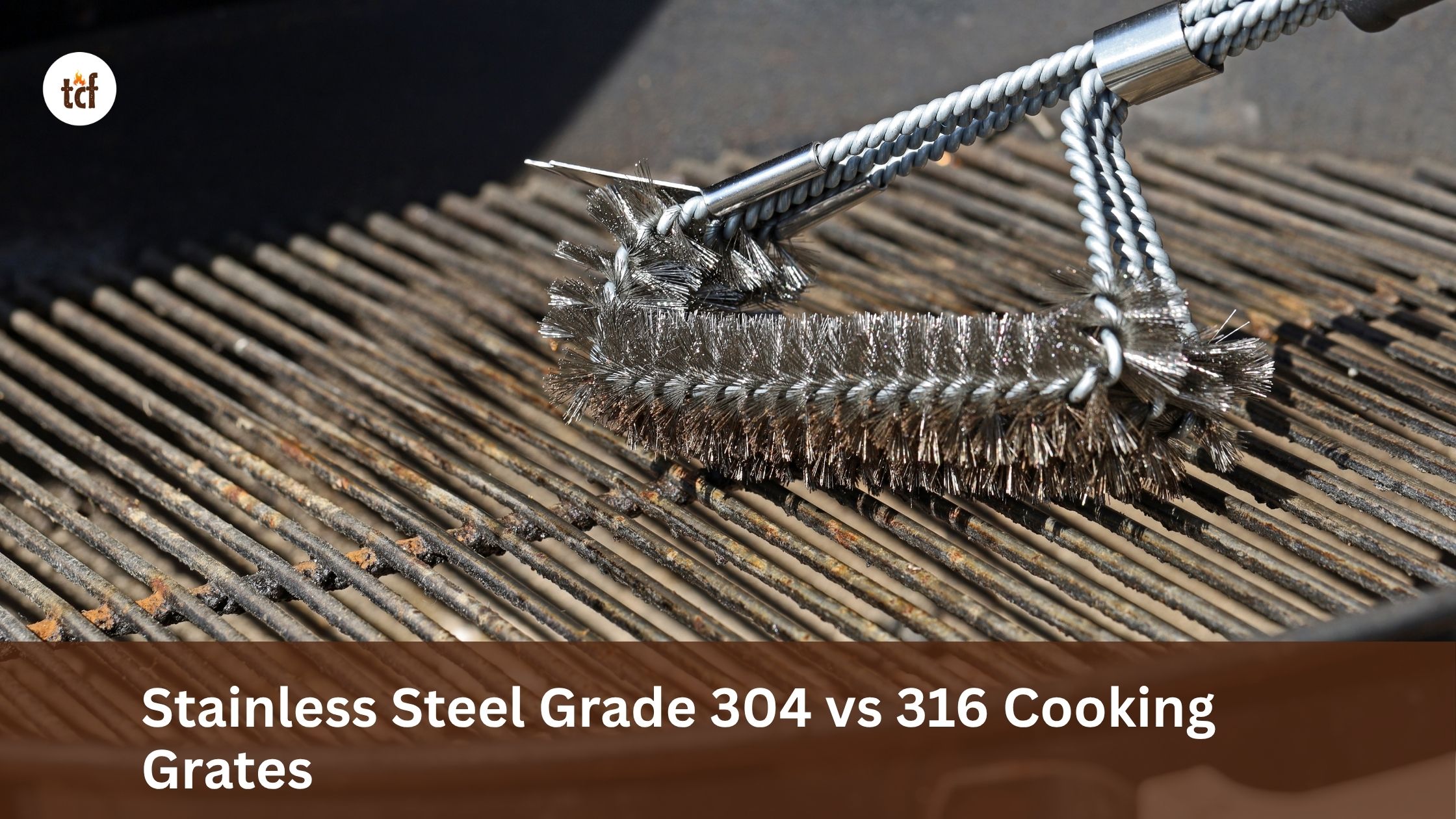


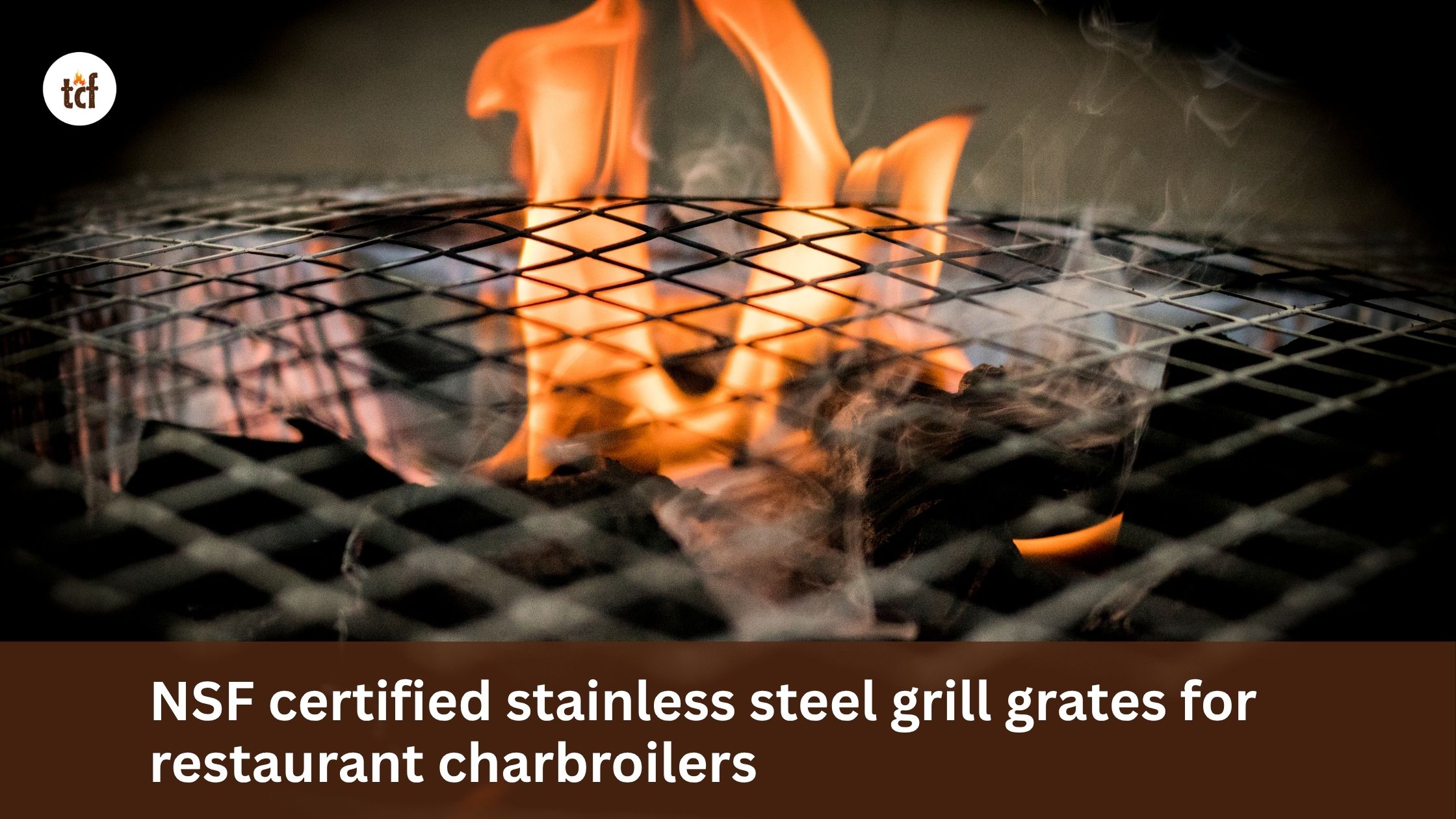
NSF certified stainless steel grill grates: NSF certification for a charbroiler applies to the equipment as a complete unit under NSF/ANSI 4, not to a grate sold on its own. What actually matters when you’re buying replacement or upgrade grates is the material behind them: 304 stainless steel, evaluated under NSF/ANSI 51, is the grade that meets food equipment standards for durability and corrosion resistance. A grate stamped “stainless steel” with no grade specified, or marketed loosely as “NSF certified” without a material certificate to back it up, is worth a closer look before it goes anywhere near a commercial kitchen.
Here’s what the certification actually covers, why the steel grade matters more than the NSF label alone, and what to check before you order.
Table of Contents
What NSF certification on a charbroiler actually means
NSF/ANSI 4 is the standard covering commercial cooking and hot food holding equipment as a whole, sanitation, cleanability, and construction requirements for the full unit. When a charbroiler is sold as “NSF certified,” that certification was earned by the complete assembled equipment, not by an individual replacement grate purchased separately later.
Grates and other food-contact components are separately evaluated under NSF/ANSI 51, the standard specifically for food equipment materials. This is the certification that actually matters when you’re sourcing grates on their own; it confirms the material itself meets food-contact safety and durability requirements, independent of whatever full unit it eventually gets installed in.
Why the stainless steel grade matters more than the label
This is where a real buyer-protection issue shows up, and it’s common enough to be worth taking seriously. 304 stainless steel, sometimes labeled 18/8 for its 18% chromium and 8% nickel content, is the internationally recognized standard for commercial food-contact surfaces, and it’s the grade FDA and NSF standards expect for equipment with direct food contact.
201 stainless steel looks similar on a polished surface and is often marketed as “food grade” too, sometimes at 20 to 30% below 304 pricing. The problem is compositional: 201 reduces nickel content and increases manganese to cut cost, which measurably reduces corrosion resistance. Under continuous high-heat, high-moisture charbroiler conditions, that difference shows up fast, suppliers marketing 201 as food grade commonly see visible rust appear within a year of installation, a real operational and hygiene problem, not just a cosmetic one.
FDA regulation 21 CFR 175.300 recognizes stainless steel as safe for food contact specifically when chromium content is 16% or higher. 304’s 18% chromium clears that threshold with room to spare. 201’s lower, variable chromium content makes it a materially weaker choice for a surface that’s in direct, repeated contact with food under heat.
What to actually request from a supplier
- A Material Test Certificate (MTC) with a heat number; this documents the actual chemical composition of the specific batch of steel, not just a generic grade claim. A supplier who can’t produce one, or offers a certificate with no heat number, is a real red flag.
- NSF/ANSI 51 documentation for the material itself, separate from any NSF/ANSI 4 certification the full charbroiler unit might carry.
- Confirmation of grade, 304 specifically, in writing, not just “stainless steel” as a generic descriptor on a spec sheet or product listing.
- Independent verification through NSF’s own certified product listings, rather than relying solely on a supplier’s own claim of certification.
A practical note on 304’s limits
304 stainless is the right call for charbroiler grates specifically, but it’s worth knowing its limits too. At extremely high sustained temperatures, above roughly 1,500°F, 304 can begin to discolor or scale. For the grate itself, this rarely matters in normal commercial charbroiler operation. For a firebox or other structural component exposed to more extreme, sustained heat, some manufacturers specify a different gauge or grade specifically to manage warping risk over years of continuous use. If you’re specifying a full charbroiler build rather than just replacement grates, confirm the grade used in each component, not just the grate.
Sourcing grill hardware alongside your fuel supply
If you’re outfitting a charbroiler setup and sourcing fuel at the same time, our round BBQ grill net covers our current stainless mesh grate accessory range, and our restaurant-grade charcoal specifications guide covers what to require from a fuel supplier with the same rigor you’d apply to equipment sourcing.
This article is for general informational purposes and isn’t a substitute for equipment compliance advice. NSF standards and material certification requirements can be updated; confirm current specifications directly with NSF and your equipment supplier before finalizing a purchase.
Frequently asked questions – NSF certified stainless steel grill grates
Does “NSF certified” on a grill grate mean the same thing as NSF certification on the whole charbroiler?
No. Full equipment certification (NSF/ANSI 4) applies to the assembled unit. A grate sold separately should be evaluated against NSF/ANSI 51, the food equipment materials standard, since it’s a component, not a complete appliance.
Is 201 stainless steel ever acceptable for restaurant equipment?
It can be, in dry, low-corrosion-risk zones like some service counters or dry storage fixtures. For a charbroiler grate, which sees continuous heat and moisture exposure, 304 is the standard for a reason, and 201 substituted in without disclosure is a legitimate quality and hygiene concern.
How can I verify a supplier’s stainless steel grade claim?
Request a Material Test Certificate with a heat number, which documents the actual tested composition of that specific batch. A supplier unwilling or unable to provide this for a claimed 304 product is worth questioning further.
Why does chromium content matter for food-contact stainless steel?
Chromium is what forms the passive oxide layer that gives stainless steel its corrosion resistance. FDA regulation recognizes stainless steel as food-safe specifically at 16% chromium or higher, which is why 304 (18% chromium) clears the bar comfortably while lower grades sit closer to, or under, that threshold.
Can 304 stainless steel grates handle full charbroiler heat without issue?
Generally yes, for normal commercial charbroiler operating conditions. Discoloration or scaling risk becomes a real factor only at sustained temperatures well above typical charbroiler grate exposure, more relevant to firebox construction than the grate surface itself.