


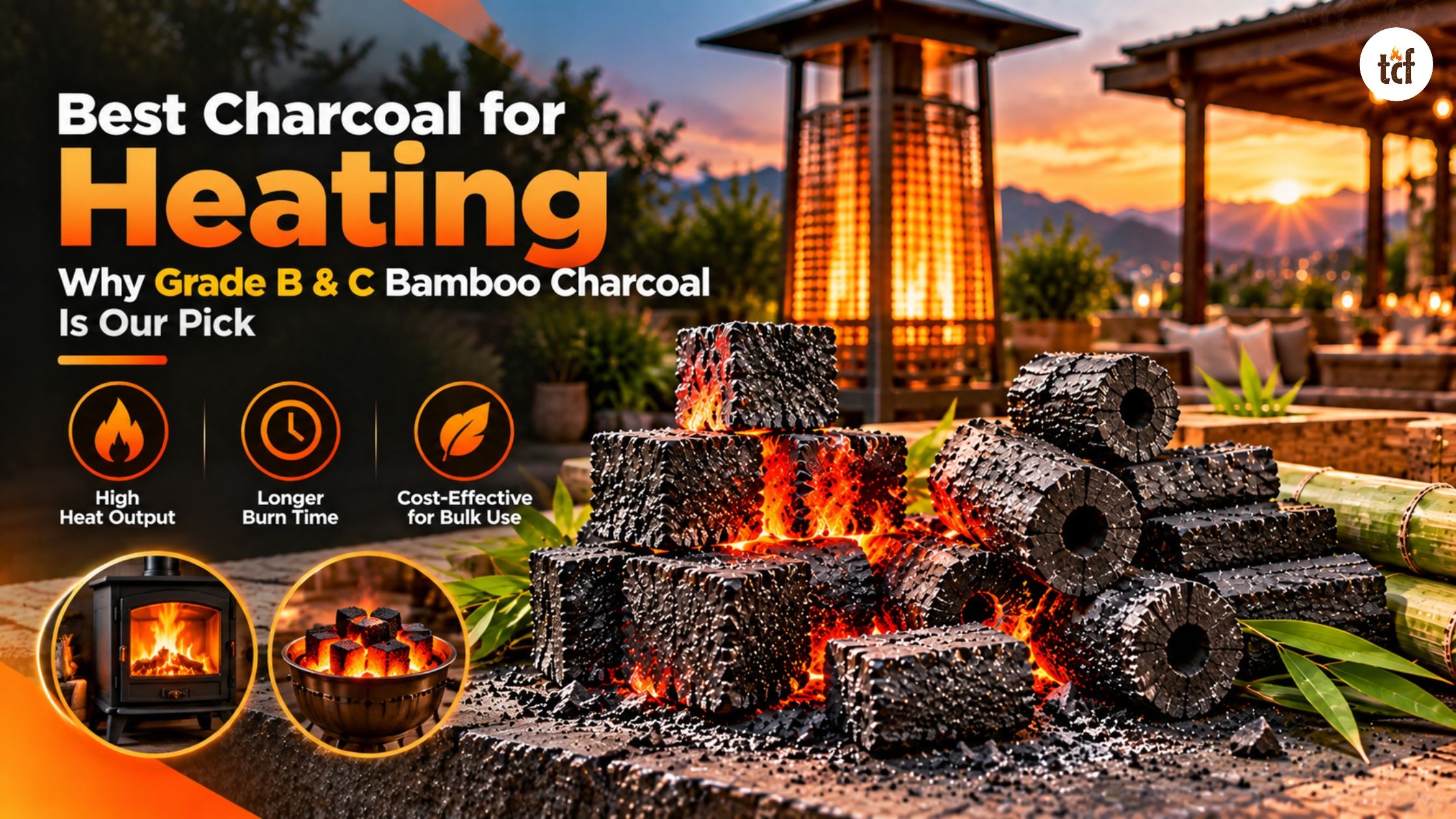
The best charcoal for heating is dense, binder-free, machine-made bamboo charcoal, burned only outdoors or in a sealed stove with a flue that its maker approves for charcoal. For most heating uses, Grade B or Grade C bamboo charcoal gives better value than Grade A, as long as you know what those grades mean in lab terms.
Heating asks different things of charcoal than grilling. Nobody inspects the charcoal in a brazier, so you can stop paying for looks and focus on steady heat, clean burning and cost.
Key takeaways
- Never heat a room with an open charcoal burner. Every charcoal gives off carbon monoxide, including low-smoke charcoal.
- Outdoors or a charcoal-approved flued stove only. Those are the only safe settings.
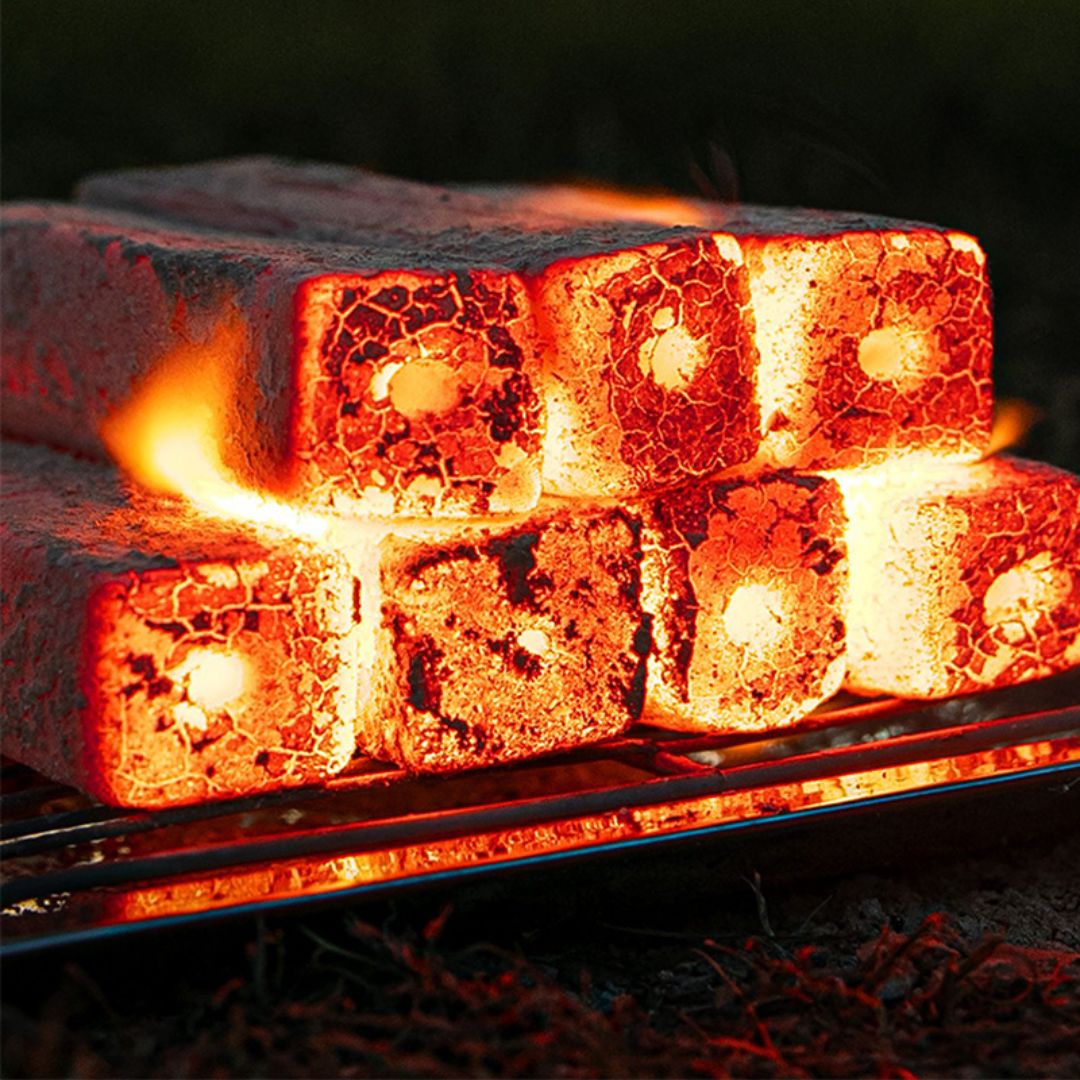
- Extruded bamboo charcoal suits heating best. It is uniform, dense and made without binders.
- Grades are set by lab results. At The Charcoal Factory, A, B and C differ in ash, fixed carbon and firing temperature, not just appearance.
- Match the grade to the setting. Grade B suits heating near people, and Grade C suits open-air and industrial heat.
- Compare cost per hour of heat, not price per bag.
Table of Contents
Where can you safely heat with charcoal?
Only in open air, or in a sealed solid-fuel stove with a working flue whose manufacturer approves charcoal. Never in an open burner inside a home, tent, vehicle or garage.
This rule comes first because low smoke is easy to mistake for safety. Smoke comes from volatile compounds, which high-temperature charcoal has very little of. Carbon monoxide comes from the carbon itself burning, so even the cleanest-looking charcoal still produces it.
The U.S. Consumer Product Safety Commission is clear: charcoal should never be used indoors, even if ventilation is provided, and it keeps producing CO until it is completely extinguished (CPSC). When the CPSC revised the warning on charcoal bags, it deliberately removed older wording that implied charcoal could be burned indoors safely with ventilation (Federal Register).
| Setting | Safe for charcoal heat? | Why |
| Open burner in a living room or bedroom | Never | CO builds up with no smell or warning |
| Tent, camper, car or van | Never | A small air volume reaches dangerous CO levels quickly |
| Garage or shed, even with the door open | Never | CO collects and can drift into the house |
| Outdoor patio, courtyard or campsite | Yes | Open air disperses CO. Keep the burner away from doors, windows and vents |
| Sealed stove with a professionally fitted flue | Only if the stove maker approves charcoal | Combustion gases leave through the chimney. Have the flue inspected every year |
Winter power cuts are a known danger point, and the CPSC has issued its warnings during storms for exactly this reason: people reach for a grill or brazier to keep warm indoors. If you sell heating charcoal, put this warning where customers will see it, not only on the bag.
Fit at least one working CO alarm in every home, and in any room next to an outdoor heating area. If you are not sure a space is safe for charcoal, treat it as unsafe.
What makes a charcoal the best charcoal for heating?
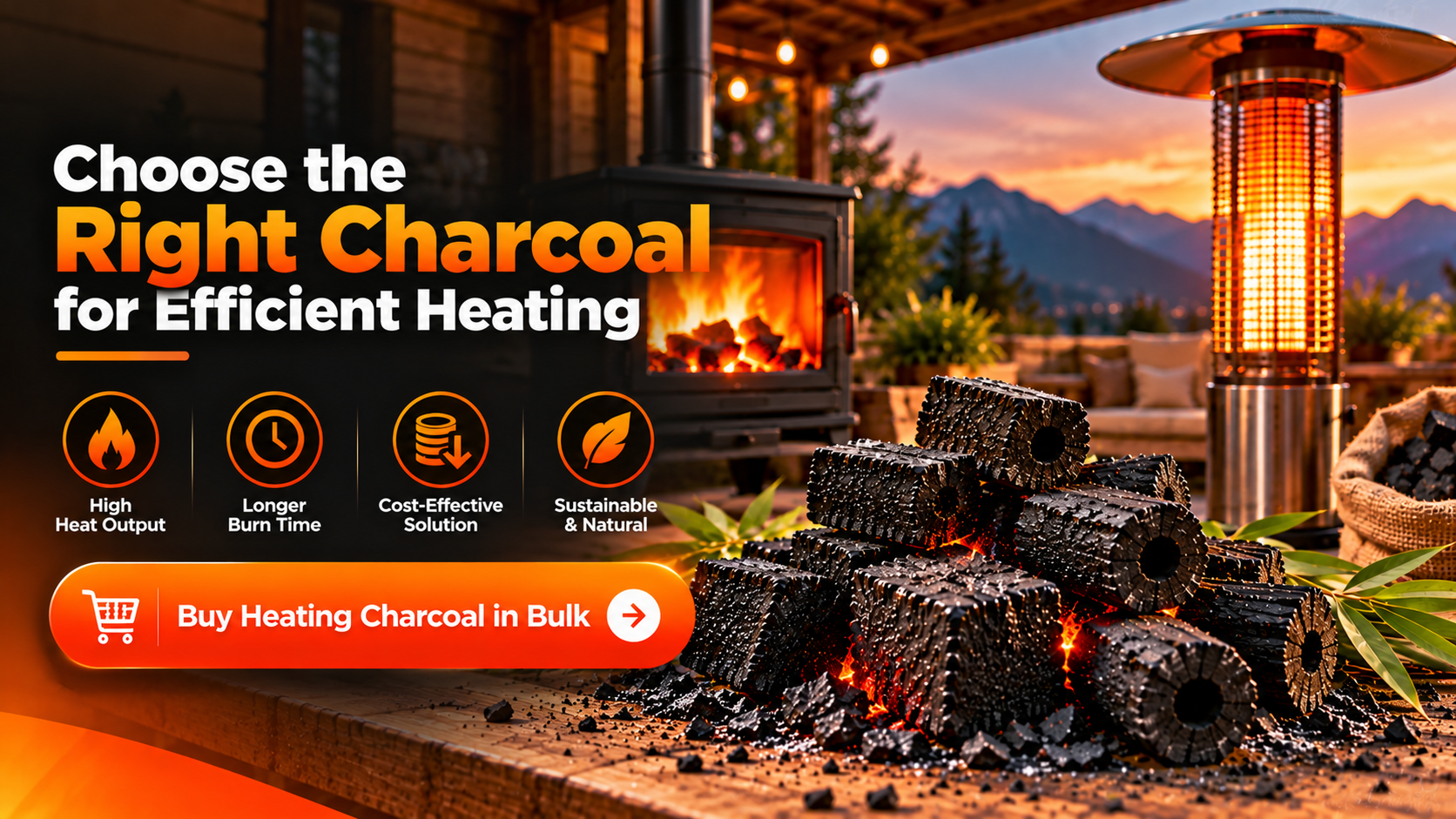
Judge heating charcoal on three things, in this order:
- It burns steadily and doesn’t die out. Dense, uniform pieces with high fixed carbon glow at an even rate. Irregular lumps leave uneven air gaps, so some pieces burn out while others barely catch.
- It burns cleanly. Low volatile matter means little smoke once lit. No chemical binders, accelerants or coal fillers means no strange smells. Low sparking matters near furniture and fabrics. None of this reduces carbon monoxide.
- It gives heat at a sensible cost. Compare the cost per hour of heat, not the price per bag.
Appearance is not on the list. A heating fire is judged only by how long and how steadily it glows.
How do common charcoals compare as heating fuel?
| Fuel | How it is made | How it heats | Smoke and additives | Verdict for heating |
| Hardwood lump | Wood carbonized in a kiln | Hot but uneven; small pieces burn out fast and can spark | No binders; smokes if under-carbonized | Good but inconsistent |
| Pillow briquettes | Charcoal dust pressed with binders; some brands add fillers or ignition aids | Steady but shorter; heavy ash can choke airflow | Additives can add smell | Fair; read the ingredients |
| Machine-made bamboo charcoal | Bamboo residue extruded into dense rods without binder, then carbonized | Uniform, long and stable | Binder-free; very low smoke once lit | Best balance |
| Binchotan | Hardwood fired at very high temperature | Very long, very clean | Minimal | Excellent but expensive for heating |
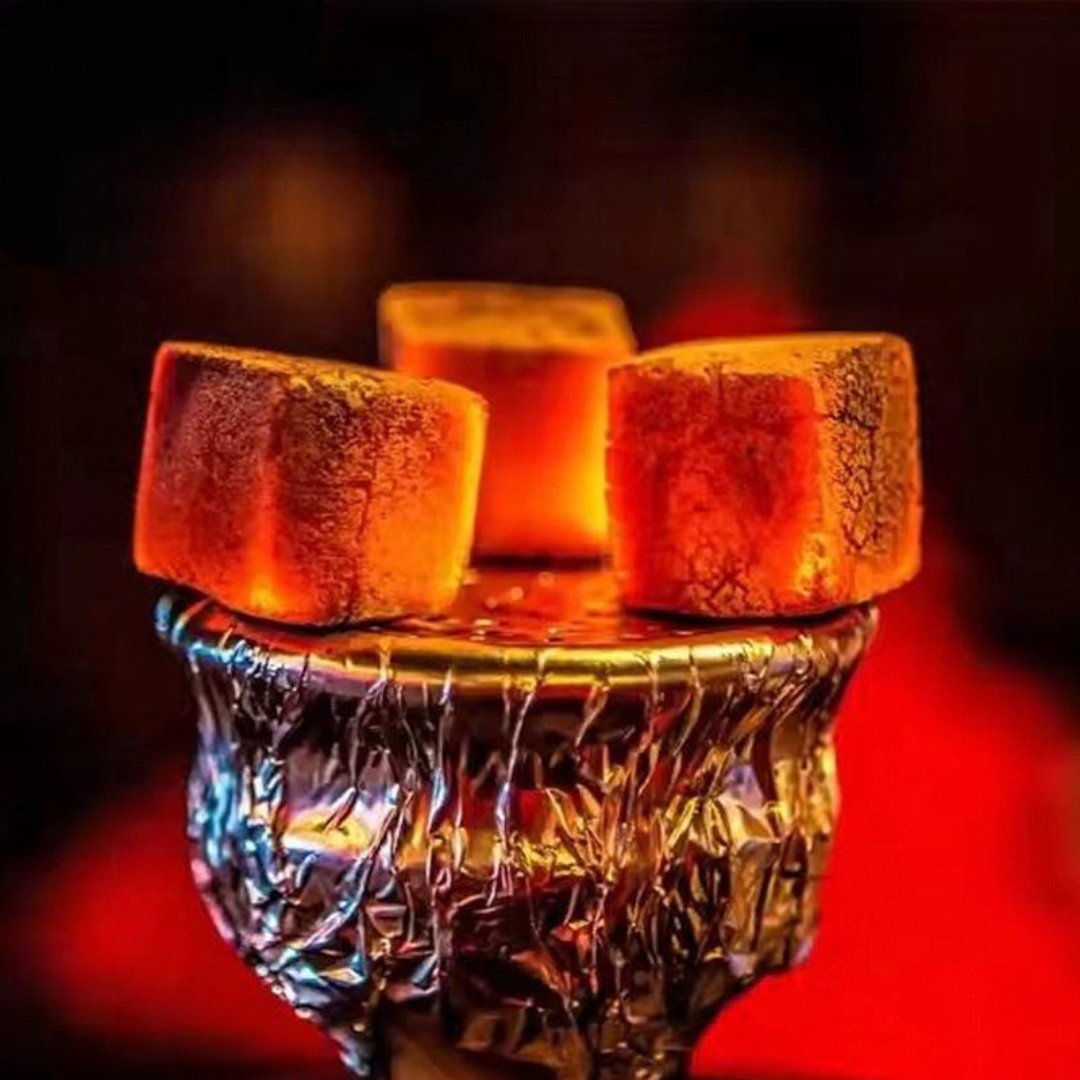
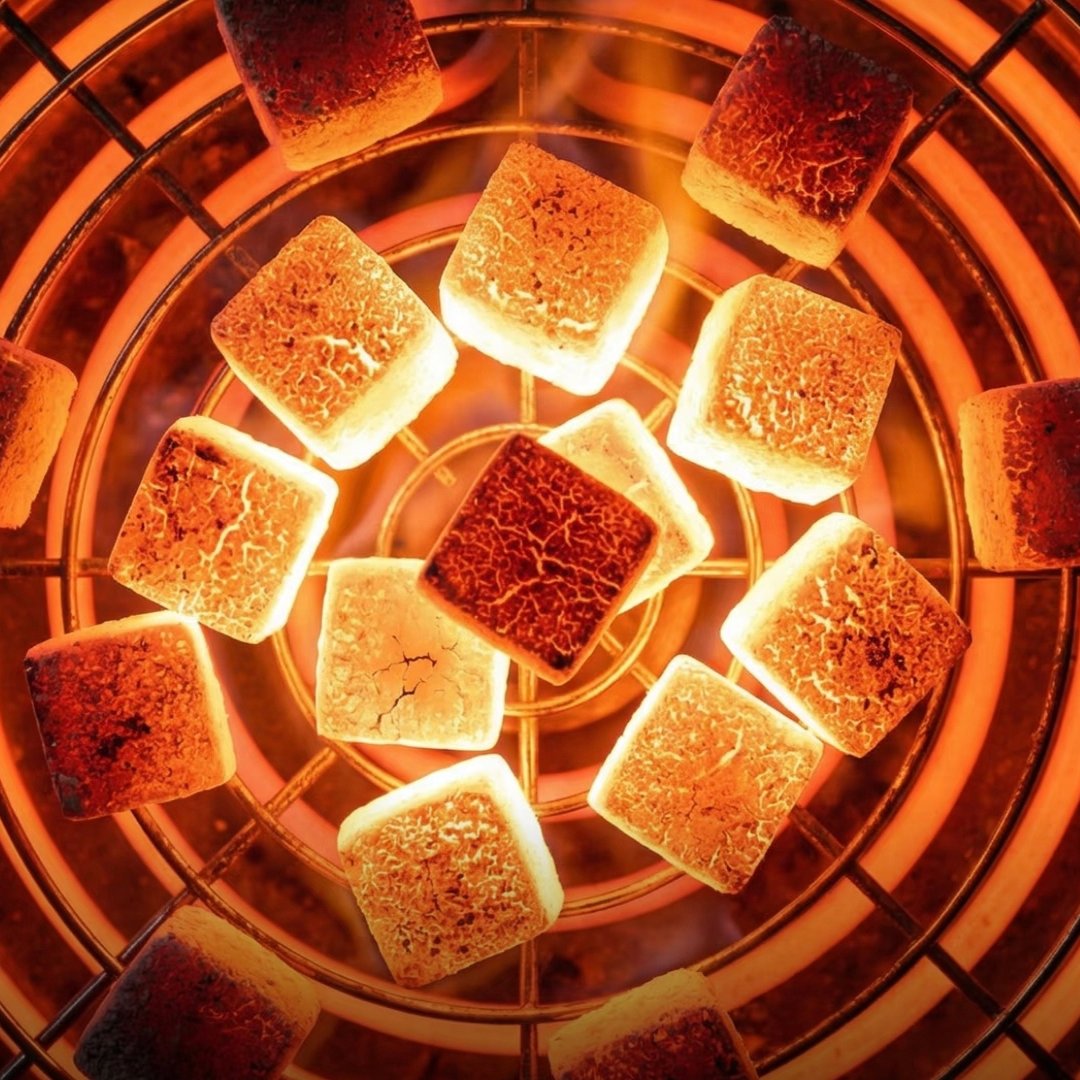
| Coconut shell cubes | Shell charcoal powder pressed into small cubes | Even and clean, but a small format | Low in good brands | Built for shisha |
Coal is sometimes sold alongside charcoal, but it is a mined fossil fuel with sulfur and other pollutants, and it should not be burned near people.
Machine-made bamboo charcoal sits in the sweet spot. It is as clean as good lump and as uniform as briquettes, and its long rods suit braziers and stoves. For why bamboo makes such consistent fuel, see the best material for making charcoal.
What do Grade A, B and C bamboo charcoal actually mean?
At The Charcoal Factory, grades are set by laboratory results, not by appearance. Grade A has the lowest ash and highest fixed carbon, and Grade C is fired at a medium temperature and carries more ash.
| Grade A | Grade B | Grade C | |
| Firing temperature | High | Between A and C | Medium |
| Ash | Lowest | Low | About 8% |
| Fixed carbon | Highest | Between A and C | 65–70% |
| Volatile matter | Lowest | Low | Higher |
| Price | Highest | Lower than Grade A | Lowest |
| Best suited to | Retail BBQ packs, restaurants, shisha | Heating near people, everyday BBQ | Outdoor heating, industrial heat supply, bulk supply |
Full laboratory test data for Grade A and Grade B pure bamboo charcoal is available upon request.
When is Grade B or C the better buy for heating?
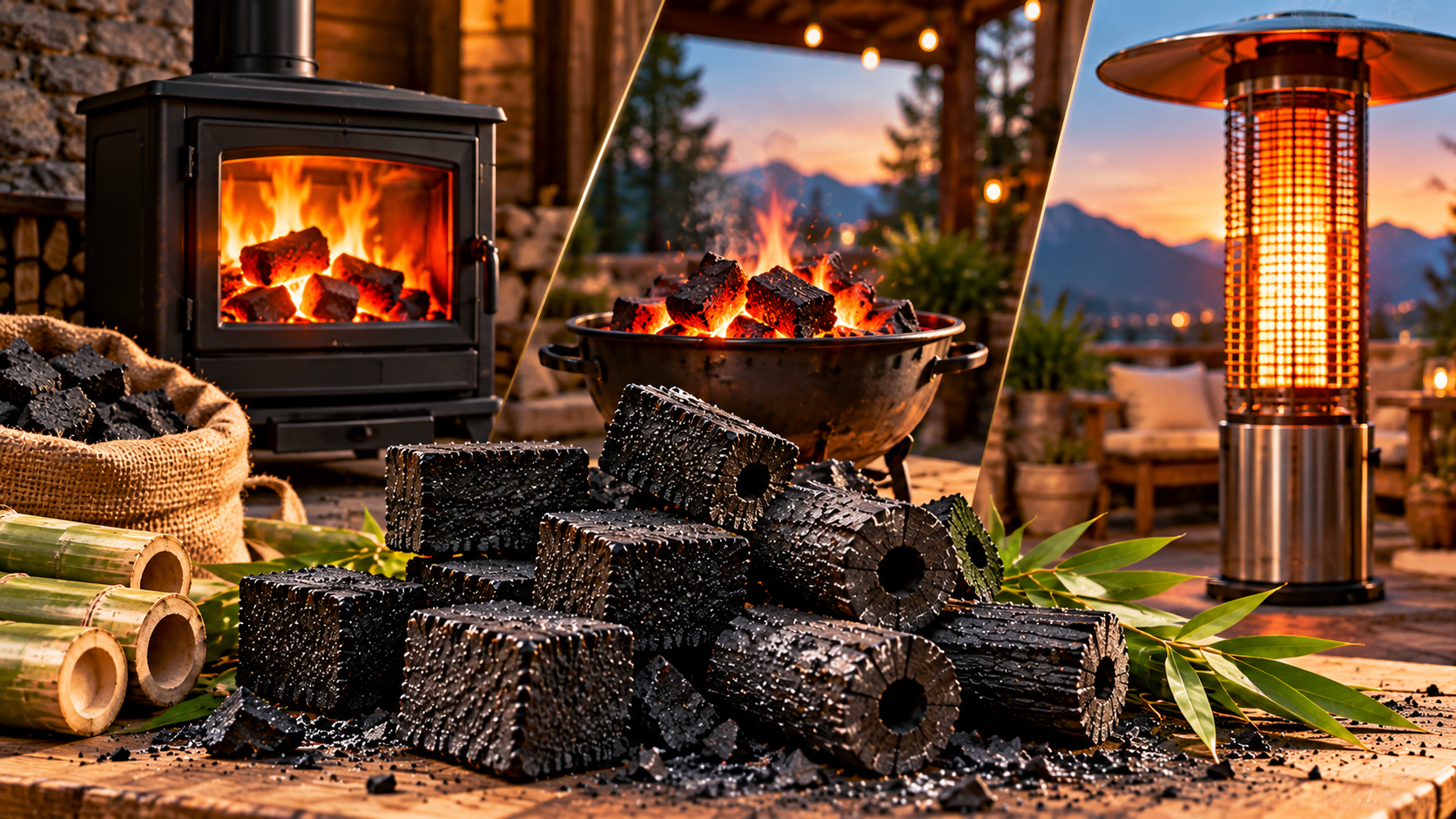
For heating, you pay for heat and clean burning, not for perfect-looking sticks. That makes the lower grades worth a serious look, as long as the trade-offs fit the setting.
- Grade B for heating close to people. Patio braziers, outdoor café heaters and charcoal-approved stoves benefit from low smoke. Grade B keeps most of Grade A’s clean burn at a lower price.
- Grade C for open-air and industrial heat. Medium-temperature charcoal keeps more volatile matter, so it smokes more while lighting and leaves more ash. That is fine in open air with good airflow, or in industrial and agricultural heating where cost per unit of heat is the main concern.
- Grade A when appearance or a premium label matters. Retail heating packs sold on the shelf, or gift and hospitality uses where the charcoal is on show.
Load any grade by weight rather than by piece count. Broken or shorter pieces burn faster individually, but the same weight of the same charcoal gives the same heat.
See the full range, including our medium-temperature bamboo charcoal, on our wholesale bamboo charcoal page. For how kiln temperature changes ash and smoke, see bamboo charcoal quality.
Where is charcoal used for heating?
Heating charcoal is sold into a handful of distinct uses, and each one points to a different grade:
- Hospitality outdoor heating. Restaurants, cafés and hotels use braziers and fire bowls on terraces and rooftops through cooler months. Guests sit close to the fire, so low smoke matters, which makes Grade B the usual fit.
- Traditional braziers. Many cultures use charcoal braziers, from Japanese-style hibachi to Middle Eastern and Central Asian charcoal burners. Used outdoors or in open-sided spaces, they suit Grade A or B where the brazier sits near people.
- Charcoal-rated stoves. Sealed stoves with a professionally fitted flue, where the manufacturer approves charcoal. Grade B gives a clean burn at a sensible price.
- Camping and outdoor events. Fire pits and portable braziers in open air, where Grade C’s extra smoke is less of a concern.
- Industrial and agricultural heat. Open-air or ducted heating where cost per unit of heat is the main test. This is where Grade C fits best.
Labelling rules differ by market. In the United States, charcoal packaging must carry the CPSC carbon monoxide warning. Other markets have their own requirements, so check them with your importer before packaging is printed.
How do you compare the cost of heating charcoal?
Work out the cost per hour of heat, because a cheaper charcoal that burns out faster can cost more per evening.
Cost per hour of heat = landed price per kg ÷ hours of usable heat per kg
Because our grades differ in lab results, a lower grade is not simply the same charcoal at a lower price. More ash means slightly less carbon in each kilogram, so it gives somewhat less heat per kilogram. Whether Grade B or C still comes out cheaper per hour depends on the price gap, which is why a side-by-side test is worth doing:
- Burn equal weights of two grades in the brazier or stove your customers actually use.
- Keep the vents at the same setting for both.
- Time how long each gives useful warmth, not just how long it glows.
- Divide the price per kilogram by the hours you recorded.
Whichever grade gives the lowest cost per hour at an acceptable level of smoke and ash is the right one for that market.
Where is charcoal used for heating?
Heating charcoal is sold into a handful of distinct uses, and each one points to a different grade:
- Hospitality outdoor heating. Restaurants, cafés and hotels use braziers and fire bowls on terraces and rooftops through cooler months. Guests sit close to the fire, so low smoke matters, which makes Grade B the usual fit.
- Traditional braziers. Many cultures use charcoal braziers, from Japanese-style hibachi to Middle Eastern and Central Asian charcoal burners. Used outdoors or in open-sided spaces, they suit Grade A or B where the brazier sits near people.
- Charcoal-rated stoves. Sealed stoves with a professionally fitted flue, where the manufacturer approves charcoal. Grade B gives a clean burn at a sensible price.
- Camping and outdoor events. Fire pits and portable braziers in open air, where Grade C’s extra smoke is less of a concern.
- Industrial and agricultural heat. Open-air or ducted heating where cost per unit of heat is the main test. This is where Grade C fits best.
Labelling rules differ by market. In the United States, charcoal packaging must carry the CPSC carbon monoxide warning. Other markets have their own requirements, so check them with your importer before packaging is printed.
Also read –
Quick Light Vs Natural Coconut Charcoal
How to Test the Moisture Content of BBQ Charcoal
How do you get a long, safe burn from heating charcoal?
Even the best charcoal for heating performs badly in a poorly managed fire. These habits matter as much as the grade:
- Light it outdoors. Use a chimney starter or natural firelighters. Lighter fluid struggles with dense rods and adds smell.
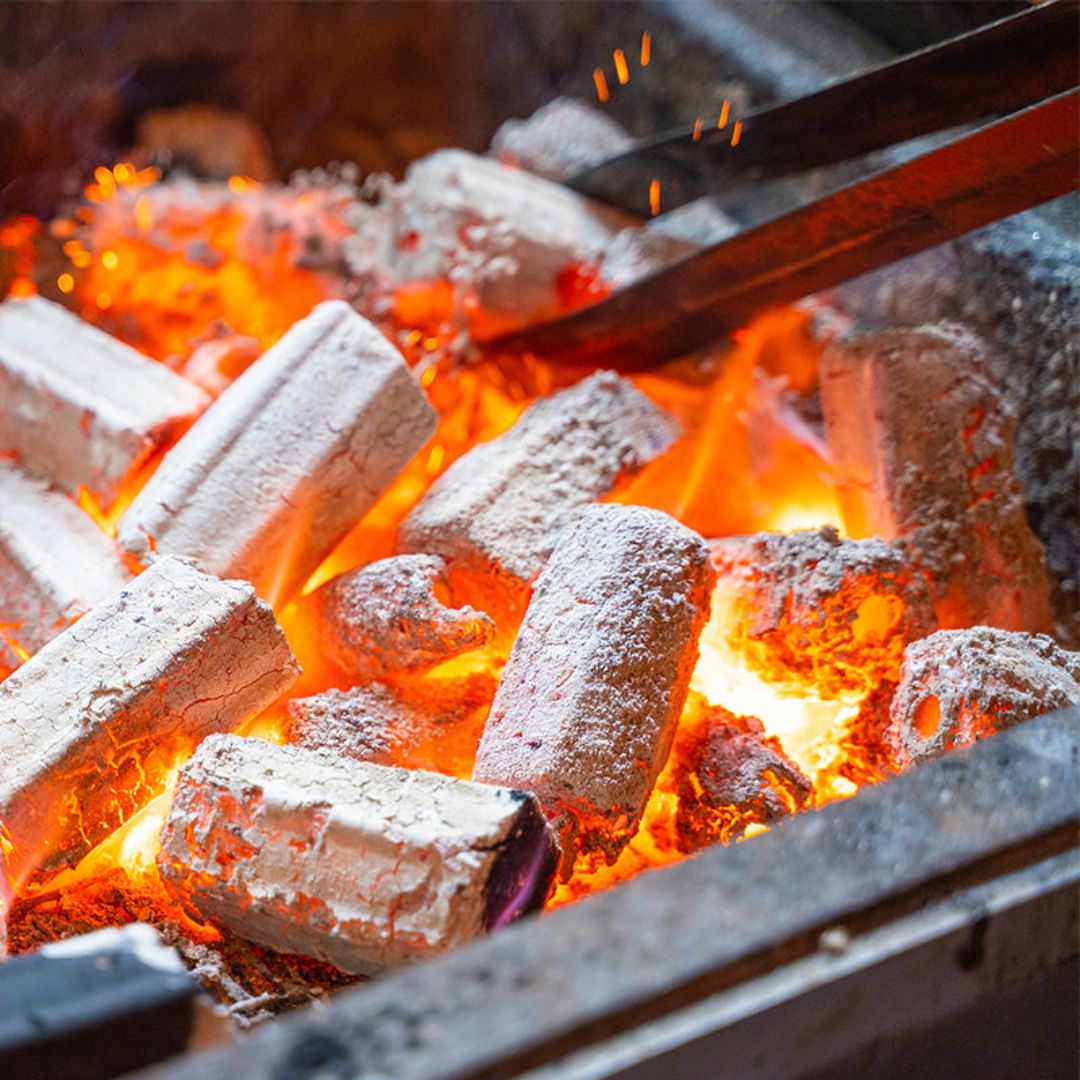
- Wait for the coals to grey over. The useful heating phase starts once every piece is coated in grey ash and glowing.
- Bed it properly. Set the charcoal on a grate or a bed of ash so air reaches it without the fire racing.
- Moderate the airflow. Less air stretches the burn, but starving the fire makes it burn dirty and cool. Aim for steady, not smothered.
- Top up with lit charcoal. Adding cold fuel cools the bed and can smother a dying fire.
- Keep fabrics and furniture well clear, and never leave a burning brazier unattended.
- Treat ash as live. Charcoal can stay hot for a long time after it looks dead. Store ash in a metal container outdoors, away from buildings, until it is completely cold.
Damp charcoal lights slowly and smokes more, which is a bigger problem for heating than for a quick grill. Our guide on how to test charcoal moisture content shows how to check a delivery.
What should distributors check before buying heating charcoal?
If you supply heating markets, the grade conversation is where margin is made or lost. Six checks protect you:
- A certificate of analysis for every grade. Fixed carbon, ash, moisture and volatile matter, so you know exactly what separates A, B and C.
- The grading basis in writing. Appearance, lab results or both. Put the answer in the contract so there is no dispute on arrival.
- A binder-free declaration confirming no starch, coal dust, nitrates or mineral fillers in machine-made charcoal.
- A side-by-side burn sample of the grades you are considering, tested in the equipment your customers use.
- Packaging suited to the grade. Lower grades with more broken pieces need inner bags or tighter cartons so fragments don’t turn to dust in transit.
- The right carbon monoxide warning for your market. In the United States, charcoal packages filled on or after November 1997 must carry the CPSC carbon monoxide warning, which states that burning charcoal inside can kill and must never be done in homes, vehicles or tents (CPSC). Check the equivalent rules in your destination market before packaging is printed.
For how ash, moisture and volatile matter compare across lump charcoal grades, see our bulk lump charcoal specifications.
Source heating charcoal by the container
The Charcoal Factory supplies machine-made bamboo charcoal in Grade A, B and C, graded by laboratory results, from one 20GP container with OEM packaging. Ask for a mixed-grade sample and run the side-by-side test before you commit. See our wholesale bamboo charcoal range, compare formats in our guide to the types of charcoal, or email info@thecharcoalfactory.com for grade specifications and pricing.
Frequently asked questions – best charcoal for heating
Can I use smokeless charcoal indoors?
No. “Smokeless” means low in volatile compounds, not free of carbon monoxide. All charcoal produces CO while it burns, and opening a window does not make indoor use safe.
Is bamboo charcoal good for heating?
Yes, when it is machine-made and burned outdoors or in a charcoal-approved flued stove. Its dense, uniform rods give a steady glow with little smoke once lit.
Is Grade C charcoal worse than Grade A?
At The Charcoal Factory, yes in lab terms: Grade C is fired at a medium temperature and has more ash. That makes it a poor choice for a restaurant grill but a sensible, lower-cost choice for open-air or industrial heating.
Is charcoal a cheap way to heat a home?
Usually not. Firewood, gas and electric heating generally cost less per unit of heat. People use charcoal for outdoor warmth, charcoal-designed stoves, tradition, or industrial and agricultural heat.
Is coal better than charcoal for heating?
Coal burns longer, but it is a fossil fuel that releases sulfur and other pollutants. It should not be burned in braziers or anywhere near people.