


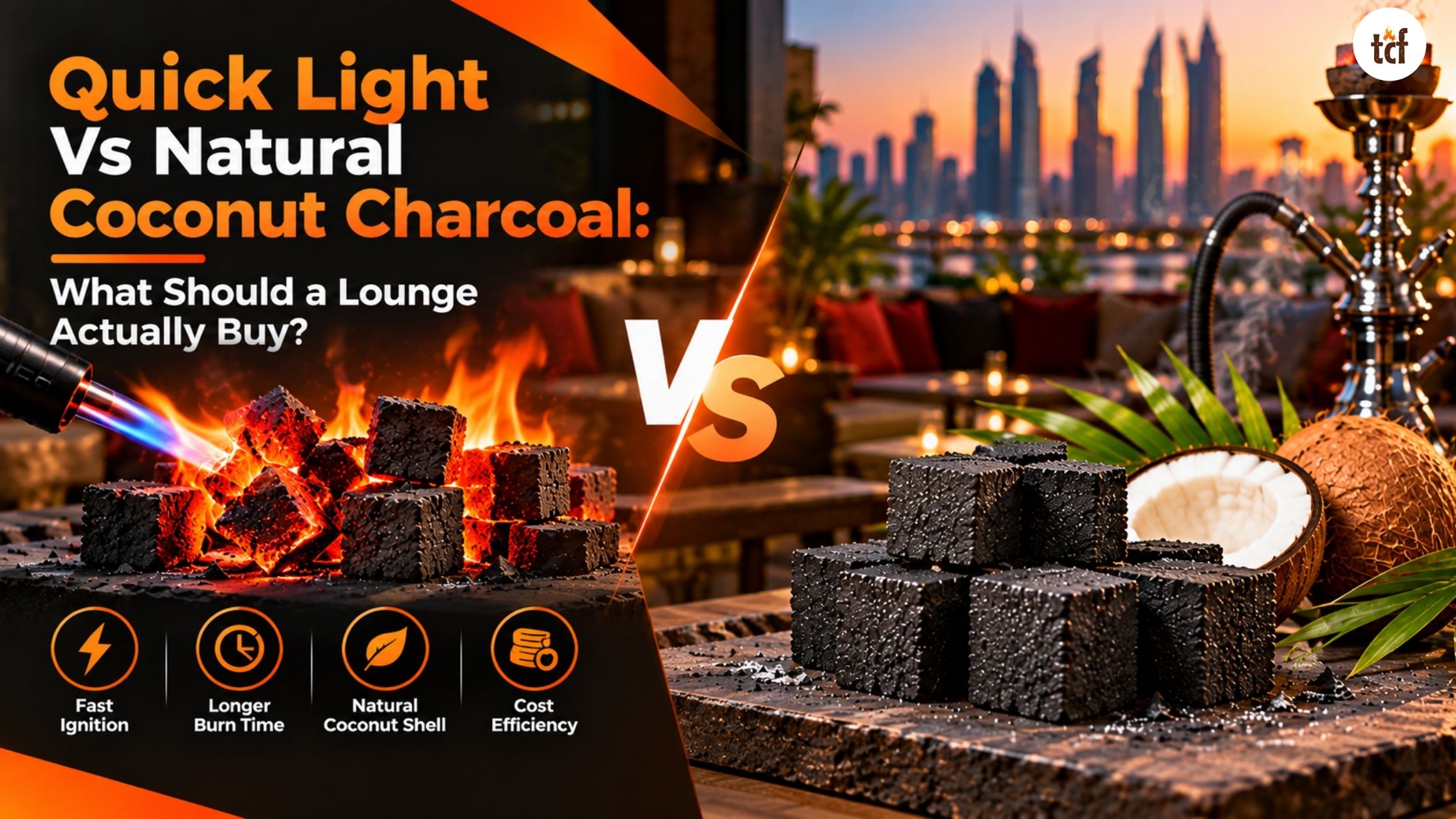
Quick Light Vs Natural Coconut Charcoal – A hookah lounge should run natural coconut charcoal as its house coal and keep quick-light charcoal as a backup for specific situations. Natural coals last longer, taste cleaner and produce less carbon monoxide, while quick-light earns its place where there is no burner or no time to preheat.
The choice is less about which coal is “better” and more about how your venue runs: how many bowls go out at peak, whether you have a proper coal station, and who stands at it.
Key takeaways
- Natural coconut for the main floor. It gives longer, steadier heat with no chemical taste.
- Quick-light for the exceptions. Terraces without power, outside events and a burner failure mid-service.
- CO is the deciding factor indoors. In a lab test, quick-light produced more than twice the carbon monoxide of natural charcoal.
- Protect the coal station. The staff member lighting coals has the highest exposure, so extraction and CO alarms belong there first.
- Compare cost per bowl-hour. Price per kilogram hides how fast each coal is used up.
- Switching takes planning. Natural coals need burner capacity and a trained routine before the main floor changes over.
Table of Contents
What is the Difference Between Quick Light Vs Natural Coconut Charcoal?
The difference is the ignition additive. Natural coconut charcoal has none, so it needs a burner. Quick-light charcoal is treated with an accelerant so it catches from a hand lighter.
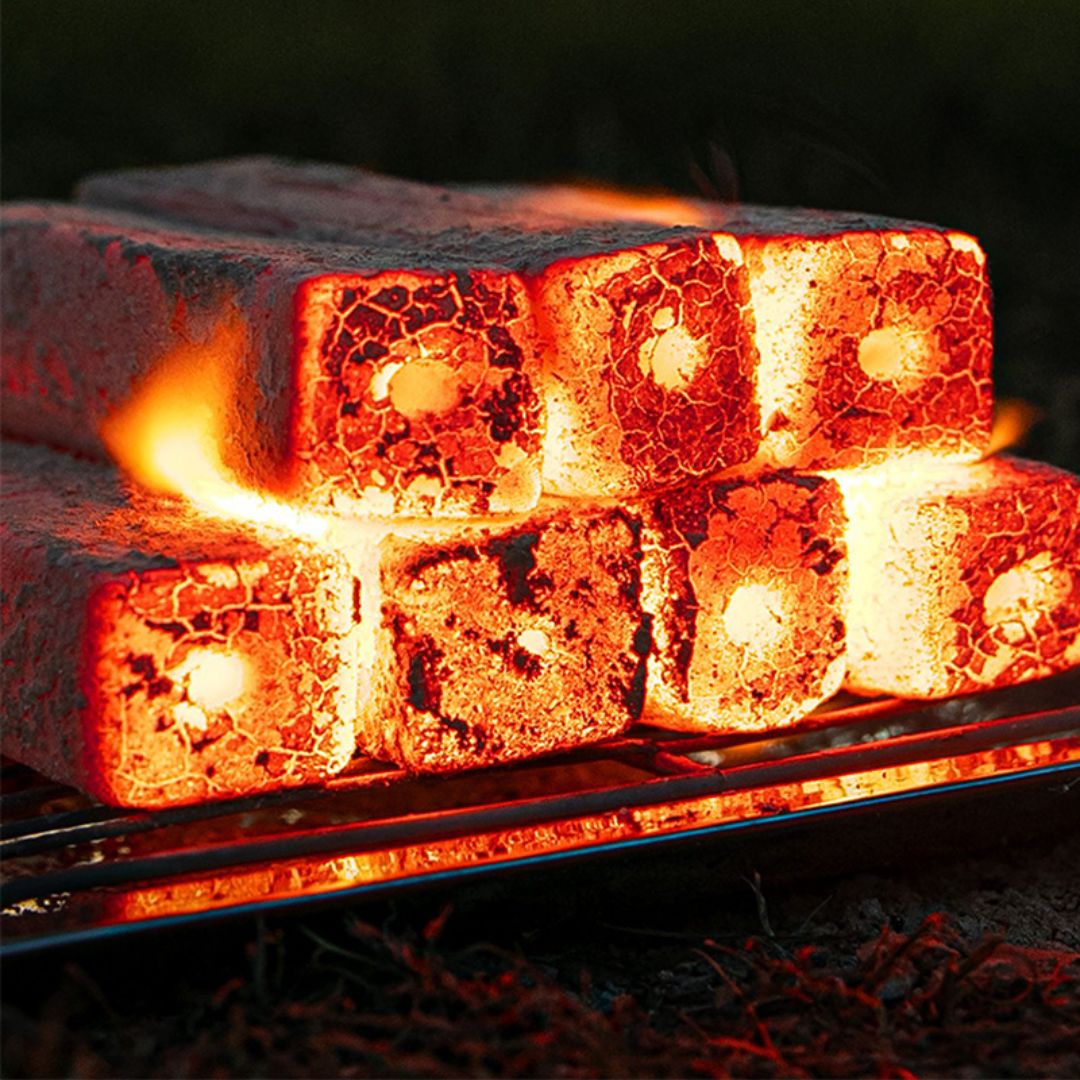
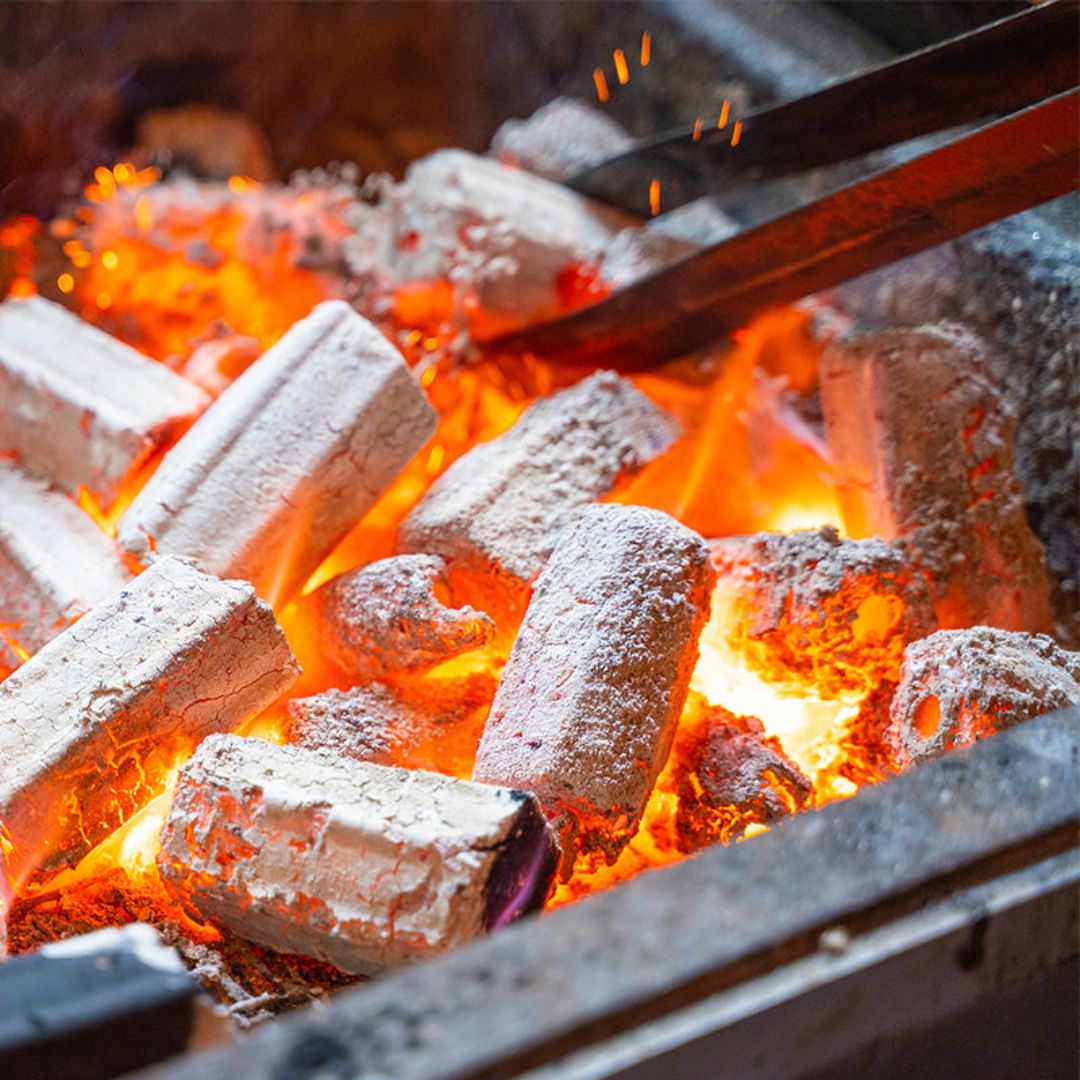
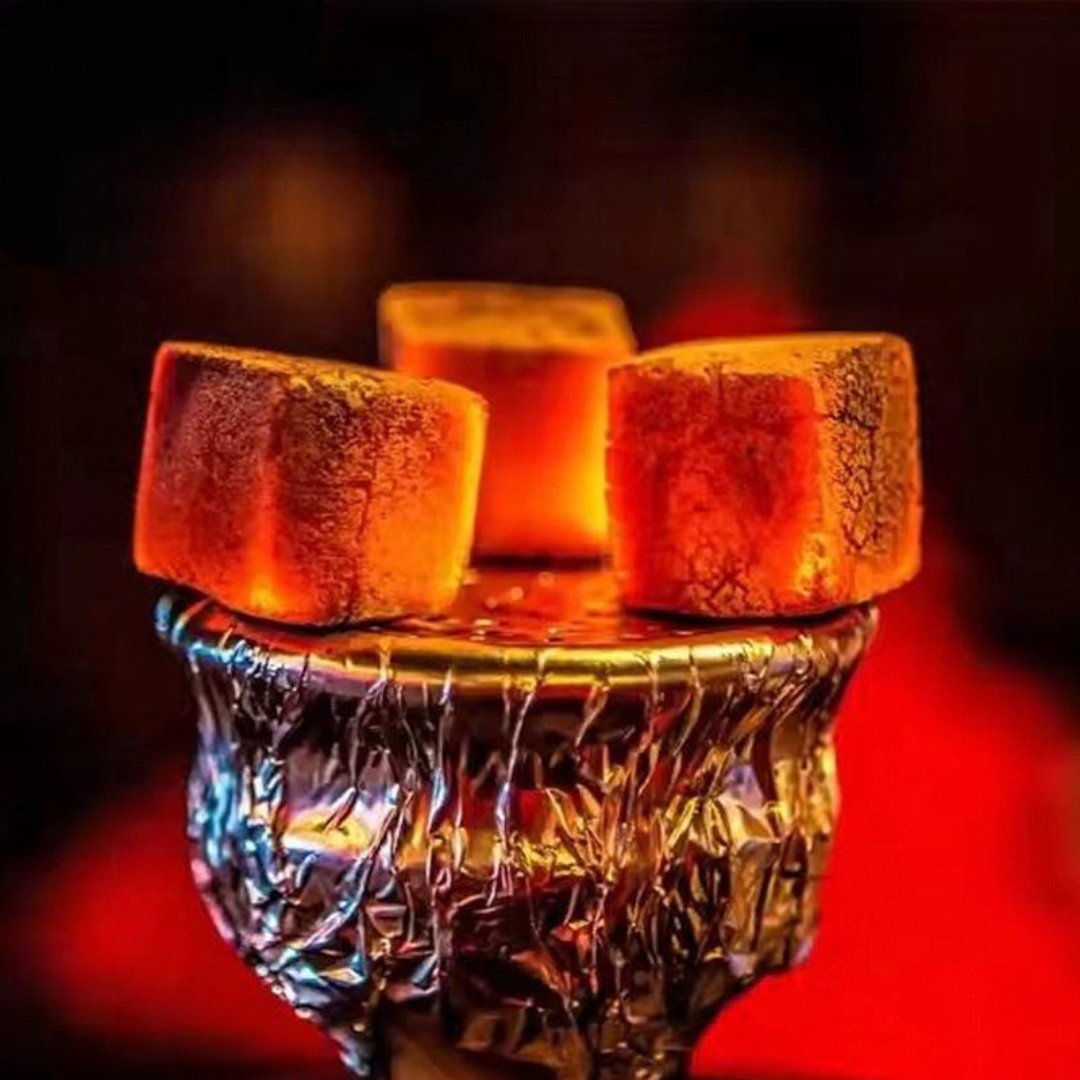
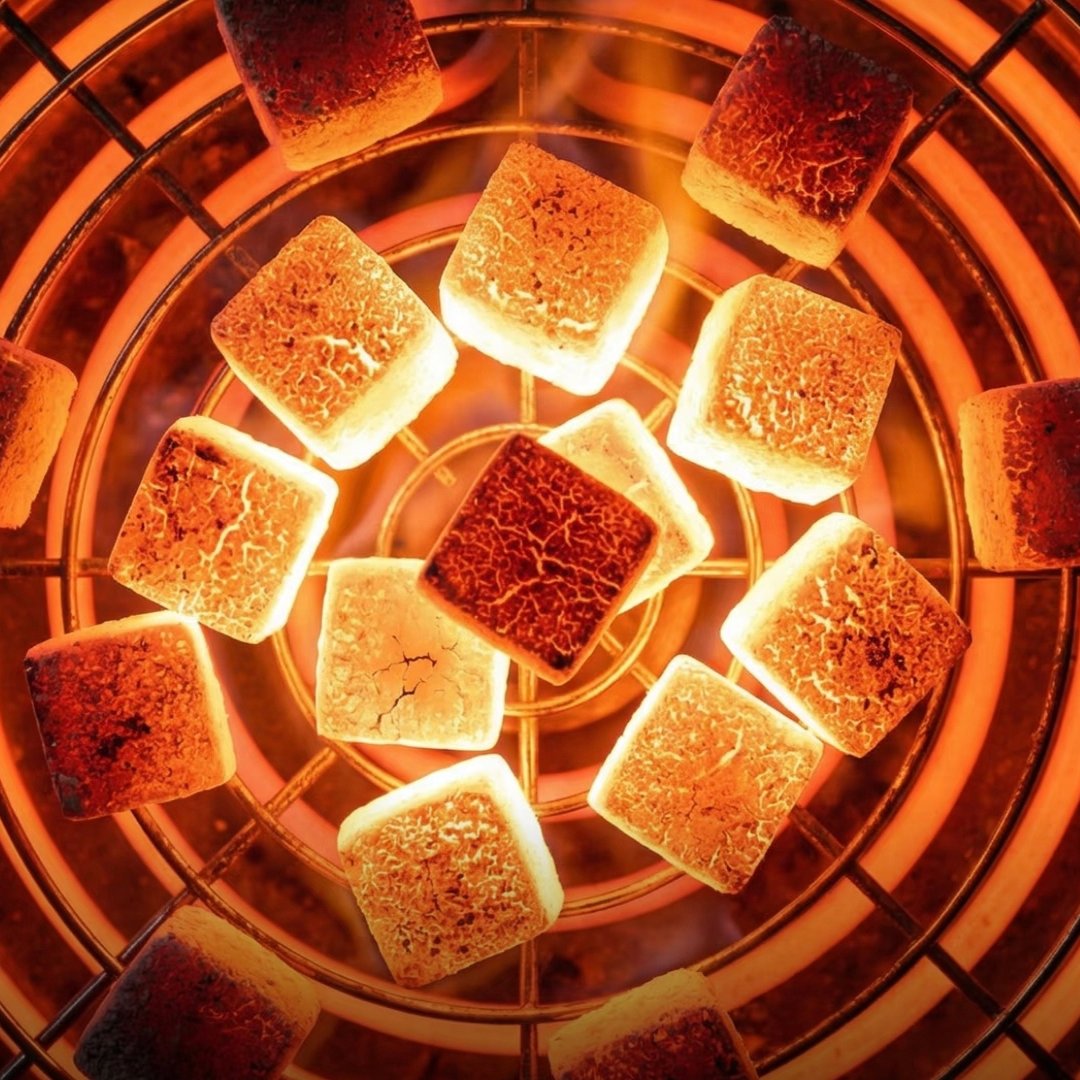
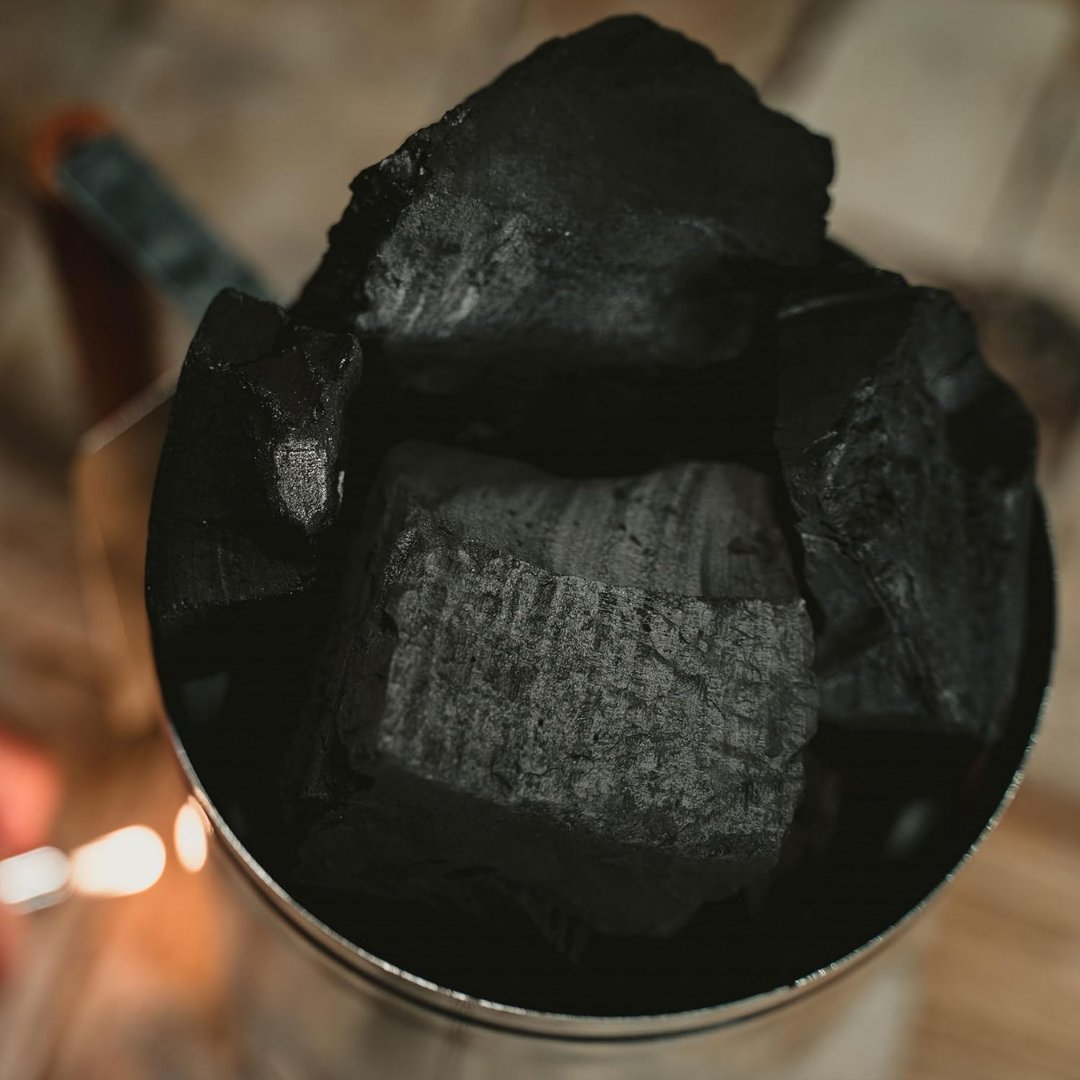
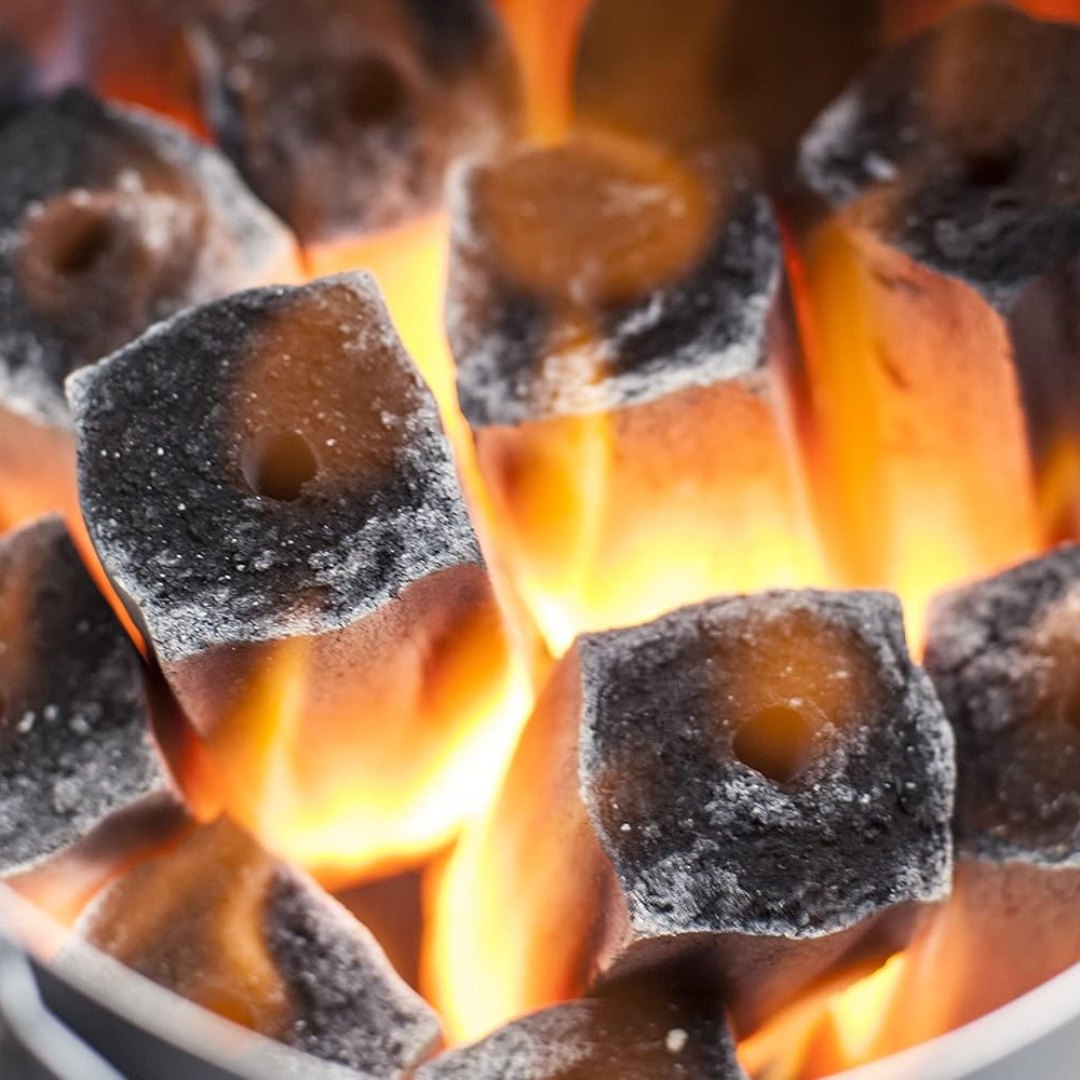
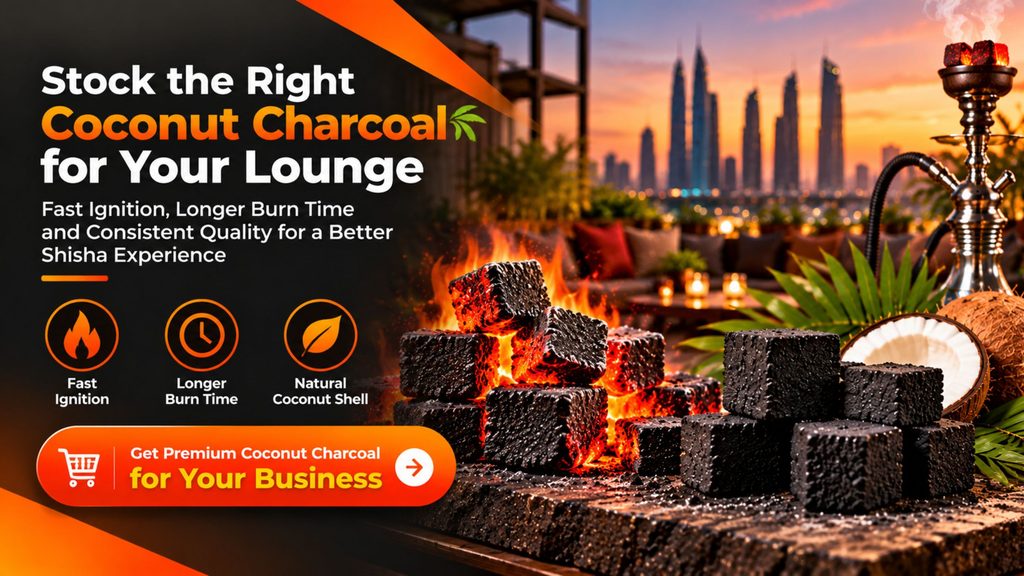
Natural coconut charcoal is carbonized coconut shell, ground and pressed into cubes or flats with a small amount of binder, usually food-grade starch. With nothing added to help it ignite, it lights slowly but burns with a steady heat and almost no smell.
Quick-light charcoal is pressed charcoal, usually in round discs, coated or mixed with an ignition compound. Retailers commonly describe this as saltpeter (a nitrate) or a sulfur-based accelerant, but brands rarely publish their exact formulas. Touch a lighter to the edge and it sparks and spreads across the disc within seconds.
| What a lounge cares about | Natural coconut | Quick-light |
| How it lights | Burner needed, several minutes | Hand lighter, seconds |
| Burn length | Longer, steady heat | Shorter, hotter start then faster decline |
| Taste | Neutral | Chemical note if served before the coating burns off |
| Smell at ignition | Little or none | Sharp smell and sparks |
| Ash | Less, holds its shape | More, powdery |
| Carbon monoxide | Lower | Higher (see below) |
| Equipment | Burner, tongs, coal station | Lighter and tongs |
| Best use | Main floor, every table | Terrace, events, backup |
Guests notice the difference. In one Las Vegas lounge’s online reviews, a visitor listed “real coconut coals” among the things the venue got right.
When is quick-light charcoal the right call?
Quick-light is the right tool whenever there is no burner within reach or a coal is needed in seconds. Most lounges have at least one of these situations:
- Outdoor terraces and rooftops without power for a burner, where wind also clears the ignition smell.
- Outside catering and events such as weddings, private parties and pop-up stands.
- Burner failure mid-service, so tables are not left waiting while equipment is fixed.
- Mobile or delivery hookah services that set up at a customer’s home.
Some operators argue for quick-light on the main floor of a high-volume lounge because it removes the preheating wait. The speed is real, but it moves work rather than removing it. Shorter burns mean more coal changes per table, the powdery ash means more cleaning, and the ignition smell builds up in a closed room. A properly sized burner station usually solves the speed problem with fewer trade-offs.
The Charcoal Factory supplies quick-light charcoal alongside natural shisha charcoal for exactly these uses. A lounge that keeps a carton of quick-light in reserve can keep serving through a terrace rush or a burner fault without changing its house coal. See our hookah charcoal range.
Two rules apply whichever coal you use. Never serve a coal until it is fully lit and evenly glowing, and with quick-light, wait until the sparking has stopped and the coating has burned off before it goes on a bowl.
Does quick-light charcoal produce more carbon monoxide?
Yes. A laboratory study published in Undersea & Hyperbaric Medicine in 2015 found that quick-light charcoal produced more than twice the carbon monoxide of natural charcoal (PubMed).
The researchers placed a single 9 to 10 g briquette of each type on a hookah bowl and measured CO every three minutes for 90 minutes. Quick-light averaged 3,728 ppm and natural charcoal 1,730 ppm. Natural charcoal also burned hotter, at 292°C against 247°C (ResearchGate). The study began after a hookah smoker treated for severe CO poisoning reported having used quick-light coals.
Two limits are worth knowing before you quote this to staff or customers:
- It measured the smoke, not the room. The CO was sampled through the hookah, so it shows what a smoker draws, not the air in your venue.
- Both coals produced high CO. Natural charcoal is the lower-emitting choice, not a safe one. Every burning coal releases carbon monoxide.
How do you protect the staff at the coal station?
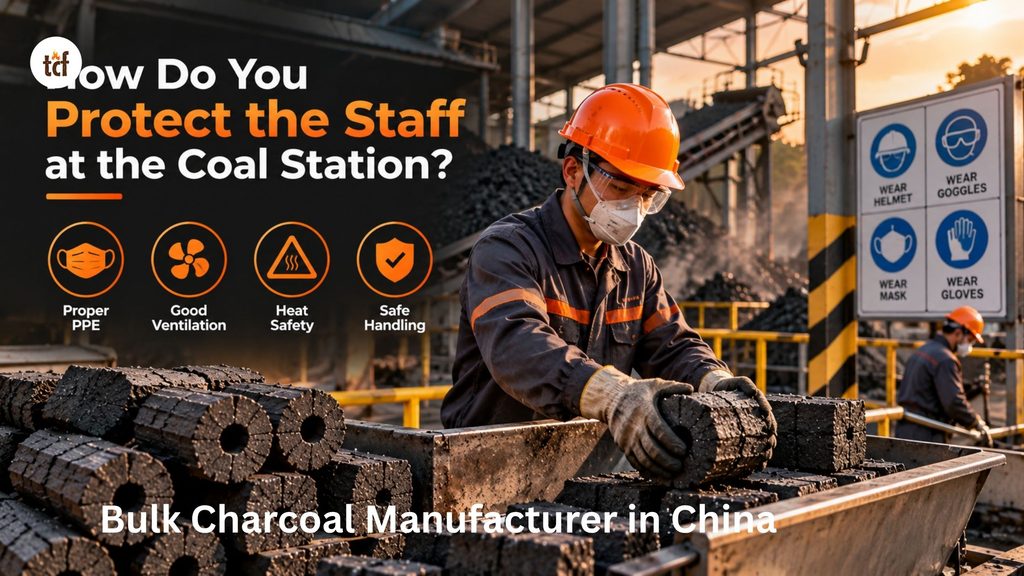
The person lighting coals is often the most exposed person in the building. They stand over dozens of coals at a time, often in a back room, for an entire shift. Medical literature includes a case report titled “Carbon monoxide toxicity after lighting coals at a hookah bar” (Misek and Patte, Journal of Medical Toxicology, 2014).
Fuel choice helps, but ventilation is the real control:
- Extract at the burner. Put mechanical extraction directly above the coal station, not only in the seating area.
- Fit CO alarms in the preheating area and the main room, and test them regularly.
- Never preheat in a closed storeroom or corridor, even for a few minutes during a rush.
- Train staff on symptoms. Headache, dizziness, and nausea at the coal station are warning signs, not tiredness.
- Check local rules. Ventilation and CO monitoring rules for hookah venues vary by city and country, so confirm what applies to yours.
Choosing natural coconut for the main floor reduces the CO load the ventilation has to handle. It does not replace the ventilation.
How do you switch a lounge from quick-light to natural coals?
Switch in stages over about four weeks, starting with the coal station rather than the coal. Changing the coal before the equipment is the quickest way to end up serving half-lit cubes on a busy weekend.
- Week 1: size the burner station. Count your peak bowls per hour. The station should deliver one fully lit round per table per hour at peak, plus a spare round. Add burner capacity and extraction above it before ordering natural coals in volume.
- Week 1: order samples. Get natural coconut cubes from your shortlisted suppliers, ideally from two different production batches each.
- Week 2: train the coal team. Set one preheating routine: how long on the burner, when to turn the cubes, and what “ready” looks like. A cube is ready when every face glows and a thin grey ash layer has formed.
- Week 2: run a pilot section. Switch a few tables to natural coals and keep quick-light on the rest. Record coal changes per session, ash bins per shift and any guest comments for both.
- Week 3: compare the numbers. Fill in the cost worksheet with your own timings. Adjust the preheating time or cube size if coals are coming out under-lit.
- Week 4: switch the main floor. Move all indoor tables to natural coals. Keep quick-light for the terrace, events, and backup.
Tell guests about the change. “Natural coconut coals only” is a point regulars notice and a fair thing to put on the menu.
Also Read –
How to Ship Charcoal in Containers Safely
Best Material for Making Charcoal
What should a lounge put in its charcoal purchase spec?
Order against numbers, not a brand name. When an order names only a product and a price, there is nothing to hold the supplier to if the next batch behaves differently.
Ask for these on the purchase order, with a certificate of analysis for each batch:
- Size and tolerance. For example, 25 mm cubes with a stated maximum deviation. Mixed sizes cannot be preheated on one timer.
- Pieces per carton and carton weight. You need both for the cost worksheet.
- Binder declaration. Natural coals should use a food-grade starch binder and no ignition additive.
- Accelerant declaration for quick-light. Ask the supplier to state in writing what ignition compound is used.
- Shipping documents. Charcoal travels as UN1361, Class 4.2 dangerous goods, so confirm the weathering report and dangerous goods declaration before booking.
Then test across batches, not once. Order a trial quantity, then a second from a different production run, and preheat both on the same timer. If the second batch behaves differently, your staff routine will not survive the reorder.
For a fuller list of documents to request, see our charcoal supplier verification checklist. For why coconut shell suits shisha better than other raw materials, see the best material for making charcoal.
Stock your lounge with the right coal for each job
The Charcoal Factory supplies natural shisha charcoal for the main floor and quick-light charcoal for terraces, events and backup, so distributors and lounge groups can source both from one factory. Orders start from one 20GP container, with private-label and Arabic or multilingual packaging available, and full dangerous goods shipping documents.
Browse our hookah charcoal range, see bulk charcoal options, or email info@thecharcoalfactory.com to request samples from two production batches.
Frequently asked questions
Can you mix natural and quick-light coals on the same bowl?
It is better not to. The two burn at different rates, which makes heat harder to manage, and an unburned quick-light coating can still add a chemical taste to the whole bowl.
Does natural coconut charcoal burn hotter than quick-light?
In the 2015 laboratory study, yes. Natural charcoal averaged 292°C on the bowl against 247°C for quick-light, even though quick-light lights faster.
How do you know a natural coal is ready to serve?
Every face should glow red and be covered in a thin layer of grey ash, with no black patches. A coal that still has dark spots will smoke, taste raw and die early.
Is quick-light charcoal bad for you?
It produced more than twice the carbon monoxide of natural charcoal in laboratory testing, and its accelerant formulas are rarely published. All hookah charcoal produces carbon monoxide, so ventilation matters whichever coal you use.