


All Blogs

Charcoal Bulk Buying Guide: How to Source Smart?

Charcoal Bulk Buying Guide: How to Source Smart?

The global demand for charcoal is no longer seasonal. From shisha lounges across the Middle East to BBQ chains in Europe and North America, the need for consistent, high-quality charcoal supply has turned bulk procurement into a serious business function. And yet, most first-time buyers walk into it underprepared.

Buying charcoal in bulk is not simply finding a “charcoal factory near me” and placing an order. It requires understanding product types, evaluating supplier credibility, navigating international logistics, and managing pricing dynamics that shift with the seasons. Do it right, and bulk buying delivers better margins, reliable supply, and a competitive edge. Do it wrong, and you’re sitting on a container of substandard product with no recourse.

This Charcoal Bulk Buying Guide covers everything you need to know, from selecting the right charcoal type to placing your first full-container order with confidence. And if you’re looking for a manufacturer you can trust from day one, we’ll introduce you to The Charcoal Factory, a wholesale charcoal manufacturer based in Anhui, China, supplying importers and distributors across 60+ countries. But also, before buying, you must go through the charcoal supplier verification checklist.

1. Why Bulk Buying Charcoal Is Growing Globally
Why Bulk Buying Charcoal Is Growing Globally

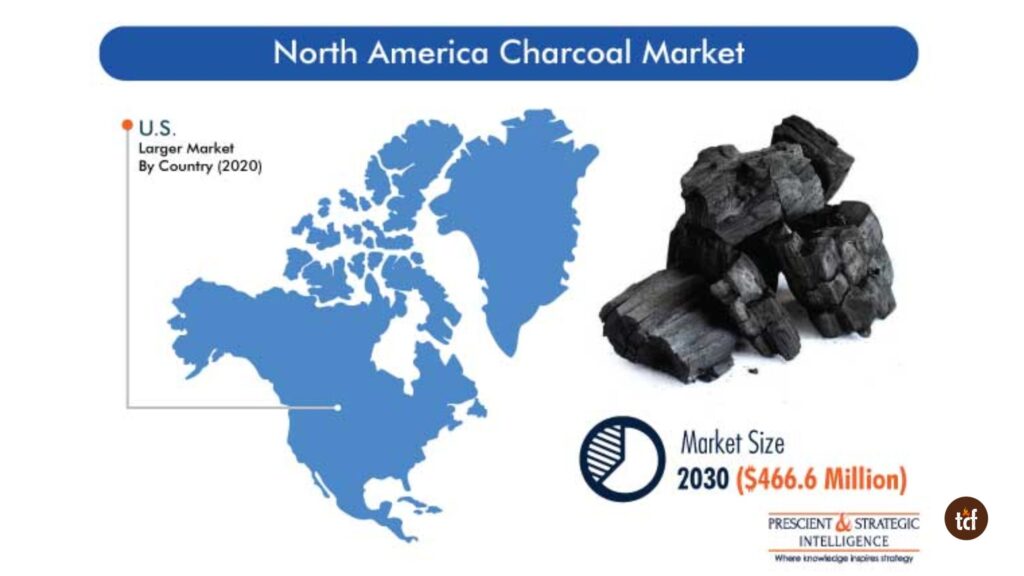
The charcoal industry has undergone a quiet transformation over the past decade. What was once a seasonal commodity tied to backyard grilling has evolved into a year-round, high-volume global trade category driven by several converging forces.

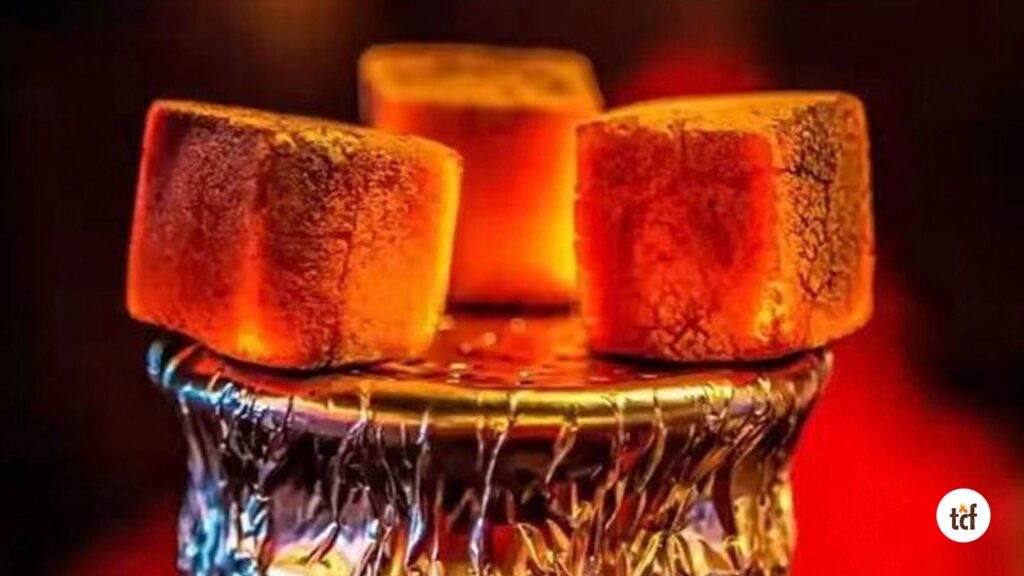
The shisha (hookah) industry has exploded across the Middle East, Europe, and Southeast Asia, creating consistent year-round demand for premium charcoal briquettes that burn long, produce minimal smoke, and deliver a clean profile. At the same time, the restaurant and hospitality sector has increasingly turned to charcoal for grilling and live-fire cooking, further driving demand.

On the supply side, the rise of bamboo charcoal manufactured from a fast-growing, renewable raw material has addressed sustainability concerns while improving production consistency. This has made large-scale manufacturing more feasible and export-grade quality more achievable across key origins, including China, Vietnam, and Indonesia.

For importers and distributors, bulk procurement is no longer just a cost-saving strategy. It’s a supply chain imperative. Buying in volume locks in pricing, ensures product consistency, and gives businesses the inventory depth to serve clients reliably through peak demand periods like Ramadan and summer grilling season. And don’t forget to check the charcoal grades.

2. Types of Charcoal Available in Bulk
Types of Charcoal Available in Bulk

Not all charcoal is suited to every market or application. The type you choose will affect burn quality, container efficiency, price point, and how well the product performs for your end customer. Understanding the difference is the foundation of smart bulk buying.

Bamboo Charcoal

Bamboo charcoal has become one of the most sought-after formats in global bulk trade, particularly for shisha and premium BBQ applications. Manufactured from carbonised bamboo shell, it delivers a notably cleaner burn profile: low ash content, longer burn time, and no chemical additives. These characteristics make it especially well-suited to indoor shisha environments where smoke and residue are deal-breakers for customers.

What sets bamboo charcoal apart is also its raw material advantage. Bamboo is harvestable every 3 to 5 years without killing the root system, making it a genuinely renewable feedstock compared to hardwood trees that require decades to mature. For buyers in the EU and North American markets where sustainability credentials matter to end consumers, bamboo charcoal offers a real differentiation story.

Bamboo charcoal comes in two primary forms for bulk buyers:

Machine-made bamboo charcoal is produced using automated pressing and carbonisation, resulting in uniform shapes, typically hexagonal or cylindrical, that are ideal for consistent shisha performance and efficient container loading.

Shaped bamboo charcoal refers to custom-formed pieces tailored for specific applications or private-label product lines. If you’re building a branded charcoal product, shaped bamboo gives you control over the visual identity of the product.

Wood Charcoal

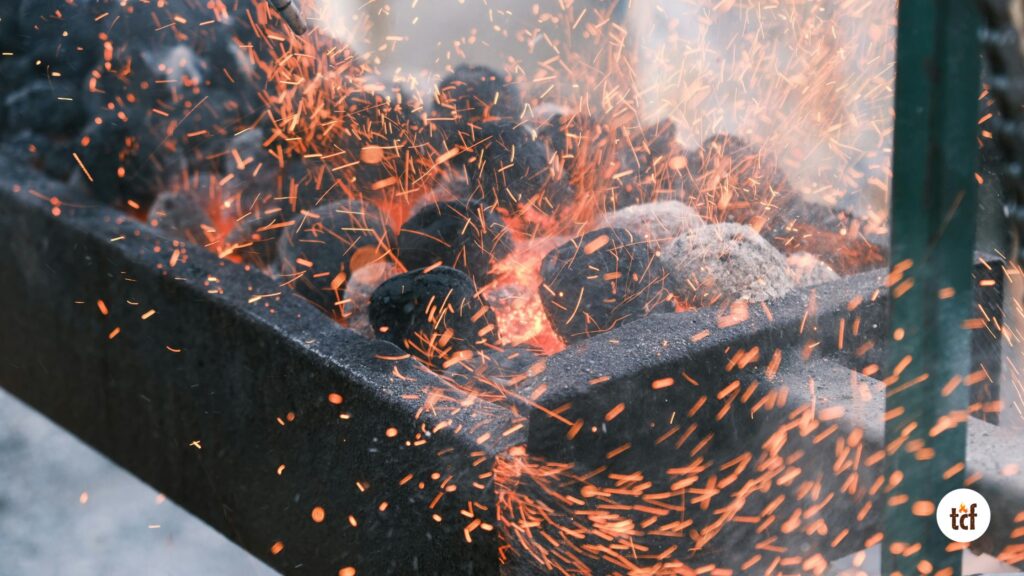
Wood charcoal is manufactured by carbonising selected hardwood in controlled kiln environments. It produces high heat output with stable burn performance, making it a strong choice for restaurants, professional BBQ operators, and grilling-focused retail products.

Like bamboo, wood charcoal is available in machine-made wood charcoal and shaped formats. For bulk buyers, the key advantage of shaped wood charcoal is size consistency, critical for retail packaging where visual uniformity matters at the point of sale.

Wood charcoal commands a premium price point compared to bamboo, which can work in your favour when targeting markets where the natural hardwood origin story resonates with buyers.

How to Choose Between Bamboo and Wood for Bulk Orders

FeatureBamboo CharcoalWood Charcoal
Burn consistencyHigh, uniform ash, clean burnHigh, stable heat output
Best applicationShisha, premium retail, private labelBBQ, restaurants, grilling retail
SustainabilityRenewable (3–5 yr harvest cycle)Requires tree felling
Price at scaleHighly competitiveSlight premium
Private label supportWidely availableWidely available
Available gradesA, B, CA, B, C

3. How to Choose the Right Charcoal Bulk Supplier
The instinct to search “charcoal suppliers near me” is understandable but limiting. For serious bulk buyers, geography is rarely the most important variable. A well-established charcoal manufacturer in China with proven export infrastructure, full documentation capabilities, and thousands of tons of annual output is almost always a better partner than a domestic broker with no factory of their own.

Here’s what to evaluate before committing to any supplier relationship:

1. Production capacity and export track record

A reliable charcoal manufacturer should be producing at scale and have documented experience shipping to international markets. Ask for references, shipping records, or evidence of prior export activity. A supplier who has never shipped internationally will struggle with the documentation requirements your customs authority expects. Look for manufacturers with a clearly stated customer reach supplying 60+ countries, for example, which signals a well-established export operation.

2. Grade transparency

One of the most overlooked supplier qualities is clear, documented grading. A credible charcoal manufacturer should offer A, B, and C-grade products that are consistently defined and maintained across production runs. You should know exactly what grade you’re buying and what specifications of ash content, moisture, and burn time that grade guarantees. A Certificate of Analysis should be available for every A-Grade shipment.

3. Certifications and compliance documentation

At minimum, require the following: a phytosanitary certificate, Certificate of Origin, Certificate of Analysis (COA), commercial invoice, packing list, and bill of lading. These aren’t bureaucratic extras; they’re the documents that determine whether your shipment clears customs or sits in a bonded warehouse at your expense.

4. Private label and OEM capability

If you’re building a brand or distributing charcoal under your own label, packaging customisation is essential. Confirm that the supplier can handle your bag design, print your branding, support multiple packaging formats (bulk sacks, export cartons, retail bags, custom-printed boxes), and meet any regional compliance labelling requirements.

5. Factory verification before any deposit

Never transfer a deposit without first verifying that you’re dealing with a real manufacturer. Request a live video walkthrough of the facility. Legitimate charcoal factories will accommodate this without hesitation. If a supplier deflects this request, treat it as a serious red flag.

A critical warning: many online listings for “charcoal distributors” and “charcoal bulk suppliers” are brokers and agents, not factories. They add margin to every transaction, slow down communication, and have zero control over production quality or shipment timelines. Always verify direct factory access before making any financial commitment.

4. Packaging, Palletisation & MOQ Explained
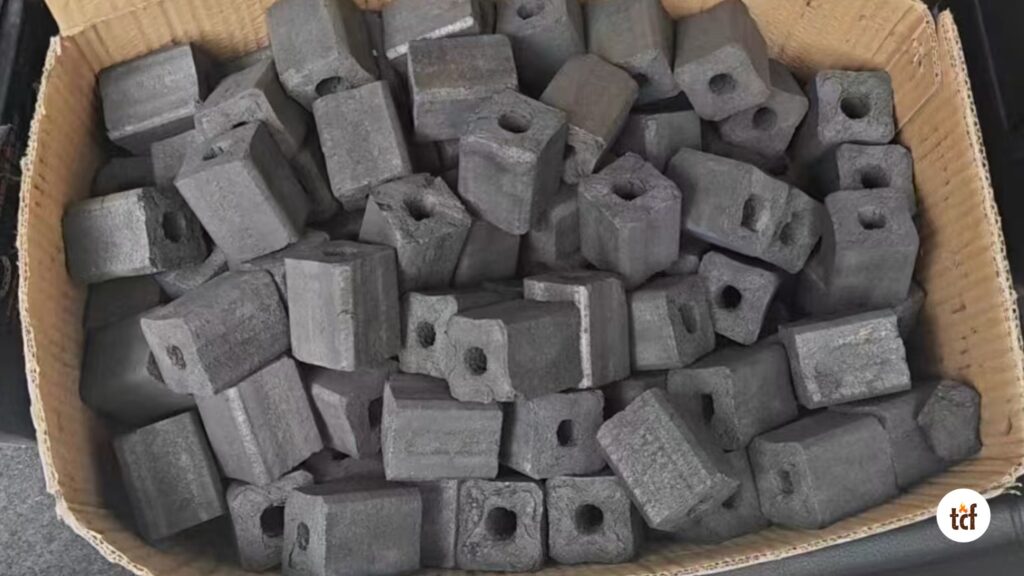
Packaging, Palletisation & MOQ Explained

How your charcoal is packaged, stacked, and loaded onto a container has a direct impact on product safety during transit, container utilisation efficiency, and ultimately, the landed cost per kilogram. Buyers who ignore these details often discover the problem after the container arrives.

1. Packaging formats

Established charcoal manufacturers offer flexible packaging options to serve different market channels: bulk sacks for industrial buyers, export cartons for distributors, and retail bags for supermarket and e-commerce supply. For private-label buyers, the full range of custom-printed boxes, branded poly bags, and language-specific labelling should be available as standard.

If you’re doing a bulk buy for retail distribution, printed packaging is almost always the right choice, as it allows your product to go directly to the shelf without repackaging at your end.

2. Container loading

A standard 20-foot container (20GP) is the typical minimum order benchmark for serious bulk buyers and the industry-standard MOQ with reputable manufacturers. A 40-foot high-cube container accommodates significantly more volume. Ask your supplier for a container loading diagram with every quote. It tells you exactly how pallets are configured, how many bags per pallet, and the total weight per container.

3. Minimum order quantities

The MOQ for most established charcoal factories starts at one 20GP container. For long-term clients or recurring orders, production planning should be available to ensure a continuous supply without delays or stock shortages.

Explore Reliable Bulk Charcoal Supply

If you’re now evaluating suppliers, it’s important to choose a manufacturer that offers both product variety and consistent quality at scale.

At The Charcoal Factory, we are bamboo charcoal suppliers and manufacturers, providing a complete range of bamboo charcoal products for global buyers, including:

Alongside this, we also offer wood charcoal solutions for BBQ and restaurant use:

  • Machine-Made Wood Charcoal
  • Shaped Wood Charcoal

All products are available in bulk quantities with custom packaging, clear grade specifications, and export-ready documentation, making them suitable for distributors, importers, and private-label brands.

If you’re planning your first order or scaling supply, you can explore the full range and choose the right product based on your market needs.

5. What Affects the Wholesale Price of Charcoal
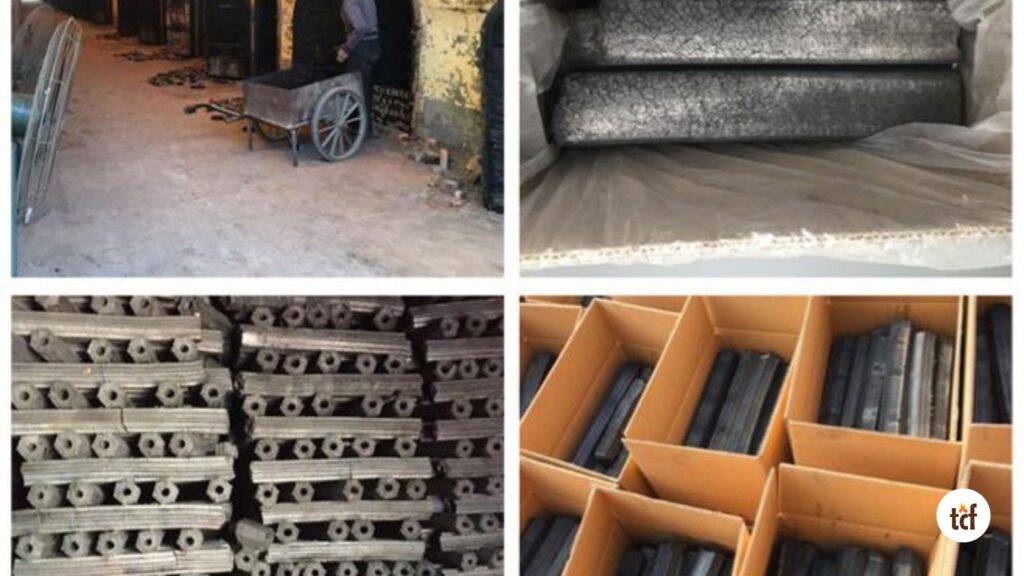
 What Affects the Wholesale Price of Charcoal

When you receive a charcoal wholesale price quote, the number reflects a complex set of upstream and downstream variables. Understanding what drives cost makes you a more effective negotiator and helps you avoid the trap of comparing incomparable quotes.

1. Raw material source

Bamboo charcoal is generally more economical than hardwood alternatives because bamboo grows faster, requires less land, and is harvested without replanting. Hardwood charcoal requires sourcing, processing, and burning of solid trees, which adds labour and cost at every stage. When evaluating quotes, always confirm the exact raw material type.

2. Grade and quality specifications

A-grade charcoal with high fixed carbon, low ash content, and precise size uniformity costs more to produce than B or C grade. Achieving these specifications requires better machines, tighter process controls, and consistent raw material sourcing. If a quote looks unusually low, check whether the product grade matches your requirements before assuming it’s a better deal.

3. Order volume

Full-container-load (FCL) orders give buyers significantly more negotiating leverage than smaller, consolidated shipments. If you’re currently buying below a full container, exploring whether you can consolidate orders either by product type or across SKUs can meaningfully reduce your unit cost.

4. Seasonality

Charcoal prices move with demand. The Middle Eastern market sees consistent price pressure ahead of Ramadan, when shisha consumption spikes. Western markets follow a similar pattern ahead of summer BBQ season. Buyers who plan inventory by placing orders in the off-season or building buffer stock consistently secure better pricing than those who buy reactively during peak periods.

5. Incoterms and total landed cost

An FOB price and a DDP price are not comparable on face value. Always request a full landed cost breakdown, including freight, insurance, port handling fees, customs duties, and last-mile delivery, before evaluating suppliers against each other. The lowest headline price is rarely the lowest total cost.

6. Logistics & Customs: FOB, CIF, DDP Explained

Logistics & Customs: FOB, CIF, DDP Explained

International shipping is often where first-time importers encounter the most friction. Understanding the three most common Incoterms used in the bulk charcoal trade removes most of the confusion before it becomes a problem.

1. FOB — Free On Board

Under FOB terms, the supplier is responsible for the product until it is loaded onto the vessel at the origin port. From that point, risk and cost transfer to the buyer. This is the preferred arrangement for experienced importers who have freight forwarding relationships in place and want full control over their shipping costs and carrier selection.

2. CIF — Cost, Insurance & Freight

With CIF, the supplier arranges and pays for ocean freight and marine insurance to the buyer’s destination port. The buyer takes responsibility once the shipment arrives at the port. This is a practical option for mid-scale importers who want the supplier to handle origin logistics without committing to the full-service DDP arrangement.

3. DDP — Delivered Duty Paid

DDP is the most hands-off option for the buyer. The supplier manages everything, freight, insurance, customs clearance, import duties, and delivery to the buyer’s warehouse. It’s the most convenient arrangement for first-time importers, but it comes at a cost premium and reduces your visibility into logistics expenses over time.

4. Documentation requirements

Regardless of the Incoterms you choose, your supplier should provide a complete documentation package with every shipment: phytosanitary certificate, Certificate of Origin, COA, MSDS, bill of lading, commercial invoice, and a detailed packing list. Missing any one of these documents can result in customs holds, demurrage fees, or outright rejection at the destination port.

Plan for lead times of 15 to 35 days from production completion to delivery, depending on origin and destination region. For seasonal orders, build a 4 to 6 week buffer into your procurement calendar.

7. Common Mistakes to Avoid When Bulk Buying Charcoal

Common Mistakes to Avoid When Bulk Buying Charcoal

Most sourcing failures in the charcoal trade are not caused by bad luck. They’re caused by predictable, avoidable mistakes.

1. Working with brokers who present themselves as factories

This is the single most common and costly mistake in bulk charcoal sourcing. Numerous online listings for charcoal suppliers are operated by intermediaries with no manufacturing capability of their own. They add margin, introduce communication delays, and cannot intervene when quality or shipment timelines go wrong. Always verify direct factory access before transferring any money.

2. Placing a full order without testing samples

No sales pitch substitutes for physically testing the product. Before committing to a container, request a sample of the exact product SKU you plan to order, same grade, same packaging, same specification. Test it for burn duration, smoke output, ash content, and physical consistency. Reputable manufacturers will ship samples readily.

3. Overlooking grade documentation

Not all charcoal sold as “A grade” meets the same standard. Insist on a Certificate of Analysis for every A-grade shipment that quantifies fixed carbon percentage, ash content, moisture level, and size uniformity. This protects you from receiving a product that was graded generously on the supplier’s end.

4. Ignoring seasonal pricing dynamics

Buyers who place reactive orders during peak demand periods consistently pay more. Build your procurement calendar around known demand events, Ramadan, summer BBQ season and place orders with enough lead time to avoid both price premiums and supply shortfalls.

5. Comparing quotes without aligning on Incoterms

Receiving three supplier quotes and choosing the lowest number is a mistake when the quotes are on different Incoterms. Always ask every supplier for the same basis, or request a full landed cost breakdown to your destination, so comparisons are meaningful.

8. Why The Charcoal Factory Is the Right Bulk Partner

If this guide has made one thing clear, it’s that bulk charcoal sourcing rewards buyers who work with manufacturers, not traders, not brokers, and not intermediaries, adding cost without adding value.

The Charcoal Factory is a wholesale charcoal manufacturer based in Anhui, China, operating a fully integrated production facility that covers everything from raw material sourcing to container loading and export documentation. Here’s why buyers across 60+ countries choose to work with them:

1. Two product lines. One reliable supply.

The Charcoal Factory produces both bamboo charcoal and wood charcoal, machine-made and shaped across A, B, and C grades. This gives buyers flexibility to serve multiple market segments from a single manufacturer relationship, rather than managing multiple supplier relationships for different SKUs.

Their bamboo charcoal range is particularly strong for shisha and premium retail buyers. Low ash content, long burn time, and clean combustion make it a top performer in demanding markets. The wood charcoal range delivers the high heat and stable performance that restaurant and BBQ-focused buyers require.

2. Grade transparency is built into every order

Every shipment from The Charcoal Factory comes with clearly documented grade specifications. A-grade orders include a Certificate of Analysis as standard, giving you a verifiable, documented record of what you purchased — and what your customers are receiving.

3. Full export documentation as standard

Every shipment includes a phytosanitary certificate, Certificate of Origin, commercial invoice, packing list, and bill of lading. No chasing paperwork, no customs surprises, no missing documentation on arrival.

4. Private label and custom packaging

Whether you’re building a retail brand for supermarkets, creating a private-label product for e-commerce, or supplying a wholesale channel under your own name, The Charcoal Factory handles the full packaging solution from bulk sacks to custom-printed retail boxes. Your brand, your artwork, their production infrastructure.

Sustainability credentials for buyers with ESG commitments

Bamboo grows from the same root system after harvest, no replanting required, no deforestation. For buyers in the EU and North American markets, where supply chain sustainability is increasingly a buyer expectation or regulatory requirement, bamboo charcoal from The Charcoal Factory comes with plantation sourcing documentation available on request.

MOQ starting at one 20GP container

The Charcoal Factory’s minimum order is one 20GP container, a practical, accessible entry point for new buyers who want to test product quality and build a supplier relationship before scaling to larger volumes.

10 years. 60+ countries. 1,000+ retail partners.

The Charcoal Factory has been manufacturing and exporting for over a decade, supplying importers, distributors, and retail chains across every major market. That track record is the clearest signal of what any bulk buyer needs most: a manufacturer that will still be there for the second order, the third, and the tenth.

9. Final Checklist Before Placing Your First Bulk Order
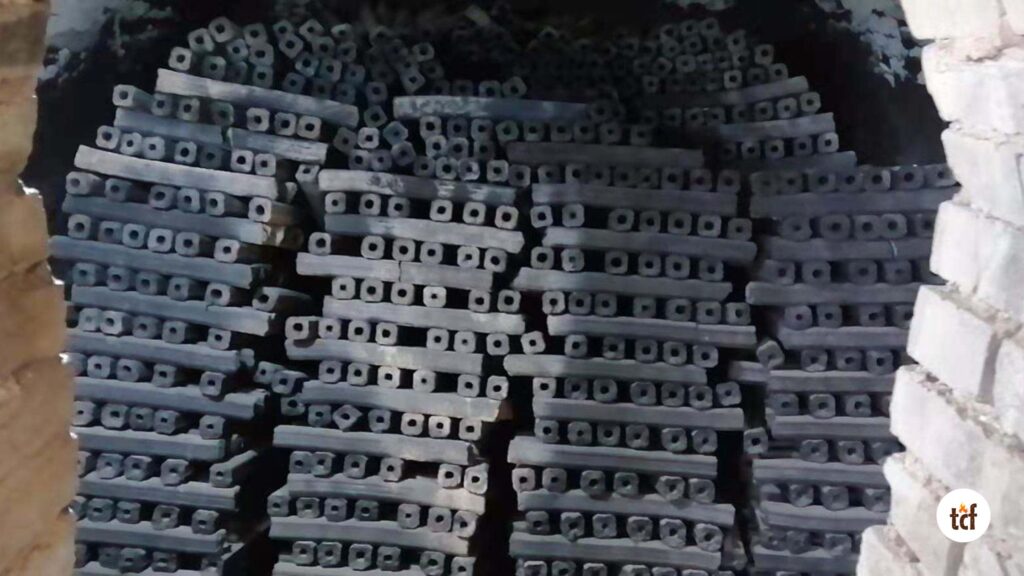
Why The Charcoal Factory Is the Right Bulk Partner

Use this checklist to confirm you’re operationally ready to move from supplier evaluation to purchase:

  • Product type confirmed — You’ve decided between bamboo charcoal and wood charcoal, and the specific grade (A, B, or C) required for your end market
  • Samples tested and approved — Your team has evaluated burn consistency, smoke output, ash content, and packaging quality from the actual supplier
  • Supplier verified as a factory — You’ve confirmed direct manufacturing capability through a live video walkthrough, not just marketing materials
  • Grade documentation in hand — COA is available and matches the specifications you agreed on at the quote stage
  • Full export documentation confirmed — Phytosanitary certificate, Certificate of Origin, packing list, and bill of lading are included as standard with every shipment
  • Full landed cost calculated — You’ve requested cost breakdowns on the same Incoterms basis across all shortlisted suppliers
  • Packaging and labelling approved — Custom branding, language requirements, and regional compliance labels are confirmed before production starts
  • MOQ and payment terms agreed — You understand the minimum order requirement, deposit structure, and balance payment terms
  • Lead time and inventory buffer planned — Your order timeline accounts for production, transit, customs, and a seasonal demand buffer

Conclusion: Bulk Buying Charcoal the Smart Way

Buying charcoal in bulk is a meaningful business investment. When approached with the right framework, it delivers better unit economics, consistent product quality, and the supply chain depth to serve clients reliably through high-demand periods. When approached carelessly, it leads to costly lessons.

The buyers who succeed long-term are those who treat supplier selection as a strategic decision, not a price comparison exercise. They verify factories before paying deposits, test products before committing to containers, and plan procurement calendars around real demand patterns rather than reacting to them.

Whether you’re placing your first container order or managing a multi-container annual supply agreement, the fundamentals don’t change: know your product, know your supplier, and know your total landed cost. And this is what this Charcoal Bulk Buying Guide is all about.

If you’re ready to source from a manufacturer that takes all three seriously.

FAQs About Charcoal Business & Usage

Is charcoal a profitable business?

Yes, charcoal can be a highly profitable business if managed correctly. Demand is consistent across industries like BBQ restaurants, shisha lounges, and households. Profitability depends on sourcing cost, quality control, logistics, and finding reliable bulk buyers. Export markets, especially in the Middle East and Europe, often offer higher margins.

What are the 5 types of charcoal?

The main types of charcoal include lump charcoal, briquettes, coconut shell charcoal, bamboo charcoal, and hardwood charcoal. Lump charcoal is natural and burns hot, briquettes are uniform and long-lasting, coconut shell charcoal is popular for shisha, bamboo charcoal is eco-friendly, and hardwood charcoal is widely used for grilling due to its steady heat.

How long does 1kg of charcoal last?

1kg of charcoal typically lasts between 2 to 4 hours, depending on the type and usage. Lump charcoal burns faster with higher heat, while briquettes and coconut charcoal burn longer and more consistently, making them ideal for extended cooking or shisha use.

What factors affect charcoal burn time and quality?

Burn time and performance depend on moisture content, density, raw material, and airflow. High-quality charcoal with low moisture and high density burns longer, produces less ash, and maintains consistent heat, which is crucial for both commercial and personal use.
How to Choose the Right Charcoal Size & Packaging for Export

How to Choose the Right Charcoal Size & Packaging for Export

The packaging decision you make before your first container ships will affect your landed cost per ton, your container fill rate, your shelf sell-through, and — in 2026 — whether your shipment gets accepted by the shipping line at all. This is the guide that covers what the other ones skip.

Most guides on charcoal export packaging tell you about four bag types and call it a day. PP woven, kraft paper, plastic bags, carton boxes — here’s what each one is, pick the right one. Done.

That’s not wrong, but it’s not what makes or breaks an export order. The decisions that actually matter are: which size hits the container fill rate sweet spot for your destination market, whether your packaging format will survive a 30-day sea voyage in 2026’s regulatory environment, how your packaging labels affect customs clearance on arrival, and whether the per-ton cost of your packaging makes your price competitive on shelf or kills your margin before the distributor adds their cut.

We’ve been shipping charcoal from our factory in Hefei, China to distributors, supermarkets, and lounge operators across 40 countries. What follows is what we’ve actually learned — including a few things that cost our buyers money before they figured them out the hard way.

Choosing the wrong bag size for your target market is one of the most expensive mistakes a first-time charcoal importer makes. You can’t repack a container in transit. And by the time you find out your 10kg bags don’t move in a market that expects 5kg, you’ve already paid the freight.

Start here: what determines the right packaging decision

Before we get into specific sizes and formats, it helps to understand that charcoal packaging is really four separate decisions that interact with each other:

  1. Product type â€” Shisha cube charcoal, BBQ lump charcoal, and coconut shell briquettes each have default packaging norms in their respective markets. Deviating from these norms requires a strong commercial reason.
  2. Destination market â€” A 5kg bag is the right choice for European supermarkets. The same bag is a slow seller in Middle East wholesale. Getting this wrong means your distributor is sitting on inventory.
  3. Sales channel â€” Retail shelf, food service, lounge supply, online marketplace, and wholesale redistribution each have different pack sizes, label requirements, and handling conditions.
  4. Container economics â€” The packaging you choose determines how much product fits in a container. A small difference in bag size can mean 1–2 metric tons more or less per container. At $400–600 per ton FOB, that’s real money.

None of these can be answered in isolation. The right packaging for A-grade bamboo shisha cube charcoal going to a UAE wholesale distributor is completely different from the right packaging for the same product going to a German supermarket chain. Same charcoal. Completely different packaging decision.

Market-by-market sizing guide

The fastest way to get this wrong is to copy what a competing exporter does without understanding why they chose that format. Here’s what actually sells in each major charcoal import market, and the commercial logic behind the size.

Middle East (UAE, Saudi Arabia, Jordan, Kuwait)

The Middle East is the world’s largest shisha charcoal market by volume, and the packaging norms here are very specific. The standard retail unit for shisha charcoal is a 1kg retail box containing 72 to 96 cubes, depending on cube size (25mm cubes give you 96 per kg; 33mm cubes give you around 72). This format has become so standard across UAE convenience stores and supermarkets that buyers who land with anything else spend months trying to educate their retail partners before the product starts moving.

For wholesale supply to hookah lounges, the format shifts. Lounge operators buying 50–200kg per week don’t want retail boxes — they want 10kg bulk bags or loose-fill master cartons that minimise packaging cost and packaging waste per session. A lounge running 30 tables a night goes through 3–5kg of charcoal per hour. They’re weighing out portions, not opening retail boxes.

For BBQ charcoal sold in the GCC for family outdoor use, the dominant retail size is 3kg and 5kg bags. Eid gatherings and weekend family BBQs are the main demand occasions — consumers want enough charcoal for the event without a large bag taking up pantry space. The 10kg+ sizes move in food service and hotel/resort supply, not in retail.

ChannelProductRecommended sizeWhy
Supermarket retailShisha cube1kg box (72–96 cubes)Category standard — buyers expect this format on shelf
Convenience storeShisha cube500g boxImpulse purchase format; lower price point for single-session use
Hookah lounge supplyShisha cube / flat10kg bulk bagReduces packaging cost; lounges portion themselves
BBQ retailWood lump / coconut3kg or 5kg bagFamily BBQ occasion; shelf density and price point
Restaurant / hotelAny grade10kg or 25kg sackFood service purchasing; cost per kg prioritised over retail presentation

Europe (Germany, Netherlands, UK, France)

European BBQ retail is dominated by one size: 3kg and 5kg bags. The 5kg bag is the volume leader — it fits a standard supermarket shelf slot, the weight is manageable for a consumer, and it contains enough fuel for two solid weekend BBQs without the household needing to store half a bag. German and Dutch category buyers have told us repeatedly that the 5kg format gives them the best combination of shelf turns and margin per linear metre.

The UK market leans slightly smaller — 3kg is the strongest seller at petrol stations and convenience retail, while 5kg and 10kg move at garden centres and outdoor retail stores. The difference is channel: UK consumers buy BBQ charcoal for a specific occasion more than as a pantry staple, so the smaller format reduces perceived risk at the point of purchase.

For eco-positioned products (bamboo briquette, FSC-certified hardwood), the packaging material matters as much as the size. European supermarkets — especially German discounters and Dutch lifestyle retailers — have been pushing suppliers toward paper kraft bags with minimal plastic as part of their own sustainability commitments. A PP woven bag is difficult to recycle and increasingly unwelcome on shelf in Germany and the Netherlands. This is not a regulation yet, but it functions like one in practice if you’re pitching a sustainability angle.

For foodservice and restaurant supply in Europe, the standard format is 10kg and 15kg paper sacks. Professional kitchens buy on cost per kg and don’t want the overhead of managing small retail packaging. Michelin-starred restaurants occasionally specify something premium (lump charcoal in individual bags with species identification), but most commercial kitchen purchasing is purely functional.

SA and Canada

The American BBQ market has different size norms from Europe, and getting them wrong costs buyers shelf space. US consumers buy charcoal in larger quantities than their European counterparts. The dominant retail sizes are 8lb (3.6kg), 16lb (7.3kg), and the category staple: 20lb (9kg). The 20lb bag is what most American consumers picture when they think of charcoal — it’s been the standard in US retail for decades.

For premium lump charcoal targeting the serious BBQ market (competition BBQ enthusiasts, restaurant supply, specialty retailers), the 20lb and 40lb bags are standard. The 40lb bag is almost exclusively a warehouse club or restaurant supply format in the US.

There’s an important labelling consideration for US imports: weight must be displayed in both metric and imperial units on the package, and the country of origin declaration must be prominent. US Customs Border Protection is particular about this for wood-derived products. If your packaging says “5kg” but not “11 lbs,” your distributor may face labelling compliance issues at import. This is a detail that doesn’t come up in most packaging guides — but it comes up in real imports.

Australia

Australia runs a summer BBQ season from October to March (Southern Hemisphere summer), and the dominant retail format is 4kg and 10kg bags. The 4kg format is the strongest supermarket seller — similar logic to the European 5kg. The 10kg moves well through hardware chains (Bunnings is the dominant DIY/hardware retailer and sells a significant volume of BBQ charcoal).

Australia has timber biosecurity requirements that affect charcoal imports — heat treatment certification is required for wood charcoal and some bamboo products to meet Australian biosecurity standards. This is handled at the phytosanitary certificate level, but it also affects what you can state on the packaging about the raw material. If your packaging makes claims about the wood source that can’t be verified against the phytosanitary documentation, customs can hold the container. We handle this for all Australian shipments as a standard part of export documentation, but it’s worth knowing before you finalise your packaging copy.

How packaging size affects your container fill rate — the numbers no one publishes

This is the section that makes or breaks the economics of an export order, and almost no charcoal supplier publishes the actual numbers. Here’s the reality: the packaging format you choose determines how many metric tons of product you can fit in a container, which directly determines your cost per ton shipped.

A standard 20GP container has an internal volume of roughly 33 cubic metres and a maximum payload of around 21–22 metric tons (the actual legal limit depends on your port and truck route, but 21MT is a safe working number for most routes out of China). The challenge is that charcoal is relatively low density — it fills volume before it hits weight limits. So the packaging shape and void space matter enormously.

Packaging formatApprox. load (MT)Units per containerNotes
1kg retail boxes (10-box master carton)16–18 MT16,000–18,000 boxesCarton air space reduces density. Heaviest cost per ton to ship.
10kg bulk bags19–21 MT1,900–2,100 bagsBetter fill rate than retail cartons. Standard wholesale format.
Loose fill (PP master bags)21–23 MT—Maximum fill rate. No retail presentation. Used by lounges who repack.
5kg retail bags17–19 MT3,400–3,800 bagsMiddle ground. Good for retail. About 4% better fill than 1kg cartons due to bag flexibility.
25kg catering sacks20–22 MT800–880 sacksNear-optimal fill rate. Right format for restaurant/foodservice supply.

What this table shows is that choosing 1kg retail boxes over 10kg bulk bags costs you roughly 2–3 metric tons per container. At $450 per ton FOB, that’s $900–$1,350 lost per container — just in container utilisation. Over 10 containers a year, that’s over $10,000 in shipping efficiency lost to packaging choice. This is the calculation most buyers don’t do, and it’s why we always ask new buyers about their end-channel before recommending a packaging format.

The landed cost calculation

Before committing to a packaging format, work through this sequence: FOB price per ton Ã— estimated tons per container = container product cost. Add sea freight, destination port charges, customs duty, and inland delivery. Divide by the number of retail units you’re actually shipping. That’s your landed cost per retail unit. A packaging choice that looks cost-neutral at the FOB stage can add $0.15–$0.30 per retail unit when you account for lower container utilisation and higher packaging material cost. On a 5kg bag retailing at $8, that margin difference is decisive.

The IMDG 2026 change that will get your container rejected if you’re not aware of it

This is the section that almost no charcoal packaging guide covers. It’s also the most important thing that changed in the past 12 months for charcoal exporters.

Between 2015 and 2022, 68 container fires aboard vessels were attributed to charcoal shipments. Charcoal is a self-heating material — under certain conditions of moisture and temperature, it can spontaneously combust in an enclosed container. The International Maritime Organization responded by progressively tightening the rules, and in 2026 they completed the final stage: every exemption that previously allowed charcoal to ship without a Dangerous Goods declaration is now gone.

The two exemptions that most China-origin charcoal shipments relied on — Special Provision SP 925 and SP 223 â€” have been eliminated from the IMDG Code. Before 2026, charcoal that passed the UN N.4 self-heating test could be declared as non-DG cargo, avoiding the additional documentation, packaging requirements, and shipping line surcharges that DG cargo attracts. That route is now closed.

What this means for your 2026 shipment

Every container of charcoal leaving China is now classified as Dangerous Goods, Class 4.2 (self-heating substances), UN 1361 or UN 1362.

This triggers four specific requirements that affect your packaging directly:

1. UN-approved packaging only. Packing instruction P002 applies. Regular PP woven bags without UN certification are no longer acceptable. You need bags or cartons with a UN packaging approval mark. Your supplier needs to be using certified packaging material — if they’re not, your container can be refused at port.

2. Moisture content must be below 5% before packing. This isn’t new as a quality standard, but it’s now a documented safety requirement. Your pre-shipment SGS report should include moisture content as a matter of course. If it doesn’t, ask for it specifically.

3. A thermal vacuum jacket is now mandatory for every container. This is a foil liner system that goes around the interior of the container and prevents condensation and external heat from triggering self-heating in the cargo. Cost is approximately $280–$400 per container. Suppliers who tell you this isn’t required are either unaware of the 2026 changes or are hoping you won’t ask. We install thermal jackets as standard on all our containers.

4. The 1.5-metre stowage height limit. Under the new rules, charcoal bags cannot be stacked higher than 1.5 metres inside the container (with a minimum 30cm headspace). This reduces the effective loading height from the full container interior height and is one reason why container fill rates are slightly lower in 2026 than they were in previous years.

The practical implication for buyers is this: if you’re comparing quotes from multiple suppliers and one is significantly cheaper, it’s worth asking whether they are compliant with IMDG Class 4.2 requirements. A supplier who is cutting corners on DG documentation is saving money that you’ll pay in one of three ways — a container rejection at the origin port, a mis-declaration fine (which can reach $15,000+), or in the worst case, a container fire at sea with all the liability that comes with it.

At The Charcoal Factory, every container we ship is DG-compliant. We use UN-certified packaging, issue a full Dangerous Goods Declaration with every Bill of Lading, and install a thermal jacket as standard. We work with shipping lines that regularly handle Class 4.2 cargo. None of this is optional, and it should be a baseline expectation from any charcoal supplier you work with in 2026.

Packaging types — what each one actually does and doesn’t do

Now that the strategic decisions are clear, here’s a practical rundown of the packaging materials themselves. Most guides list these without explaining the real trade-offs.

Kraft paper three-ply bags

This is the material of choice for retail BBQ charcoal in Europe. Three-ply kraft (paper/PE liner/paper) gives you moisture resistance on the inside, printability on the outside, and an eco-credible material story that European retailers actually value. The downside is cost — kraft three-ply is more expensive per unit than PP woven, and it’s slightly more vulnerable to physical damage in transit if bags are handled roughly at the destination port. For European supermarket supply, the sustainability credential and the print quality make it worth the premium. For Middle East wholesale distribution, it’s usually unnecessary.

PP woven bags

The workhorse of charcoal bulk packaging. Cheap, strong, tear-resistant, and available in a wide range of sizes. PP woven is the default for Middle East wholesale, Asian redistribution, and any format where retail presentation is not the primary concern. The challenge in 2026 is that standard PP woven bags without UN packaging certification are no longer compliant for sea freight of DG Class 4.2 cargo. Make sure your supplier is using UN-certified PP woven if you’re shipping post-2025. The bags look identical — the difference is in the certification documentation.

Retail carton boxes (shisha charcoal)

The standard format for shisha charcoal sold at retail in the Middle East and East Asia. A full packaging stack for shisha charcoal typically has three layers: an inner plastic bag (PE) that protects the charcoal from moisture and holds the cubes together, an inner retail box (duplex or corrugated e-flute) with your branding, and a master carton (double-wall corrugated) that holds typically 10 inner boxes. The inner plastic bag can be printed with branding — this is what your end customer actually handles when they open the retail box. The print run minimum for inner plastic bags is typically 10,000 units, which is relevant for small first orders.

The inner box is where most of the branding budget goes. A well-designed inner box with embossing, spot UV, or metallic finish can add $80–$120 per ton to your packaging cost but significantly improves shelf presence. For premium positioning in the UAE or Saudi retail market, this investment usually pays back in the margin your distributor can hold. For budget retail, a plain duplex box with two-colour printing is the cost-effective route.

Jumbo bags (FIBC / big bags)

1,000kg flexible intermediate bulk containers are used for charcoal that will be repacked at the destination. This is a specialist format — you see it in industrial charcoal supply and in operations where the importer runs their own packaging facility and wants to minimise packaging material from the origin. Not relevant for retail or food service supply, but worth knowing exists if you’re building a distribution business that eventually wants to control more of the value chain at destination.

What your packaging label says affects your customs clearance

This is a connection that almost no charcoal packaging guide makes, and it catches buyers out regularly.

When your container arrives at the destination port, customs officers compare the physical goods against the documents. The commercial invoice describes the product. The packing list describes the packaging. The Certificate of Origin confirms where it was made. And your product packaging — the label on the bag — is treated as a declaration about the product inside.

Here’s where it goes wrong. If your product label says “hardwood charcoal” but your phytosanitary certificate describes the product as “bamboo charcoal”, you have a document mismatch. UAE customs, in particular, can hold a container on this basis. If your label says “made from natural wood” but your SGS lab report identifies bamboo as the raw material (bamboo is technically a grass, not a wood), a sharp customs inspector can classify this as a mislabelling issue.

The rule we give every buyer is simple: whatever your packaging says, your export documentation must say the same thing, in the same terms. If your bag says “A-grade bamboo shisha charcoal cube, 25×25×25mm, net weight 1kg,” your commercial invoice and packing list should describe the product in exactly those terms. The country of origin on the packaging must match the Certificate of Origin. The net weight must match the packing list. The raw material claim must be consistent with the phytosanitary certificate.

This sounds obvious when stated directly, but it’s genuinely common for packaging artwork to be designed by a marketing person and export documents to be written by a trade person, with no one cross-checking the two. We review both together as part of our pre-shipment process.

Private label charcoal packaging — what the MOQs actually look like

Most packaging guides either don’t cover private label at all, or give a vague “MOQ varies by supplier” answer. Here are the actual numbers from how we work, which reflect fairly standard practice among Chinese charcoal manufacturers.

Packaging typeTypical MOQLead time (packaging)Notes
PP woven retail bags (branded, gravure print)1 container (from TCF)10–15 daysBrand name, logo, weight, barcode. 6–8 colour gravure print.
Kraft paper retail bags (branded)1 container12–18 daysSuitable for European eco-positioned charcoal. Paper + PE liner.
Shisha inner retail box (duplex, 2-colour)10,000 boxes15–20 daysBudget inner box option. 1–2 colour offset print.
Shisha inner retail box (full colour, laminated)5,000 boxes20–25 daysPremium presentation. Embossing, spot UV available from 10,000+.
Shisha inner PE plastic bag (printed)10,000 units15–20 daysRequires separate print plate setup. One-time plate cost applies.
Master carton (printed)500 cartons7–10 days1–2 colour flexo print on corrugated. Low minimum.

The practical implication here is that if you’re placing your first order with a shisha charcoal brand and you want the full three-layer packaging (inner plastic + inner box + master carton), you need to order enough charcoal to consume 5,000–10,000 inner boxes in one go. At 1kg per box, that’s 5–10 metric tons minimum to run through your packaging. With typical container loads of 16–18MT for 1kg retail cartons, a single container is usually enough to justify the print run.

For buyers who want private label packaging but aren’t yet ready for the full print run minimum, there are two practical options. First, plain packaging with a label sticker â€” less professional, but allows you to test the market with a small order before committing to a print run. Second, share the print run with another buyer at the same factory who’s ordering the same packaging size but a different brand. Some factories offer this; we can facilitate it for buyers who ask.

Charcoal packaging for Amazon and e-commerce — the requirements most buyers miss

This is a growing channel that has its own specific packaging requirements, and they’re different from traditional retail in ways that catch first-time sellers out.

Amazon FBA (Fulfilled by Amazon) has detailed requirements for product packaging that must be met before goods are accepted at an Amazon fulfilment centre. For charcoal specifically:

  • Bags must be self-standing or box-shaped â€” floppy bags that can’t be placed on a shelf without falling over are rejected at intake. Flat-bottom bags or box-style packaging is required for charcoal on Amazon FBA.
  • FNSKU barcode must be on the outside of the retail unit, scannable without opening the master carton. This means your private label packaging needs to include the FNSKU barcode from the start — you can’t add it with a sticker at the warehouse without additional cost.
  • Moisture-resistant packaging is effectively required for charcoal, because fulfilment centres aren’t climate-controlled and charcoal in non-moisture-resistant packaging will absorb humidity, degrade in performance, and generate negative reviews. A PE liner inside the bag is the minimum.
  • Weight declaration in the selling country’s primary units â€” for USA Amazon, this means US customary units (lbs/oz) must be prominent. For UK Amazon, grams and kg.

Beyond FBA, online-direct charcoal sellers (Shopify, their own website, regional marketplaces) have slightly more flexibility — but the practical reality is that what protects charcoal in a sea container also protects it in a courier network. Bags that can’t handle 30 days in a container definitely can’t handle a courier throwing them in a van. The moisture protection and structural integrity requirements are, if anything, higher for e-commerce than for retail.

A practical checklist before you finalise your packaging decision

Running through these questions before you confirm your order will catch most of the expensive mistakes.

  1. Does your end channel have a standard format? Shisha retail, BBQ retail, food service, and wholesale all have defaults. Start with the default and only deviate if you have a specific commercial reason.
  2. What’s the container fill rate for your chosen packaging? Ask your supplier for the estimated metric tons per 20GP container for your specific packaging format. If they can’t give you a number, they’re not tracking this and you’re guessing on your economics.
  3. Is the packaging UN-certified for DG Class 4.2? After 2025, this is non-negotiable. Ask for the UN packaging certification reference number. It should be on the bag itself.
  4. Is a thermal jacket included in the freight quote? If your supplier is quoting you FOB without mentioning a thermal jacket, ask whether it’s included. If it’s not, add $280–$400 per container to your cost calculation.
  5. Does your packaging label match your export documents? Cross-check product name, raw material description, weight, and country of origin between the packaging artwork and the commercial invoice, packing list, and Certificate of Origin.
  6. What are the labelling requirements in your destination market? Weight in local units, language requirements (Arabic for Middle East retail, bilingual for USA), regulatory markings for food-contact or fire safety. These vary by market and need to be confirmed before artwork is finalised.
  7. What’s the minimum print run for your private label? Confirm whether your order size meets the packaging MOQ, or negotiate a smaller first run using sticker labelling.

Working with a manufacturer who handles this end-to-end

One thing that doesn’t get said enough in export guides: the packaging decision is significantly easier when you’re working directly with the manufacturer rather than a trading company. A manufacturer controls the production process, the packaging line, and the export documentation. They can confirm container fill rates from actual loading data, not estimates. They can cross-check the packaging artwork against the documentation before it goes to print. And when something needs to change — a different bag size for a new market, a label update for compliance — they can execute it without going back to a third party.

The Charcoal Factory is a manufacturer, not a trader. We make bamboo charcoal, wood charcoal, shisha charcoal, and coconut shell briquettes at our facility in Hefei, China. We handle private label packaging from one container minimum, produce Arabic-language packaging for Middle East markets, and manage full DG export documentation for every shipment. If you’re at the stage of working out what packaging makes sense for your market, the fastest way to get a concrete answer is to send us your end channel, destination country, and approximate quantity — we’ll come back with a packaging recommendation, container fill estimate, and FOB price within 24 hours.

The packaging decision you make before your first container ships is harder to undo than most buyers expect. Getting it right from the start, on format, size, compliance, and labelling, is the difference between a product that moves and a container that comes back to haunt you six months later.

Check out the products

wholesale hookah charcoal
wholesale BBQ charcoal
Charcoal Supplier for Distributors
bulk charcoal for restaurants
private label charcoal for supermarkets

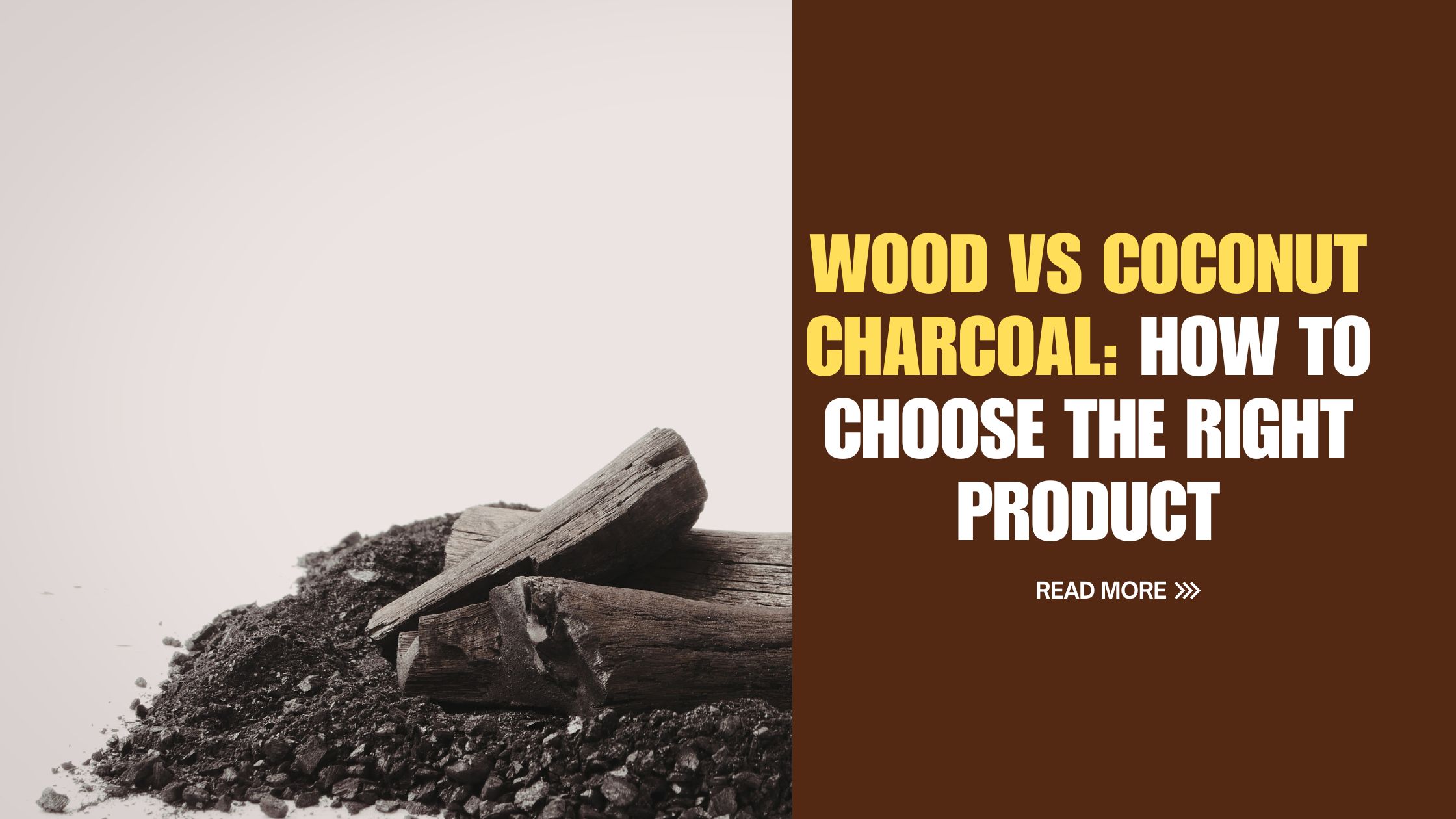
Wood vs Coconut Charcoal: How to Choose the Right Product for Your Market

Wood vs Coconut Charcoal: How to Choose the Right Product for Your Market

Most comparisons of wood vs coconut charcoal are written for people deciding what to put on their grill. This one is written for importers and distributors deciding what to put in a container and why that decision is not as obvious as it looks. The answer changes depending on your market, your channel, and which product your end buyers actually ask for.

The Charcoal Factory makes two things: wood charcoal and bamboo charcoal. Both sell. Both have buyers who order them regularly and build their distribution businesses around them. But the businesses that do best are the ones that matched the right product to their specific market before placing the first container, not the ones that ordered the cheaper option and hoped the market would accept it.

The typical comparison article on wood versus bamboo charcoal walks through burn time, ash content, and which one is more eco-friendly, and then concludes with something like “it depends on your needs.” That’s not useful if you’re trying to decide what to import for distribution in Germany, or what to supply to hookah lounges in Dubai, or what to put on a supermarket shelf in Australia.

This post works through the actual commercial decision. What are the two products really like, not just in performance, but in how they behave in different markets? Where does each one win, and where does each one create problems for the buyer who chose the wrong one? And what does the pricing differential actually look like in 2026, because the gap between wood and bamboo charcoal at FOB affects every margin calculation you make downstream?

What wood charcoal and bamboo charcoal actually are and how they’re made

What wood charcoal and bamboo charcoal actually are and how they're made

Before the market analysis, it helps to be clear about what each product is. A lot of confusion in buyer decisions comes from treating “charcoal” as a single category when the two materials have meaningfully different production processes, characteristics, and end-use profiles.

Wood charcoal – Machine-made & shaped wood charcoal

Made from selected hardwoods, fruitwood, acacia, and mixed hardwoods are most common in Chinese production. The wood is carbonised in kilns, then either sold as natural lump or processed into shaped forms (pillow briquette, hex rod, square rod) through compression. Shaped wood charcoal from TCF uses compressed wood charcoal powder formed into consistent shapes, which gives more predictable burn performance than natural, irregular lump. The result is a product with a mild smoky character and high heat output that lights readily and burns hot.

Wood charcoal is the default BBQ fuel in most of the world’s largest grilling markets, the UK, USA, Germany, Australia, and South Africa. The “campfire” association is cultural as much as it is about performance.

  • Fixed carbon (A-grade)> 72%
  • Ash content (A-grade)≤ 5%
  • Calorific value 6,500–7,200 kcal/kg
  • Burn time 1.5–2.5 hrs (shaped)
  • Flavour influence: Mild smoky present
  • Forms available: Pillow, hex, shaped, BBQ
Charcoal in bulk

Bamboo charcoal – Machine-made & shaped bamboo charcoal

Made from bamboo — a fast-growing grass that carbonises differently from hardwood due to its higher silica content and denser cell structure. Bamboo charcoal is almost always compressed and shaped rather than used as a natural lump, because bamboo doesn’t produce useful irregular chunks the way wood does. Machine-made bamboo charcoal from TCF is extruded from compressed bamboo powder and carbonised at 800°C–1,000°C, producing extremely uniform density and shape. This uniformity is one of bamboo’s core commercial advantages: automated packing lines, consistent burn profiles, and no irregular sizing issues.

Bamboo charcoal burns more cleanly than wood, with less smoke on lighting, no woody flavour influence on food or tobacco. This is why it’s the dominant shisha charcoal material in the Middle East and a growing BBQ fuel in eco-conscious markets.

  • Fixed carbon (A-grade)≥ 80%
  • Ash content (A-grade)≤ 3%
  • Calorific value 7,000–8,000 kcal/kg
  • Burn time2–3 hrs
  • Flavour influence Neutral minimal
  • Forms available: Cube, hex, flat, square rod

The spec comparison between Wood vs Coconut Charcoal shows bamboo with better numbers on fixed carbon, ash content, calorific value, and burn time. That’s accurate. A-grade bamboo charcoal is technically a superior fuel by these measures. But “technically superior” doesn’t automatically translate into “commercially better for your market.” There are large markets where wood charcoal is the right product even though bamboo would outperform it on every spec metric, because the buyer preference, price expectation, and channel norms are built around wood. Understanding why that is the case is what this guide is for.

The question most buyers ask, and the better one they should ask

The question buyers usually ask when comparing these two products is: which one is better?

The better question is: which one does my specific market already buy, at what price, through what channel — and can I enter that market at a price that makes commercial sense?

The product that performs better on a spec sheet and the product that performs better in your P&L are not always the same one. In charcoal, they’re often different depending on the geography.

Here’s the commercial reality. Wood charcoal has been the BBQ fuel of record in the UK, USA, Germany, and Australia for decades. Consumer habits, retail planograms, and trade relationships are built around it. A distributor going into those markets with bamboo charcoal is not selling a better product; they’re selling a product that requires market education, repositioning, and a price story that makes the change worthwhile for the retail buyer and the end consumer. That’s a harder sell than it looks.

Bamboo charcoal, on the other hand, is the default shisha fuel across the Middle East, not because every lounge operator evaluated it scientifically, but because Chinese bamboo charcoal factories built the supply chain into that market 15 years ago, and the product became the norm. A distributor entering the GCC shisha market without a bamboo charcoal offer isn’t competing at a disadvantage; they’re not competing at all, because their product isn’t what lounge operators stock.

Neither market preference is irrational. Both are historically established and commercially entrenched. The task for a buyer is to figure out which market they’re in, which product that market expects, and then order accordingly.

Use case breakdown: which product wins, where and why

Shisha & hookah lounge supply

Flavour neutrality is everything in shisha; the charcoal must not influence the tobacco taste. Bamboo’s near-neutral burn profile makes it the industry standard. Wood charcoal smokes too visibly on light and introduces a woody character that experienced shisha smokers notice immediately. This is not a preference that can be overcome with marketing.

BBQ retail UK, USA, Australia

These are lump-and-briquette markets with an entrenched wood charcoal culture. The “real charcoal” narrative in UK BBQ media specifically frames lump hardwood as authentic. Bamboo exists as a niche eco product in these markets, but does not approach wood charcoal’s volume. Wood is the right entry point for any importer going into the UK, US, or Australian BBQ retail.

European eco retail (DE, NL, Nordics)

Germany and the Netherlands, in particular, are shifting toward plant-based, sustainable BBQ fuels. Bamboo’s story fastest-growing plant on earth, no trees felled, harvested without replanting, lower production emissions, resonates strongly with European eco-product buyers. Bamboo charcoal, positioned as the sustainable BBQ alternative to wood, commands a shelf price premium and meets retailer sustainability sourcing requirements that wood charcoal cannot.

Restaurant & food service high heat

A-grade wood charcoal delivers excellent high heat for searing and grilling in professional kitchens. A-grade bamboo does too, and burns longer and cleaner. For restaurants where charcoal taste influence is a desired outcome (smoky ribs, campfire chicken), wood is often preferred. For restaurants where flavour neutrality matters, Japanese robatayaki, Middle Eastern grilling, bamboo is the better choice.

Supermarket retail private label

For general BBQ charcoal shelf space in most markets, shaped wood charcoal in retail bags is the standard format. For eco-positioned own-brand ranges in European supermarkets, bamboo gives a stronger sustainability story. The decision for a private label buyer is essentially: which story does my retail partner want to tell: “premium BBQ charcoal” (wood) or “sustainable plant-based fuel” (bamboo)?

Wholesale redistribution to bulk buyers

For importers who simply need the highest volume of charcoal per dollar spent, redistributors, industrial fuel buyers, catering supply at scale, wood charcoal’s lower price point typically wins. It provides good calorific value per ton at a lower FOB cost. Bamboo is the right choice when a premium justification exists at the end channel. Without that, wood’s better cost-per-ton usually prevails.

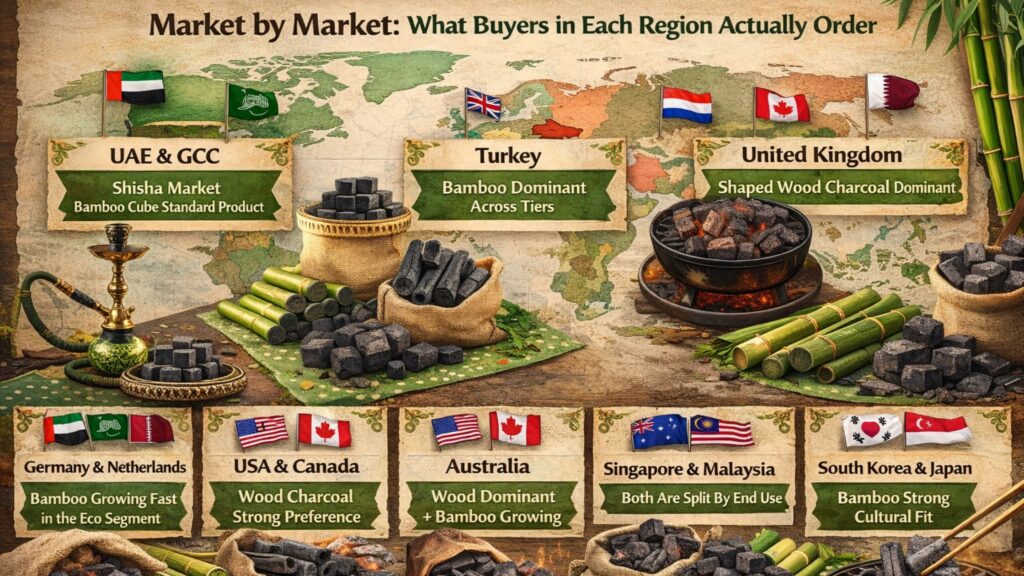
Market by market, what buyers in each region actually order

Market by market, what buyers in each region actually order

Geography shapes product preference more strongly in charcoal than in almost any commodity. Here’s what experience shipping to 40+ countries tells us about which product moves in which market.

UAE & GCC (shisha market) – Bamboo cube standard product

Bamboo cube charcoal is the volume product for shisha distribution across the UAE, Saudi Arabia, Jordan, and Kuwait. It has been the norm here for over a decade. The product your lounge operator customers already buy, already stock, and already know how to use. Any distributor entering this market needs an A-grade bamboo cube as the core product. Wood charcoal has no meaningful role in the GCC shisha market.

Turkey – Bamboo dominant across tiers

Turkey is a large shisha market with significant domestic production, but Chinese bamboo charcoal imports are substantial. Budget venues use a B-grade bamboo cube. Mid-tier venues use A-grade bamboo cube. Premium venues occasionally specify higher-spec bamboo. Wood charcoal plays a minor role in Turkish shisha supply bamboo is the established format across all price points.

United Kingdom – Shaped wood charcoal dominant

The UK BBQ market is driven by lump and shaped hardwood charcoal. “Natural hardwood charcoal” is a strong brand concept in the UK — there’s significant food media influence here (TV chefs, outdoor cooking culture) pushing toward what’s perceived as authentic charcoal. Bamboo exists in a small eco-niche but does not compete with wood on volume. An importer entering UK BBQ retail starts with wood.

Germany & Netherlands – Bamboo growing fast in the eco segment

This is where the market is shifting most visibly. German and Dutch supermarkets and outdoor retailers have been replacing standard wood briquettes with eco-positioned alternatives. Bamboo charcoal, marketed as sustainable, plant-based, and deforestation-free, is picking up real shelf space. For buyers targeting eco-product ranges in Germany or the Netherlands, bamboo is now the stronger commercial bet.

USA & Canada – Wood charcoal strong preference

The US BBQ market has deep cultural roots in wood-based charcoal. Hardwood lump is the premium format; compressed wood briquettes (Kingsford-style) dominate the commodity segment. Bamboo is a speciality product in the USA, interesting for eco-niche or Asian food concepts, but not a mainstream import play. Wood-shaped charcoal for the premium import segment is the right entry product.

Australia – Wood dominant + bamboo growing

Australia follows a UK-similar preference pattern, with wood charcoal being the BBQ standard, with hardware retailers (Bunnings) as the dominant channel. But the sustainability trend is accelerating, and bamboo eco-charcoal is gaining genuine shelf space. A buyer entering Australia with only wood is well-positioned now but should be watching the bamboo eco segment closely for the next 2–3 years.

Singapore & Malaysia – Both are split by end use

Singapore and Malaysia serve as redistribution hubs as well as domestic markets. The shisha segment (Singapore has a visible shisha café culture) takes a bamboo cube. The BBQ and satay charcoal market takes wood charcoal — Malaysian satay charcoal specifically is a well-defined product category using shaped hardwood. A distributor here can often serve both segments.

South Korea & Japan – Bamboo strong cultural fit

Both markets have existing relationships with bamboo as a material. Japanese BBQ culture includes binchotan (white charcoal) and bamboo charcoal as premium categories. South Korean BBQ restaurants often specify bamboo charcoal for clean heat without smoke in ventilated restaurant settings. These are specialist markets requiring premium product documentation and quality control, but bamboo charcoal is the right product category for both.

Also read – Bamboo charcoal market

The pricing gap and what it means for your margin

Bamboo charcoal costs more than wood charcoal at the FOB level. That is a fact. What it means for your margins depends entirely on what your market will pay for each product at the retail or wholesale level — and the answer is not the same in every channel.

ProductGradeFOB price range (USD/MT)vs A-grade wood
Shaped wood charcoal — BBQA$360–$460Baseline
Shaped wood charcoal — BBQB$280–$360−20 to −25%
Machine-made bamboo charcoalA$420–$520+12 to +18%
Machine-made bamboo charcoalB$330–$420−5 to +10%
Bamboo shisha charcoal cubeA$440–$540+18 to +22%
Bamboo shisha charcoal cubeB$350–$440−5 to +8%
Shaped bamboo charcoal — BBQ ecoA$410–$510+10 to +16%

The bamboo premium is real but not enormous, roughly 12–22% more for A-grade bamboo versus A-grade wood, depending on product type. The shisha cube format carries the largest premium because it requires more precise sizing, consistent density for uniform burn in a hookah bowl, and typically better raw material specifications.

What matters more than the FOB gap is the retail price differential in your specific market. In Germany’s eco-product segment, A-grade bamboo BBQ charcoal in branded kraft bags can retail at 25–35% more than a comparable wood charcoal product. If the FOB cost is 15% higher but the retail price is 30% higher, your margin percentage on bamboo is actually better than on wood, despite the higher absolute cost.

The margin calculation that most buyers skip

Here’s a rough comparison for a European retail buyer, 5kg bag format, before freight and duty:

Wood charcoal A-grade: FOB ~$410/MT → landed ~$680/MT → $3.40 per 5kg bag. Retail Germany: €6.50 (~$7.10). Gross margin: ~52%.

Bamboo eco charcoal A-grade: FOB ~$470/MT → landed ~$740/MT → $3.70 per 5kg bag. Retail Germany eco range: €9.99 (~$10.90). Gross margin: ~66%.

The bamboo product costs $0.30 more per bag to land. It sells for $3.80 more per bag. The higher FOB cost of bamboo disappears the moment your retail channel supports the sustainability premium. The calculation only breaks the other way if you try to sell bamboo at wood charcoal pricing — which is a positioning mistake, not a product problem.

The bamboo charcoal sustainability story and why it matters commercially, not just ethically

Bamboo is the fastest-growing plant on earth. Moso bamboo the variety most commonly used for charcoal in China can grow 90cm in a single day under optimal conditions. It reaches harvestable maturity in four to five years, compared to 20–80 years for the hardwoods used in wood charcoal production. And when bamboo is harvested, the root system remains intact, and the plant regenerates you don’t replant, you simply wait for the next cycle.

This is not just an environmental credential. In an export context, it is a commercial argument that matters in specific markets and channels.

European supermarket buyers particularly in Germany, the Netherlands, Sweden, and the UK’s premium grocery segment have sustainability sourcing requirements that are increasingly applied to every product category, including charcoal. Some require FSC certification (Forest Stewardship Council). Others have internal policies against products associated with deforestation. Wood charcoal, even from certified sources, carries a deforestation association that requires active documentation to overcome. Bamboo charcoal arrives with a clean story by default.

Amazon’s EU marketplace has seen growing listings for “sustainable charcoal” and “eco BBQ charcoal” where bamboo charcoal consistently outperforms wood charcoal on review sentiment partly because of the sustainability framing and partly because bamboo’s cleaner burn produces fewer negative reviews about smoke and ash.

None of this means bamboo is the right product for every eco-positioning play. The sustainability story has to connect with your specific channel and buyer. But for buyers targeting European supermarket eco ranges, premium online channels, or markets where a retailer needs to justify their charcoal category to a sustainability auditor, bamboo charcoal gives you something to say that wood charcoal cannot match.

Charcoal in bulk

For Further Readings:

What happens when buyers order the wrong product

This section is less about theory and more about the pattern of mistakes we see. They tend to cluster around a few recurring scenarios.

Common ordering mistakes — and what they cost

Scenario 1: Wood charcoal into a shisha-dominant market. A general charcoal importer adds wood charcoal to their product line and ships a container to a market they serve for shisha supply. The product is A-grade, well-made, and performs well for BBQ. But their customers are lounge operators and shisha distributors who want bamboo cube. Wood charcoal for shisha produces too much smoke on lighting, leaves visible ash on the bowl, and critically changes the flavour of the tobacco. The container moves slowly and the importer discounts to clear it, destroying the margin on the first order.

Scenario 2: Bamboo shisha cube into a pure BBQ market. A buyer orders A-grade bamboo shisha cube for a UK BBQ retail customer, drawn by the better spec numbers. The retailer’s customers expect lump-style wood charcoal in familiar rough shapes the uniform bamboo cubes look strange to them and the product doesn’t communicate “BBQ” on the shelf. The retailer reduces the order on the second cycle.

Scenario 3: Bamboo at wood charcoal pricing. A buyer imports A-grade bamboo eco charcoal for the European market but prices it at the same level as their existing wood charcoal line to move volume faster. This strips out the margin premium that bamboo requires to make the FOB cost worthwhile. The product sells but at thin margin, and the buyer can’t justify reordering at the higher FOB because the numbers don’t work at commodity pricing.

The common thread in all three scenarios: a product choice made without first confirming what the end channel specifically expects and what it will pay. None of these outcomes are caused by product quality problems — they’re caused by mismatched product-market fit.

Machine-made vs shaped: the format distinction that matters inside each material

Within both wood and bamboo charcoal, TCF wood charcoal supplier and bamboo charcoal supplier produce two format types: machine-made and shaped. This distinction matters for buyers and is worth understanding before ordering.

Machine-made charcoal is produced by extruding compressed charcoal powder through a mould. This is the process that creates the very uniform hex rods, square rods, and other geometric shapes you see in bamboo charcoal catalogues. The uniformity is extreme: every piece is the same diameter, the same length, the same density. This makes machine-made charcoal ideal for automated packing lines (the pieces stack predictably), for shisha use (consistent heat output per piece), and for markets where the visual uniformity reads as quality and precision on retail packaging.

Shaped charcoal â€” particularly shaped wood charcoal refers to charcoal that has been formed into specific shapes (pillow briquette, flat cake, BBQ block) but retains more of the natural character of the source material. Shaped wood charcoal has a slight variation from piece to piece, which many BBQ buyers associate with natural authenticity. It lights more intuitively than a dense machine-made cylinder and behaves more like the hardwood charcoal consumers are familiar with.

For shisha use, machine-made bamboo is almost always the right format. The shisha cube (25×25×25mm or 26×26×26mm) is a machine-made format by definition. For BBQ retail, the choice between machine-made and shaped is partly a market norms question and partly a price question. Shaped formats tend to be slightly more cost-effective for equivalent BBQ performance.

Why does sourcing from one factory change the conversation

Charcoal in bulk

The Charcoal Factory makes both wood charcoal and bamboo charcoal from the same facility in Hefei, China. This is less common than it sounds. Most Chinese charcoal manufacturers specialise in one material or the other because the raw material sourcing, kiln setup, and processing equipment differ between the two. You can even check the Charcoal grades.

For a buyer, sourcing both products from a single manufacturer changes several things. You have one relationship, one set of export documentation procedures, one QC standard, and one contact for any issues that arise. If you’re serving multiple markets say, a shisha distribution business in the Middle East and a BBQ retail business in Europe you can often put both products in the same shipment conversation without managing two supplier relationships in parallel.

It also means the advice you get on product selection comes from someone who has commercial relationships with both product lines and no interest in pushing you toward bamboo when wood is the better fit, or vice versa. A supplier who only makes bamboo charcoal has a structural incentive to tell you that bamboo is the right product for every market. We don’t have that bias because we’re selling you both products and we’d rather you order the right one, come back for more, and scale your business than order the wrong one and not reorder.

If you’re not sure which product is right for your specific situation, the fastest way to find out is to send us your destination market, your sales channel (lounge supply, retail, food service, online), and your rough price target. We’ll tell you what we’d recommend and why and we’ll send you

Get a Quick Quote