

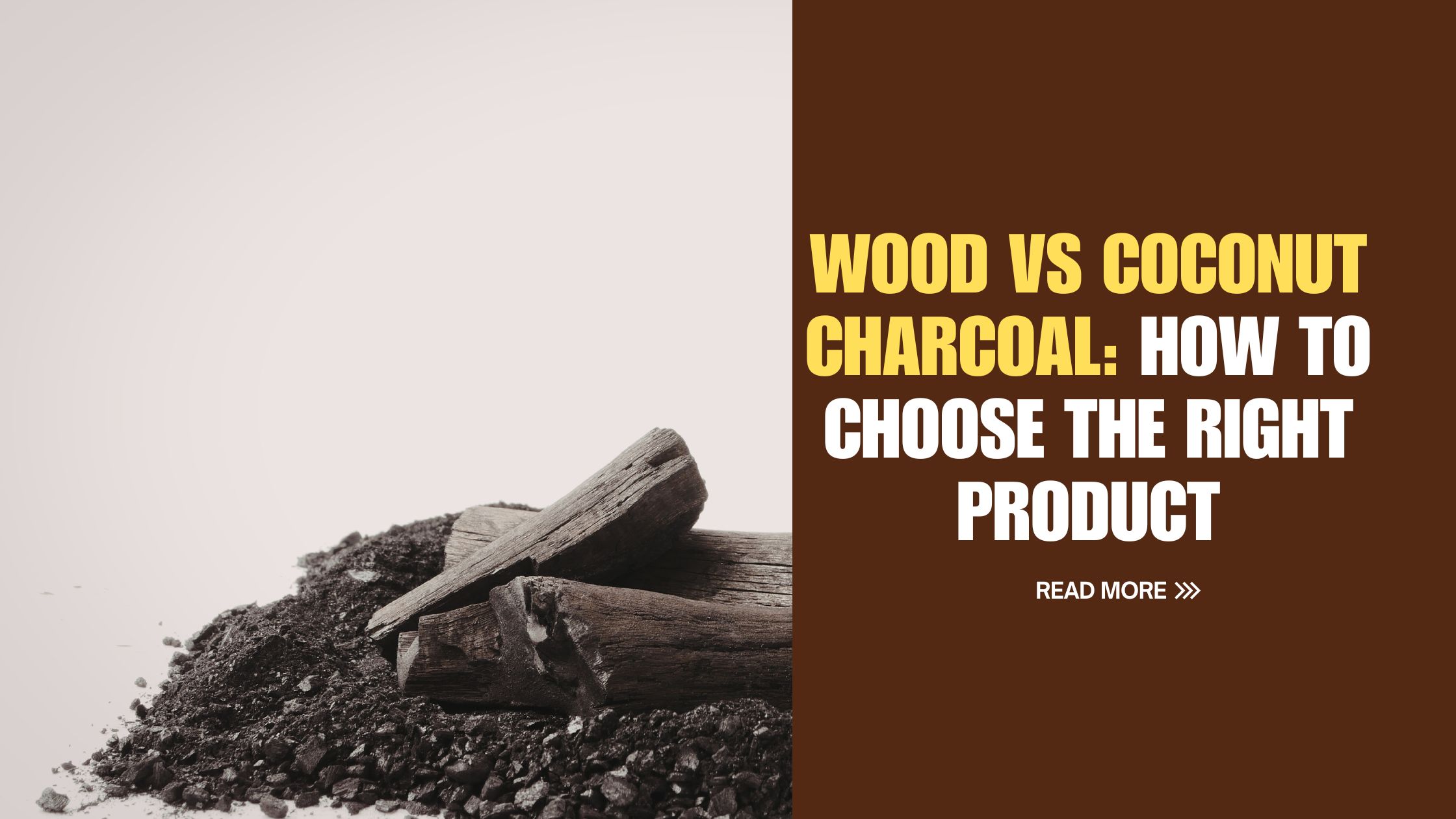
Most comparisons of wood vs coconut charcoal are written for people deciding what to put on their grill. This one is written for importers and distributors deciding what to put in a container and why that decision is not as obvious as it looks. The answer changes depending on your market, your channel, and which product your end buyers actually ask for.
The Charcoal Factory makes two things: wood charcoal and bamboo charcoal. Both sell. Both have buyers who order them regularly and build their distribution businesses around them. But the businesses that do best are the ones that matched the right product to their specific market before placing the first container, not the ones that ordered the cheaper option and hoped the market would accept it.
The typical comparison article on wood versus bamboo charcoal walks through burn time, ash content, and which one is more eco-friendly, and then concludes with something like “it depends on your needs.” That’s not useful if you’re trying to decide what to import for distribution in Germany, or what to supply to hookah lounges in Dubai, or what to put on a supermarket shelf in Australia.
This post works through the actual commercial decision. What are the two products really like, not just in performance, but in how they behave in different markets? Where does each one win, and where does each one create problems for the buyer who chose the wrong one? And what does the pricing differential actually look like in 2026, because the gap between wood and bamboo charcoal at FOB affects every margin calculation you make downstream?
What wood charcoal and bamboo charcoal actually are and how they’re made
Before the market analysis, it helps to be clear about what each product is. A lot of confusion in buyer decisions comes from treating “charcoal” as a single category when the two materials have meaningfully different production processes, characteristics, and end-use profiles.
Wood charcoal – Machine-made & shaped wood charcoal
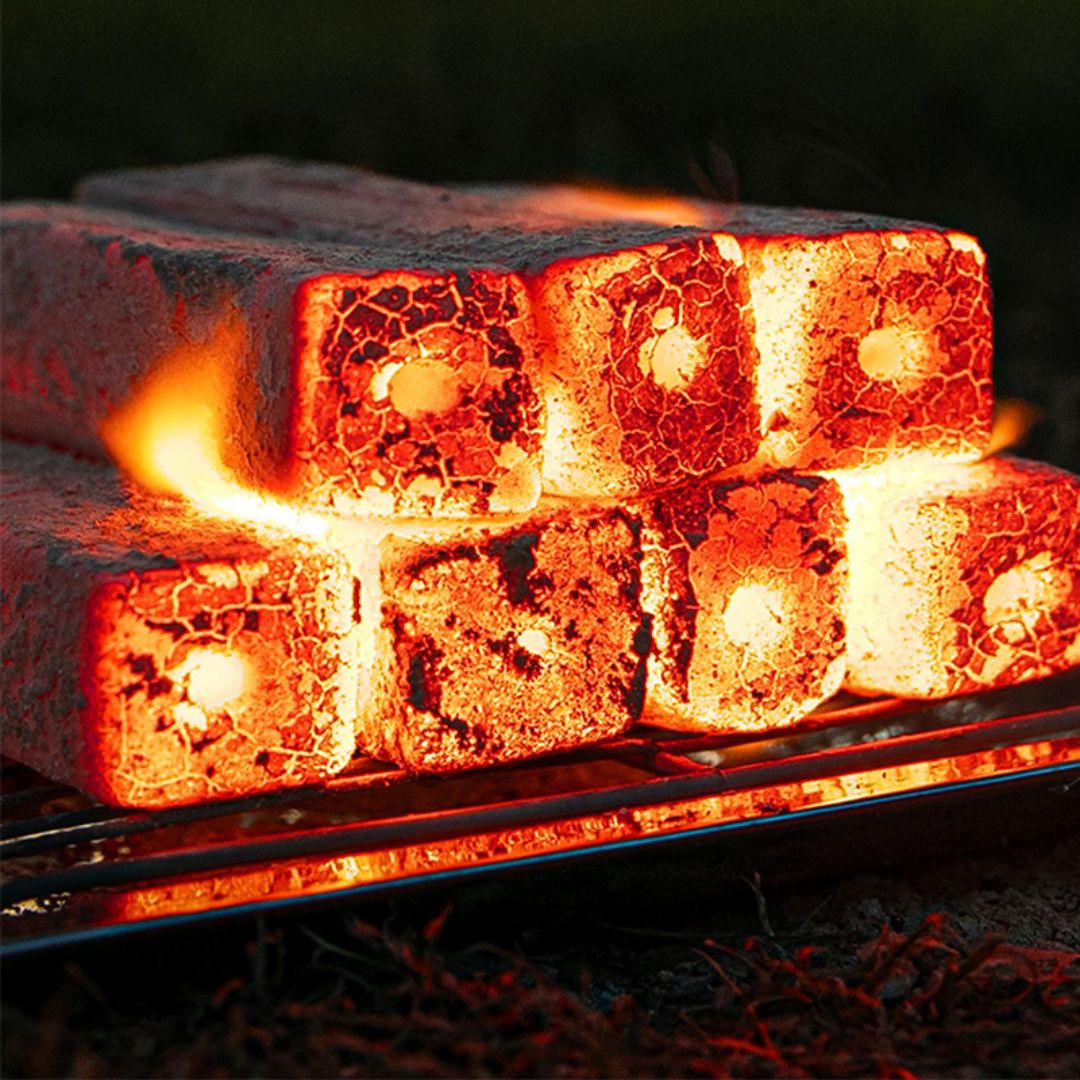
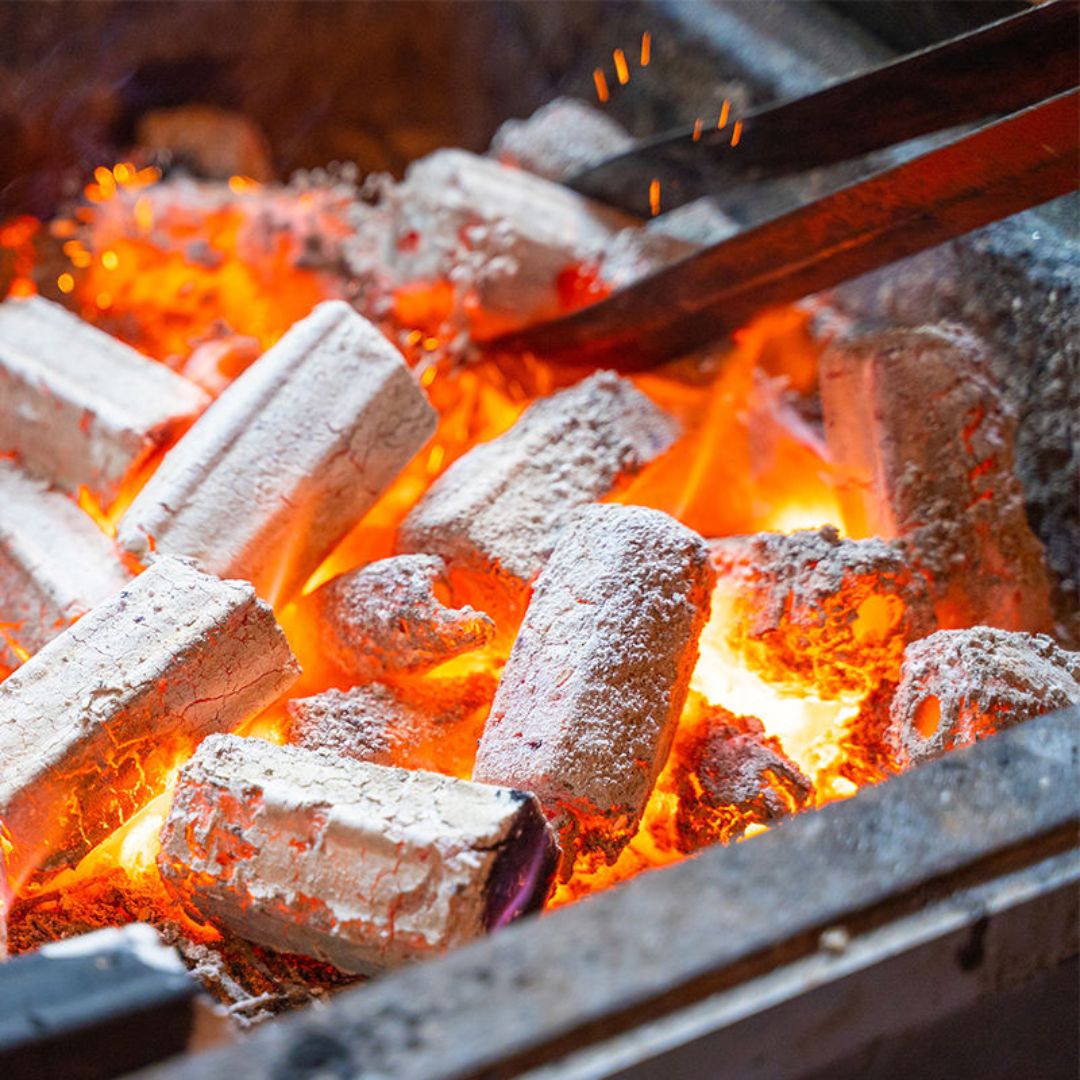
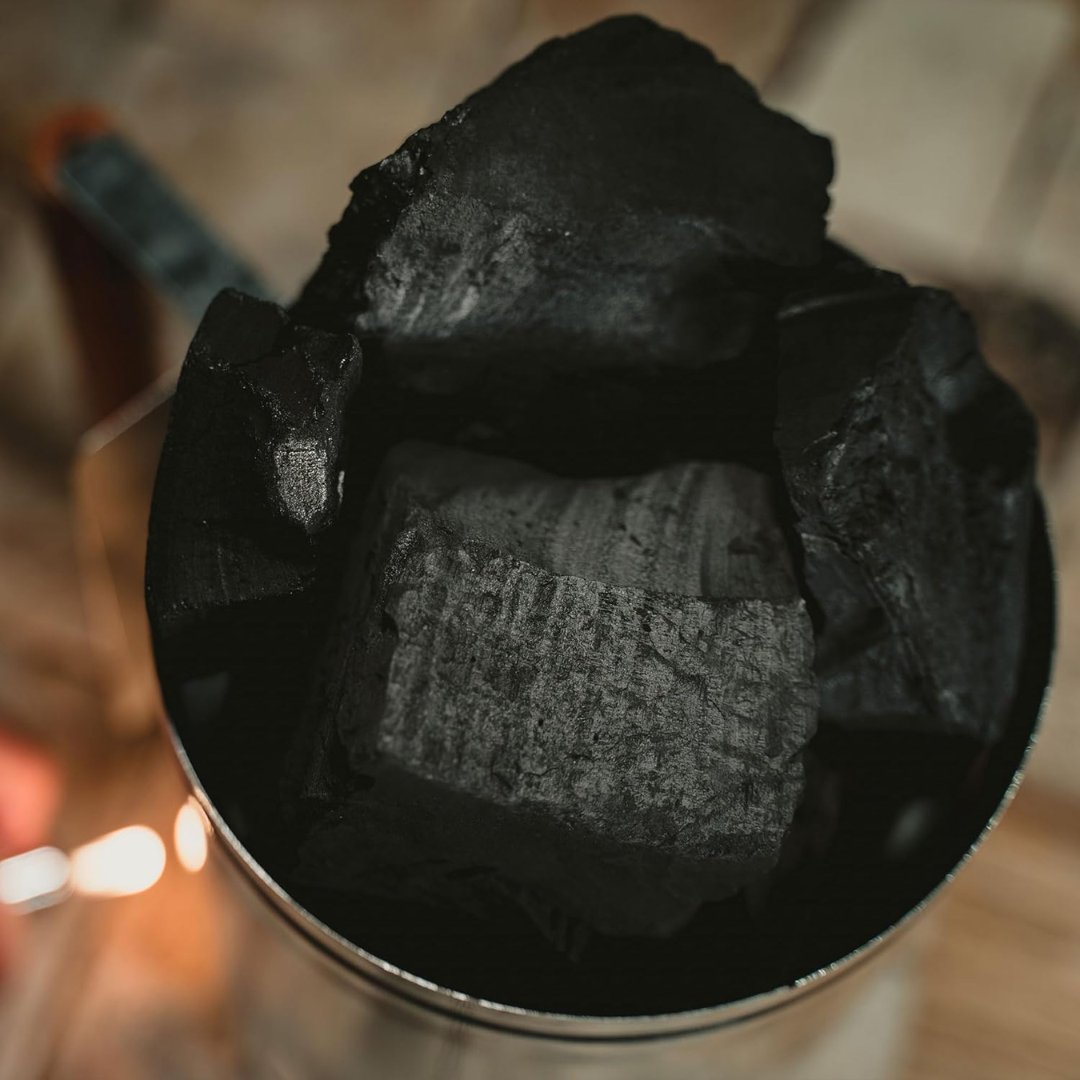
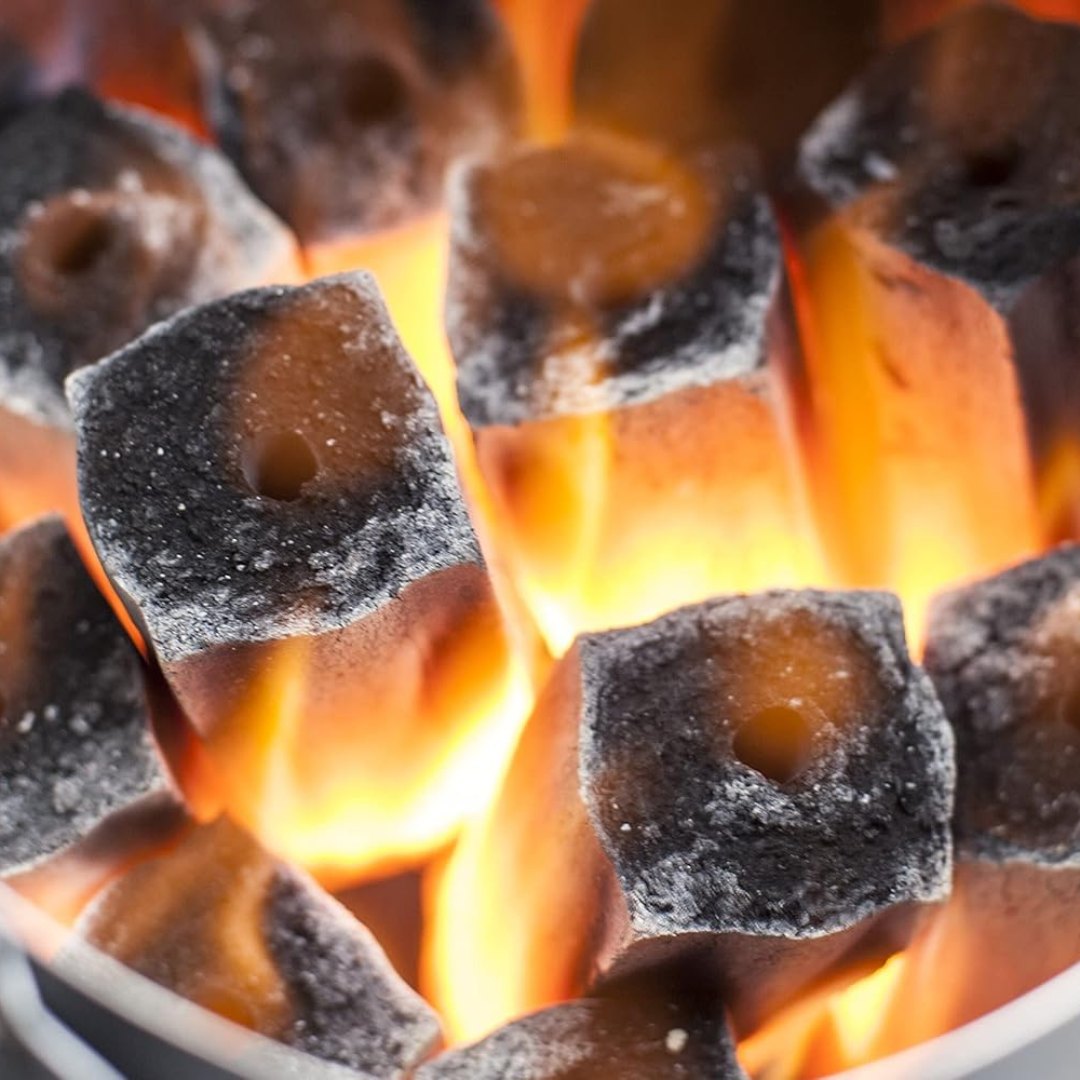
Made from selected hardwoods, fruitwood, acacia, and mixed hardwoods are most common in Chinese production. The wood is carbonised in kilns, then either sold as natural lump or processed into shaped forms (pillow briquette, hex rod, square rod) through compression. Shaped wood charcoal from TCF uses compressed wood charcoal powder formed into consistent shapes, which gives more predictable burn performance than natural, irregular lump. The result is a product with a mild smoky character and high heat output that lights readily and burns hot.
Wood charcoal is the default BBQ fuel in most of the world’s largest grilling markets, the UK, USA, Germany, Australia, and South Africa. The “campfire” association is cultural as much as it is about performance.
- Fixed carbon (A-grade)> 72%
- Ash content (A-grade)≤ 5%
- Calorific value 6,500–7,200 kcal/kg
- Burn time 1.5–2.5 hrs (shaped)
- Flavour influence: Mild smoky present
- Forms available: Pillow, hex, shaped, BBQ
Bamboo charcoal – Machine-made & shaped bamboo charcoal
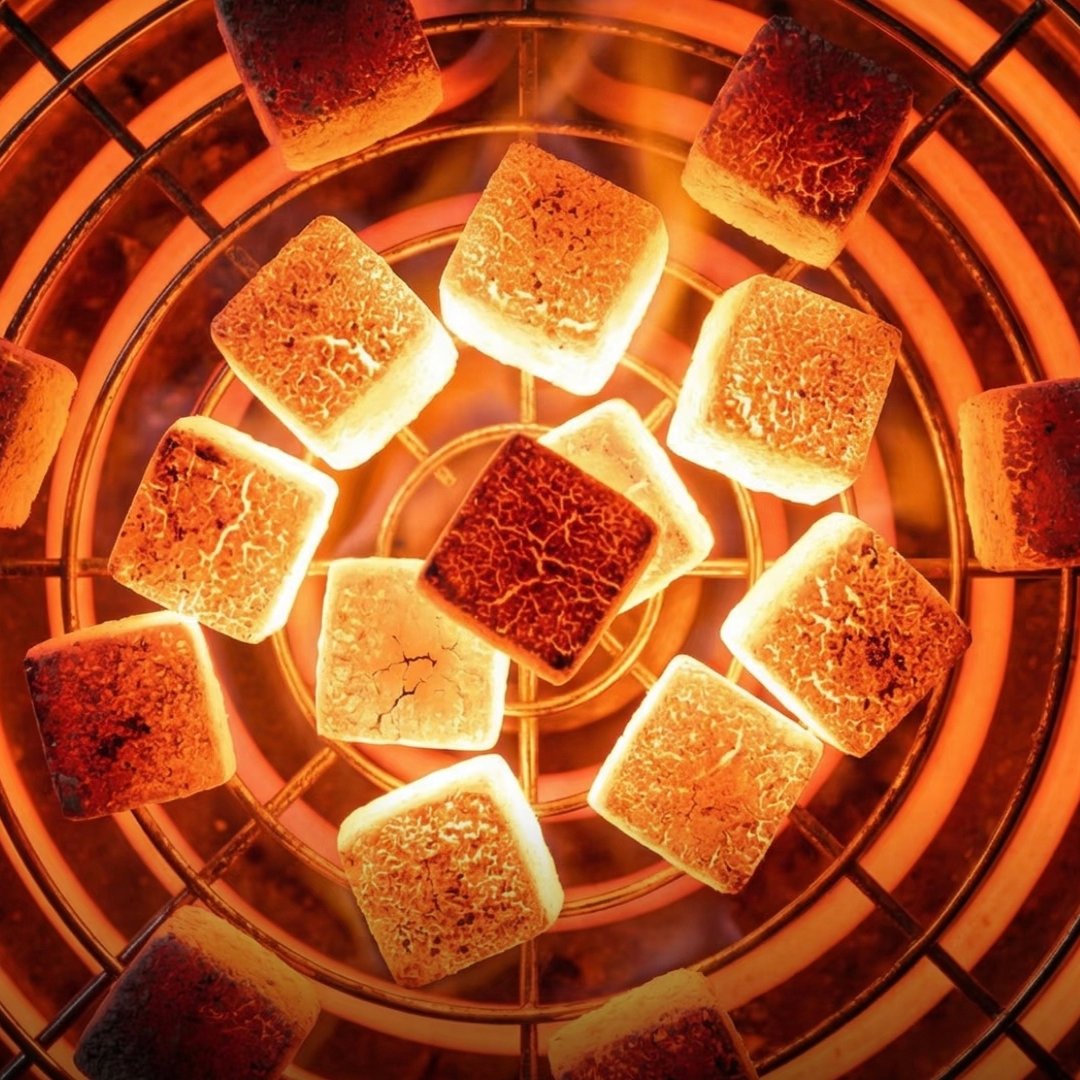
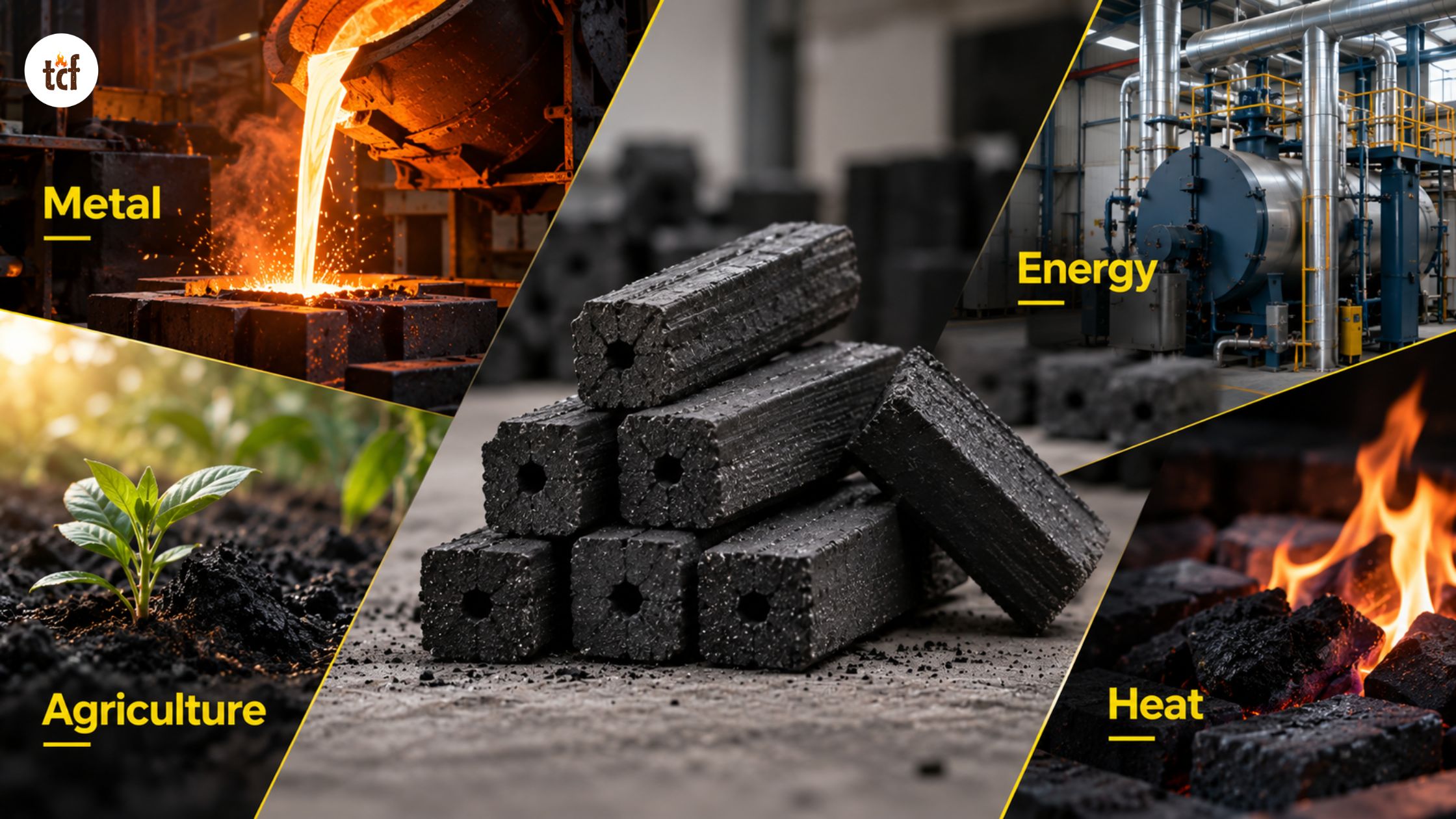
Made from bamboo — a fast-growing grass that carbonises differently from hardwood due to its higher silica content and denser cell structure. Bamboo charcoal is almost always compressed and shaped rather than used as a natural lump, because bamboo doesn’t produce useful irregular chunks the way wood does. Machine-made bamboo charcoal from TCF is extruded from compressed bamboo powder and carbonised at 800°C–1,000°C, producing extremely uniform density and shape. This uniformity is one of bamboo’s core commercial advantages: automated packing lines, consistent burn profiles, and no irregular sizing issues.
Bamboo charcoal burns more cleanly than wood, with less smoke on lighting, no woody flavour influence on food or tobacco. This is why it’s the dominant shisha charcoal material in the Middle East and a growing BBQ fuel in eco-conscious markets.
- Fixed carbon (A-grade)≥ 80%
- Ash content (A-grade)≤ 3%
- Calorific value 7,000–8,000 kcal/kg
- Burn time2–3 hrs
- Flavour influence Neutral minimal
- Forms available: Cube, hex, flat, square rod
The spec comparison between Wood vs Coconut Charcoal shows bamboo with better numbers on fixed carbon, ash content, calorific value, and burn time. That’s accurate. A-grade bamboo charcoal is technically a superior fuel by these measures. But “technically superior” doesn’t automatically translate into “commercially better for your market.” There are large markets where wood charcoal is the right product even though bamboo would outperform it on every spec metric, because the buyer preference, price expectation, and channel norms are built around wood. Understanding why that is the case is what this guide is for.
The question most buyers ask, and the better one they should ask
The question buyers usually ask when comparing these two products is: which one is better?
The better question is: which one does my specific market already buy, at what price, through what channel — and can I enter that market at a price that makes commercial sense?
The product that performs better on a spec sheet and the product that performs better in your P&L are not always the same one. In charcoal, they’re often different depending on the geography.
Here’s the commercial reality. Wood charcoal has been the BBQ fuel of record in the UK, USA, Germany, and Australia for decades. Consumer habits, retail planograms, and trade relationships are built around it. A distributor going into those markets with bamboo charcoal is not selling a better product; they’re selling a product that requires market education, repositioning, and a price story that makes the change worthwhile for the retail buyer and the end consumer. That’s a harder sell than it looks.
Bamboo charcoal, on the other hand, is the default shisha fuel across the Middle East, not because every lounge operator evaluated it scientifically, but because Chinese bamboo charcoal factories built the supply chain into that market 15 years ago, and the product became the norm. A distributor entering the GCC shisha market without a bamboo charcoal offer isn’t competing at a disadvantage; they’re not competing at all, because their product isn’t what lounge operators stock.
Neither market preference is irrational. Both are historically established and commercially entrenched. The task for a buyer is to figure out which market they’re in, which product that market expects, and then order accordingly.
Use case breakdown: which product wins, where and why
Shisha & hookah lounge supply
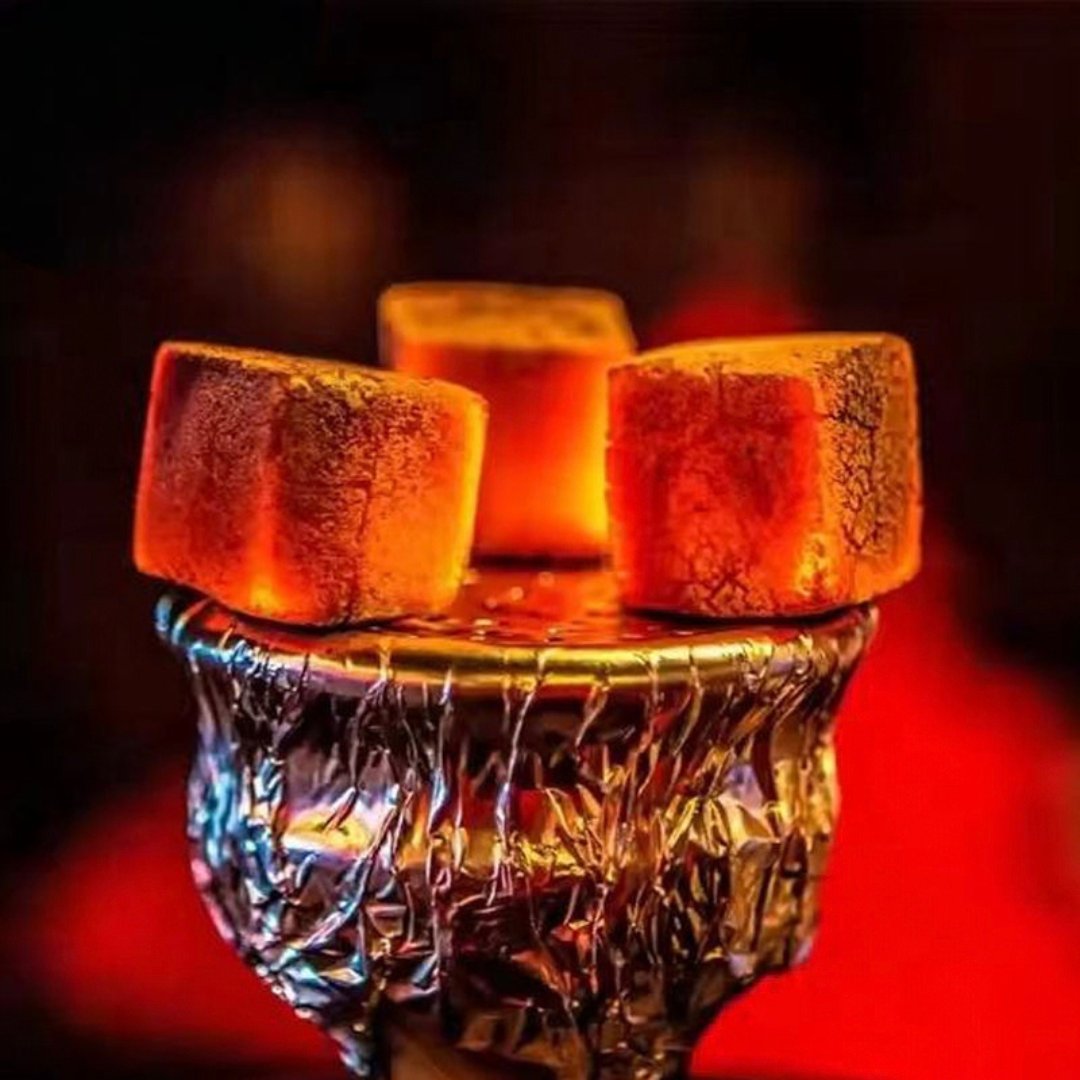
Flavour neutrality is everything in shisha; the charcoal must not influence the tobacco taste. Bamboo’s near-neutral burn profile makes it the industry standard. Wood charcoal smokes too visibly on light and introduces a woody character that experienced shisha smokers notice immediately. This is not a preference that can be overcome with marketing.
BBQ retail UK, USA, Australia
These are lump-and-briquette markets with an entrenched wood charcoal culture. The “real charcoal” narrative in UK BBQ media specifically frames lump hardwood as authentic. Bamboo exists as a niche eco product in these markets, but does not approach wood charcoal’s volume. Wood is the right entry point for any importer going into the UK, US, or Australian BBQ retail.
European eco retail (DE, NL, Nordics)
Germany and the Netherlands, in particular, are shifting toward plant-based, sustainable BBQ fuels. Bamboo’s story fastest-growing plant on earth, no trees felled, harvested without replanting, lower production emissions, resonates strongly with European eco-product buyers. Bamboo charcoal, positioned as the sustainable BBQ alternative to wood, commands a shelf price premium and meets retailer sustainability sourcing requirements that wood charcoal cannot.
Restaurant & food service high heat
A-grade wood charcoal delivers excellent high heat for searing and grilling in professional kitchens. A-grade bamboo does too, and burns longer and cleaner. For restaurants where charcoal taste influence is a desired outcome (smoky ribs, campfire chicken), wood is often preferred. For restaurants where flavour neutrality matters, Japanese robatayaki, Middle Eastern grilling, bamboo is the better choice.
Supermarket retail private label
For general BBQ charcoal shelf space in most markets, shaped wood charcoal in retail bags is the standard format. For eco-positioned own-brand ranges in European supermarkets, bamboo gives a stronger sustainability story. The decision for a private label buyer is essentially: which story does my retail partner want to tell: “premium BBQ charcoal” (wood) or “sustainable plant-based fuel” (bamboo)?
Wholesale redistribution to bulk buyers
For importers who simply need the highest volume of charcoal per dollar spent, redistributors, industrial fuel buyers, catering supply at scale, wood charcoal’s lower price point typically wins. It provides good calorific value per ton at a lower FOB cost. Bamboo is the right choice when a premium justification exists at the end channel. Without that, wood’s better cost-per-ton usually prevails.
Market by market, what buyers in each region actually order
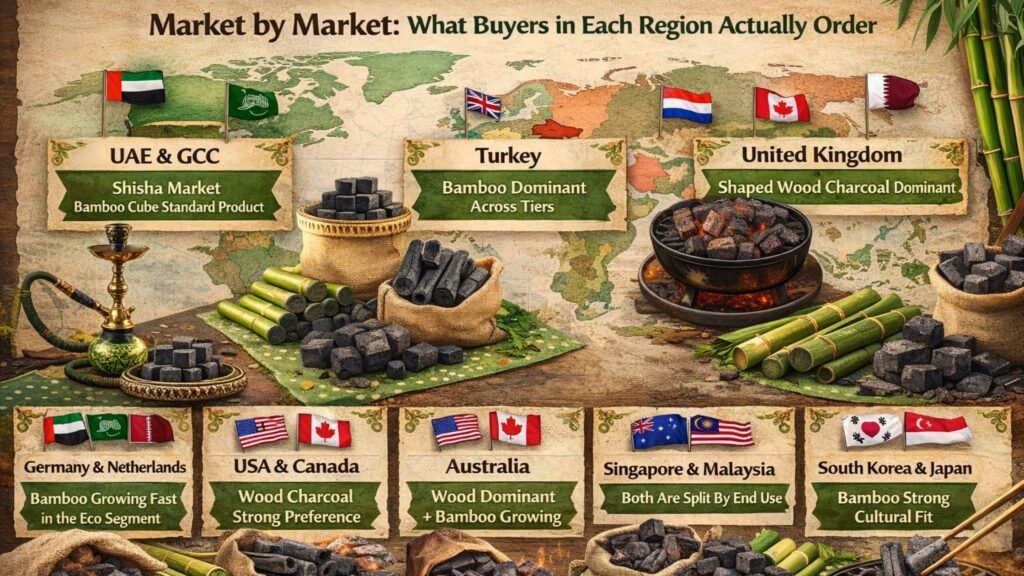
Geography shapes product preference more strongly in charcoal than in almost any commodity. Here’s what experience shipping to 40+ countries tells us about which product moves in which market.
UAE & GCC (shisha market) – Bamboo cube standard product
Bamboo cube charcoal is the volume product for shisha distribution across the UAE, Saudi Arabia, Jordan, and Kuwait. It has been the norm here for over a decade. The product your lounge operator customers already buy, already stock, and already know how to use. Any distributor entering this market needs an A-grade bamboo cube as the core product. Wood charcoal has no meaningful role in the GCC shisha market.
Turkey – Bamboo dominant across tiers
Turkey is a large shisha market with significant domestic production, but Chinese bamboo charcoal imports are substantial. Budget venues use a B-grade bamboo cube. Mid-tier venues use A-grade bamboo cube. Premium venues occasionally specify higher-spec bamboo. Wood charcoal plays a minor role in Turkish shisha supply bamboo is the established format across all price points.
United Kingdom – Shaped wood charcoal dominant
The UK BBQ market is driven by lump and shaped hardwood charcoal. “Natural hardwood charcoal” is a strong brand concept in the UK — there’s significant food media influence here (TV chefs, outdoor cooking culture) pushing toward what’s perceived as authentic charcoal. Bamboo exists in a small eco-niche but does not compete with wood on volume. An importer entering UK BBQ retail starts with wood.
Germany & Netherlands – Bamboo growing fast in the eco segment
This is where the market is shifting most visibly. German and Dutch supermarkets and outdoor retailers have been replacing standard wood briquettes with eco-positioned alternatives. Bamboo charcoal, marketed as sustainable, plant-based, and deforestation-free, is picking up real shelf space. For buyers targeting eco-product ranges in Germany or the Netherlands, bamboo is now the stronger commercial bet.
USA & Canada – Wood charcoal strong preference
The US BBQ market has deep cultural roots in wood-based charcoal. Hardwood lump is the premium format; compressed wood briquettes (Kingsford-style) dominate the commodity segment. Bamboo is a speciality product in the USA, interesting for eco-niche or Asian food concepts, but not a mainstream import play. Wood-shaped charcoal for the premium import segment is the right entry product.
Australia – Wood dominant + bamboo growing
Australia follows a UK-similar preference pattern, with wood charcoal being the BBQ standard, with hardware retailers (Bunnings) as the dominant channel. But the sustainability trend is accelerating, and bamboo eco-charcoal is gaining genuine shelf space. A buyer entering Australia with only wood is well-positioned now but should be watching the bamboo eco segment closely for the next 2–3 years.
Singapore & Malaysia – Both are split by end use
Singapore and Malaysia serve as redistribution hubs as well as domestic markets. The shisha segment (Singapore has a visible shisha café culture) takes a bamboo cube. The BBQ and satay charcoal market takes wood charcoal — Malaysian satay charcoal specifically is a well-defined product category using shaped hardwood. A distributor here can often serve both segments.
South Korea & Japan – Bamboo strong cultural fit
Both markets have existing relationships with bamboo as a material. Japanese BBQ culture includes binchotan (white charcoal) and bamboo charcoal as premium categories. South Korean BBQ restaurants often specify bamboo charcoal for clean heat without smoke in ventilated restaurant settings. These are specialist markets requiring premium product documentation and quality control, but bamboo charcoal is the right product category for both.
Also read – Bamboo charcoal market
The pricing gap and what it means for your margin
Bamboo charcoal costs more than wood charcoal at the FOB level. That is a fact. What it means for your margins depends entirely on what your market will pay for each product at the retail or wholesale level — and the answer is not the same in every channel.
| Product | Grade | FOB price range (USD/MT) | vs A-grade wood |
|---|---|---|---|
| Shaped wood charcoal — BBQ | A | $360–$460 | Baseline |
| Shaped wood charcoal — BBQ | B | $280–$360 | −20 to −25% |
| Machine-made bamboo charcoal | A | $420–$520 | +12 to +18% |
| Machine-made bamboo charcoal | B | $330–$420 | −5 to +10% |
| Bamboo shisha charcoal cube | A | $440–$540 | +18 to +22% |
| Bamboo shisha charcoal cube | B | $350–$440 | −5 to +8% |
| Shaped bamboo charcoal — BBQ eco | A | $410–$510 | +10 to +16% |
The bamboo premium is real but not enormous, roughly 12–22% more for A-grade bamboo versus A-grade wood, depending on product type. The shisha cube format carries the largest premium because it requires more precise sizing, consistent density for uniform burn in a hookah bowl, and typically better raw material specifications.
What matters more than the FOB gap is the retail price differential in your specific market. In Germany’s eco-product segment, A-grade bamboo BBQ charcoal in branded kraft bags can retail at 25–35% more than a comparable wood charcoal product. If the FOB cost is 15% higher but the retail price is 30% higher, your margin percentage on bamboo is actually better than on wood, despite the higher absolute cost.
The margin calculation that most buyers skip
Here’s a rough comparison for a European retail buyer, 5kg bag format, before freight and duty:
Wood charcoal A-grade: FOB ~$410/MT → landed ~$680/MT → $3.40 per 5kg bag. Retail Germany: €6.50 (~$7.10). Gross margin: ~52%.
Bamboo eco charcoal A-grade: FOB ~$470/MT → landed ~$740/MT → $3.70 per 5kg bag. Retail Germany eco range: €9.99 (~$10.90). Gross margin: ~66%.
The bamboo product costs $0.30 more per bag to land. It sells for $3.80 more per bag. The higher FOB cost of bamboo disappears the moment your retail channel supports the sustainability premium. The calculation only breaks the other way if you try to sell bamboo at wood charcoal pricing — which is a positioning mistake, not a product problem.
The bamboo charcoal sustainability story and why it matters commercially, not just ethically
Bamboo is the fastest-growing plant on earth. Moso bamboo the variety most commonly used for charcoal in China can grow 90cm in a single day under optimal conditions. It reaches harvestable maturity in four to five years, compared to 20–80 years for the hardwoods used in wood charcoal production. And when bamboo is harvested, the root system remains intact, and the plant regenerates you don’t replant, you simply wait for the next cycle.
This is not just an environmental credential. In an export context, it is a commercial argument that matters in specific markets and channels.
European supermarket buyers particularly in Germany, the Netherlands, Sweden, and the UK’s premium grocery segment have sustainability sourcing requirements that are increasingly applied to every product category, including charcoal. Some require FSC certification (Forest Stewardship Council). Others have internal policies against products associated with deforestation. Wood charcoal, even from certified sources, carries a deforestation association that requires active documentation to overcome. Bamboo charcoal arrives with a clean story by default.
Amazon’s EU marketplace has seen growing listings for “sustainable charcoal” and “eco BBQ charcoal” where bamboo charcoal consistently outperforms wood charcoal on review sentiment partly because of the sustainability framing and partly because bamboo’s cleaner burn produces fewer negative reviews about smoke and ash.
None of this means bamboo is the right product for every eco-positioning play. The sustainability story has to connect with your specific channel and buyer. But for buyers targeting European supermarket eco ranges, premium online channels, or markets where a retailer needs to justify their charcoal category to a sustainability auditor, bamboo charcoal gives you something to say that wood charcoal cannot match.
For Further Readings:
- How is bamboo charcoal made
- How Charcoal Briquettes Are Made
- What Is Lump Charcoal Made Of
- Charcoal manufacturing
What happens when buyers order the wrong product
This section is less about theory and more about the pattern of mistakes we see. They tend to cluster around a few recurring scenarios.
Common ordering mistakes — and what they cost
Scenario 1: Wood charcoal into a shisha-dominant market. A general charcoal importer adds wood charcoal to their product line and ships a container to a market they serve for shisha supply. The product is A-grade, well-made, and performs well for BBQ. But their customers are lounge operators and shisha distributors who want bamboo cube. Wood charcoal for shisha produces too much smoke on lighting, leaves visible ash on the bowl, and critically changes the flavour of the tobacco. The container moves slowly and the importer discounts to clear it, destroying the margin on the first order.
Scenario 2: Bamboo shisha cube into a pure BBQ market. A buyer orders A-grade bamboo shisha cube for a UK BBQ retail customer, drawn by the better spec numbers. The retailer’s customers expect lump-style wood charcoal in familiar rough shapes the uniform bamboo cubes look strange to them and the product doesn’t communicate “BBQ” on the shelf. The retailer reduces the order on the second cycle.
Scenario 3: Bamboo at wood charcoal pricing. A buyer imports A-grade bamboo eco charcoal for the European market but prices it at the same level as their existing wood charcoal line to move volume faster. This strips out the margin premium that bamboo requires to make the FOB cost worthwhile. The product sells but at thin margin, and the buyer can’t justify reordering at the higher FOB because the numbers don’t work at commodity pricing.
The common thread in all three scenarios: a product choice made without first confirming what the end channel specifically expects and what it will pay. None of these outcomes are caused by product quality problems — they’re caused by mismatched product-market fit.
Machine-made vs shaped: the format distinction that matters inside each material
Within both wood and bamboo charcoal, TCF wood charcoal supplier and bamboo charcoal supplier produce two format types: machine-made and shaped. This distinction matters for buyers and is worth understanding before ordering.
Machine-made charcoal is produced by extruding compressed charcoal powder through a mould. This is the process that creates the very uniform hex rods, square rods, and other geometric shapes you see in bamboo charcoal catalogues. The uniformity is extreme: every piece is the same diameter, the same length, the same density. This makes machine-made charcoal ideal for automated packing lines (the pieces stack predictably), for shisha use (consistent heat output per piece), and for markets where the visual uniformity reads as quality and precision on retail packaging.
Shaped charcoal — particularly shaped wood charcoal refers to charcoal that has been formed into specific shapes (pillow briquette, flat cake, BBQ block) but retains more of the natural character of the source material. Shaped wood charcoal has a slight variation from piece to piece, which many BBQ buyers associate with natural authenticity. It lights more intuitively than a dense machine-made cylinder and behaves more like the hardwood charcoal consumers are familiar with.
For shisha use, machine-made bamboo is almost always the right format. The shisha cube (25×25×25mm or 26×26×26mm) is a machine-made format by definition. For BBQ retail, the choice between machine-made and shaped is partly a market norms question and partly a price question. Shaped formats tend to be slightly more cost-effective for equivalent BBQ performance.
Why does sourcing from one factory change the conversation
The Charcoal Factory makes both wood charcoal and bamboo charcoal from the same facility in Hefei, China. This is less common than it sounds. Most Chinese charcoal manufacturers specialise in one material or the other because the raw material sourcing, kiln setup, and processing equipment differ between the two. You can even check the Charcoal grades.
For a buyer, sourcing both products from a single manufacturer changes several things. You have one relationship, one set of export documentation procedures, one QC standard, and one contact for any issues that arise. If you’re serving multiple markets say, a shisha distribution business in the Middle East and a BBQ retail business in Europe you can often put both products in the same shipment conversation without managing two supplier relationships in parallel.
It also means the advice you get on product selection comes from someone who has commercial relationships with both product lines and no interest in pushing you toward bamboo when wood is the better fit, or vice versa. A supplier who only makes bamboo charcoal has a structural incentive to tell you that bamboo is the right product for every market. We don’t have that bias because we’re selling you both products and we’d rather you order the right one, come back for more, and scale your business than order the wrong one and not reorder.
If you’re not sure which product is right for your specific situation, the fastest way to find out is to send us your destination market, your sales channel (lounge supply, retail, food service, online), and your rough price target. We’ll tell you what we’d recommend and why and we’ll send you