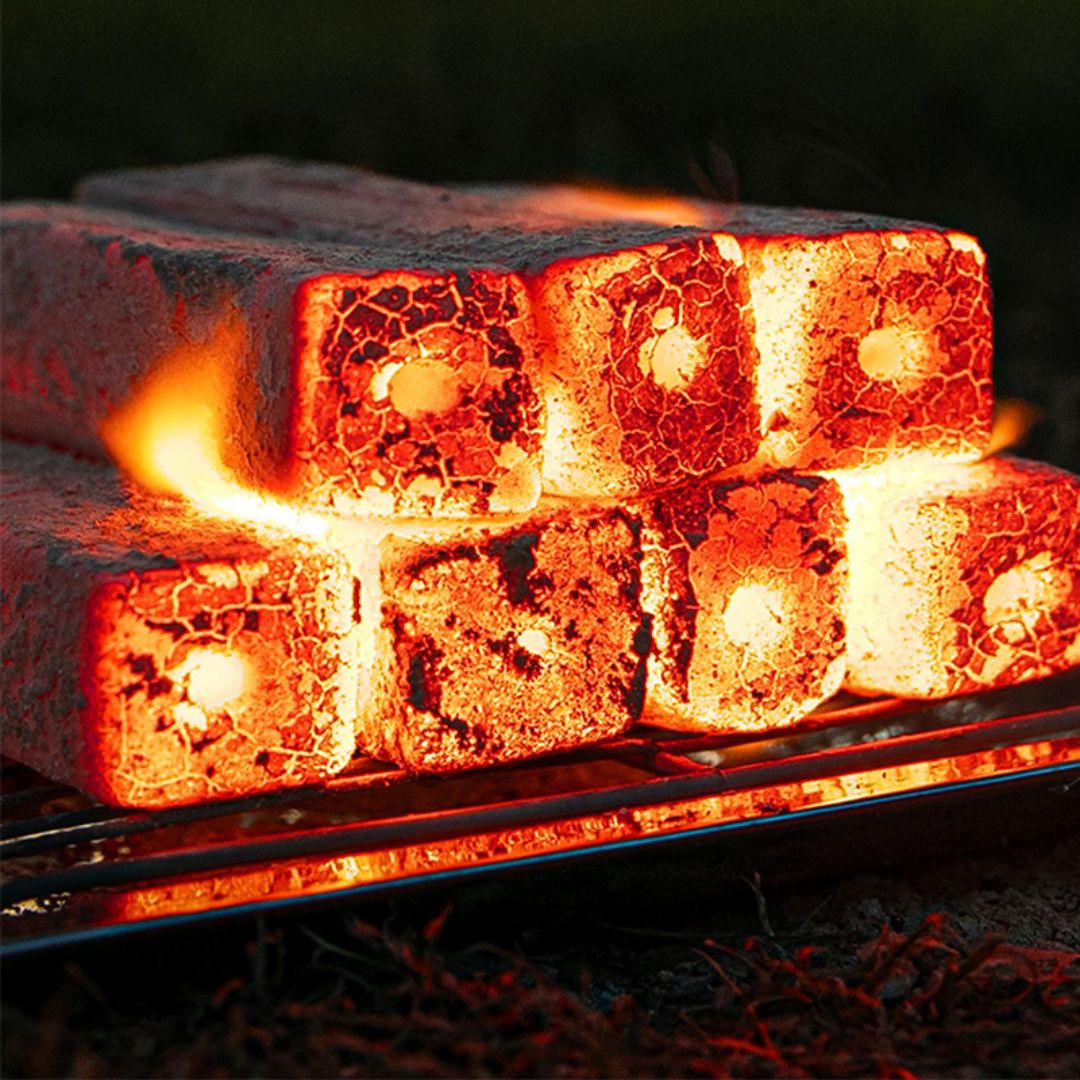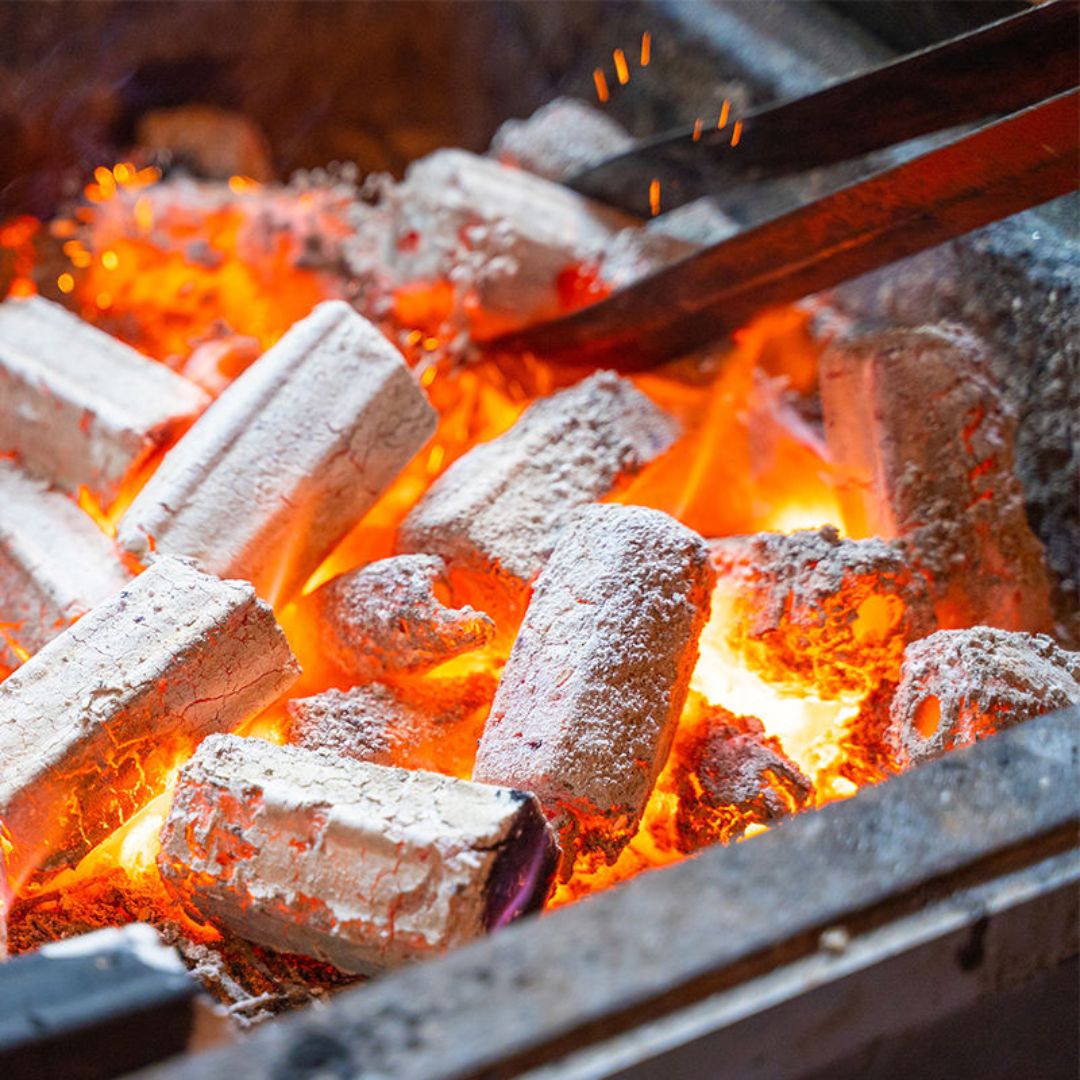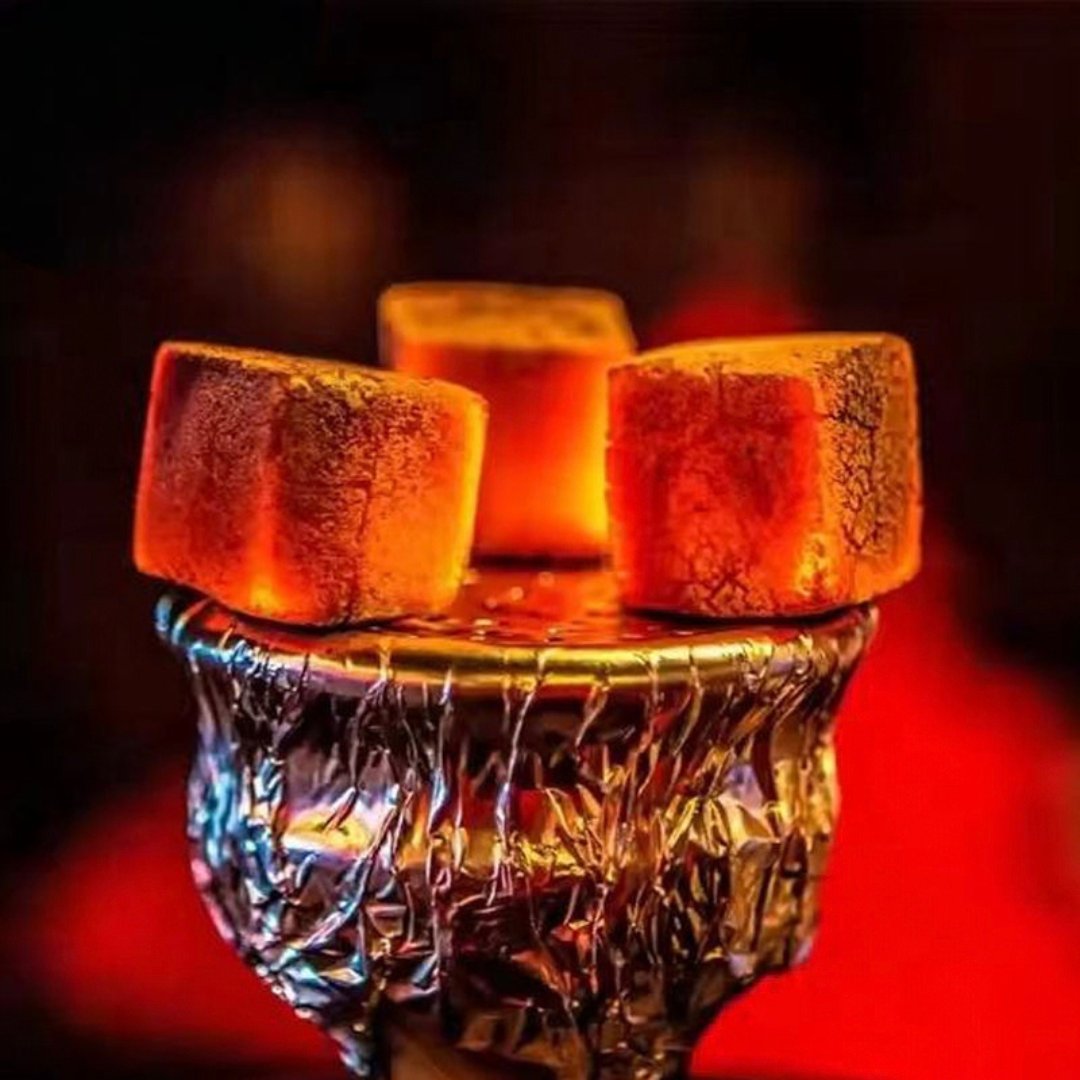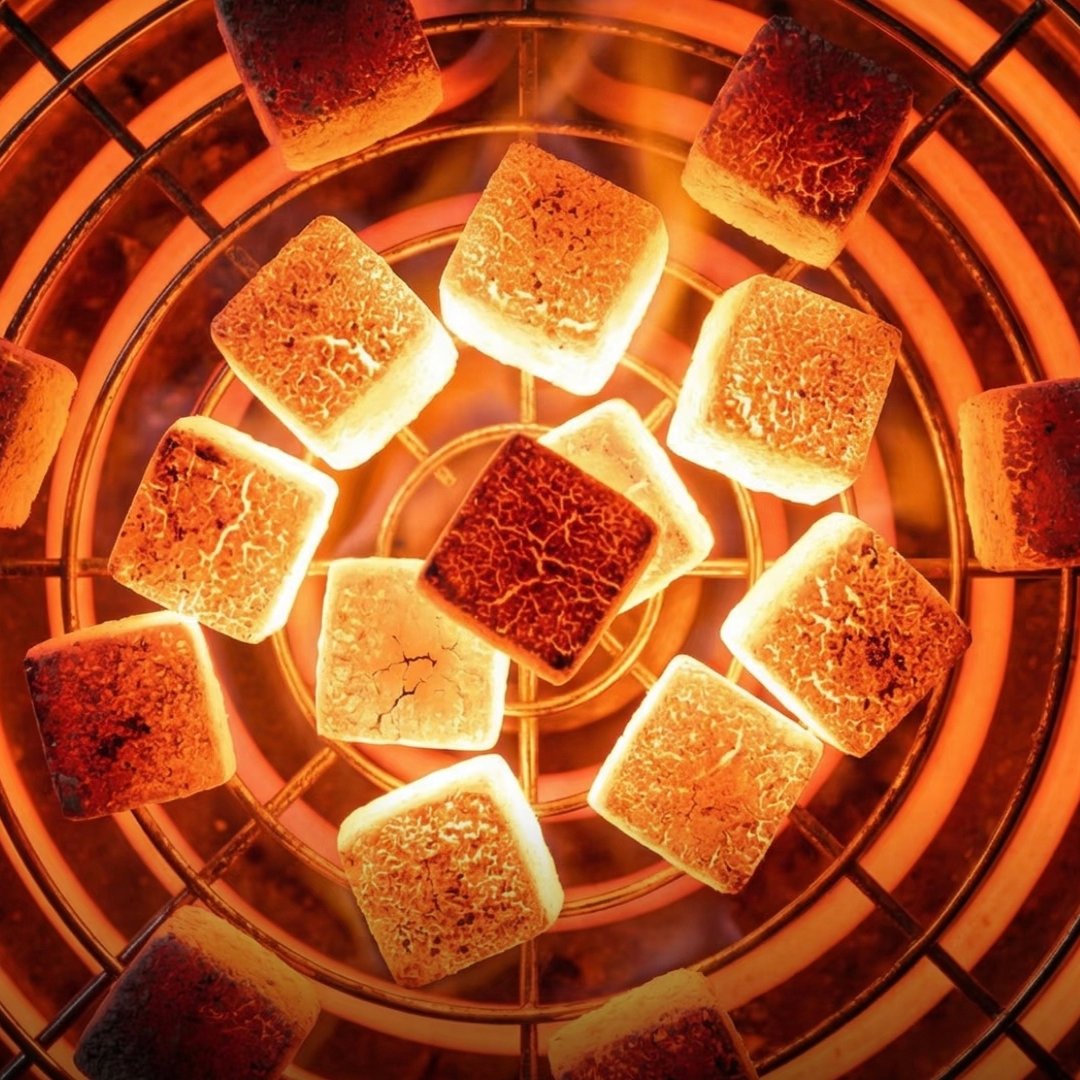


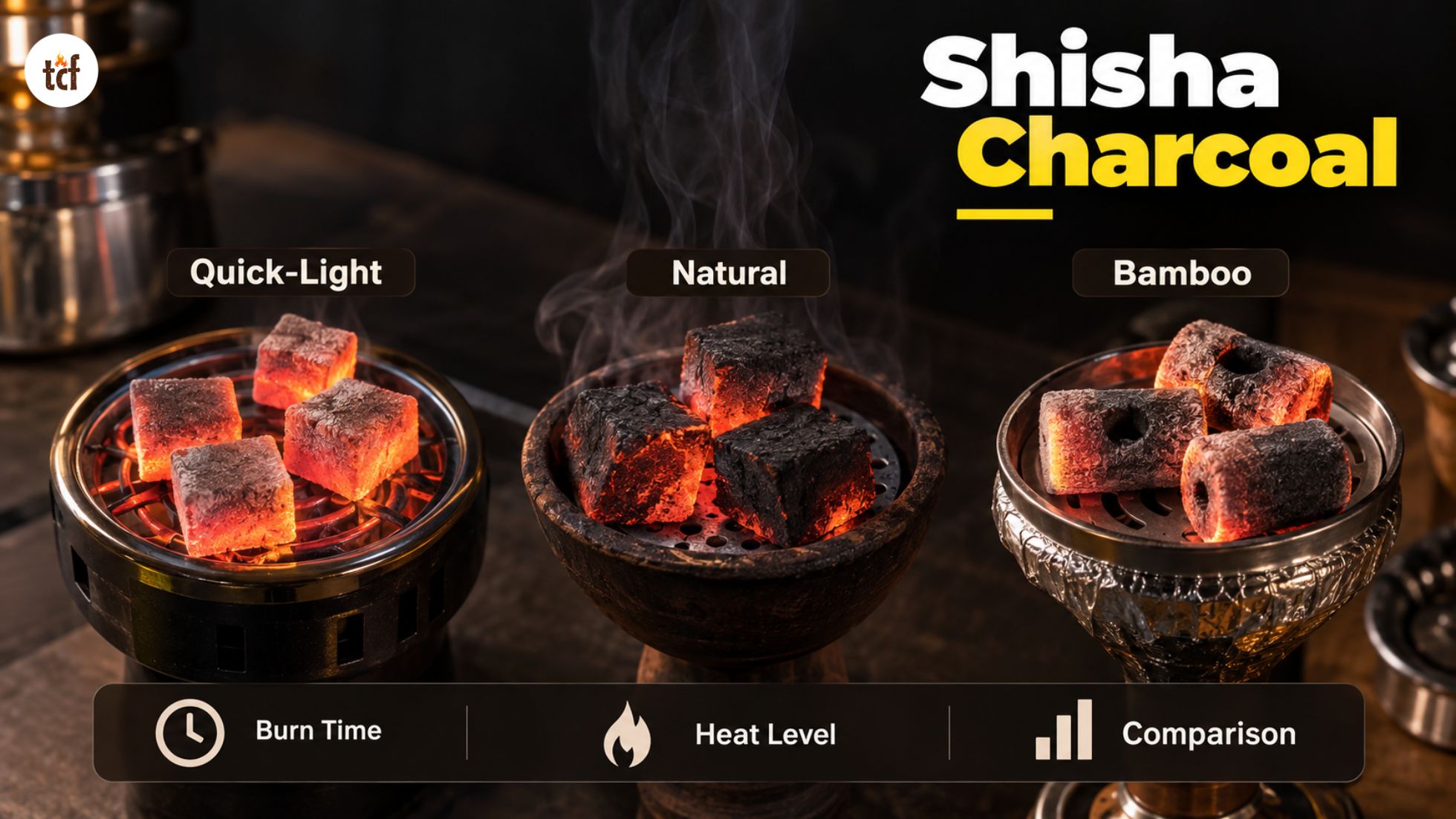
Shisha charcoal burn time and heat comparison: Natural coconut shisha charcoal burns the longest, commonly 75 to 120 minutes, with the steadiest heat and lowest ash (2 to 3%). Bamboo charcoal burns slightly cooler and less consistently than coconut but ignites a little faster. Quick-light charcoal ignites almost instantly but burns out fastest, typically 30 to 60 minutes, with more ash and a chemical note from its ignition accelerant.
Here’s the full breakdown, plus which one actually makes sense for your session length and setup.
Table of Contents
Quick comparison
| Quick-light | Natural coconut | Bamboo | |
| Ignition time | Under 1 to 2 minutes (self-igniting) | 6 to 12 minutes on a coal burner | 6 to 10 minutes on a coal burner |
| Burn time | 30 to 60 minutes | 75 to 120 minutes | 60 to 100 minutes, varies by density |
| Heat consistency | Less stable, prone to flare-ups | Steady, predictable throughout the session | Good, slightly less consistent than coconut |
| Ash produced | 5 to 10% | 2 to 3% | Low, generally close to coconut |
| Flavor impact | Can carry a chemical note from the ignition accelerant | Neutral, doesn’t interfere with shisha flavor | Neutral to mild woody note if not fully carbonized |
| Composition | Compressed charcoal powder with a chemical accelerant (commonly potassium nitrate) | Compressed coconut shell, no chemical additives | Compressed bamboo, no chemical additives |
| Best for | Quick, casual, or single sessions without a coal burner | Lounges, longer sessions, flavor-focused smokers | Sessions where slightly faster ignition matters more than peak consistency |

Why the burn times differ so much
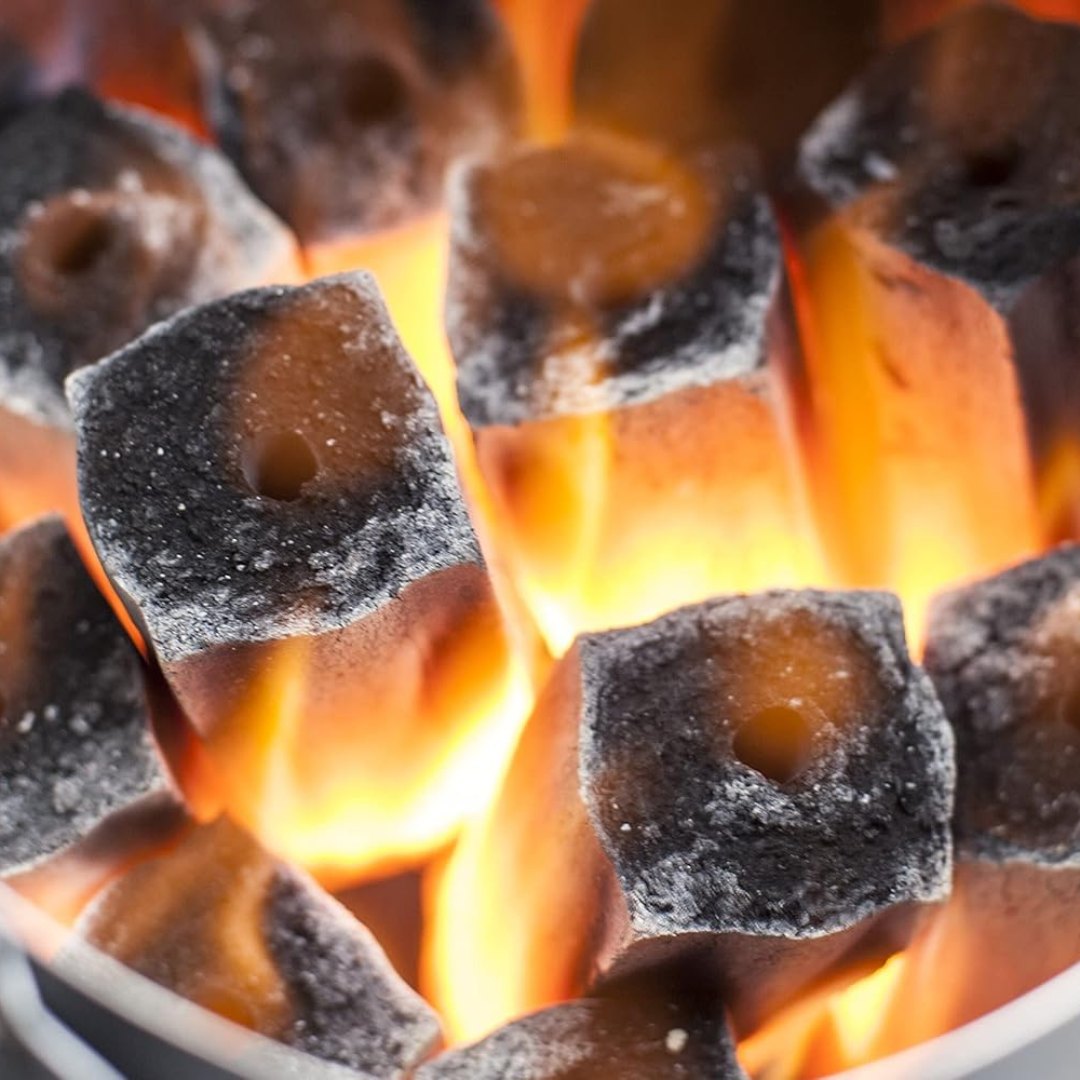
Quick-light charcoal is made from compressed charcoal powder or sawdust mixed with a chemical ignition accelerant, commonly potassium nitrate, which is what lets you light it with a match or lighter instead of a dedicated coal burner. That same accelerant is also why it burns faster and less predictably: it’s designed for rapid ignition, not sustained, even combustion.
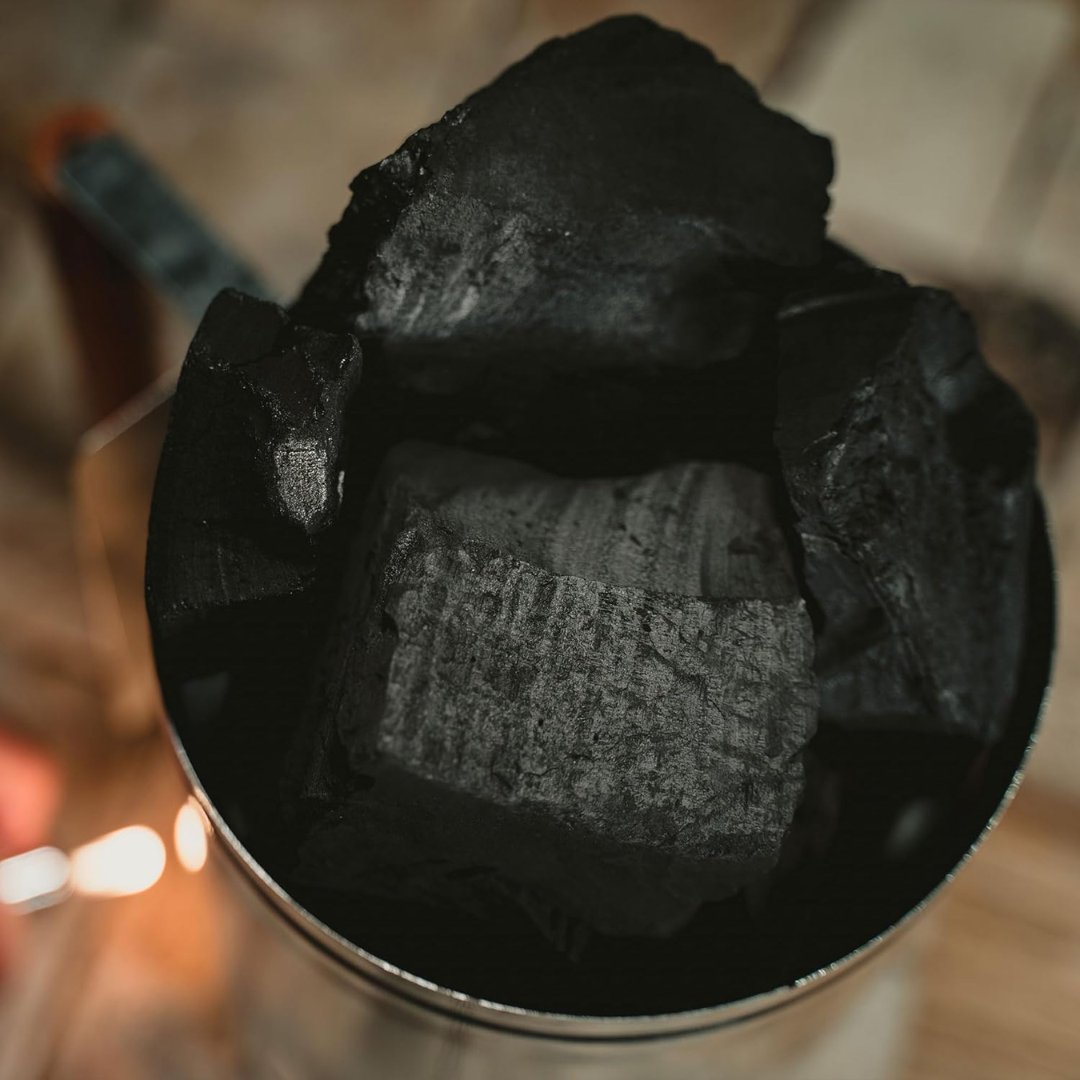
Natural coconut charcoal is compressed coconut shell with no chemical additives, carbonized and pressed into dense cubes or briquettes. That density is the entire reason for its longer burn, more mass per piece means more fuel available before the coal burns through, and a steadier release of heat along the way.
Bamboo charcoal follows a similar natural, additive-free production process but starts from a less dense raw material than coconut shell. It ignites slightly faster as a result, generally 6 to 10 minutes versus 8 to 12 minutes for coconut, but that lower density also means a shorter, somewhat less consistent burn compared to coconut.
Also read – Restaurant-grade charcoal specifications
Why ignition speed and burn time are a tradeoff, not a ranking
It’s tempting to read “quick-light ignites faster” and “coconut burns longer” as a simple better-or-worse comparison, but they’re solving for different things.
Quick-light charcoal exists because not every smoker owns a coal burner, and not every session calls for 90 minutes of continuous heat. For a single short session, the convenience of a match-lit coal can outweigh the tradeoffs.
Natural coconut and bamboo require a coal burner and more lead time before your bowl is ready, but they pay that back with a session that doesn’t need mid-way coal changes and doesn’t introduce flavor interference from an ignition chemical.
The flavor and composition angle
This is where the comparison stops being just about time and starts mattering for what you’re actually tasting. Quick-light charcoal’s accelerant can produce a chemical smell during the first several minutes of a session, which some smokers notice interfering with the shisha flavor, particularly in the opening puffs before the accelerant fully burns off.
Natural coconut and bamboo charcoal, being additive-free, don’t carry that risk. This is also why natural coconut charcoal has become the standard in professional lounges and cafes, where consistent flavor across every session matters more than convenience.
Which one should you actually buy?
- Home use, occasional sessions, no coal burner: quick-light is the practical choice; just be aware of the flavor tradeoff in the first few minutes
- Home use, regular sessions, own a coal burner: natural coconut charcoal, the longer burn means fewer coal changes and a more consistent session
- Lounge or commercial setting: natural coconut charcoal is close to a standard requirement at this point, both for flavor consistency and for lower ash output across high daily volume
- Faster-igniting natural option: bamboo charcoal, if you want additive-free charcoal but don’t want to wait the full 10 to 12 minutes coconut sometimes needs
Sourcing shisha charcoal at volume
If you’re supplying a lounge, café, or distribution business, our wholesale hookah charcoal page covers our current coconut and bamboo shisha charcoal specs, including burn time, ash content, and packaging formats built for commercial reorder volume. For a look at how shisha charcoal production actually works at scale, our guide on hookah charcoal manufacturing plant setup covers the process end to end.
Frequently asked questions
Is quick-light shisha charcoal bad for you?
The chemical accelerants in quick-light charcoal, commonly potassium nitrate, are a legitimate reason some smokers avoid it, both for flavor interference and general preference for burning fewer added chemicals near what they’re inhaling. Natural coconut and bamboo charcoal avoid this by using no additives at all.
How much longer does natural charcoal burn compared to quick-light?
Natural coconut charcoal commonly burns more than double the time of quick-light charcoal, roughly 75 to 120 minutes versus 30 to 60 minutes, depending on brand and piece size.
Is bamboo or coconut charcoal better for shisha?
Coconut charcoal generally burns hotter, longer, and more consistently. Bamboo ignites slightly faster and is a solid additive-free option, but most lounges and serious smokers still lean toward coconut for session length and flavor neutrality.
Do I need a special burner for natural charcoal?
Yes, natural coconut and bamboo charcoal need a dedicated coal burner (electric or gas) to ignite properly, typically taking 6 to 12 minutes. Quick-light charcoal is designed to skip this step and light directly with a match or lighter.
Why does natural charcoal produce less ash than quick-light?
Natural charcoal’s denser, purely biomass composition burns more completely and cleanly. Quick-light charcoal’s additives and generally less dense composition tend to leave more residue behind, commonly 5 to 10% ash versus 2 to 3% for natural coconut.