



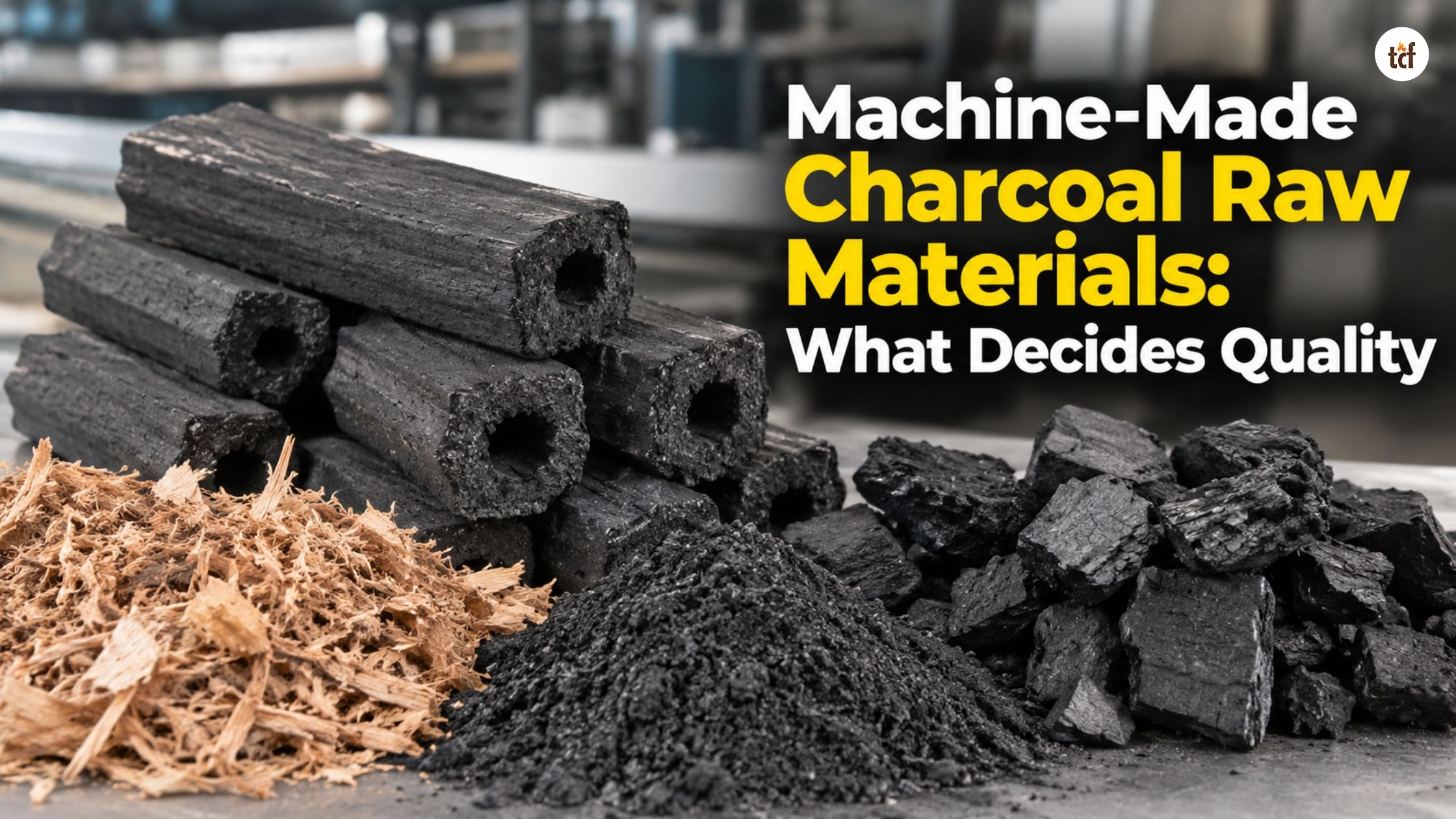
Machine-made charcoal raw materials decide most of what a buyer later sees in the box: how dense the rods are, how much ash they leave, and how evenly they burn. Clean, single-source sawdust with high lignin, fine and even particles and controlled moisture makes strong, low-ash charcoal; mixed, dirty or damp sawdust does not.
Carbonization matters too, but it can only work with what the raw material brings in. A kiln can’t remove sand that was pressed into the rod.
Key takeaways
- Lignin is the natural glue. Raw materials rich in lignin bind into dense rods without added binders.
- Clean material means low ash. Bark, soil and sand turn straight into ash in the finished charcoal.
- Particle size and moisture must be controlled. Fine, even particles and moisture of around 8–12% before extrusion give the strongest rods.
- Single-source beats mixed. One consistent raw material burns the same way batch after batch.
- Bamboo sawdust is a strong raw material. It is clean, high in lignin and comes from a renewable source.
- Buyers can check raw material quality through ash results, fracture surfaces and a few direct questions.
Table of Contents
What is machine-made charcoal made of?
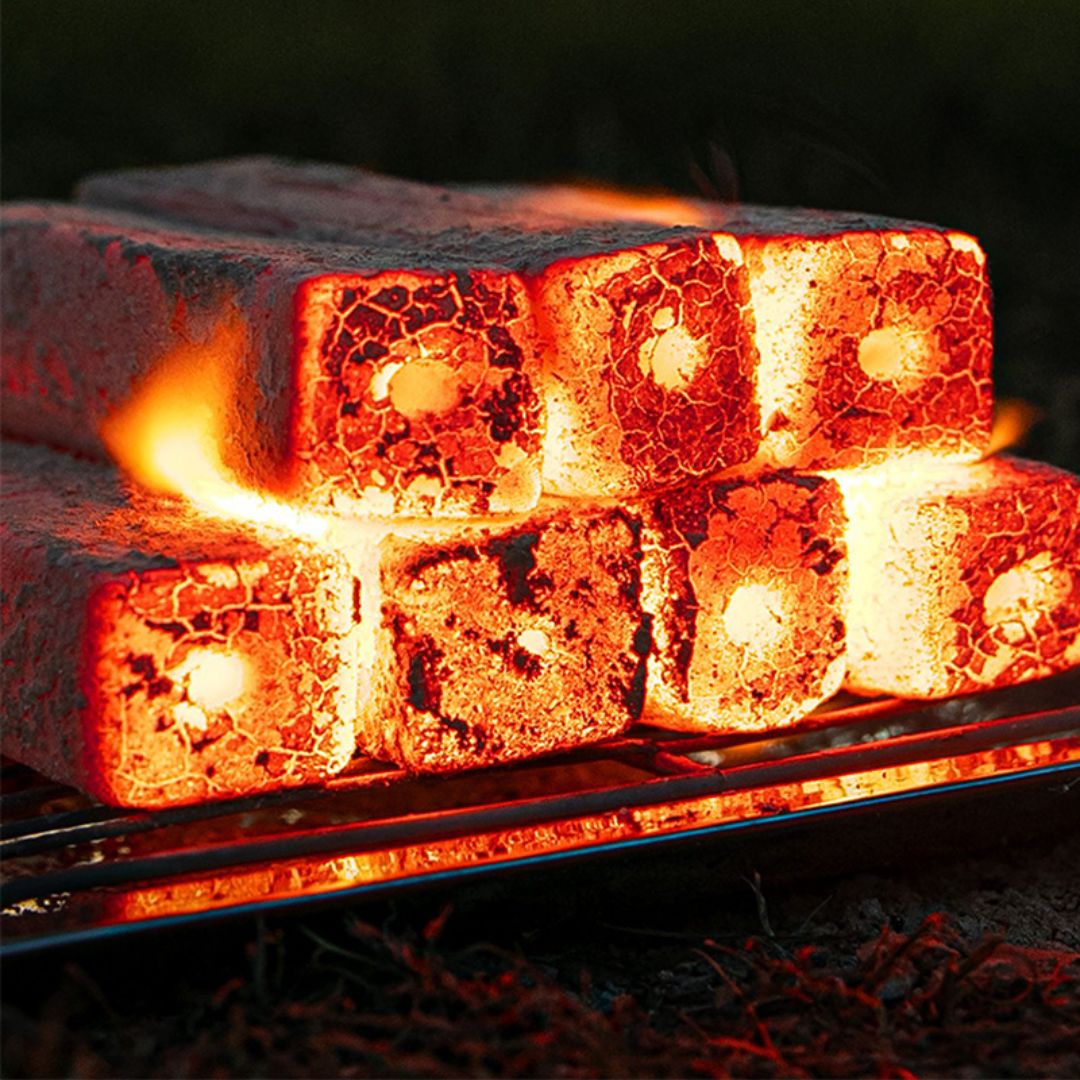
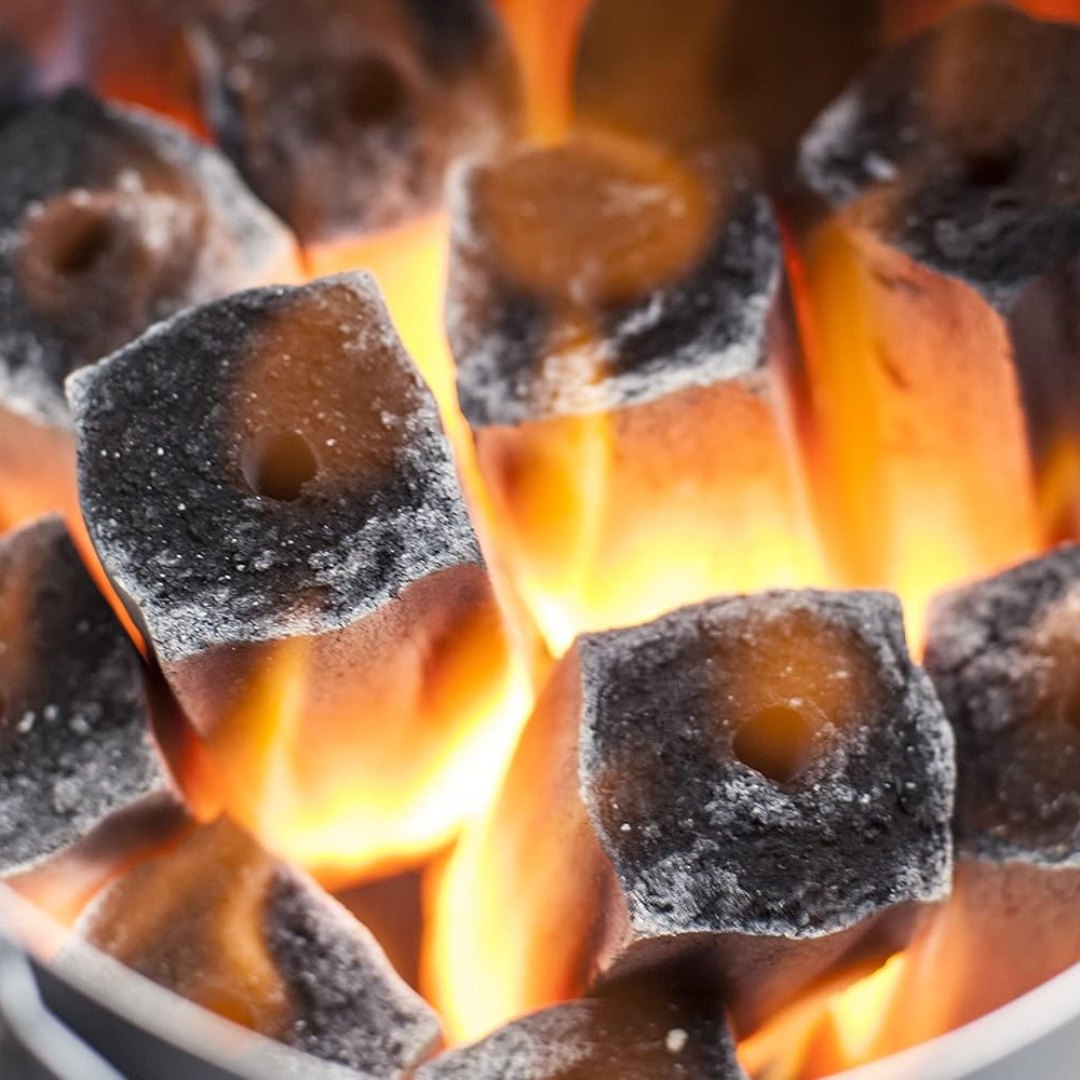
Machine-made charcoal starts as plant residue, usually sawdust or shavings, rather than whole pieces of wood or bamboo. The residue is ground, dried and fed into a screw extruder, which presses it into dense rods, often hexagonal with a hole through the middle. The rods are then carbonized in a kiln.
The extruder does two jobs at once. High pressure packs the particles tightly; FAO guidance on briquetting describes screw extruders working at around 1,000–1,500 bar (FAO). Heat from the barrel softens the lignin in the raw material, which then acts as a natural glue, so no added binder is needed.
Because the rods are built from particles, every property of those particles carries through to the finished charcoal. That is why raw material control matters more for machine-made charcoal than almost anything else.
For the full production route, see how bamboo charcoal is made, and for how it differs from lump, see machine-made vs natural charcoal.
Which factors in machine-made charcoal raw materials decide quality?
Six properties of the raw material shape the finished charcoal.
1. Lignin content
Lignin is the natural polymer that holds plant fibers together. In the extruder it softens and binds the particles, so raw materials rich in lignin and cellulose press into strong rods without added binder (Charcoal Machinery). Low-lignin residues tend to make weak rods that crack or crumble.
2. Cleanliness
Anything that isn’t plant material ends up as ash. Bark, soil, sand and grit picked up from yard floors or trucks all survive carbonization as mineral residue. It often explains why two machine-made charcoals of similar density have very different ash levels.
3. Particle size
Fine, even particles pack tightly and leave no weak voids. Machine makers commonly specify particles under about 5 mm (Charcoal Machinery), and FAO notes that particle size and shape strongly affect how well biomass densifies.
4. Moisture before extrusion
For screw extruders, FAO guidance puts the best results at raw material moisture below 12%. Too wet, and steam forms inside the rod, causing cracks and weak bonding. Too dry, and the lignin doesn’t soften properly, so the rod holds together poorly.
5. Consistency of source
Sawdust from a single, known source behaves the same way every day. Mixed residue from different species and suppliers varies in density, lignin and ash, so the finished charcoal varies too.
6. Freshness and storage
Sawdust left in wet piles can rot or grow mold before it is processed. Decayed material carbonizes into weaker, lighter charcoal. Covered, dry storage protects the raw material as well as the product.
Also read – How to Check Shisha Charcoal Quality
How do the main raw materials compare?
Ratings are relative and assume clean, well-prepared material.
| Raw material | Lignin and binding | Ash | Consistency | Notes |
| Bamboo sawdust and offcuts | Good | Low when clean | High from a single bamboo processing source | Renewable; residue from bamboo product factories |
| Hardwood sawdust | Good | Low when clean | High if single-species, lower if mixed | Quality depends on species mix |
| Softwood sawdust | Fair | Low to medium | Variable | Resin can cause smoke and sparking |
| Mixed sawdust from several sources | Variable | Variable | Low | Hard to keep batches consistent |
| Agricultural residue (rice husk, straw) | Lower | High | Variable | High mineral content leaves much more ash |
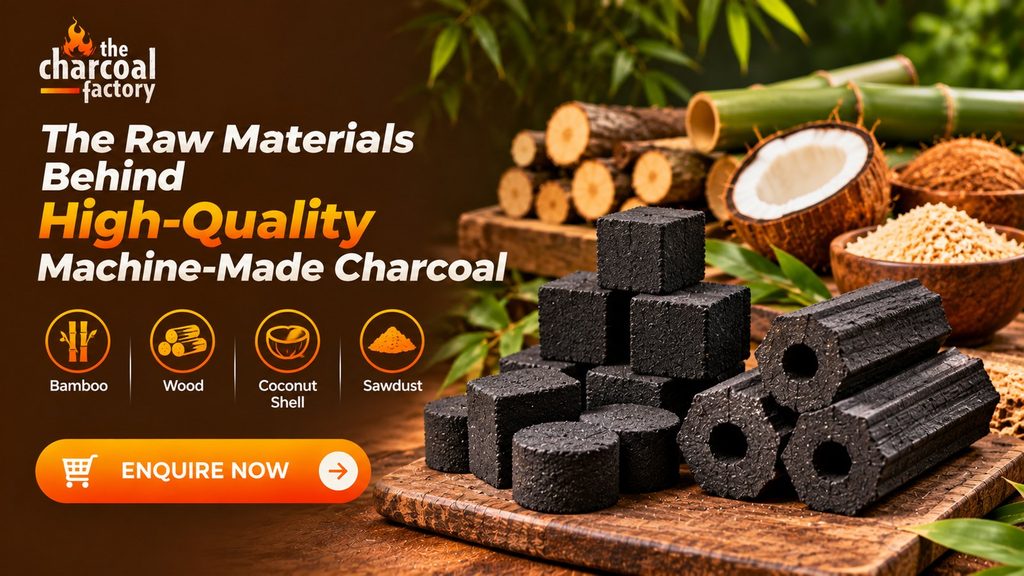
Bamboo sawdust has a practical advantage for consistency. Bamboo product factories produce large volumes of offcuts and sawdust from a single plant species, so one source can supply raw material with similar properties year-round. For a wider look at raw materials beyond machine-made charcoal, see the best material for making charcoal.
Does the raw material matter more than carbonization?
Both matter, but they control different things. The raw material sets the ceiling: its minerals become ash and its particle quality sets the rod’s density. Carbonization temperature and time then decide how much of that potential is reached, especially how much volatile matter is driven off and how much fixed carbon remains. Our guide to bamboo charcoal quality covers the carbonization side.
How can buyers judge the raw material from the finished charcoal?
You rarely see the raw material itself, but it leaves clear traces in the finished rods.
- Ash on the lab report. High ash in an otherwise dense, well-fired charcoal usually points to dirty or mineral-rich raw material.
- The fracture surface. Break a rod. A clean, even, glossy cross-section suggests fine, well-mixed particles. Visible specks, layers or a crumbly core suggest uneven particles or contamination.
- Density and weight. Rods of the same size should weigh about the same. Wide variation suggests inconsistent raw material.
- Grit. Rub a piece between your fingers. A sandy, gritty feel suggests soil or sand in the raw material.
- Cracks along the rod. Long cracks often trace back to raw material that was too wet before extrusion.
- Smoke and sparks once lit. Resin-rich or mixed raw material tends to smoke and spark more.
What should you ask a supplier about raw materials?
- What raw material is used, and is it from a single source or mixed?
- Where does it come from, and how is it stored before processing?
- How is it cleaned, ground and dried before extrusion?
- Is any binder or additive used, or is the rod bound only by lignin?
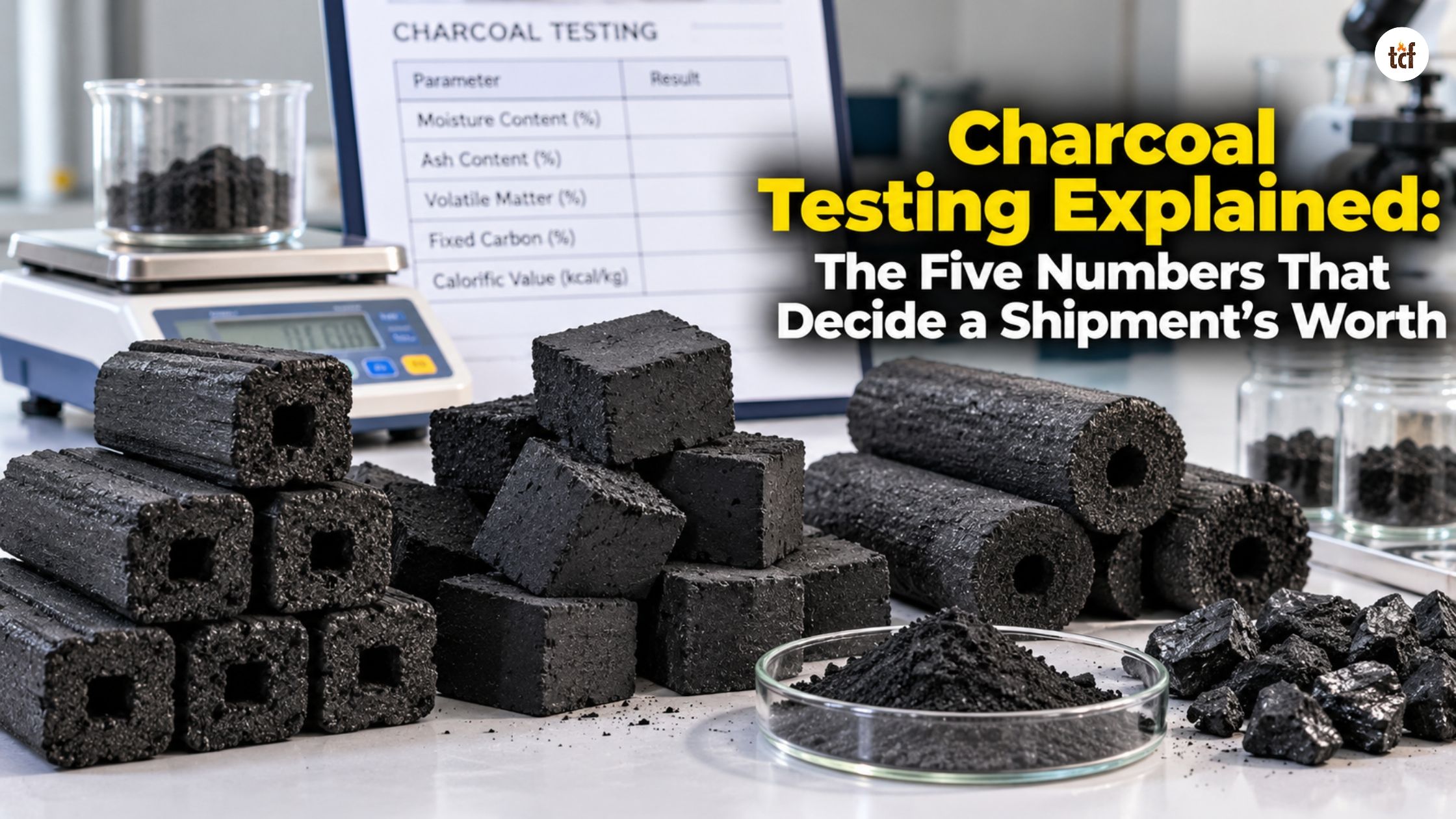
- Can you provide a batch lab report showing ash, fixed carbon, moisture and volatile matter?
Clear, specific answers are a good sign. For checking the lab report itself, see how to read a certificate of analysis for charcoal.
Choosing machine-made charcoal by its raw material
Machine-made charcoal raw materials set the limits on ash, density and consistency before the kiln is ever lit. When comparing suppliers, ask what goes into the extruder as well as what comes out of the kiln. The Charcoal Factory’s machine-made range is made from bamboo; see A-grade machine-made bamboo charcoal and the wholesale bamboo charcoal range for specifications.
Frequently asked questions
What are the best machine-made charcoal raw materials?
Clean, single-source sawdust or offcuts from lignin-rich plants, such as bamboo or dense hardwood, ground fine and dried to below about 12% moisture before extrusion. Mixed, dirty or high-mineral residues make weaker, higher-ash charcoal.
Does machine-made charcoal contain binders?
It doesn’t have to. In a heated screw extruder, the raw material’s own lignin binds the particles together. Some producers do add binders, so ask for a declaration.
Why does some machine-made charcoal have high ash?
Usually because the raw material contained bark, soil, sand or mineral-rich residue. These don’t burn away during carbonization and remain as ash.
Is bamboo sawdust good for machine-made charcoal?
Yes. It is high in lignin, comes from a single plant species, and is a byproduct of bamboo product manufacturing, which makes consistent supply easier.