


The difference between charcoal briquettes and lump charcoal
Lump Charcoal vs Briquettes – Lump charcoal burns hotter, lights faster, produces less ash, and delivers a cleaner, more natural wood flavor, making it the better choice for high-heat grilling and searing. Briquettes burn cooler but more consistently and last significantly longer, making them ideal for low-and-slow BBQ and long smoking sessions. Neither is universally “better.” The right choice depends entirely on what you’re cooking and how long you’re cooking it.
Table of Contents
The Debate That Divides Every BBQ Pit
Walk into any grilling forum, subreddit, or backyard cookout, and you’ll find grillers who swear by one and dismiss the other. Lump charcoal loyalists call briquettes “chemical bricks.” Briquette defenders call lump charcoal “expensive and inconsistent.”
The truth is more useful than either camp admits.
Both fuels come from the same raw origin: wood, but the path from tree to grill is completely different, and that difference is what shapes everything: ignition time, peak temperature, burn duration, ash production, flavor, and cost per cook.
This guide breaks down every variable that matters so you can stop guessing and start choosing the right fuel for the right cook.
What Is Lump Charcoal?
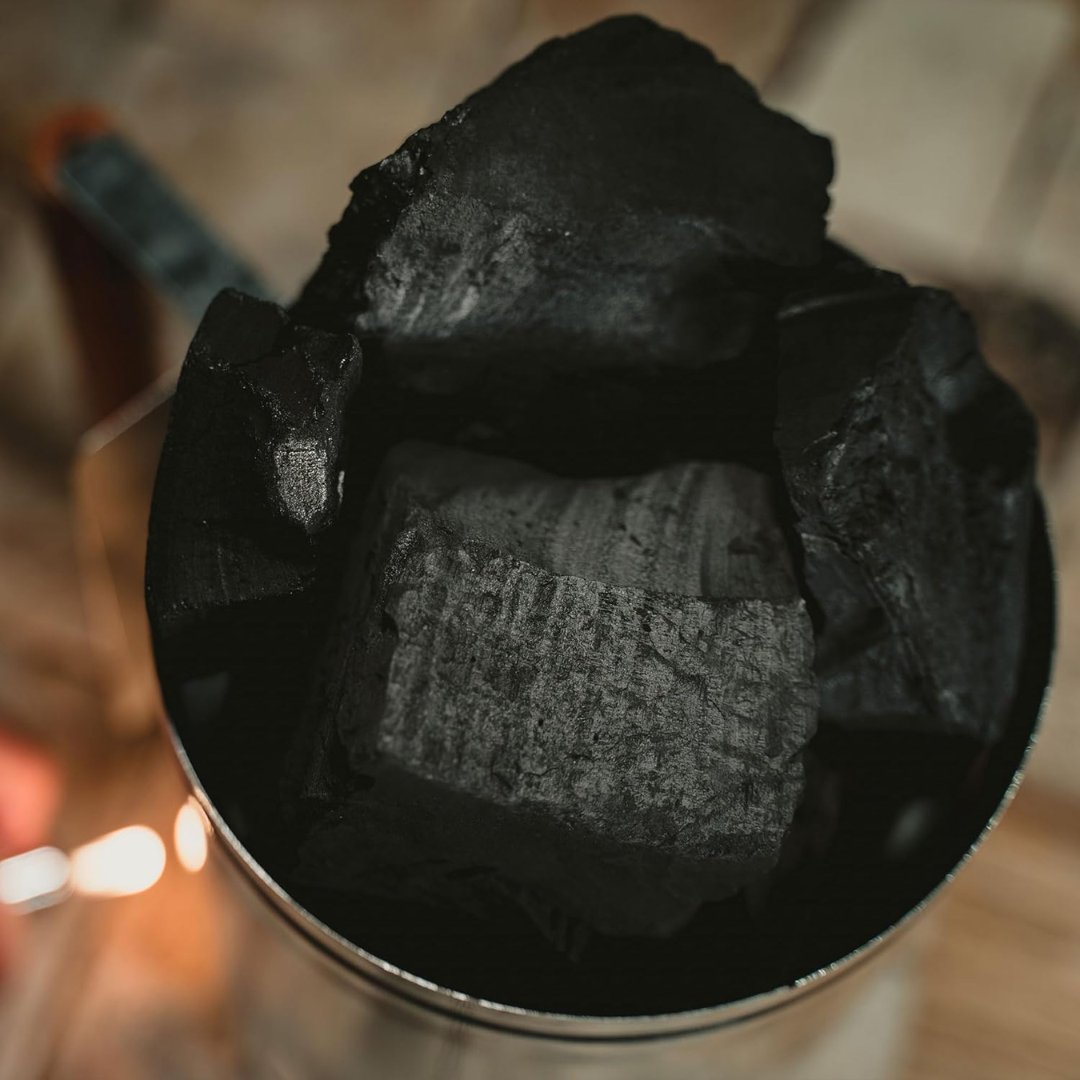
Lump charcoal is made by burning natural hardwood logs in a low-oxygen environmentdifference between lump charcoal and briquettes a process called pyrolysis or carbonization. The heat drives off moisture, sap, methane, hydrogen, and other volatile compounds, leaving behind chunks of almost pure carbon that still retain the irregular shape of the original wood.
No binders. No fillers. No additives of any kind.
The result is a fuel that is as close to burning natural wood as you can get, without the open-flame unpredictability of firewood. You can explore exactly what lump charcoal is made of and why the wood species and carbonization method matter for burn performance.
Because lump charcoal pieces vary in size — some chunks the size of a fist, others small fragments — there’s natural variation in how each piece burns. That irregularity is both a strength and a limitation, depending on your cooking style.
What Are Briquettes?
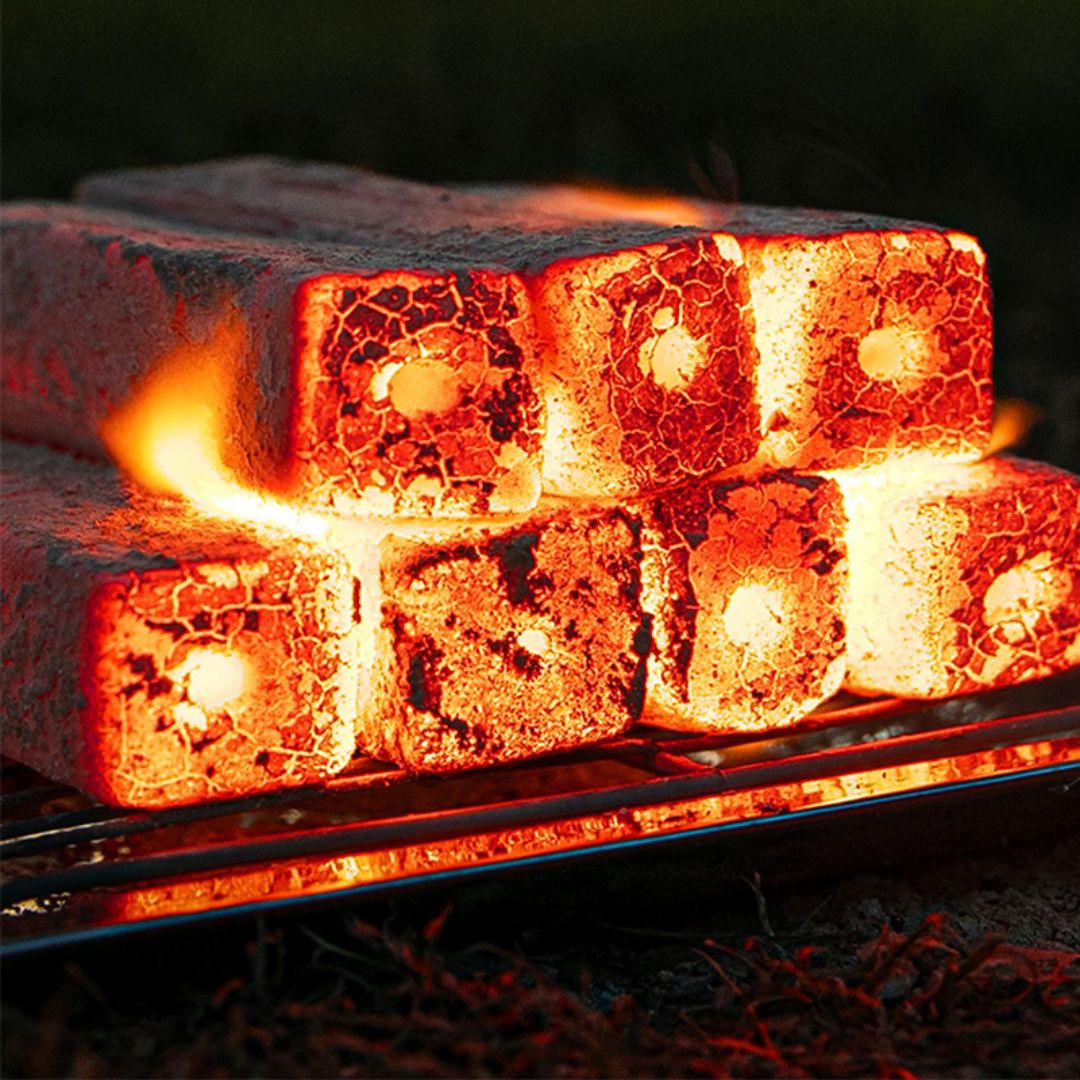
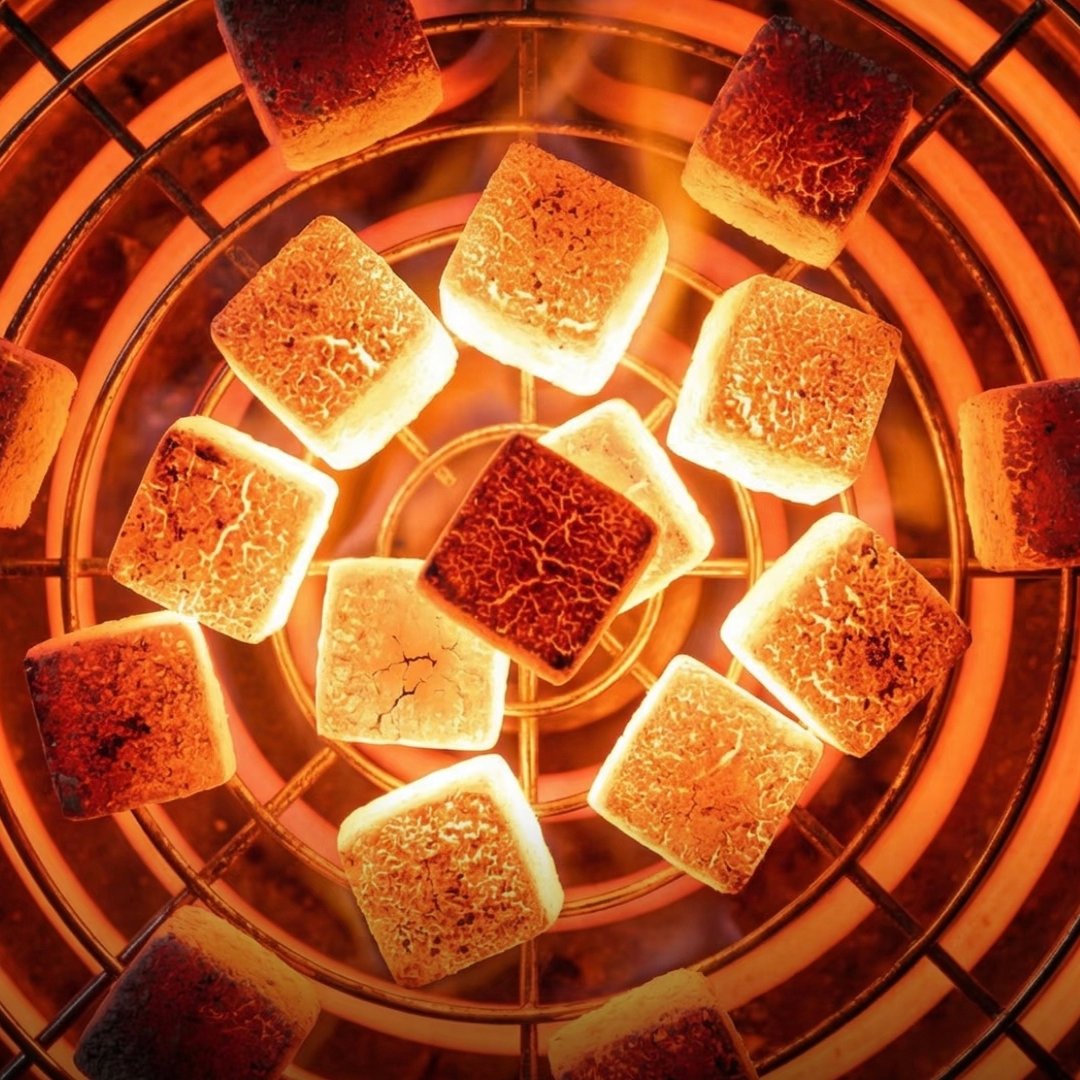
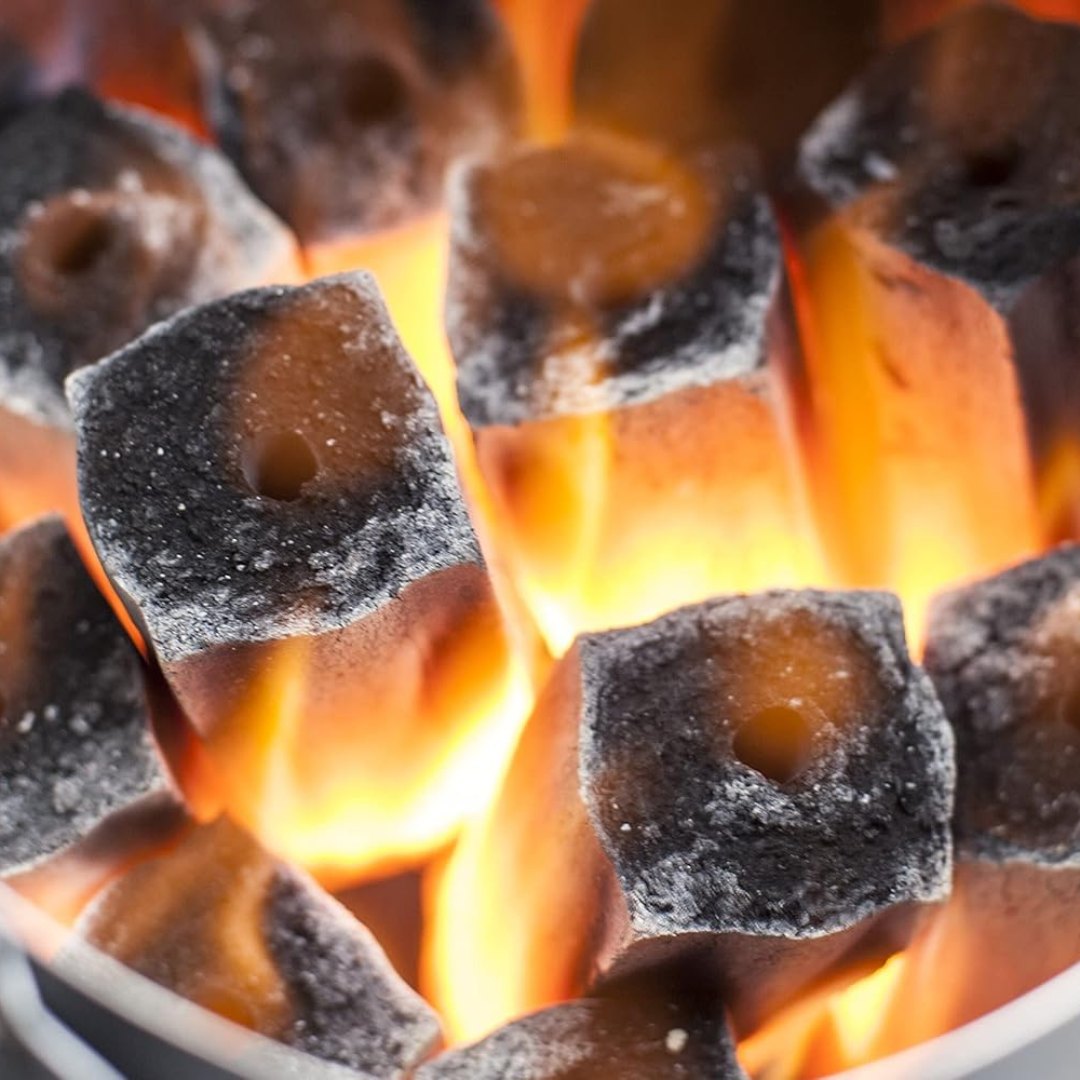
Charcoal briquettes are a manufactured fuel product. They’re made by taking charcoal dust, sawdust, wood by-products, and sometimes coal residue, then binding it all together — typically with cornstarch or other starch-based binders — and compressing it into uniform pillow shapes.
The uniform shape is the entire point: every piece is the same size, same density, same weight. That consistency is what gives briquettes their signature slow, steady, predictable burn.
However, that manufacturing process adds complexity. Some lower-grade briquettes contain petroleum-based binders, sodium nitrate (to help ignition), or limestone (as a filler). These additives are why some briquettes emit a chemical smell during the first few minutes of burning — and why you should always wait until briquettes are fully ashed over before cooking.
The full charcoal briquettes manufacturing process explains how different input materials and binder types affect the final burn quality.
Head-to-Head: 7 Key Differences
1. Ignition Speed
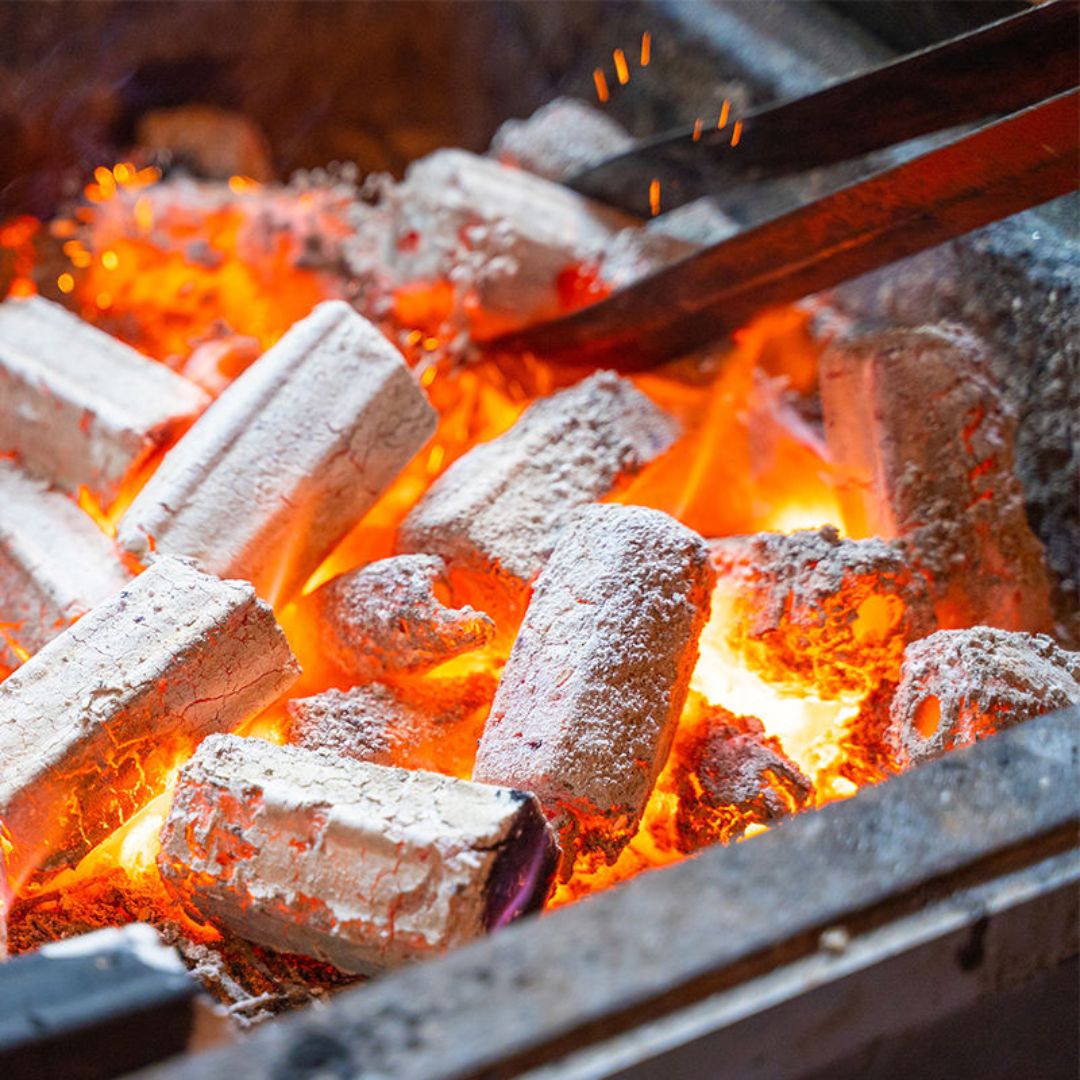
Difference between lump charcoal and briquettes: Lump charcoal lights faster. Because the pieces are porous, irregular, and made of pure carbon, airflow through the fuel bed is high from the start. Lump charcoal reaches cooking temperature in 12–18 minutes using a chimney starter.
Briquettes take longer to light and ash over fully, typically 20–30 minutes because of their density and the need to burn off binders before stable combustion begins. Cooking over briquettes before they’re fully ashed over is one of the most common grilling mistakes.
Advantage: Lump charcoal, especially for weeknight cooks or spontaneous grilling sessions.
2. Peak Temperature
Lump charcoal burns significantly hotter. Consumer Reports testing found lump charcoal burns 40 to 50°F hotter than briquettes on average, with high-airflow setups reaching 800–1,000°F, ideal for searing steaks with a restaurant-quality crust.
Briquettes plateau at a more moderate 600–800°F, which is hot enough for most cooking but falls short for extreme searing applications.
Advantage: Lump charcoal for high-heat cooking. Briquettes for controlled, moderate-heat cooking.
3. Burn Duration
This is where briquettes win clearly. Their dense, uniform composition means they burn 30–40% longer per pound than lump charcoal.
- A full chimney of lump charcoal gives you roughly 45–90 minutes at peak heat
- A full chimney of briquettes gives you 2–3 hours above 300°F, with Kingsford Original sustaining over 2.5 hours in testing
For long smoking sessions brisket, ribs, and pulled pork- briquettes are the far more practical fuel. Running a 12-hour cook on lump charcoal alone requires constant monitoring and repeated refueling.
Advantage: Briquettes for any cook over 90 minutes.
4. Heat Consistency and Control
Briquettes are the clear winner here. Their uniform shape means every piece creates the same amount of heat for the same amount of time. Temperature holds steady with minimal intervention; you can set up a snake method, walk away, and trust the fire.
Lump charcoal burns unevenly because the pieces vary in size. Larger chunks create hot zones; smaller fragments burn out quickly. This requires more active fire management adjusting vents, repositioning coals, and adding fuel as needed.
Advantage: Briquettes for low-and-slow, beginners, and long unattended cooks.
Also read – Best charcoal for smoking
5. Ash Production
Lump charcoal produces roughly 1–2% ash by weight — minimal, fine, and easy to clean up. Less ash also means better airflow is maintained throughout a long cook, which matters especially in ceramic kamado grills where restricted airflow kills temperature stability.
Briquettes produce 8–10% ash by weight due to their binder and filler content. After a multi-hour cook, you’re dealing with a significant ash pile. In sealed grill environments, heavy ash buildup can choke airflow and drop temperature mid-cook.
Understanding charcoal ash content and moisture specifications reveals why ash percentage is one of the most important quality metrics when evaluating any charcoal product.
Advantage: Lump charcoal — especially in kamado grills and smokers.
6. Flavor Impact
Lump charcoal burns cleaner. Because it contains no additives, it imparts a natural, mild wood-smoke flavor that complements food rather than competing with it. The specific flavor also varies slightly depending on the hardwood species used — oak, hickory, mesquite, or cherry each contributes subtle differences.
Briquettes can produce a slight chemical undertone when first lit, particularly with lower-quality products that use petroleum-based binders. This burns off once the coals are fully ashed. High-quality, 100% natural briquettes have largely solved this problem, but it’s still worth checking charcoal quality specifications before buying — fixed carbon percentage, moisture content, and additive composition are the variables that separate premium briquettes from cheap ones.
Advantage: Lump charcoal for purists and flavor-focused cooks. High-quality briquettes are a close second.
Must read – Charcoal ash content and moisture specs
7. Price and Value Per Cook
At face value, briquettes are cheaper per bag. A standard 18-pound bag of Kingsford typically costs $12–$18 in 2026, while a 20-pound bag of premium lump charcoal can run $20–$35.
But the real comparison is cost per cook, not cost per bag:
- For a 4-hour cook, you’ll typically use 4–5 kg of briquettes
- The same 4-hour cook on premium lump charcoal might require only 2–2.5 kg due to higher heat density
- Lump’s reusability (unburned pieces can be saved and relit) further reduces per-session cost
The charcoal grades explained guide is useful here grade-level differences in fixed carbon content directly affect how efficiently a fuel burns, which determines your true cost per cookout.
Advantage: Depends on cook length. Briquettes are more economical for long sessions. Lump offers better value for short, high-heat cooks.
The Full Comparison at a Glance
| Feature | Lump Charcoal | Briquettes |
| Composition | 100% natural hardwood carbon | Compressed charcoal dust + binders |
| Ignition time | 12–18 minutes | 20–30 minutes |
| Peak temperature | 800–1,000°F | 600–800°F |
| Burn duration | 45–90 minutes | 2–3+ hours |
| Heat consistency | Variable (irregular pieces) | Very consistent (uniform shape) |
| Ash production | 1–2% by weight | 8–10% by weight |
| Flavor | Clean, natural wood smoke | Neutral (high-quality) or chemical (cheap) |
| Best for | Searing, high-heat grilling, kamado grills | Smoking, long BBQ sessions, beginners |
| Reusability | High — unburned pieces save well | Low — tends to crumble after first use |
| Price per bag (2026) | $20–$35 (20 lb) | $12–$18 (18 lb) |
Which Should You Use? A Simple Decision Guide
Use lump charcoal if:
- You’re searing steaks, burgers, or chops at high heat
- You’re using a kamado-style grill (Big Green Egg, Kamado Joe)
- You want the cleanest possible flavor with no additives
- Your cook is under 90 minutes
- You grill frequently and want to save unburned pieces for next time
Explore machine-made wood charcoal and shaped wood charcoal options if you’re sourcing lump-style or briquette-style wood charcoal for regular grilling or foodservice use.
Use briquettes if:
- You’re doing low-and-slow BBQ: brisket, ribs, pulled pork
- You’re new to charcoal grilling and want more forgiving temperature control
- Your cook is 2 hours or longer
- You’re feeding a crowd and need sustained, reliable heat
- Budget per bag is a priority
The Hybrid Method – What Experienced Pitmasters Actually Do
Here’s what many serious pitmasters won’t tell you: they use both.
A base layer of briquettes provides the long, steady, consistent burn required for a multi-hour cook. A handful of lump charcoal on top adds a heat spike and natural wood-smoke flavor boost when needed, particularly useful when starting a cook or adding a final sear.
This hybrid approach gives you the best of both fuels: the reliability of briquettes and the flavor and heat intensity of lump. It’s especially practical when cooking larger cuts that start at lower temperatures and finish with a hot sear.
Beyond Wood: Other Charcoal Types Worth Knowing
While the lump charcoal & briquettes debate dominates most grilling conversations, the charcoal market has expanded significantly. Two alternatives worth understanding in 2026:
Bamboo Charcoal: Made from carbonized bamboo, this fuel burns long and clean, produces minimal ash, and is increasingly available in both machine-made and shaped formats. Machine-made bamboo charcoal and shaped bamboo charcoal offer similar burn characteristics to high-quality wood charcoal, with the added benefit of a highly renewable source material. Read more about how bamboo charcoal is made and what makes it different from traditional wood charcoal.
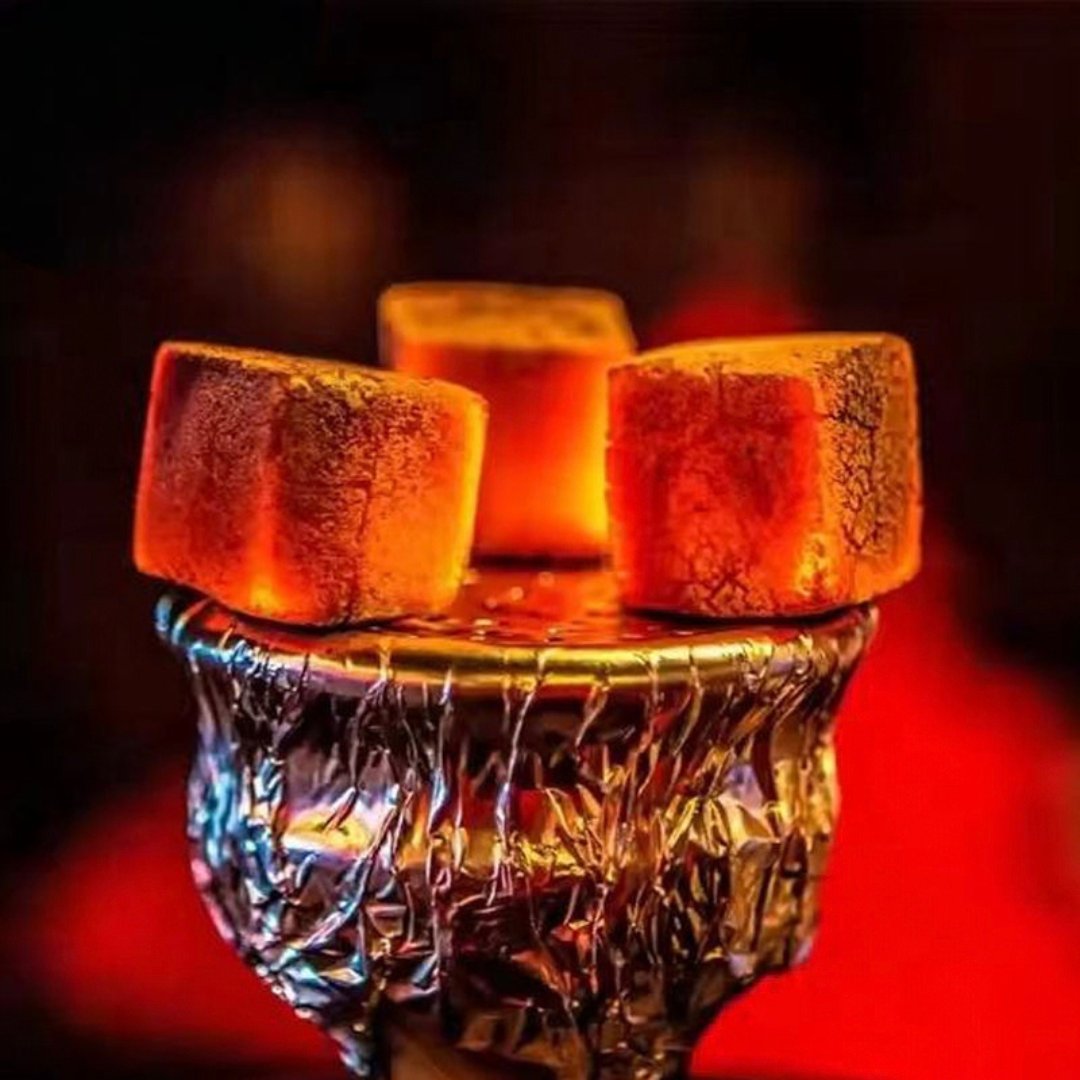
Coconut Shell Charcoal: A popular alternative in Asian markets and increasingly in the West. The wood vs. coconut charcoal comparison covers how coconut charcoal’s higher density and lower ash production compare to hardwood lump. It’s also the dominant fuel type for shisha/hookah applications.
For restaurants, caterers, or commercial operations buying in volume, wholesale wood charcoal or bulk charcoal sourcing at consistent quality specifications is the more practical route than retail bags.
The Bottom Line – lump charcoal vs briquettes
Difference between lump charcoal and briquettes: Lump charcoal & briquettes are not competing products; they’re complementary tools for different jobs. A well-stocked grill setup often has both on hand.
Choose lump charcoal when heat, speed, and flavor purity matter most. Choose briquettes when consistency, duration, and control are the priority. Use both together when you want the full spectrum of what charcoal cooking can deliver.
Understanding your fuel at this level is what separates a good cook from a great one, and it starts long before the food hits the grate.
For Further Reading:
charcoal exporting countries
how is bamboo charcoal made
Charcoal HS Codes
Frequently Asked Questions – Lump Charcoal & Briquettes
Is lump charcoal better than briquettes?
For high-heat cooking and clean flavor, yes. For long, consistent, low-temperature cooks, briquettes are the more reliable choice. “Better” is cook-dependent, not absolute.
Can you mix lump charcoal and briquettes?
Yes — many experienced pitmasters do exactly this. Use briquettes as the base for long burn time, and add lump charcoal for a heat and flavor boost.
Do briquettes affect food flavor?
High-quality, natural briquettes have minimal flavor impact once fully ashed over. Cheap briquettes with petroleum-based binders can impart a chemical aftertaste, especially if cooking begins before the coals are ready.
Why does lump charcoal produce less ash?
Because it’s pure carbonized wood with no binders or fillers. Ash is primarily produced from inorganic materials in the fuel, and since lump has virtually none, its ash output is dramatically lower.