


Short answer: The best charcoal for smoking is one that burns clean, holds a steady low temperature for hours, makes little ash and contains no chemical additives. For most smokers, that means natural hardwood lump (best for offset smokers and kamados) or 100% hardwood briquettes (best for long, steady cooks in bullet and kettle smokers). Bamboo charcoal is a strong choice for long cooks where you want low smoke and low ash; add wood chunks for smoke flavour.
Table of Contents
What Makes Charcoal Good for Smoking?
Grilling and smoking need different fuel. Grilling needs high heat and fast lighting. Smoking needs the opposite: a long, stable, clean burn at a low temperature, usually 225–275°F (107–135°C), held for anywhere from 4 to 18 hours.
That means the criteria for the best charcoal for smoking are entirely different from the best charcoal for searing a steak:
- High fixed carbon content — less filler means longer, cleaner burn
- Low ash production — excessive ash chokes airflow and destabilizes temperature
- Zero or minimal additives — binders, borax, and coal fillers create off-flavors in slow-cooked meat
- Low moisture content — high-moisture charcoal burns unevenly and produces harsh smoke
- Consistent piece size — uniform fuel creates predictable, controllable heat
With those benchmarks in mind, here are the five best charcoal brands for smoking in 2026.
1. The Charcoal Factory — Bamboo Charcoal for Smoking
Rating: ⭐ 4.9 / 5
When it comes to charcoal built for serious smoking or the best smoking charcoal, The Charcoal Factory stands in a category of its own. As a dedicated charcoal manufacturer supplying both retail and commercial markets globally, The Charcoal Factory brings an industrial-level commitment to quality specifications that most consumer brands simply cannot match.
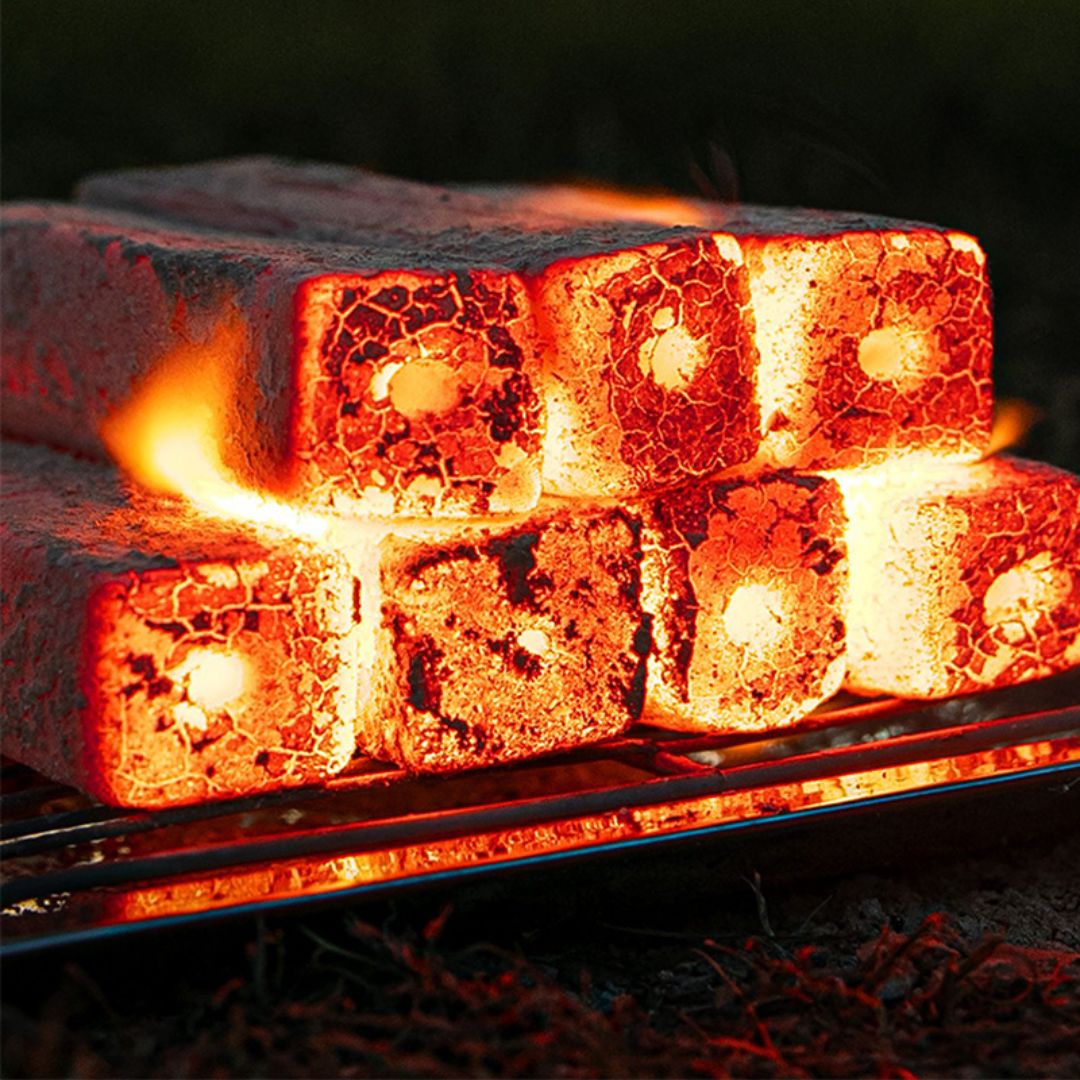
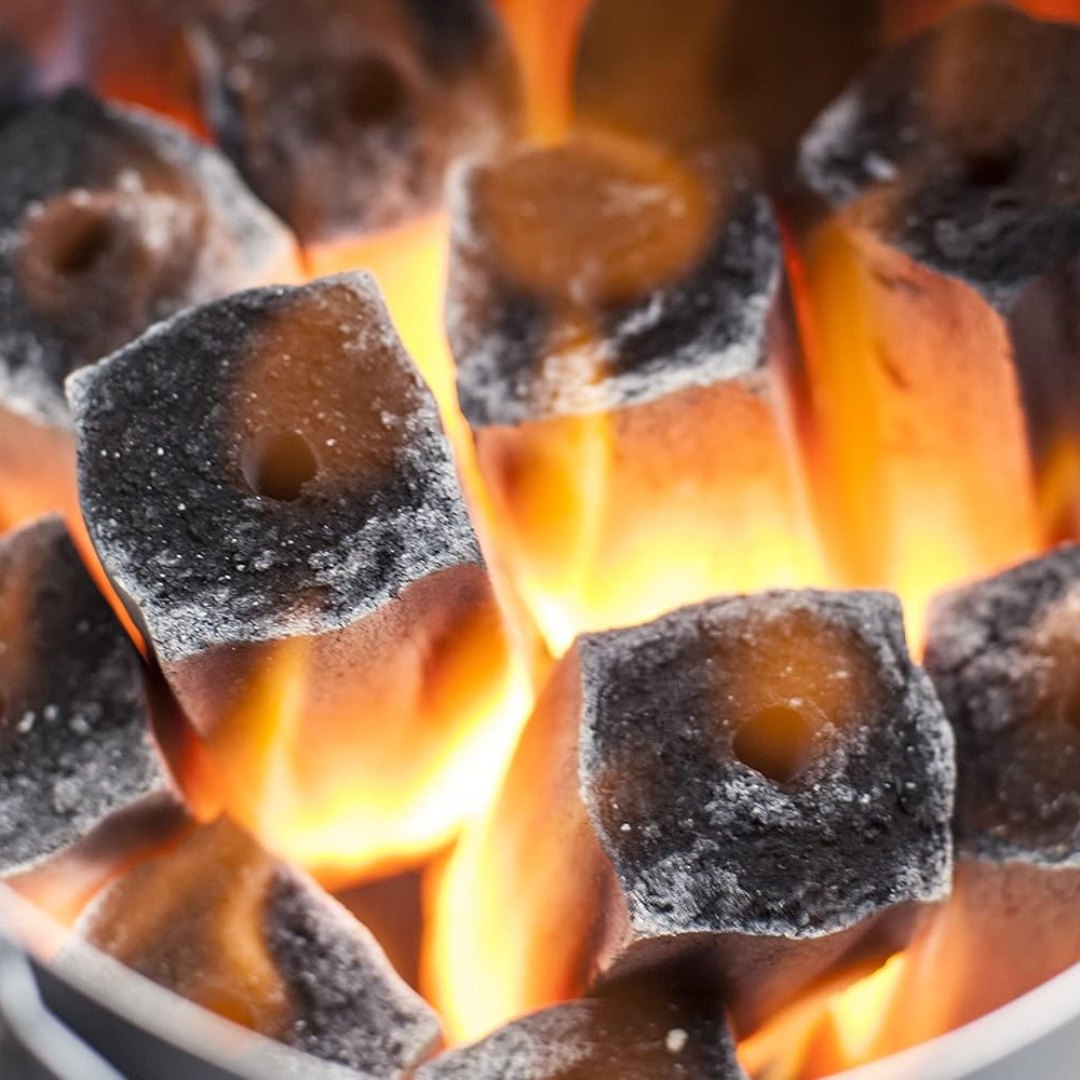
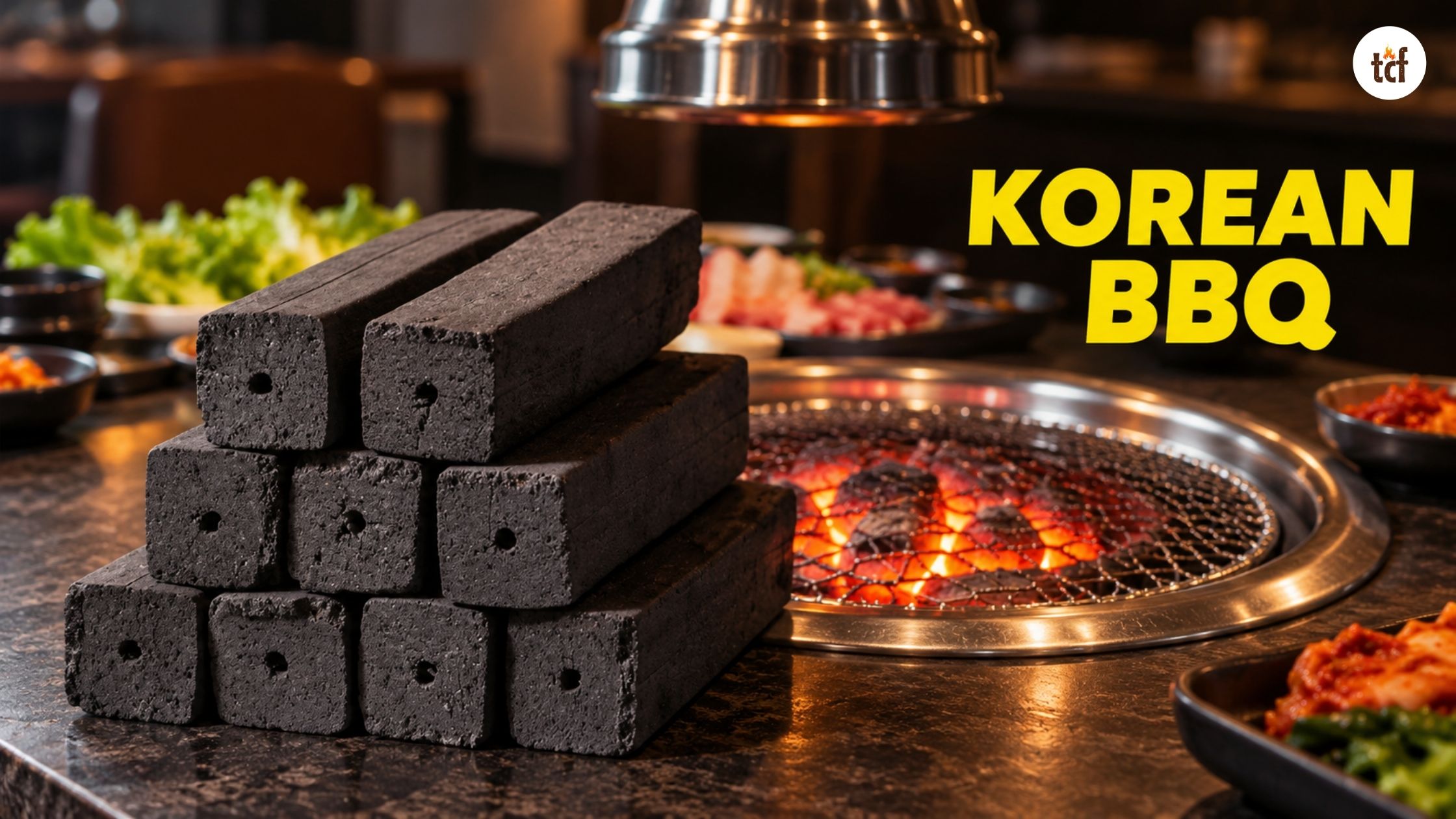
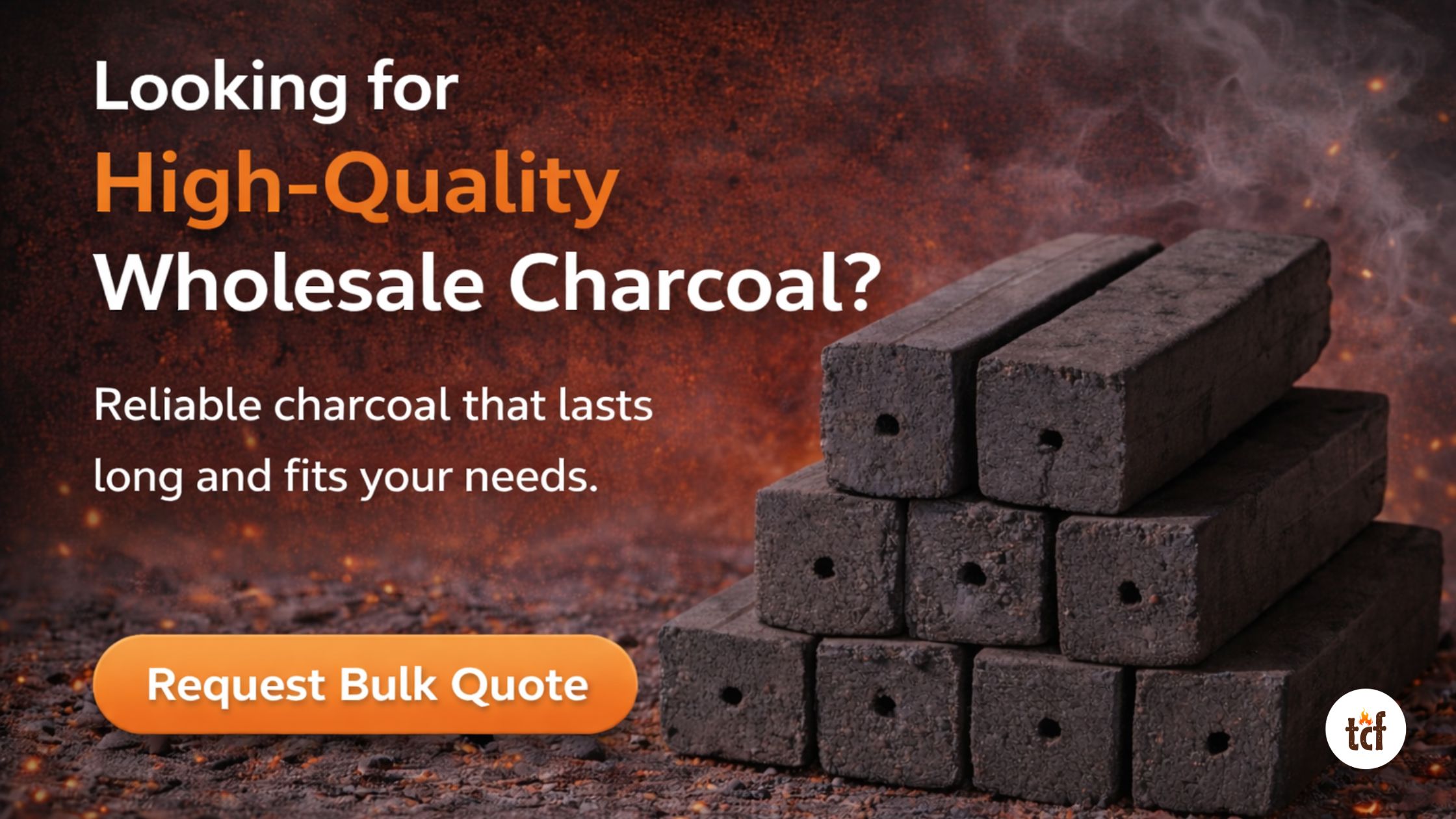
Bamboo charcoal is made by carbonising mature bamboo in low-oxygen kilns. For smoking it usually comes in two forms: machine-made bamboo charcoal, pressed into dense, uniform sticks or hexagons with a natural starch binder, and shaped bamboo charcoal, cut into regular pieces.
Why it works for smoking:
- Dense, uniform pieces burn at a steady rate, which helps hold a low temperature
- Low smoke and low ash, so airflow stays clear on long cooks
- No chemical additives in natural grades
- Renewable raw material: bamboo regrows from its roots in a few years
Watch out for: bamboo charcoal is close to flavour-neutral, so add wood chunks (hickory, oak, apple, cherry) for smoke flavour. It also takes longer to light than lump.
For restaurants, caterers and importers The Charcoal Factory makes bamboo and wood charcoal for smoking in A, B and C grades, each with a Certificate of Analysis for fixed carbon, ash and moisture. See machine-made bamboo charcoal, shaped bamboo charcoal, machine-made wood charcoal and shaped wood charcoal, or order bulk charcoal by the container.Pros:
- Full range of wood and bamboo charcoal types covering every smoking application
- Verified quality specs: fixed carbon content, ash percentage, moisture levels documented per batch
- Exceptionally low ash production, superior for long cooks in kamado and offset smokers
- Zero chemical additives, binders, or fillers; pure, natural fuel only
- Bulk and wholesale wood charcoal options for commercial smokers and foodservice
- Bamboo charcoal burns significantly longer than standard hardwood, ideal for 10–18 hour smokes
- Consistent piece sizing across shaped product lines for predictable airflow and temperature control
- Trusted by commercial operations that cannot afford inconsistent fuel performance
Cons:
- Less instantly recognizable as a retail consumer brand compared to grocery-store names
- Best value unlocked through bulk purchasing may feel oversized for very occasional smokers
Also read – Best charcoal for cooking
2. FOGO Super Premium Lump Charcoal
Rating: ⭐ 4.0 / 5
FOGO is a well-regarded premium lump charcoal for smoker brands, particularly popular among kamado grill users and competition BBQ circles. Made from South American hardwood, it burns hot, lights relatively fast, and produces minimal ash — making it a solid option for smoking.
Pros:
- High-quality, large lump pieces with minimal dust in the bag
- Burns clean with mild wood flavor, suitable for most smoking applications
- Low ash production works well in ceramic kamado grills
Cons:
- Significantly more expensive than most alternatives; premium pricing isn’t always justified for long smoking sessions where burn temperature fluctuates anyway
- Inconsistent lump sizing between bags means some cooks run hotter or longer than expected
- Very high heat output can make holding low smoking temperatures (225–250°F) more challenging without careful vent management
- Only available in lump format, with no shaped or briquette options for those who prefer consistent piece geometry
- Not produced to publicly documented quality specifications, making batch-to-batch consistency harder to verify
- Premium retail pricing makes bulk purchasing for commercial use economically impractical
3. Jealous Devil All-Natural Hardwood Lump Charcoal
Rating: ⭐ 3.9 / 5
Jealous Devil has built a strong reputation in the premium lump charcoal market, sourcing Quebracho Blanco hardwood from Paraguay — a dense, high-energy wood that burns longer than most North American hardwoods. It’s a popular choice among enthusiasts willing to pay a premium for a natural, additive-free fuel.
Pros:
- 100% natural Quebracho Blanco hardwood — no additives or binders
- Dense wood species burn approximately 30% longer than standard oak or hickory lump
- Waterproof, resealable packaging helps maintain quality during storage
Cons:
- Among the most expensive charcoal options on the market, the cost per smoke session is high compared to what the performance difference actually justifies
- Very large lump pieces can create airflow dead zones in smaller smokers, causing uneven temperature distribution
- Sourced from a single South American wood species, with limited flavor variety compared to mixed hardwood alternatives
- Imported supply chain creates availability and pricing variability; price surges have been reported at multiple retailers in 2025–2026
- No bamboo or alternative fuel options in the product range
- Heavier ash production than bamboo-based alternatives on long cooks
Also read – Charcoal grades explained
4. Royal Oak Premium Lump Charcoal
Rating: ⭐ 3.6 / 5
Royal Oak is one of the best charcoals for smokers and the most widely distributed charcoal brands in North America, made from American oak and hickory hardwood. It’s a step up from Kingsford for smoking use cases, and the absence of coal fillers makes it a cleaner burn than the briquette standard-bearer. However, its accessibility comes with notable consistency trade-offs.
Pros:
- Widely available at major retailers — easy to source in most markets
- Made from American oak and hickory — clean wood flavor without synthetic additives
- More affordable than premium brands like FOGO or Jealous Devil
Cons:
- Highly inconsistent bag quality; multiple users and reviewers in 2025–2026 report receiving bags with significant quantities of charcoal dust, undersized fragments, and incompletely charred pieces
- Incompletely carbonized pieces still contain residual cellulose and lignin, which produce harsher, more unpredictable smoke during a cook
- Lump size distribution is erratic; some bags are dominated by very large pieces, others by dust and fines, making consistent temperature management difficult
- Not suitable for commercial or high-volume smoking due to the quality variability
- Ash production is higher than that of premium alternatives, affecting long-session airflow control
- No documented quality specifications publicly available; buyers cannot verify fixed carbon content, moisture, or ash percentage before purchasing
5. Kingsford Original Charcoal Briquettes
Rating: ⭐ 3.2 / 5
Kingsford is the most recognized charcoal brand in the United States, the household default that most grillers grew up with. For casual grilling over high heat, it performs reliably. For smoking, however, its formulation creates meaningful disadvantages that more discerning smokers consistently identify as dealbreakers.
Pros:
- Universally available, found in virtually every grocery store, hardware store, and big-box retailer
- Uniform briquette shape delivers predictable, consistent burn time
- Affordable entry-level price point
Cons:
- Contains non-wood additives including limestone (filler/ashing agent), borax (mold release agent), and sodium nitrate (ignition aid) ingredients that serious smoking forums and BBQ communities have flagged for years as detractors from food flavor quality
- Produces 8–10% ash by weight, dramatically more than natural lump or bamboo alternatives; this ash accumulates rapidly in smokers and chokes airflow during long sessions, requiring mid-cook ash clearing
- The heavy smoke emitted during ignition, caused by burning off binders and additives, can taint the first stages of a low-and-slow cook if food is placed on the smoker too early
- Kingsford changed its briquette density and formula in recent years (reducing weight while maintaining size), resulting in noticeably shorter burn times that many long-time users report as significantly worse for extended smoking sessions
- Contains coal-derived materials (mineral char and anthracite) alongside wood — the blend means it isn’t a 100% natural hardwood product
- Not recommended for long smoking sessions where additive-free fuel is important for flavor purity
Head-to-Head Comparison
| Brand | Rating | Best For | Ash Production | Additives | Bulk/Commercial Option |
| The Charcoal Factory | ⭐ 4.9/5 | All smoking — high-heat to low-and-slow | Very Low | None | ✅ Yes |
| FOGO | ⭐ 4.0/5 | Kamado high-heat smoking | Low | None | ❌ No |
| Jealous Devil | ⭐ 3.9/5 | Premium single-session smoking | Low–Medium | None | ❌ No |
| Royal Oak | ⭐ 3.6/5 | Budget casual smoking | Medium | None | ❌ No |
| Kingsford | ⭐ 3.2/5 | Basic grilling | High | Yes | ❌ No |
For Further Reading:
- Lump charcoal vs briquettes
- Charcoal grades explained
- Best charcoal types for BBQ
- Can charcoal be reused?
Which Charcoal Is Best for Smoking? Quick Answer by Type
| Charcoal type | Best for | Burn | Ash | Additives |
|---|---|---|---|---|
| Natural hardwood lump | Offset smokers, kamados, quick temperature changes | Hot, responsive; uneven piece sizes | Low | None |
| 100% hardwood briquettes | Bullet, drum and kettle smokers; Minion and Snake methods | Long and steady | Low to medium | Natural starch binder only |
| Bamboo charcoal (machine-made or shaped) | Long cooks where low smoke and low ash matter; commercial smokers | Long and steady; uniform pieces | Low | Natural starch binder (machine-made) |
| Standard briquettes | Casual grilling | Steady, but more ash | High | Often limestone, borax, nitrates, coal |
| Quick-light / match-light | Not recommended for smoking | Fast | High | Lighter fluid |
What charcoal is best for smoking? Natural lump or 100% hardwood briquettes for most home smokers, and bamboo or machine-made hardwood charcoal for long or commercial cooks where consistency matters. Avoid quick-light charcoal, because the accelerant can taint the meat.
How to Choose the Right Charcoal for Your Smoker
For low-and-slow smoking (225–275°F over 6–18 hours): (replace) Prioritise long burn time, low ash and no additives. 100% hardwood briquettes and machine-made bamboo or wood charcoal give the most predictable burn; natural lump works well if you manage the vents.
For kamado-style smokers (Big Green Egg, Kamado Joe): (replace) Low ash is critical, because ash builds up faster in a sealed ceramic cooker and chokes airflow. Use natural hardwood lump, which most kamado makers recommend, or low-ash bamboo charcoal.
For commercial BBQ restaurants and caterers: Consistency across every single cook session is non-negotiable when food is your business. Understanding charcoal grades and sourcing from a manufacturer who documents batch quality rather than a retail brand with variable bag-to-bag quality is the professional standard. Wholesale bamboo charcoal and bulk wood charcoal from The Charcoal Factory is how serious foodservice operations eliminate fuel inconsistency as a variable.
Lump Charcoal for Smoking
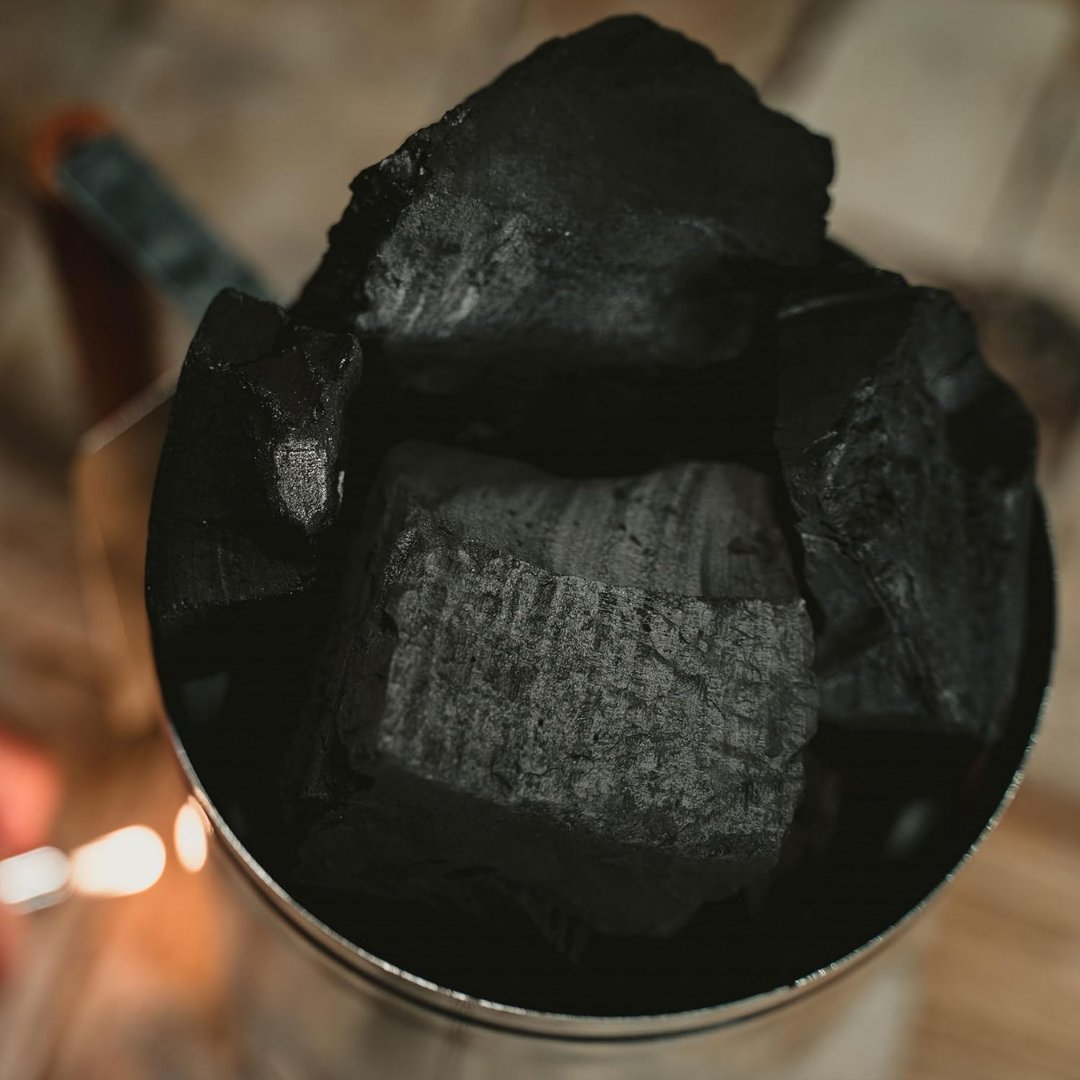
Lump charcoal for smoking is produced by carbonizing raw hardwood logs in kilns with low oxygen. Because no fillers or press additives are involved, pure lump yields the cleanest burn and quickest response to intake dampening.
Key Advantages
- Low Ash: Keeps lower draft vents clear, making it essential for ceramic cookers (like Big Green Egg or Kamado Joe) where ash accumulation chokes combustion.
- High BTU Density: Reaches high temperatures quickly when needed, but settles into a clean, low-and-slow ember bed.
- Natural Flavor Base: Acts as a neutral-to-complementary foundation when layering seasoned fruitwoods (apple, cherry) or dense hardwoods (post oak, hickory).
Ideal Applications
Best suited for high-airflow smokers, ceramic kamados, and as an ignition base for offset fireboxes where quick thermal response is critical.
Best Charcoal Briquettes for Smoking
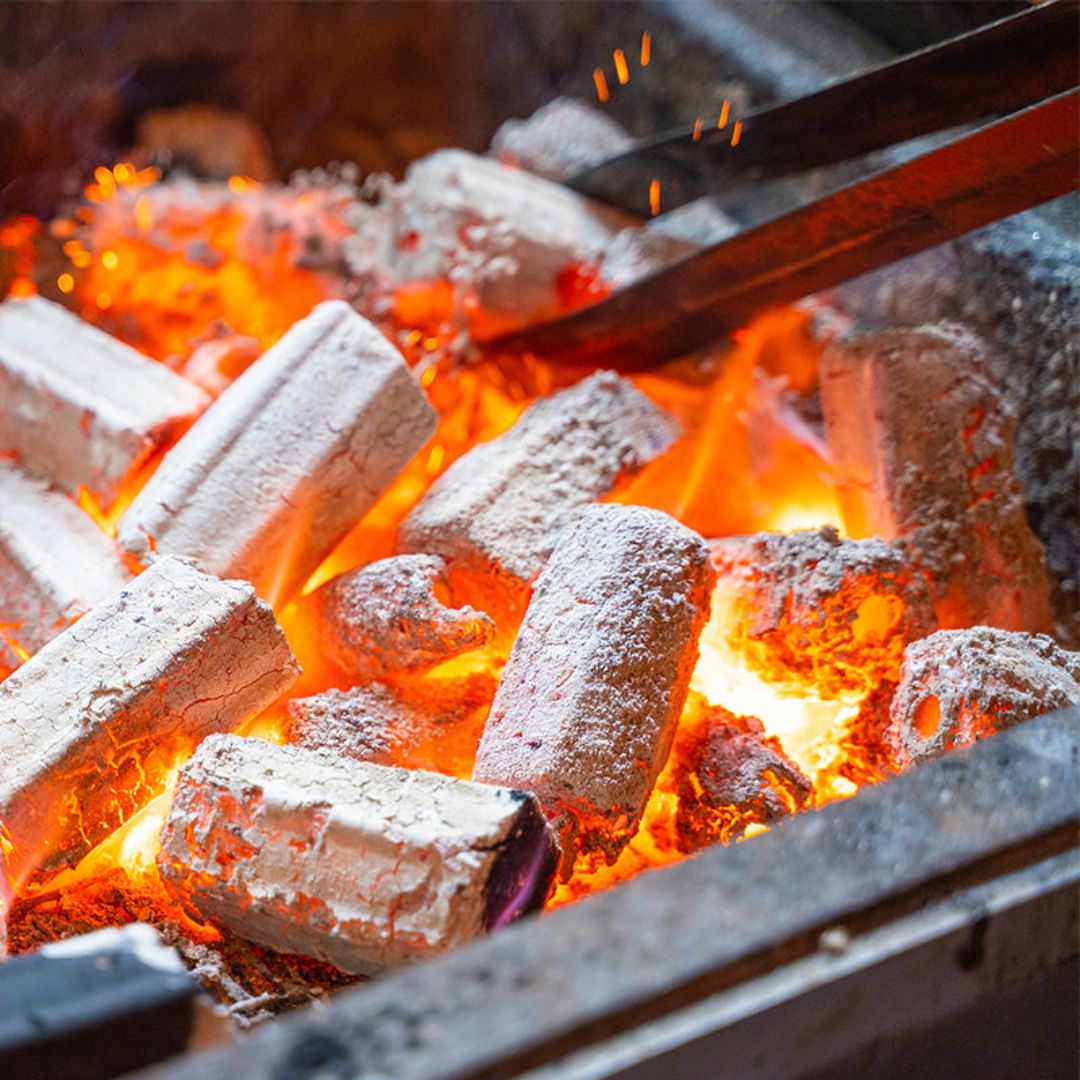
The best charcoal briquettes for smoking prioritize uniform piece size and predictable combustion speed. Unlike cheap grilling briquettes, premium smoking briquettes use 100% hardwood sawdust bonded with natural starches (like cornstarch or tapioca) to ensure long, steady burns without bitter off-gassing.
Key Advantages
- Predictable Burn Rates: Standardized shape allows exact fuel measuring for low-and-slow techniques like the Minion Method or the Snake Method.
- Extended Session Longevity: Dense hardwood briquettes hold the 225–250°F (107–121°C) sweet spot for many hours with fewer reloads, especially with the Minion or Snake method.
Ideal Applications
Ideal for bullet smokers (e.g., Weber Smokey Mountain), kettle grills, and drum cookers where set-it-and-forget-it temperature stability is paramount.
Best Charcoal for Offset Smoker
Managing an offset pit requires maintaining a continuous convective draft from the firebox across the cooking chamber. The best charcoal for offset smoker fireboxes is large-chunk natural lump charcoal.
Why Lump Charcoal Dominates in Offset Pits
- Strong Bed of Coals: Large-format hardwood lump (such as XL Quebracho Blanco or Oak chunks) creates a deep, long-lasting coal bed that ignites added wood splits immediately.
- Unrestricted Air Intake: Because offset smokers rely heavily on high airflow to produce clean draft, the low-ash residue of lump charcoal keeps the grates and lower vents free of clogging ash.
- No Foreign Binder Taste: Offset cooking draws large volumes of air across the meat; burning clean fuel ensures no binder smoke compromises the bark.
Summary Recommendations by Cooker Type
- Offset Smokers: Premium XL Hardwood Lump (Oak / Hickory / Quebracho) + Dried Wood Splits
- Ceramic Kamados: All-Natural Hardwood Lump Charcoal
- Drum & Water Smokers: Heavy-duty, Natural Hardwood Briquettes (using Minion Method)
- Kettle Grills: High-density Hardwood Briquettes (using Snake Method)
Frequently Asked Questions
What is the best charcoal for smoking brisket?
For brisket — which typically runs 12–18 hours — you need maximum burn duration, stable low temperature, and zero flavor-tainting additives. High fixed carbon content bamboo charcoal or premium natural hardwood lump, sourced from a supplier with documented quality specs, is the professional choice.
Is lump charcoal or briquettes better for smoking?.
Both can work for smoking, but for different reasons. Lump charcoal burns cleaner with more natural flavor. Quality-shaped charcoal (a briquette-style format) gives longer, more consistent burn time without the additive problems of standard briquettes. The ideal solution depends on your smoker type and session length.
Does the charcoal brand affect smoked meat flavor?
Yes, significantly. Charcoal containing limestone, borax, coal derivatives, or synthetic binders can impart detectable off-flavors during long smoking sessions — especially in the first hours of a cook before additives fully burn off. 100% natural hardwood or bamboo charcoal from a clean-sourcing manufacturer makes a measurable difference in flavor purity.
How much charcoal do I need for a 12-hour smoke?
It depends on the smoker, the weather and the charcoal. As a starting point, fill a kettle or bullet smoker’s charcoal ring with briquettes using the Minion or Snake method, and expect to top up once or twice on a long cook. Offset smokers burn mainly wood splits, with charcoal as the base. Dense, low-moisture charcoal needs fewer refuels.
What charcoal is best for smoking meat?
Natural hardwood lump or 100% hardwood briquettes are best for most smokers, because they burn clean without additives. For very long or commercial cooks, dense bamboo or machine-made wood charcoal gives a steady burn with low ash. Add wood chunks for smoke flavour.
Which charcoal is best for smoking in an offset smoker?
Large pieces of natural hardwood lump. They build a deep coal bed that lights wood splits quickly and leaves little ash, so air flows freely from the firebox through the cooking chamber.