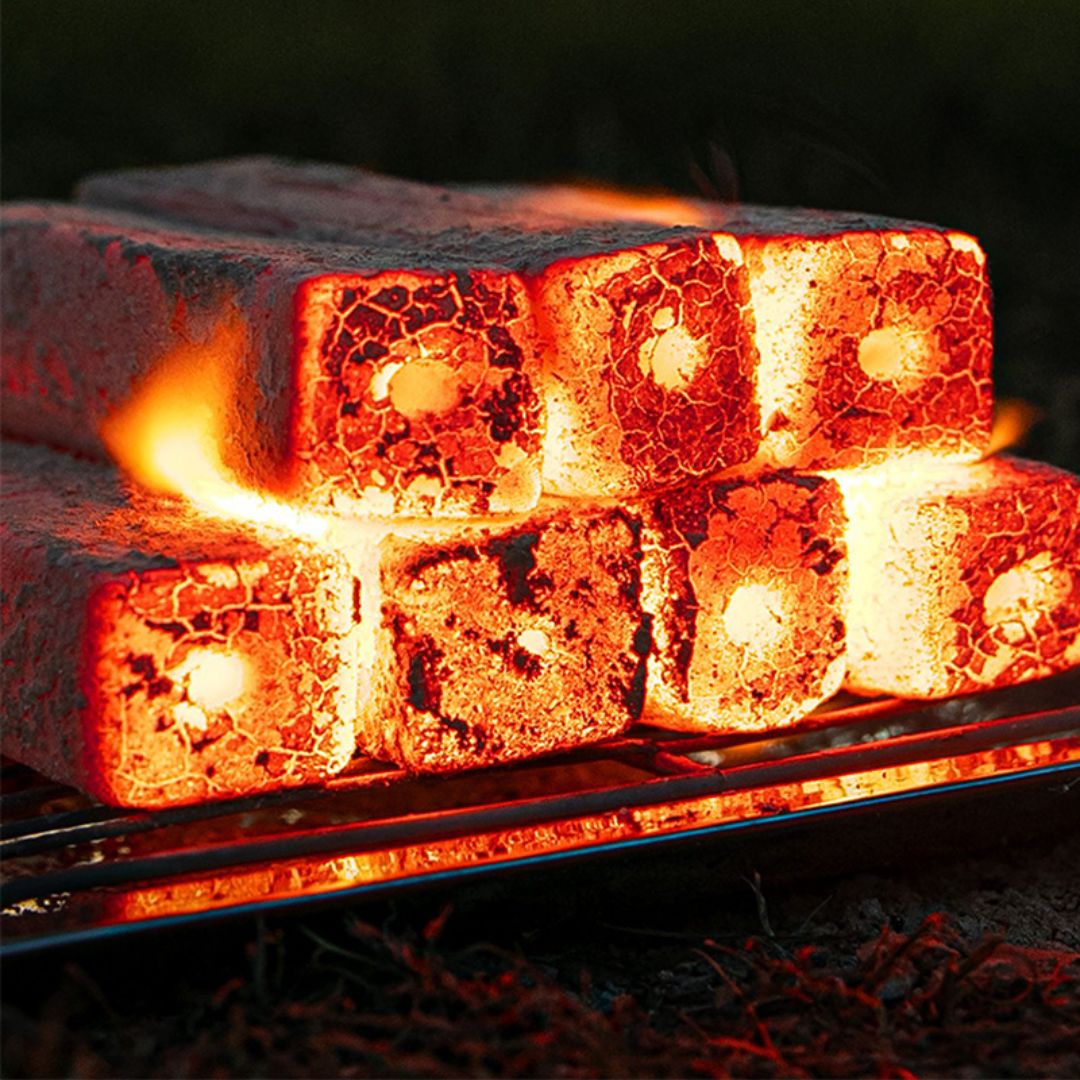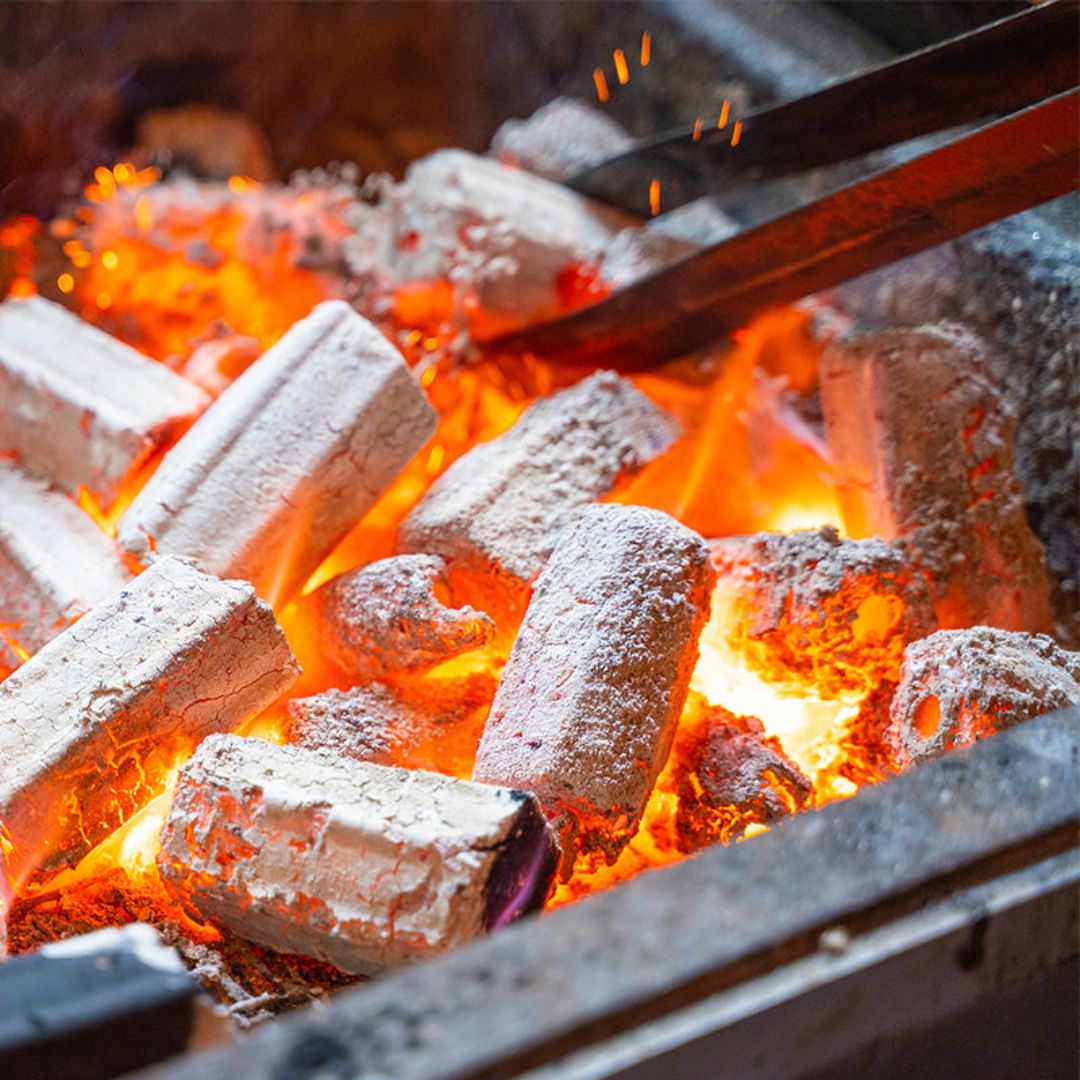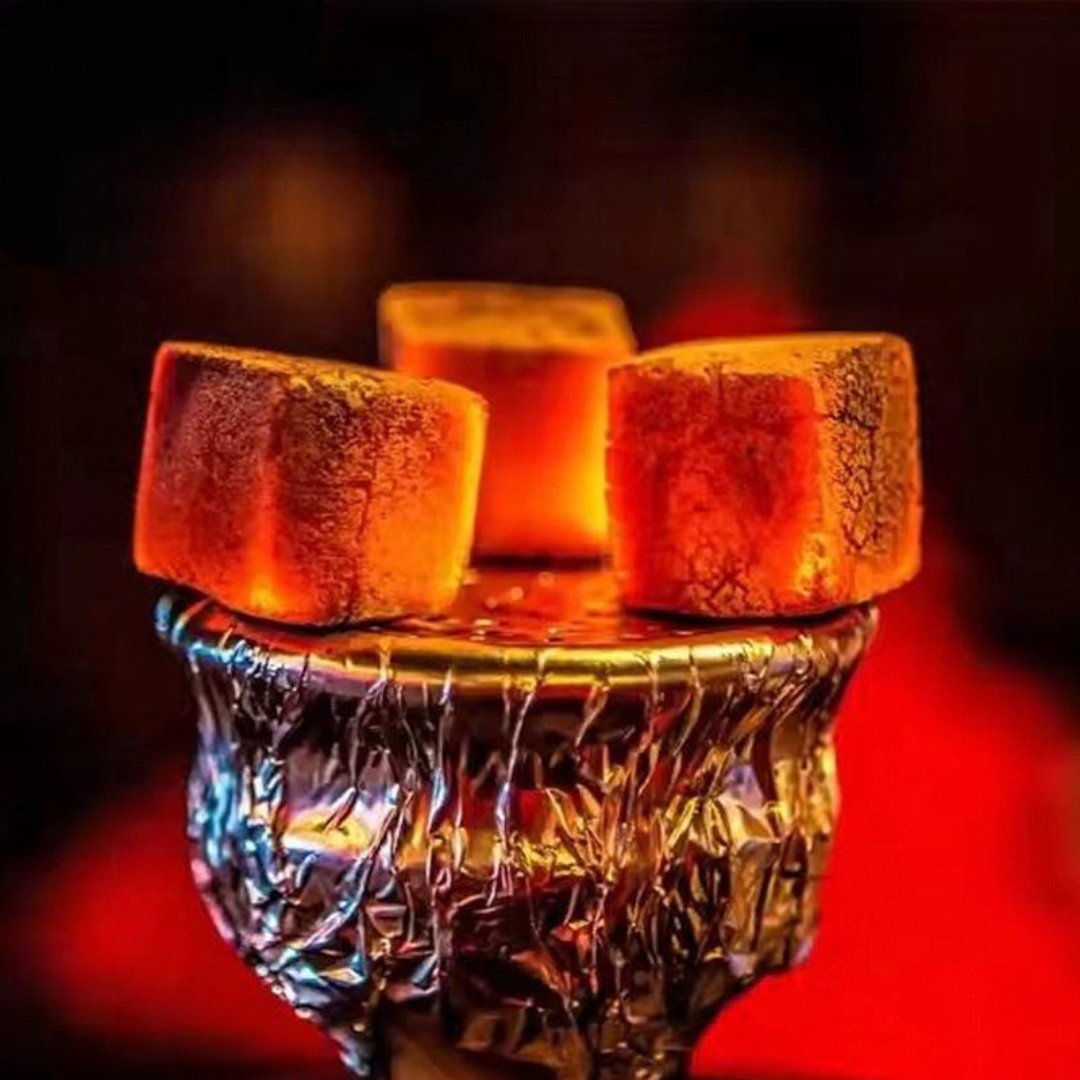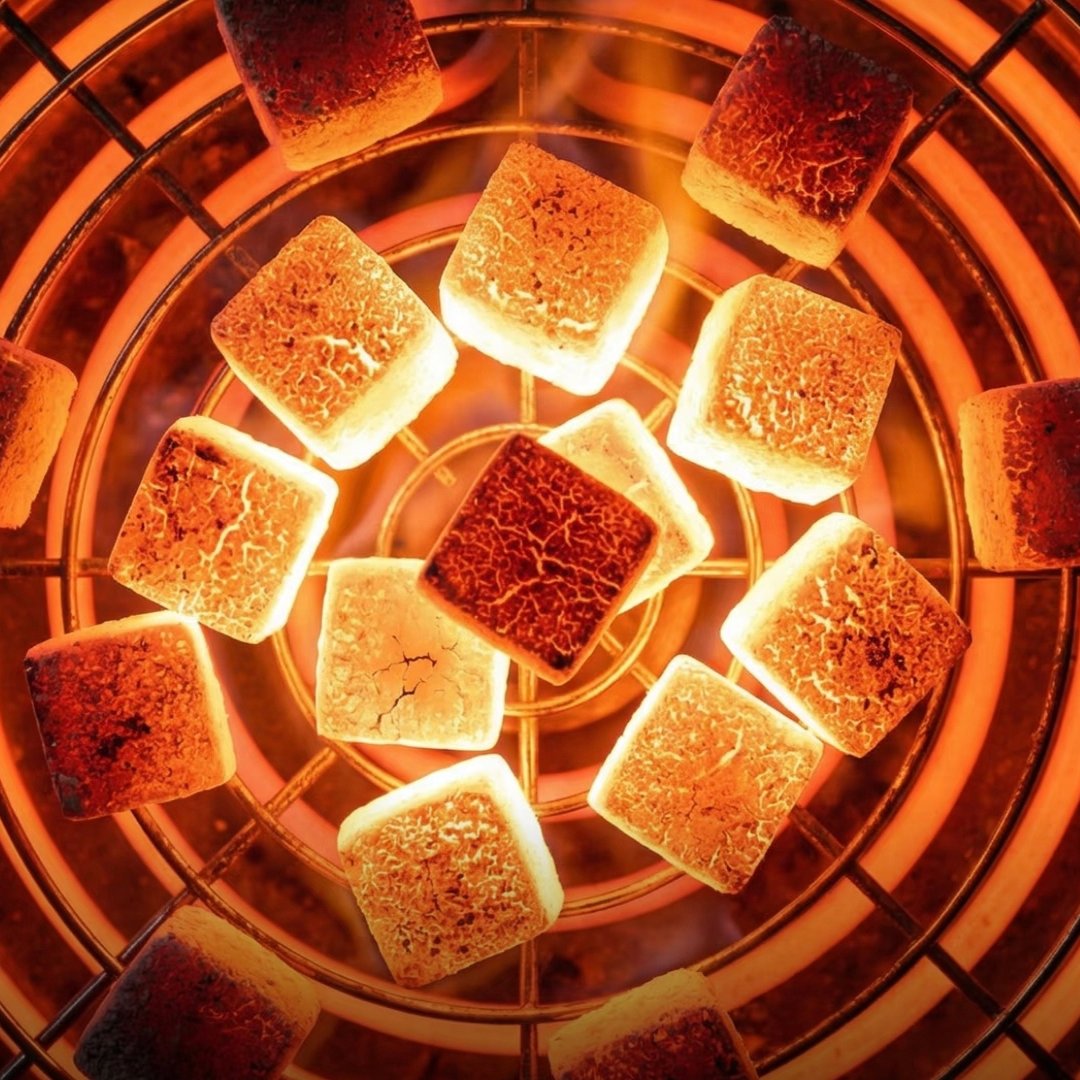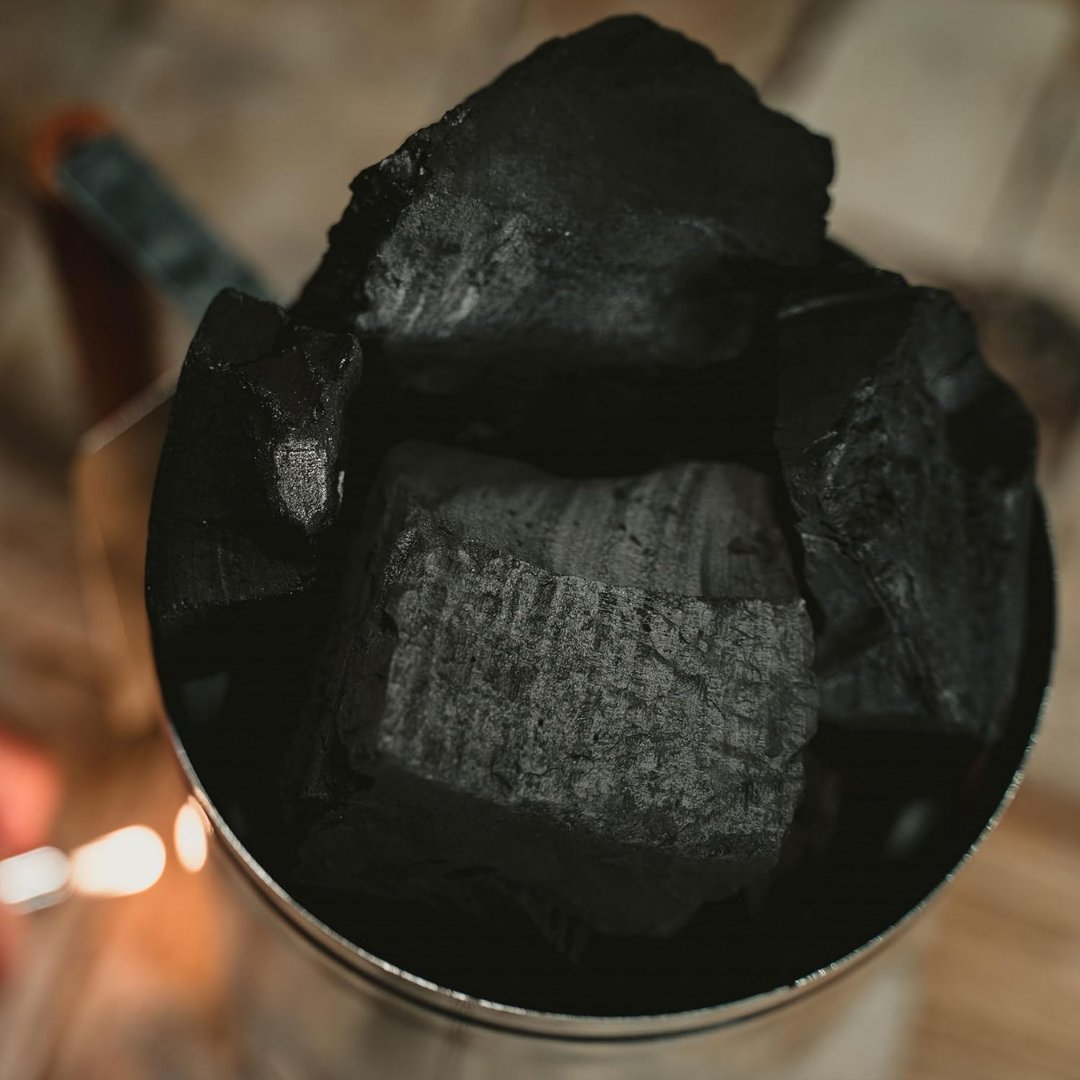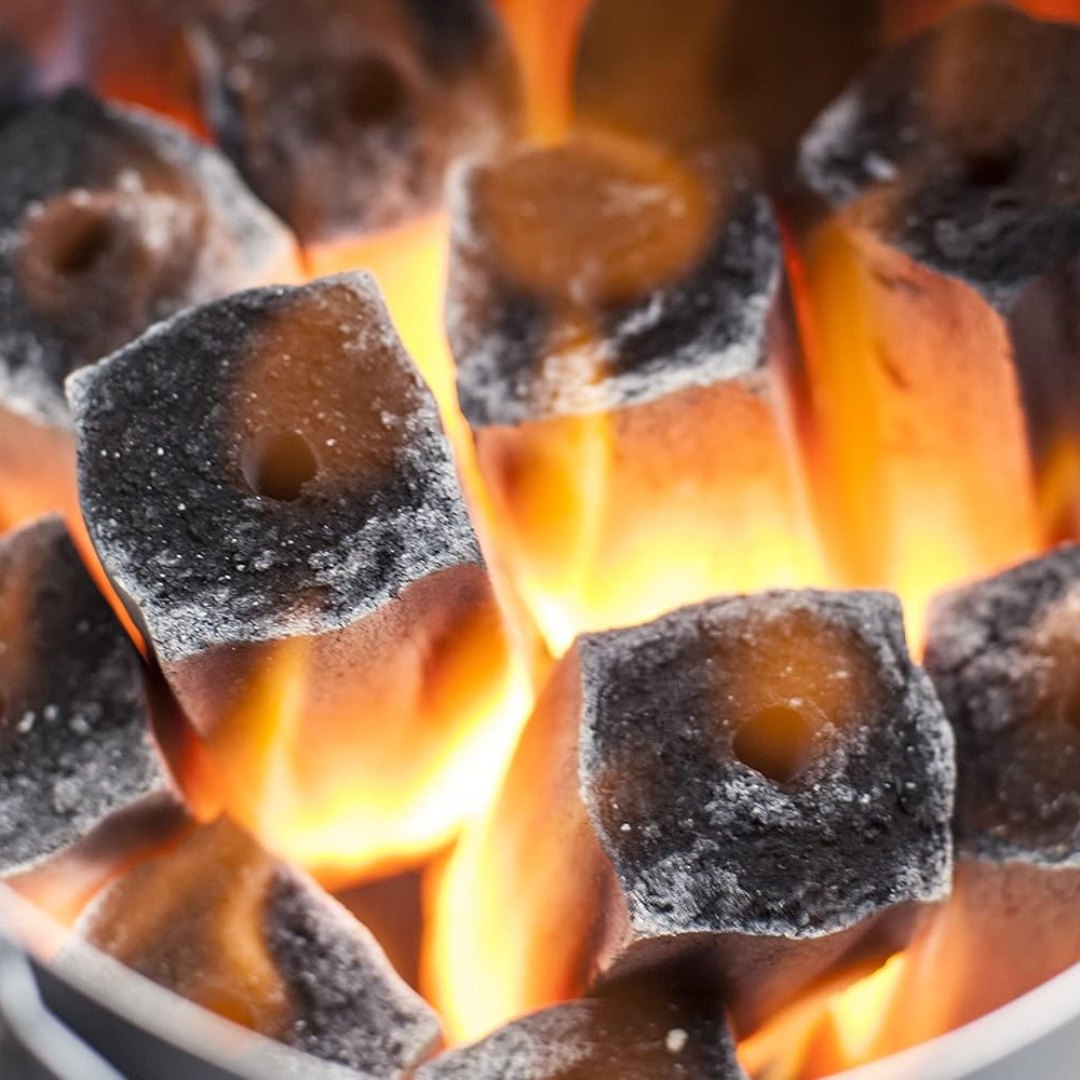




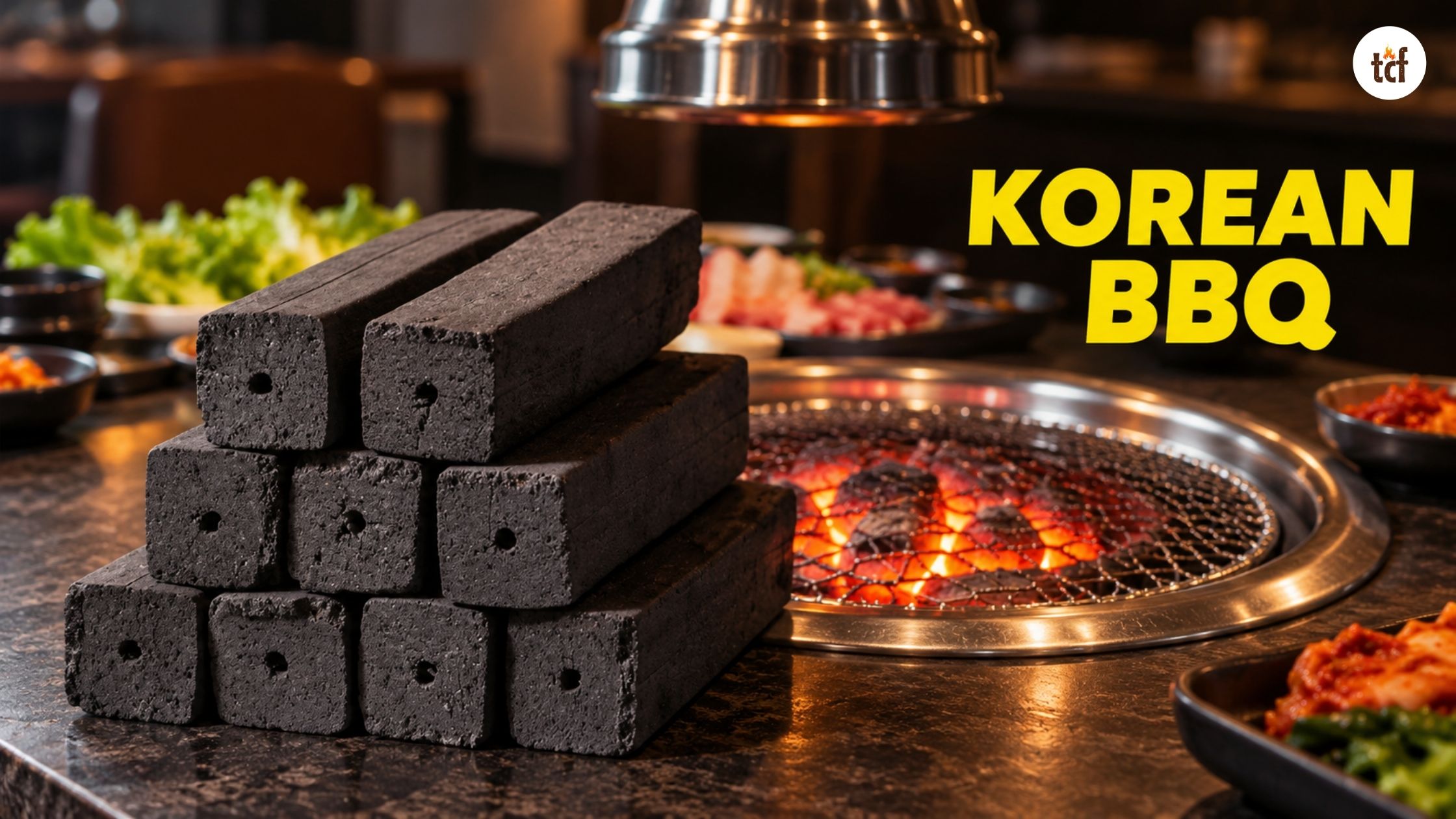
The best Korean BBQ charcoal burns hot, steady and almost smokeless, because it sits a few centimeters from the meat and from the diners. Traditionally, that means oak charcoal (sut, 숯), while many restaurants use white charcoal, or high-temperature bamboo charcoal as a lower-cost alternative with similarly clean heat.
Korean BBQ is cooked at the table, often indoors, for an hour or more per party. That puts unusual demands on the fuel: it must not smoke, spark or flare, and it must hold its heat for the whole meal.
Key takeaways
- Clean heat matters most. Smoke, sparks and flare-ups are far more noticeable at a table grill than on a backyard grill.
- Oak sut is the traditional choice. It burns hot and clean but varies in size and price.
- White charcoal is the premium option. Very long, steady and smokeless, but expensive.
- High-temperature bamboo charcoal is a practical alternative. It is dense, uniform and low in smoke once lit.
- Coal briquettes are not charcoal. Korean yeontan briquettes are made from coal and belong in a different category.
- Ventilation is not optional. Every charcoal gives off carbon monoxide, so table grills need proper extraction.
Table of Contents
What charcoal does Korean BBQ use?
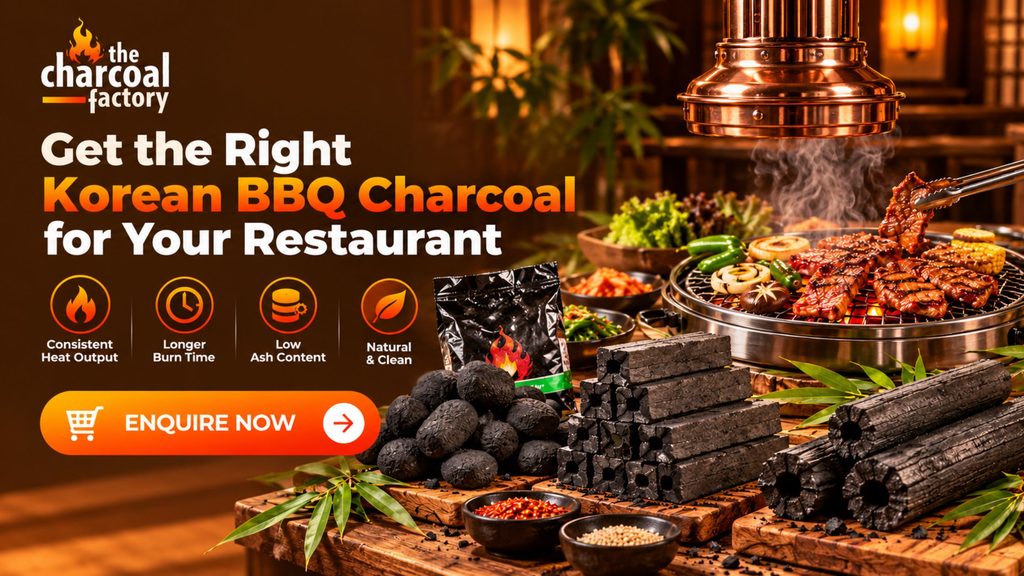
Korean BBQ restaurants and home cooks mainly use three kinds of charcoal, plus compressed charcoal in some chains.
- Oak charcoal (sut 숯, often chamsut 참숯). Traditional Korean charcoal made from oak, with nothing added, which is why it burns cleanly and is preferred by many top Korean restaurants (Maangchi).
- White charcoal (baektan 백탄). Hard, very high-temperature charcoal similar to Japanese binchotan. High-end Korean restaurants favor it for its steady heat over long periods (PNP Charcoal).
- Bamboo charcoal. Dense, uniform pieces made from bamboo, often in rectangular or shaped blocks. Diners have spotted it in Korean restaurants outside Korea, such as a Korean BBQ restaurant in Shanghai described on the AmazingRibs forum (AmazingRibs).
- Compressed charcoal. Pressed and shaped charcoal used where cost and consistency matter.
How do the main types of Korean BBQ charcoal compare?
| Oak sut | White charcoal | High-temperature bamboo charcoal | |
| Smoke once lit | Low | Very low | Very low |
| Heat | Hot | Very steady | Steady and even |
| Piece size | Varies | Varies | Uniform |
| Lighting | Moderate | Slow | Slow |
| Flavor | Light, clean | Neutral | Neutral |
| Cost | Medium to high | Highest | Lower than white charcoal |
| Best for | Traditional and premium restaurants | High-end restaurants | Busy restaurants and chains wanting consistency |
Is yeontan the same as Korean BBQ charcoal?
No. Yeontan (연탄) briquettes, the cylinders with holes used in some traditional Korean eateries and for home heating, are made from coal, not charcoal. They are a different fuel with different emissions. When a menu says “charcoal-grilled,” diners expect real charcoal.
Is bamboo charcoal good for Korean BBQ?
Yes, if it is high-temperature bamboo charcoal. Fired at high temperature, bamboo charcoal loses most of its volatile matter, so once lit it gives steady heat with very little smoke or smell. That suits a table grill, where diners sit right over the fire.
Three things make it practical for restaurants:
- Uniform pieces. Shaped and machine-made bamboo charcoal comes in consistent sizes, so every table gets the same heat and staff can portion it by count.
- Few flare-ups. With little volatile matter left, fat dripping from pork belly or marinated beef produces less open flame.
- Steady supply. Bamboo regrows after harvest, which helps keep supply and quality consistent from one order to the next.
The trade-off is lighting. Dense charcoal takes longer to catch, so restaurants light it before service rather than at the table.
Which bamboo charcoal grade suits a Korean BBQ restaurant?
Match the grade to where the grill sits:
- Indoor table grills: high-temperature bamboo charcoal, for the lowest smoke and ash. See high-temperature A-grade bamboo charcoal and eco-friendly high-temperature shaped bamboo charcoal.
- Grills with a specific tray or pot size: shaped bamboo charcoal cut to fit. See custom shaped bamboo charcoal for grilling.
- Outdoor terraces and price-led venues: a lower grade such as B-grade bamboo charcoal for BBQ or medium-temperature shaped bamboo charcoal, where a little more smoke during lighting is acceptable.
For how kiln temperature changes smoke and ash, see bamboo charcoal quality.
Also read – Bamboo Charcoal vs Fruit Charcoal
How do Korean BBQ restaurants run charcoal in service?
The usual practice is to light charcoal away from the dining room and carry it to the table already burning, so diners never see the lighting stage.
- Light in a dedicated area with extraction, on a gas burner or in a charcoal starter.
- Wait until every piece is fully lit, glowing evenly with a light layer of grey ash. Charcoal that still has black patches will smoke at the table.
- Transfer to the table grill in a metal charcoal pot or tray.
- Fit a clean grill net or grate on top. A worn or greasy net causes sticking and smoke regardless of the charcoal; see this round BBQ grill net with handle as one example of the format.
- Top up with lit charcoal only. Adding unlit pieces at the table brings back smoke.
What ventilation does a Korean BBQ restaurant need?
Every charcoal produces carbon monoxide while it burns, including low-smoke bamboo charcoal and white charcoal. Low smoke does not mean low carbon monoxide.
- Extraction over every table grill, such as downdraft or overhead hoods, sized for the number of grills running at once.
- Extraction at the lighting station, where staff work closest to large quantities of burning charcoal.
- Carbon monoxide alarms in the dining room and kitchen.
- Local rules. Ventilation requirements for indoor charcoal grilling vary by city and country, so confirm them before fit-out.
Choosing a low-smoke charcoal reduces what the extraction has to deal with. It doesn’t replace the extraction.
What should you ask a Korean BBQ charcoal supplier?
Whether you run one restaurant or supply a chain, buy Korean BBQ charcoal on specs rather than on a product name. Ask for:
- A lab report for the batch showing fixed carbon, ash, moisture and volatile matter, with the basis and test method stated. Our guide on how to read a certificate of analysis for charcoal explains what to check.
- Carbonization temperature or grade, since high-temperature charcoal smokes far less at the table.
- Piece size and shape tolerance, so the charcoal fits your grill pots and burns evenly.
- A binder and additive declaration. Table-grill charcoal should contain no ignition chemicals.
- Moisture on arrival, not just at loading. Damp charcoal lights slowly and smokes; see how to test the moisture content of BBQ charcoal.
- Samples from two batches, burned on your own table grill before you commit to a full order.
For a fuller list of what restaurants should specify, see restaurant-grade charcoal specifications.
Sourcing Korean BBQ charcoal
For restaurants, groups and distributors looking for Korean BBQ charcoal in bulk, see the wholesale bamboo charcoal range and bulk charcoal page to request specifications and samples.
Frequently asked questions
What is the best charcoal for Korean BBQ?
For indoor table grills, the best charcoal for Korean BBQ is one that burns with very little smoke: oak sut, white charcoal or high-temperature bamboo charcoal. White charcoal is the premium choice; high-temperature bamboo charcoal gives similar clean heat at lower cost and more uniform size.
Can you use regular BBQ charcoal for Korean BBQ?
Outdoors, yes. At an indoor table, regular charcoal and briquettes with binders or additives produce more smoke and smell than diners will accept. Choose a low-smoke, additive-free charcoal.
Is Korean BBQ charcoal smokeless?
No charcoal is completely smokeless. Well-made, high-temperature charcoal produces very little smoke once fully lit, which is why it is lit before it reaches the table.
Does bamboo charcoal change the taste of Korean BBQ?
High-temperature bamboo charcoal adds almost no flavor of its own, so the marinade and the meat come through. Oak sut adds a light, clean wood note.
Is charcoal safe for indoor Korean BBQ?
Only with proper extraction over each grill and carbon monoxide alarms. All burning charcoal produces carbon monoxide.