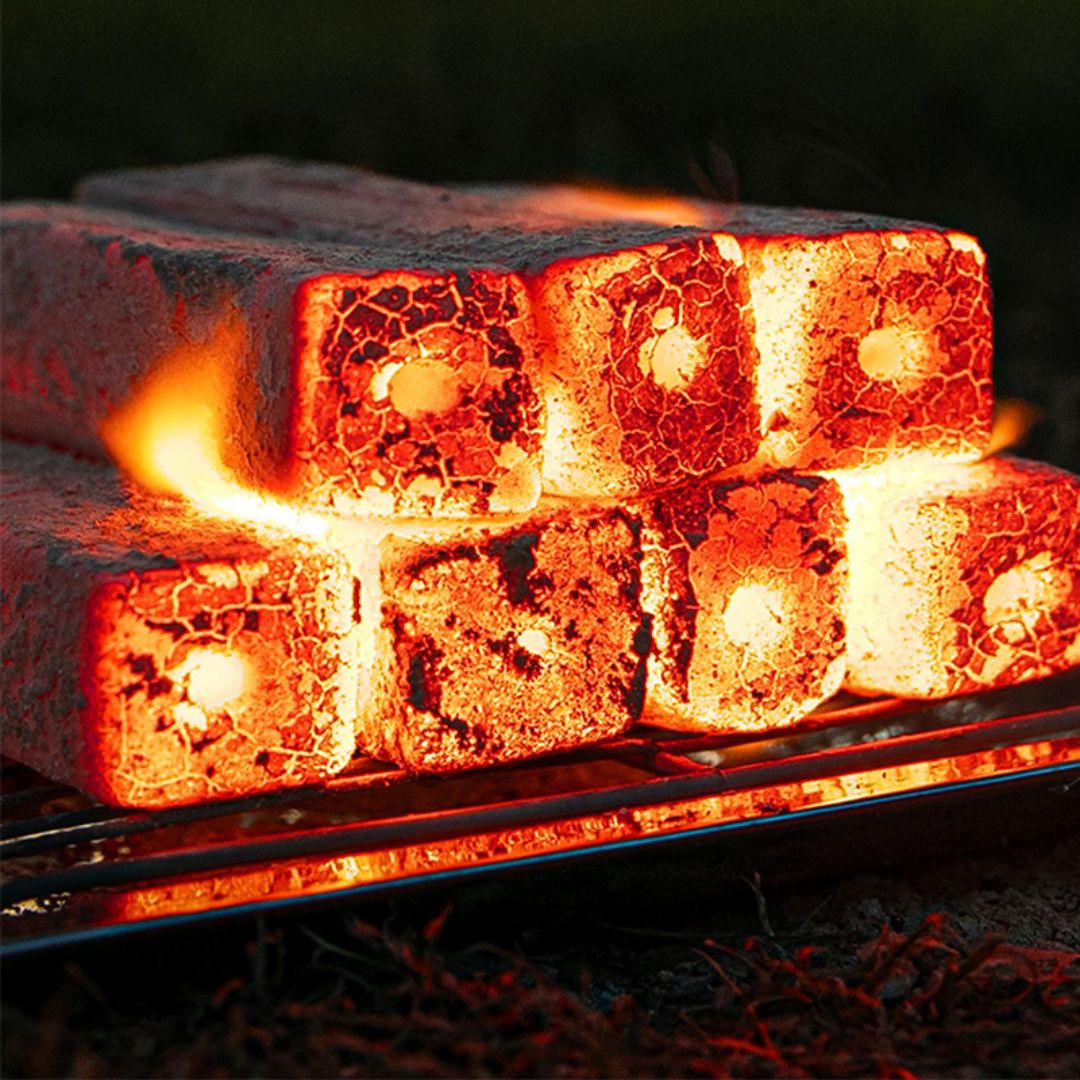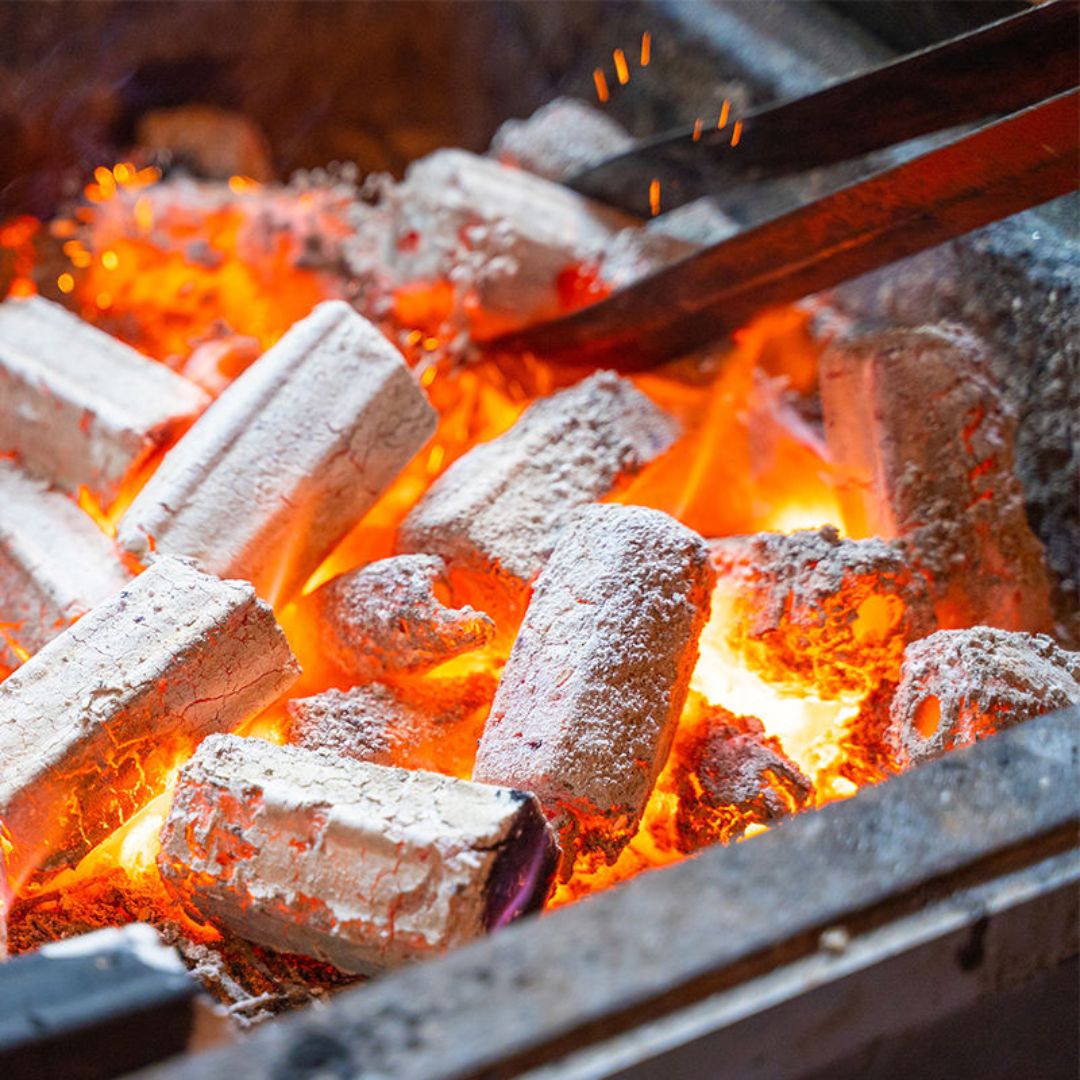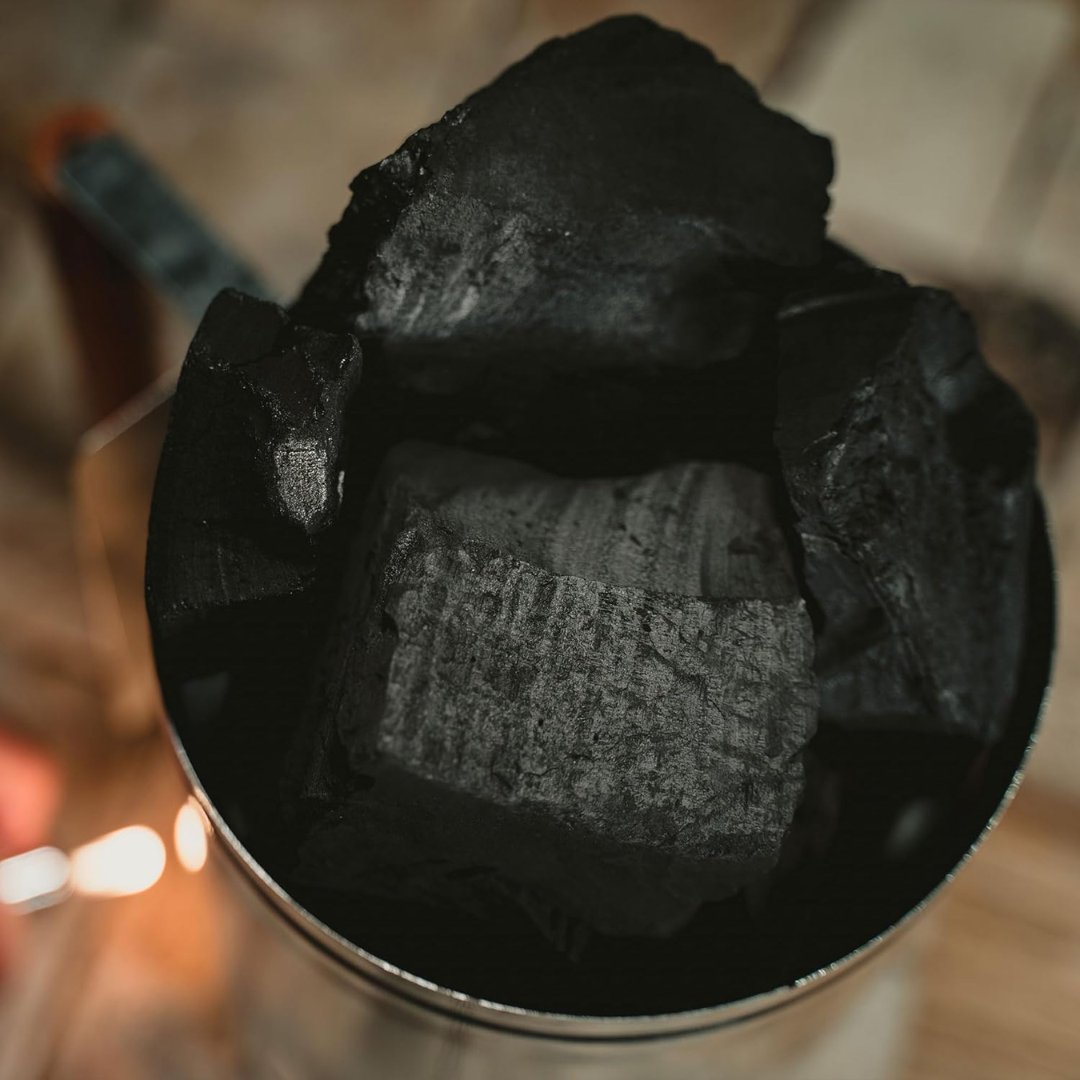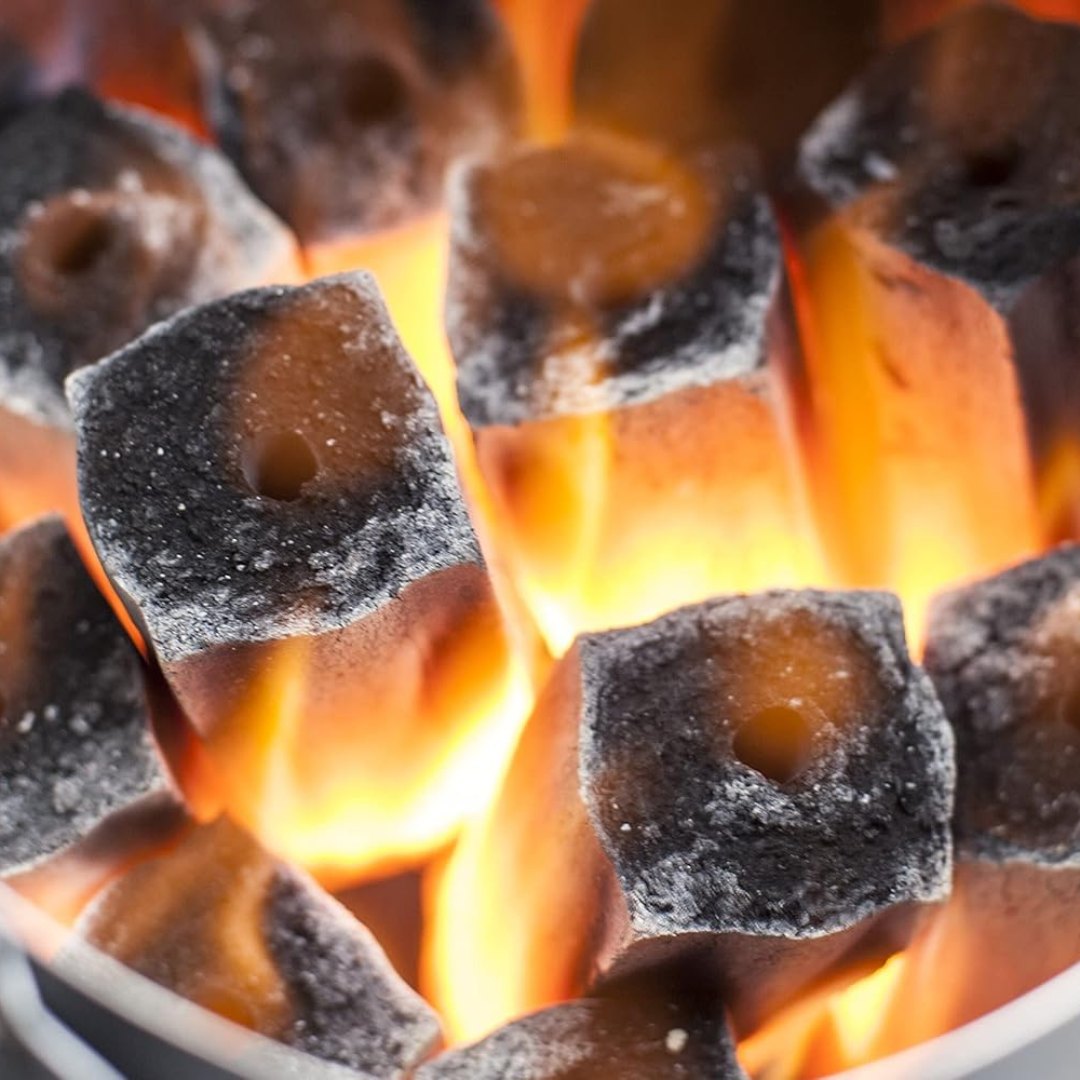


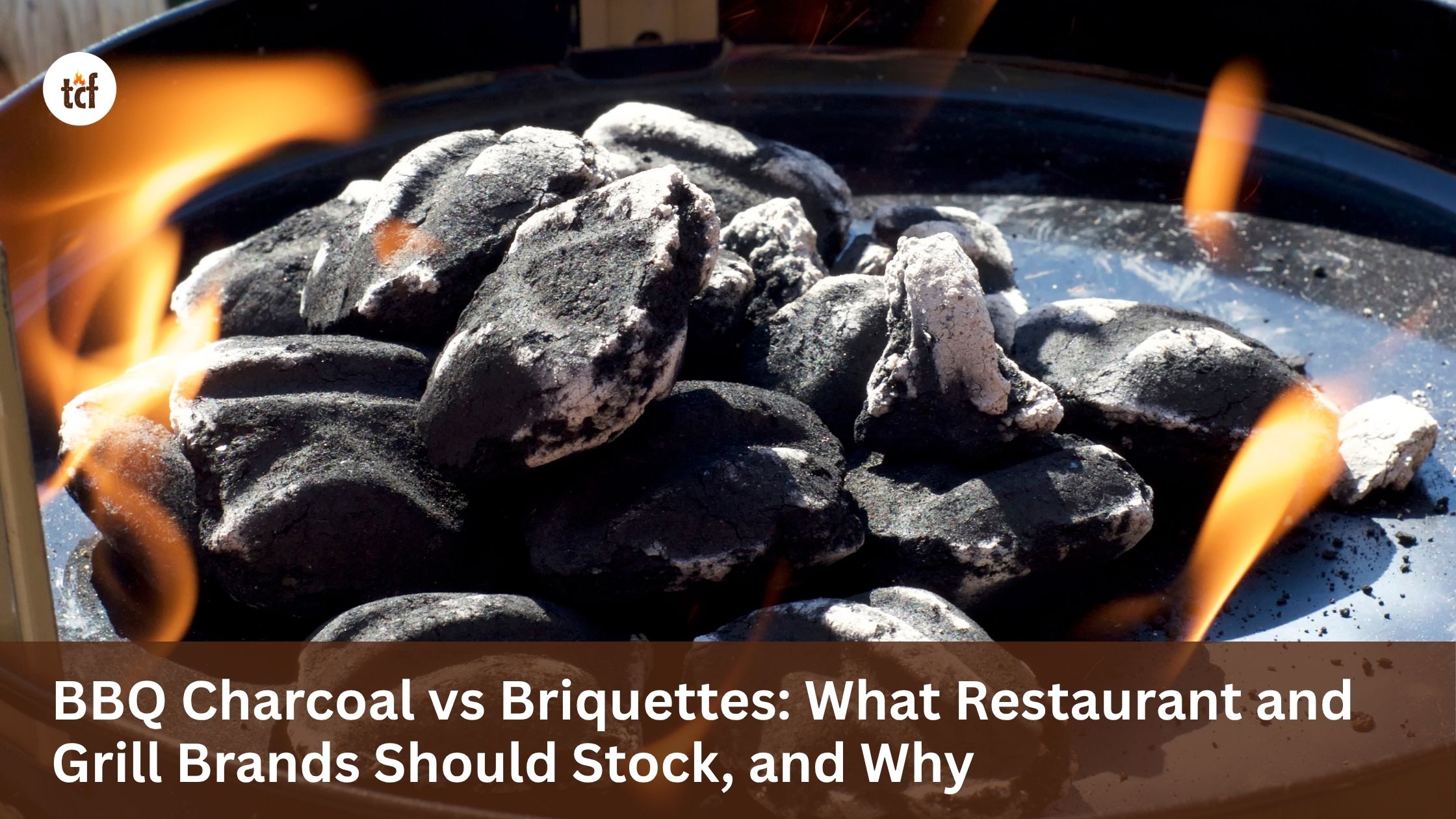
BBQ charcoal vs briquettes: Most restaurant and grill operations shouldn’t choose one fuel over the other; they should stock both, matched to specific equipment and menu items. Lump charcoal belongs wherever a dish needs searing heat and fast response: ceramic kamados, Josper and Mibrasa charcoal ovens, open-fire grills. Briquettes belong wherever a kitchen needs a long, steady, predictable burn: offset smokers, gravity-fed rigs, high-volume catering.
This isn’t a “which is better” question; it’s a procurement question tied directly to your equipment list and menu. Here’s how to think about it as a stocking decision rather than a preference.
Table of Contents
Why BBQ charcoal vs briquettes is an equipment question first, a preference question second
Our lump charcoal vs. briquettes comparison covers the underlying performance data in detail: lump runs 40 to 50°F hotter on average with peaks around 800 to 1,000°F; briquettes plateau lower but burn 30 to 40% longer per pound. For a home griller, that’s a preference decision. For a restaurant or grill brand managing multiple pieces of equipment across a menu, it’s an allocation decision, and the answer is usually “both,” not “either.”
Match fuel to equipment, not to opinion
Ceramic kamado grills, Josper and Mibrasa charcoal ovens, open-fire Santa Maria grills: these are built around lump charcoal specifically, not as a preference but as a functional requirement. Josper’s own equipment documentation restricts fuel to charcoal only, and their commercial ovens are designed to run in the 580 to 670°F range on the fast ignition and airflow responsiveness that lump provides. Briquettes’ lower peak heat and slower response to airflow adjustment work against exactly what these ovens are built to do.
Large offset smokers, gravity-fed smokers, high-volume catering rigs: these want the opposite profile, a long, steady, low-maintenance burn that doesn’t need constant attention or refueling mid-service. Briquettes’ uniform shape and predictable combustion rate are the operational advantage here, not a compromise.
Also read – sustainable bamboo charcoal sourcing
What this means for menu items specifically
- Lump charcoal: ribeyes, skewers, seafood, wood-fired pizza, direct-heat chicken thighs, anything where a hard sear and fast temperature response matter more than a multi-hour cook
- Briquettes: brisket, pork shoulder, ribs, pulled pork, anything running 6 hours or more where consistent temperature matters more than peak heat
The cost and labor side of the decision
Briquettes cost less per pound than lump charcoal and burn longer, which matters directly on high-volume, long-cook menu items where fuel cost scales with cook time. A single load lasting 2 to 3 hours versus 45 to 90 minutes for lump isn’t just a convenience; on an 8 to 12 hour smoke, it’s the difference between checking the fire once versus repeatedly through a shift.
Lump charcoal costs more, but it also produces less ash, which has a real labor-cost implication during a busy dinner service: less mid-shift cleanout, and less risk of airflow blockage slowing the line at the exact moment speed matters most.
A practical allocation framework
| If you run… | Stock… | Because… |
| Ceramic kamado, Josper/Mibrasa oven, open-fire grill | Lump charcoal | Fast ignition, high peak heat, low ash, quick airflow response |
| Offset smoker, gravity-fed smoker, catering rig | Briquettes | Long, steady, predictable burn with minimal refueling |
| Mixed equipment across multiple stations | Both, allocated by station | Matches fuel to what each piece of equipment actually needs |
The hybrid approach some commercial kitchens use
Some commercial pitmasters run a blended ratio, commonly around 70% briquettes to 30% lump, inside smokers specifically. The briquettes provide a reliable, long-burning base for the full cook, while the lump adds bursts of higher heat and a stronger wood flavor layered on top. This isn’t necessary for every operation, but it’s worth testing if you want more of lump’s flavor profile without giving up briquettes’ burn-time reliability on long cooks.
Building this into your fuel procurement
Once you’ve mapped fuel type to equipment, the next question is sourcing consistency, since a supplier who can’t hold the same spec shipment to shipment undermines the whole point of standardizing your fuel program. Our restaurant-grade charcoal specifications guide covers what to require in writing: fixed carbon, ash, moisture, and batch-to-batch consistency, regardless of which fuel type you’re stocking.
Also read – Wholesale bamboo shisha charcoal
Sourcing fuel for a multi-format kitchen
If you’re stocking both lump charcoal and briquettes across different equipment, our bulk lump charcoal and pillow-shaped charcoal briquettes pages cover current specs and packaging formats for both, and our bulk charcoal for restaurants page covers how we structure supply for operations running more than one fuel type across their equipment lineup.
Frequently asked questions
Should a restaurant only stock one type of charcoal?
Generally not, if the menu and equipment mix calls for both high-heat searing and long, steady cooks. Most multi-format restaurants and grill brands get better results by assigning fuel types by station or equipment rather than standardizing on one.
Why do charcoal ovens like Josper and Mibrasa require lump charcoal specifically?
These ovens are engineered around lump charcoal’s fast ignition and airflow responsiveness to reach and hold their operating temperature range efficiently; briquettes’ slower response and lower peak heat work against that design.
Is briquette charcoal cheaper to run in a high-volume kitchen?
Generally yes, both in raw fuel cost per pound and in longer burn time per load, which reduces how often staff need to manage or replace fuel during long cooks or high-volume service.
What’s the 70/30 hybrid ratio used for?
Some commercial smoker operations blend roughly 70% briquettes to 30% lump charcoal, using briquettes for a stable, long-burning base and lump to add extra heat intensity and flavor on top.
Does lump charcoal really produce less ash than briquettes?
Yes, and this has an operational impact beyond just cleanup time; excess ash buildup can restrict airflow in a grill or smoker, which slows recovery time exactly when a busy service needs consistent heat.