

Every international charcoal shipment requires charcoal HS codes. Use the wrong one, and you face customs delays, unexpected duties, regulatory investigations, and potentially losing eligibility for trade agreement benefits, all before a single bag reaches a customer. This guide covers every code you need, what it covers, and where the costly mistakes happen.
Table of Contents
What Is an HS Code and Why Does It Matter for Charcoal?
A charcoal HS code (Harmonized System code) is a globally standardised numerical classification used by customs authorities in over 200 countries to identify traded products. It determines the duty rate applied to your shipment, what regulations apply at import, and whether your goods qualify for preferential treatment under free trade agreements.
For charcoal specifically, the correct HS code does more than just clear customs. It determines whether your shipment triggers EUDR (EU Deforestation Regulation) due diligence obligations, whether you qualify for zero-duty rates in major markets, and how your goods are recorded in trade statistics used by buyers and governments to track supply chain activity.
Getting it wrong is not a minor paperwork issue. A misclassified container can be held at port, subjected to physical inspection, recoded with the correct and potentially higher duty rate, and flagged for future audit. The financial exposure on a single 40HQ container can run to tens of thousands of dollars before demurrage, re-inspection, and logistics delays are factored in.
What Is the Primary HS Code for Charcoal?
Heading 4402: The Universal Charcoal Code
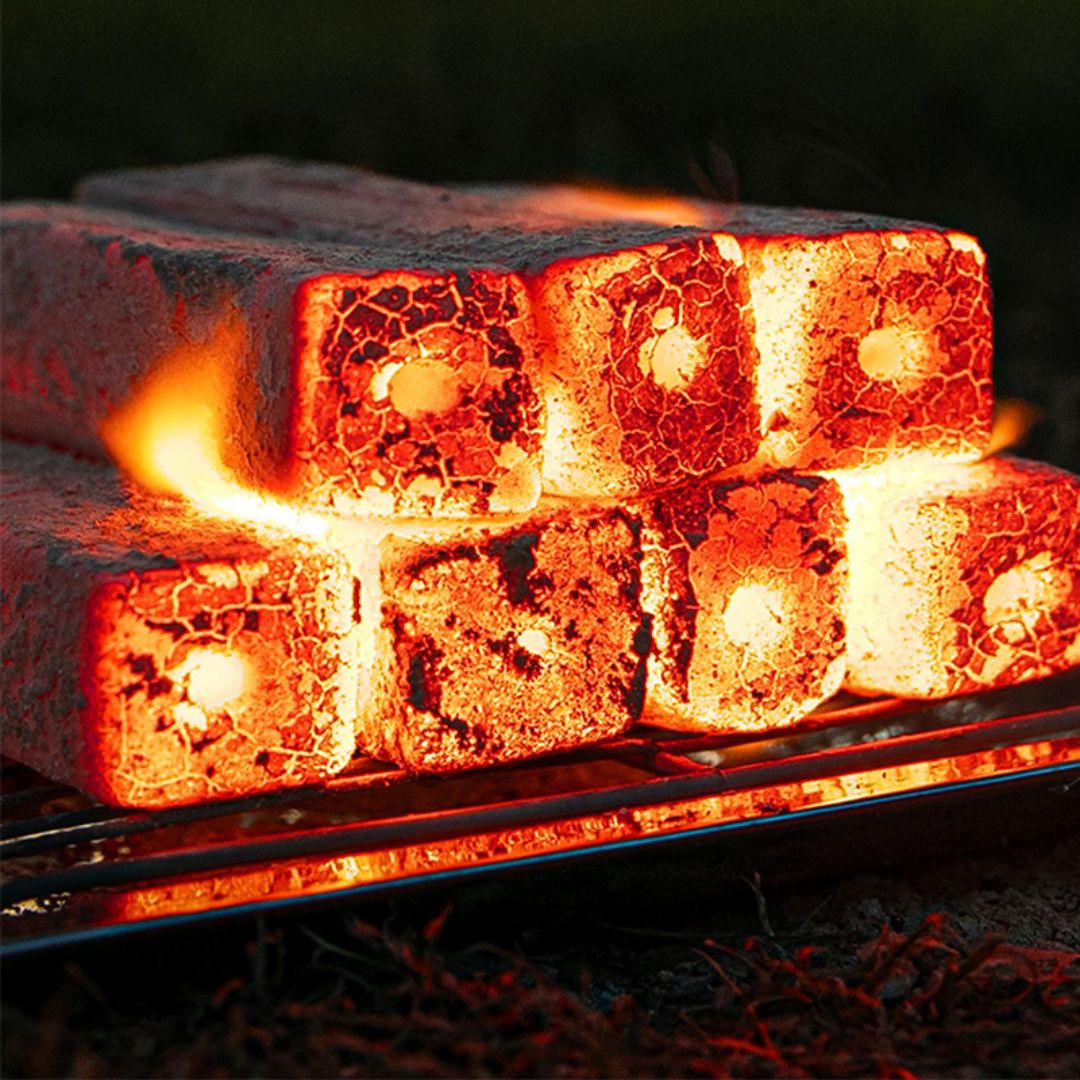
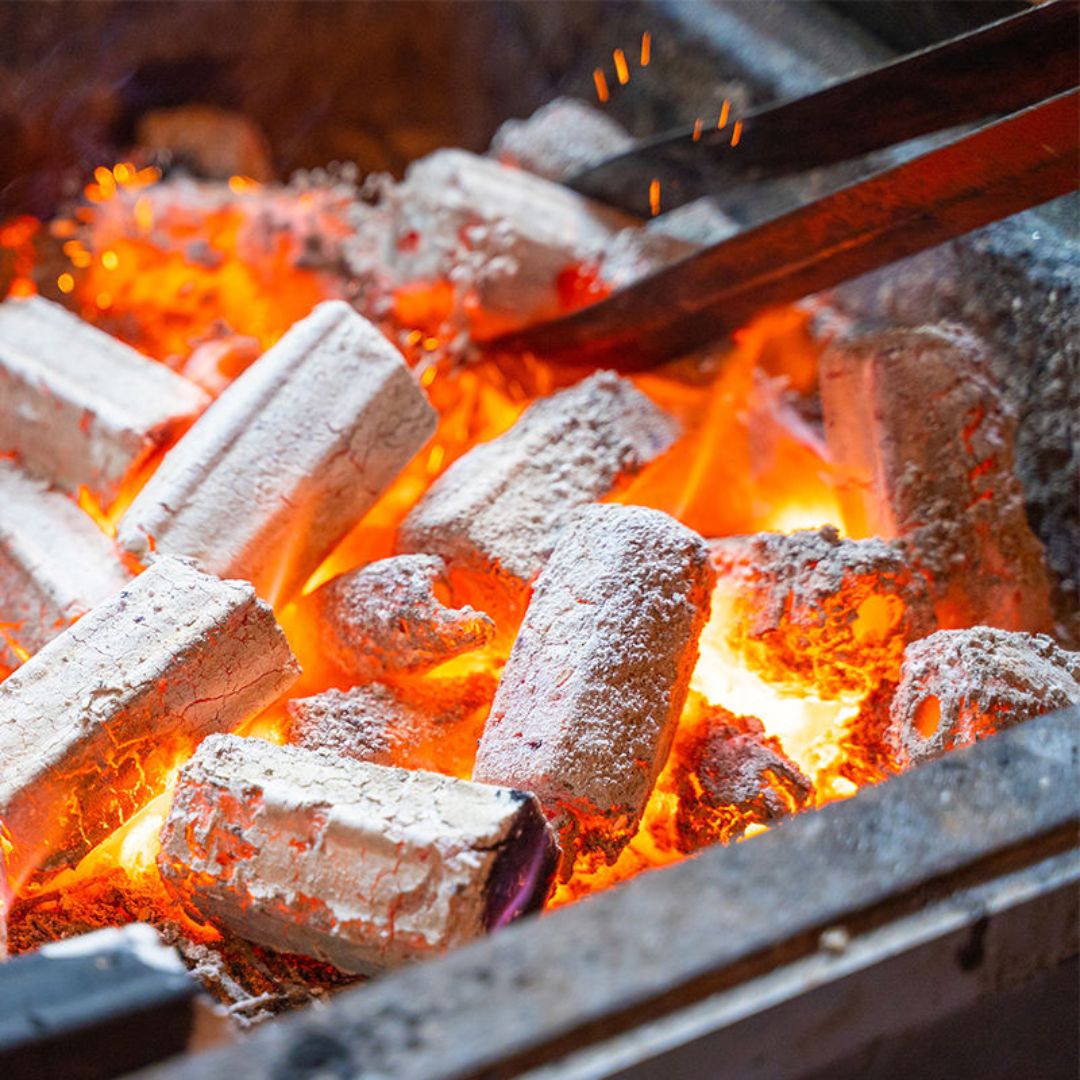
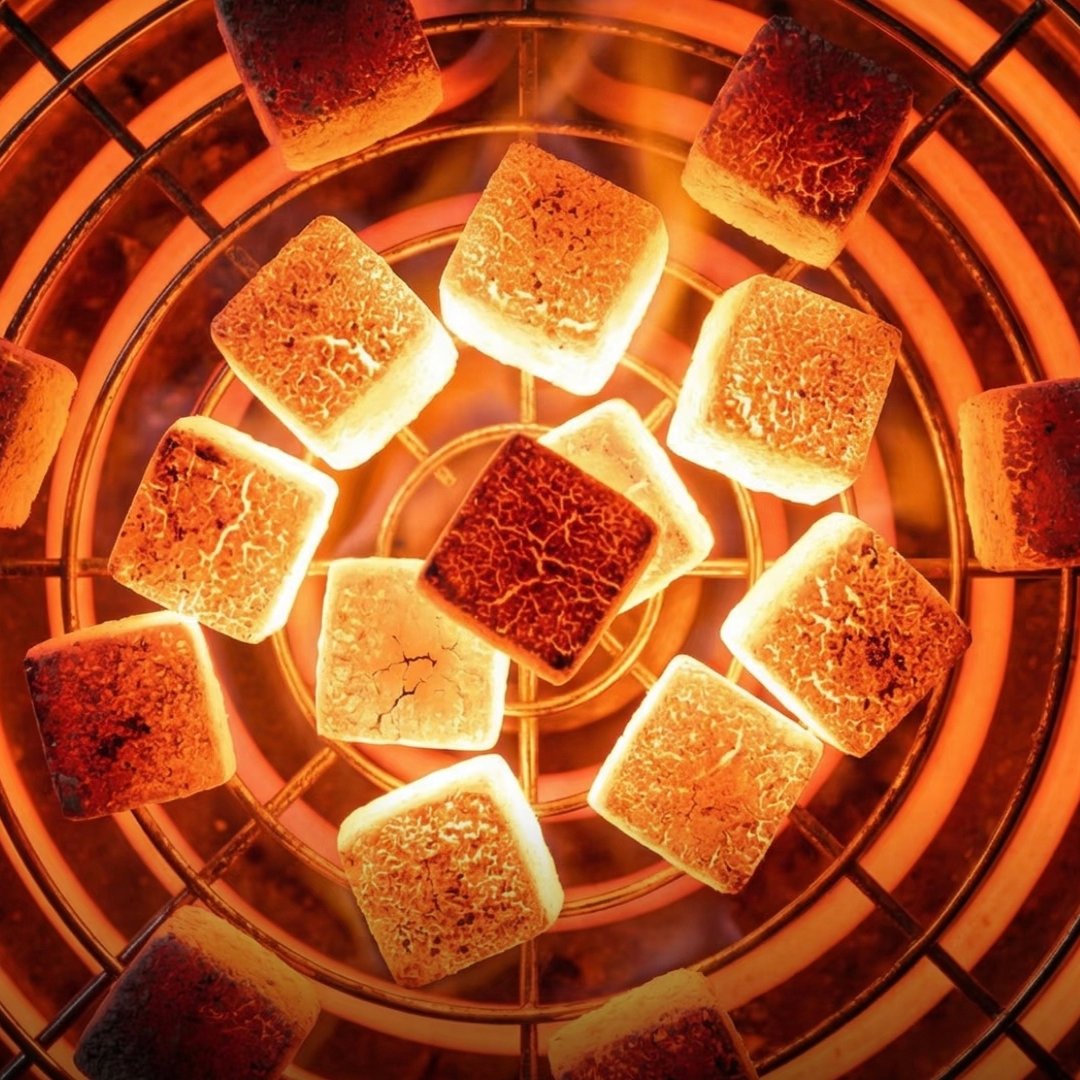
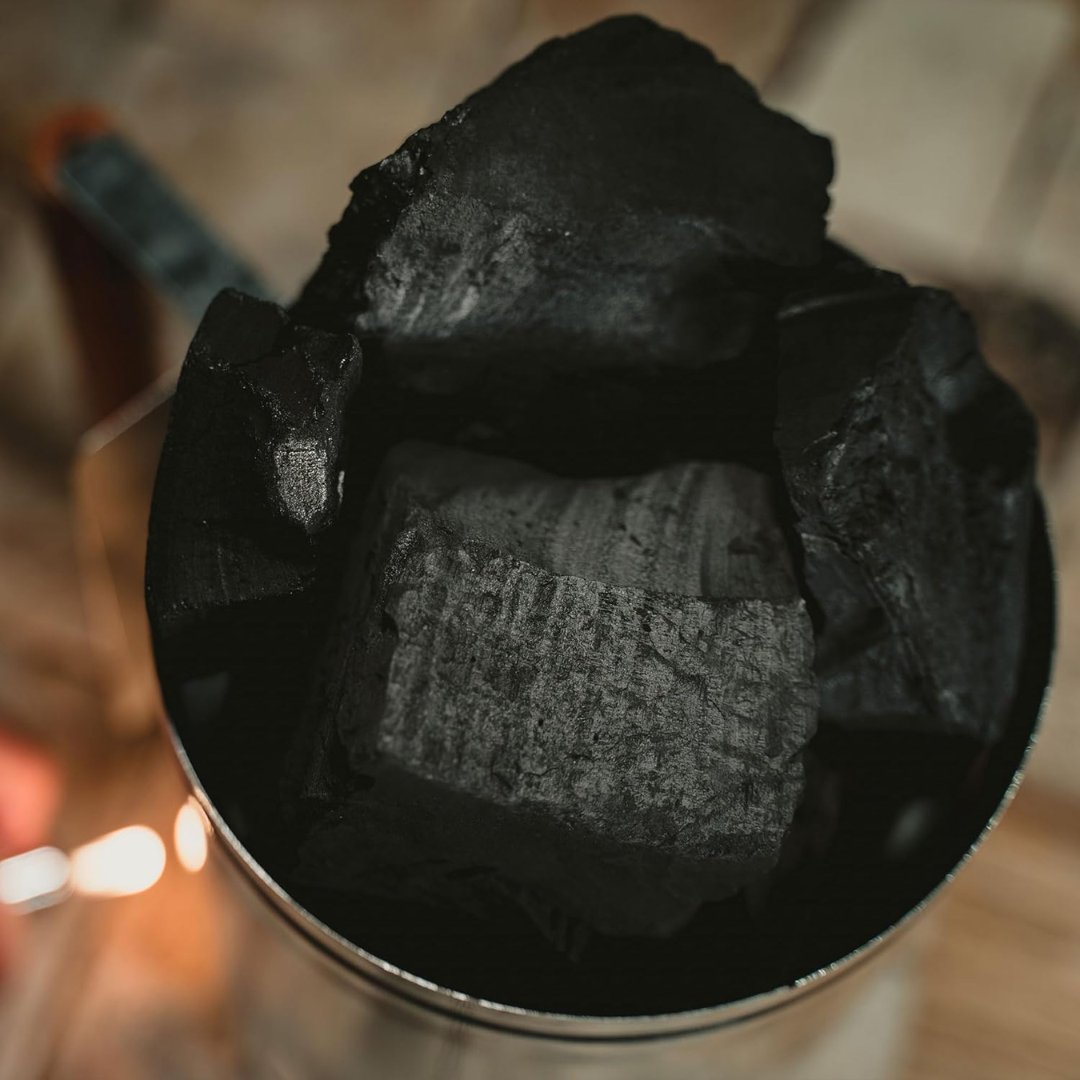
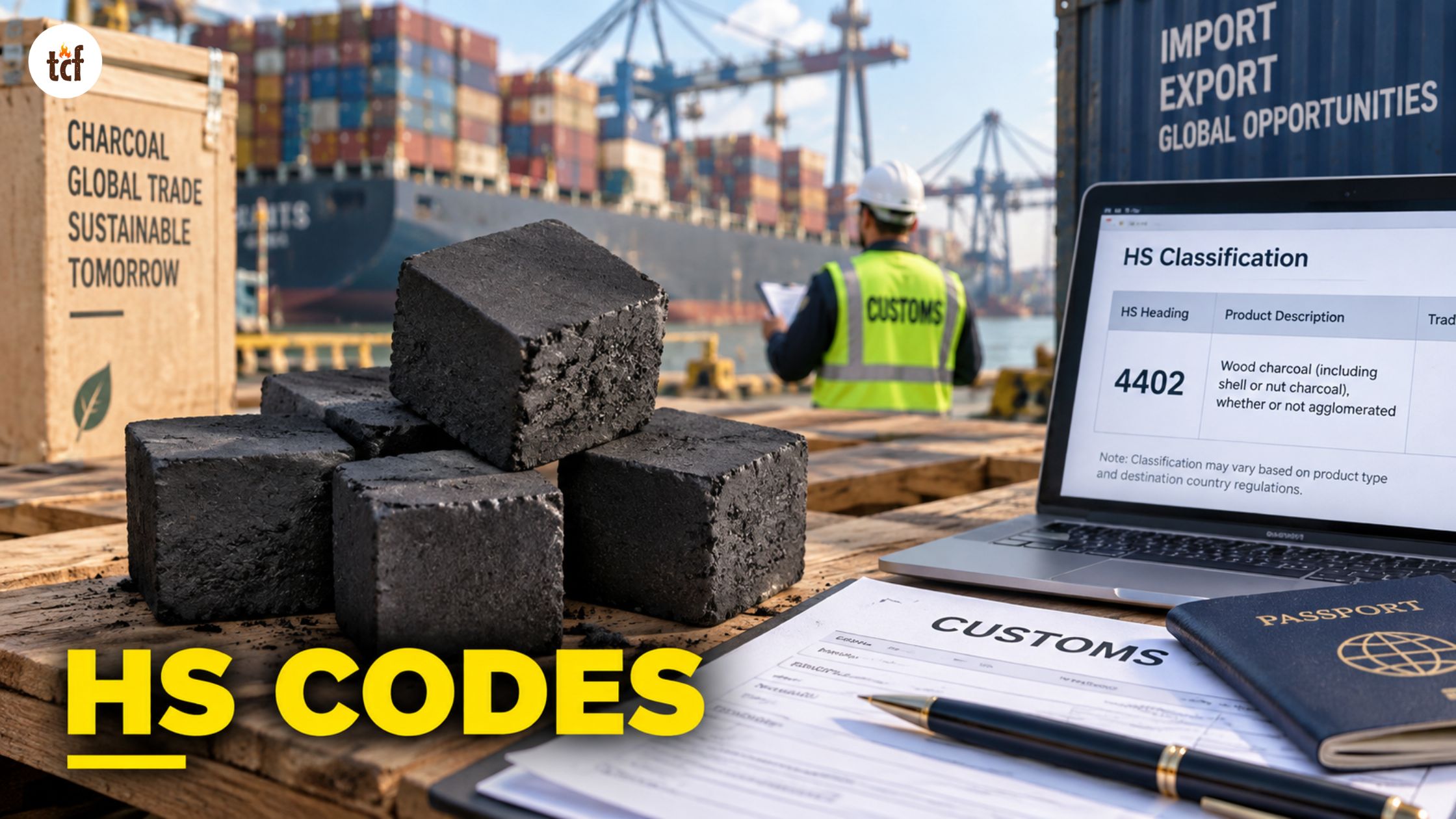
All commercial charcoal wood, bamboo, coconut shell, nut shell, lump, and briquette fall under HS heading 4402. The full WCO description is:
4402 — Wood charcoal (including shell or nut charcoal), whether or not agglomerated
This heading sits within Chapter 44 of the Harmonized System, which covers wood and articles of wood. Despite bamboo and coconut shell not being “wood” in the conventional sense, both are explicitly included under this heading. The parenthetical “including shell or nut charcoal” was added precisely to capture these materials and remove any ambiguity.
The heading covers charcoal in all physical forms: loose lump, compressed briquettes, pellets, logs, and powder, as long as the material has been carbonised rather than simply dried or processed as fuel wood.
Also read – Charcoal Import Regulations in Europe
What Are the Subheadings Under 4402?
The WCO HS 2022 edition (effective 1 January 2022) defines three six-digit subheadings under 4402:
| HS Code | Description | Typical Products |
| 4402.10 | Of bamboo | Bamboo lump charcoal, bamboo briquettes, bamboo powder charcoal |
| 4402.20 | Of shell or nut | Coconut shell charcoal (lump and briquettes), palm shell charcoal, olive pit charcoal, peach pit charcoal, walnut shell charcoal |
| 4402.90 | Other | Hardwood lump charcoal, wood briquettes, sawdust briquettes, mixed wood charcoal, fruitwood charcoal |
These three subheadings replaced an older two-subheading structure (4402.10 for bamboo, 4402.90 for everything else) in earlier HS editions. The addition of the dedicated 4402.20 subheading for shell and nut charcoal was a meaningful change — it separated coconut shell products from the general “other” bucket, which has regulatory consequences in markets like the EU.
Why the 4402.20 vs 4402.90 Distinction Matters in Europe
This is one of the most practically important distinctions in the charcoal trade. Coconut shell charcoal, correctly classified under 4402.20, can be argued as an agricultural byproduct from a plantation crop (Cocos nucifera) not a forest tree. This distinction matters significantly under the EU Deforestation Regulation (EUDR), which targets wood-derived products.
Charcoal incorrectly or ambiguously declared under 4402.90 (“Other”) signals to customs systems that the product is wood-derived, which triggers full EUDR traceability obligations, including geolocated sourcing data and third-party verification. Importers who declare coconut shell briquettes under the wrong subheading face a substantially heavier regulatory burden than those who use the correct 4402.20 classification.
Also read – can charcoal be reused
How Do Countries Extend the Six-Digit Charcoal HS Code?
The six-digit HS code is the internationally standardised level that every country that uses the Harmonized System agrees on for the first six digits. Beyond that, countries add their own digits to meet domestic classification needs. This is where the code used on your invoice must match what the destination country’s customs system expects.
European Union: Eight-Digit CN Codes and Ten-Digit TARIC Codes
The EU uses the Combined Nomenclature (CN), which extends HS codes to eight digits. For import declarations, this is further expanded to a ten-digit TARIC code. For charcoal:
44021000 (bamboo charcoal) and 44022000 (shell or nut charcoal) are the eight-digit CN codes for export declarations. The ten-digit TARIC codes add further specificity for import declarations and determine whether additional measures apply, such as anti-dumping duties or EUDR-linked controls.
The EU import duty rate across all 4402 subheadings is 0% under the standard tariff. However, VAT applies at national rates, typically 20–22% in most EU member states, assessed on the CIF value plus charges.
United Kingdom: Commodity Codes
Post-Brexit, the UK uses its own tariff schedule derived from the EU CN but independently administered. Charcoal falls under the same 4402 heading structure. UK import duty on charcoal under 4402 is 0% from most origins. Buyers can verify current commodity codes and duty rates via the UK’s official Trade Tariff service at trade-tariff.service.gov.uk.
United States: Ten-Digit HTS Codes
The US Harmonized Tariff Schedule (HTS) extends classification to ten digits. US importers use the HTS for import declarations, while US exporters use the Schedule B system (also ten digits, same first six as HTS). The US import duty on charcoal under 4402 is 0% from most trading partners. US buyers sourcing from China need to factor in Section 301 tariffs, which apply to certain Chinese goods. Classification and tariff applicability should be confirmed with a licensed customs broker.
India: Eight-Digit HSN Codes
India uses the Harmonised System of Nomenclature (HSN), which extends to eight digits. For GST purposes, wood charcoal under HSN 4402 carries a 0% GST rate applicable uniformly across all sub-categories regardless of whether the product is bamboo, coconut shell, or hardwood. India applies a separate import duty on charcoal imports, bringing the total effective duty to approximately 30% when customs duty, social welfare surcharge, and IGST are combined. This makes India a significant manufacturing and re-export market rather than a pure consumption import market.
Saudi Arabia and GCC Markets
Saudi Arabia and the Gulf Cooperation Council (GCC) apply a 5% customs duty on charcoal imports under 4402. Given that the Middle East is one of the largest global markets for shisha and hookah charcoal, this tariff is a known landed cost factor that buyers in the region build into their pricing models.
Also read – best charcoal to use
What Is the Duty Rate Summary by Key Market?
| Destination Market | Import Duty (4402) | VAT / Local Tax | Notes |
| European Union | 0% | 20–22% (varies by member state) | EUDR compliance required from Dec 2026 |
| United Kingdom | 0% | 20% VAT | Verify via UK Trade Tariff |
| United States | 0% (most origins) | N/A at federal level | Section 301 tariffs may apply to Chinese goods |
| Saudi Arabia / GCC | 5% | N/A | Applies uniformly across GCC member states |
| India | ~30% effective | 0% GST on 4402 | Total includes customs duty + surcharges |
| Japan | 0–3% | 10% consumption tax | Varies by origin and FTA status |
| Australia | 0% | 10% GST | Standard rate, no additional measures |
Duty rates are subject to change and should be verified against the current tariff schedule of the destination country before each shipment.
What Other HS Codes Are Related to Charcoal?
Understanding adjacent codes is essential to avoid misclassification in either direction.
4401 — Fuel Wood and Wood Pellets (NOT Charcoal)
HS heading 4401 covers fuel wood, wood chips, sawdust, and wood waste, including wood pellets and similar products. This is the single most common misclassification error in the charcoal trade. Sawdust briquettes that have been carbonised belong under 4402. Sawdust briquettes that have been compressed but not carbonised, fuel pellets belong under 4401. The distinction is whether the carbonisation process has taken place. Getting this wrong in either direction creates customs disputes and potential duty recalculations.
3802 — Activated Charcoal (Separate Classification Entirely)
Activated charcoal and activated carbon are not classified under 4402. They fall under HS heading 3802 (Activated carbon; activated natural mineral products; animal black). Activated charcoal has undergone an additional steam or chemical treatment to create a highly porous structure used in filtration and purification applications. It is a chemically distinct product from fuel or BBQ charcoal and carries different duty rates and regulations in most markets. Confusing the two is a significant compliance error.
9609 — Drawing Charcoal and Crayon Charcoal
Artist’s charcoal pencil-form charcoal sticks used for drawing is classified under HS heading 9609 rather than 4402. Charcoal mixed with incense and charcoal used as a medicament are also excluded from 4402 under the WCO classification notes. These exclusions are explicitly noted in the EU’s TARIC descriptions for 44029000.
Also read – What Wholesale Buyers Look for in a Charcoal Supplier
How Does the EUDR Affect Charcoal HS Code Declarations?
This is the most significant regulatory development affecting charcoal trade into the EU in recent years.
The EU Deforestation Regulation (Regulation (EU) 2023/1115, amended by Regulation (EU) 2025/2650) requires operators placing covered products on the EU market to demonstrate that goods are deforestation-free, meaning produced on land not deforested after 31 December 2020. Wood is one of the seven commodities explicitly covered, and HS heading 4402 appears in the EUDR Annex I product list.
The enforcement deadline for large and medium operators is 30 December 2026. Micro and small enterprises have until 30 June 2027. The EU has published additional simplification measures in May 2026, clarifying due diligence obligations, though the fundamental requirement — deforestation-free proof via geolocated sourcing data and supply chain mapping — remains in place.
For charcoal importers, the practical implications are significant. Hardwood charcoal under 4402.90 is unambiguously within scope and will require full due diligence statements (DDS) with geolocated origin data from each supplier. Bamboo charcoal under 4402.10 is also wood-derived and subject to the same obligations. Coconut shell charcoal under 4402.20 may have a defensible argument for exclusion because coconut is a plantation agricultural crop rather than a forest product — but this position should be verified with a customs compliance specialist before relying on it commercially.
Buyers sourcing for European markets should begin requesting EUDR-compliant documentation from suppliers now. FSC certification — already discussed in our charcoal supplier verification checklist — is a meaningful step toward EUDR readiness, though FSC alone does not constitute a complete due diligence statement under the regulation.
What Are the Most Common HS Code Mistakes in Charcoal Trade?
Declaring Carbonised Products Under 4401
The most frequent error. Charcoal briquettes, even those made from sawdust or agricultural waste, are 4402 products once they have been carbonised. Declaring them as fuel wood or biomass pellets under 4401 is factually incorrect and creates liability if discovered at customs inspection.
Using 4402.90 for Coconut Shell Products
Coconut shell charcoal belongs under 4402.20. Declaring it under 4402.90 (Other) is a subheading error that, in the EU context, can trigger unnecessary EUDR obligations. It also produces inaccurate trade data, which affects your ability to demonstrate a consistent, compliant sourcing history if audited.
Confusing 4402 with 3802 for Activated Products
If your charcoal has undergone activation treatment for filtration use, it is no longer a 4402 product. Misclassifying activated charcoal under 4402 or vice versa creates duty rate errors and potential regulatory violations in markets where activated carbon faces additional controls.
Not Matching Country-Level Code Extensions
The six-digit WCO code is the baseline but the destination country requires more digits on customs declarations. Filing a six-digit code where a ten-digit code is required (such as in the US) creates processing errors. Filing an eight-digit CN code for EU import when a ten-digit TARIC code is needed creates incomplete declarations.
Not Verifying After HS Edition Updates
The WCO revises the Harmonized System every five years. The current edition is HS 2022 (effective 1 January 2022). If your business was using codes assigned under HS 2017 or earlier, verify that nothing changed for your specific product — the addition of the 4402.20 subheading for shell and nut charcoal was one such update. The next revision, HS 2027, will take effect 1 January 2027.
How Do I Find the Correct Code for My Specific Charcoal Product?
The decision tree is straightforward:
Start with the question: Has the material been carbonised? If no, it is not a 4402 product. If yes, move to the next question.
Is the raw material bamboo? If yes: 4402.10. Is the raw material a shell or nut (coconut shell, palm shell, olive pit, peach stone, walnut shell)? If yes: 4402.20. Is the raw material wood, fruitwood, hardwood, or mixed wood (including sawdust briquettes that have been carbonised)? If yes: 4402.90.
For products that combine materials — for example, a briquette made with both sawdust and coconut shell — the classification follows the predominant material by weight. When in genuine doubt, a binding tariff ruling from the destination country’s customs authority is the definitive answer and provides legal protection against reclassification.
For Further Readings:
lump charcoal vs briquettes
Best charcoal for grilling
Charcoal grades
can you reuse charcoal
Best charcoal for smoking
types of charcoal
What Documentation Should Accompany a Charcoal Shipment?
Correct HS code declaration is one part of a compliant shipment. The full document set required for most international charcoal consignments includes:
Commercial invoice (with HS code declared, description matching the code), packing list, Bill of Lading or Airway Bill, Certificate of Origin, Phytosanitary certificate (required by many import markets), Fumigation certificate, Certificate of Analysis (COA) from third-party lab, and MSDS (Material Safety Data Sheet).
For EU-destined shipments from December 2026 onwards, a completed Due Diligence Statement (DDS) under EUDR will be added to this list.
For charcoal classified under IMDG Class 4.2 (Substances liable to spontaneous combustion) which applies to certain charcoal types during shipping, additional Dangerous Goods declarations are required. Coconut shell charcoal briquettes that pass the weathering test may be exempt from Class 4.2 treatment; the correct determination depends on the specific product and test data, not on a general assumption.
Related reading: how to choose the right charcoal supplier, top countries exporting charcoal, charcoal supplier verification checklist, and our charcoal bulk buying guide. For product categories, see our bulk lump charcoal, coconut charcoal briquettes wholesale, and wholesale bamboo charcoal pages.
External sources:
- World Customs Organization — Harmonized System (official HS nomenclature and edition information)
- European Commission — EU Deforestation Regulation (EUDR) implementation and enforcement timeline
Frequently Asked Questions
What is the HS code for charcoal briquettes?
Charcoal briquettes fall under HS heading 4402. The specific six-digit subheading depends on the raw material: bamboo briquettes are 4402.10, coconut shell briquettes are 4402.20, and wood or sawdust briquettes are 4402.90. All subheadings carry a 0% import duty rate in the EU, UK, and US under standard tariff schedules.
Is the HS code for charcoal the same in all countries?
The first six digits (the WCO subheading) are internationally standardised and identical across all countries using the Harmonized System. Beyond six digits, countries apply their own extensions — eight digits in the EU (CN codes), ten digits in the US (HTS), eight digits in India (HSN). Always use the digit length required by the destination country on customs declarations.
What is the difference between HS 4402 and HS 3802?
HS 4402 covers regular fuel and cooking charcoal — lump, briquettes, bamboo, and coconut shell. HS 3802 covers activated charcoal and activated carbon — products that have undergone a secondary steam or chemical activation process to create a porous structure used in filtration, purification, and industrial applications. They are different products with different duty rates and regulations. Never use 4402 for activated charcoal products.
Does the EUDR apply to coconut shell charcoal?
This is an evolving compliance question. HS heading 4402 is listed in EUDR Annex I, which technically brings all charcoal under its scope. However, coconut is a plantation agricultural crop (not a forest tree), and operators declaring coconut shell charcoal specifically under 4402.20 may have grounds to argue it falls outside the regulation’s intent. Buyers should seek specialist customs compliance advice before making commercial decisions based on this argument. The enforcement deadline is 30 December 2026 for large operators.
What is the import duty on charcoal in the UK?
The UK import duty rate on charcoal (HS 4402) is 0% under the standard UK Global Tariff. UK VAT of 20% applies on the full CIF-plus-charges value. Current rates can be verified on the official UK Trade Tariff at trade-tariff.service.gov.uk.