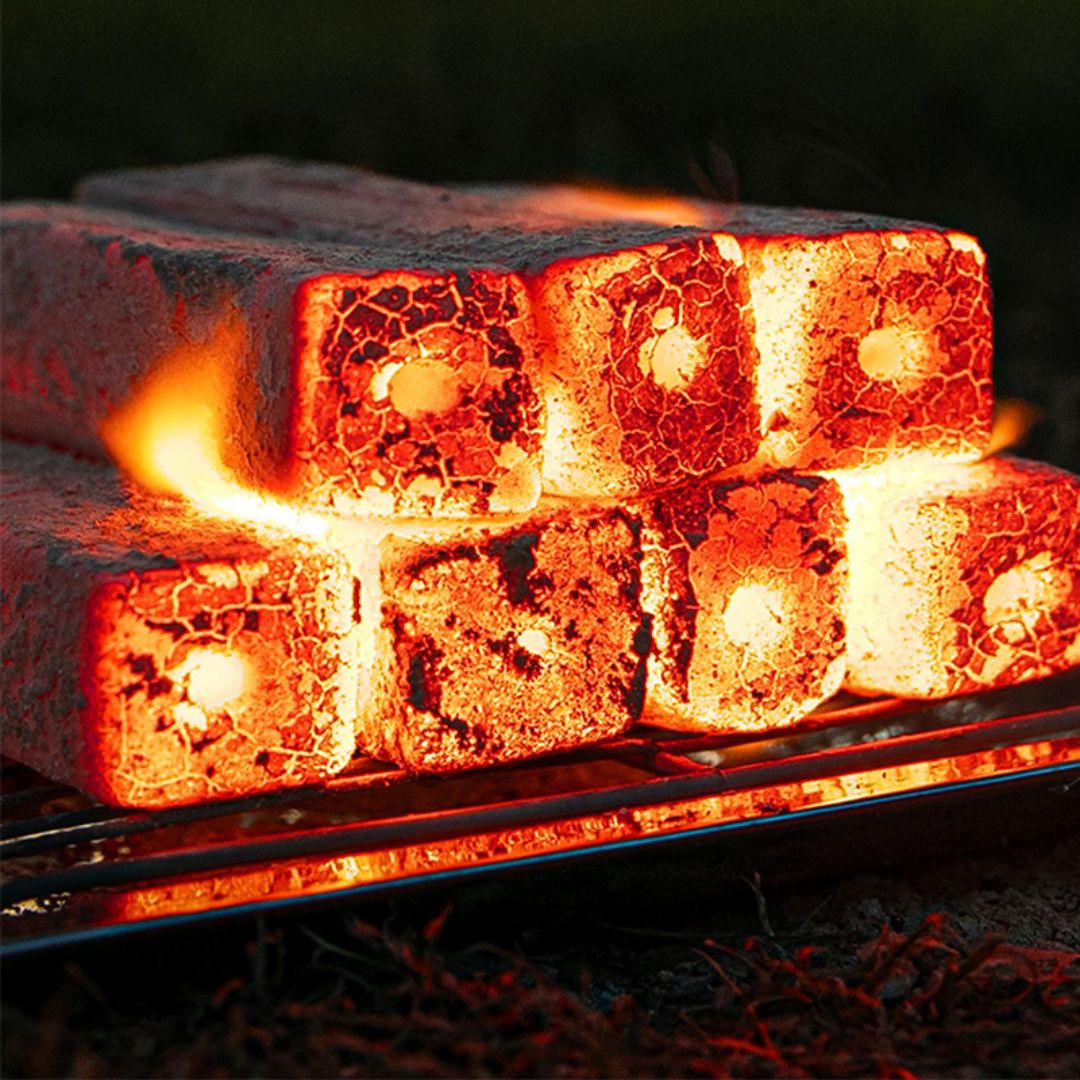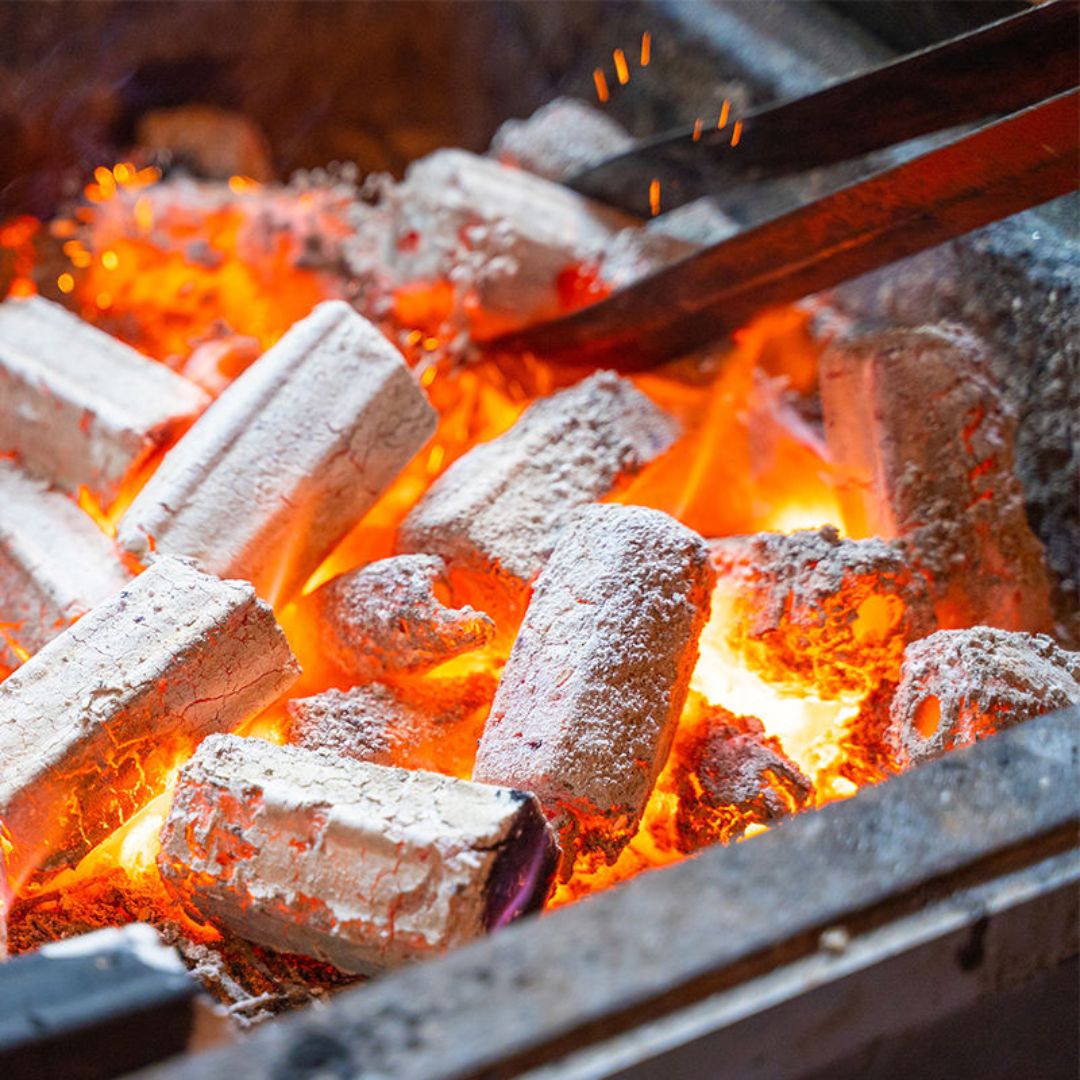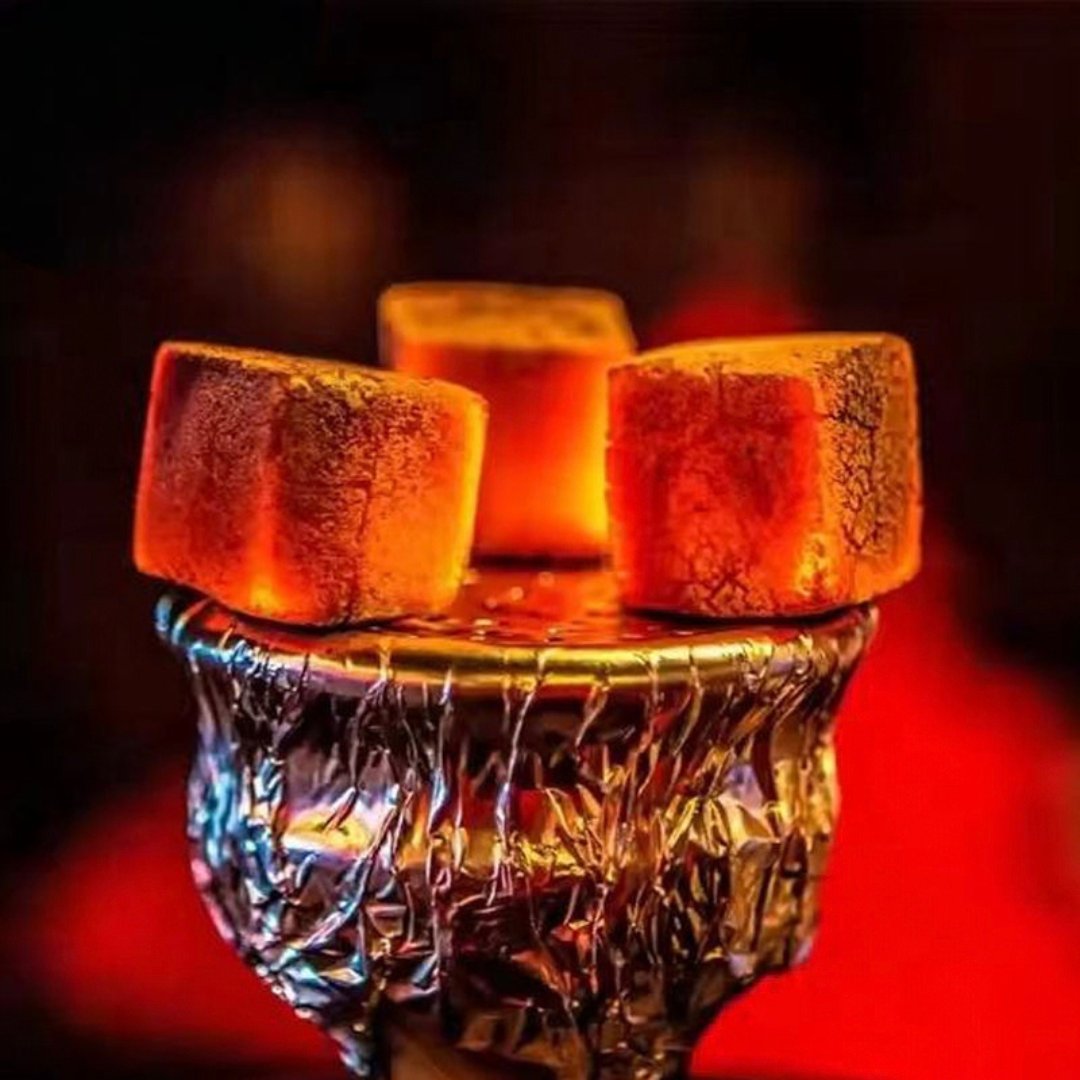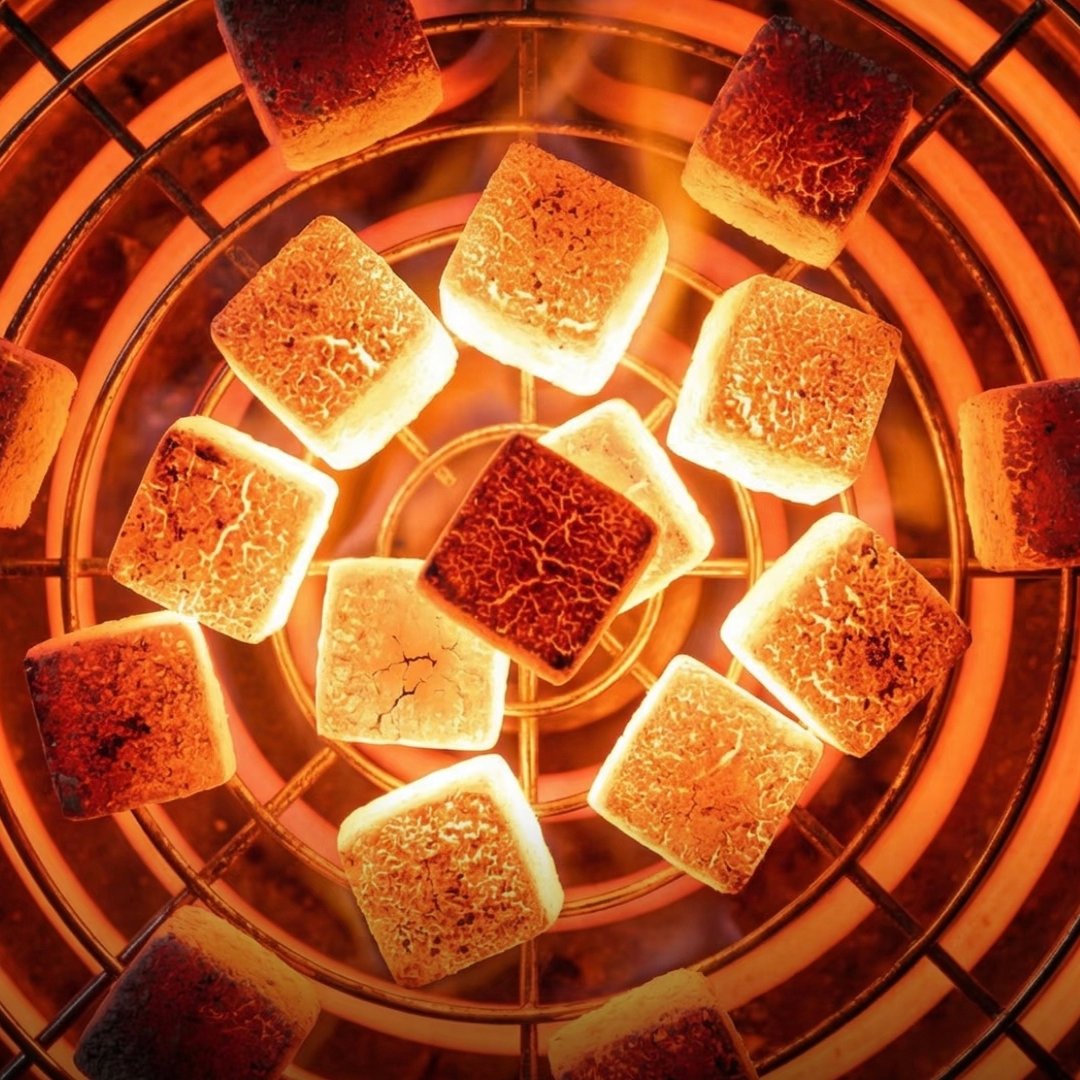


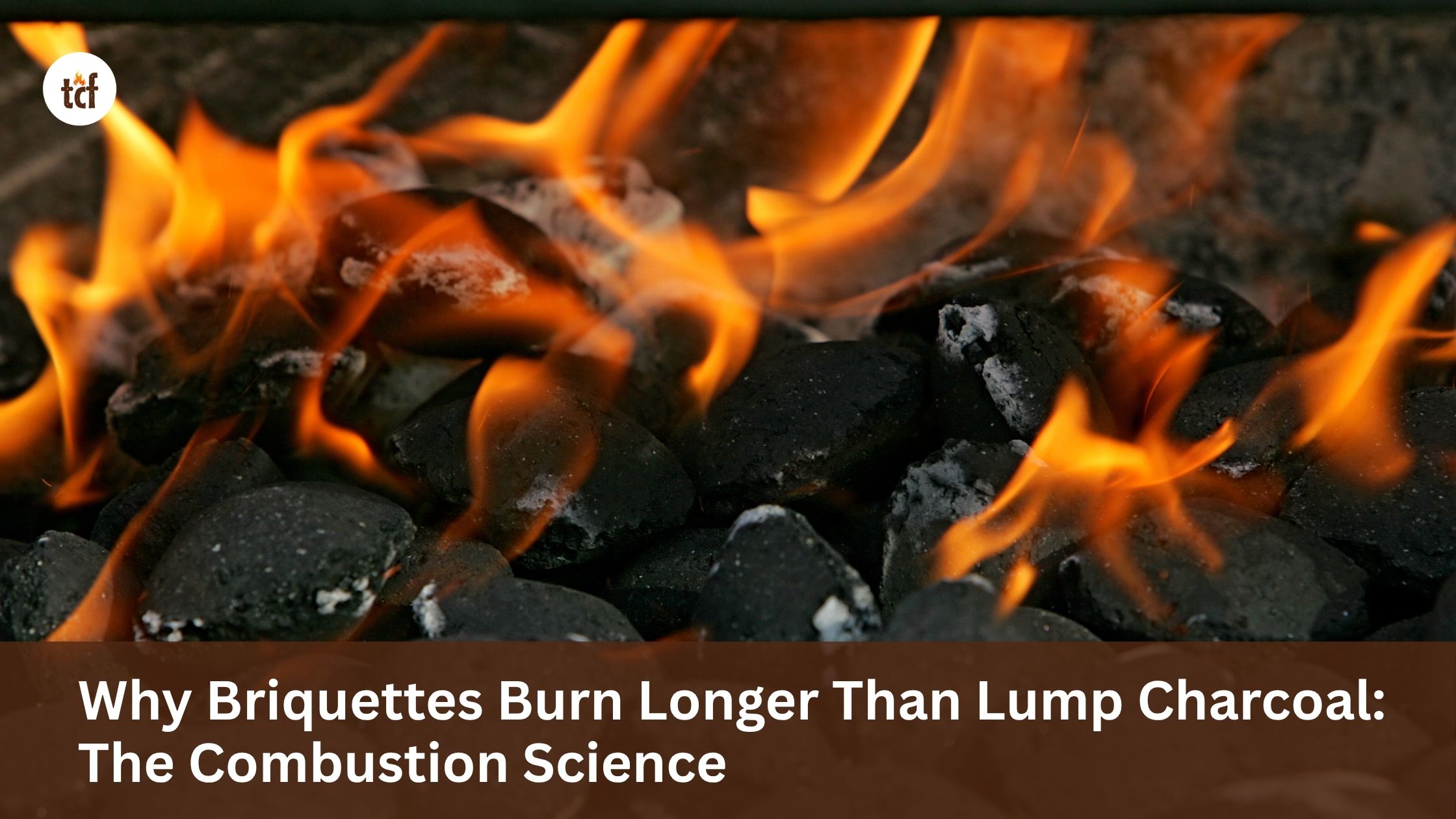
Why Briquettes Burn Longer Than Lump Charcoal? Charcoal briquettes typically burn 3 to 5 hours at a steady temperature. Lump charcoal burns hotter but faster, usually 1 to 2 hours. The counterintuitive part is that lump actually contains more potential energy per gram; briquettes just release theirs more slowly. Here’s the actual mechanism behind that, not just the burn-time numbers.
The surprising part: lump has more energy per gram, but burns out faster
When researchers at the USDA Forest Products Laboratory ran controlled bomb calorimeter tests, comparing lump and briquettes in isolation, they found lump charcoal had a genuinely higher heat of combustion, more stored energy per gram than briquettes. That’s the opposite of what the burn-time difference would suggest at first glance.
But energy content per gram isn’t the same as burn rate, or total burn time for a given volume. A full chimney of briquettes gives roughly 2.5 to 3.5 hours of usable cooking heat (temperatures above 300°F), compared to roughly 40 minutes to 2 hours for the same volume of lump. The explanation isn’t about which fuel has more energy; it’s about how fast each one releases it.
Why briquettes burn longer: 3 mechanisms working together
Non-combustible fillers act as a thermal buffer. Briquettes are roughly 50 to 70% fixed carbon, with the remainder made up of binders, limestone, and sometimes borax. These non-carbon components don’t contribute energy; they absorb heat and physically slow the combustion reaction down. Lump charcoal, by contrast, runs 75 to 90% fixed carbon, almost pure combustible material with nothing to moderate the burn rate.
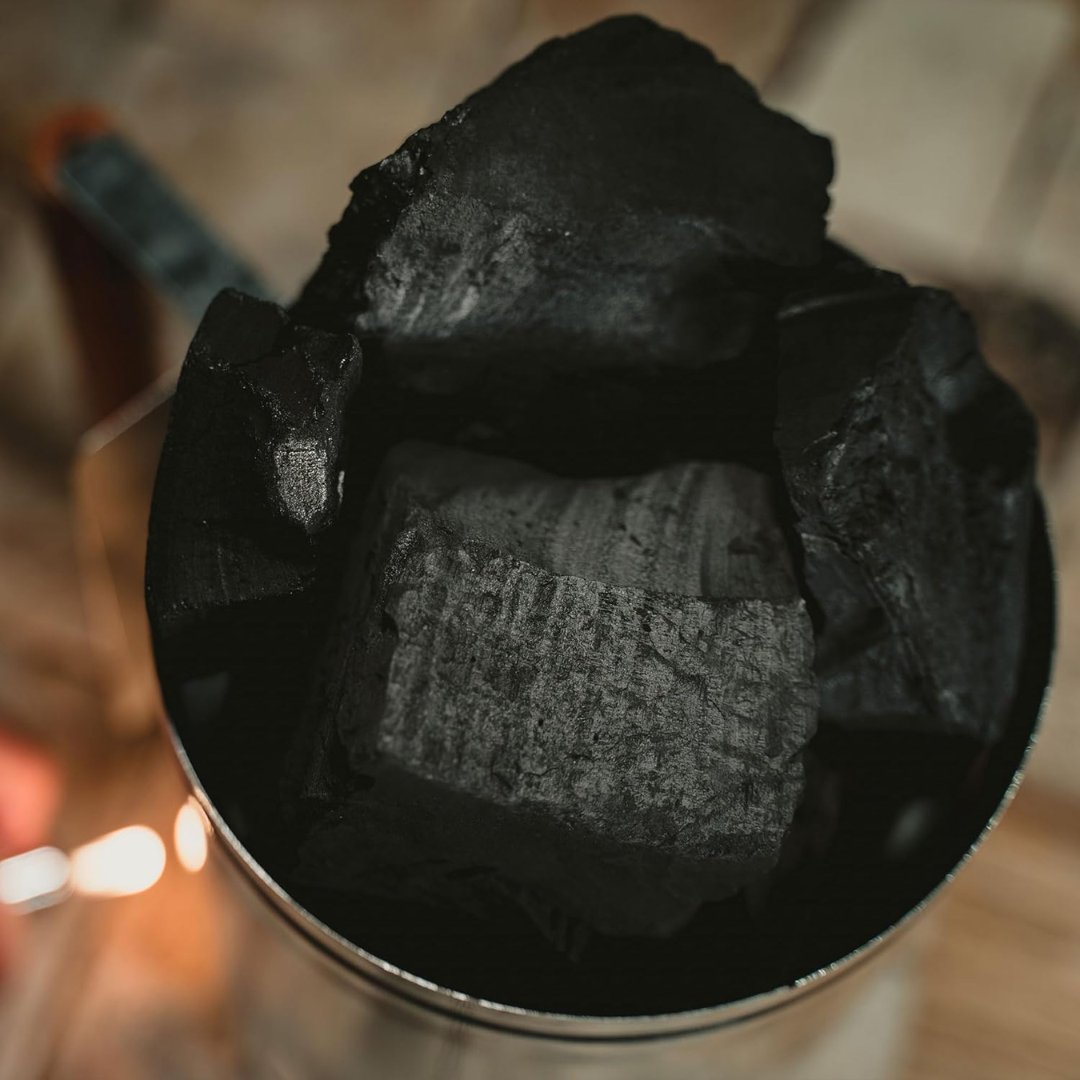
Uniform density means uniform, predictable combustion. Every briquette is compressed to the same shape and density, so every piece in a chimney burns at roughly the same rate. Lump charcoal varies wildly; a dense chunk of oak might burn for 90 minutes, while a thin sliver from the same bag burns out in 15. That inconsistency isn’t just about predictability; it’s part of why lump as a whole burns through faster: the smaller, thinner pieces combust quickly and don’t sustain the pile the way uniformly-sized briquettes do.
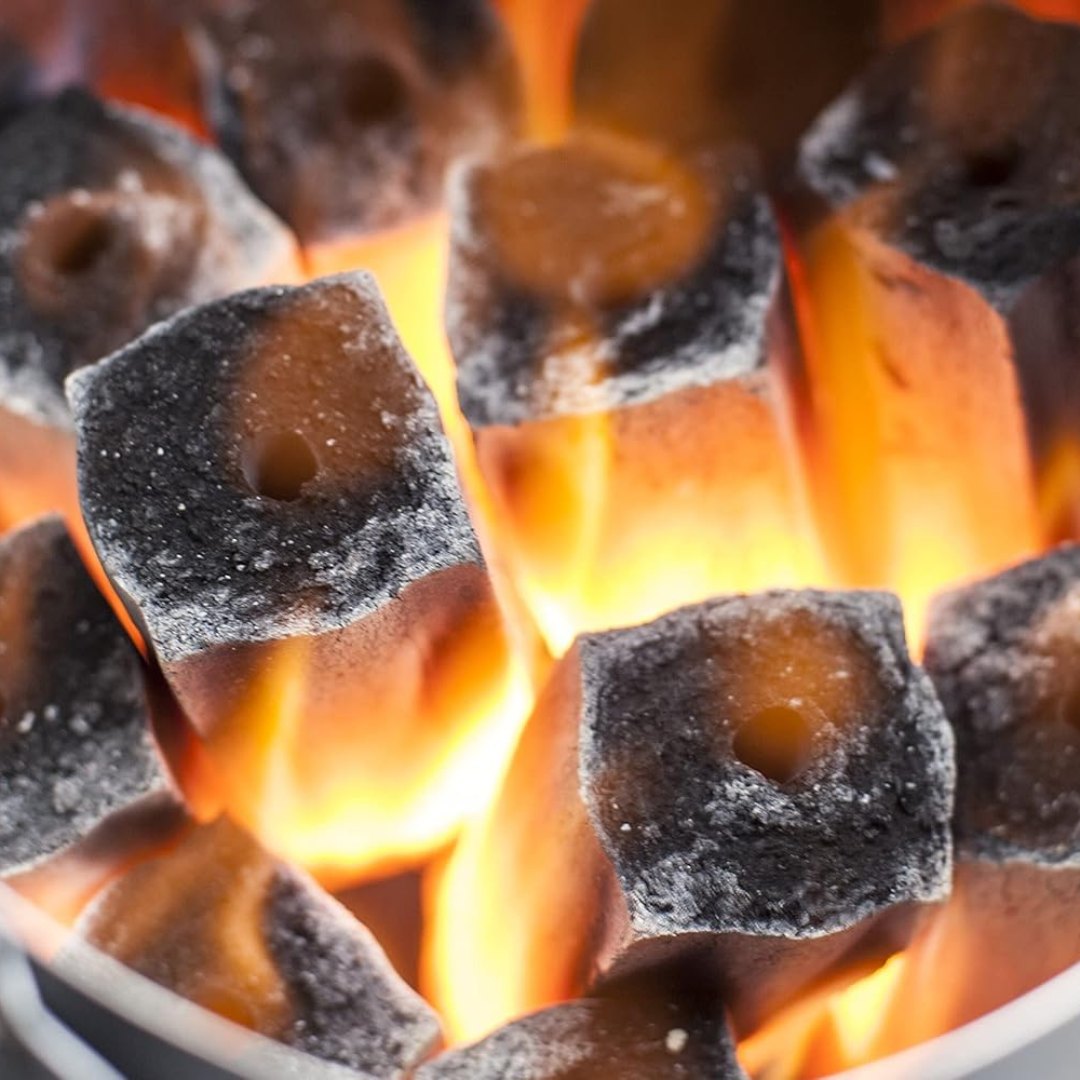
Restricted airflow slows oxygen consumption. Lump charcoal’s irregular shapes create large air gaps between pieces, allowing rapid, relatively uncontrolled airflow and fast combustion. Briquettes’ uniform blocks pack more tightly, restricting oxygen flow through the pile and preventing the fuel from consuming itself as quickly.
Also read – Shisha lounge supply guide
Why lump burns hotter, even though it burns out faster
The same fixed carbon advantage that makes lump burn out faster is what makes it burn hotter while it’s going. With almost no non-combustible material diluting the fuel, lump releases its stored energy in a shorter window, which shows up as a higher peak temperature. Premium lump charcoal has been measured reaching 1,200 to 1,400°F at the coal surface in controlled chimney tests, a 200 to 400°F advantage over briquettes that matters directly for a fast, hard sear.
What this means for how you actually use each fuel
- Choose briquettes for long, low-and-slow sessions, brisket, pork shoulder, anything running multiple hours where a steady, predictable temperature matters more than peak heat.
- Choose lump charcoal for quick, high-heat searing, steaks, burgers, chops, where you want maximum temperature and don’t need the fire to last more than an hour or so.
For a fuller breakdown of how these two fuels compare across lighting time, flavor, and ash production- not just burn duration- our lump charcoal vs. briquettes guide covers the complete picture, including Consumer Reports’ testing on peak temperature differences between the two.
Frequently asked questions – Why Briquettes Burn Longer Than Lump Charcoal?
Does lump charcoal really contain more energy than briquettes?
Yes, per gram, in isolation. Bomb calorimeter testing by USDA Forest Products Laboratory researchers found lump charcoal has a higher heat of combustion than briquettes. The longer burn time of a full volume of briquettes comes from a slower release rate, not a larger total energy store.
Why do briquettes burn more predictably than lump charcoal?
Because every briquette is compressed to the same size and density, so combustion proceeds at a consistent rate across the whole pile. Lump charcoal’s naturally irregular piece sizes mean some chunks burn out much faster than others.
What’s actually in briquettes that slows the burn down?
Non-combustible material, commonly limestone and starch-based binders, that make up roughly 30 to 50% of a briquette’s composition. These components absorb heat without releasing energy, acting as a thermal buffer that moderates the combustion rate.
Is lump charcoal’s higher peak temperature always an advantage?
Only for high-heat, short-duration cooking like searing. For long cooks, briquettes’ lower but steadier heat output is generally the better fit, since peak temperature matters less than temperature consistency over several hours.
How much longer do briquettes actually burn compared to lump?
Commonly around double, roughly 3 to 5 hours for briquettes versus 1 to 2 hours for lump, though exact figures vary by brand, airflow setup, and how the charcoal is arranged.
For Further Readings:
calculate the landed cost of bulk charcoal
esg and supply chain reporting
bulk charcoal manufacturer in china
wholesale bbq charcoal buying guide
Wholesale bamboo shisha charcoal
sustainable bamboo charcoal sourcing