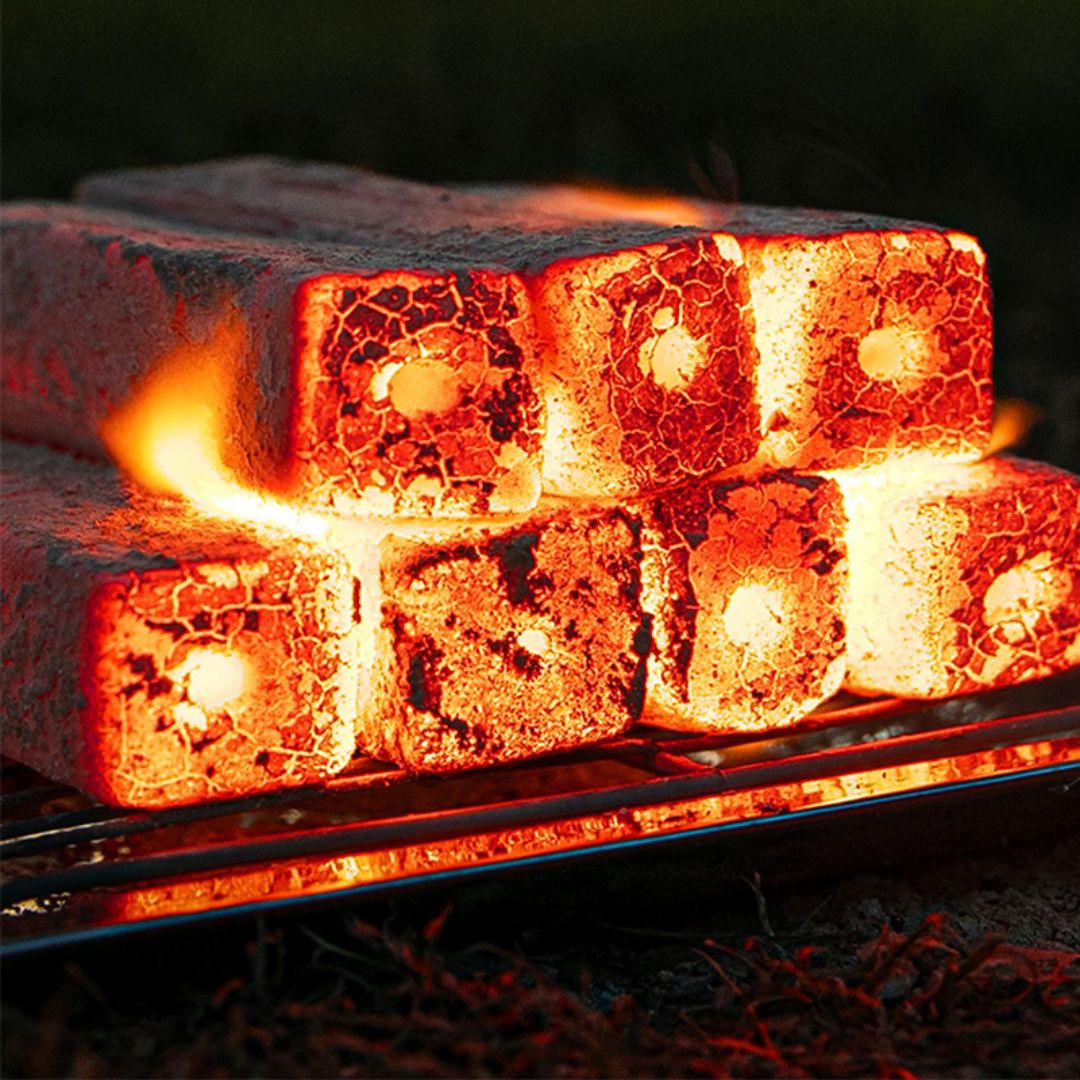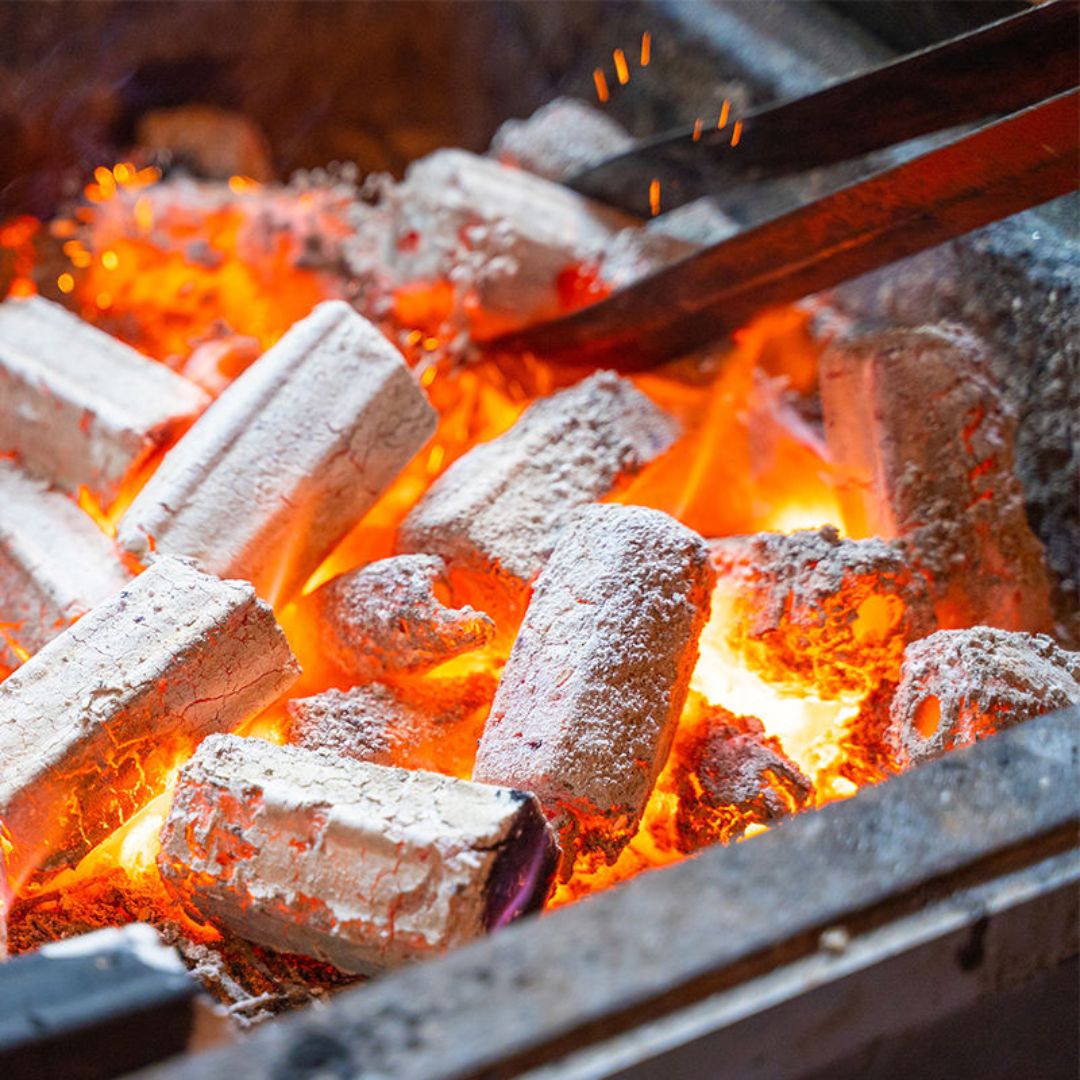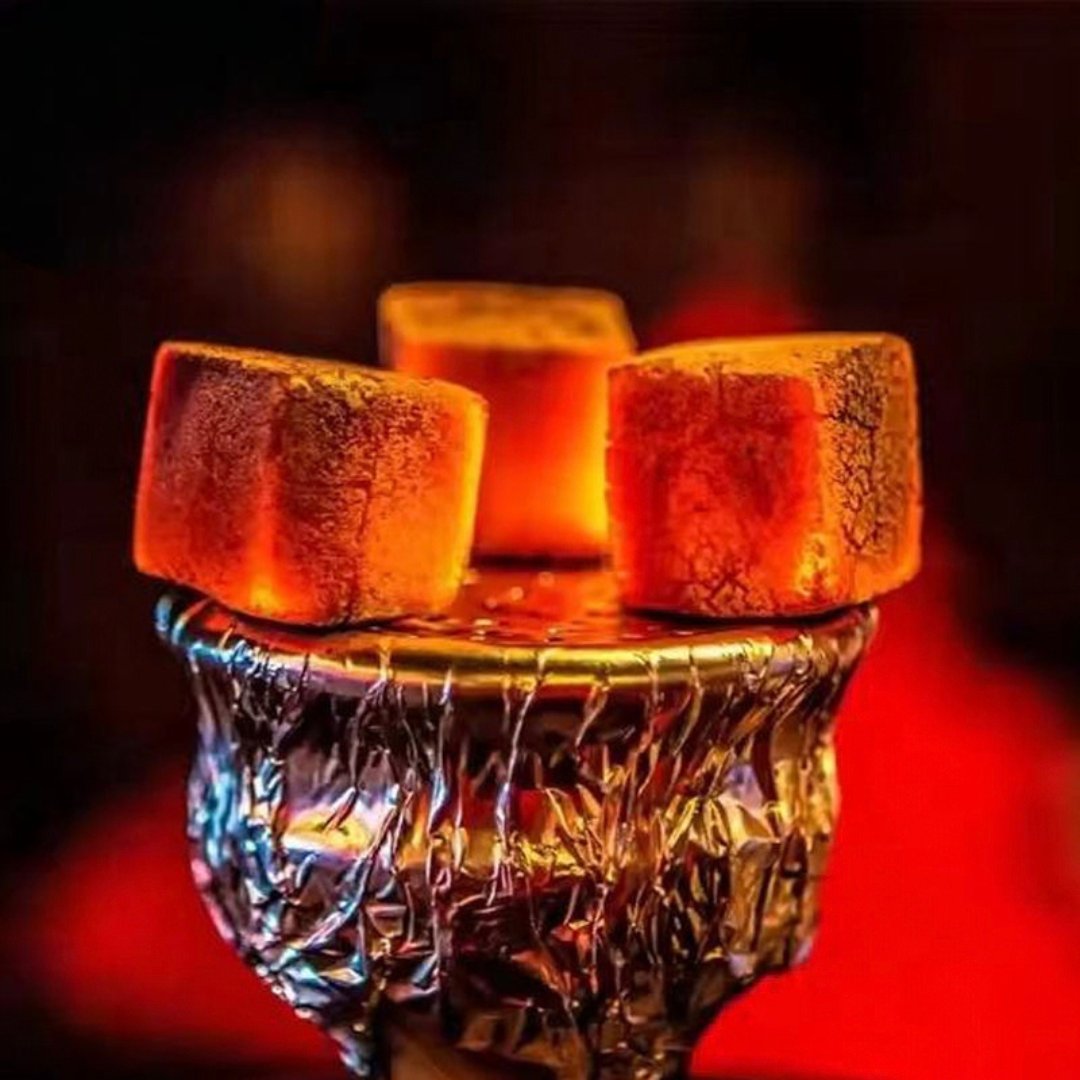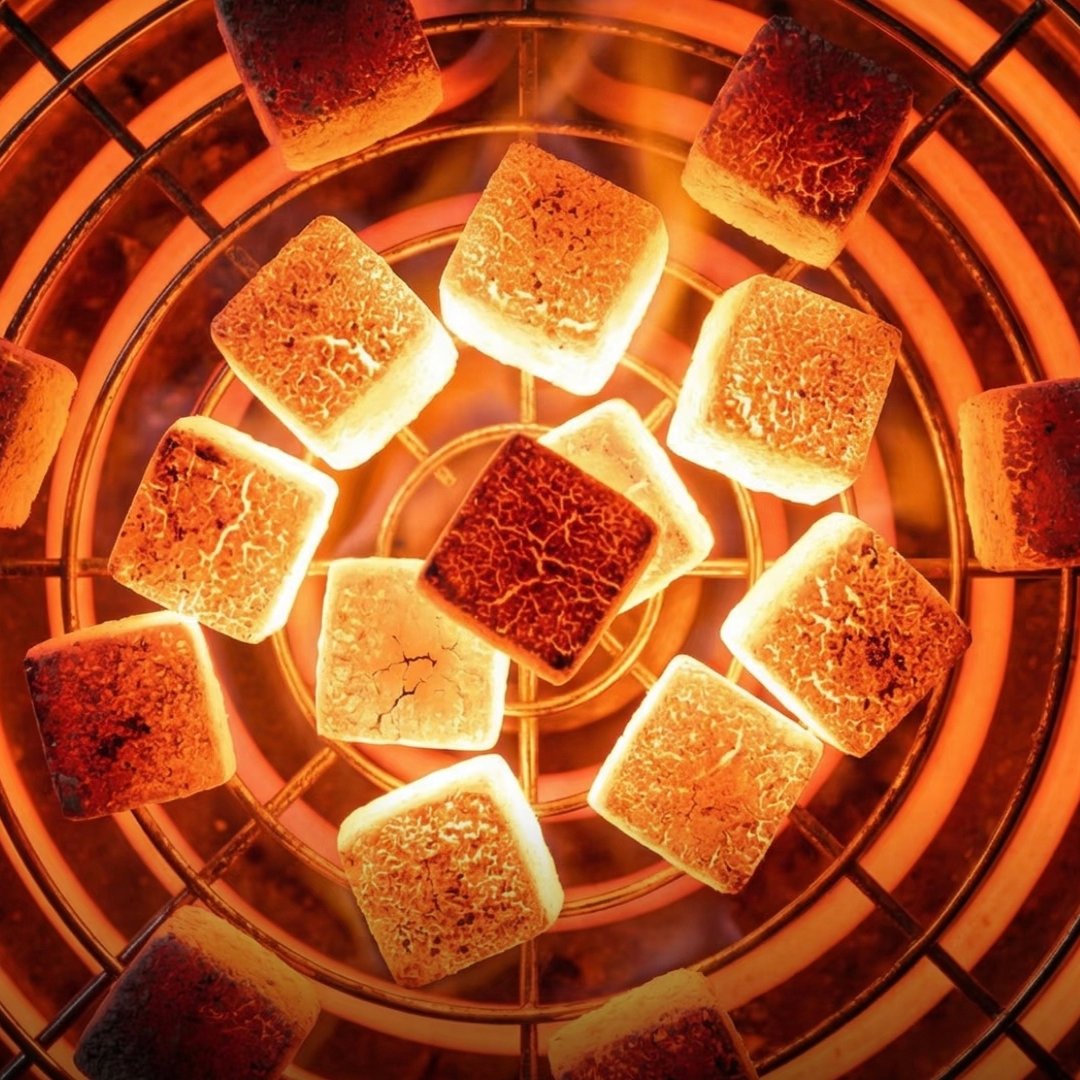


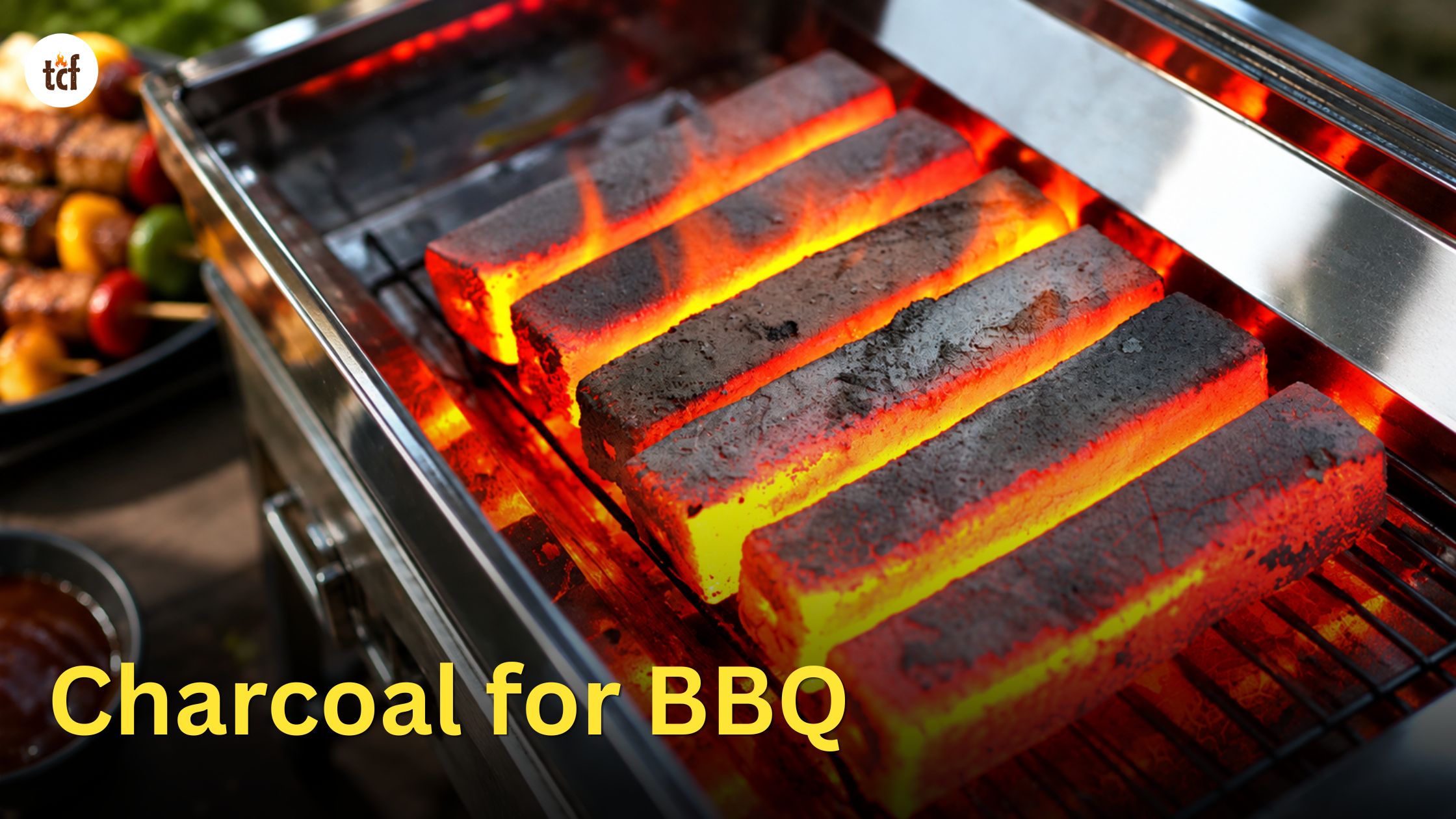
There’s no single best type of charcoal for BBQ; the right choice depends on what you’re cooking. Lump charcoal wins for hot, fast sears. Briquettes win for long, steady low-and-slow cooks. Coconut shell charcoal and binchotan win when you want high heat without heavy smoke.
Instead of another general lump-vs-briquette breakdown, here’s how to match charcoal type to the actual dish in front of you, plus the burn data behind why each one performs the way it does.
Table of Contents
The 4 main types, in one table
| Type | Heat output | Burn time | Ash produced | Best for |
| Lump charcoal | Highest, fast to peak | Shorter, needs replenishing | Low to moderate | Searing, quick high-heat grilling |
| Hardwood briquettes | Moderate, steady | Long, consistent | Higher | Low-and-slow smoking, long cooks |
| Coconut shell charcoal | High | Long | Low | High heat over extended time, delicate proteins |
| Binchotan (white charcoal) | High, very stable | Very long | Very low | Premium, flavor-neutral grilling |
Match the charcoal to the cook, not the other way around
Searing steaks or burgers: lump charcoal
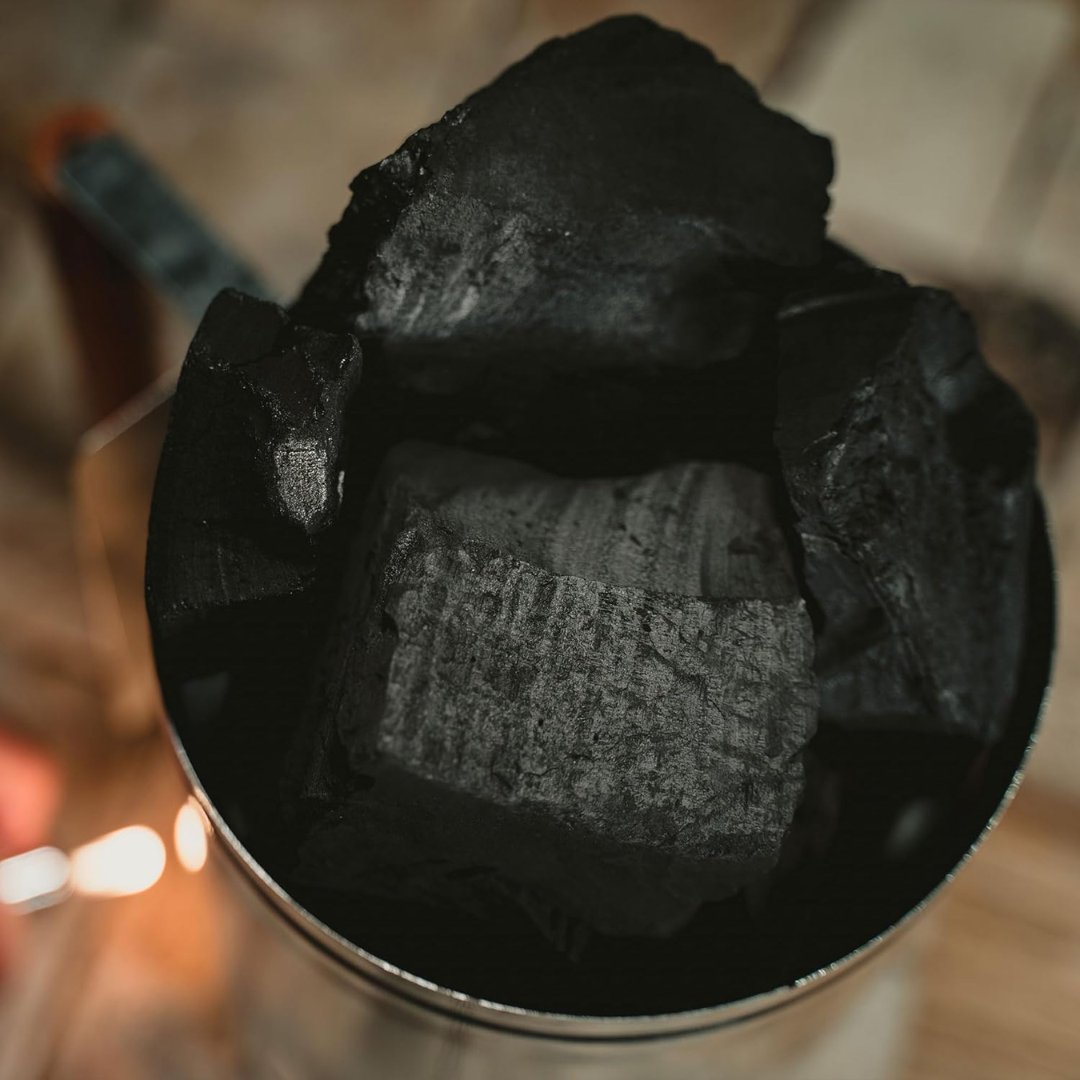
Lump charcoal is 100% pure wood with no binders, so it lights fast and hits high heat quickly, which is exactly what you want for a hard sear that locks in a crust. The tradeoff is a shorter, less predictable burn, fine for a 15 to 20 minute cook, less ideal if you’re feeding a crowd over several hours.
Also read – charcoal exporting countries
Low-and-slow brisket, ribs, or pulled pork: hardwood briquettes
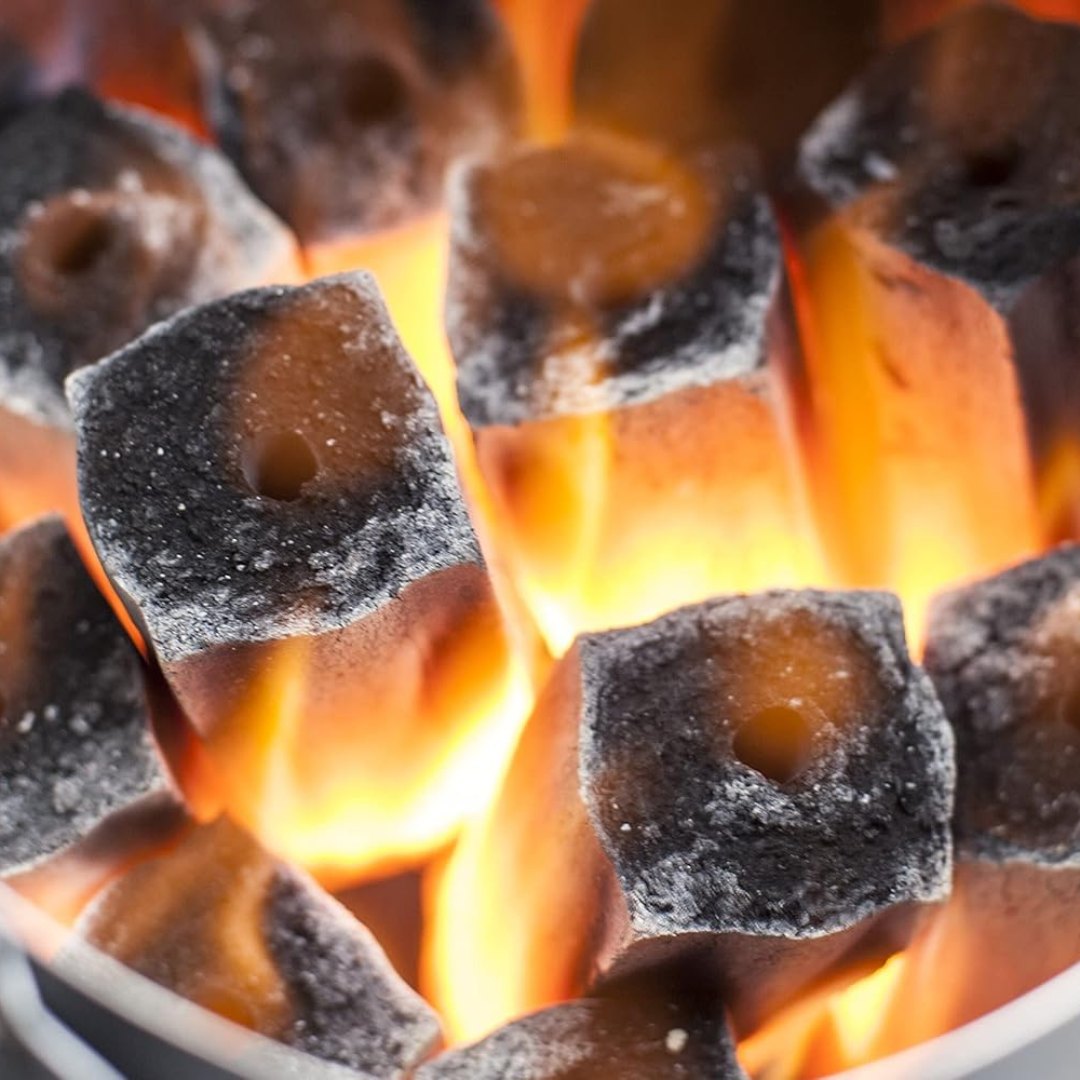
Briquettes are compressed into a uniform shape specifically for predictable, steady burning. That consistency is worth more than peak heat when you’re managing a smoker at a stable temperature for 8 to 16 hours. Standard briquettes do produce more ash than lump charcoal; budget extra time for mid-cook cleaning on very long sessions.
Whole chicken or indirect roasting: briquettes, with lump for direct pieces
Indirect cooking (whole birds, roasts) benefits from the same long, steady burn briquettes are built for. If you’re doing bone-in pieces over direct heat instead, lump charcoal’s higher heat gets you better skin crisping in less time.
Fish and delicate seafood: coconut shell charcoal or binchotan
Delicate proteins pick up smoke flavor fast, and heavy or chemical-tinged smoke from lower-quality charcoal can overpower them entirely. Coconut shell charcoal burns clean with minimal smoke while still delivering high heat, and binchotan goes a step further as the flavor-neutral premium option favored for yakitori and similarly delicate grilling styles.
Grilled vegetables: coconut shell charcoal
The same clean-burning quality that protects delicate fish works in vegetables’ favor too. A neutral, low-smoke burn lets natural char and sweetness develop without a heavy smoke flavor overwhelming lighter ingredients.
Also read – Private Label Charcoal Packaging
Why the burn characteristics differ: what’s actually in each type
Lump charcoal is wood, carbonized and nothing else. No binders, no fillers. That purity is what gives it a hot, fast burn and why enthusiasts favor it for flavor.
Briquettes are compressed from charcoal dust, sawdust, or shell material, held together with a starch binder, sometimes with sodium nitrate to aid ignition or limestone to whiten the ash. This is also why lower-quality briquettes can carry a faint chemical smell during lighting, a detail worth checking for if you’re buying based on price alone. Premium briquette brands minimize additives, but “briquette” alone doesn’t guarantee a clean burn the way pure lump charcoal does.
Coconut shell charcoal is made by carbonizing coconut shells, an agricultural byproduct, then often compressing them into briquette form. It’s denser than most wood charcoal, which is the direct reason it burns longer and cleaner. According to one industry comparison, coconut shell charcoal briquettes are made from compressed coconut shells rather than the ash-based fillers used in traditional briquettes, which is a key reason they’re positioned as the more sustainable option among briquette types.
Binchotan is a traditional Japanese white charcoal, made from oak through a slower, higher-temperature carbonization process. That process is what gives it an exceptionally clean, long, stable burn, and why it commands a premium price over standard lump or briquette charcoal.
A quick buying checklist
- Check for additive-free labeling if you want a clean burn, especially for lump charcoal, where “100% hardwood, no additives” should be stated plainly
- Match bag size to cook length: lump charcoal for a single quick grill session, briquettes if you’re planning a multi-hour smoke and don’t want to replenish mid-cook
- Look for sustainability sourcing claims if that matters to you; coconut shell charcoal and other agricultural-byproduct charcoals are commonly marketed on this basis; verify the claim rather than assuming it from the name alone
- Smell test at lighting: a sharp chemical odor when lighting briquettes usually points to lower-quality binders or fillers
Also read – What Is a Pre-Shipment Inspection
Frequently asked questions
Is lump charcoal or briquettes better for BBQ?
Neither is universally better; it depends on the cook. Lump charcoal suits hot, fast cooking like searing. Briquettes suit long, low-and-slow cooks like brisket or ribs, where a steady, predictable burn matters more than peak heat.
Is coconut shell charcoal better than regular charcoal?
It depends on your priority. Coconut shell charcoal generally burns cleaner and longer than standard wood briquettes, with high heat and low smoke, making it a strong choice for extended cooks or delicate proteins. However, it’s typically priced higher than standard lump or briquette charcoal.
What charcoal is best for smoking meat for many hours?
Hardwood briquettes are the standard choice for long smoking sessions, since their compressed, uniform shape is built specifically for a steady, predictable burn over time.
Does the type of charcoal affect the taste of grilled food?
Yes. Pure lump charcoal tends to produce a cleaner wood flavor, while lower-quality briquettes with heavier additive content can carry a faint chemical note, particularly noticeable during lighting.