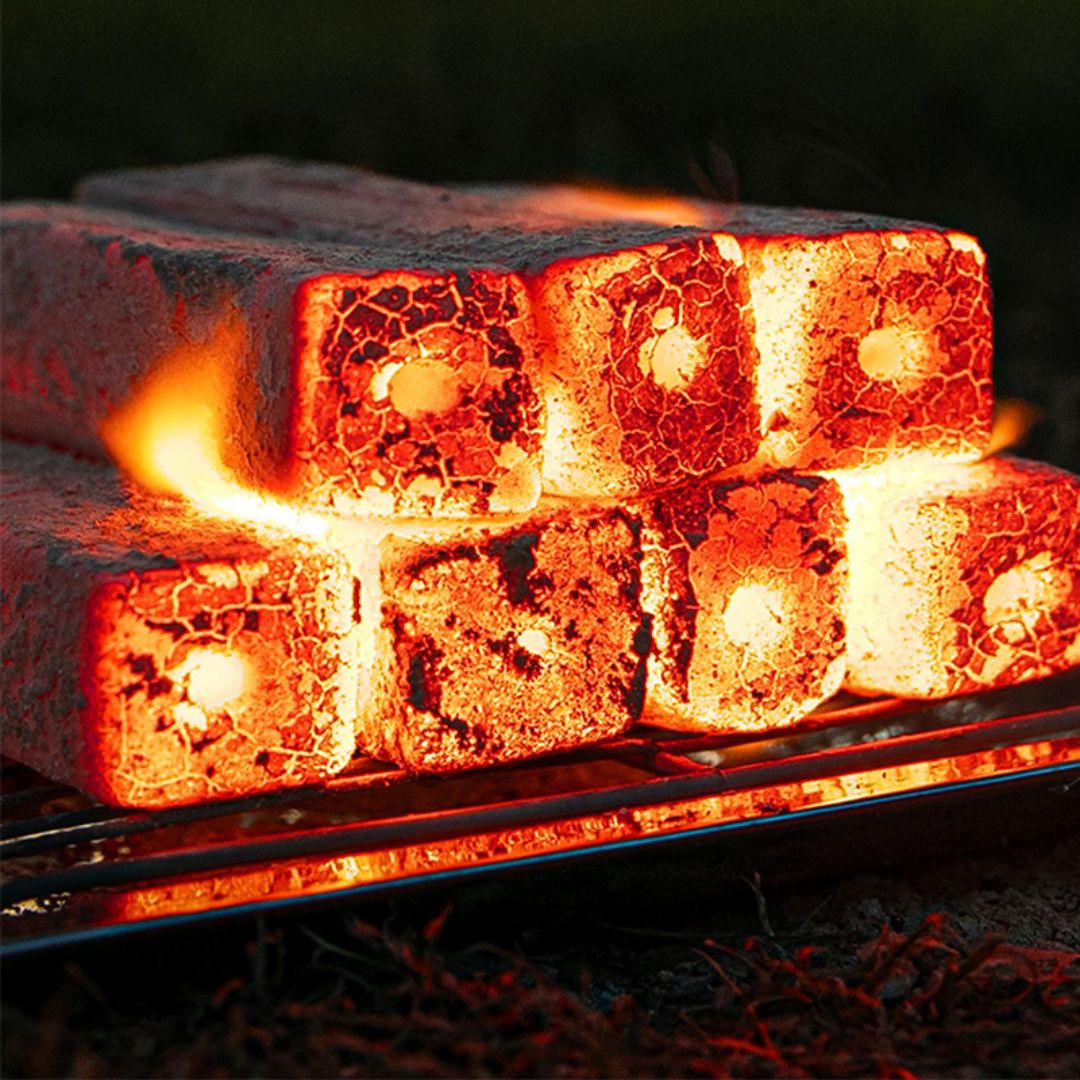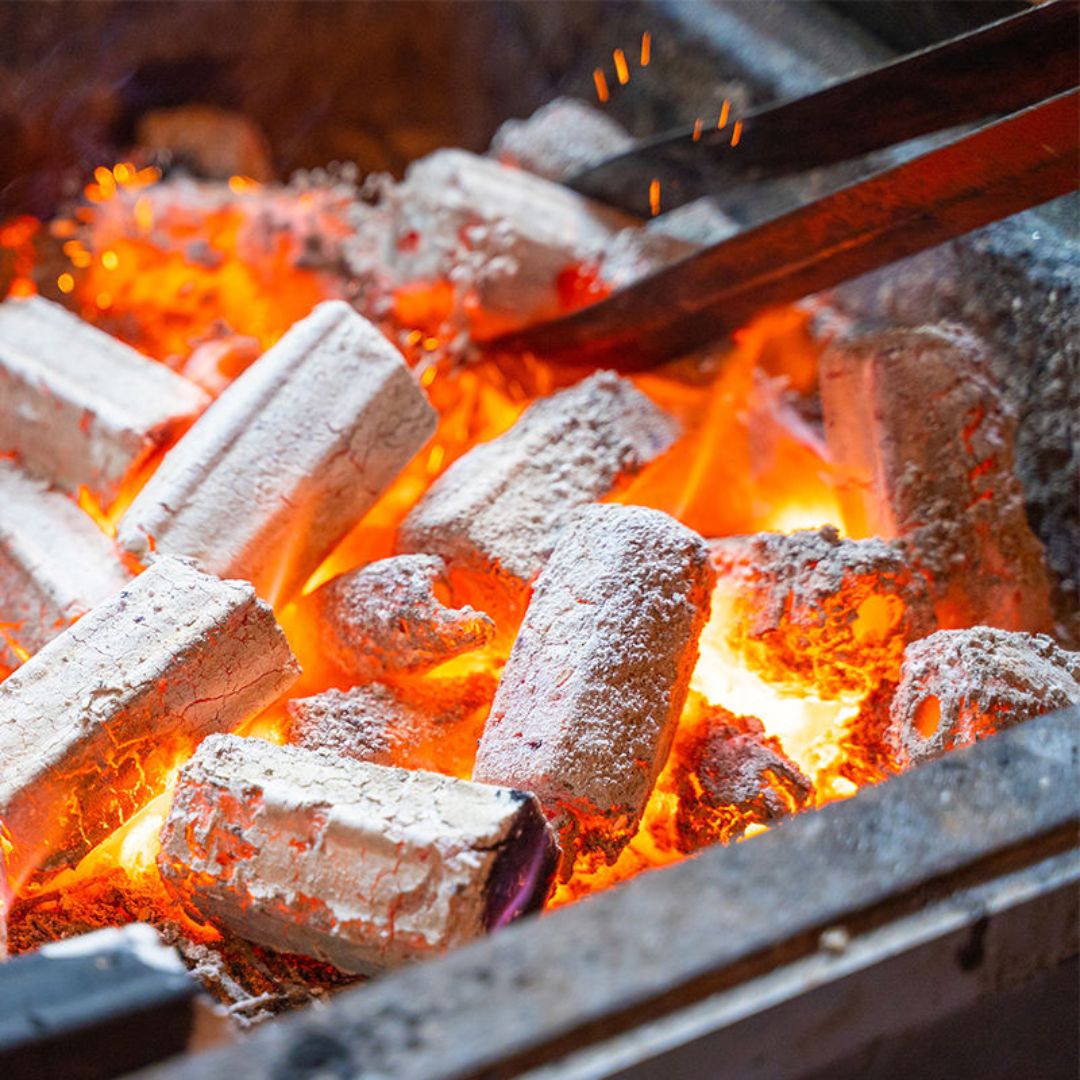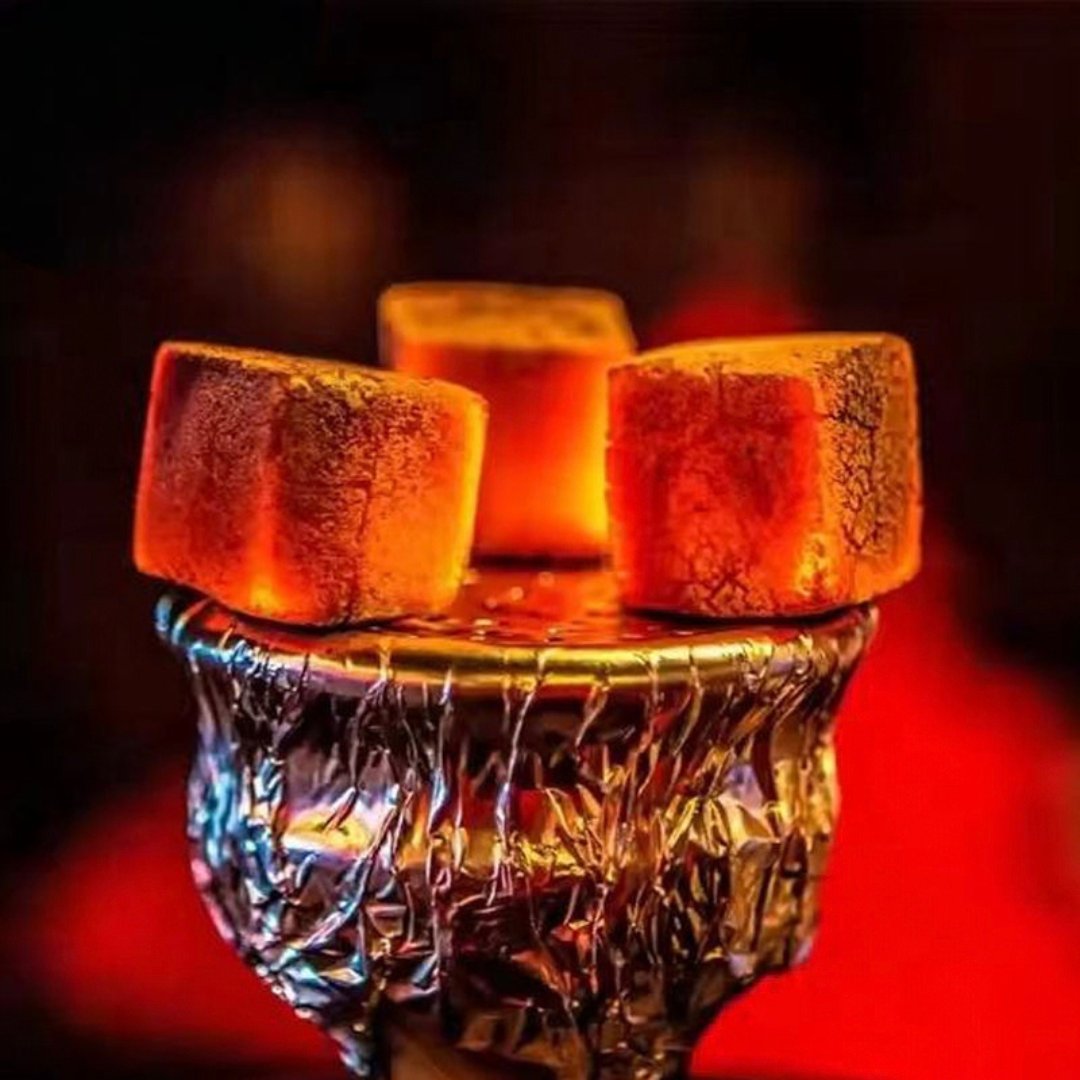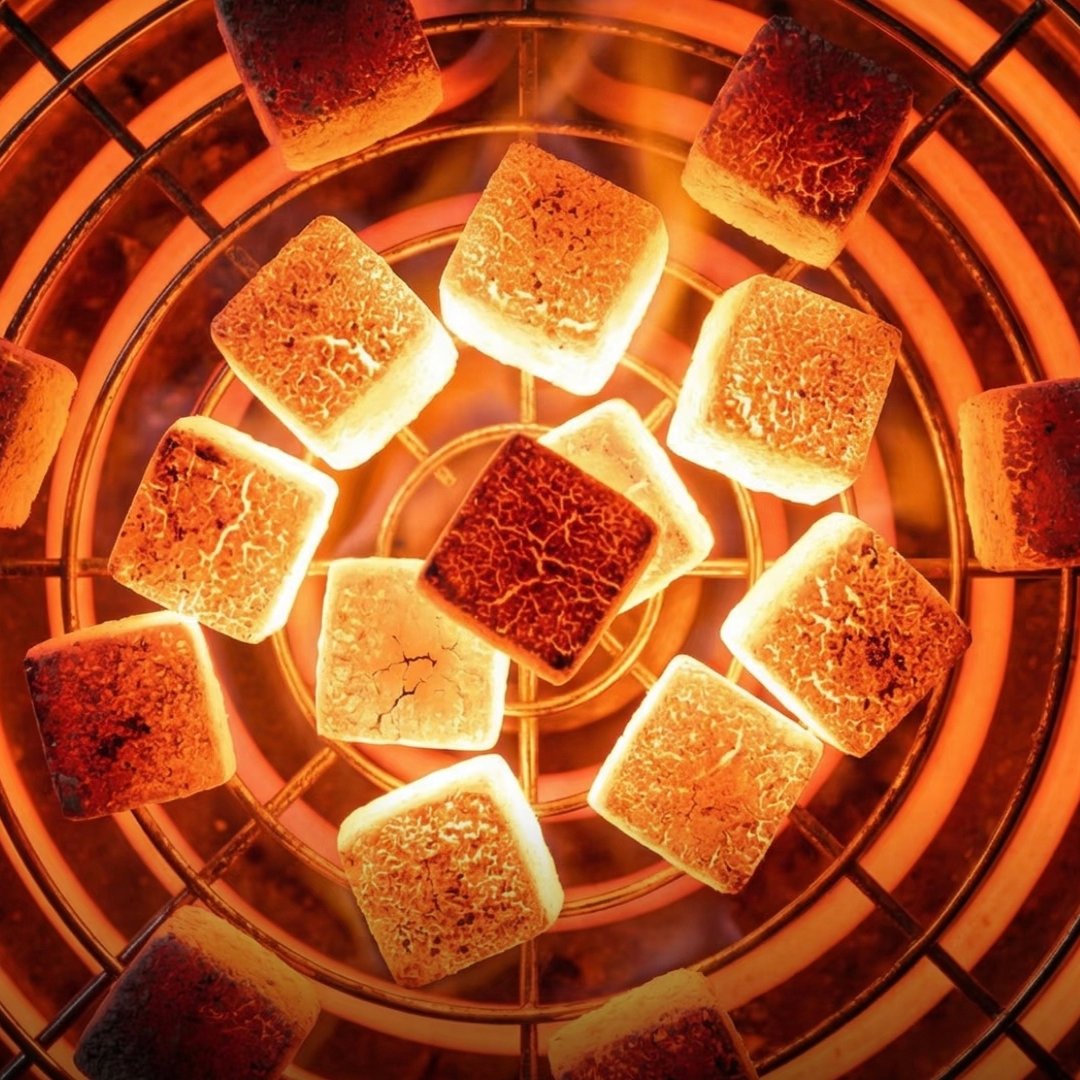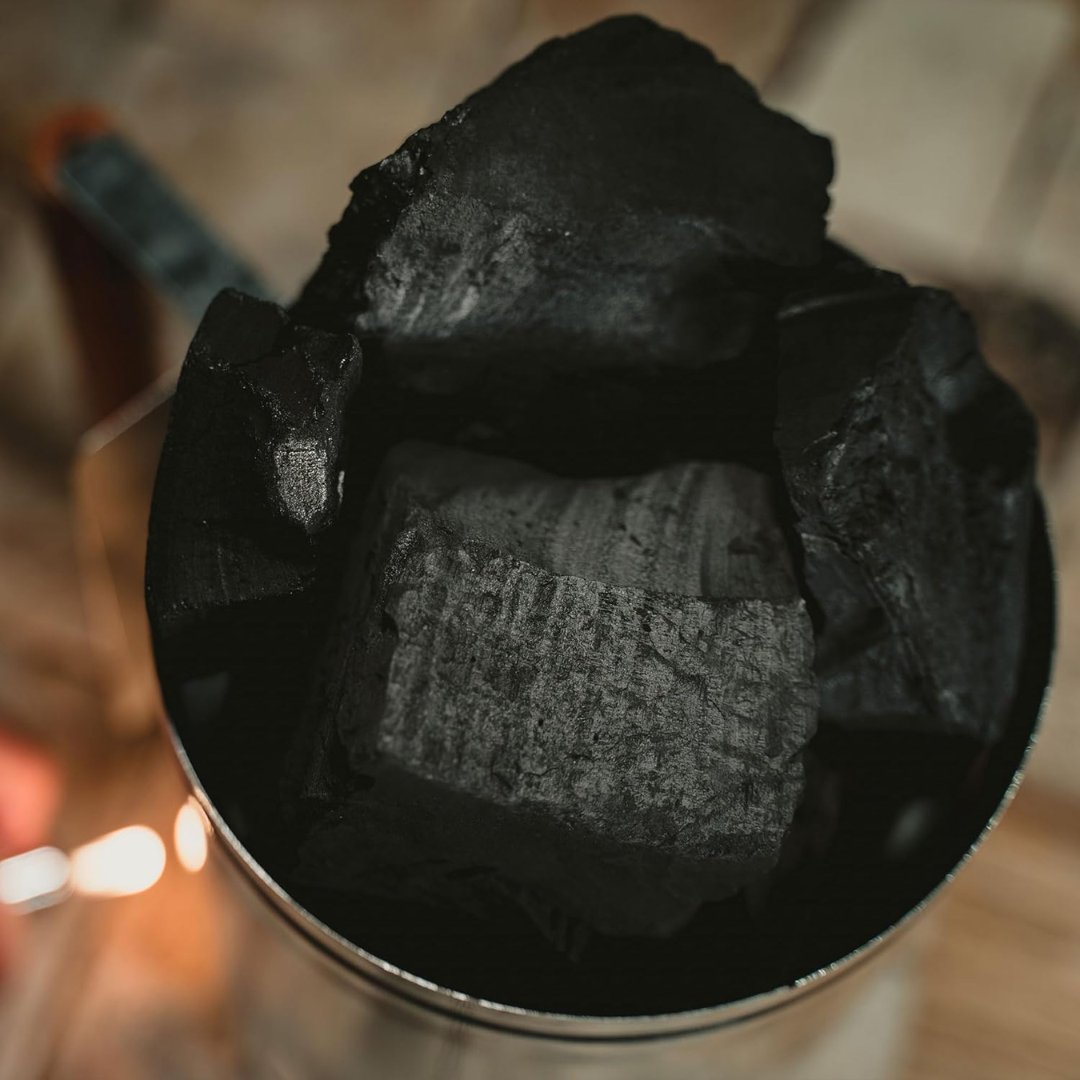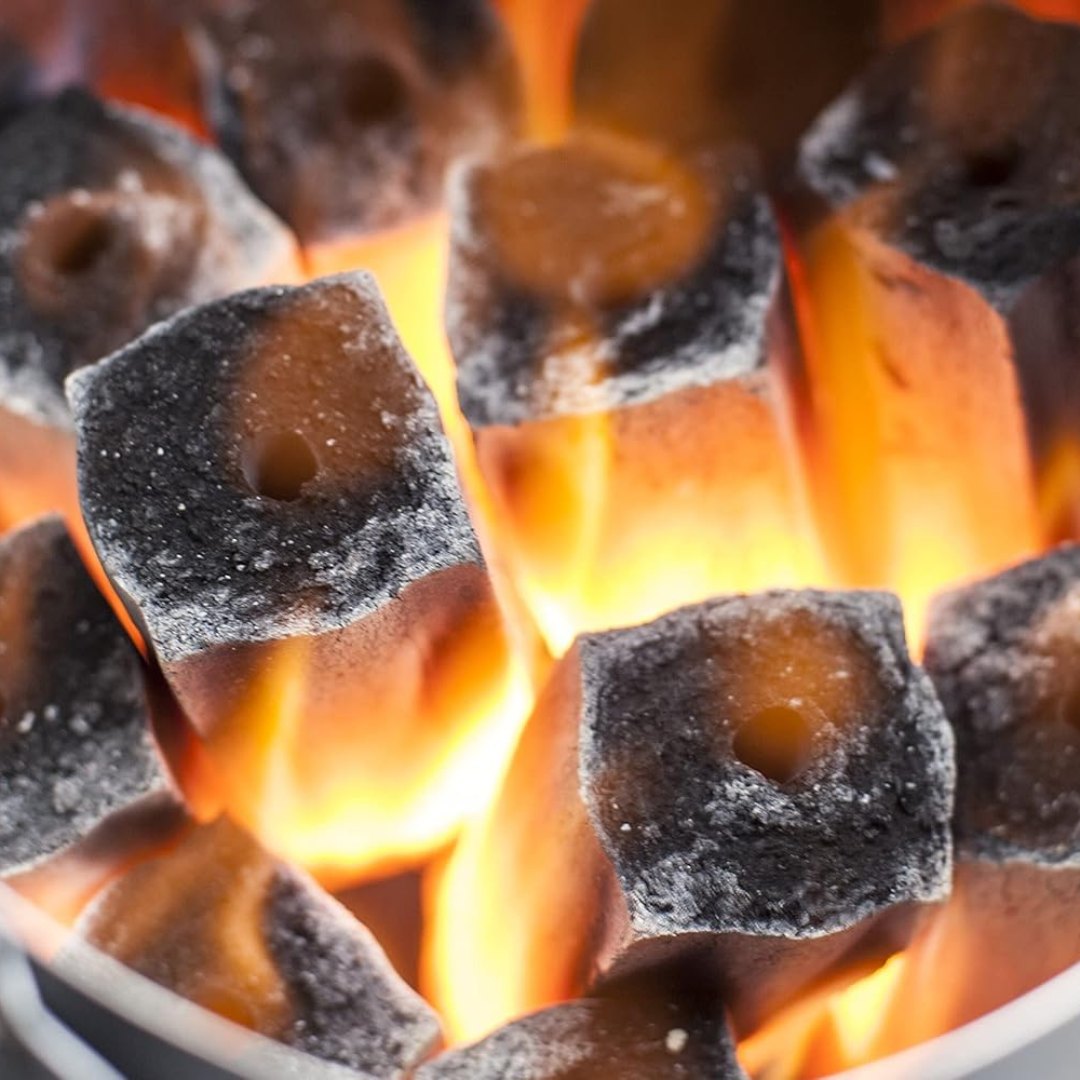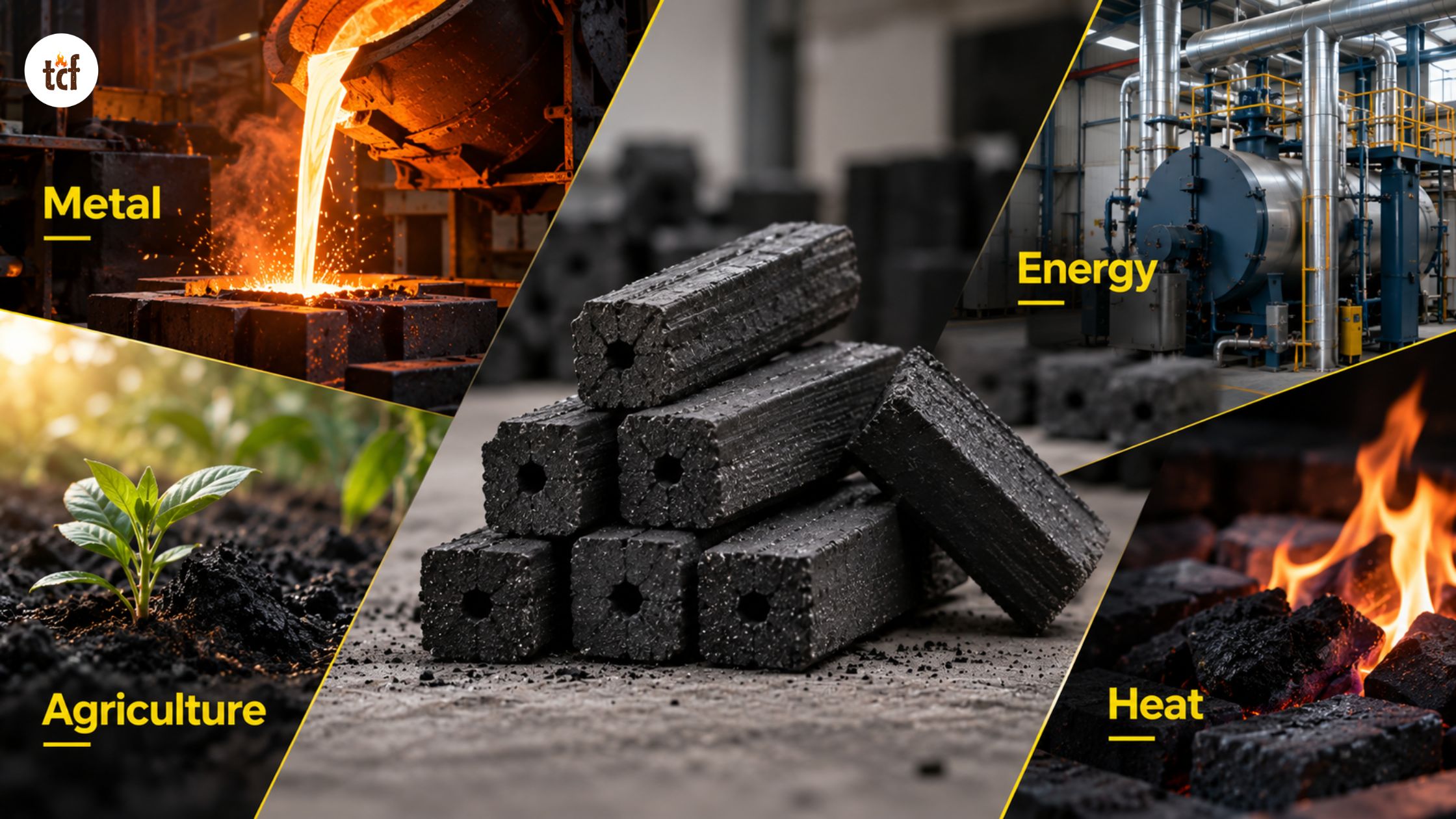


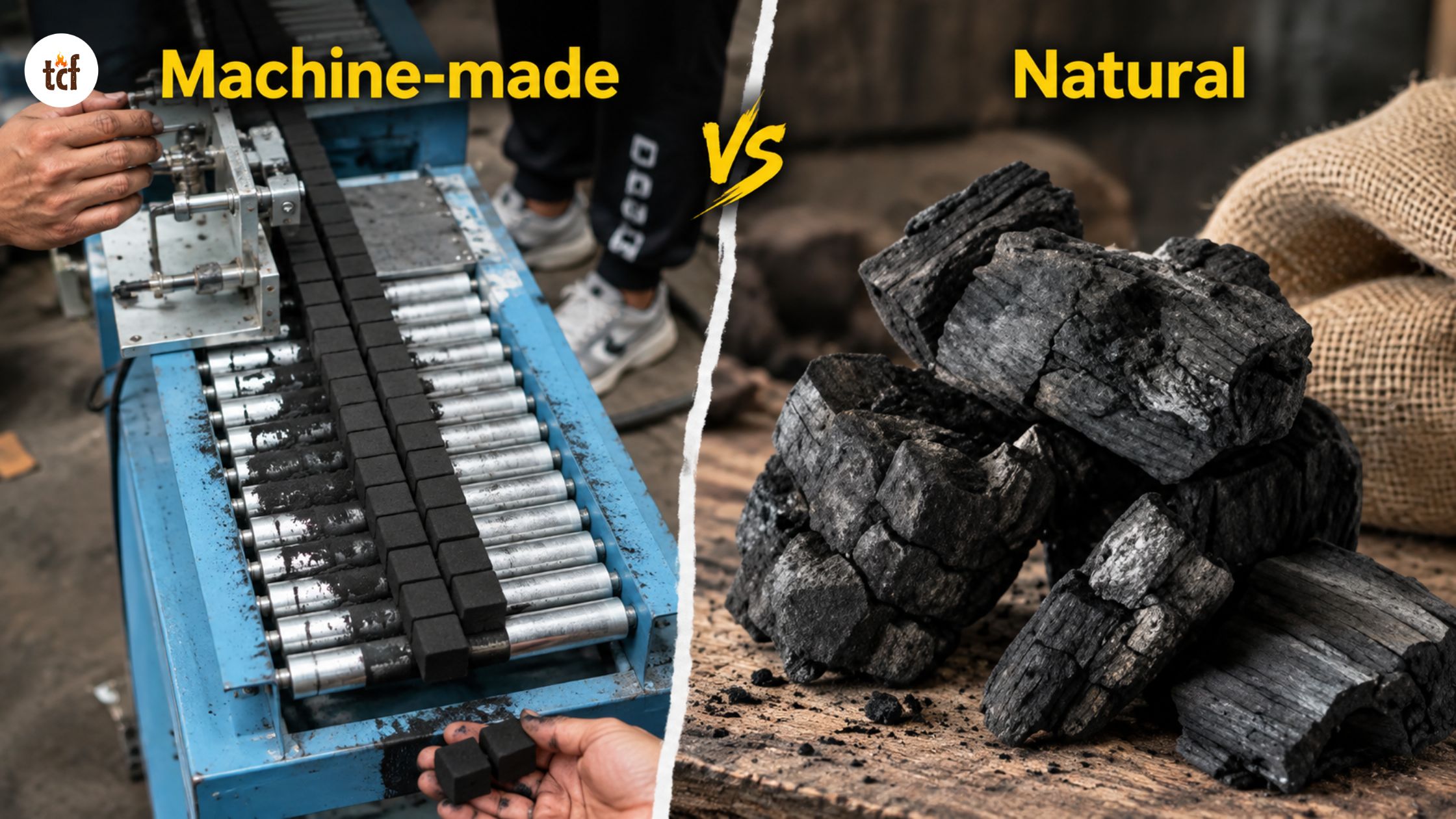
Machine-made vs natural charcoal: Natural charcoal is carbonized directly from whole pieces of wood, shell, or bamboo with no further processing, keeping an irregular shape and no additives. Machine-made charcoal starts as crushed or powdered raw material, mixed with a binder, then extruded or pressed into a uniform shape like a hexagon or cylinder.
The difference isn’t just cosmetic. It affects burn time, ignition speed, ash output, and in some cases, what’s actually in the charcoal you’re buying.
Table of Contents
How each one is actually produced
Natural charcoal goes through one process: carbonization. Whole logs, branches, or shells go into a kiln and heat in a low-oxygen environment until only carbon remains. Nothing gets added, and nothing gets reshaped. What comes out is what went in, minus the moisture and volatile compounds.
Machine-made charcoal starts differently. Instead of whole pieces, it’s often made from charcoal dust, sawdust, or shell fragments- the leftover material from processing natural charcoal or other biomass that would otherwise go to waste. That material gets crushed into powder, mixed with a binder (commonly a natural starch), and pushed through an extrusion or briquetting machine to form a consistent shape before drying.
This is actually one of the strongest arguments in favor of machine-made charcoal: it turns waste material, the fines and fragments too small to sell as natural lump, into a usable product instead of discarding it.
The part buyers need to watch for
Not all machine-made charcoal is created equal, and this is where the category gets murkier than most comparisons let on.
Legitimate machine-made charcoal uses 100% biomass, wood dust, shell dust, or bamboo dust, held together with a natural starch binder. It’s still additive-free in the sense that matters for flavor and health.
But some lower-cost machine-made products on the market are made with mineral char or anthracite (coal-derived material) blended into the biomass. This isn’t always disclosed clearly, and a buyer assuming “machine-made” automatically means “100% natural hardwood” can end up with a product that isn’t. Coal-blended charcoal burns differently, can carry a sulfur note, and isn’t something most cooks or shisha lounges actually want in their product.
If you’re buying machine-made charcoal, particularly at a price that seems unusually low, ask directly what the binder and base material are, and ask for a Certificate of Analysis confirming composition. Don’t assume “machine-made” and “adulterated” are the same thing, they aren’t, but don’t assume they’re mutually exclusive either.
Also read – best type of charcoal for bbq
Performance comparison
| Natural charcoal | Machine-made charcoal | |
| Shape | Irregular, varies piece to piece | Uniform (hexagonal, cylindrical, or cube) |
| Ignition speed | Generally faster | Slightly slower, denser structure |
| Burn time | Shorter, commonly around 1.5 hours for standard natural lump | Longer, commonly around 3 hours or more, depending on density |
| Ash output | Lower for high-quality lump | Can be higher unless raw material and binder are clean |
| Packaging and retail fit | Less predictable bag weight and appearance | Uniform pieces pack and display more consistently |
| Flavor | Directly reflects the source wood or shell | Neutral to mild, depending on raw material |
Why the industry uses machine-made charcoal at all
Beyond turning waste into product, machine-made charcoal solves a few real problems natural charcoal doesn’t:
- Consistency: a retail bag of natural lump charcoal has pieces ranging from fist-sized chunks to small fragments. Machine-made charcoal fills every bag with pieces of nearly identical size and burn behavior.
- Longer, steadier burn: the denser, compressed structure typically burns longer than loose natural lump of the same weight, which matters for extended cooks or, in the shisha industry, long sessions that can’t tolerate frequent coal changes.
- Shape control for specific markets: hexagonal and cylindrical shapes are standard in the shisha and hookah trade specifically because of how evenly they sit and heat on a bowl, something irregular natural lump can’t reliably replicate.
When natural charcoal is the better choice
- You want the cleanest possible flavor tied directly to a specific wood, oak, hickory, mesquite, without any binder in the mix
- You’re doing a shorter, high-heat cook where fast ignition matters more than multi-hour burn time
- You’re a buyer for whom “100% natural, zero processing beyond carbonization” is a specific claim you need to stand behind, for labeling or certification reasons
When machine-made charcoal is the better choice
- You need predictable burn time and shape for commercial or retail consistency
- You’re supplying a shisha or hookah market where uniform hexagonal or cylindrical shape is close to a requirement, not a preference
- You want to use a lower-cost raw material stream (dust and fragments) rather than paying a premium for whole natural pieces
How to verify what you’re actually buying
- Ask for a Certificate of Analysis showing fixed carbon, ash content, and, ideally, confirmation of raw material composition
- Ask specifically whether any coal-derived or mineral material is blended into the product, not just what the primary raw material is
- Do a simple burn test: charcoal with coal-derived content often has a different smell and spark pattern during ignition compared to pure biomass charcoal
- Buy a sample before committing to a full container order, especially with a new supplier
Also read – Private Label Charcoal Packaging
Going deeper
If you’re comparing raw material types rather than production method, our guides on charcoal manufacturing and charcoal grades cover how fixed carbon and ash specs differ across wood and bamboo charcoal, which matters regardless of whether the final product is natural lump or machine-shaped.
Production process details in this piece are informed in part by industry manufacturing guides, including charcoalmachinery.com’s overview of BBQ charcoal production methods and AmazingRibs’ technical breakdown of how charcoal is made.
This article is for general informational purposes. Composition, binders, and production methods vary by manufacturer; confirm specifics directly with your supplier before purchasing, particularly for bulk or private label orders.
Frequently asked questions
Is machine-made charcoal the same as briquettes?
Closely related, but not identical terms. “Machine-made” describes the production method, extrusion or pressing from crushed material. “Briquette” describes the resulting shape. Most briquettes are machine-made, but the term “machine-made charcoal” is also used for shaped products (like hexagonal shisha charcoal) that aren’t always labeled as briquettes.
Is machine-made charcoal less natural than lump charcoal?
Not necessarily. Legitimate machine-made charcoal is 100% biomass held together with a natural starch binder. The concern is specifically products that blend in coal-derived material without disclosing it, which does happen in parts of the market at lower price points.
Which burns longer, natural or machine-made charcoal?
Machine-made charcoal generally burns longer due to its denser, compressed structure, commonly cited around 3 hours or more compared to roughly 1.5 hours for standard natural lump charcoal, though this varies by raw material and quality.
Why does the shisha industry use machine-made charcoal almost exclusively?
Uniform shape and predictable, extended burn time matter more in a shisha session than in typical grilling. Natural lump’s irregular shape and shorter burn don’t fit that use case as well as a consistently sized hexagonal or cylindrical briquette does.