


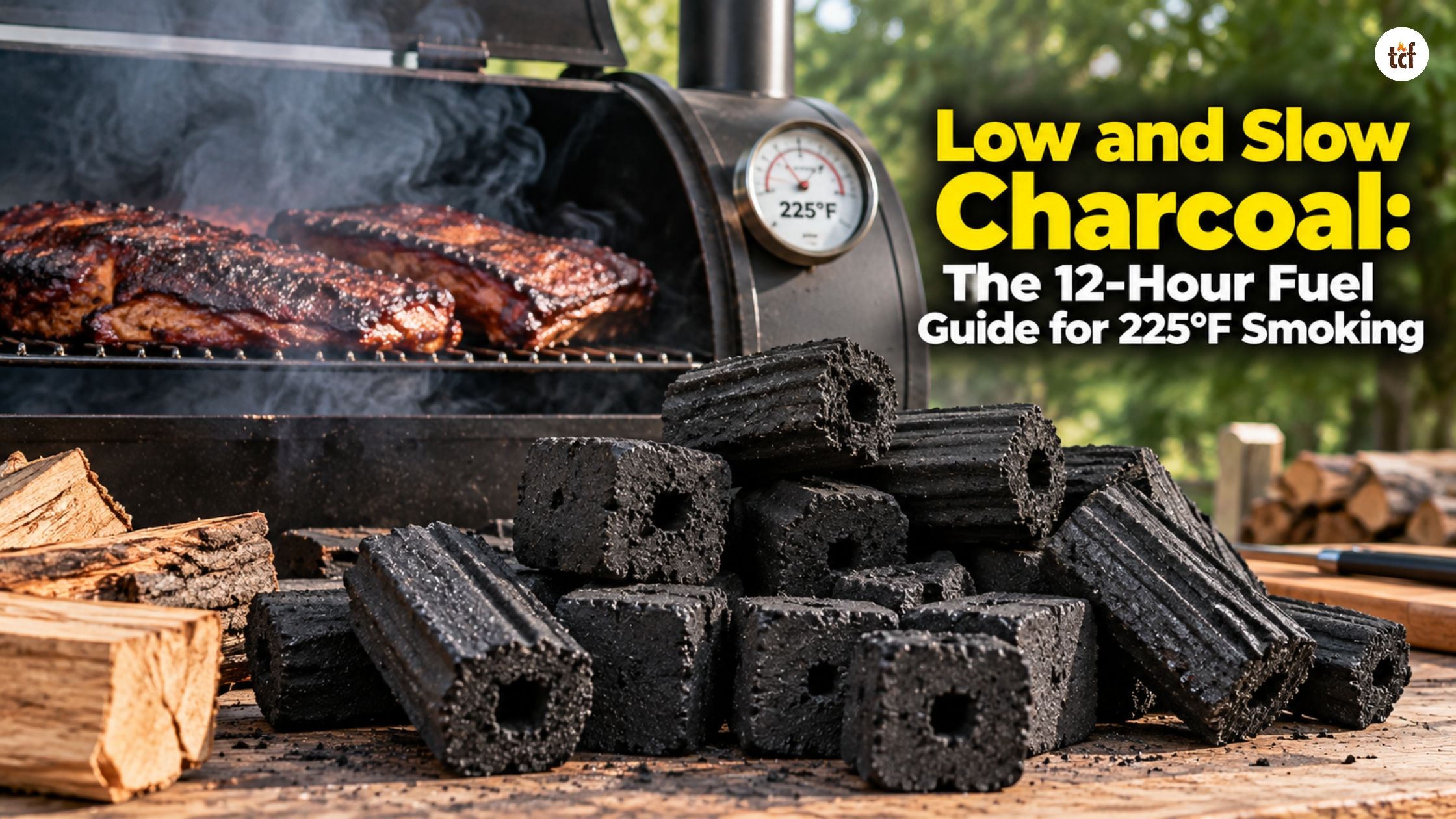
The best low and slow charcoal is dense and uniform, so it burns at a steady rate for hours, and the best way to use it is to light only a small amount and let it ignite the rest gradually. With the minion or snake method and a full load of fuel, a charcoal smoker or kettle can hold about 225°F (107°C) for many hours without new charcoal.
Twelve hours is achievable, but it depends on your cooker, the weather and how well you manage the vents. Plan for a mid-cook fuel check rather than hoping one load will last.
Key takeaways
- Dense, uniform fuel burns steadiest. Briquettes and extruded charcoal suit long cooks better than mixed-size lump.
- Light a little, not a lot. The minion and snake methods light a small amount that slowly ignites the unlit fuel.
- The vents are your thermostat. Small adjustments, made slowly, hold 225°F.
- A water pan stabilizes temperature in kettles and bullet smokers.
- Expect variation. Published burn times for the same method range from about 6 to 15 hours.
- Check fuel around the halfway mark, and add lit charcoal if needed.
Table of Contents
What is the best low and slow charcoal?
For long cooks, consistency matters more than peak heat. You want every piece to burn at roughly the same rate, so the fire moves through the fuel steadily instead of flaring and fading.
| Fuel | For a 12-hour cook | Why |
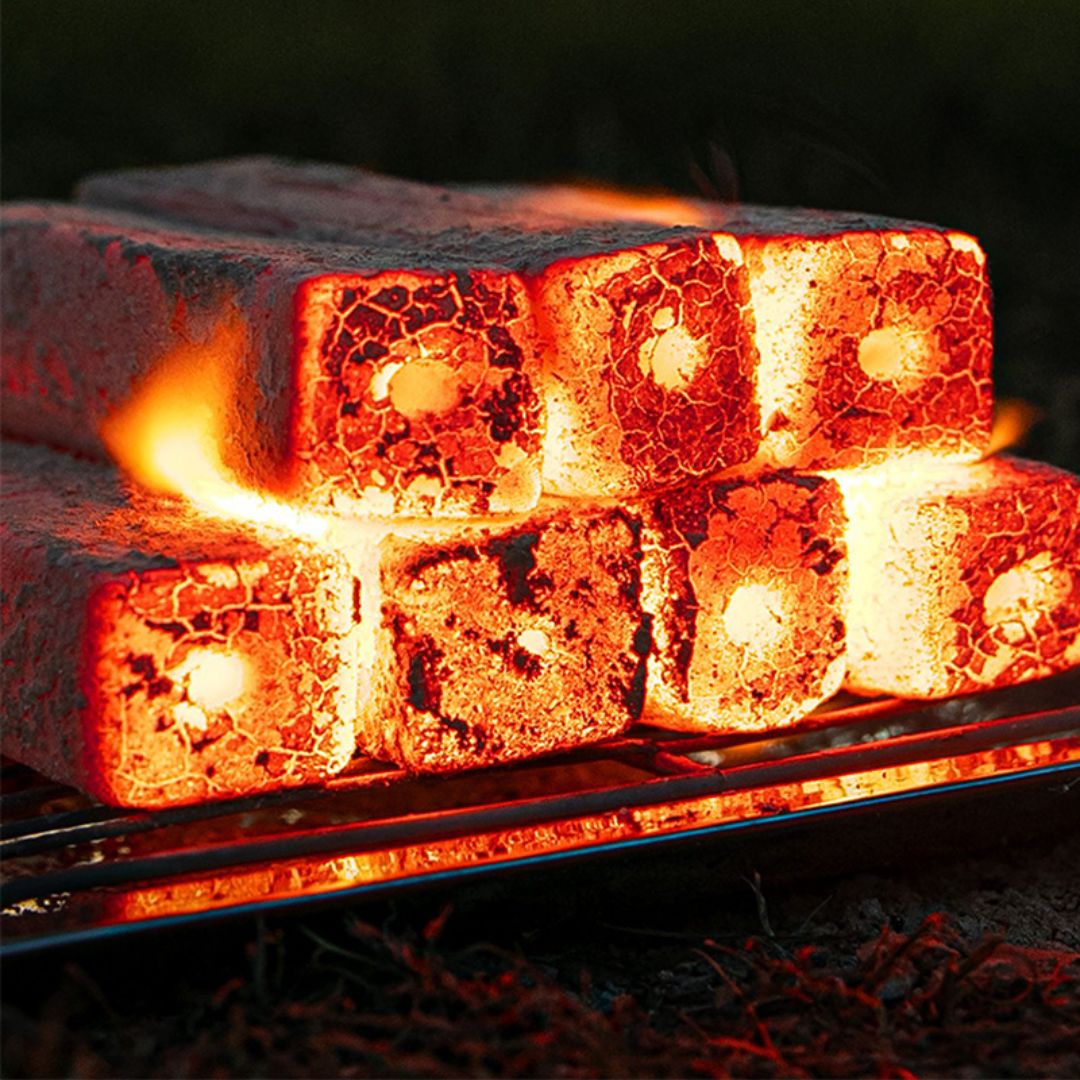
| Extruded charcoal (bamboo or hardwood sawdust) | Very good | Dense, uniform rods burn evenly; low smoke and low ash in high-temperature grades |
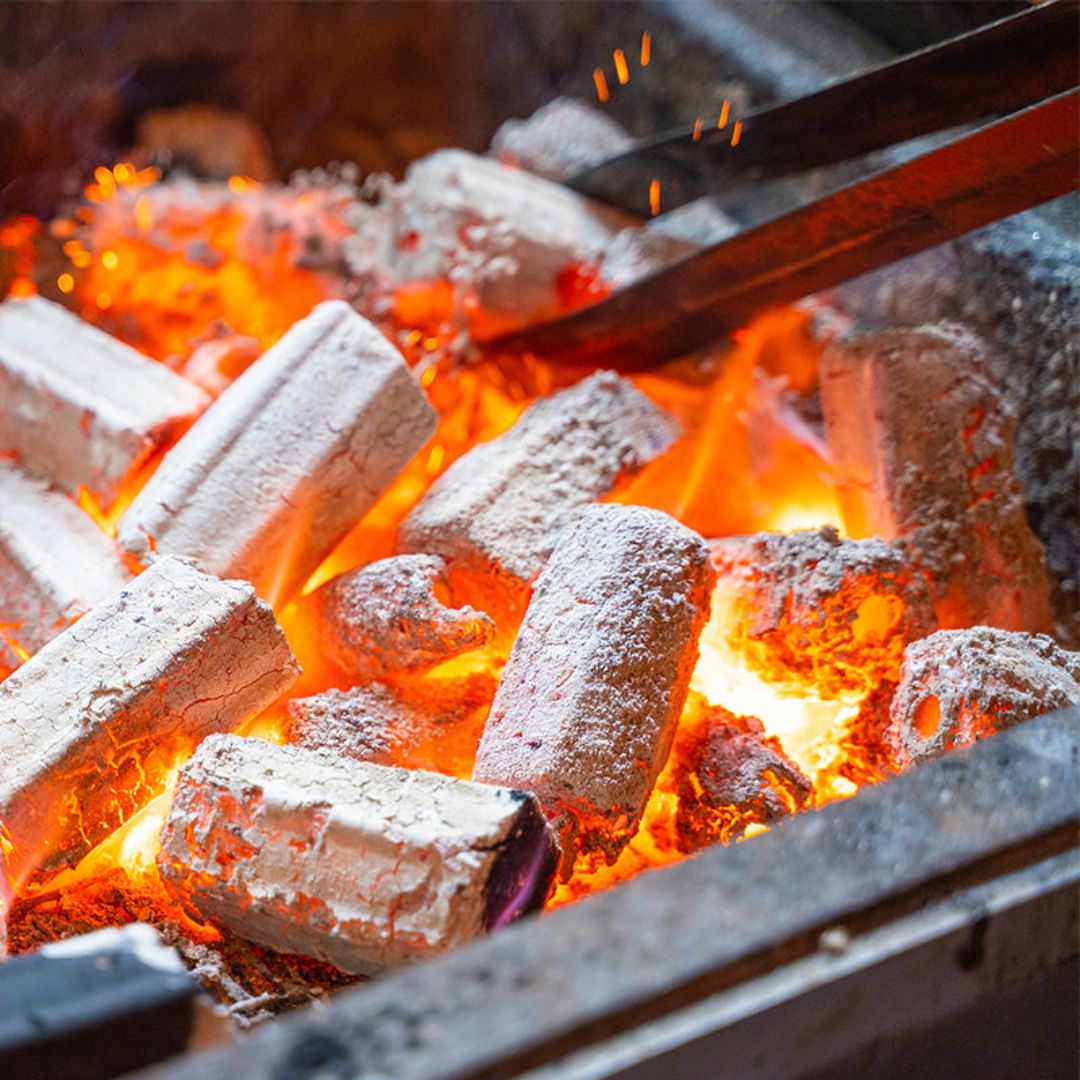
| Briquettes | Good | Uniform shapes are easy to arrange in a snake or ring; more ash to manage on very long cooks |
| Lump charcoal | Fair | Burns hotter and faster; mixed piece sizes make temperature harder to hold |
Two things to watch with any fuel:
- Ash build-up. Over 10 hours or more, ash can smother the burning coals. Low-ash fuel, or a gentle stir mid-cook, keeps air moving.
- Smoke flavor. High-temperature charcoal is close to neutral, so add wood chunks for smoke. Put them on the first part of the snake or scatter them through the ring.
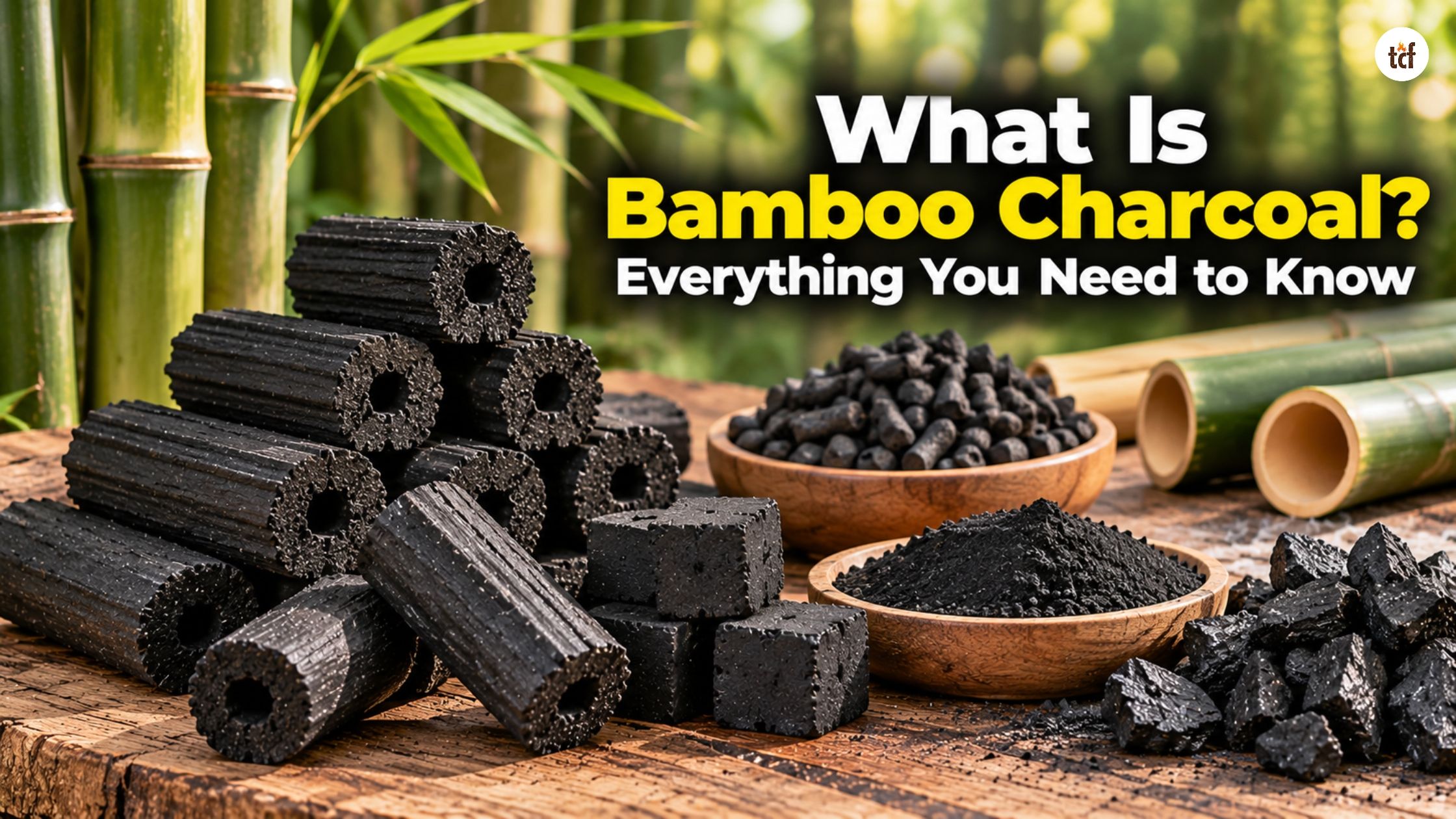
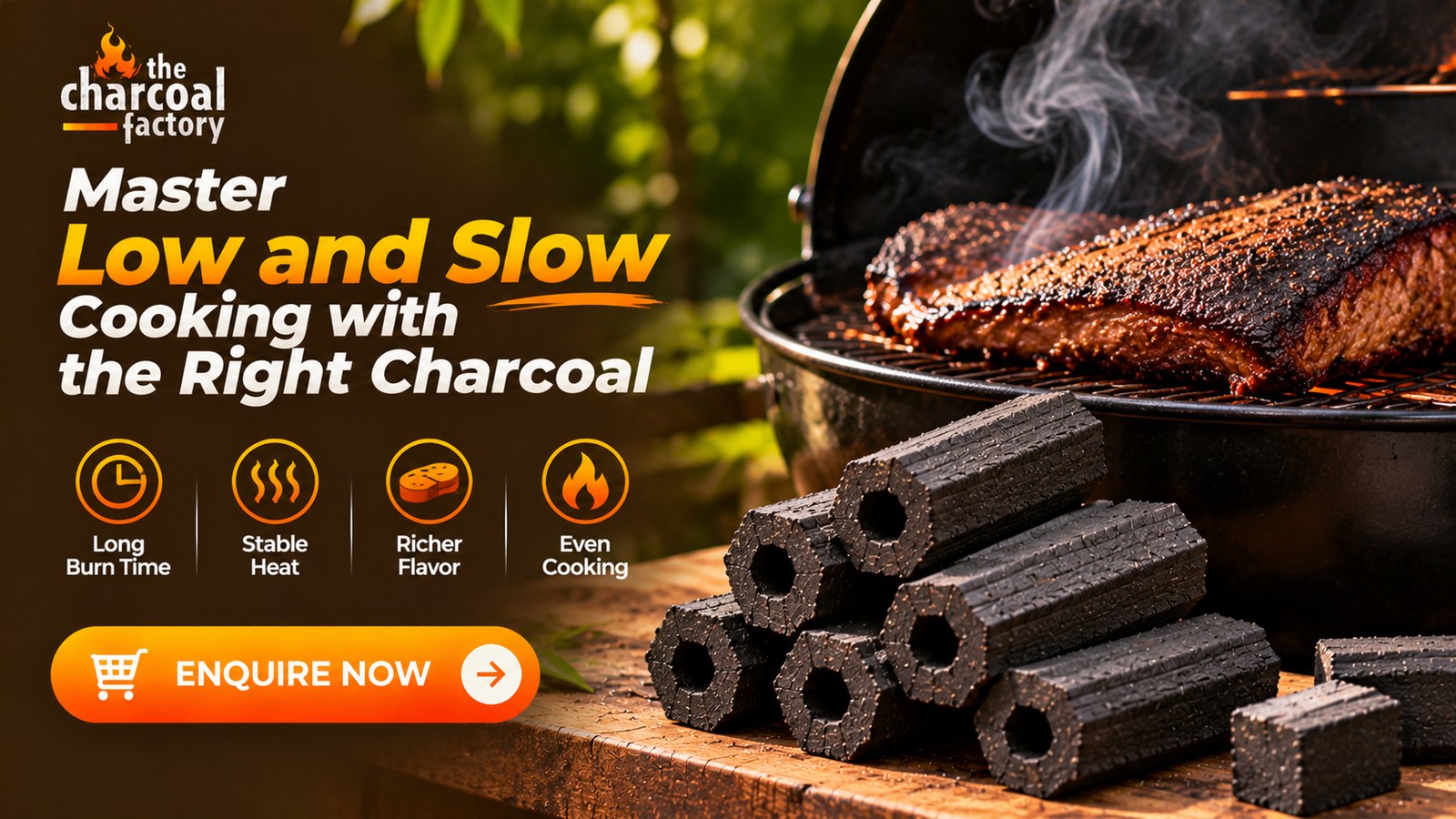
Dense extruded bamboo charcoal suits low and slow cooking well because of its uniform density, but it takes longer to light. For more on choosing a fuel, see the best charcoal for smoking and bamboo charcoal quality.
How do you set up charcoal for a 12-hour cook?
Both main methods work the same way: a small amount of lit charcoal slowly lights the unlit fuel next to it, so the fire burns for hours from one load.
The minion method (bullet smokers and fire baskets)
- Fill the charcoal ring or basket with unlit charcoal, leaving a small well in the center.
- Light a small batch in a chimney. Weber suggests about 2 kg of unlit briquettes with a half to three-quarter chimney of lit ones added to the well.
- Pour the lit coals into the well, add wood chunks on top and assemble the smoker.
- Start with vents open, then close them down as the temperature approaches 225°F.
The snake method (kettle grills)
- Build a C-shaped line of charcoal around the inside edge of the grate, two pieces wide and one or two high.
- Place wood chunks along the first part of the snake.
- Put a water pan in the open center.
- Add a small number of lit coals to one end of the snake.
- Cook on the side away from the lit end, with the lid vent above the meat.
Kamado and ceramic grills
Fill the firebox, light one or two spots in the center, and close the vents down early. Ceramic holds heat so well that it’s easy to overshoot 225°F and hard to bring the temperature back down.
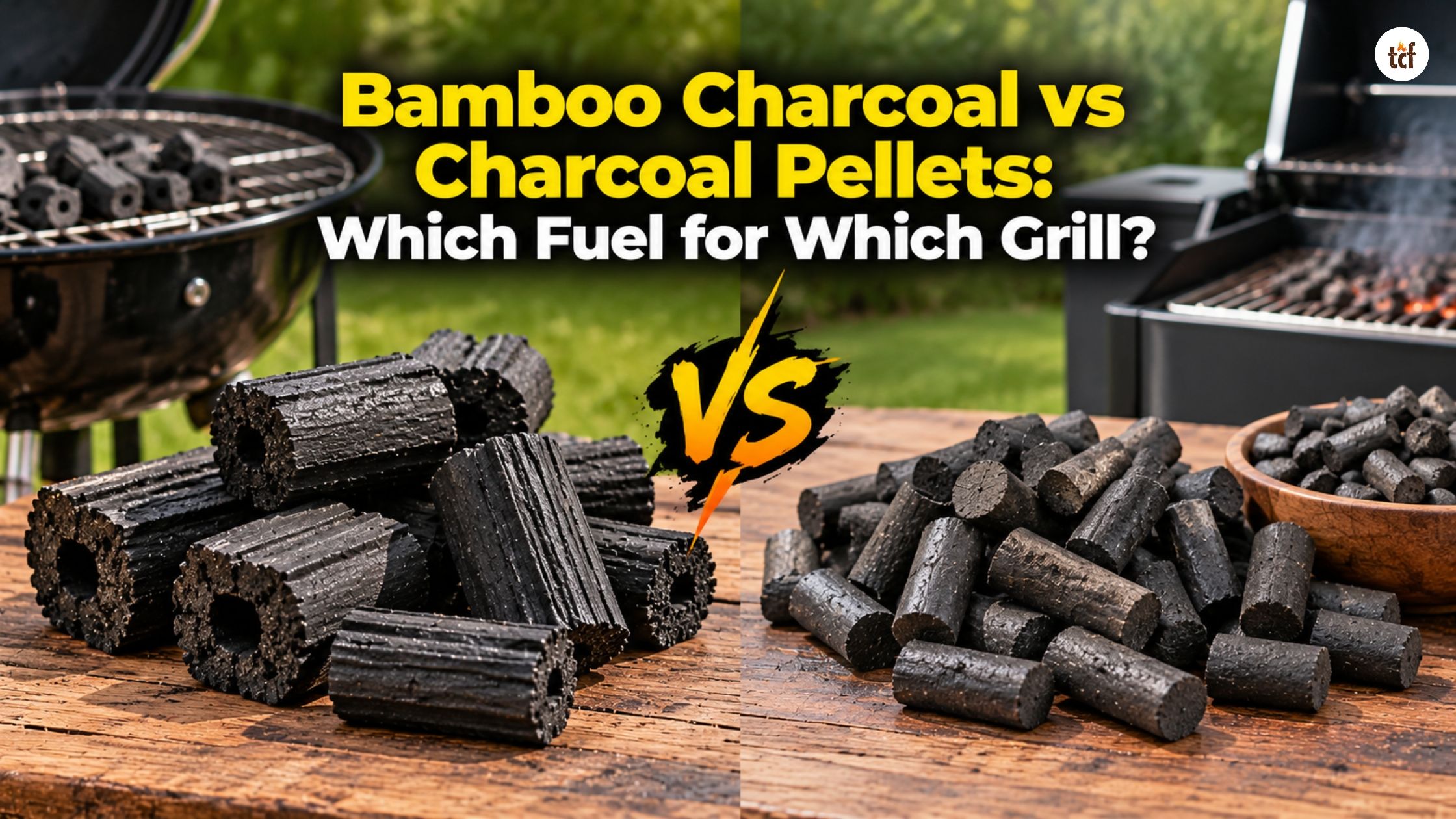
Also read – Bamboo Charcoal vs Charcoal Pellets
How long will one load last?
Published figures vary widely, which tells you how much cooker, fuel and weather matter:
| Setup | Published burn times at about 225–250°F |
| Minion method, Weber Smokey Mountain | About 8–12 hours (Weber) |
| Snake method, kettle | From about 12–15 hours (Weber) down to 4–8 hours in other testing (Destination BBQ) |
For a true 12-hour cook, build the largest load your cooker allows and plan to check the fuel halfway through.
How do you hold 225°F with charcoal?
- Close the vents early. Start closing them about 25°F before your target. Charcoal fires are slow to cool once they overshoot.
- Use the bottom vent to steer, the top vent to breathe. Adjust the bottom vent in small steps and leave the top vent at least partly open so smoke can escape.
- Wait between adjustments. Give the fire 10–15 minutes to respond before changing anything again.
- Use a water pan in kettles and bullet smokers. It absorbs heat spikes and keeps the cooking chamber more stable.
- Keep the lid shut. Each opening lets heat out and air in, which speeds up the burn.
- Measure at the grate, not just with the lid thermometer, which often reads differently.
- Plan for weather. Wind and cold pull heat away and make the charcoal burn faster. Shelter the cooker from the wind if you can.
What if you need more fuel mid-cook?
Add lit charcoal, not unlit. Light a half chimney, wait until it is covered in grey ash, and add it to the burning end of the snake or the top of the ring. Adding a pile of unlit fuel to a low fire can produce a burst of heavy smoke and a temperature drop.
On very long cooks, a gentle stir or a tap on the charcoal grate can clear ash that is choking the fire.
A 12-hour low and slow fuel plan
Use this as a checklist for a brisket, pork shoulder or similar long cook.
| Time | What to do |
| 1 hour before | Build the ring or snake with a full fuel load, add wood chunks, fill the water pan, light a small batch in a chimney |
| Start | Add the lit coals, assemble the cooker, vents open |
| First 30–60 minutes | Close vents down as the temperature nears 225°F; put the meat on once it holds steady |
| Hours 1–5 | Leave it alone. Check temperature every hour; top up the water pan if it runs low |
| Around hour 6 | Fuel check: see how far the fire has moved through the ring or snake. Light a half chimney ready if it is past halfway |
| Hours 6–10 | Add lit charcoal if needed; clear ash if the temperature drifts down with vents open |
| Hours 10–12 | Watch internal meat temperature rather than the clock; keep the fire steady to the finish |
| After the cook | Close all vents to put the fire out and save the unburned charcoal |
Unburned charcoal from a low and slow cook is usually in good shape for next time; see can you reuse charcoal. For lighting and shutting down safely, see how to use charcoal.
Frequently asked questions
What is the best low and slow charcoal?
Dense, uniform fuel such as extruded charcoal or good briquettes. Each piece burns at a similar rate, which makes 225°F easier to hold for hours.
How much charcoal do I need for a 12-hour smoke?
The largest load your cooker can hold in a minion ring or snake, plus a half chimney in reserve. Burn rates vary with cooker, fuel and weather, so plan a fuel check around the halfway mark.
Is lump charcoal good for low and slow?
It works, but mixed piece sizes and faster burning make temperature harder to hold over 12 hours. Large, even pieces help.
Why does my smoker temperature keep rising?
Usually the vents are too open, or too much charcoal was lit at the start. Light less, close the bottom vent sooner and make changes in small steps.