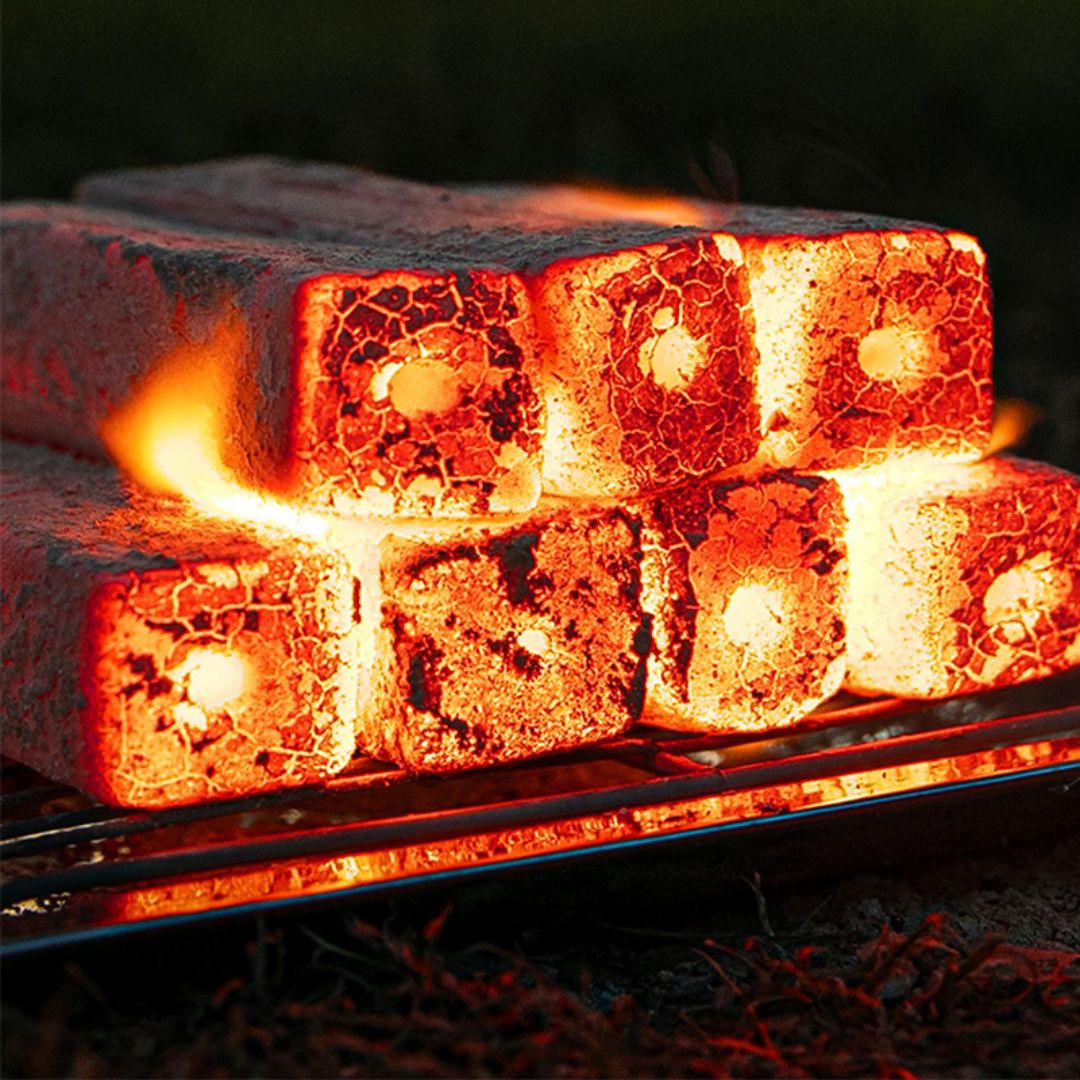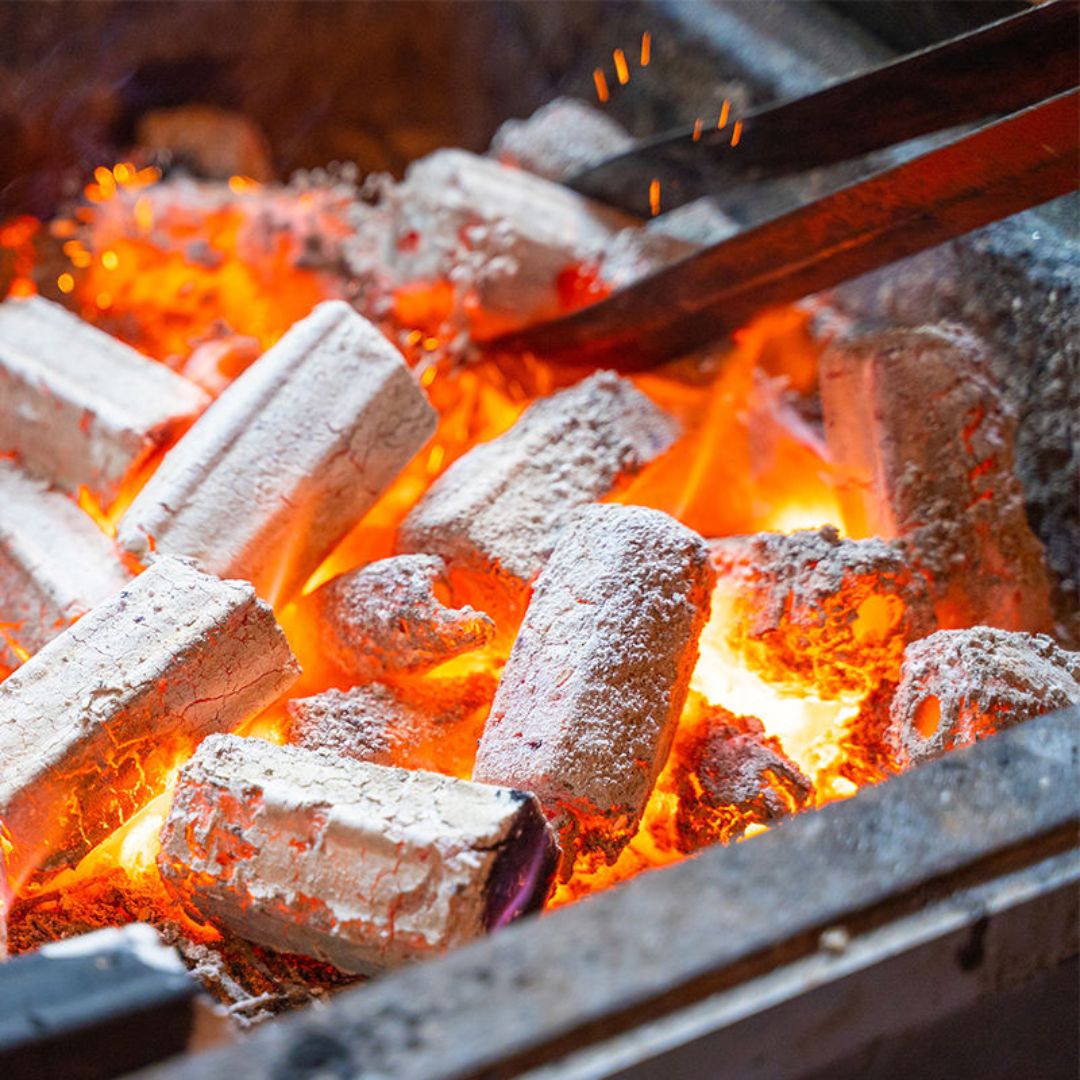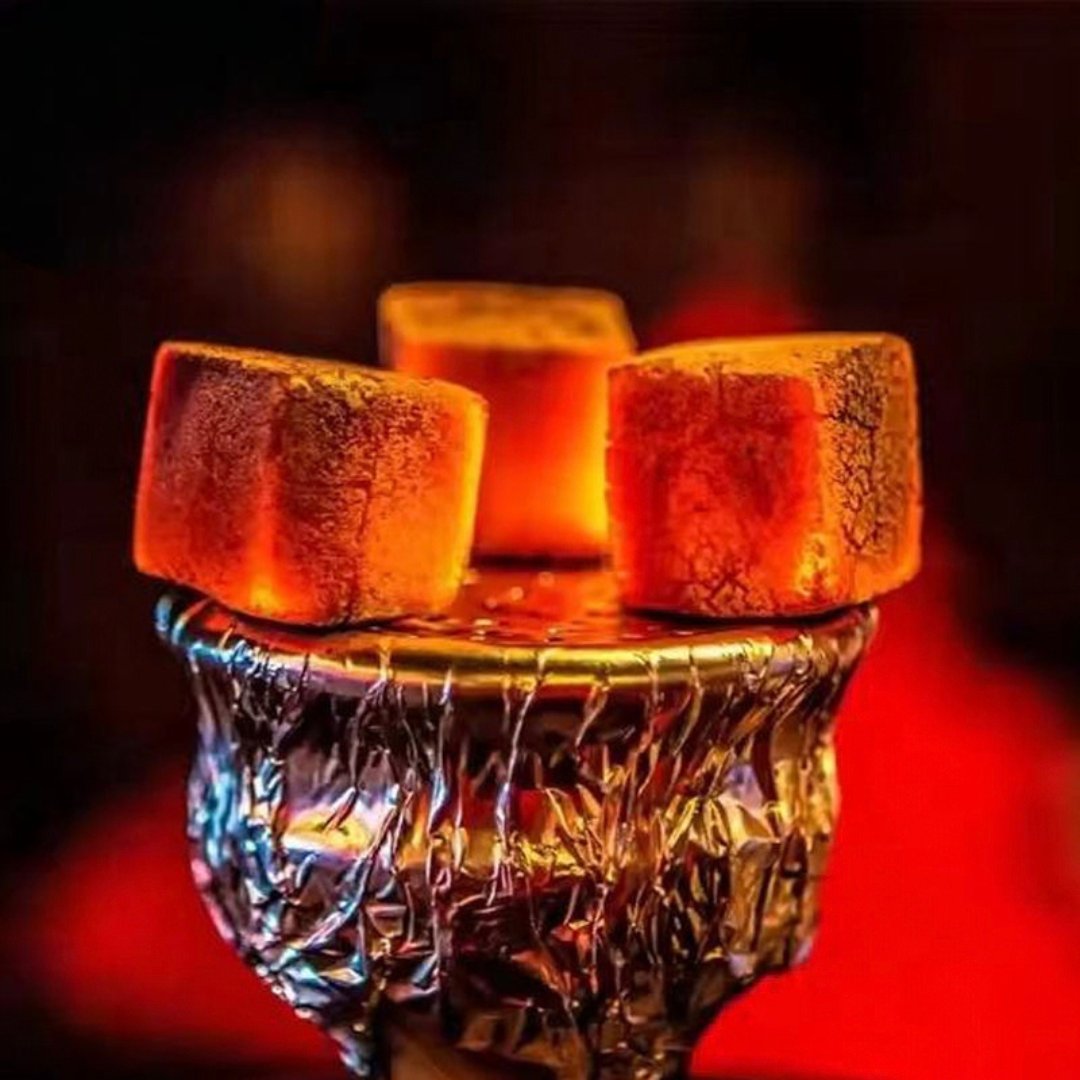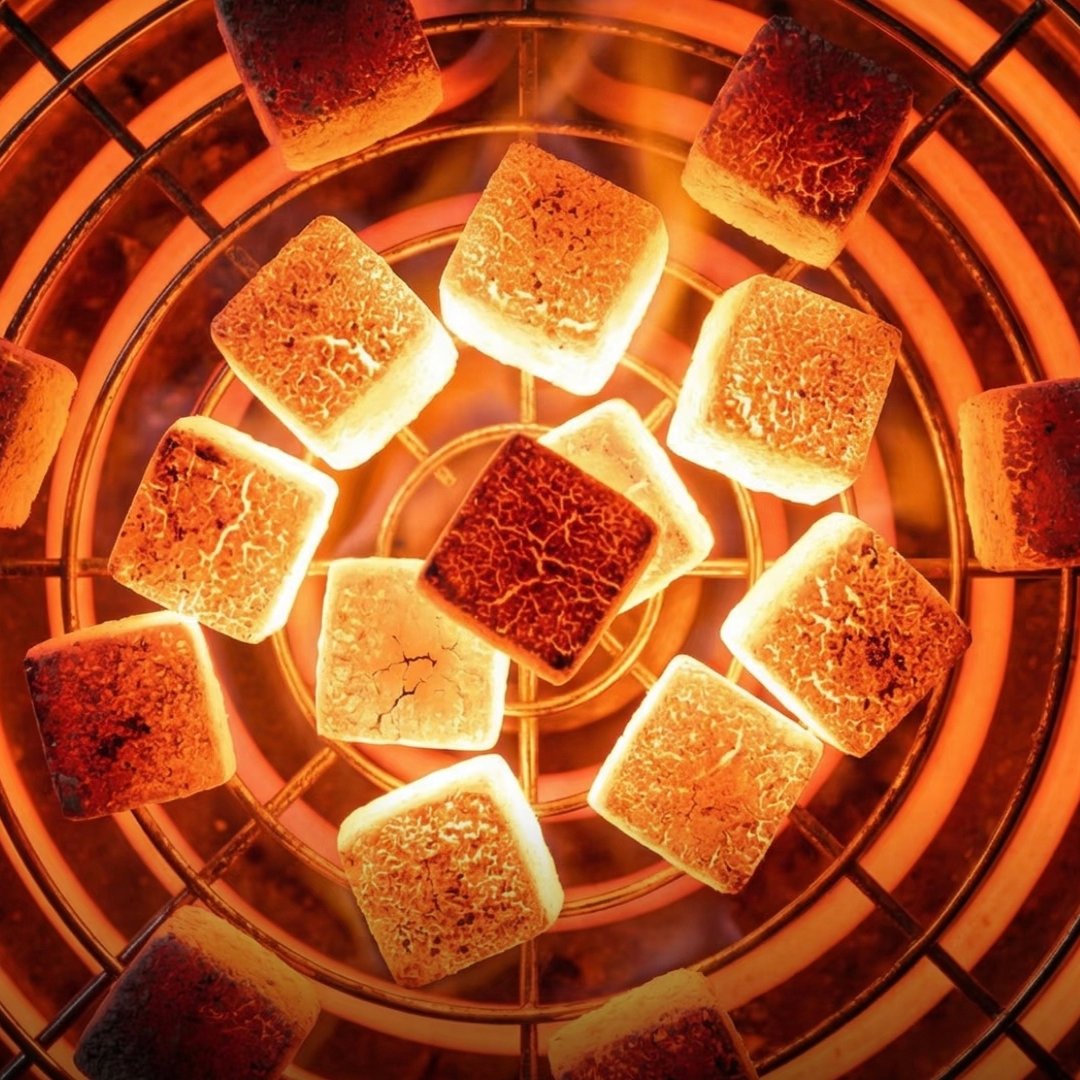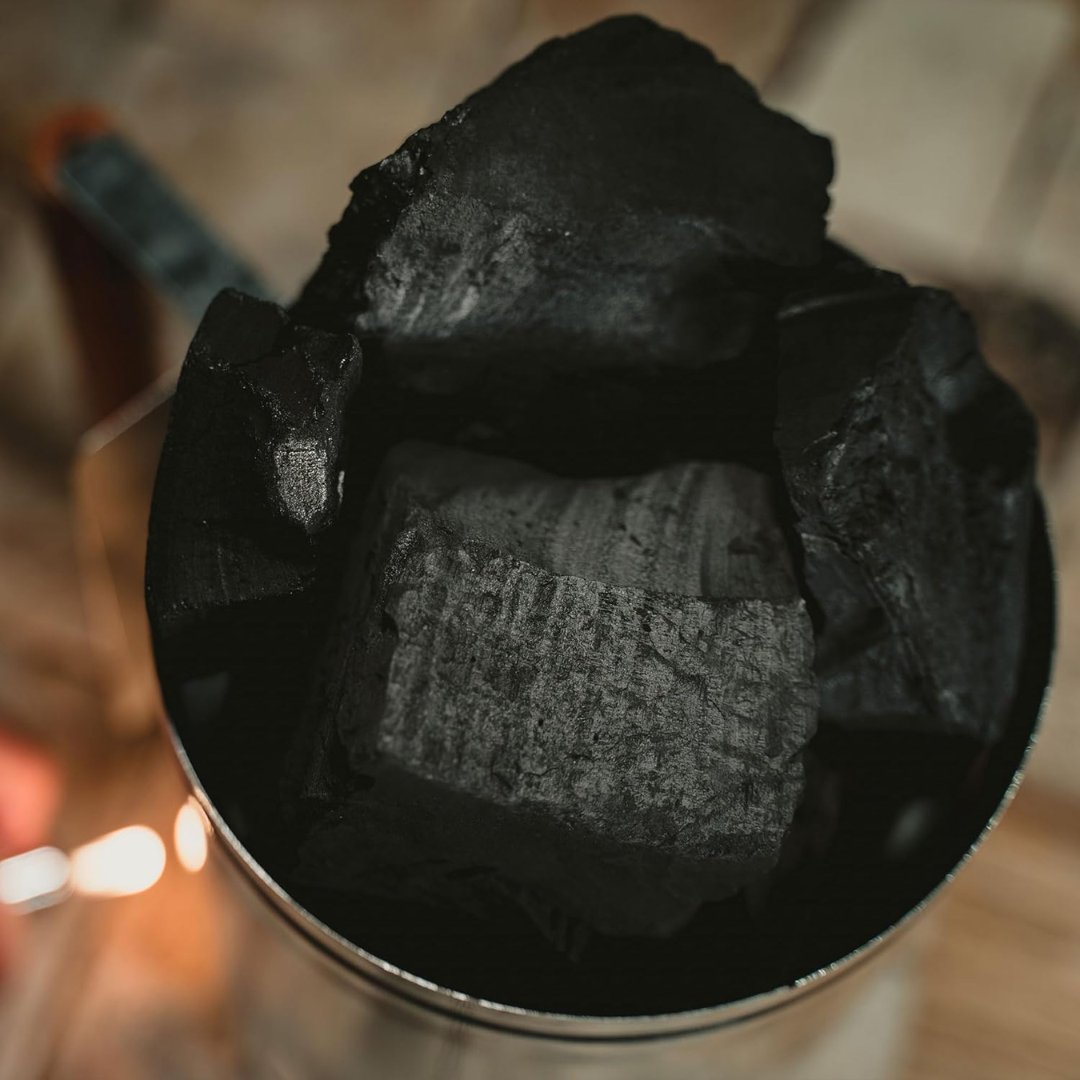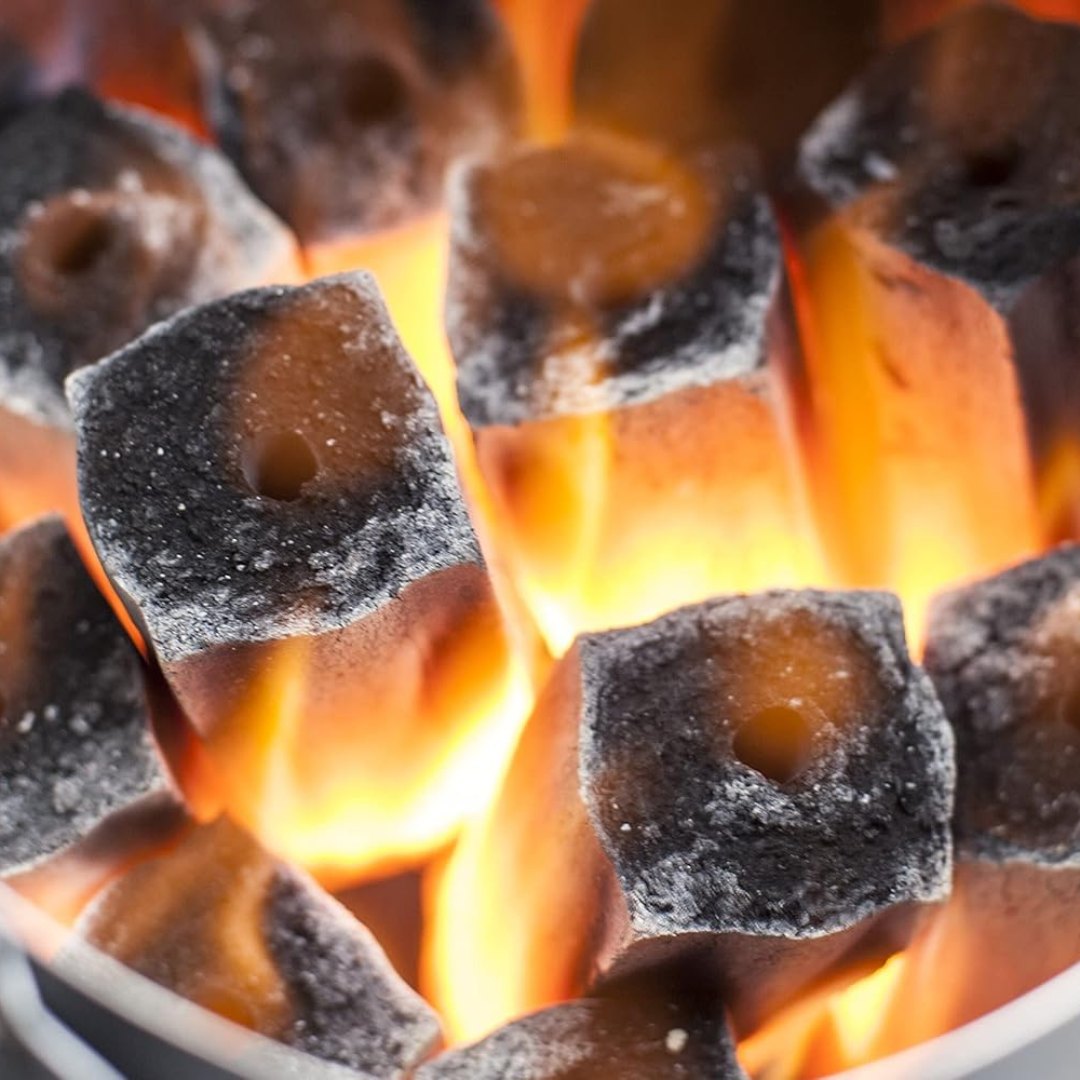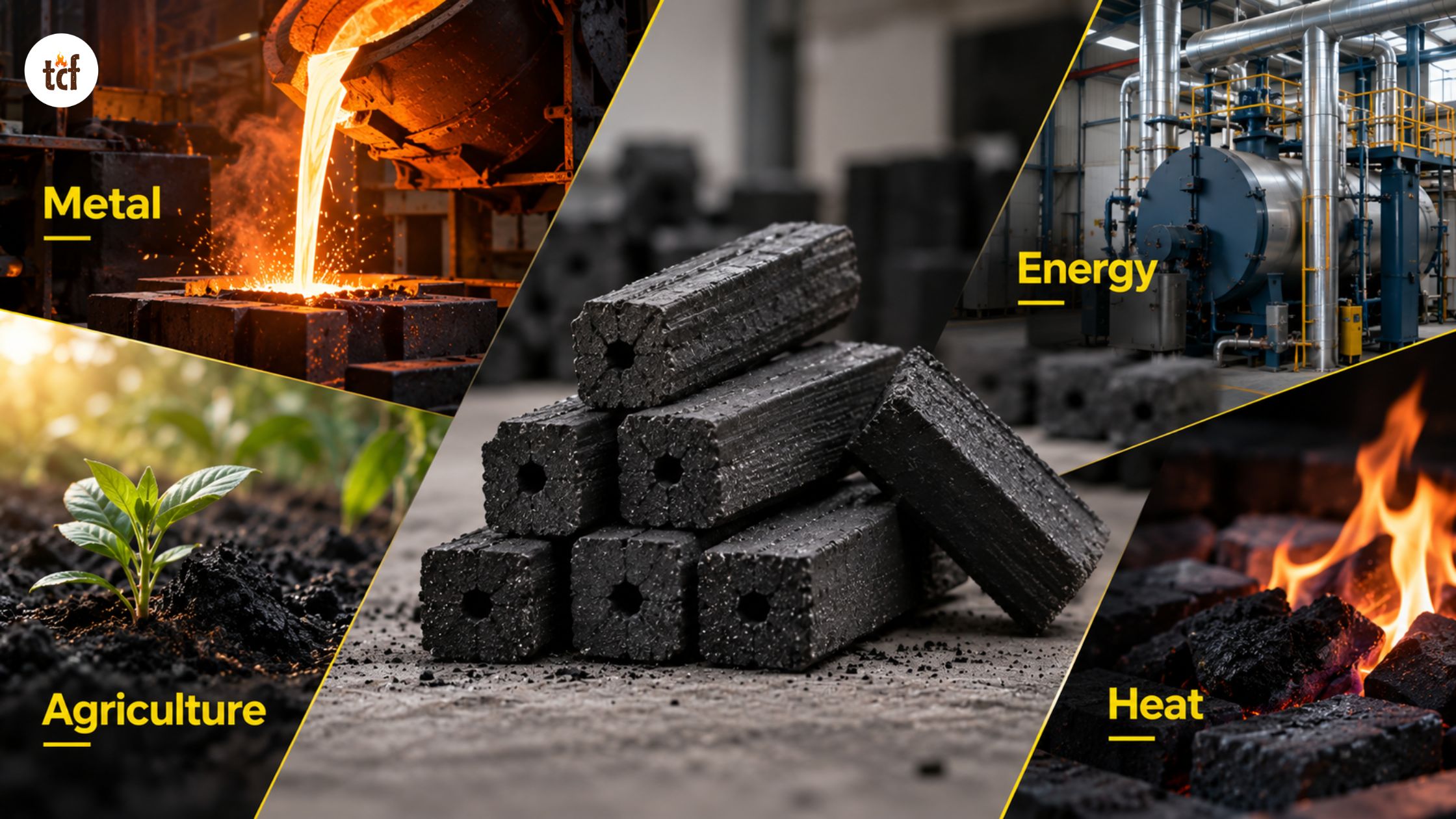


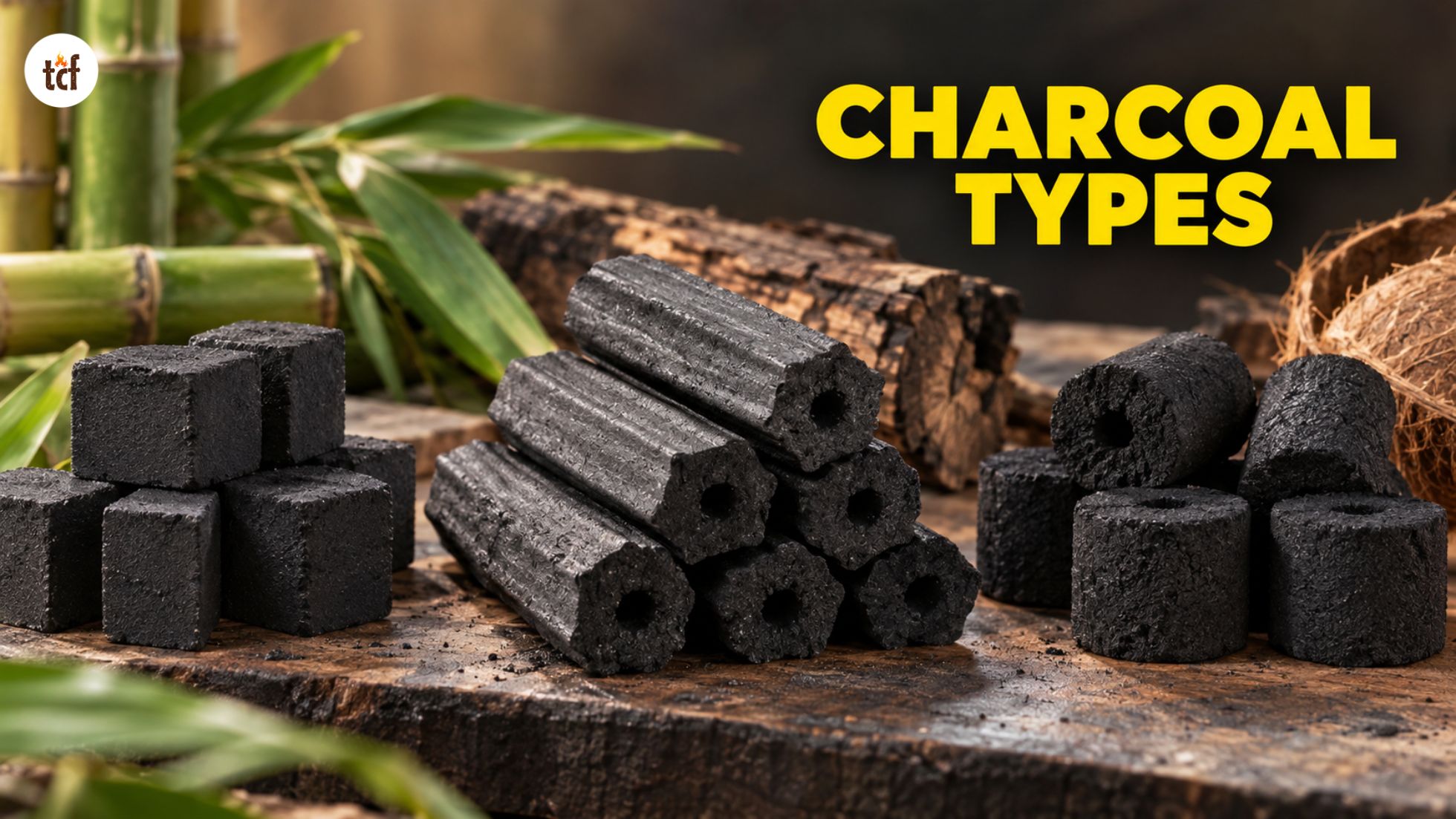
Bamboo charcoal vs wood charcoal vs coconut shell charcoal: Wood charcoal wins for high-heat searing and traditional BBQ. Coconut shell charcoal wins for shisha, hookah, and long cooking sessions where low ash and steady heat matter most. Bamboo charcoal wins for premium lounges, wellness products, and buyers who want the lowest possible ash content available.
There’s no single “best” material; the right answer depends entirely on who’s actually going to use the product. Here’s how to match the charcoal to your market instead of your personal preference.
Table of Contents
Quick comparison by spec
| Wood charcoal | Coconut shell charcoal | Bamboo charcoal | |
| Fixed carbon (A-grade) | 72%+ | Commonly 70-78% | 75%+ |
| Ash content (A-grade) | Up to 5% | Roughly 5-10% at standard grade, lower at premium spec | As low as 3% or under |
| Heat output | High, fast peak | High, steady | High, very stable |
| Burn time | Shorter, needs replenishing | Long, commonly 75-120+ minutes in shisha use | Long, comparable to or exceeding coconut |
| Raw material source | Hardwood (oak, hickory, and similar) | Coconut shell, an agricultural byproduct | Bamboo, a fast-growing renewable grass |
| Primary markets | BBQ, grilling, restaurant searing | Shisha/hookah, extended cooking, activated carbon | Premium shisha, wellness products, high-end grilling |
Exact numbers vary by supplier and grade. Our charcoal grades guide breaks down how A, B, and C grade thresholds differ between wood and bamboo, since the same grade label doesn’t mean the same absolute numbers across materials.
Match the material to your market
BBQ, grilling, and restaurant searing: wood charcoal
Wood charcoal remains the standard for direct-heat cooking because it hits high temperatures fast, which is exactly what a hard sear or a busy dinner service char-broiler needs. If your customers are grill retailers, BBQ restaurants, or foodservice distributors, they already expect and know how to use wood charcoal. It’s also the most widely available and typically the lowest cost per ton of the three.
Shisha, hookah, and lounge settings: coconut shell charcoal
Coconut shell charcoal has become close to a standard in the shisha trade for good reason: long, steady burn, low ash, and a neutral flavor that doesn’t interfere with tobacco taste. Our earlier guide on shisha charcoal burn time and heat covers this in more depth if you’re comparing against quick-light or bamboo specifically for hookah use. If you’re supplying lounges, cafés, or hookah distributors, this is the default expectation in most markets, particularly the Middle East, where coconut shell dominates shisha charcoal demand.
Premium and wellness-adjacent markets: bamboo charcoal
Bamboo charcoal serves 2 distinct buyer types. First, premium hookah lounges chasing the lowest possible ash spec, where bamboo’s structural advantage (commonly 3% ash or under at A-grade) matters more than the price premium. Second, an entirely different market: wellness and lifestyle products, air-purifying bags, skincare, deodorizers, where bamboo’s high surface area and renewable growth story do the selling. Our bamboo charcoal market size guide covers how large that second category has actually become.
Activated carbon and filtration: coconut shell charcoal
If you’re supplying water filtration, air purification, or industrial adsorption markets rather than fuel markets, coconut shell is generally the preferred raw material. Its consistent pore structure and high adsorption capacity have made it close to the industry standard for activated carbon in filtration systems, ahead of both wood and bamboo for this specific application.
Sustainability-forward retail and private label: bamboo or coconut shell
If your brand positioning leans on sustainability, both bamboo and coconut shell have a genuine story: bamboo is one of the fastest-growing plants on Earth and doesn’t require replanting, while coconut shell charcoal uses an agricultural byproduct that would otherwise go to waste. Wood charcoal, by contrast, carries more scrutiny around deforestation and sourcing legality, which is part of why regulations like EUDR exist in the first place.
Also read – How to read a Certificate of Analysis for charcoal
Why ash content differs so much between the three
Ash content is where these 3 materials separate most clearly, and it comes down to raw material structure. Wood charcoal, especially at lower grades, commonly runs 15 to 25% ash. Coconut shell charcoal, denser and lower in mineral content, typically lands lower. Bamboo, with the lowest natural silica content of the three, is capable of the tightest ash specs at premium grade, which is exactly why premium hookah lounges chasing sub-3% ash specs increasingly favor bamboo over coconut shell at the very top end of the quality range.
A decision framework
Ask these 3 questions before choosing a material for your product line:
- What’s the end use? Direct-heat cooking favors wood. Extended low-heat sessions favor coconut shell or bamboo. Filtration and adsorption favor coconut shell specifically.
- What ash spec does your market actually require? Standard BBQ retail tolerates higher ash than a premium hookah lounge or an activated-carbon filtration buyer.
- Does your brand story depend on sustainability positioning? If so, bamboo and coconut shell both offer a stronger renewable or byproduct-based narrative than wood.
Frequently asked questions
Which charcoal burns the cleanest: bamboo, wood, or coconut shell?
Bamboo generally produces the lowest ash at premium grade, commonly 3% or under, followed closely by coconut shell. Wood charcoal, particularly at standard grades, typically produces noticeably more ash than either.
Is bamboo charcoal better than coconut charcoal for shisha?
Both perform well. Bamboo has a slight edge on the lowest achievable ash spec, which matters most for premium lounges. Coconut shell remains the more widely used default across the broader shisha market, particularly in the Middle East.
Why is wood charcoal still preferred for BBQ over bamboo or coconut shell?
Wood charcoal ignites faster and reaches peak heat more quickly, which suits direct-heat searing and fast-turnaround restaurant cooking better than the steadier, longer burn that coconut shell and bamboo are built for.
Which material is best for activated carbon or filtration products?
Coconut shell charcoal is generally the preferred raw material for activated carbon in water and air filtration, due to its consistent pore structure and high adsorption capacity, ahead of both wood and bamboo for this specific application.