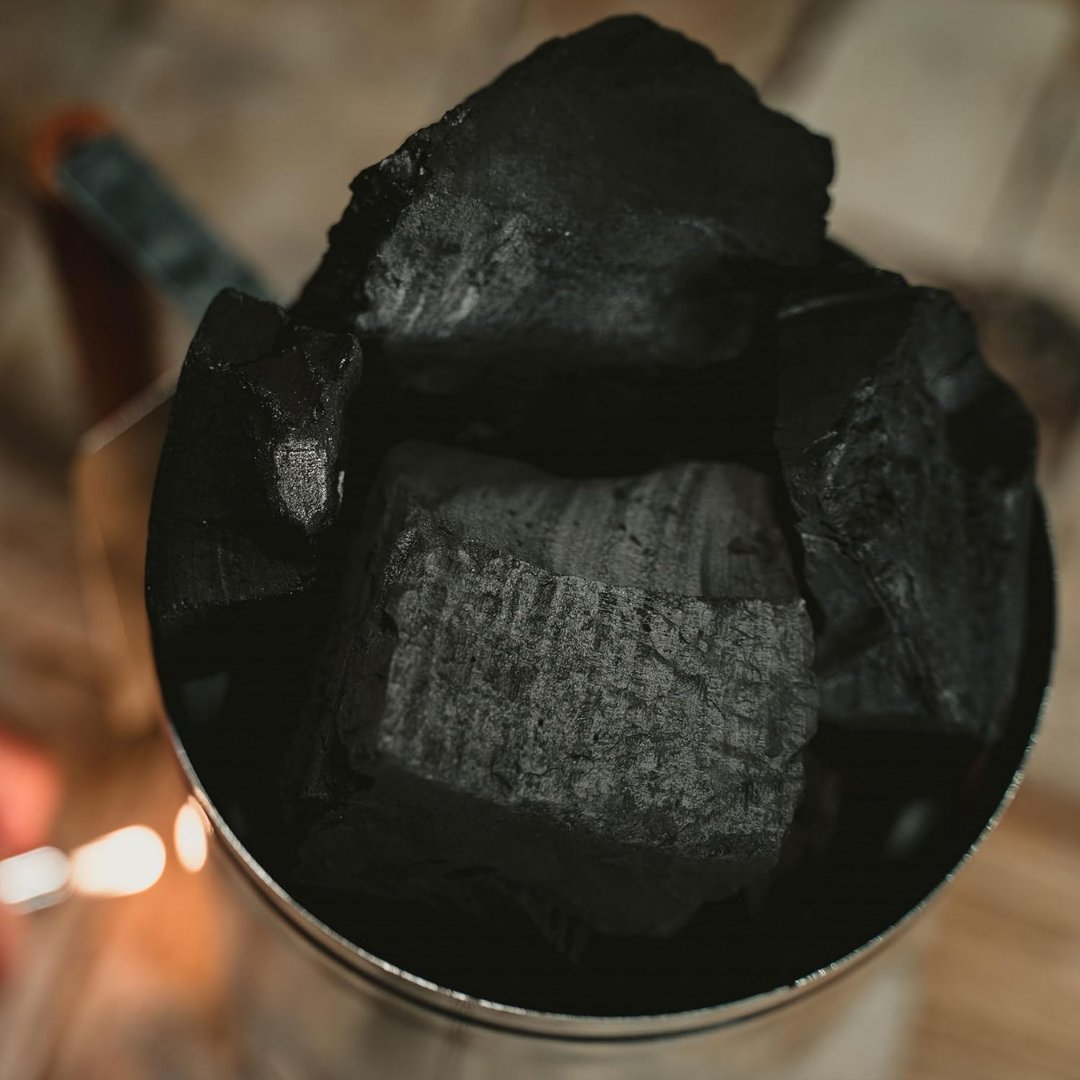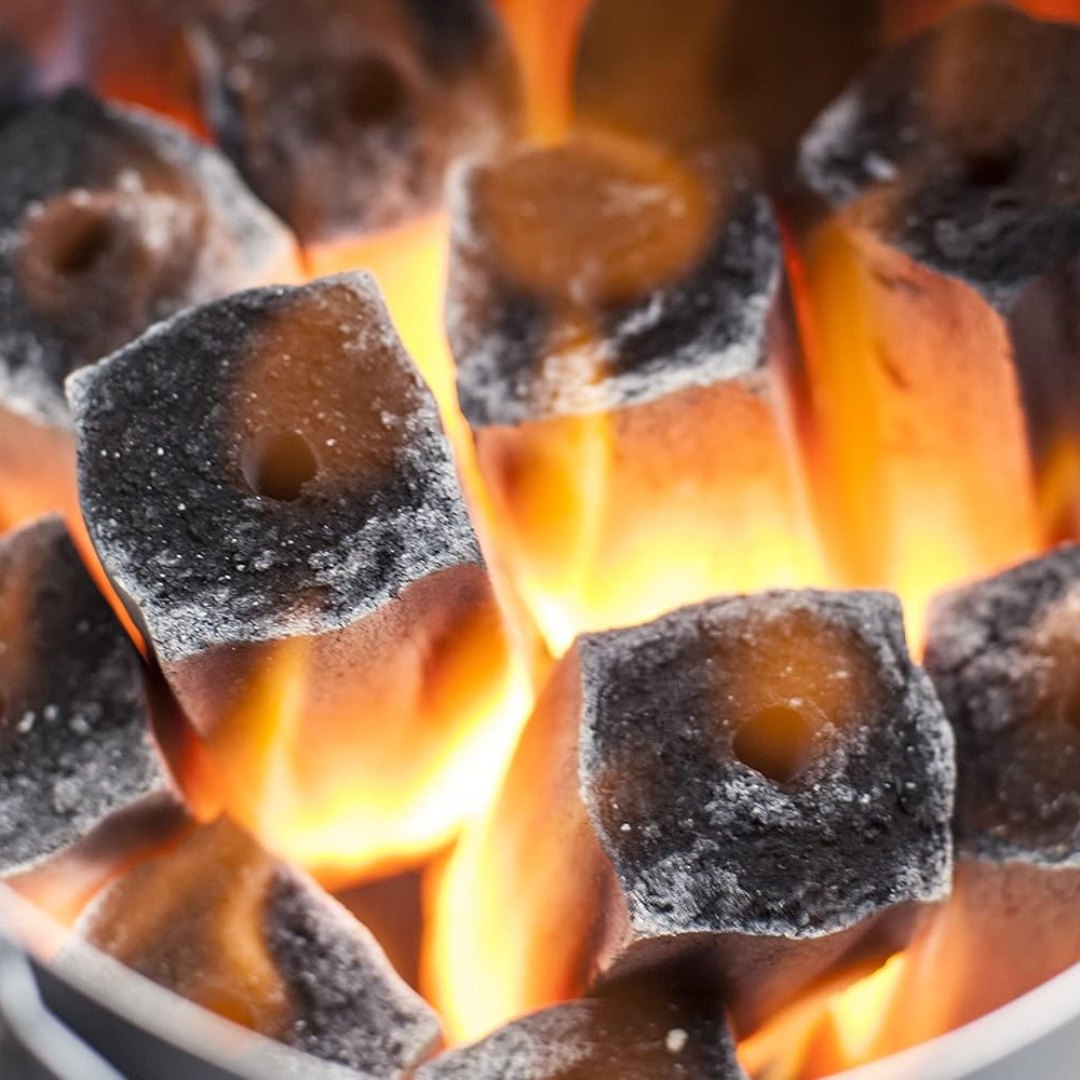




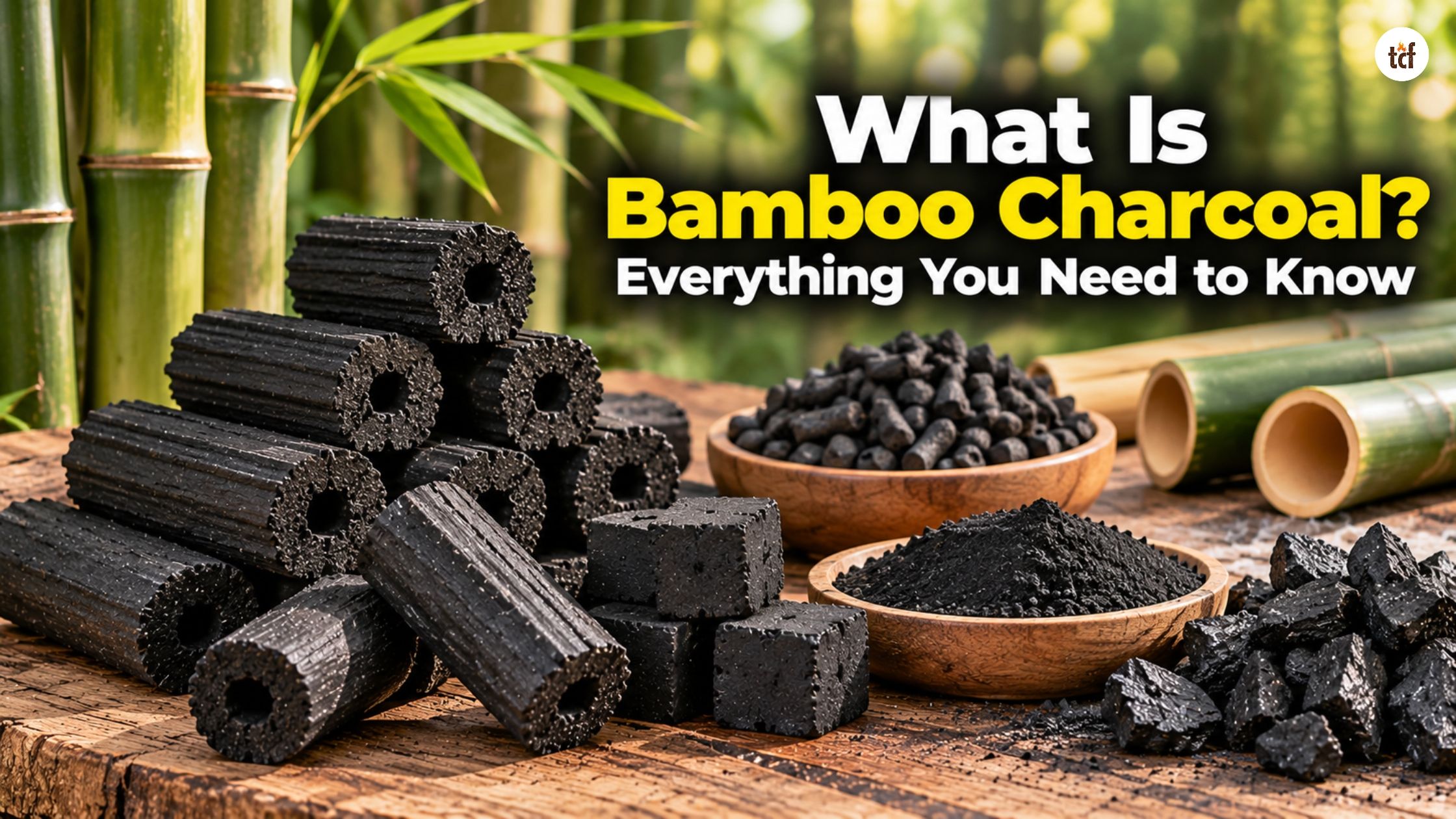
What is bamboo charcoal? It is charcoal made by heating bamboo in a kiln with little or no oxygen, which drives off water and volatile compounds and leaves a dense, porous carbon. It is used as a cooking and shisha fuel, for heating, and, thanks to its porous structure, for deodorizing, filtration and soil improvement.
Bamboo charcoal comes in two broad families: raw bamboo charcoal made from pieces of the plant, and machine-made bamboo charcoal pressed from bamboo sawdust before carbonizing. Which one you need depends on what you plan to do with it.
Key takeaways
- It is carbonized bamboo, usually Moso bamboo, and typically contains no added chemicals.
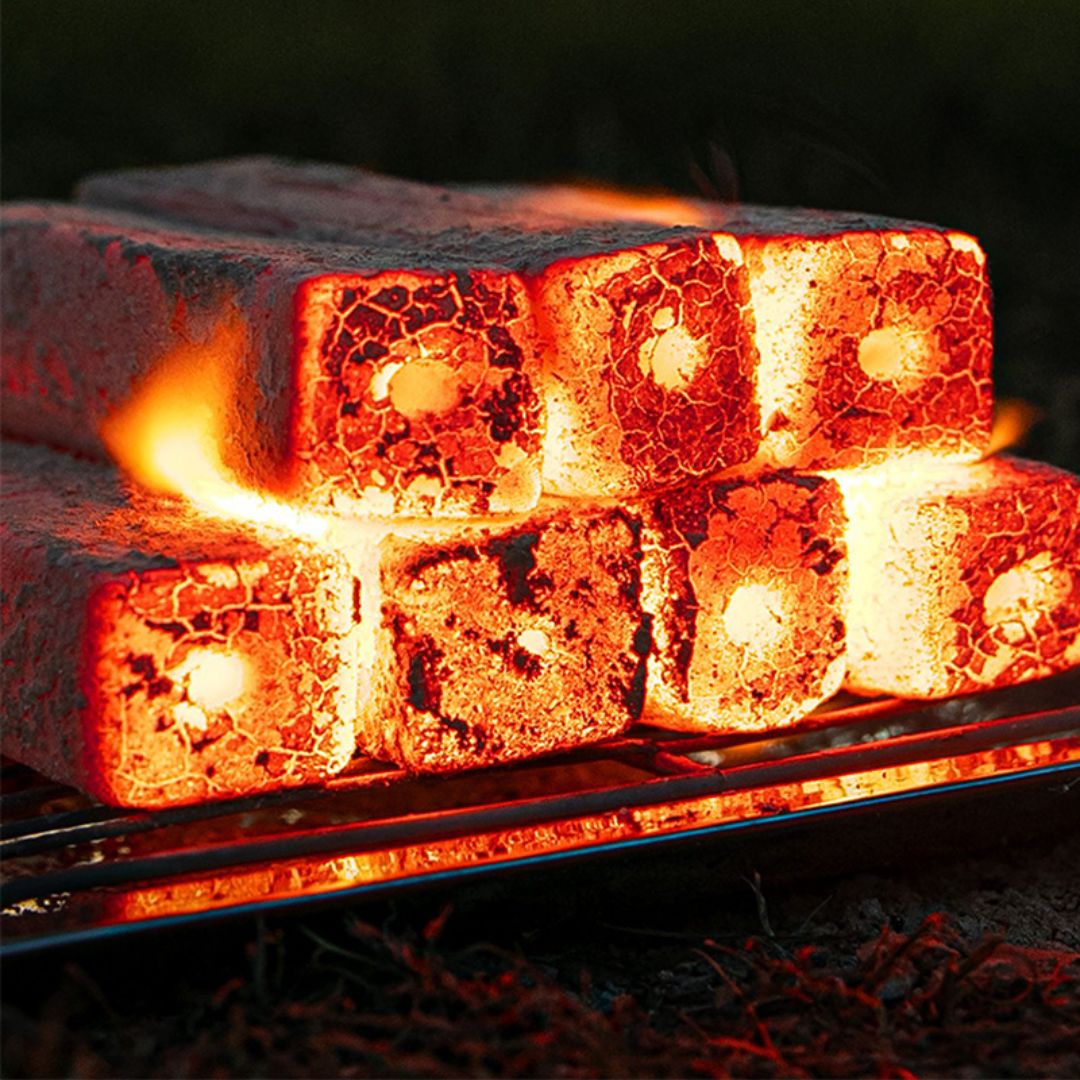
- Raw and machine-made forms differ. Raw pieces suit deodorizing and filtration; dense machine-made rods suit grilling and heating.
- It is very porous, which is why it absorbs odors and moisture.
- As a fuel, high-temperature grades burn long and clean, with low smoke once lit.
- Bamboo is a renewable raw material that regrows from its roots after harvest.
- Quality varies, so buy on lab results, not just the word “bamboo.”
Table of Contents
How is bamboo charcoal made?
The basic process is carbonization: heating bamboo in a kiln or retort with limited air, so it chars instead of burning.
- Raw material. Mature bamboo culms, offcuts, or sawdust left over from making bamboo products. Moso bamboo, China’s most widespread bamboo species, is the most common raw material.
- Preparation. Culms are cut into tubes or split into slices; sawdust is ground, dried and pressed into rods for machine-made charcoal.
- Carbonization. The bamboo is heated with little oxygen. Water and volatile compounds are driven off, and a smoky liquid called bamboo vinegar can be collected as a byproduct.
- Cooling and grading. The charcoal cools in the kiln, then is sorted by size, shape and quality.
The kiln temperature and time decide much of the final quality. Higher temperatures leave more fixed carbon and less volatile matter, which means cleaner, longer burning. For the full process, see how bamboo charcoal is made and bamboo charcoal quality.
What are bamboo charcoal’s main properties?
- Porosity. Bamboo charcoal is full of tiny pores. A review of bamboo charcoal research describes how this structure adsorbs odors, moisture and pollutants such as formaldehyde and ammonia (PMC).
- High carbon content. Well-fired bamboo charcoal is mostly fixed carbon, which burns as steady, glowing heat.
- Low ash in good grades. Clean bamboo raw material leaves little mineral residue.
- Hardness. Well-carbonized pieces are hard and give a clear ring when tapped together.
- Renewable source. Bamboo regrows from its root system after harvesting, so the plant doesn’t have to be replanted.
What are the types of bamboo charcoal?
Bamboo charcoal is grouped by how the bamboo was prepared before carbonizing (Wikipedia).
| Type | How it’s made | Main uses |
| Bamboo tube charcoal | Carbonized sections of whole culm | Decoration, deodorizing, water treatment |
| Bamboo slice charcoal | Carbonized split pieces of culm | Deodorizing, some fuel use |
| Bamboo lump charcoal | Carbonized offcuts of mixed size | Low-cost fuel |
| Granular bamboo charcoal | Raw charcoal crushed and screened | Filters, deodorizing products, horticulture |
| Bamboo charcoal powder | Very finely ground | Cosmetics, textiles, additives |
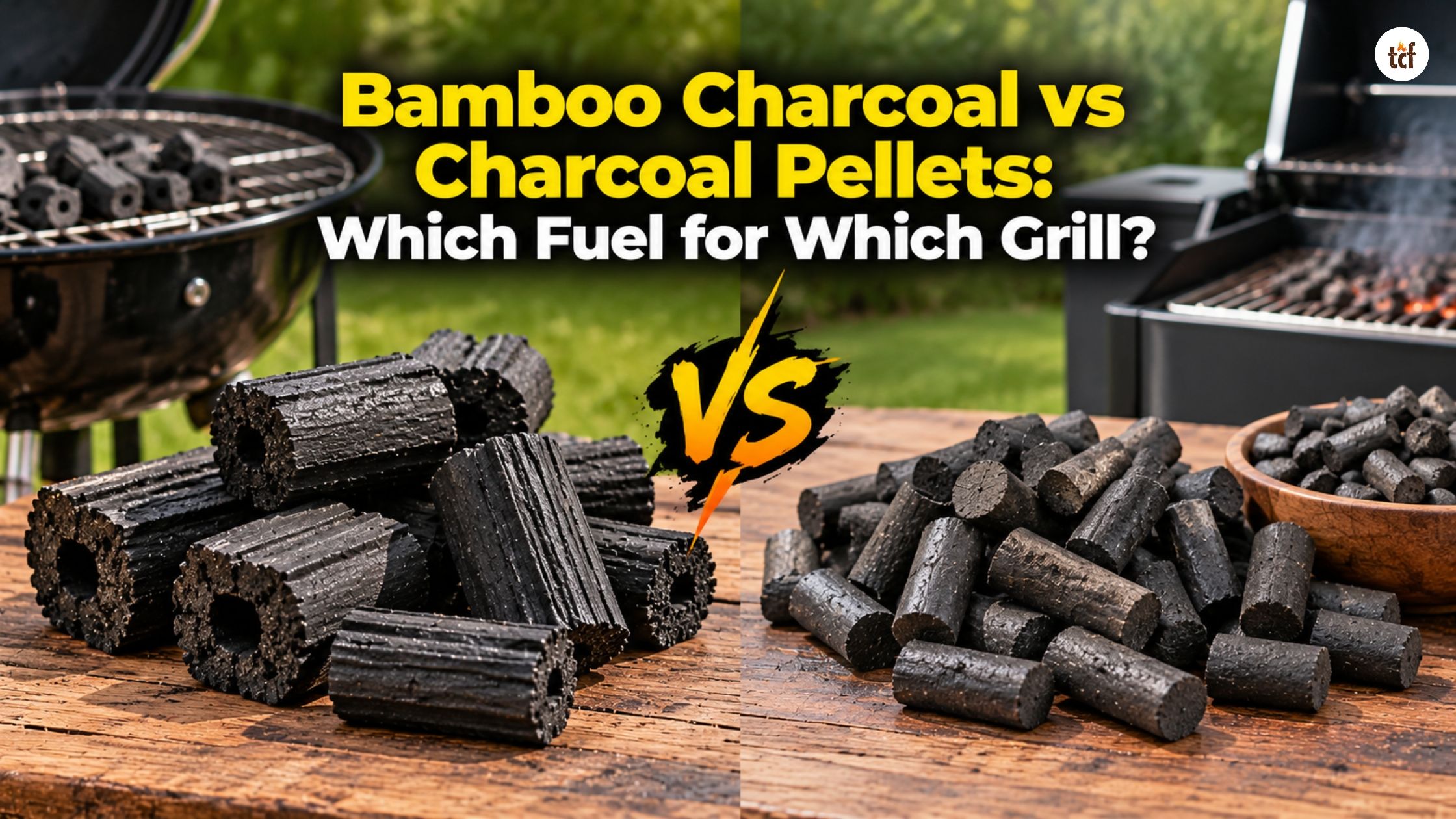
| Machine-made (extruded) bamboo charcoal | Bamboo sawdust pressed into rods, then carbonized | BBQ, restaurants, hot pot, heating |
| Shaped bamboo charcoal | Dense charcoal cut to set sizes | Restaurant grills, table grills |
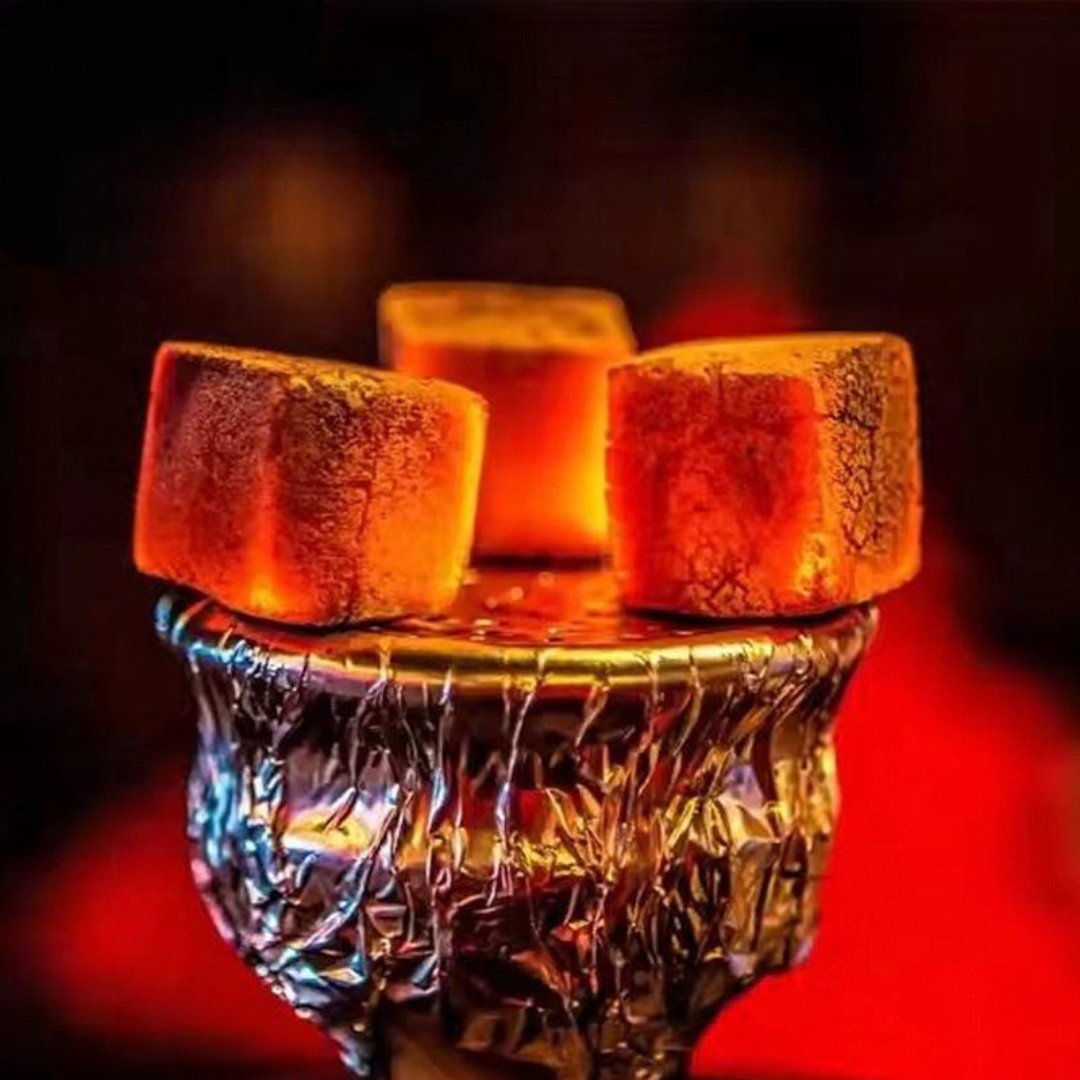
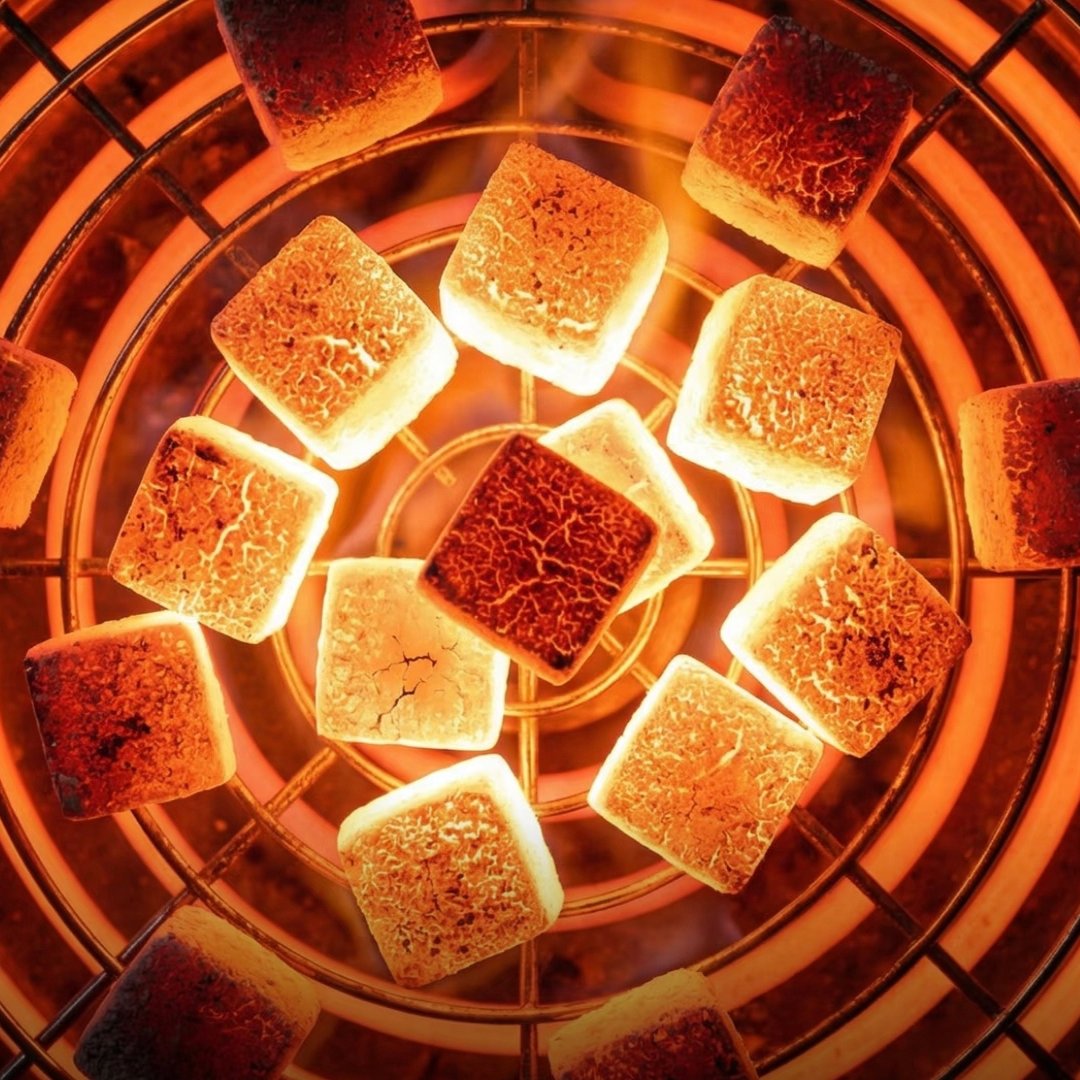
| Bamboo shisha charcoal | Dense bamboo charcoal shaped for hookah bowls | Shisha lounges and retail |
For fuel, the machine-made, shaped and shisha forms matter most, because their uniform density gives predictable heat. Raw tube and slice charcoal is lighter and less consistent, which suits absorbing odors better than burning.
What is bamboo charcoal used for?
Grilling and cooking
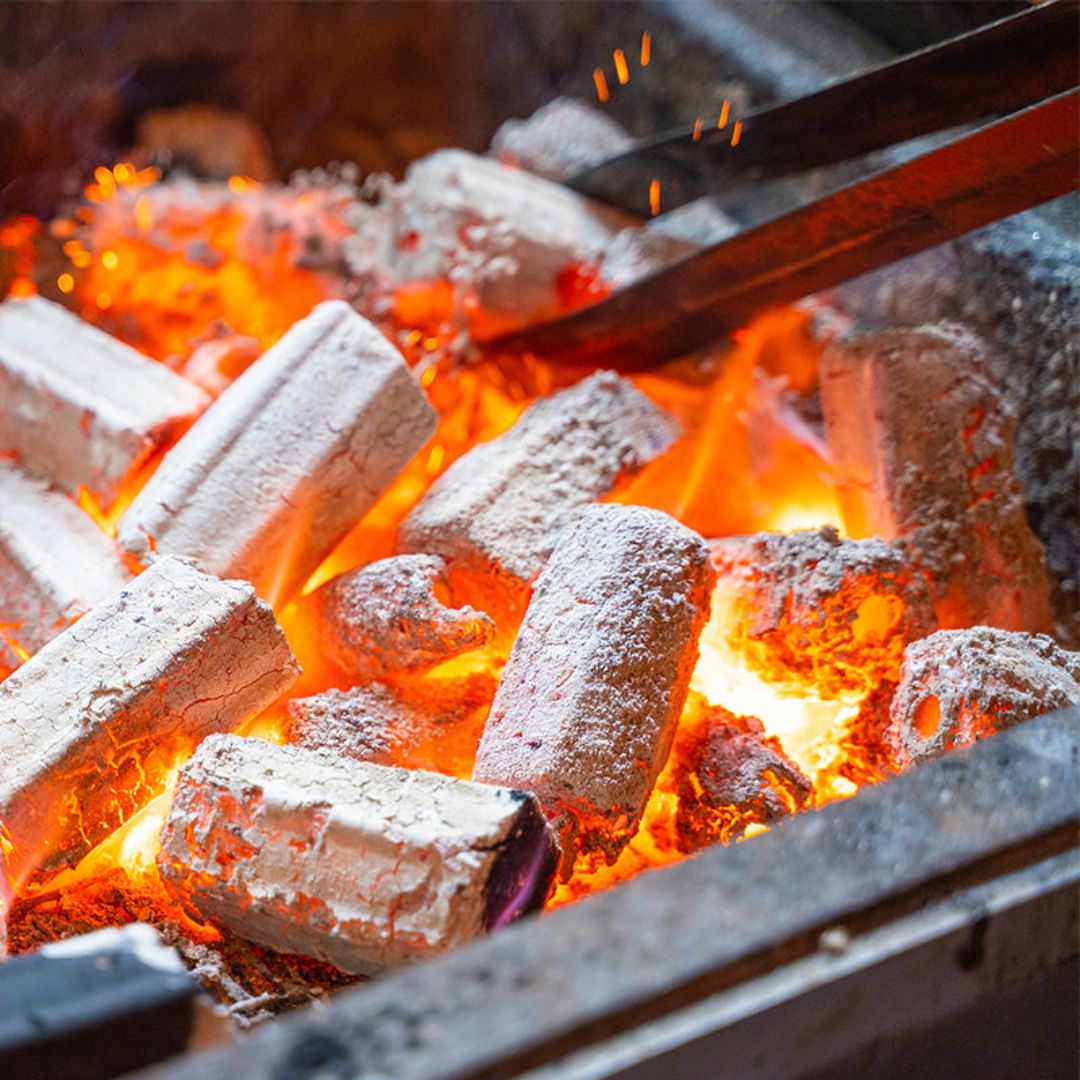
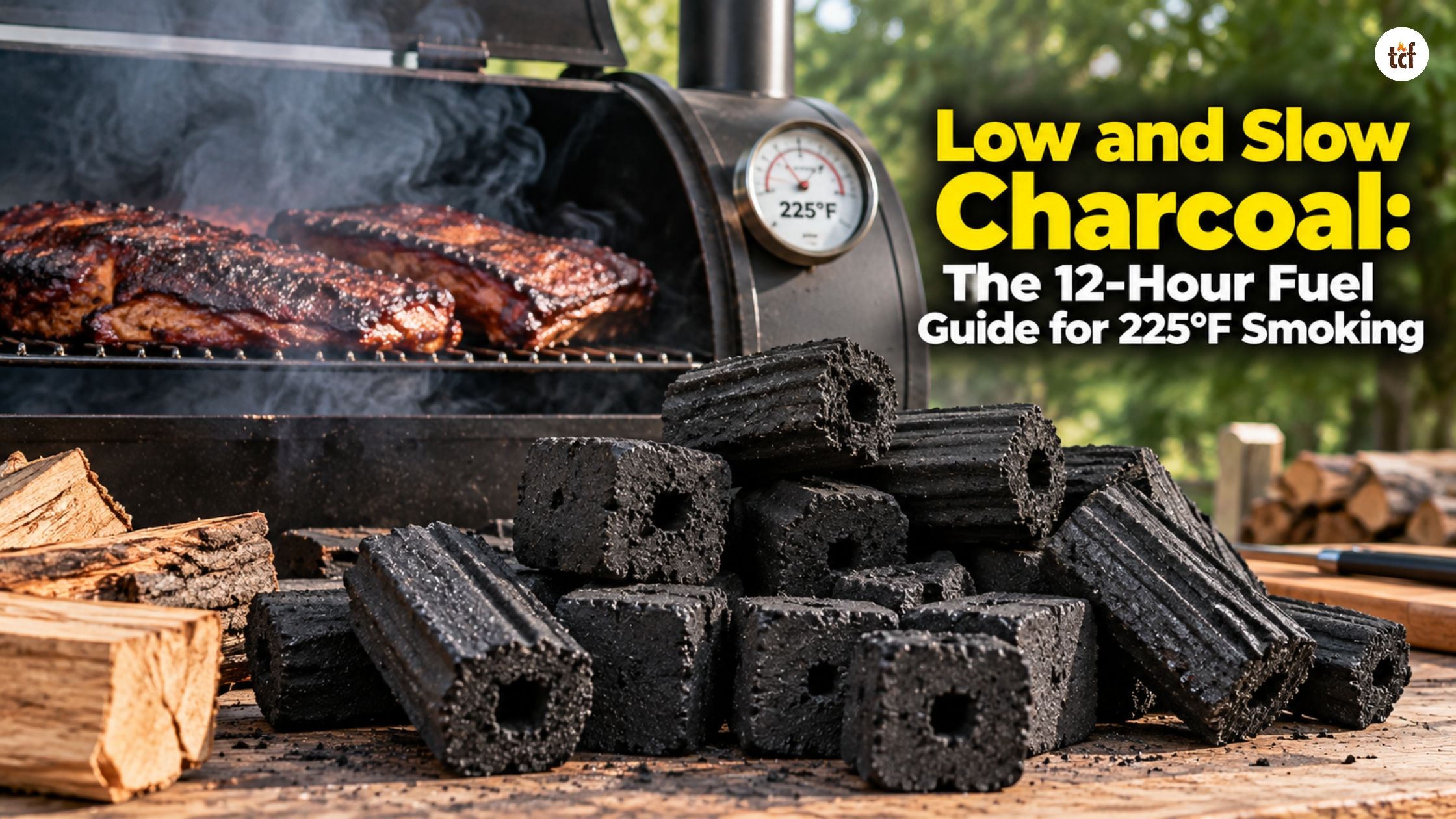
High-temperature, machine-made bamboo charcoal burns long and evenly with little smoke once lit, and produces few flare-ups when fat drips. That makes it well suited to restaurant grills, Korean BBQ and yakitori, hot pot and long, low cooks. It adds almost no flavor of its own. For how it compares with fruitwood fuel, see bamboo charcoal vs fruit charcoal.
Shisha
Dense bamboo charcoal can be shaped for hookah bowls, where low ash and a neutral smell matter most. See how to check shisha charcoal quality.
Heating
Bamboo charcoal is used in outdoor braziers and charcoal-rated stoves. Like all charcoal, it produces carbon monoxide and must only be burned outdoors or in a properly flued stove.
Deodorizing and moisture control
Because of its porosity, raw and granular bamboo charcoal is used in closets, shoes, fridges and cars to absorb odors and some moisture. It works best in small, enclosed spaces.
Water and air filtration
Bamboo charcoal and activated bamboo charcoal are used in water filters and air-purifying products, where their pore structure traps impurities (PMC).
Soil and biochar
Crushed bamboo charcoal, often called bamboo biochar in this use, is mixed into soil to help hold water and nutrients. Research also studies bamboo biochar for carbon storage (PMC).
Other uses
Bamboo charcoal powder appears in cosmetics, textiles and some food and feed applications, usually in specially processed grades.
How does bamboo charcoal compare with other charcoal?
| Bamboo charcoal | Wood (lump) charcoal | Coconut shell charcoal | |
| Raw material | Bamboo culms or sawdust | Hardwood | Coconut shells |
| Consistency | High in machine-made forms | Varies with species and piece size | High in pressed forms |
| Smoke once lit | Very low in high-temperature grades | Light wood aroma | Very low |
| Main uses | Grilling, shisha, heating, deodorizing | Grilling and smoking | Shisha, grilling, activated carbon |
| EU deforestation rules | Outside the EUDR since September 2026 | In scope | Generally treated as outside scope |
For a fuller comparison, see bamboo vs wood vs coconut shell charcoal. For the EU rules, see EUDR compliance for charcoal importers.
Is bamboo charcoal the same as activated charcoal?
No. Activated charcoal has been given an extra steam or chemical treatment that opens up far more pores. Bamboo charcoal can be activated, but ordinary bamboo charcoal hasn’t been. Check before relying on a product labelled “activated.”
Is bamboo charcoal safe?
As a fuel, bamboo charcoal is as safe as any natural charcoal when used outdoors. Like all charcoal, it gives off carbon monoxide while burning, so never use it indoors, in a garage, tent or vehicle. For cooking, choose charcoal with no ignition chemicals and a stated binder, if any.
How do you buy good bamboo charcoal?
- Ask for a batch lab report covering fixed carbon, ash, moisture and volatile matter.
- Ask how it was made: raw or machine-made, firing temperature or grade, and whether any binder was used.
- Check consistency across two batches before committing to regular orders.
- Ask about sourcing, especially if your customers care about sustainability; see sustainable bamboo charcoal sourcing.
Frequently asked questions
What is bamboo charcoal made of?
Bamboo, usually Moso bamboo: either pieces of the culm or sawdust and offcuts from bamboo product factories, carbonized in a kiln with little oxygen.
Is bamboo charcoal good for BBQ?
Yes. Machine-made, high-temperature bamboo charcoal gives long, even heat with little smoke once lit. It takes longer to light than lump charcoal.
How long does bamboo charcoal last?
As a fuel, it keeps indefinitely if stored dry. As a deodorizer, it works for weeks before it needs drying in the sun or replacing.
Is bamboo charcoal eco-friendly?
Bamboo regrows from its roots after harvest, and much bamboo charcoal uses offcuts from other bamboo products. Like all charcoal, it still produces carbon dioxide when burned.