



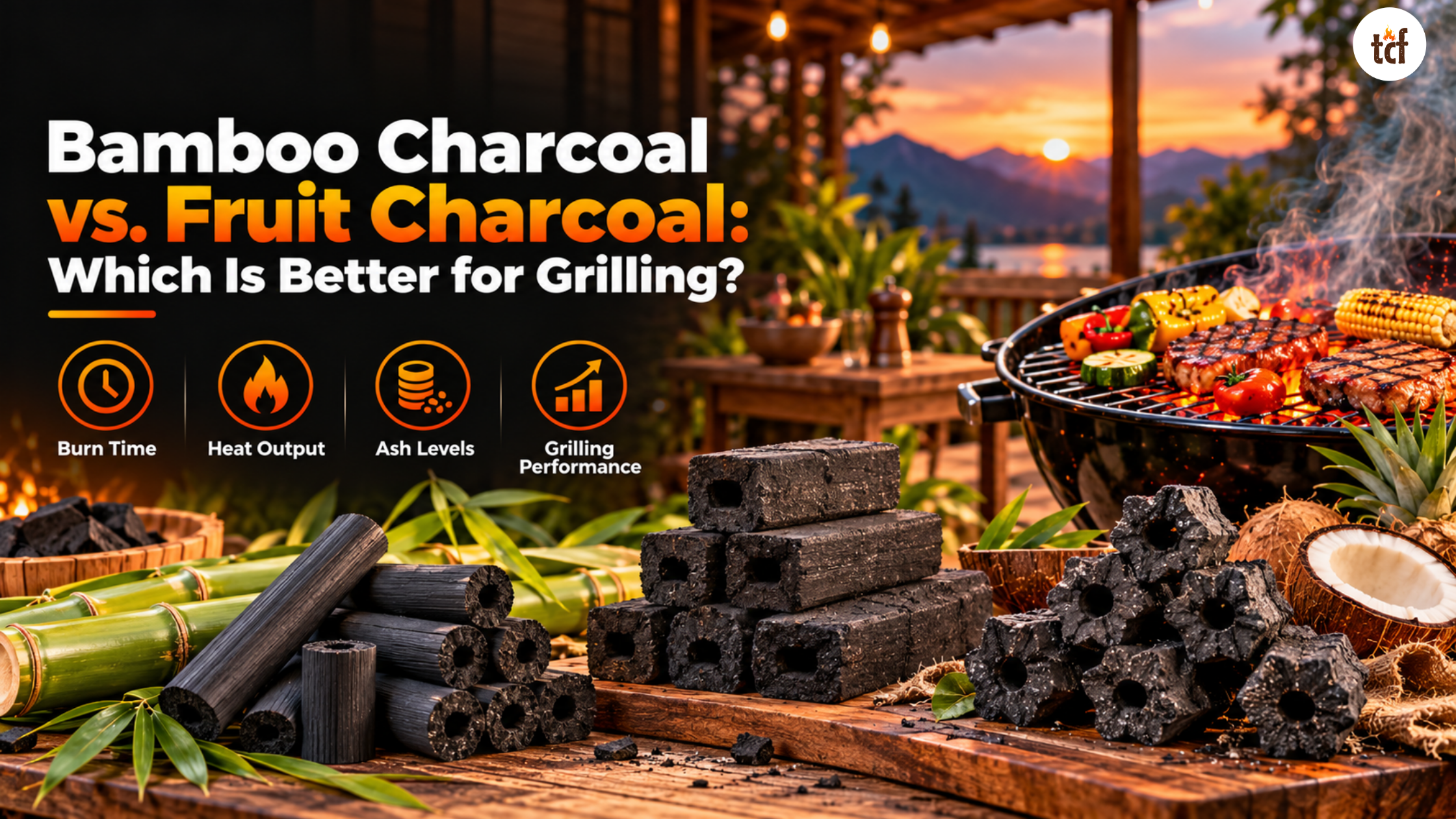
Bamboo Charcoal vs Fruit Charcoal – Bamboo charcoal is better when you want clean, even heat with little ash and no flavour of its own, such as for seafood, vegetables, steak, and indoor grills. Fruit charcoal is better when the smoke is part of the dish, such as for roast duck, pork, ribs and poultry.
Neither is better across the board. They suit different menus, and many kitchens get the best of both by grilling over a clean bamboo base and adding fruitwood for aroma.
Key takeaways
- Bamboo charcoal is neutral. High-temperature bamboo charcoal adds almost nothing to the taste of food.
- Fruit charcoal adds sweet smoke. That is its main selling point and why chefs pay for it.
- Not all bamboo charcoal is the same. Extruded rods and split-culm pieces burn and light very differently.
- Bamboo wins on consistency and ash, which matters most in a busy kitchen.
- You can combine them. A bamboo base bed with fruitwood chunks gives clean heat and aroma.
- EU import rules now differ. Fruitwood charcoal is covered by the EU Deforestation Regulation; bamboo charcoal is not.
Table of Contents
Where do bamboo charcoal and fruit charcoal come from?
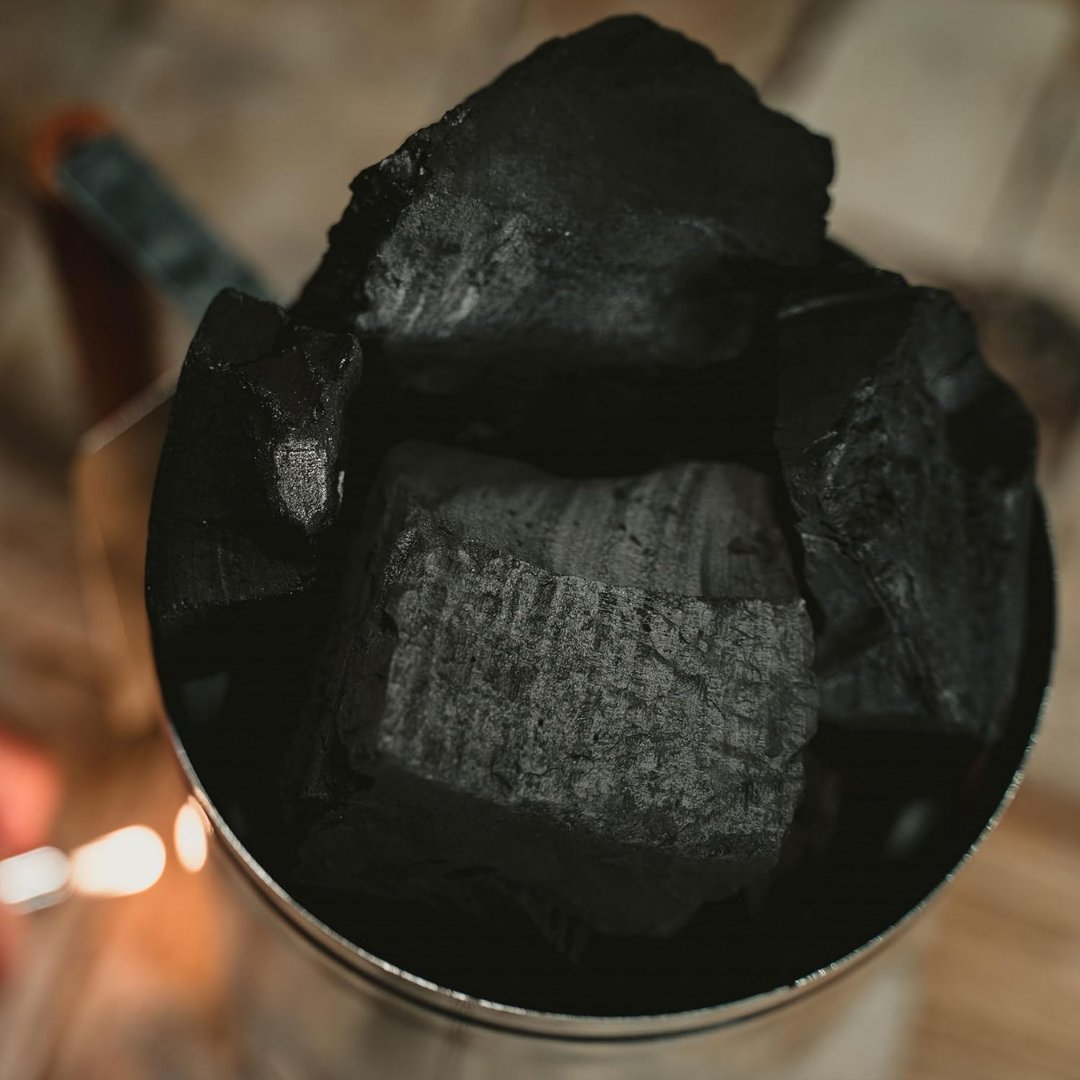
Fruit charcoal is made from orchard wood: trees such as apple, cherry, peach, lychee and longan. The wood comes from seasonal pruning and from old trees removed when an orchard is replanted. It is carbonized as lump, so each piece keeps the shape of the original branch or log. Lychee and longan charcoal have a long history in Asian roasting, including Cantonese roast duck and char siu.
Bamboo charcoal is made from bamboo, most often Moso bamboo, which regrows from its root system after cutting. It comes in two very different forms, and the difference matters more than most comparisons admit.
Split-culm vs extruded bamboo charcoal: why does it matter?
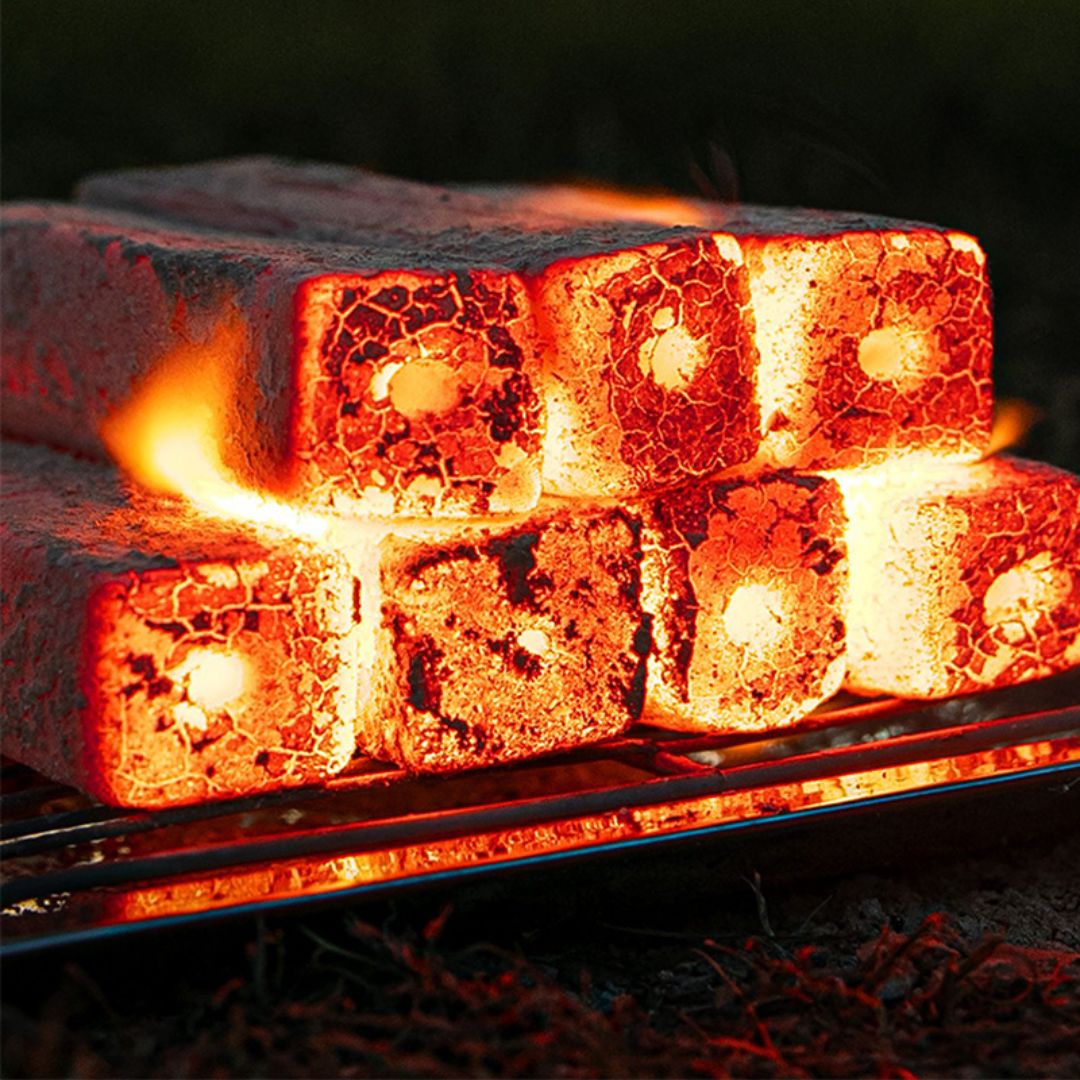
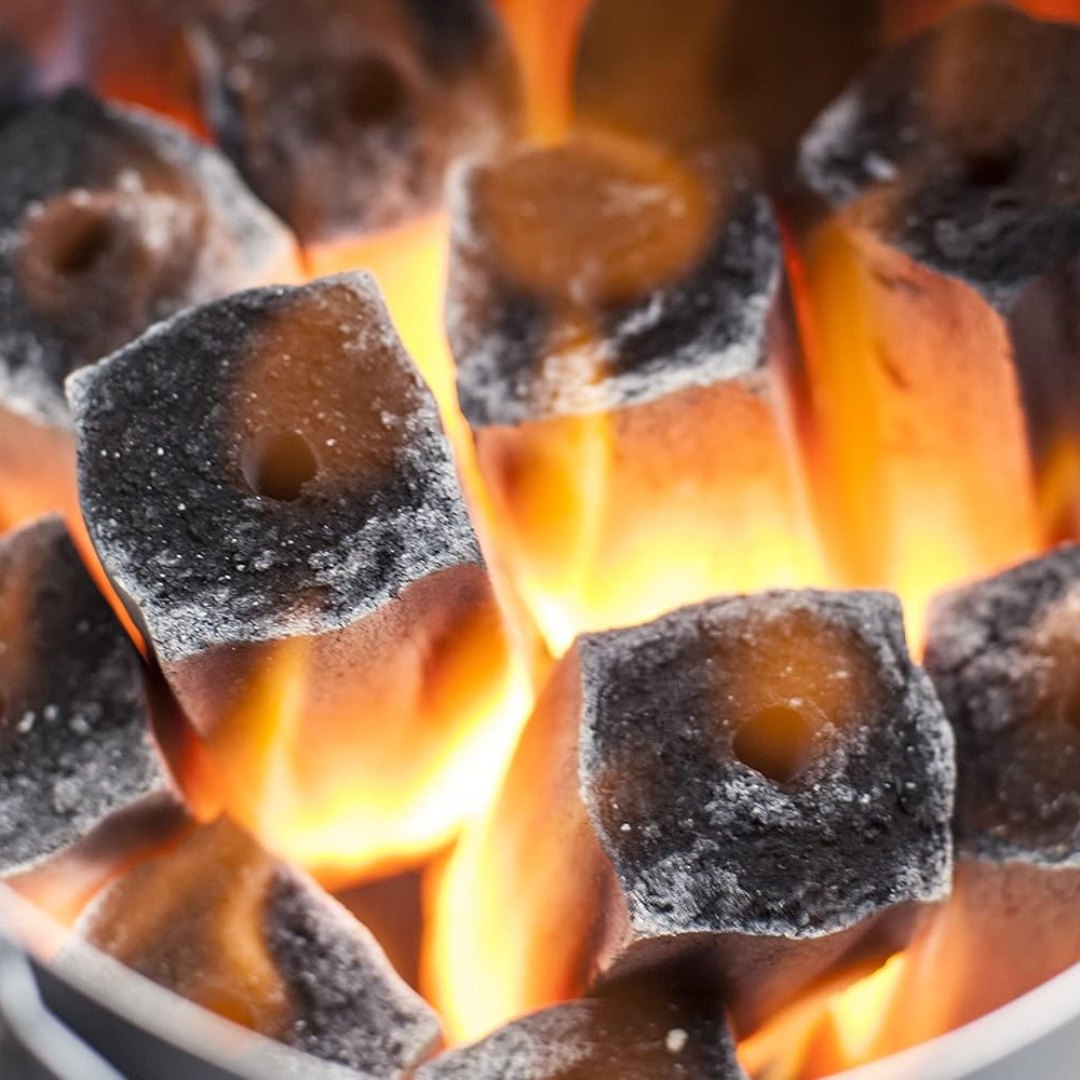
Split-culm bamboo charcoal is made by carbonizing pieces of the bamboo stem. Extruded bamboo charcoal is made by pressing bamboo sawdust into dense rods, then carbonizing them.
| Split-culm bamboo charcoal | Extruded bamboo charcoal | |
| Made from | Pieces of the bamboo stem | Bamboo sawdust pressed into rods |
| Density | Lighter and more open | Dense and uniform |
| Lighting | Lights quickly | Slower; best lit in a chimney starter |
| Burn | Faster, less even | Long and steady |
| Consistency | Varies with stem thickness and age | Each rod burns the same way |
Many comparisons describe bamboo charcoal as fast-lighting. That is true of split pieces, not of the extruded rods most restaurants and importers buy. The Charcoal Factory supplies both machine-made and shaped bamboo charcoal.
For how kiln temperature and density change performance, see our guide to bamboo charcoal quality.
How do bamboo charcoal and fruit charcoal compare?
The table compares extruded bamboo charcoal with fruitwood lump charcoal, the two forms buyers most often weigh up. Individual lots vary with species, kiln and grade, so ask for a lab report on any product you buy.
| Extruded bamboo charcoal | Fruit charcoal (lump) | |
| Heat | Even and steady across the bed | Hot early; varies with piece size and species |
| Ash | Low in high-temperature grades | Usually low, but varies by species and lot |
| Smoke and aroma | Very little smoke, almost no aroma once lit | Sweet, fruity smoke that flavours food |
| Lighting | Slow; needs a chimney starter | Faster for lighter species, slower for dense lychee and longan |
| Sparking | Low once lit | Occasional sparks from trapped moisture |
| Consistency | High; rods are uniform in size and density | Lower; piece size and density vary in each bag |
| Supply | Steady, from bamboo processing residue | Seasonal, tied to orchard pruning and replanting |
The species label matters less than density. A dense lychee lump behaves very differently from a light apple lump, even though both are sold as fruit charcoal. That is why fruit charcoal is graded by species and piece size.
Also read – Hookah Charcoal vs BBQ Charcoal
When does aroma help, and when does it get in the way?
Fruit charcoal’s smoke carries a mild sweetness into whatever is cooking. It works well with pork, ribs, duck, chicken and sausages, where the smoke is part of the flavour. It is milder than hickory or mesquite, so chefs who dislike heavy smoke can still use it.
High-temperature bamboo charcoal adds almost no flavour. For white fish, squid, scallops, delicate vegetables and anything with a light marinade, that neutrality is the point: the food tastes of itself and its seasoning, not the fire.
If a dish needs aroma, choose fruit charcoal or add fruitwood. If the dish needs to taste clean, choose bamboo.
Which charcoal is best for each type of menu?
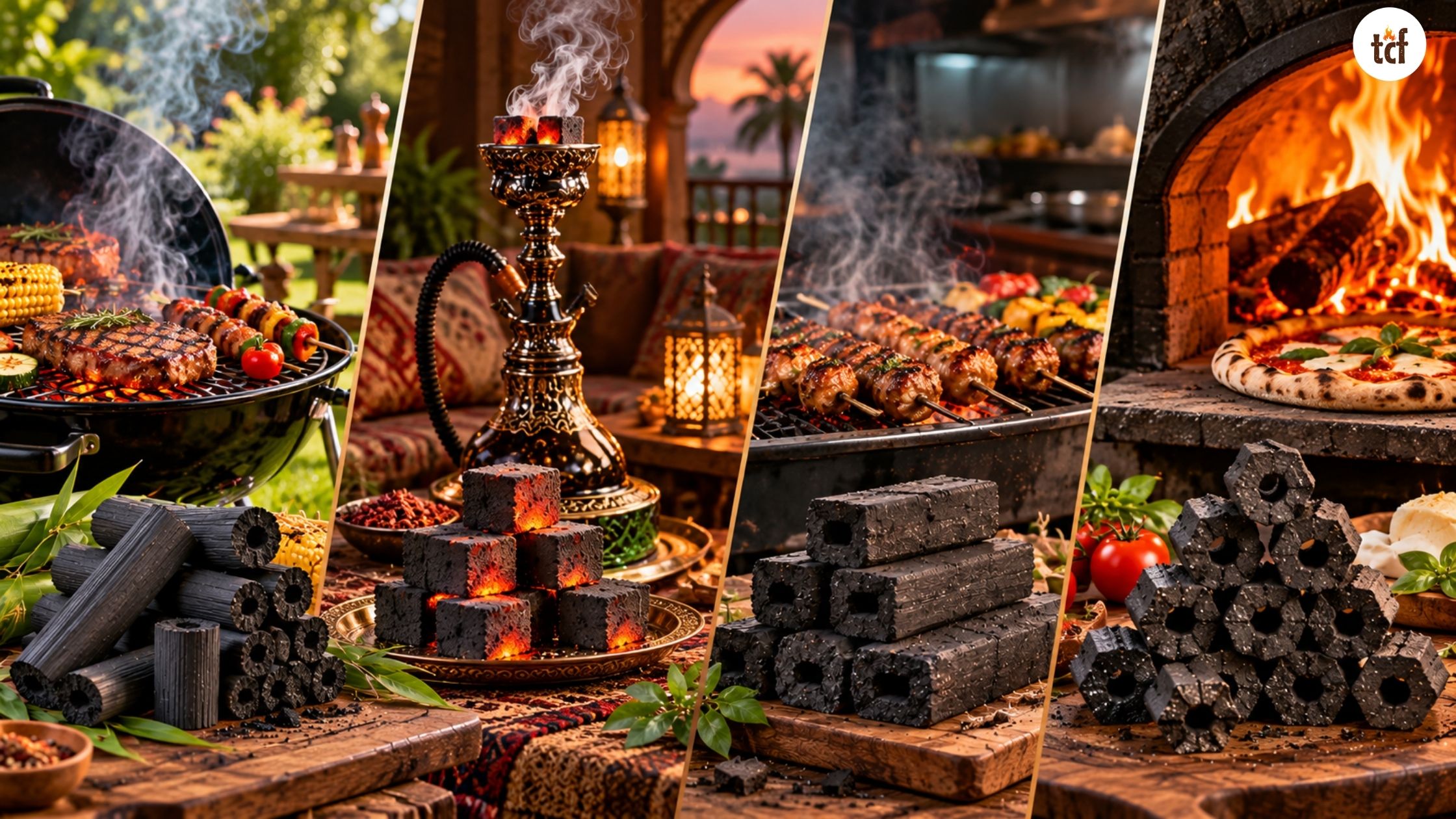
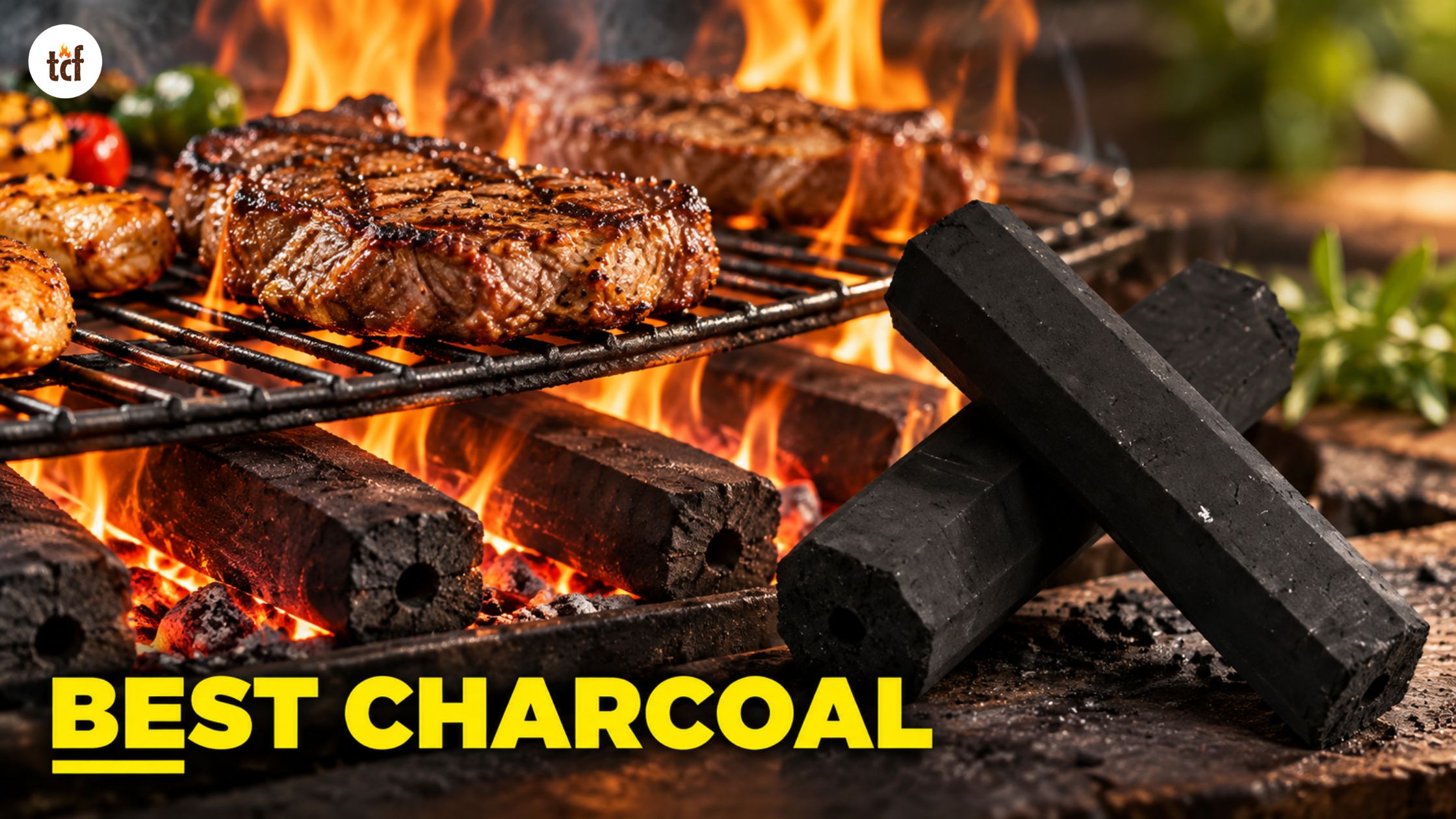
- Steakhouse, yakiniku and Korean BBQ: extruded bamboo charcoal for clean, even searing heat. Dense lychee charcoal if the kitchen wants a light wood note on the crust.
- Seafood and vegetable-led menus: bamboo charcoal. Fruit smoke competes with delicate flavours.
- Roast duck, char siu and Cantonese roasting: lychee or longan charcoal, where the aroma is part of the traditional dish.
- Pork, ribs, poultry and sausages on an open grill: fruit charcoal, or bamboo with fruitwood chunks added.
- Indoor and semi-indoor venues: bamboo charcoal, because it produces little smoke and few sparks once lit. Every charcoal still produces carbon monoxide, so ventilation and CO alarms are essential.
- Supermarket and retail bags: bamboo sells on clean burning and low ash; fruit charcoal sells on flavour. Because they appeal to different customers, one shelf can carry both.
- Hookah and shisha: neither in grilling form. Shisha needs purpose-made coals; see hookah charcoal vs BBQ charcoal.
Can you get fruit aroma with bamboo charcoal?
Yes. Build the fire on bamboo charcoal for steady, clean heat, then add a few fruitwood chunks when you want smoke.
- Light the bamboo charcoal in a chimney starter until every piece is covered in grey ash.
- Spread it into an even bed.
- Place two or three apple, cherry or lychee wood chunks on the hottest part of the bed.
- Add more chunks only for the dishes that need aroma, and let the bed run clean for the rest.
This gives a kitchen control. It can grill fish over a clean bed, then add fruitwood only while the pork is on.
How do cost and supply compare?
Compare cost per hour of usable heat, not price per kilogram. A cheaper fuel that burns out faster or leaves more ash can cost more per service.
- Bamboo charcoal comes from a fast-regrowing plant and from bamboo processing residue, and extruded charcoal is made on mechanized lines. That keeps supply steady and quality consistent from one container to the next.
- Fruit charcoal depends on orchard pruning and replanting, so supply is seasonal. Premium grades are sorted by species and piece size, which adds cost.
For restaurants, bamboo’s consistency and low ash often make it the cheaper fuel to run, but test both on your own grill before deciding. For retail, fruit charcoal can carry a higher shelf price because the flavour story sells.
Do EU import rules differ for bamboo and fruit charcoal?
Yes. Under the EU Deforestation Regulation (EUDR), wood charcoal is in scope, but bamboo is not. Commission Delegated Regulation (EU) 2026/2102 took effect on 18 September 2026 and confirmed that bamboo is not treated as wood under the EUDR (Polygon).
- Fruit charcoal is wood charcoal, so EU importers need due diligence statements with geolocation of where the wood was harvested. Large and medium operators must comply from 30 December 2026, and micro and small operators from 30 June 2027.
- Bamboo charcoal made only from bamboo is outside the EUDR. Normal customs and product rules still apply.
For EU buyers, that makes bamboo charcoal the simpler product to import. For more on raw materials and compliance, see the best material for making charcoal.
Source bamboo charcoal for grilling
The Charcoal Factory produces machine-made and shaped bamboo charcoal for restaurants, BBQ brands and supermarkets, with private-label packaging.
See our wholesale bamboo charcoal and BBQ charcoal ranges, compare fuels in our guide to the types of charcoal, or email info@thecharcoalfactory.com for samples.
Frequently Asked Questions – Bamboo Charcoal vs Fruit Charcoal
Is bamboo charcoal or fruit charcoal better for grilling?
Bamboo charcoal is better for clean, even heat and dishes that should taste of themselves. Fruit charcoal is better when you want sweet smoke in the food. The right answer depends on the menu.
Does bamboo charcoal change the taste of food?
Well-made, high-temperature bamboo charcoal adds almost no flavour once fully lit. What you taste is the ingredient and the seasoning.
Which lights faster?
It depends on the form. Split bamboo pieces and light fruitwood lump light quickly. Dense extruded bamboo rods and dense lychee or longan lump take longer and are best lit in a chimney starter.
Which is the more sustainable choice?
Both have a good case. Bamboo regrows from its roots after cutting, and fruit charcoal uses orchard wood that would otherwise be waste. For EU buyers, bamboo also falls outside the EUDR.
Can I mix bamboo and fruit charcoal in one fire?
Yes. A bamboo base with fruit charcoal or fruitwood chunks added gives steady heat with some aroma.