


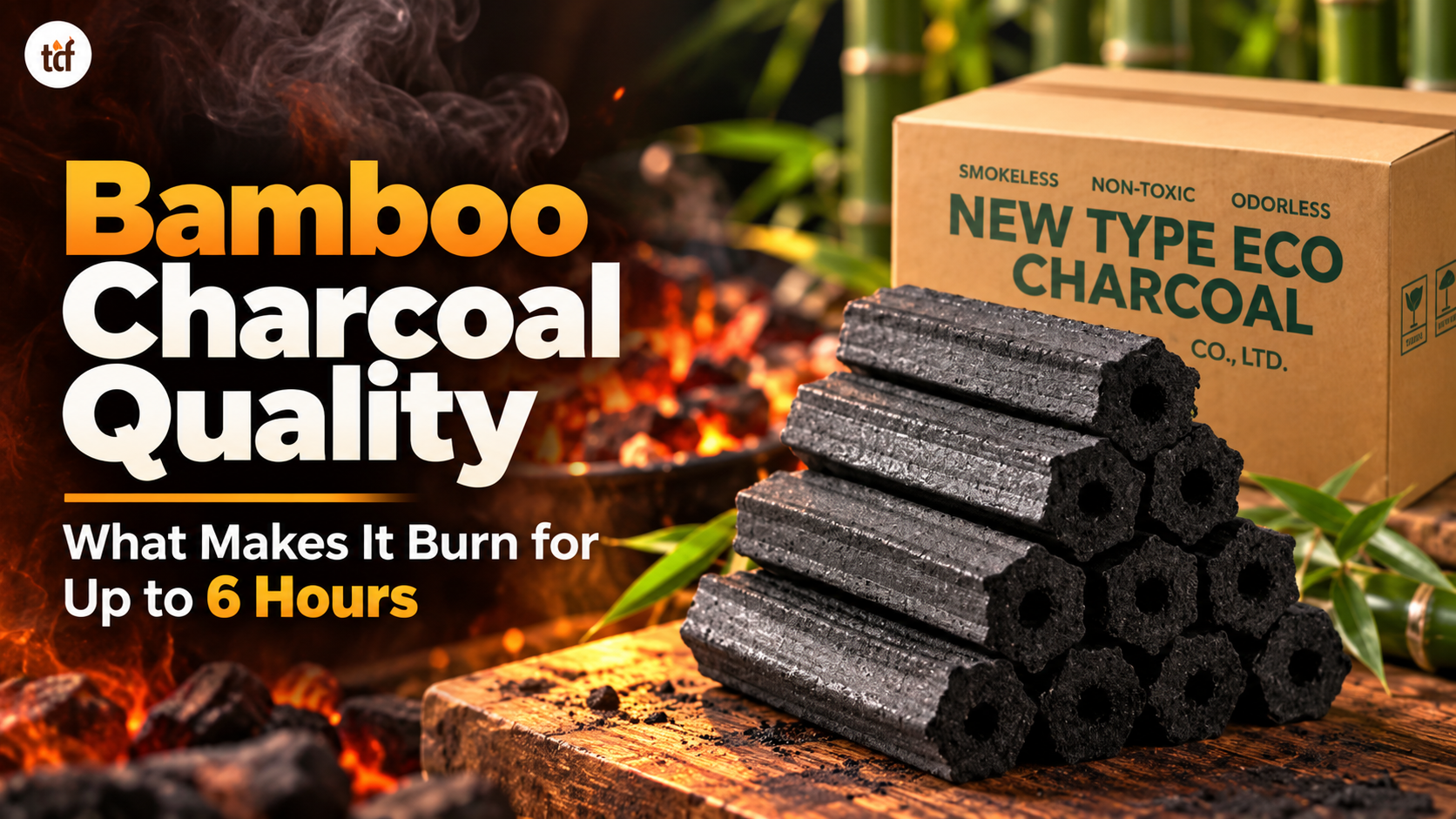
Bamboo Charcoal Quality – Bamboo charcoal burns for up to 6 hours when it is made from compressed bamboo sawdust and carbonized at a high temperature for a long time. Charcoal made from raw bamboo pieces at lower temperatures usually lasts closer to 2 hours, because it keeps more volatile matter and has an uneven density.
So when two suppliers both sell “bamboo charcoal,” they may be selling two very different fuels. The difference is set in the factory, and you can check most of it before you order.
Key takeaways – Bamboo Charcoal Quality
- Form matters first. Extruded bamboo charcoal (sawdust pressed into rods, then carbonized) burns longer and more evenly than charcoal made from raw bamboo tubes or slices.
- Kiln temperature decides burn time. Higher, longer carbonization removes more volatile matter and leaves more fixed carbon, which burns as a steady glow instead of a quick flame.
- Dense charcoal is slower to light. Plan for a chimney starter and a longer lighting time than lump charcoal.
- “Burns 6 hours” means nothing without test conditions. Ask what load, grill, airflow, and endpoint the figure is based on.
- Test samples before a container. A lab report plus a side-by-side burn test on equal weights tells you more than any brochure.
Table of Contents
Why does some bamboo charcoal burn 6 hours and some only 2?
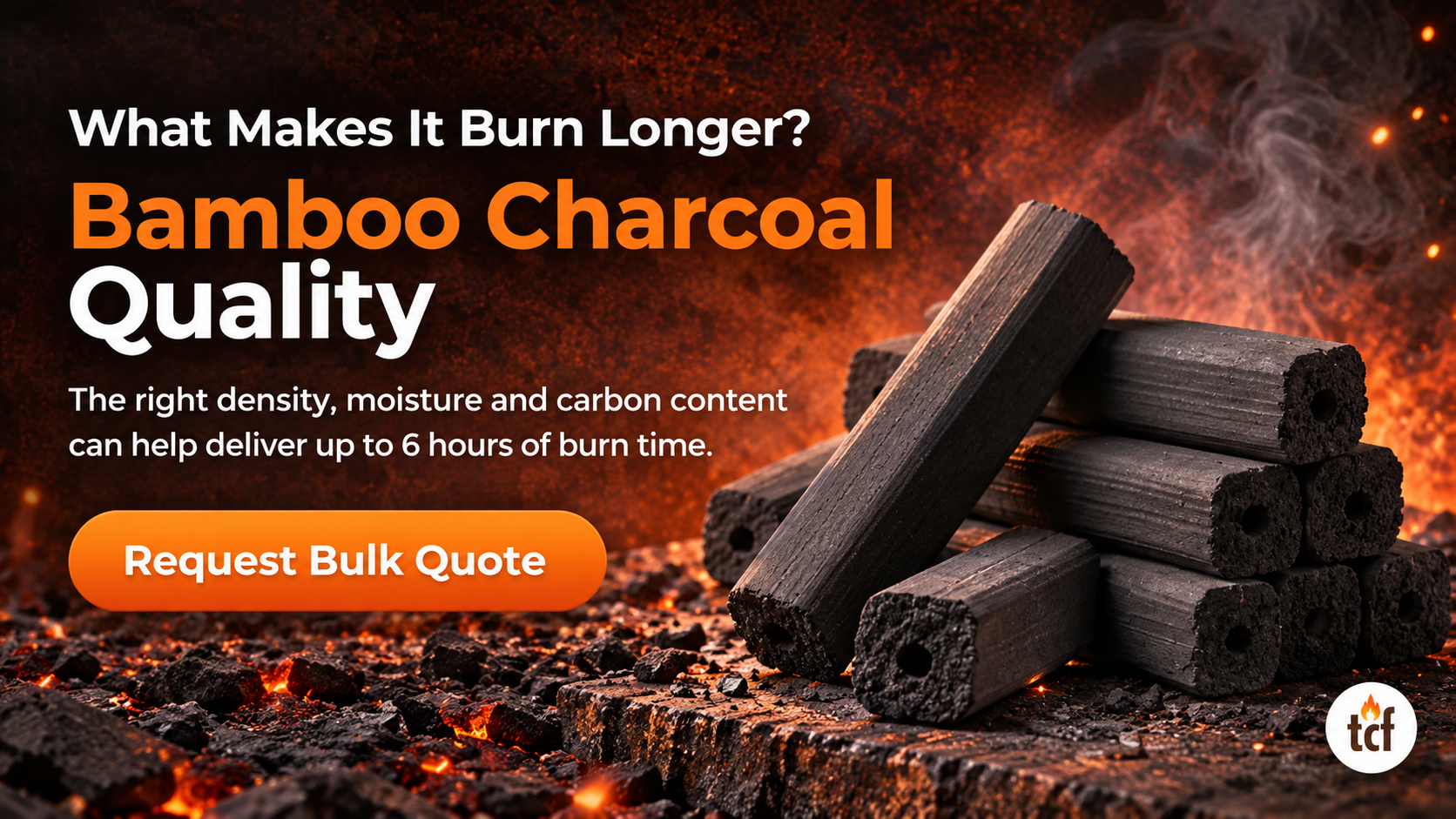
Four things decide how long a load of bamboo charcoal lasts. Three of them happen in the factory.
- The form of the charcoal. Rods pressed from fine bamboo sawdust have the same density all the way through. Charcoal made from whole bamboo tubes or split slices varies with cane age, wall thickness, and node spacing.
- Carbonization temperature and time. Charcoal fired at lower temperatures keeps more volatile matter. That matter burns off fast on the grill as smoke and flame, and the lighter charcoal left behind is used up quickly.
- Moisture. Damp charcoal spends energy driving off water before it gives useful heat. It also tends to crack and spark.
- How it is burned. Load weight, airflow, and grill design change burn time as much as the charcoal itself. The same charcoal burns out much faster in an open grill with wide vents than in a closed kamado with the vents nearly shut.
This is why retail listings disagree so much. Bamboo charcoal logs sold online in the US are commonly advertised at 2 to 4 hours, while some factories quote 6 hours or more. Both figures can be honest. They are rarely measured the same way.
For a wider comparison with lump, briquettes, binchotan and coconut shell charcoal, see our guide to the types of charcoal.
Raw bamboo charcoal vs extruded bamboo charcoal: which is for grilling?
Extruded bamboo charcoal is the better grilling fuel. Raw bamboo charcoal is better suited to deodorizing, water filtration and decorative use.
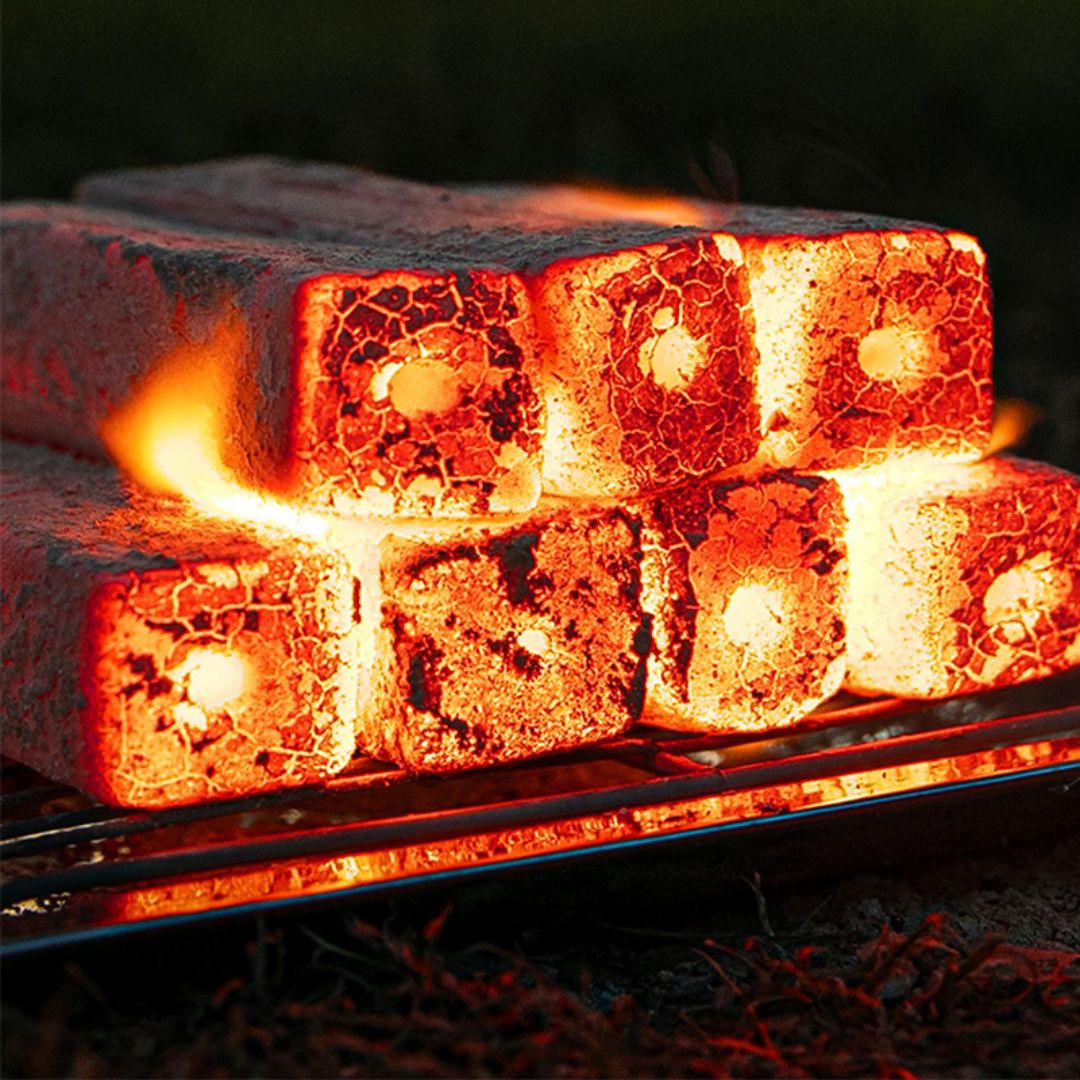
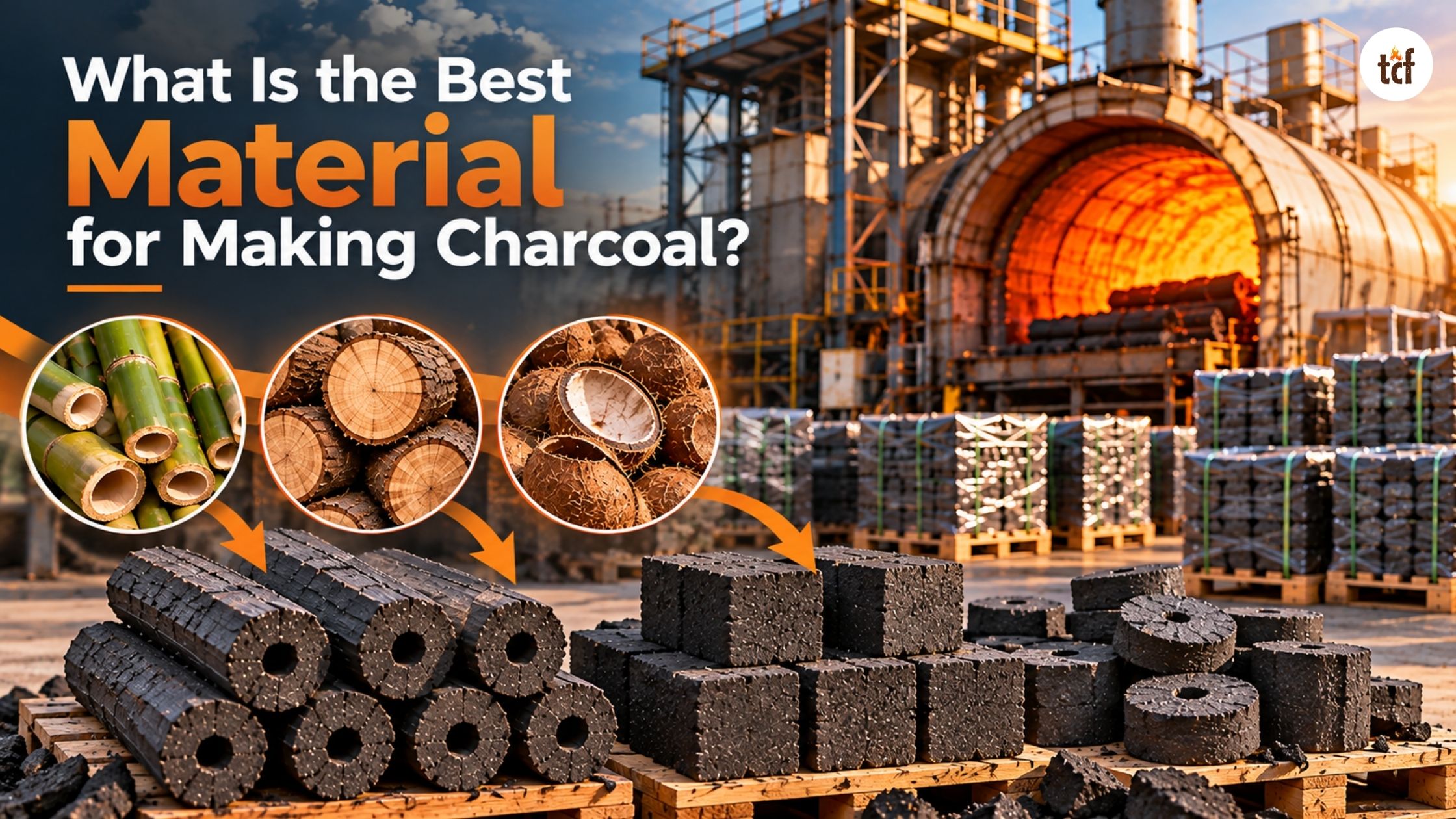
The two are made from the same plant but in different ways. Raw bamboo charcoal is carbonized from culms, branches or roots. Extruded charcoal, sometimes called bamboo briquette charcoal or machine-made bamboo charcoal, starts as bamboo residue such as sawdust that is pressed into sticks or rods.
| Raw bamboo charcoal | Extruded bamboo charcoal | |
| Made from | Whole tubes, split slices or offcuts | Bamboo sawdust and processing residue |
| Shape | Irregular, follows the cane | Uniform rods, often with a centre hole, cut to length |
| Density | Varies piece to piece | Same throughout each rod |
| Burn behaviour | Uneven; some pieces burn out early | Steady, predictable glow |
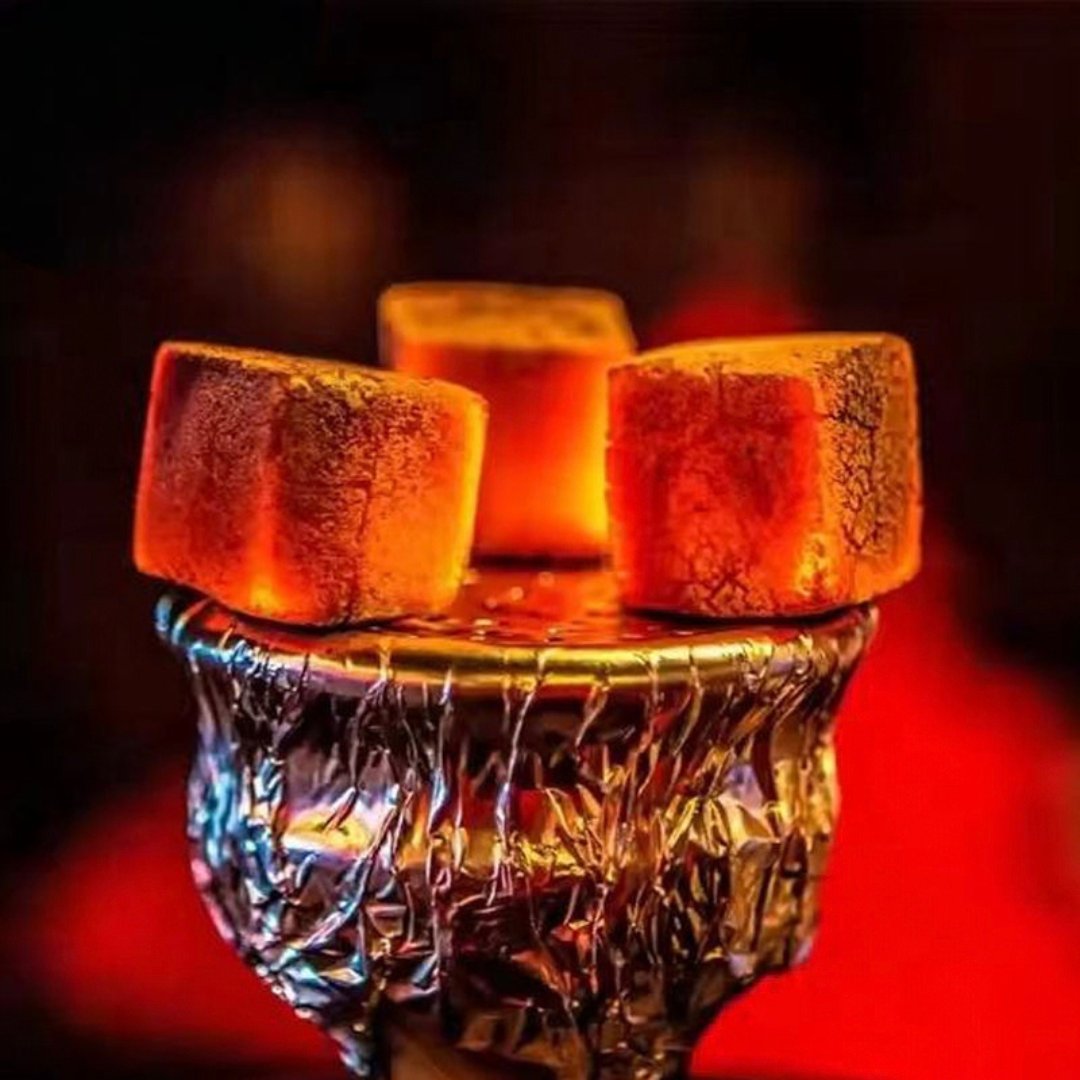
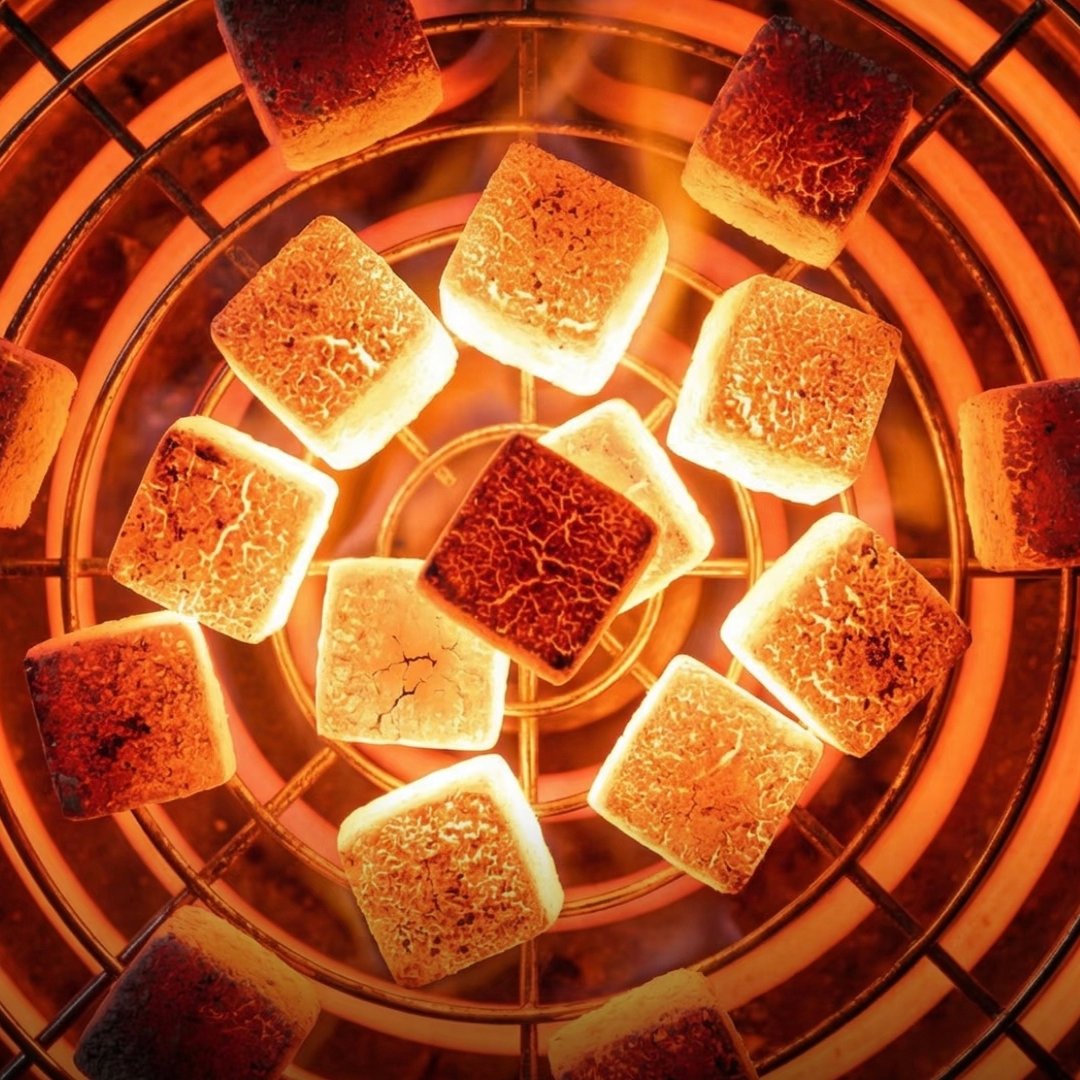
| Main uses | Odour and moisture absorption, water filters, crafts | BBQ, hot pot, restaurant grills, shisha (shaped versions) |
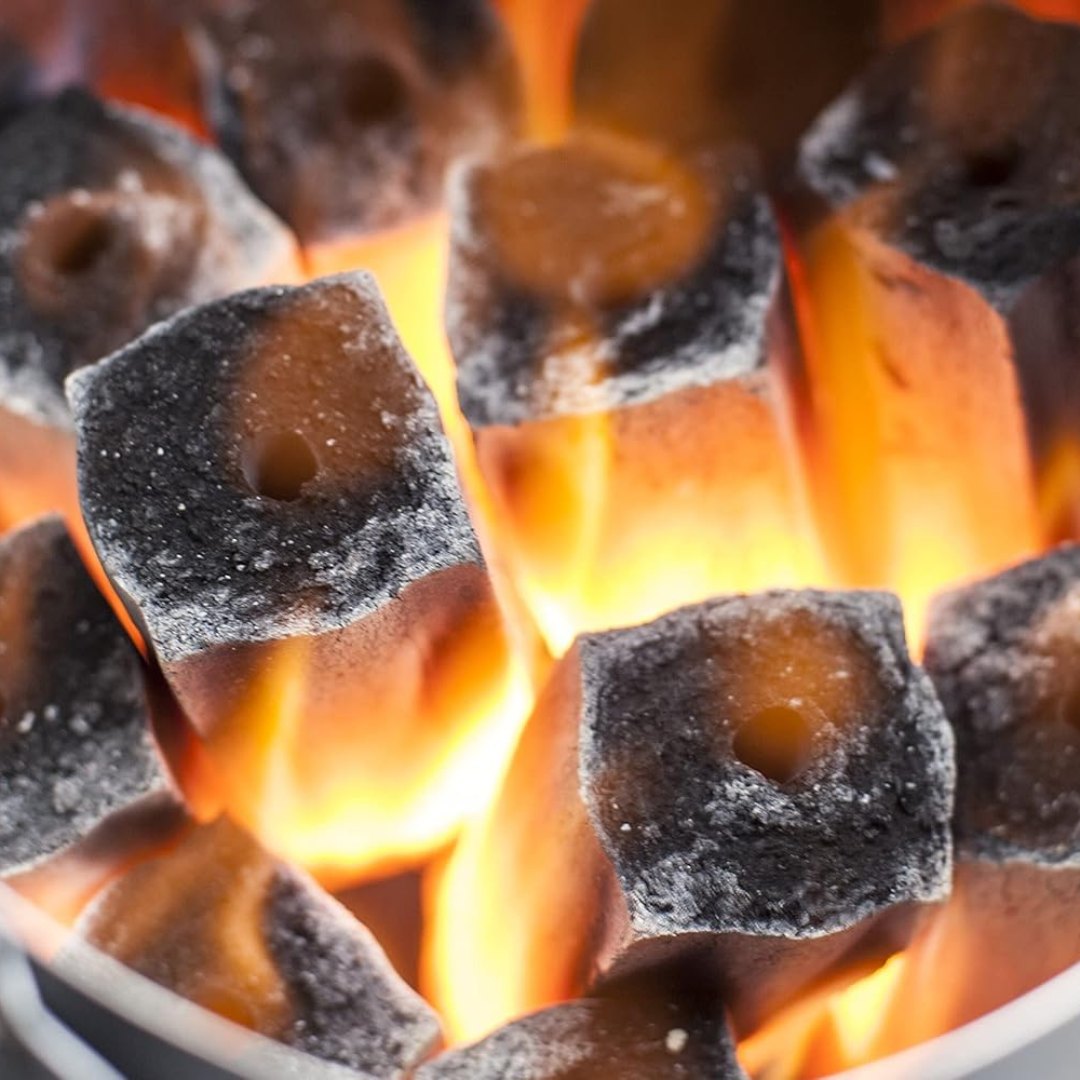
The centre hole in many extruded rods is there for airflow. It helps the rod burn from the inside as well as the outside, which keeps heat even across a long session.
The pressing step also matters for buyers who care about additives. During heated extrusion, the natural lignin in bamboo softens and binds the particles, so extruded charcoal can be made without any added binder. Some extruded charcoal does use a binder. The Charcoal Factory produces both types, so state which one you need when you order, and ask any supplier for a binder declaration.
The Charcoal Factory supplies machine-made, A-grade, machine-made and shaped bamboo charcoal. You can see the full range on our wholesale bamboo charcoal page.
How does kiln temperature change burn time?
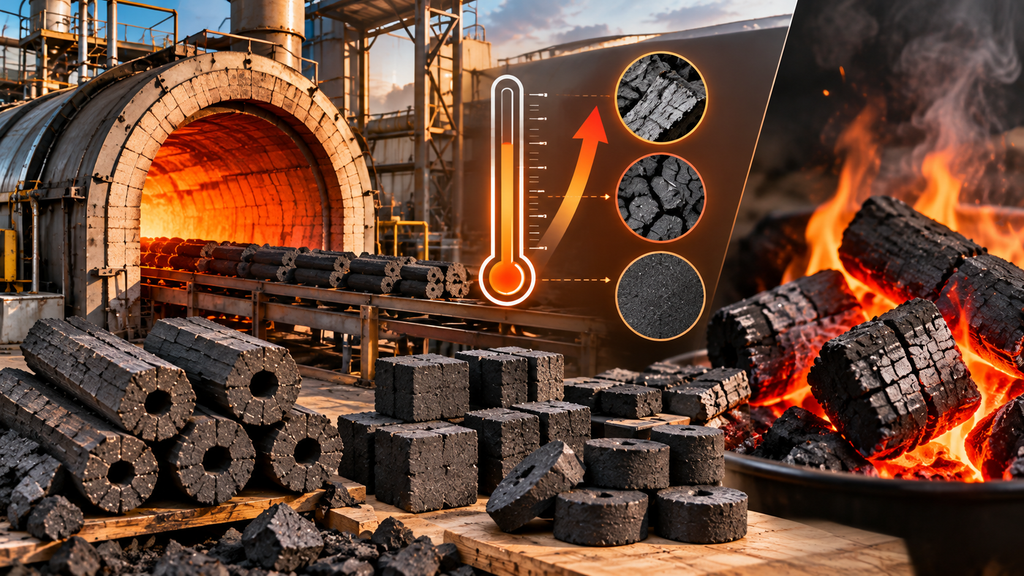
The hotter and longer bamboo is carbonized, the more volatile matter leaves in the kiln instead of on your grill. What remains is denser and higher in fixed carbon, the part of charcoal that glows steadily rather than flaming.
Research backs this up. A 2023 study in BioResources on bamboo charcoal carbonized at 750°C found that the most suitable species for charcoal production were the ones with low moisture, low volatile matter, low ash and high fixed carbon (source). Those four numbers are the same ones you should ask any supplier for.
Here is what each one tells you on the grill:
- Fixed carbon: higher means longer, steadier heat.
- Volatile matter: higher means more smoke, more flame and a shorter burn.
- Ash: higher means more cleaning and more fine ash lifting onto food.
- Moisture: higher means slower lighting, more sparking and less heat per kilogram.
High-temperature charcoal also handles dripping fat better. With few volatiles left, grease that hits the coals produces far less open flame, which matters on a busy restaurant grill or a skewer station.
Kiln temperature and cycle length depend on the process. Traditional kilns typically run at 500–800°C over cycles of 15 to 35 days. Industrial dry-distillation retorts reach up to about 800°C, with cycles of 2 to 3 days. High-temperature refining can go above 1,000°C, and the refining stage itself takes only a few hours. For the full step-by-step production route, see how charcoal is manufactured.
Is bamboo charcoal the same as binchotan?
No. Traditional binchotan is Japanese white charcoal made from oak, usually ubame oak. Bamboo charcoal is made from bamboo.
The confusion is common because high-temperature extruded bamboo charcoal behaves a lot like binchotan on the grill: dense, low smoke, long and even heat. Several retail brands market extruded bamboo or sawdust charcoal as a “binchotan-style” or ogatan alternative for yakitori and Korean BBQ.
The reverse mix-up also happens. Some guides tell readers that bamboo charcoal is only for water filtering and not for cooking. That advice describes raw bamboo charcoal sticks, not extruded rods made for fuel.
For buyers, the practical difference is price and supply. Genuine oak binchotan costs several times more than standard charcoal and is produced in limited volumes. Extruded bamboo charcoal can be made in container quantities with consistent specs, which is why restaurant groups and importers use it as an everyday alternative.
Why is dense bamboo charcoal harder to light?
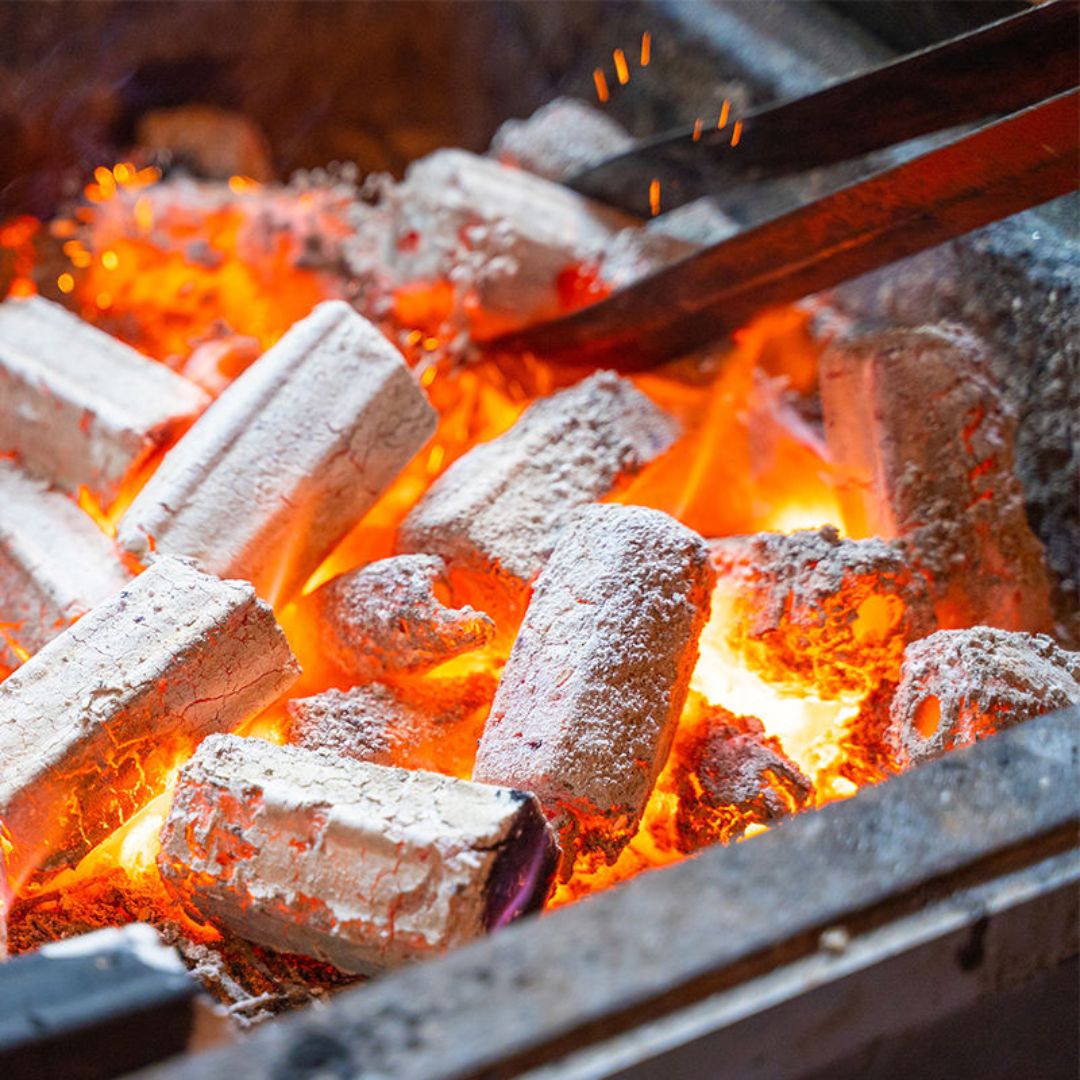
The same density that gives a long burn makes the charcoal slower to catch. There is less air inside each rod and almost no volatile matter left to ignite quickly, so a match or a sheet of newspaper is not enough.
Grillers notice this. On the AmazingRibs Pitmaster Club forum, one user described bamboo charcoal as very long-burning but harder to light if you want the full burn length (source). Buyers who are not warned about this often mistake slow lighting for poor quality.
The reliable method:
- Fill a chimney starter with the rods, broken to similar lengths if needed.
- Light it with natural fire starters or a gas torch. Avoid lighter fluid, which leaves a taste and is unnecessary with charcoal this clean.
- Wait until the outer surface of every rod is covered in grey ash.
- Pour the coals into the grill, then add fresh rods around the edges if you need a longer session.
For restaurants, the simple fix is to light the first batch before service starts, so lighting time never holds up an order.
How should you read a supplier’s burn-time claim?
Treat any burn-time figure as incomplete until the supplier tells you how it was measured. There is no single industry test for grilling burn time, so “burns 6 hours” can describe very different conditions.
Ask these five questions:
- How much charcoal was loaded? A 3 kg load will outlast a 1 kg load of the same product.
- In what grill or burner? Open braziers, kettle grills, kamados, and hot-pot burners all use fuel at different rates.
- With what airflow? Vents fully open or partly closed changes the result more than most buyers expect.
- When did timing start? From ignition, or from the moment the coals were fully lit?
- When did timing stop? When the last ember went out, or when the coals were no longer hot enough to cook on? The second is the number that matters for a restaurant.
Consistency matters as much as the headline number. A Texas pitmaster who trialled bamboo charcoal in a commercial kitchen reported that it did not behave the same from one batch to the next, and that the trial cost him around $400 in extra fuel (source). For an importer, one inconsistent container can cost far more than that.
So ask for burn-time and lab results from more than one production batch, not a single best-case sample. Our charcoal supplier verification checklist covers the documents to request alongside them.
5 checks to run on samples before ordering a container
When the minimum order is a full 20-foot container, as ours is, a few days of sample testing is cheap insurance. Run these checks on every supplier’s samples, side by side.
- Get a lab report. Ask for fixed carbon, volatile matter, ash, moisture, and calorific value, ideally from a third-party lab. Ask which test method was used, for example ASTM D1762 for charcoal analysis, so you can compare suppliers on the same basis.
- Tap two pieces together. Well-carbonized charcoal gives a clear, metallic ring. A dull thud points to low carbonization temperature or high moisture.
- Break a piece. The cross-section should be dense, glossy, and even. A brown or crumbly core means the centre was not fully carbonized and will smoke and spark.
- Check weight and size. Pieces should feel heavy for their size and match in diameter and length. Uneven rods burn unevenly and pack badly in cartons.
- Run a timed burn test. Use the same grill, the same vent settings, and equal weights of each sample. Record time to full glow, smoke level, and the time until the coals can no longer cook. Then weigh the ash: ash weight divided by starting weight gives a real-world ash percentage you can compare against the lab report.
If a sample passes the lab report but fails the burn test, trust the burn test. That is how your customers will judge it.
Must read –
How to Ship Charcoal in Containers Safely
Best Material for Making Charcoal
How do grades A, B and C differ? – Bamboo Charcoal Quality
The Charcoal Factory sells bamboo charcoal in A, B and C grades. Higher grades have more fixed carbon, less ash and more uniform pieces, and they cost more per tonne.
| Grade | Fixed carbon | Ash | Moisture | Typical buyer | Grade |
| A | Highest | Lowest | Lowest | Premium BBQ brands, restaurant groups, shisha | A |
| B | Medium | Moderate | Low to moderate | Supermarket and private-label retail | B |
| C | Lower | Higher | Higher | Price-focused wholesale, medium-heat uses | C |
Exact fixed carbon, ash and moisture figures for each grade are available on request, with a lab report for the batch you are ordering.
If you are unsure, order a mixed sample of two grades and run the burn test above. You can also read our pick of the best charcoal for grilling for how bamboo compares with hardwood lump in different cooking styles.
Order samples before you order a container
The Charcoal Factory manufactures bamboo and wood charcoal in Hefei, Anhui Province, and supplies importers, distributors and private-label brands from one 20GP container upward. We can send samples for your own burn test, provide [Confirm: lab reports and certificates available], and arrange a factory inspection on request. Export shipments go with DG-compliant packing and full documentation.
See our bulk charcoal page for products and private-label options, or email info@thecharcoalfactory.com for samples and pricing.
Frequently asked questions
Does bamboo charcoal add flavour to food?
Very little. Well-carbonized bamboo charcoal gives clean heat with almost no smoke, so the food tastes of itself and its seasoning. If you want a strong smoke flavour for low-and-slow BBQ, add wood chunks such as hickory or oak alongside it.
Can bamboo charcoal be reused?
Yes. Close the grill vents to starve the fire of air, let the coals cool completely, and relight the leftover pieces next time with fresh charcoal. Dense extruded rods often have plenty of usable fuel left after a short cook.
How should bamboo charcoal be stored?
Keep it dry, off the floor and away from heat sources. Charcoal is porous and absorbs moisture from humid air, which makes it slower to light and more likely to spark.
Is bamboo charcoal safe for indoor or tabletop grills?
No charcoal is safe to burn in an enclosed space. Burning charcoal produces carbon monoxide, so tabletop and hot-pot charcoal grills need strong ventilation or an extraction hood.