

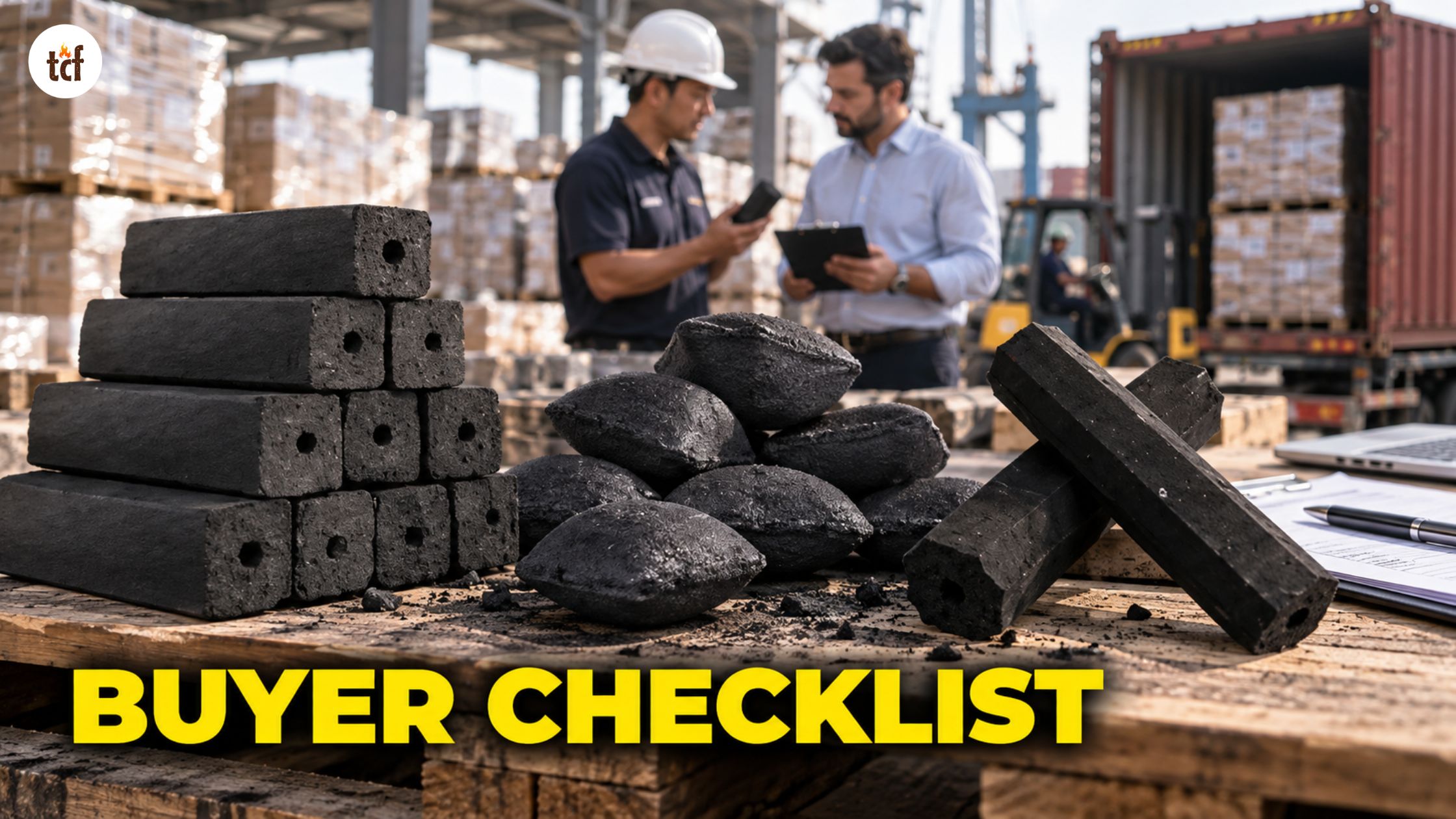
certifications, reliable logistics, and the ability to scale are what separate a long-term partner from a one-order vendor. Here is what serious buyers actually check before signing a contract.
Table of Contents
Why Does Supplier Selection Matter More Than Product Selection?
A great product from an unreliable supplier is still a business risk. Quality problems in charcoal wholesale do not just ruin one order; they damage brand reputation, inflate logistics costs, and create warranty claims that compound over time.
Buyers sourcing bulk charcoal at container scale cannot afford supplier mistakes. The cost of a failed shipment far exceeds any savings made by choosing the cheapest quote.
What Wholesale Buyers Look for in a Charcoal Supplier?
Fixed Carbon, Moisture, and Ash Content
These three metrics form the core of any charcoal specification sheet. Buyers request a Certificate of Analysis (COA) from a third-party lab before committing to volume orders.
The widely accepted benchmarks serious buyers use as minimum thresholds are:
| Parameter | Lump Charcoal | Briquettes |
| Fixed Carbon | ≥75% | ≥65% |
| Moisture Content | ≤8% | ≤6% |
| Ash Content | ≤5% | ≤8% |
| Volatile Matter | ≤15% | ≤20% |
Buyers serving professional kitchens and restaurant groups apply tighter tolerances. A moisture level above 10% is a common ground for rejecting an entire shipment.
Also read – Best Charcoal Manufacturers in China
Burn Performance and Consistency
Lab figures alone are not enough. Experienced buyers test samples by igniting a fixed weight (typically 1 kg) in a chimney starter and timing ignition, steady-state burn duration, and heat output at intervals. Consistent performance across multiple bags, not just one test piece, is what signals a reliable production process.
For buyers sourcing BBQ charcoal wholesale, burn time and heat consistency directly affect their end customers’ experience and repeat purchase rate.
Which Certifications Do Buyers Require?
The Non-Negotiable Documents
Most international wholesale buyers will not proceed without a core document set. The standard expectation across B2B platforms and importer communities includes:
SGS or equivalent third-party test report, ISO certification, Certificate of Analysis (COA), Material Safety Data Sheet (MSDS), Fumigation certificate, Phytosanitary certificate, and Certificate of Origin.
FSC Certification Is Now an Entry Requirement for Many Markets
FSC (Forest Stewardship Council) certification confirms that wood used in production comes from responsibly managed forests. In Europe and the UK, many wholesale buyers, especially supermarkets and retail chains, now treat FSC as a baseline requirement, not a premium add-on.
Buyers sourcing private label charcoal for supermarkets consistently list FSC as a non-negotiable. Suppliers without it are disqualified early in the process.
DIN EN 1860-2 for European Markets
European wholesale buyers often require conformity with DIN EN 1860-2, the standard governing untreated barbecue charcoal and briquettes. The DIN mark acts as a market access gateway; many wholesalers exclusively purchase charcoal carrying this certification.
You can learn more about what these standards cover in our charcoal grades explained guide.
Also read – China vs Indonesia Charcoal Manufacturing Comparison
How Do Buyers Assess Supplier Reliability?
Production Capacity and Consistency
Buyers ask direct questions: Can this supplier fill a 40HQ container every month? Can they scale to three containers if demand rises? Suppliers with transparent production capacity data and a track record of hitting lead times earn preference.
A standard commercial MOQ is one 40HQ container (approximately 18–26 metric tons). Buyers with seasonal demand spikes, particularly in Q2 and Q3, need suppliers who can absorb that volume without quality slippage.
Trade History and Export Track Record
Before a first order, smart buyers ask for recent Bills of Lading or basic client references. A supplier who has successfully shipped to your region before carries significantly less risk than one attempting it for the first time. This is not a matter of trust — it is proof of execution.
Our charcoal supplier verification checklist covers the full vetting process buyers use before placing volume orders.
Response Time and Communication
Buyers on major B2B platforms specifically filter for suppliers with response times under two hours. Slow communication is treated as a proxy for slow production management. A supplier who takes three days to answer a specification question is unlikely to handle a logistics emergency well.
Does Packaging Affect the Buying Decision?
Yes — significantly. Poor packaging is one of the most common causes of charcoal quality degradation in transit. Buyers look for moisture-resistant PP woven bags, secure sealing, and correct weight labelling.
For retail and private label programmes, UN-certified carton boxes with full-colour printing are standard. Buyers supplying supermarket chains or branded retail channels expect the supplier to handle custom bag design and labelling as part of the service.
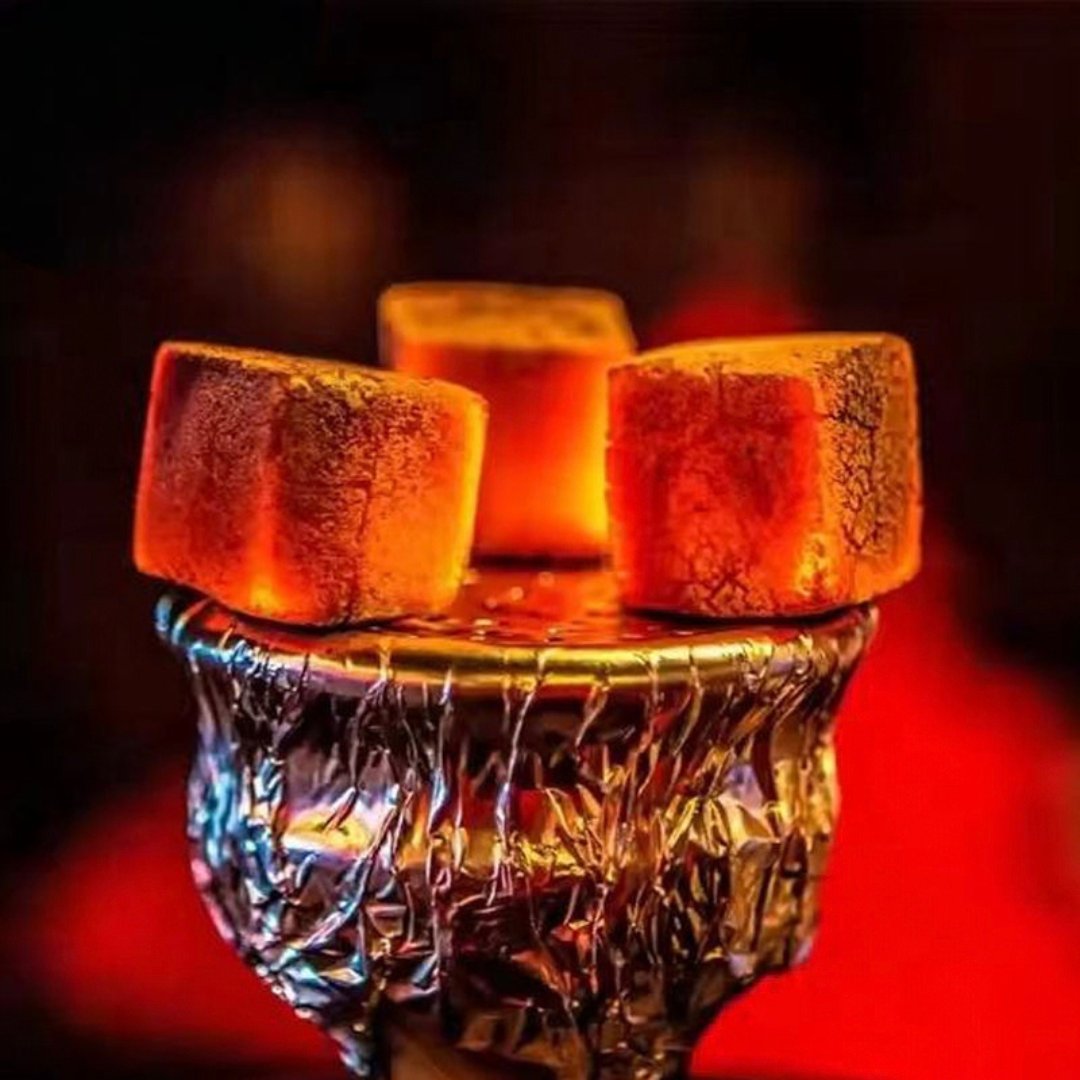
Packaging requirements also vary by product type. Buyers sourcing wholesale shisha charcoal typically expect foil-lined inner packaging to protect against humidity, while bulk lump charcoal buyers prioritise tear-resistant outer bags that survive port handling.
Must read – Best Charcoal Manufacturer and Supplier
What Pricing Structure Do Buyers Expect Transparency On?
Incoterms Matter More Than the Unit Price
Experienced buyers always request quotes across multiple Incoterms: FOB, CIF, and DDP to calculate the true landed cost. A lower FOB price can become an expensive CIF equivalent once freight, insurance, and port handling are added.
As a reference point, lump charcoal in 2024–2025 was priced broadly between $800–$1,400 per metric ton on an FOB basis, depending on origin and specification. Shipping from Southeast Asia to Europe or North America adds $200–$400 per ton on top of that.
Seasonal Price Movements
Buyers who understand the market time their orders strategically. Demand and, therefore, pricing typically spike in Q2 and Q3 (the grilling season in the Northern Hemisphere). Placing orders in Q4 or Q1 frequently yields better pricing and shorter lead times.
Our charcoal bulk buying guide covers negotiation strategy and timing in more detail.
Do Buyers Care About Sustainability?
Increasingly, yes. Wholesale buyers supplying supermarkets, food service chains, and eco-conscious retail brands are under pressure from their own customers to demonstrate responsible sourcing. FSC certification addresses the forestry side, but buyers also look at production methods and raw material origin.
Buyers in this category often show a preference for bamboo charcoal and coconut shell briquettes as inherently more sustainable alternatives to hardwood-only products. Understanding the difference between raw material types covered in our wood vs coconut charcoal comparison helps buyers make sourcing decisions that align with their brand positioning.
What Do Buyers in Different Segments Prioritise?
Different buyer types weigh these factors differently. Based on patterns observed across wholesale enquiries:
Restaurant and foodservice buyers prioritise consistent piece size, burn time, and low ash. They need charcoal that performs identically in every service. See our dedicated page for bulk charcoal for restaurants.
Retail distributors and supermarket chains lead with packaging, private label capability, and FSC certification. Product performance matters, but shelf appeal and compliance come first.
Shisha and hookah lounges focus almost entirely on low smoke, odourless burn, and a specific shape and size. Our wholesale hookah charcoal page outlines what this segment typically specifies.
Industrial and export traders prioritise volume capacity, competitive FOB pricing, and documentation completeness for customs clearance.
Frequently Asked Questions
What is the most important thing wholesale buyers check first in a charcoal supplier?
Most buyers start with certifications, particularly SGS test reports, a COA, and an FSC certification. These documents answer quality and compliance questions immediately and filter out unsuitable suppliers before any samples are requested.
What certifications should a charcoal supplier have for the European market?
For Europe, FSC certification is effectively mandatory for most retail channels. DIN EN 1860-2 compliance is important for Germany and neighbouring markets. Standard export documents, including COA, fumigation certificate, and phytosanitary certificate, are required for customs clearance.
How do buyers verify charcoal quality before placing a large order?
Buyers request a sample batch and test it independently — measuring moisture content, ignition time, burn duration, and ash output. They also ask for a third-party lab COA and cross-check the supplier’s production photos or a virtual factory tour.
What is a typical MOQ for wholesale charcoal orders?
The standard commercial MOQ is one 40HQ container, which holds roughly 18–26 metric tons depending on charcoal type and packaging. Some suppliers offer LCL (Less than Container Load) for trial orders, but the per-ton cost is considerably higher.
Can wholesale buyers request custom or private label packaging?
Yes. Established manufacturers typically offer private label services, including custom bag design, branding, and retail-ready formatting. This is especially common among buyers supplying supermarket chains or building their own BBQ brand.