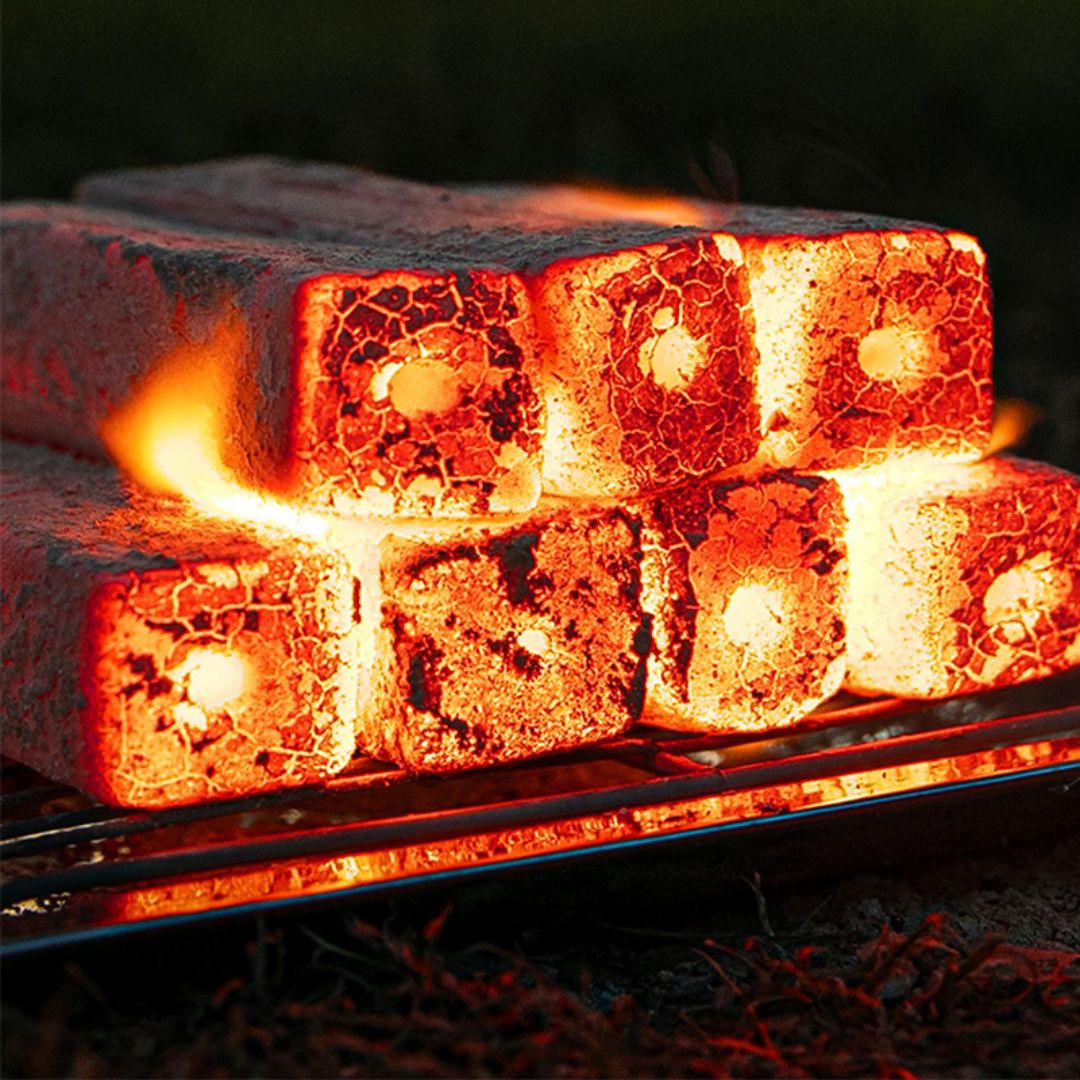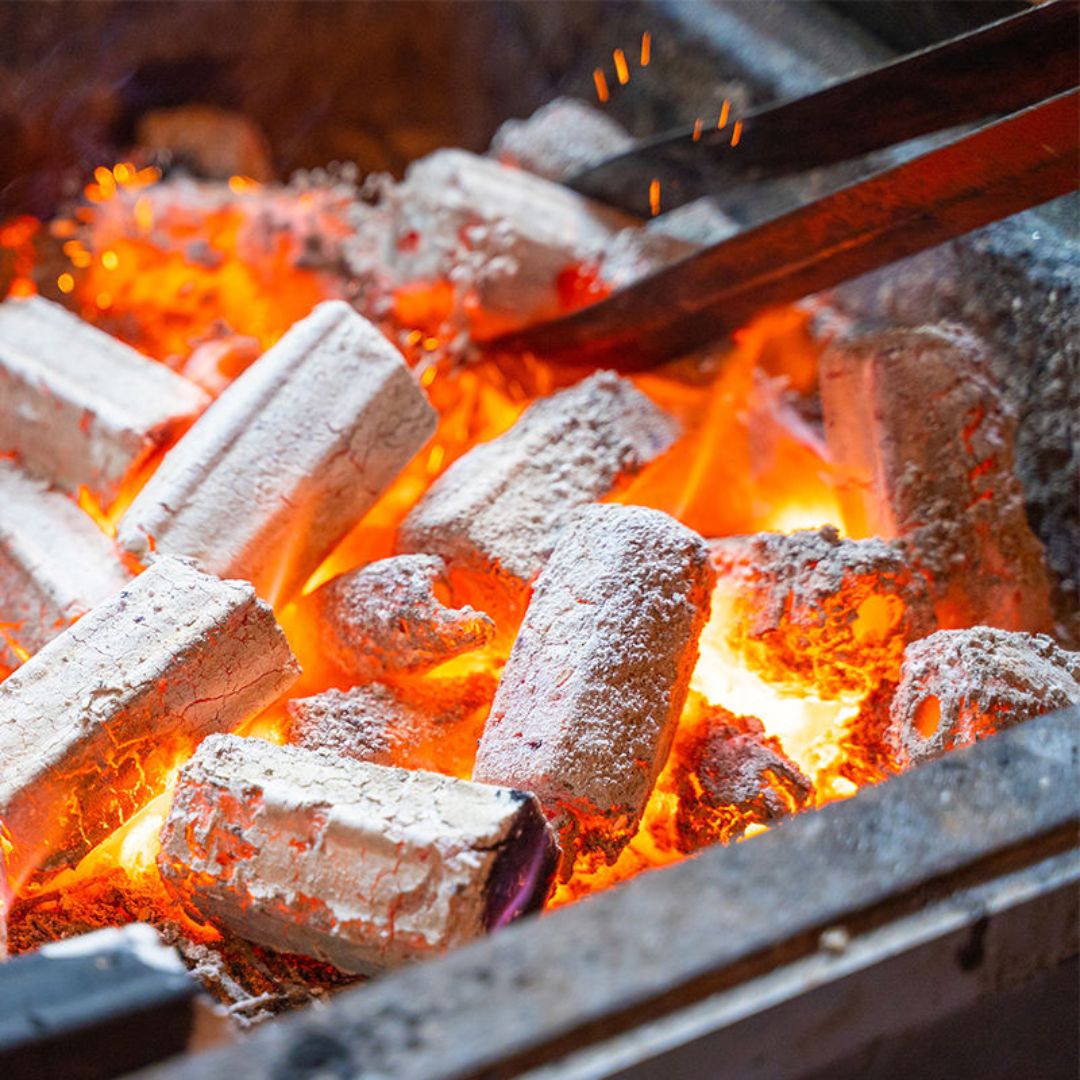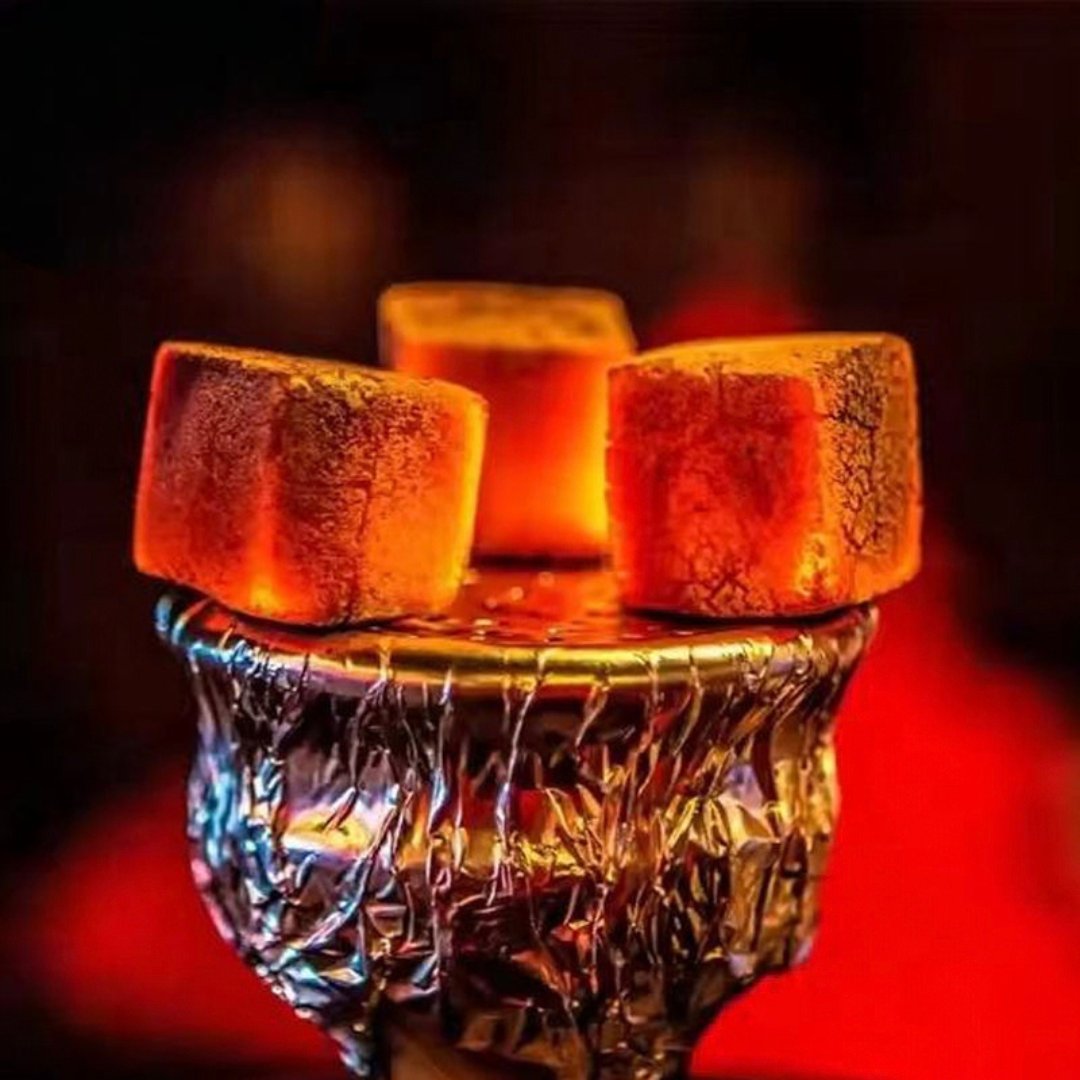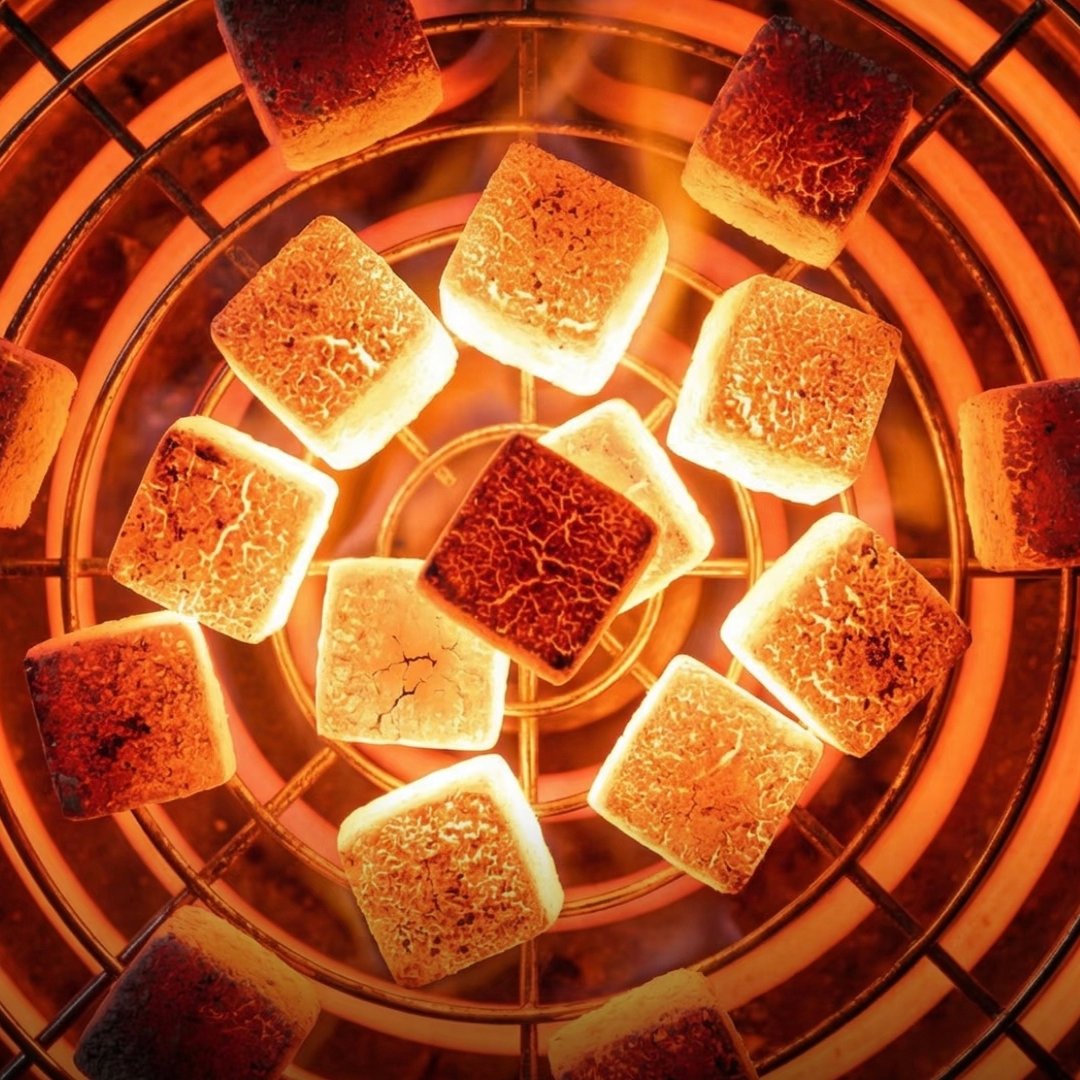



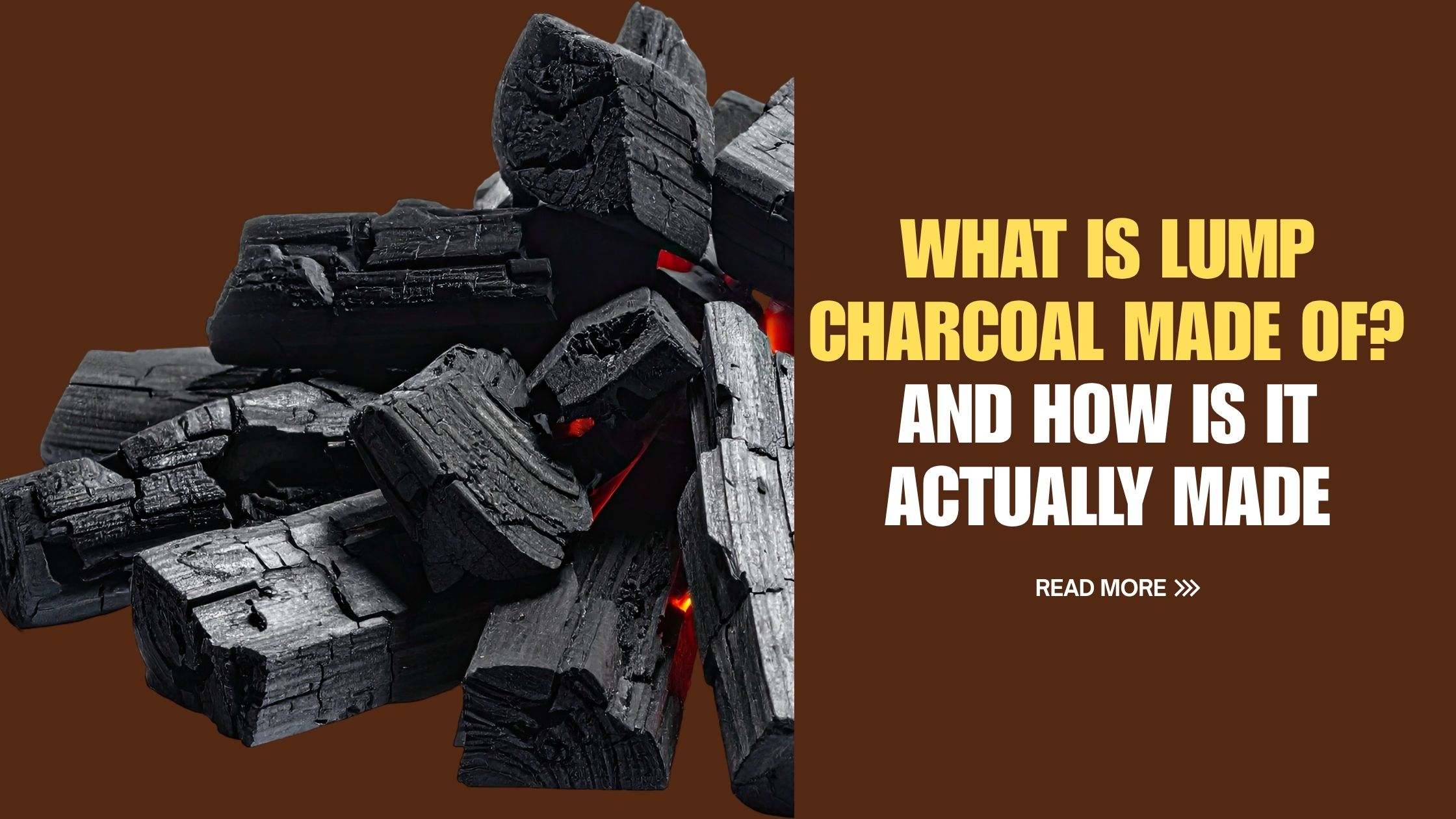
Walk into any serious BBQ supply store, and you’ll find two types of charcoal on the shelf: briquettes and lump. The briquettes are uniform, pillow-shaped, and cheap. The lump charcoal is irregular, jagged, and costs noticeably more. If you ask the person behind the counter why, they’ll probably say something like “it’s more natural” or “it burns hotter.” Both of those things are true — but they barely scratch the surface of what makes lump charcoal different, where it comes from, and why the manufacturing process behind it produces a product that serious cooks have used for centuries and continue to prefer over everything else.
This article covers What Is Lump Charcoal Made Of, the science of how it’s produced, what to look for when buying it, and why the wood species used changes the product more than most people realize.
The One-Sentence Answer — And Why It’s Not Enough
Lump charcoal is made from wood that has been carbonized heated to high temperatures in a low-oxygen environment until everything except the carbon structure has been driven off.
That’s the accurate, honest answer. But it tells you almost nothing useful. “Wood heated until only carbon remains” describes both a premium bag of single-origin quebracho charcoal that burns at 1,100°C for an hour and a bag of mystery-wood charcoal that crumbles in your hands, sparks like a fireworks display, and tastes faintly of chemicals. The difference between those two products comes entirely from what species of wood was used, how it was prepared, and how carefully the carbonization process was controlled. Get the wholesale price for wood lump charcoal.
So let’s go deeper.
What Is Lump Charcoal Made Of: Starting With the Wood
The most fundamental thing to understand about lump charcoal is that it contains exactly one ingredient: carbonized wood. No binders, no fillers, no accelerants, no coal dust, no cornstarch. If you are holding a piece of genuine lump charcoal, you are holding a piece of wood from which everything except the carbon framework has been removed.
This is the defining difference between lump charcoal and briquettes. Briquettes are an engineered product — charcoal dust compressed with starch binders, sometimes with limestone added for white ash aesthetics, sometimes with sodium nitrate added for faster lighting. Briquettes are predictable and consistent precisely because they are manufactured to a formula. Lump charcoal has no formula. What you get in the bag is a direct reflection of the wood that went into the kiln.
This is why wood species selection matters so enormously in lump charcoal production. The species determines the density, the lignin content, the mineral profile, the moisture behavior, and ultimately the quality of the carbon structure that survives pyrolysis.
Dense Hardwoods: The Gold Standard
The best lump charcoal in the world is made from dense tropical and temperate hardwoods. The denser the wood going in, the denser and more energy-rich the charcoal coming out.
Quebracho, a family of South American hardwoods (primarily Schinopsis balansae and Schinopsis lorentzii) from the Gran Chaco region of Argentina and Paraguay, is arguably the most prized charcoal wood in the world. Its name literally translates from Spanish as “axe breaker” — a testament to its density, which rivals many stones. Quebracho-based charcoal like Jealous Devil is among the most coveted by competitive pitmasters because it produces extraordinarily large, dense chunks, burns for a very long time, and has a relatively neutral flavor that doesn’t compete with the smoke from cooking wood.
Oak is the workhorse of the North American and European lump charcoal industry. It is abundant, grows in managed forests, and produces well-balanced charcoal with good density, moderate burn duration, and a mild, clean flavor. Most mid-range lump charcoal in American BBQ stores uses oak as its primary or sole wood.
Hickory is preferred by BBQ enthusiasts who want a bold, smoky flavor baked into the charcoal itself. Hickory charcoal burns hot and produces distinctively flavored smoke. It is somewhat less dense than oak and quebracho, but its flavor contribution makes it popular for traditional American barbecue.
Mesquite grows abundantly in the American Southwest and northern Mexico and produces a charcoal with an intense, earthy character. Mesquite charcoal lights relatively quickly, burns extremely hot, and has a flavor profile that polarizes people — deeply appreciated in Tex-Mex and Southwestern BBQ traditions, overwhelming in more delicate applications.
Coconut shell occupies a special place in the lump charcoal world. Technically not a wood at all, coconut shell produces charcoal with some of the highest fixed carbon content of any natural feedstock — often 80–88% — and an exceptionally microporous structure. Coconut shell lump charcoal burns clean, hot, and long, with very low ash. It is increasingly popular in the premium market and is the dominant raw material for hookah charcoal worldwide.
You should explore some of the best-selling wood lump charcoal at wholesale prices –
- machine-made wood charcoal
- A-Grade Low-Ash Shaped Wood Charcoal
- A-Grade Wood Charcoal for BBQ – Low Ash
- A-Grade Wood Charcoal for Grilling
Why Density Matters: The Lignin Connection
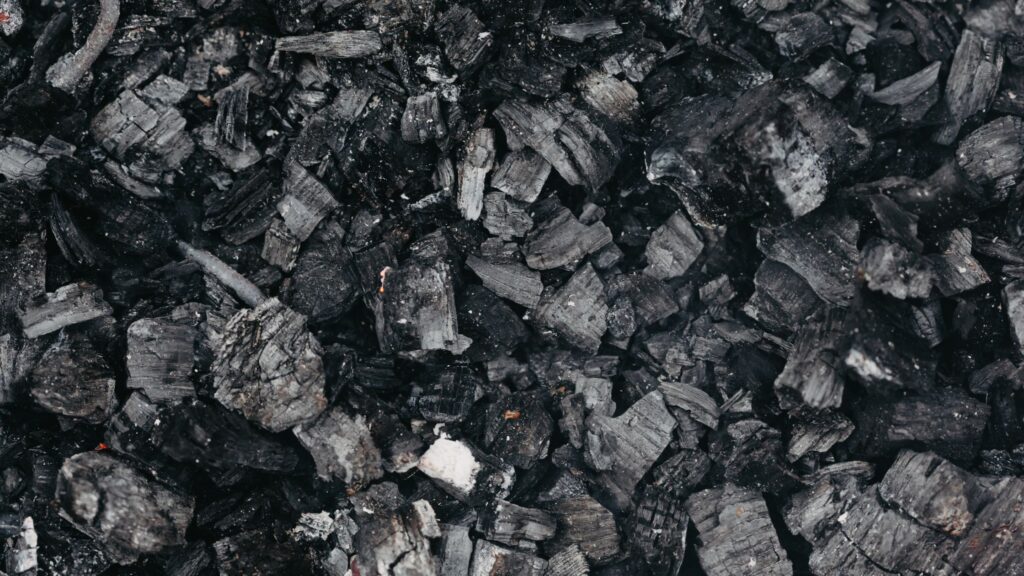
The reason dense hardwoods produce better charcoal is ultimately a matter of chemistry. Wood is composed primarily of three structural polymers: cellulose, hemicellulose, and lignin. Cellulose and hemicellulose are carbohydrate chains that break down readily during pyrolysis, contributing to the carbon yield but also to volatile losses. Lignin is a complex aromatic polymer that forms the “glue” holding wood cells together, and it has the highest carbon retention during pyrolysis of the three components.
Dense hardwoods contain proportionally more lignin than light softwoods or agricultural residues. More lignin means more carbon survives the pyrolysis process intact, which means denser, harder, more energy-rich charcoal. This is not an abstraction — you can feel it. Pick up a piece of good quebracho charcoal and a piece of cheap softwood charcoal. The quebracho piece is noticeably heavier for its size, harder to break, and when you crack it open, the interior has a bright, glassy black surface. The softwood piece feels almost hollow by comparison. And when you’re ready to buy, do not forget to check the charcoal supplier verification checklist.
What Lump Charcoal Should Not Contain
This point deserves explicit attention because it affects both quality and safety.
Genuine lump charcoal made from untreated natural wood is entirely safe for cooking. However, the lump charcoal market has a transparency problem: most bags do not fully disclose their wood source, and some manufacturers use wood that should not be in cooking fuel.
Construction lumber scraps and dimensional timber can contain preservative treatments — particularly older lumber may contain chromated copper arsenate (CCA), which releases toxic arsenic compounds when burned. Pallet wood is a particular concern; while pallets marked “HT” (heat treated) are safe, those marked “MB” (methyl bromide fumigation) are emphatically not. Plywood, MDF, and particle board all contain formaldehyde-based adhesives that release toxic compounds at cooking temperatures.
The safest approach as a consumer is to buy lump charcoal from brands that explicitly state the wood species and source on the packaging. If a bag of charcoal says only “hardwood” without specifying species, that’s a yellow flag. If it provides no wood information at all, treat it with skepticism.
How Lump Charcoal Is Made: The Full Process
The Pre-Carbonization Stage: Getting the Wood Ready
Before any wood goes into a kiln, it needs to be in a state that will carbonate efficiently and uniformly. This sounds obvious but is one of the most commonly skipped steps in lower-quality operations.
Logs and offcuts are cut into pieces of roughly consistent length and diameter — typically 15–40 centimeters long and 5–20 centimeters in diameter. The consistency in size isn’t about aesthetics; it’s about ensuring that all pieces in a batch reach full carbonization at approximately the same time. A kiln loaded with a mix of wrist-thin branches and 30-centimeter-diameter logs will inevitably produce a batch where the thin pieces are over-carbonized and brittle while the thick pieces are still brown and partially raw in their cores. If you really intrested then must read about, How Charcoal Is Manufactured.
The wood then needs to lose most of its moisture. Fresh-cut wood is often 40–60% water by weight. That water has to go somewhere during pyrolysis, and the energy required to evaporate it comes at the direct expense of carbonization efficiency. Producers who take the time to properly dry their wood — either by stacking and air-drying for weeks in the open air, or by running material through a mechanical dryer — see dramatically higher yields and more consistent product. The target moisture content before loading the kiln is typically 10–15%.
Also read – Charcoal Bulk Buying Guide
Carbonization: The Transformation
The wood is loaded into a kiln, the type of kiln varies enormously and is discussed separately below, and the carbonization process begins.
Here is what actually happens to a piece of hardwood inside a kiln as the temperature rises:
The first thing that happens, from around 100°C to 180°C, is straightforward drying. Any remaining moisture in the wood evaporates and exits through the kiln vents as steam. The wood changes color very slightly but has not yet begun to transform chemically in a meaningful way.
Between 180°C and about 270°C, the hemicelluloses begin to break down. These are the shorter, more easily broken carbohydrate chains in the wood. Their decomposition releases acetic acid (which condenses as wood vinegar when captured), methanol, CO₂, and carbon monoxide. The wood turns noticeably brown and begins to feel softer. This phase is sometimes called pre-carbonization, and some of the most aromatic and medicinally interesting byproducts of charcoal production come from this stage.
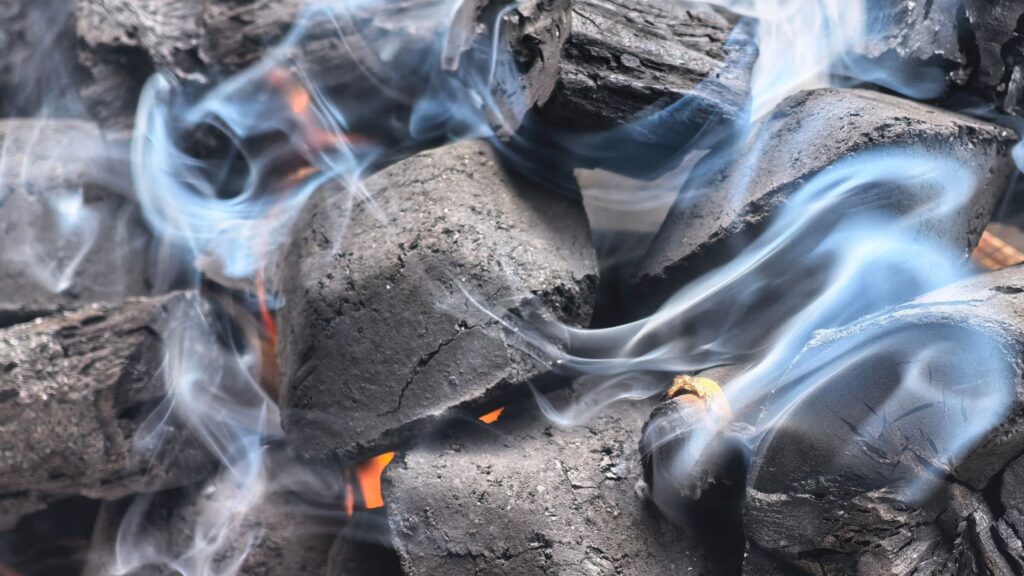
The critical transformation begins at around 270°C and accelerates dramatically around 300–320°C. This is where cellulose — the primary structural polymer making up roughly 40–50% of the wood — reaches its decomposition temperature. The breakdown of cellulose is exothermic, meaning it generates heat on its own. Once this phase starts, the kiln essentially drives itself — the heat released by decomposing cellulose sustains the temperature needed for further decomposition. The wood releases large quantities of flammable gases (methane, CO, hydrogen) along with complex organic volatiles. In modern industrial systems, these gases are captured and burned as kiln fuel. In traditional kilns, they escape as the characteristic blue-gray smoke visible from a charcoal operation.
From 320°C to about 450°C, the material transitions from brown, partially decomposed wood to true black charcoal. The basic carbon skeleton of the wood’s cell structure is preserved — this is why you can often see growth rings and grain patterns in a cross-section of lump charcoal — but nearly everything else has been driven off. The material shrinks and loses mass dramatically.
From 450°C upward, the charcoal undergoes consolidation. Residual hydrogen atoms are expelled, the carbon lattice tightens, and the micropore structure of the charcoal develops. Higher temperatures within this range produce progressively harder, denser charcoal with higher fixed carbon content. Most premium lump charcoal is produced with peak temperatures between 500°C and 700°C. Beyond 700°C you begin to move toward the territory of metallurgical and activated carbon grades, which require different handling and are not typically produced for BBQ applications.
The Kiln Makes All the Difference
The same wood, processed in two different kilns, will produce meaningfully different charcoal. The kiln determines how uniformly temperature is distributed across the batch, how well oxygen is controlled, whether the batch can be held at peak temperature long enough for complete carbonization, and whether any of the valuable pyrolysis byproducts are captured or simply vented.
Traditional earth mound kilns — still used widely in parts of Africa, South Asia, and Latin America — produce yields of 10–18%. That means 82–90% of the wood mass is wasted. The quality is uneven because different parts of the mound reach different temperatures and hold them for different durations. The uncontrolled combustion that keeps the mound hot also consumes charcoal at the edges. What emerges is a mix of excellent pieces, partially carbonized “brands,” and ash where combustion ran too hot.
Steel drum and portable metal kilns are a significant step up — yields improve to 20–28%, cycle times drop to 8–15 hours, and the operator has real control over air intake to manage the process. These are the kilns of choice for artisan lump charcoal producers, small commercial operations, and specialty producers making single-origin products.
Retort kilns — sealed steel chambers where the wood is never exposed to flame and heat is applied externally are where quality lump charcoal production really comes into its own. Because combustion cannot occur inside the retort, the entire wood mass converts to charcoal rather than ash at the edges. Yields reach 30–38%. The temperature distribution is more uniform. And the pyrolysis gases can be captured and piped to the external burner, dramatically reducing the fuel cost of the operation. The charcoal produced in a well-run retort is noticeably more consistent in quality and carbon content than anything produced in an open or direct-fired system. Charcoal grades are also important.
Also read – Wood vs Coconut Charcoal
Cooling, Breaking, and Grading
After carbonization is complete, the charcoal must be cooled inside the sealed kiln before any exposure to air. This is not optional — it is a safety imperative. Charcoal at 400–600°C in contact with oxygen will ignite spontaneously. Good operations seal the kiln at the end of carbonization and leave it sealed for 12–48 hours until the temperature has fallen to a safe level, typically below 50°C.
Once cooled, the charcoal is discharged and broken apart. During carbonization, pieces of wood that were loaded separately sometimes fuse together as their surfaces soften and come into contact. Workers or mechanical tumblers break these fused pieces apart, and the entire batch is run through a series of vibrating screens to separate it by size.
This grading step is where lump charcoal quality reveals itself most visibly. High-quality batches produce a large proportion of substantial, well-formed pieces with minimal fines — the dust and small fragments that result from over-carbonized, brittle wood or rough handling. Premium brands hand-sort their charcoal before packaging, removing undersized pieces and fines that would otherwise end up at the bottom of the bag. Lower-cost brands skip this step, which is why the bottom third of a cheap bag of lump charcoal is often mostly dust.
What Good Lump Charcoal Looks, Sounds, and Feels Like
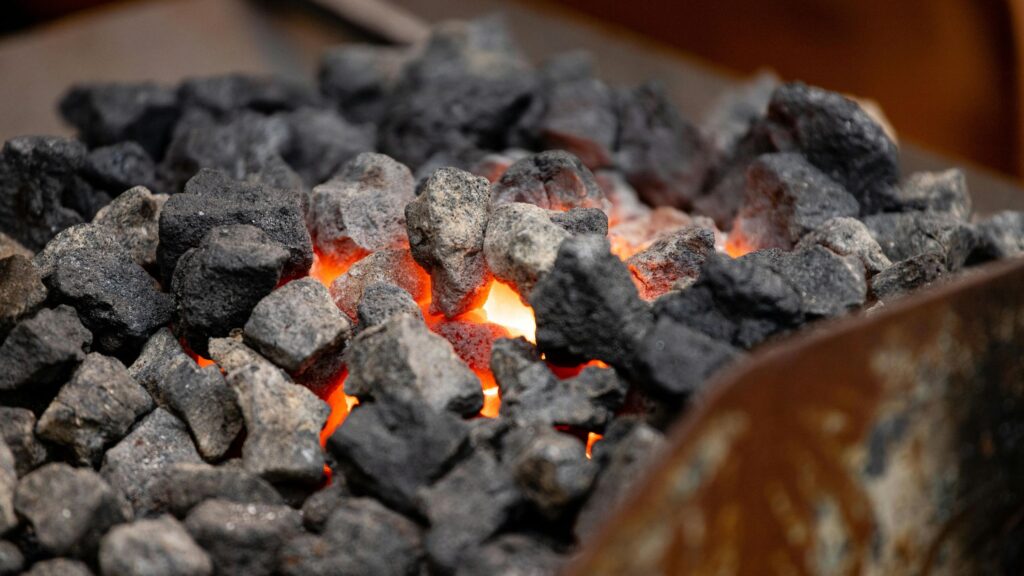
Because lump charcoal is a natural product with no standardized formula, learning to evaluate it by sensory inspection is genuinely useful.
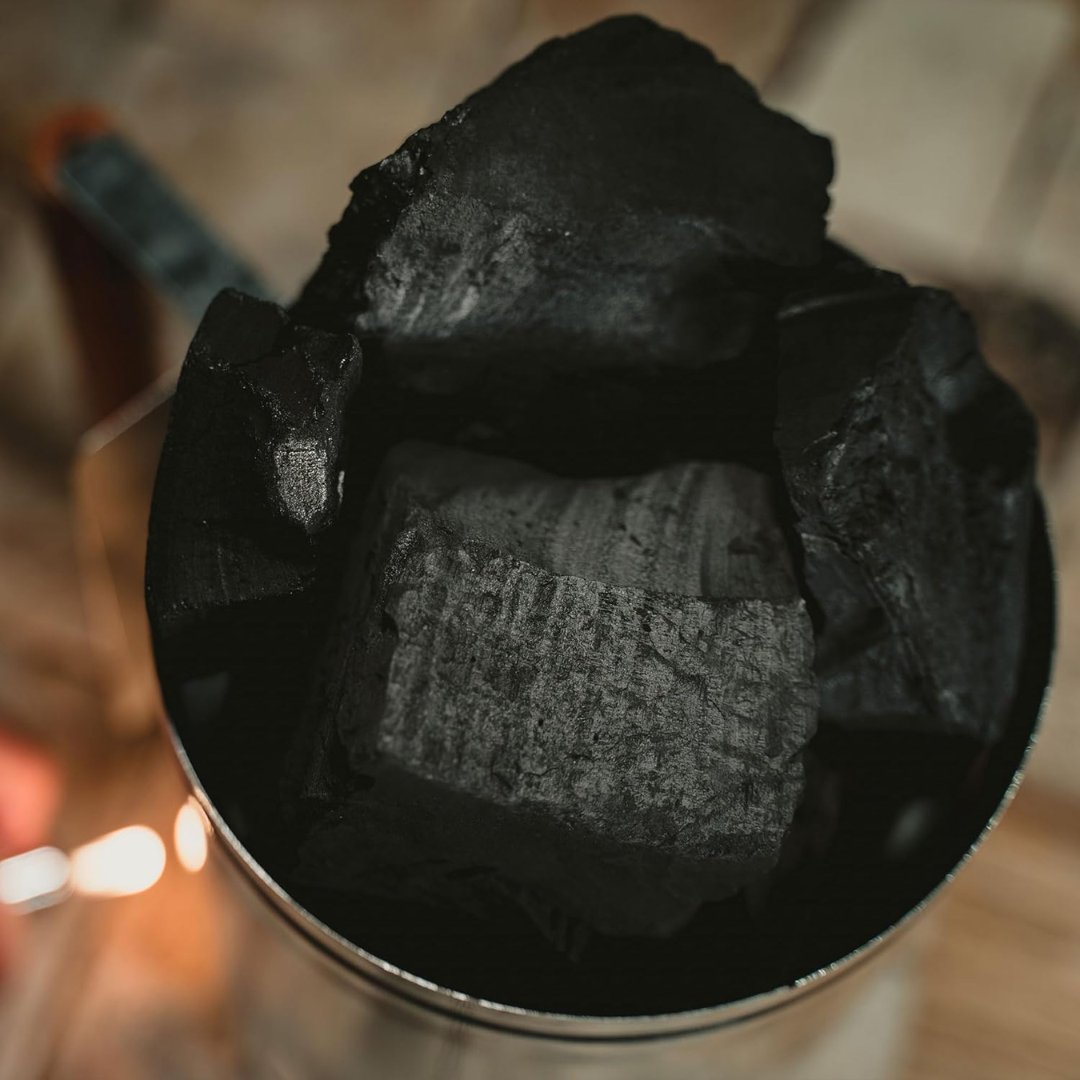
Appearance: Good lump charcoal is uniformly deep black throughout. Crack open a piece — the interior should be the same pure black as the surface, with a slightly glassy or lustrous quality. Brown interiors indicate under-carbonization: the pyrolysis didn’t reach the core. Gray or white patches on the surface indicate moisture issues or incomplete processing.
Sound: This is the test most expert buyers use. Pick up two pieces of good lump charcoal and knock them together. You should hear a clear, clean ringing sound — almost metallic. This indicates fully carbonized, dense carbon structure. A dull thud indicates soft or under-carbonized material that will crumble during use and produce far more smoke and volatile compounds during lighting.
Weight: Good lump charcoal is lighter than you’d expect for its size — it has lost 70–75% of the original wood’s mass during carbonization, and its porous structure means it’s full of space. But within those expectations, denser species produce noticeably heavier pieces, which is a positive indicator.
Fines ratio: Shake the bag gently before opening and observe how much dust comes through the material. A small amount of fines (5–10%) is inevitable in any lump charcoal. More than 15–20% suggests either low-quality wood, aggressive processing that fractured the charcoal, or a bag that has been damaged or repeatedly handled roughly. After all of this, if you plan to buy the lump charcoal, please do not forget to check the bamboo charcoal market.
How Lump Charcoal Burns: What the Manufacturing Process Determines
The performance characteristics of lump charcoal at the grill — lighting speed, maximum temperature, burn duration, ash volume, smoke output — are all direct consequences of the manufacturing decisions made upstream.
Lighting speed is primarily a function of volatile matter content. Charcoal that was carbonized at relatively lower temperatures (400–500°C) retains more volatile compounds that ignite easily and help the charcoal catch. This sounds like an advantage but has a tradeoff: those same volatiles produce more smoke during the lighting phase and can impart off-flavors until fully burned off. Charcoal carbonized at higher temperatures (550–700°C) lights slightly less quickly but burns cleaner immediately.
Maximum temperature is primarily determined by wood density and fixed carbon content. Denser wood species with higher lignin content produce charcoal with higher fixed carbon percentages, and that translates directly to higher peak temperatures. This is why quebracho and coconut shell charcoal are used by professional cooks who need very high heat — the raw material advantage translates directly to grill performance.
Burn duration is primarily a function of piece size and density. Large, dense lump charcoal from a dense hardwood burns longer than small pieces from lighter wood. This is why experienced cooks prefer the large lump grade for long cooks and why the XL pieces at the top of the bag are worth more than the smaller pieces at the bottom.
Ash volume is largely a function of the original wood’s mineral content. Wood naturally contains minerals — calcium, potassium, silicon, and magnesium — that do not burn off during carbonization and form ash. Dense tropical hardwoods with low mineral content (like quebracho or mesquite) produce very little ash. Softer woods with higher mineral content produce more.
Frequently Asked Questions
Is lump charcoal just wood that’s been burnt?
No — this is the most common misconception. Burning wood in the presence of oxygen produces CO₂ and ash: combustion converts the carbon to gas. Lump charcoal is produced by pyrolysis — heat in a low-oxygen environment that drives off everything except the carbon structure without burning it. The result is 70–90% pure carbon, not ash.
Is lump charcoal safe for cooking food?
Yes, when made from untreated natural wood. The carbonization process removes all organic compounds essentially, and the carbon itself is chemically inert. The concern arises only when charcoal is made from chemically treated wood, which is why transparent sourcing information matters.
Why does lump charcoal spark and pop sometimes?
Sparking and popping during lighting are caused by residual volatile compounds in the charcoal that ignite explosively as the piece heats up. This is more common in charcoal made from softwoods, resinous woods, or wood that was carbonized at lower temperatures without sufficient hold time at peak temperature. Premium lump charcoal made from dense hardwoods in well-run kilns sparks very little.
How long does lump charcoal last on the grill?
In an open grill with standard airflow, a 1–2 kg load of quality lump charcoal from dense hardwood burns for 45–75 minutes at high heat. In a kamado or ceramic grill with controlled airflow, the same amount of charcoal can sustain a low-and-slow cook (107–135°C) for 8–16 hours.
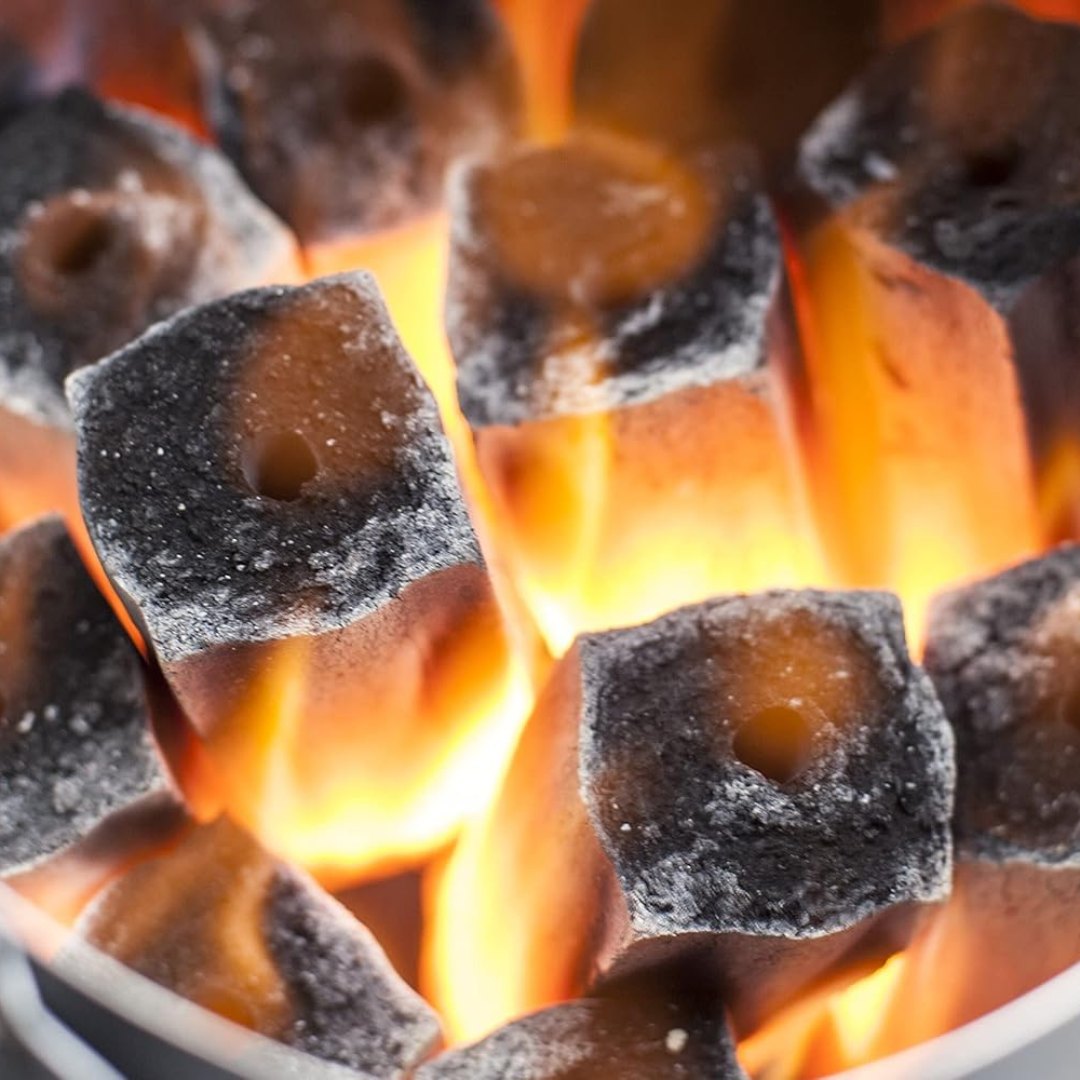
What’s the difference between lump charcoal and charcoal briquettes?
Lump charcoal is pure carbonized wood — one ingredient, no additives. Briquettes are an engineered product made by compressing charcoal dust or fines with starch binders, sometimes supplemented with limestone (for white ash appearance), sodium nitrate (for fast lighting), or coal dust (in economy products). Briquettes are more consistent in shape and burn time; lump charcoal burns hotter, produces less ash, and has a cleaner flavor profile.