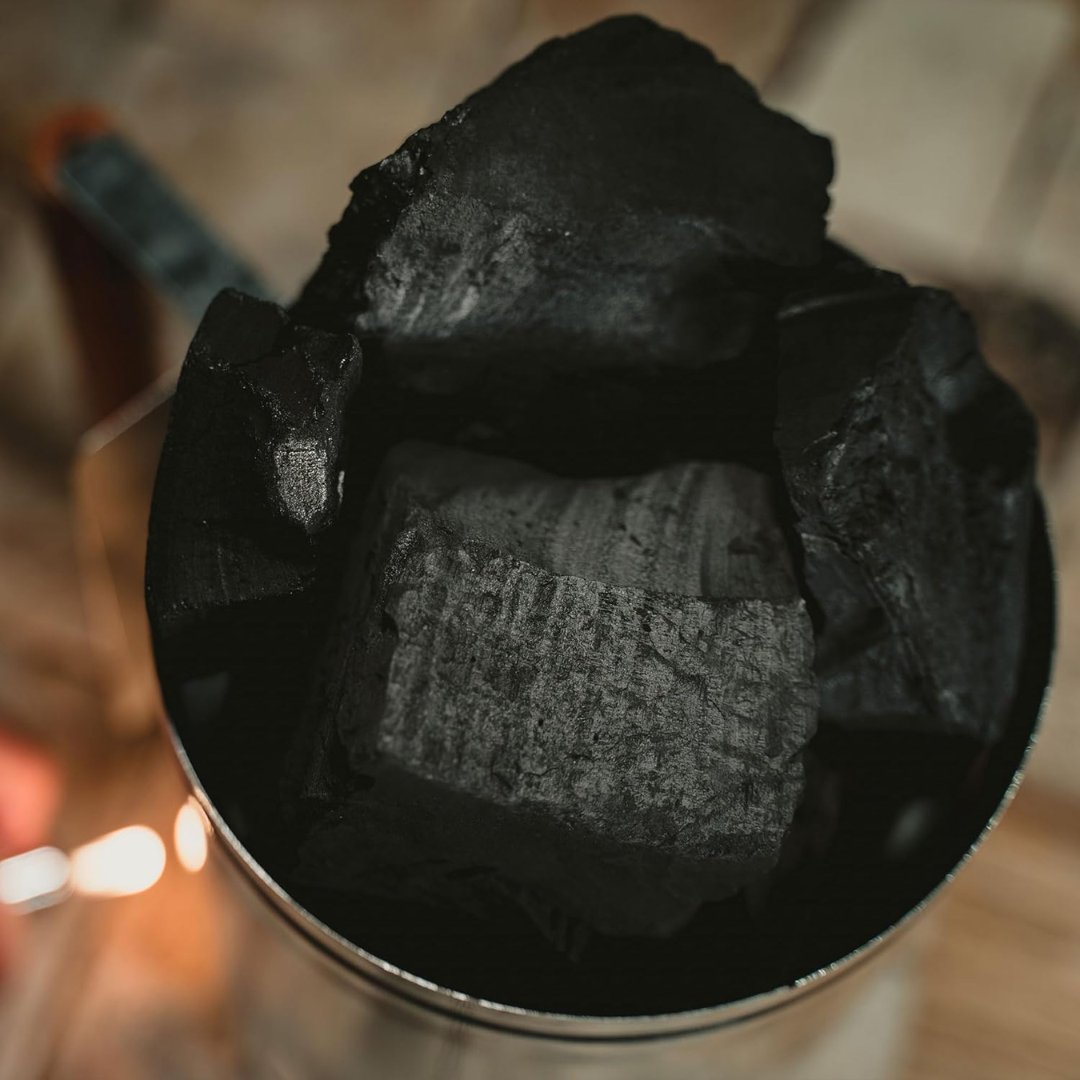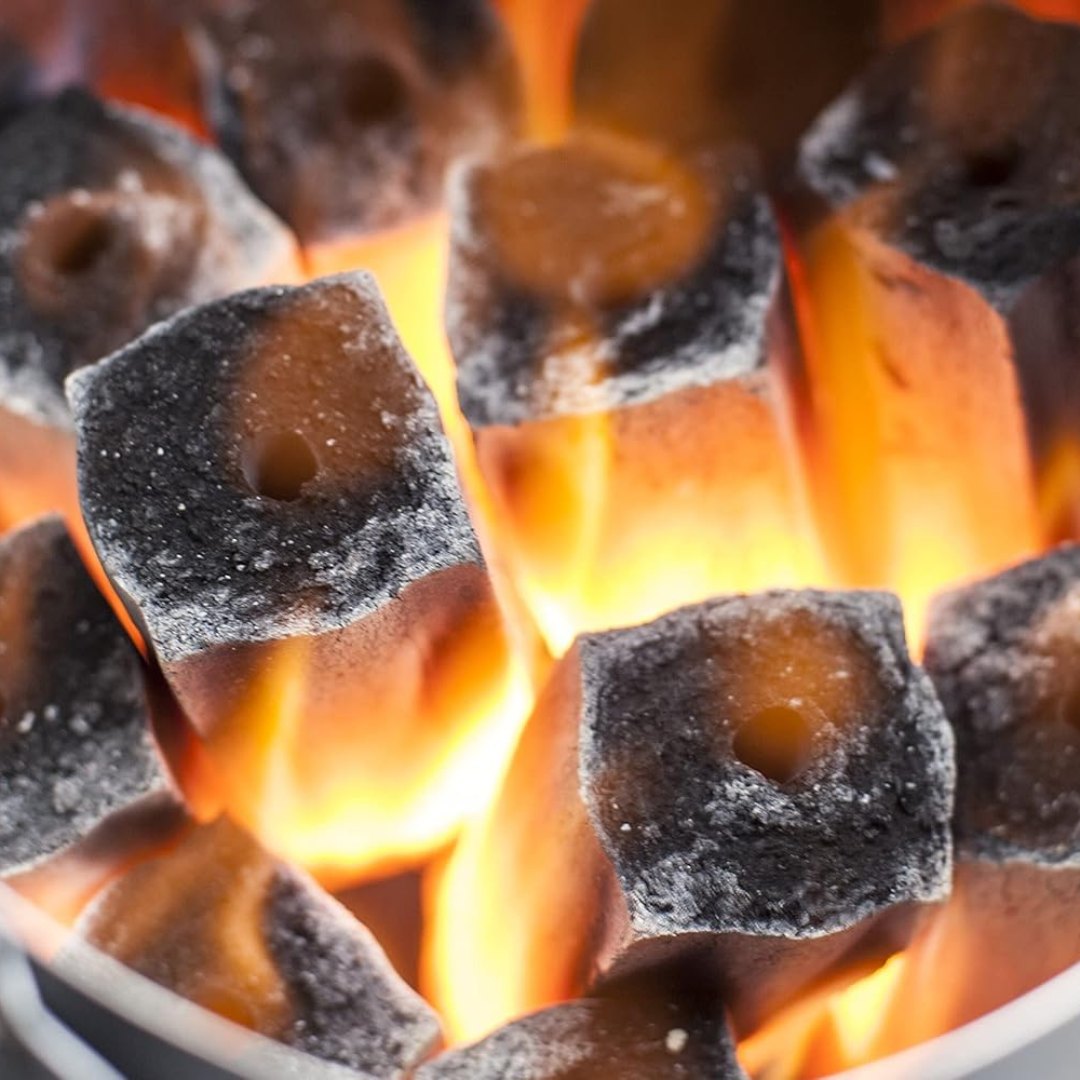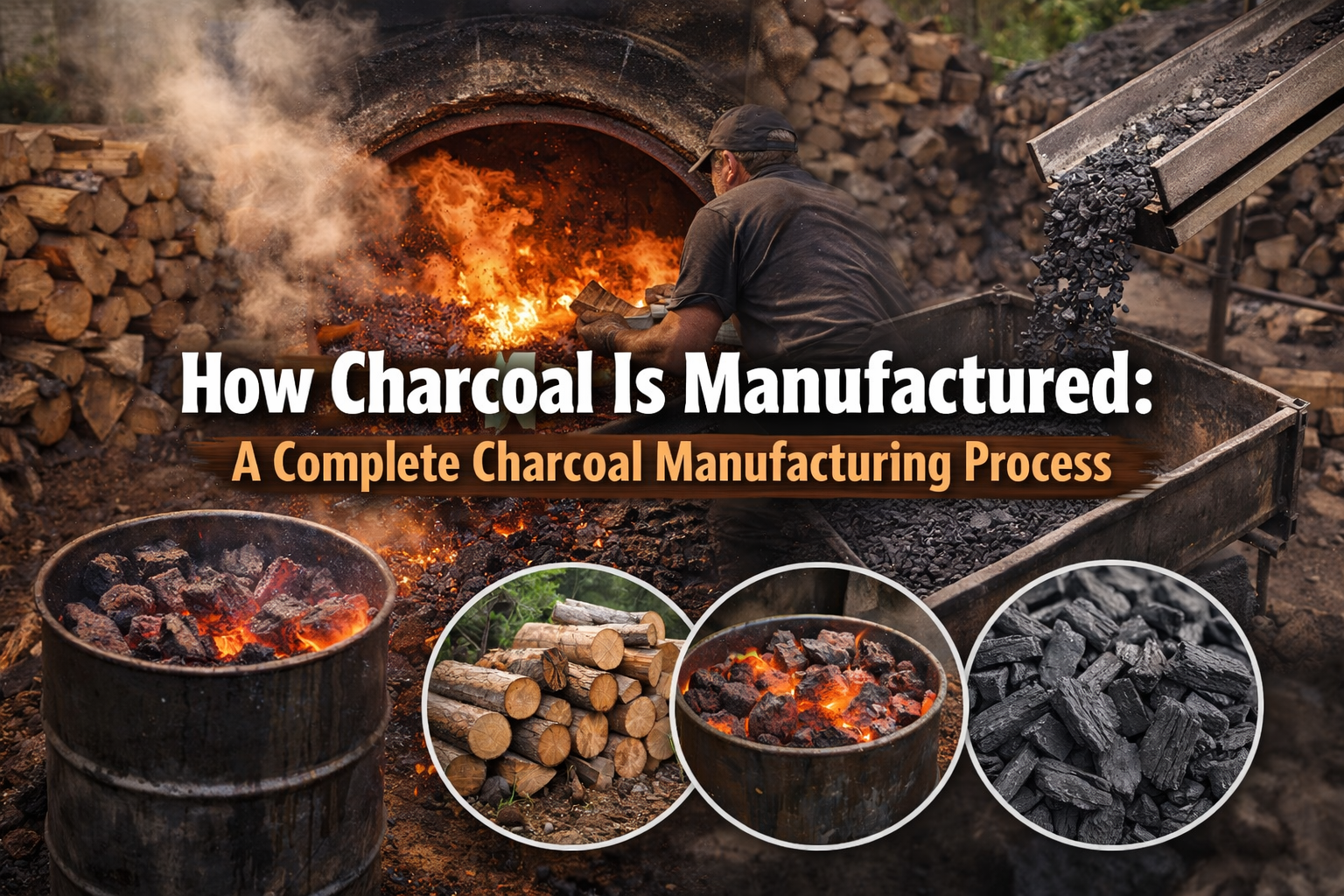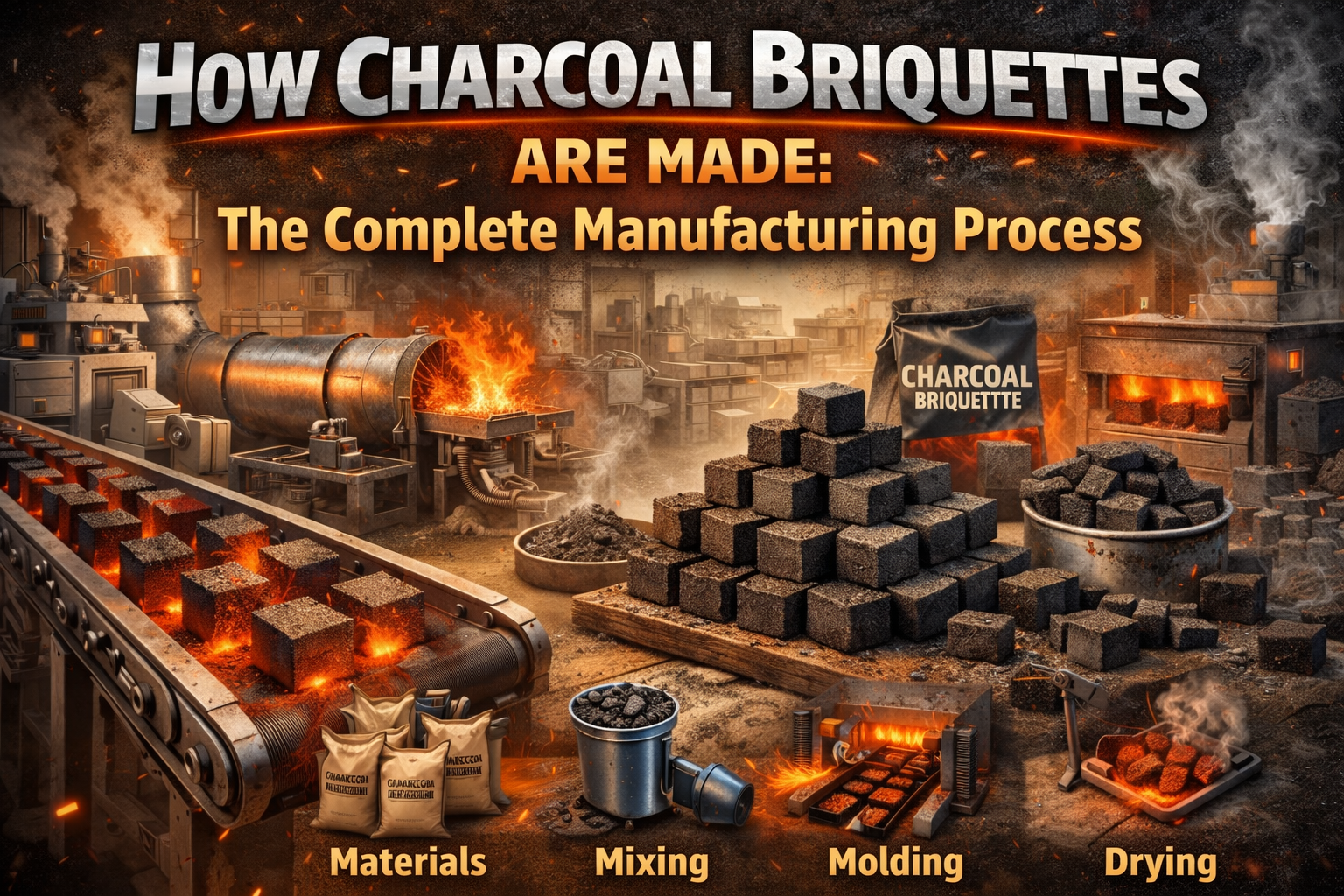



Most people who buy bamboo charcoal in a deodorizer pouch, a face wash, a water filter, or a bag of premium hookah coals have no idea how different it is from the wood charcoal they might use on a grill. They know it’s black, they know it’s supposed to be good for something, and they may have a vague sense that bamboo is sustainable. But the actual science of how bamboo becomes charcoal, why its internal structure behaves so differently from wood charcoal, and what the charcoal manufacturing process looks like from raw stalk to finished product, that story is rarely told.
It’s worth telling, because bamboo charcoal is genuinely unusual. Not in a marketing sense, but in a materials science sense. The cellular structure of bamboo creates a charcoal with properties that wood simply cannot match, and the range of products built on those properties, from water purification to skincare to textile manufacturing to high-end cooking fuel, reflects a material with real, measurable advantages in specific applications. Let us show you how bamboo charcoal is Bamboo Charcoal Made.
Why Bamboo Is an Exceptional Raw Material for Charcoal
Before getting into the manufacturing process, it’s worth understanding why bamboo produces such distinctive charcoal. The answer lies in bamboo’s biological structure.
Bamboo is technically a grass, not a wood, and this distinction matters enormously. While hardwood trees build their structure through dense interlocking fibers of cellulose, hemicellulose, and lignin laid down over decades, bamboo achieves its structural strength through a different architecture entirely. The culm of the bamboo stalk consists of a dense outer layer of vascular bundles packed tightly with fiber cells, surrounding a progressively less dense interior. The fiber cells in bamboo are narrower, more numerous, and oriented more uniformly than in wood. When this structure is carbonized, the result is a charcoal with a far more developed micropore network than wood charcoal can achieve.
This matters because porosity, specifically the quantity and size of microscopic pores, is the primary determinant of a charcoal’s ability to adsorb molecules from air and water. Adsorption, not absorption: molecules of gas or dissolved chemicals don’t soak into charcoal the way water soaks into a sponge. Instead, they stick to the surfaces of the pores, held by van der Waals forces. More pore surface area means more sites for molecules to attach, which means better performance in filtration, deodorization, and purification applications.
Research published in journals including the Journal of Hazardous Materials and Bioresource Technology has consistently found that bamboo charcoal has a BET surface area, the standard measurement of pore surface area, of 300 to 400 square meters per gram. For context, good wood charcoal typically measures 150 to 250 square meters per gram. The difference is not marginal. It represents fundamentally different performance in the applications that depend on adsorption capacity.
Beyond porosity, bamboo charcoal has two other properties that separate it from wood charcoal. First, it emits far-infrared radiation at rates of 90–95%, compared to 70–85% for wood charcoal. Far-infrared emission is the basis for bamboo charcoal’s use in textiles and wellness products, the claim being that far-infrared promotes circulation and warmth retention. Second, bamboo charcoal is alkaline when in contact with water, with a pH typically in the range of 8 to 10. This makes it useful as a soil amendment and explains why bamboo charcoal sticks placed in drinking water gradually raise the water’s pH toward a mildly alkaline state.
The Raw Material: Not All Bamboo Is Equal
There are over 1,500 species of bamboo distributed across tropical, subtropical, and temperate zones worldwide, and they vary enormously in culm diameter, fiber density, growth rate, and ultimately in the quality of charcoal they produce.
The undisputed standard for premium bamboo charcoal is Moso bamboo (Phyllostachys edulis), a giant temperate bamboo native to China and Japan that dominates commercial bamboo charcoal production globally. Moso culms grow to 15–20 centimeters in diameter and 20–28 meters in height. The fiber density in mature Moso culms is exceptionally high, which translates directly to dense, hard charcoal with well-developed pore structure. China’s Zhejiang, Fujian, and Hunan provinces, the heart of the global bamboo charcoal industry, are dominated by Moso plantations managed specifically for charcoal production.
In South America, Guadua bamboo (Guadua angustifolia) serves a similar role. One of the densest and strongest bamboos in the world, Guadua culms can reach 22 centimeters in diameter and produce excellent charcoal. Ecuador and Colombia have emerging bamboo charcoal industries based on Guadua that are gaining recognition in export markets.
In South and Southeast Asia, species including Dendrocalamus asper and Bambusa vulgaris are widely used for commercial charcoal production, though they generally produce slightly lower quality charcoal than Moso due to a less dense fiber structure.
The harvest timing of bamboo has as much influence on charcoal quality as species selection, and this point is seldom discussed in marketing materials. Bamboo must reach full structural maturity before harvest at least four years old, ideally five to six. Young bamboo (under three years) has not yet developed its full fiber density; the cells are still thin-walled, the lignin content is lower, and the resulting charcoal is soft, high in ash, and poorly structured. Experienced bamboo charcoal producers can identify a culm’s approximate age from the color and texture of its outer surface younger culms are bright green and somewhat glossy; older culms develop a matte, yellowish-green patina. The oldest culms on a stand, five to seven years old, are considered prime material.
Harvest timing within the year also matters. Bamboo harvested in autumn and winter has lower starch and sugar content in its culms than bamboo harvested in spring and summer. These carbohydrates burn off during carbonization, but higher sugar content means more volatile compounds in the kiln and slightly lower final carbon yield. Autumn-harvested bamboo is preferred for premium charcoal production.
Also read – Charcoal grades
Pre-Carbonization Preparation: Cutting and Drying
Fresh-cut bamboo culms contain 50–70% moisture by weight, and the first challenge of bamboo charcoal production is managing this moisture effectively. The principle is the same as for wood charcoal: every kilogram of water in the raw material that must be evaporated during carbonization wastes energy and reduces yield. Getting the bamboo to 10–15% moisture before the kiln is the target.
The preparation approach varies by intended product. For charcoal that will be sold as whole culm pieces, the long sticks used as room deodorizers or placed in water jugs, the culms are cut to consistent lengths (typically 30–60 centimeters) with the nodes left intact. Nodes in bamboo are the solid partitions that divide the hollow interior into chambers, and they serve as structural reinforcement during handling. Culm pieces are then stacked in covered drying sheds with good airflow.
For charcoal that will be processed into granules or powder after carbonization, the form used in filters, cosmetics, and industrial applications, the culms are often split lengthwise or broken into shorter sections before drying. The increased surface area from splitting accelerates moisture loss but produces a less visually attractive piece that’s unsuitable for whole-culm markets.
Natural air drying of bamboo in a well-ventilated shed takes four to twelve weeks, depending on the climate. Forced air or solar drying can accelerate this to two to four weeks. Mechanical drum drying brings it down to 24–72 hours, but requires energy investment. The economics of each approach depend on the scale of the operation and the local climate. In dry highland regions of Sichuan, China, where much premium bamboo charcoal is produced, the climate does much of the drying work naturally. You can also visit this blog for more: Hookah Charcoal Manufacturing Plant.
Carbonization: How is Bamboo Charcoal Made
The carbonization of bamboo follows the same general pyrolysis chemistry as wood heated in a low-oxygen environment, which drives off moisture, then volatile compounds, then hydrogen, leaving behind a carbon skeleton. But bamboo’s unique structure and composition mean the details look somewhat different, and the target temperature varies significantly depending on which product grade is being produced.
At around 100 to 180°C, free moisture finishes evaporating. The bamboo yellows visibly and smells like warm hay. Nothing dramatic is happening chemically, but this phase must be allowed to complete fully before temperatures rise further; rushing this step produces uneven carbonization downstream.
Between 180°C and 270°C, the hemicelluloses in the bamboo begin to decompose. Bamboo has a somewhat different hemicellulose composition than wood, with higher arabinoxylan content. This contributes to the slightly different aroma of bamboo carbonization, sharper and more acidic than wood pyrolysis, and produces pyroligneous acid with a somewhat different chemical profile.
The active carbonization phase begins around 270°C and accelerates sharply through 320–400°C as the cellulose in the bamboo fiber cells decomposes rapidly. Bamboo has a very high cellulose content 40–60% of dry weight, and this decomposition is strongly exothermic, releasing substantial heat and large volumes of flammable pyrolysis gas. In well-designed kilns, this gas is captured and burned as fuel to maintain kiln temperature. The bamboo transitions from brown to black during this phase, and the characteristic pore structure of bamboo charcoal begins to develop as the cell wall material carbonizes around the existing void spaces of the bamboo’s vascular anatomy.
From 400°C upward, the charcoal consolidates. Residual hydrogen and organic compounds are expelled, and the carbon structure tightens. Standard bamboo charcoal for deodorizer, cosmetic, and general filtration use is typically produced with peak temperatures of 500–700°C, held for two to six hours depending on kiln type and batch size.
Temperature Defines the Product Grade
What makes bamboo charcoal manufacturing genuinely more complex than wood charcoal production is that the target temperature is not fixed it varies dramatically depending on the intended application, and each temperature range produces a meaningfully different material.
Standard-grade bamboo charcoal at 300–500°C is suitable for fuel and basic soil amendment but has relatively low porosity and adsorption capacity. It is the lowest-value commercial grade.
Between 500°C and 700°C, bamboo charcoal reaches the quality level used for most deodorizers, cosmetics, and general water filtration products. The pore structure is well-developed, the fixed carbon content is 72–82%, and the surface area is in the range of 200–350 square meters per gram. This is the dominant commercial grade for consumer products.
Above 700°C, something more sophisticated begins to happen. The pore structure continues to develop, and the fixed carbon content rises above 82–85%. The resulting charcoal has surface areas of 300–500 square meters per gram, approaching the territory of lower-end activated carbon. This high-temperature grade commands premium prices for water filtration, air purification, and as a precursor for activated carbon production.
White Bamboo Charcoal: A Process Unlike Any Other
The most remarkable and least understood product in bamboo charcoal manufacturing is white bamboo charcoal, known in Japan as binchotan (白炭) and in China as baitan. Understanding how it is made requires setting aside most assumptions about what charcoal production looks like.
Standard charcoal production ends at the cooling stage, the kiln is sealed, the temperature drops, and charcoal is discharged. White bamboo charcoal production does not end there. After the bamboo has been fully carbonized at around 800–900°C, the kiln operator dramatically increases airflow, effectively allowing controlled combustion of the charcoal surface. The temperature at the kiln entrance spikes rapidly toward 950–1,200°C. The charcoal at the hottest zone literally glows orange-red.
At these extreme temperatures, the charcoal surface undergoes a rapid transformation. Residual organic compounds and surface impurities oxidize away. The carbon lattice structure reaches a near-graphitic state, becoming harder, denser, and more electrically conductive. The pore structure at this temperature is different from standard charcoal there are more mesopores (medium-sized pores) in addition to the micropores that dominate lower-temperature charcoal.
Then comes the most distinctive step in all of charcoal manufacturing: the hot charcoal is pulled from the kiln and immediately buried in a quenching mixture of fine earth, sand, and ash. This burial smothers the charcoal before it can combust completely in the open air, and the quenching medium conducts heat away rapidly, locking the high-temperature carbon structure in place. The minerals in the quenching earth coat the surface of each piece, producing the characteristic silvery-white or pale gray surface that gives white charcoal its name.
The resulting product has qualities that genuinely distinguish it from everything else in the charcoal world. It is extraordinarily hard to strike two pieces together to produce a metallic ring that sounds more like stone than carbon. It is electrically conductive, with resistivity low enough to use in some agricultural and industrial applications. It has a surface pH of 9–11, making it strongly alkaline. And it has surface areas that can exceed 400–600 square meters per gram, performing as a premium natural filter without any activation step.
Premium Japanese binchotan made from white oak (Quercus phillyraeoides) or from Moso bamboo is one of the most expensive charcoal products in the world, retailing at USD 15–50 per kilogram depending on quality and origin. Its use in the Tea Ceremony tradition of Japan, where binchotan is burned in specific arrangements to achieve precise temperature profiles has given it a cultural significance that extends well beyond its physical properties.
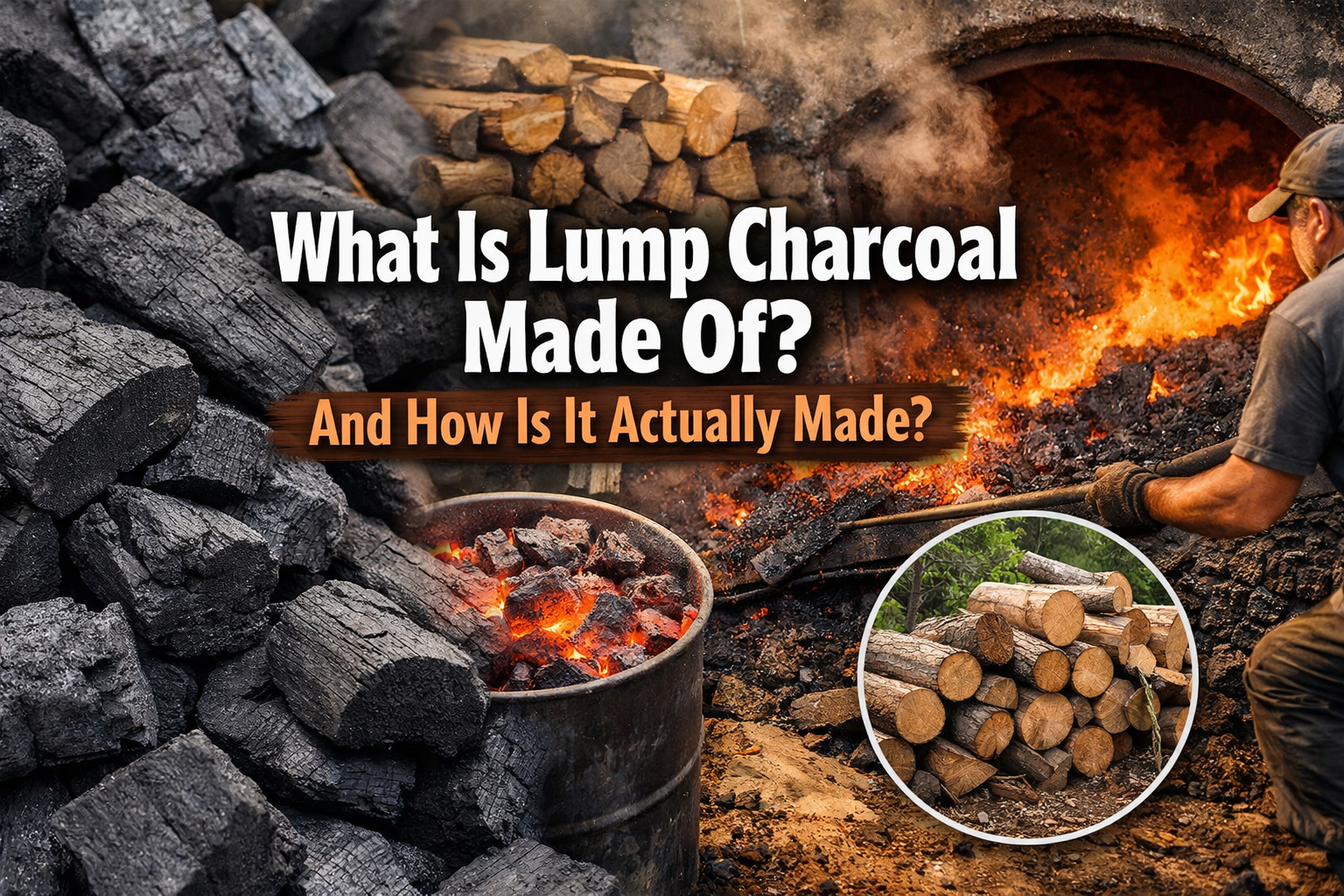
Also read – What Is Lump Charcoal Made Of?
Processing After Carbonization
For most bamboo charcoal grades, carbonization produces a finished product that simply needs to be broken, sized, and packaged. But the diversity of bamboo charcoal applications means there is a range of post-carbonization processing that can occur.
Whole culm pieces are the simplest output — carbonized lengths of bamboo that retain the visual character of the original culm, complete with nodes. These are sold directly as deodorizers, water purifiers, and decorative pieces. Quality is assessed visually: the surface should be uniformly black and matte, the pieces structurally sound without cracks running through the nodes, and the weight appropriate for the culm diameter.
For granular products, carbonized bamboo is run through a crusher and then screened to target size ranges. The granule size determines the application — coarser granules (2–8 millimeters) are used in water filter cartridges and aquarium systems, where good flow-through is important. Finer granules (0.5–2 millimeters) are used in air purification systems and as soil amendment. Each size range commands a different price and serves a different market.
Bamboo charcoal powder is produced by further milling granules in a hammer mill or ball mill, then classifying in an air classifier to achieve consistent fineness. Standard cosmetic-grade bamboo charcoal powder is 200 mesh — particles smaller than about 75 micrometers. This is the material that goes into face washes, soaps, toothpastes, and sheet masks. Premium pharmaceutical-grade powder is milled finer still, to 300–400 mesh, and tested rigorously for heavy metal content, microbial contamination, and particle size distribution.
Activated Bamboo Carbon: Taking It Further
Standard bamboo charcoal is already useful for many filtration applications. But the highest-performance filtration products — medical-grade water purifiers, industrial solvent recovery systems, gas purification — require activated carbon, which has surface areas of 700–1,200 square meters per gram and above.
Bamboo charcoal is an excellent precursor for activated carbon production because its already-high starting porosity means the activation step has more to work with. The activation of bamboo charcoal is typically done in one of two ways.
Steam activation involves passing steam through bamboo charcoal at 800–1,000°C. The steam reacts with the carbon surface in a controlled way, etching out additional pore volume and increasing surface area dramatically without chemically contaminating the product. Steam-activated bamboo carbon is the preferred form for drinking water treatment and food-grade applications because it contains no chemical residues.
Chemical activation uses phosphoric acid or zinc chloride to swell and restructure the carbon before or during carbonization. Chemical activation produces very high surface areas but requires a washing step to remove the activation chemical, and the finished product requires certification to confirm residual chemical levels are within acceptable limits for the intended application.
Where Bamboo Charcoal Is Made and Where to Buy It in Bulk
China produces approximately 78% of the world’s bamboo charcoal, primarily in Zhejiang, Fujian, Hunan, and Sichuan provinces. Japan produces smaller quantities of the highest-quality premium products, particularly binchotan. Vietnam, Indonesia, and India have growing production industries.
For bulk purchasing, the sourcing landscape divides broadly into three tiers. At the lowest price point, commodity bamboo charcoal from China — primarily fuel grade and basic deodorizer grade — is available through platforms like Alibaba with minimum orders of 500 kilograms and FOB prices starting around USD 800–1,200 per metric ton. Mid-range quality products, particularly coconut-grade and standard filter-grade bamboo charcoal from China and Vietnam, trade at USD 1,500–3,000 per metric ton in container quantities. Premium products — high-temperature filter grade, cosmetic-grade powder, and binchotan — command USD 4,000–30,000 per metric ton depending on specification and origin.
In India, commercial bamboo charcoal production is concentrated in the northeastern states — Assam, Meghalaya, and Manipur — where Moso and related species grow abundantly. The industry is relatively young but growing, and domestic prices for standard-grade bamboo charcoal range from INR 25 to 60 per kilogram, depending on grade and quantity.
For buyers sourcing bamboo charcoal in bulk, the most important quality specification to request is a proximate analysis confirming fixed carbon content, ash content, and moisture, along with a BET surface area measurement for any product intended for filtration or adsorption applications. Cosmetic and food-contact grades should additionally be tested for heavy metals, particularly lead, arsenic, and cadmium, since bamboo concentrates minerals from soil.
Frequently Asked Questions
Is bamboo charcoal the same as activated charcoal?
No, and this distinction matters practically. Bamboo charcoal is the product of carbonization alone — pyrolysis of bamboo without further processing. Activated charcoal is bamboo (or wood, or coconut shell) charcoal that has undergone a secondary activation step — steam or chemical — that dramatically increases its surface area and adsorption capacity. For mild deodorizing and water conditioning, standard bamboo charcoal is adequate. For serious filtration, medical applications, or industrial gas purification, activated bamboo carbon with its much higher surface area is required.
Does bamboo charcoal really purify air and water?
The adsorption chemistry is real and well-documented. Bamboo charcoal effectively adsorbs formaldehyde, benzene, toluene, and other volatile organic compounds from air, as well as chlorine, certain heavy metals, and some organic contaminants from water. The limitation is capacity — a bamboo charcoal deodorizer bag will eventually saturate its pores and stop working, which is why manufacturers recommend regenerating them monthly by placing them in direct sunlight for two to three hours, which drives off trapped molecules and reopens pore surfaces.
Why is bamboo charcoal sustainable?
Bamboo reaches harvest maturity in four to six years, compared to 20–80 years for most charcoal hardwoods. It regenerates from its root system after harvest without replanting. It sequesters carbon during growth at five to twelve tons of CO₂ per hectare per year, which is substantially higher than most managed forests. And the entire above-ground biomass of the culm can be used — there is essentially no waste in a bamboo charcoal operation if the culm is managed properly. These are genuine sustainability advantages, not marketing claims.
What should I look for when buying bamboo charcoal products?
For deodorizer bags and whole pieces: look for disclosure of bamboo species and origin, weight per piece, and recommended regeneration frequency. For cosmetic-grade powder: request a certificate of analysis confirming particle size, heavy metal testing, and microbial testing. For water filtration: BET surface area should be specified; anything below 200 m²/g is insufficient for meaningful filtration. For binchotan or premium white charcoal: origin matters significantly — Japanese binchotan commands a premium because the production process is controlled and the raw material is known. Chinese baitancan be excellent but quality varies more widely