

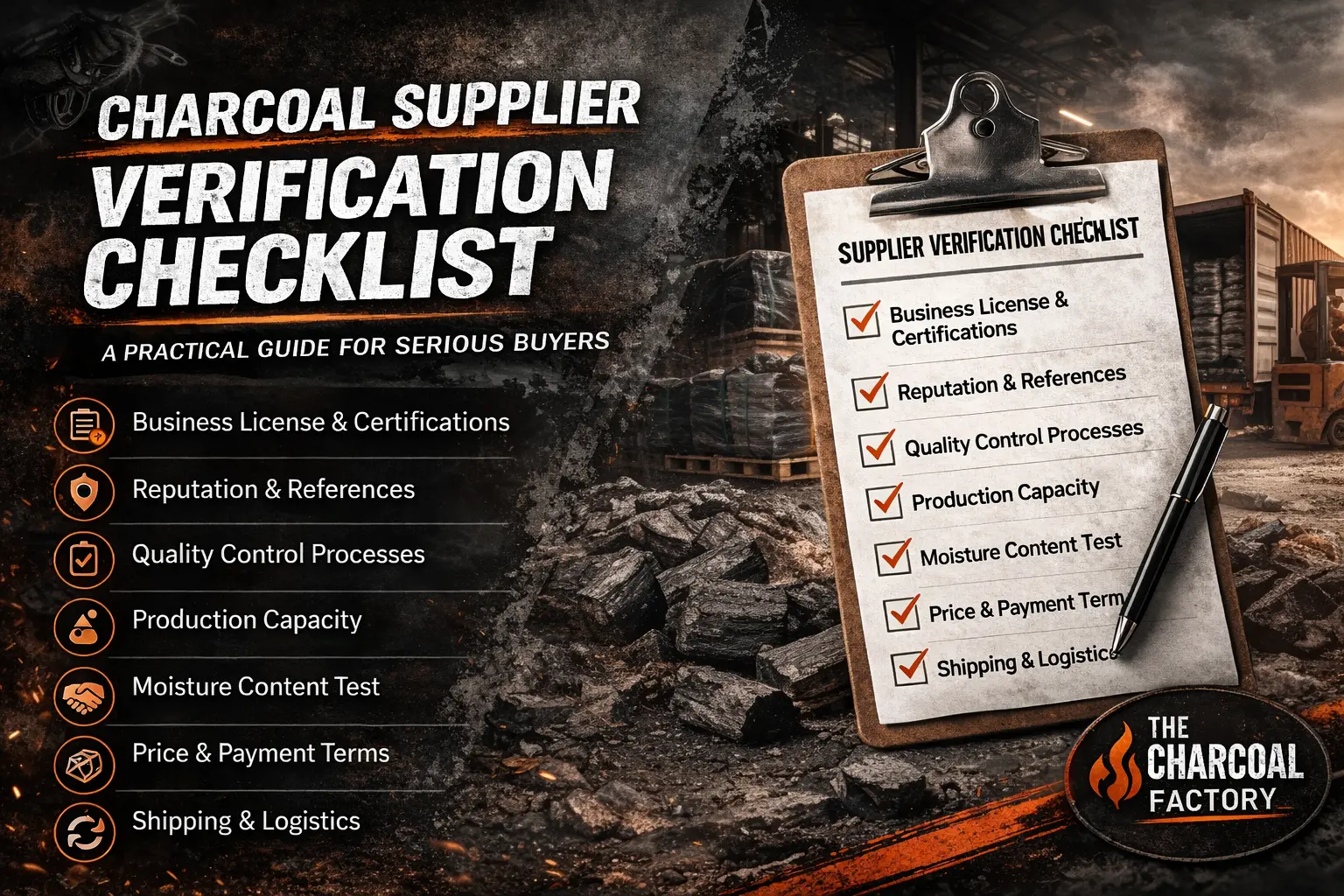
In the charcoal trade, most problems don’t start at the port; they start at the supplier selection stage. A supplier might look professional on the surface, offer attractive pricing, and even send decent samples. But without proper verification, the risk of inconsistent quality, delayed shipments, or compliance issues increases significantly.
This charcoal supplier verification checklist keeps things simple and real, even before you search for how to source charcoal bulk. It follows the same structure most experienced importers use, but with added clarity, examples, and context so you actually understand what to check and why it matters.
Table of Contents
1. Business & Legal Verification

Before looking at the product, ensure the entity is legitimate and compliant with international trade laws. This step is often ignored, but it’s where many sourcing mistakes begin. And all these are presented in this charcoal supplier verification checklist blog.
- A genuine supplier should be able to provide a valid business license and tax registration details. This confirms you are dealing with an officially registered company, not an individual trader operating without accountability. If a supplier hesitates or delays sharing these documents, it’s usually a sign to proceed carefully.
- You should also verify their export licenses. Charcoal export is regulated in many countries due to environmental concerns, especially around illegal logging. A supplier without proper export permits may still offer you a shipment, but it can get stuck at customs or rejected before loading.
- Another important factor is FSC certification (Forest Stewardship Council). This certification indicates that the wood used for charcoal is sourced from responsibly managed forests. Today, many international buyers, especially in Europe and the Middle East, prefer or require FSC-certified charcoal. If a supplier cannot provide this, it raises questions about their sourcing practices.
- Finally, check their trade history. Ask for recent Bills of Lading (B/L) or a basic client reference. This is not about trust, it’s about proof. A supplier who has successfully shipped to your region before is far less risky than one who hasn’t.
Must read – Charcoal grades
2. Product Quality & Specifications
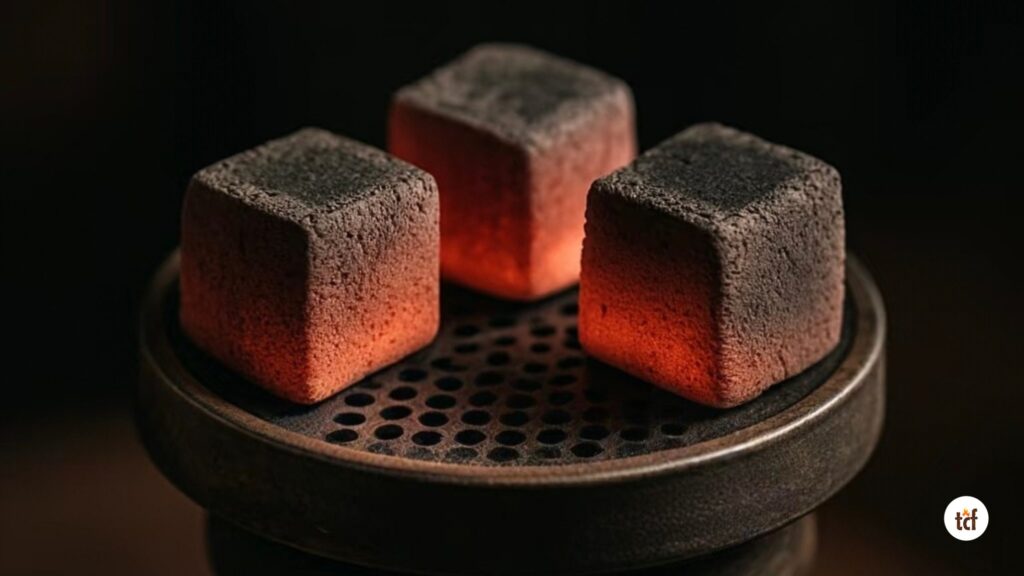
Once the business is verified, the next step is understanding the actual product quality. This is where many buyers rely too much on images or assumptions instead of real data.
- Always ask for a laboratory analysis report (COA). This document gives you measurable values that define how the charcoal will perform.
- The most important parameter is fixed carbon content, which should ideally be between 75% and 85% for high-quality lump charcoal or briquettes. This directly affects heat strength and burn duration. Lower carbon content usually means weaker performance and faster consumption.
- Moisture content should be below 8%. This is critical but often overlooked. High moisture makes charcoal harder to ignite and increases its weight—meaning you end up paying for water instead of usable fuel. In real scenarios, shipments with high moisture often lead to customer complaints about slow ignition.
- Ash content should remain between 3% and 5%. Higher ash not only reduces heat efficiency but also creates more residue, which becomes a problem for restaurants and commercial users who need consistent performance.
- Volatile matter should stay below 15%. If it’s higher, the charcoal tends to produce more smoke and odor, which is unacceptable for applications like shisha or indoor grilling.
- You should also check the calorific value, which indicates the heat output. While numbers matter, performance matters more, so always combine this with a practical check.
- Finally, verify the burning time. Don’t rely only on reports. Ask for a burn test video or, ideally, order a sample and test it yourself, as this is important for the charcoal supplier verification checklist. This is one of the simplest ways to identify quality differences before placing a bulk order.
3. Production & Scalability
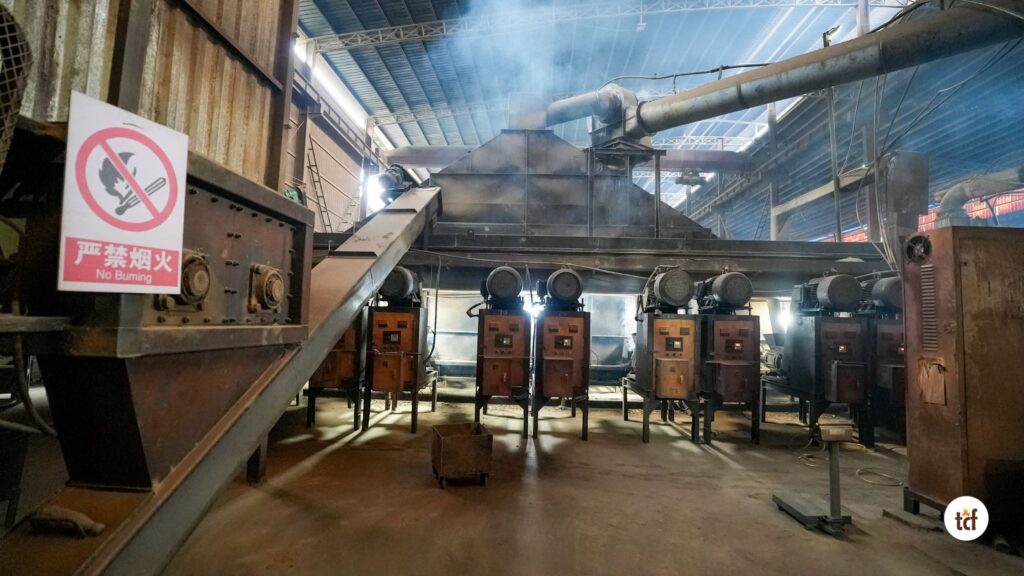
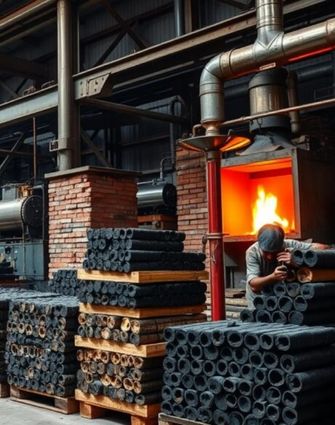
A supplier might present themselves as a manufacturer, but in many cases, they are traders sourcing from multiple factories. This doesn’t always mean poor quality, but it does increase the risk of inconsistency. And this is one of the most important point in the charcoal supplier verification checklist.
- Start by understanding the raw material source. Whether it’s hardwood like oak or beech, or agricultural waste like coconut shells, each type serves a different purpose. For example, coconut shell charcoal is widely preferred for shisha due to its low ash and clean burn, while hardwood charcoal is commonly used for BBQ due to its strong heat.
- Next, assess their production capacity. It’s not just about whether they can supply your current requirement, but whether they can maintain quality as volume increases. A supplier who handles 2–3 containers per month may struggle when you scale to 10 or more.
- Storage facilities also play a bigger role than most buyers realize. Charcoal naturally absorbs moisture from the environment. If it is stored in open or humid conditions, the quality can drop even before it is packed. Asking for warehouse photos or videos is a simple but effective step here.
- Lastly, look at packaging options. If you are building a brand, the ability to offer custom packaging or private labeling becomes important. Suppliers who only deal in bulk bags may limit your flexibility in the long term.
4. Logistics & Shipping

As per the charcoal supplier verification checklist, even if everything else is perfect, poor handling of logistics can completely disrupt your shipment.
- Charcoal is classified as Dangerous Goods (UN 1361) by many shipping lines because it can self-heat if not processed correctly. This makes documentation and handling extremely important.
- The most critical requirement is the Self-Heating Test (SHT) certificate. This document confirms that the charcoal is stable and safe for transport. Without it, shipping lines may refuse to load your cargo, leading to delays and additional costs.
- Another key factor is the weathering process. After production, charcoal must be cooled and aired for at least 14 days before packing. If this step is rushed, residual heat inside the charcoal can create risks during transit.
- You should also ask about a vanning survey, where a third-party inspection agency like SGS or Intertek monitors the container loading process. This ensures that the right product, quantity, and packaging are being loaded as agreed. It adds an extra layer of security, especially for large orders.
Work with a Verified Charcoal Manufacturer
For the charcoal supplier verification checklist, once you’ve gone through the supplier checklist, the next step is choosing a partner that already meets these standards, without the risk of trial and error.
At The Charcoal Factory, we supply export-grade bamboo and wood charcoal with verified specifications, consistent grading, and full compliance documentation, so you don’t have to second-guess quality or logistics.
You can explore our bamboo charcoal range for shisha and premium applications:
- Bamboo Charcoal
- Machine-Made Bamboo Charcoal
- A-Grade Machine-Made Bamboo Charcoal
- Shaped Bamboo Charcoal
We also offer wood charcoal products for BBQ and commercial use:
- Machine-Made Wood Charcoal
- Shaped Wood Charcoal
All products are available in bulk with COA reports, export documentation, and private-label packaging options, aligned with the exact checkpoints covered above.
Quick Red Flags
In the charcoal supplier verification checklist, some warning signs should not be ignored, even if the pricing looks attractive.
If a supplier refuses to provide FSC certification, it may indicate sourcing from illegal or unregulated forests. Prices that are significantly below the market average often point to poor carbonization or contamination with dust, stones, or excess moisture.
The absence of an SHT certificate is another major risk. Without it, your shipment may never leave the port, regardless of how good the product is.
Final Thoughts
A reliable charcoal supplier is not defined by price alone, but by consistency, transparency, and compliance. Most issues in charcoal sourcing are preventable if the right checks are done early.
This charcoal supplier verification checklist is not about making the process complicated; it’s about making it controlled. When you verify the business, confirm the product data, understand the production, and secure the logistics, you significantly reduce the chances of failure.
In a market where one bad shipment can impact your entire business, taking the time to verify your supplier properly is not just a step; it’s a strategy.
Frequently Asked Questions
What is the difference between “Lump Charcoal” and “Briquettes”?
Lump Charcoal: Made directly from hardwood pieces. It burns hotter and faster, contains no additives, and is preferred by professionals for flavor.
Briquettes: Made from charcoal dust mixed with a binder (like starch). They burn longer and more consistently but at a lower temperature.
Why is “Moisture Content” so important?
High moisture (above 10%) means you are paying for water weight. It also makes the charcoal difficult to ignite and causes it to “spit” or spark excessively during burning.
What does “Fixed Carbon” tell me?
This is the measure of the actual fuel content. High-quality charcoal typically has 75% to 85% fixed carbon. Anything lower usually indicates the wood wasn’t fully carbonized (burnt properly).
Is charcoal considered a “Dangerous Good”?
Yes. Under international maritime law, charcoal is classified as UN 1361 (Carbon, animal or vegetable origin). It is prone to spontaneous combustion if not handled correctly.
What is a “Self-Heating Test” (SHT)?
It is a mandatory lab test where a sample is kept in an oven at a specific temperature for 24 hours. If the sample doesn’t catch fire or exceed a certain temperature, it is cleared for shipping. No SHT = No Shipping.