

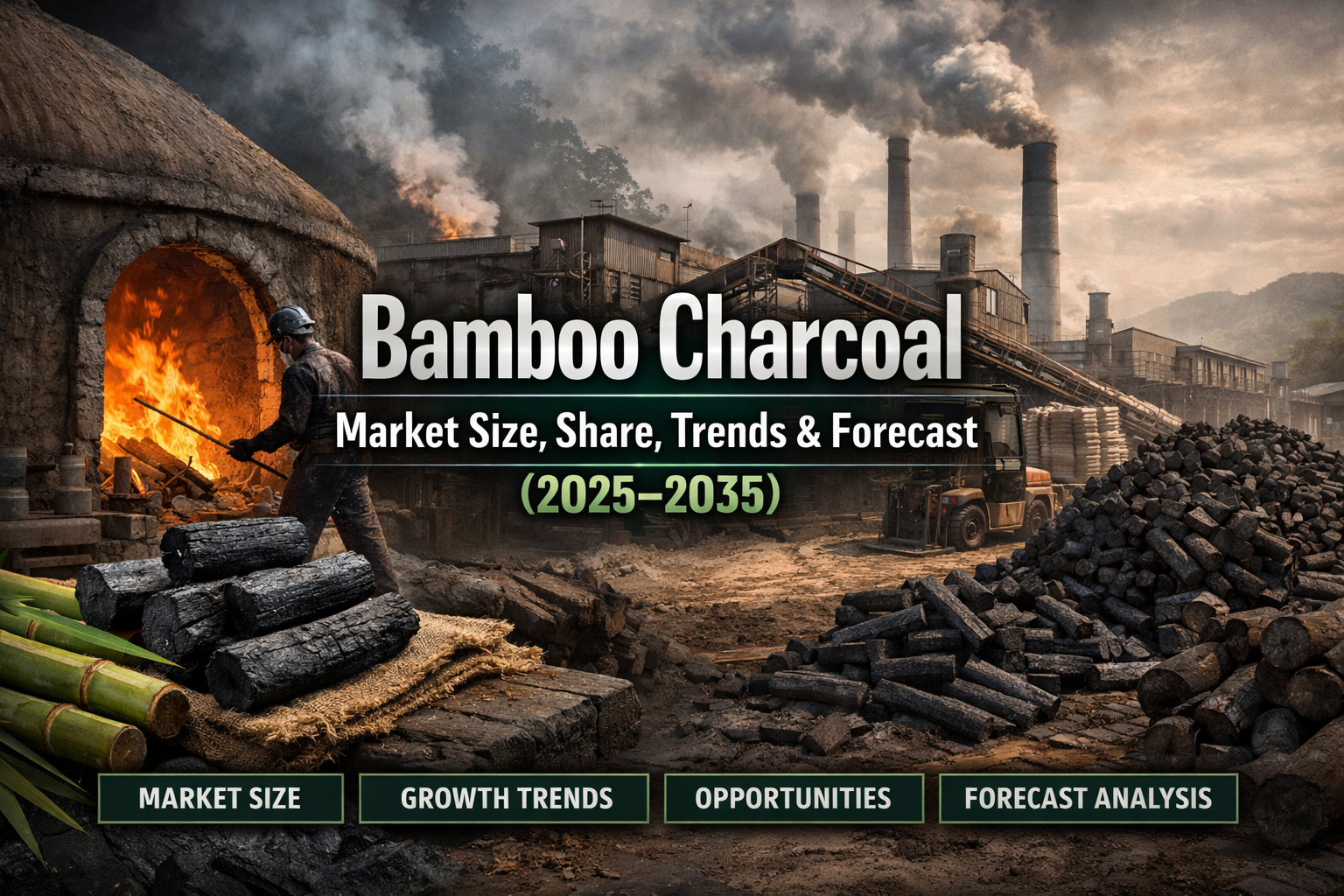
The global bamboo charcoal market is on a clear upward trajectory, valued at $17.46 billion in 2024 and projected to reach $37.76 billion by 2035, growing at a CAGR of 7.26% over the forecast period. What’s driving this growth isn’t a single factor but a convergence of sustainability momentum, expanding health consciousness, and a rapid broadening of industrial applications across sectors as varied as pharmaceuticals, agriculture, and personal care.
This report covers everything analysts, investors, product developers, and market researchers need to understand about where the bamboo charcoal market stands today and where it is headed.
Key market highlights at a glance
- The bamboo charcoal market was valued at $17.46 billion in 2024, rising to $18.73 billion in 2025
- Projected to reach $37.76 billion by 2035 at a 7.26% CAGR
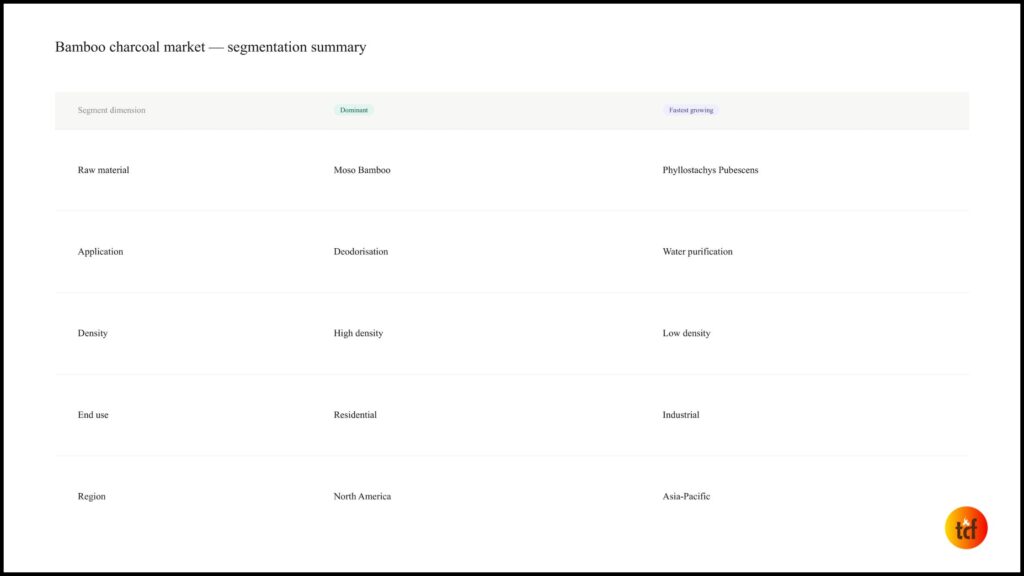
- North America holds the largest regional market share, driven by strong consumer preference for sustainable products
- Asia-Pacific is the fastest-growing region, propelled by rising health and wellness awareness
- Moso Bamboo dominates the raw material supply; Phyllostachys Pubescens is emerging rapidly due to its fast growth rate
- Deodorisation is the largest application segment; Water Purification is the fastest-growing
- Residential end use leads in volume; Industrial is the fastest-growing end-use category
- High-Density bamboo charcoal holds the largest density segment share; Low-Density is growing fastest
- Key market drivers: sustainability initiatives, health consciousness, e-commerce expansion, and regulatory support for eco-friendly materials
Bamboo charcoal market size and forecast (2024–2035)
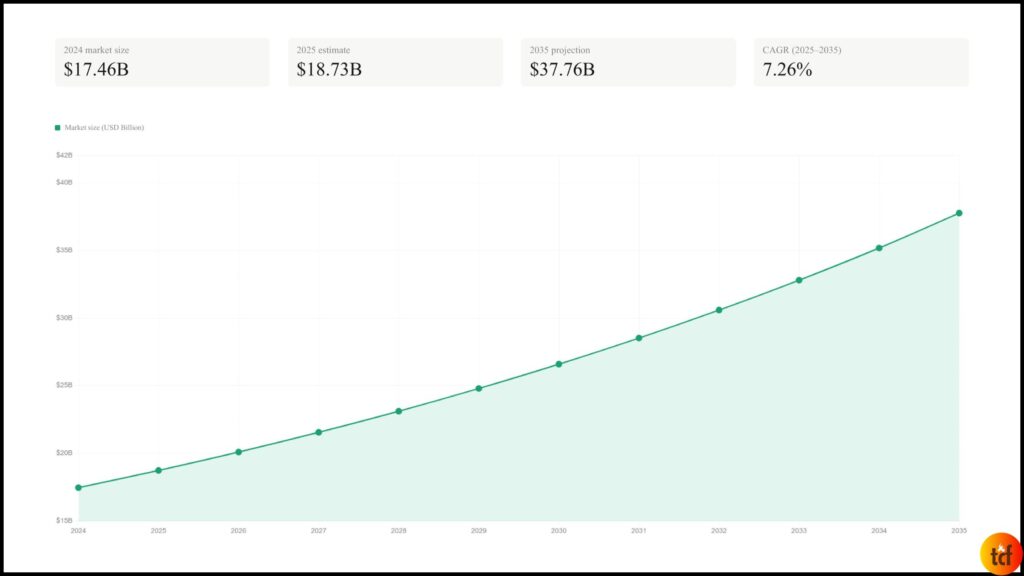
According to Market Research Future analysis, the bamboo charcoal market has entered a sustained growth phase that is expected to hold through the next decade. The numbers tell a clear story:
| Year | Market Size |
| 2024 | $17.46 billion |
| 2025 | $18.73 billion |
| 2035 | $37.76 billion |
| CAGR (2025–2035) | 7.26% |
This near-doubling of market value over ten years is underpinned by structural demand shifts not cyclical consumption spikes, which gives the forecast a high degree of confidence among analysts tracking sustainability-driven materials markets.

Bamboo charcoal market trends
The bamboo charcoal market is currently undergoing a notable transformation, driven by increasing consumer awareness regarding sustainability and eco-friendly products. This shift in consumer behaviour is influencing multiple sectors simultaneously, such as personal care, food and beverage, home goods, agriculture, and industrial manufacturing.
Sustainability at the centre
Consumers are actively seeking eco-friendly charcoal products, and bamboo charcoal occupies a uniquely favourable position in that landscape. Its raw material, bamboo, is fast-growing, renewable, and requires no replanting after harvest. This alignment with environmental values makes bamboo charcoal a default beneficiary of the broader sustainable consumption movement. As regulations across North America, Europe, and parts of Asia-Pacific tighten around carbon emissions and single-use synthetics, bamboo charcoal stands to gain further tailwinds from policy as well as consumer demand.
Diverse application expansion
One of the defining characteristics of the current market phase is the broadening of bamboo charcoal’s application base. Beyond its traditional uses in deodorisation and water filtration, bamboo charcoal manufacturers are actively exploring its integration into textiles, food additives, pharmaceutical formulations, agricultural soil amendments, and biodegradable packaging. Each new application category that bamboo charcoal successfully penetrates expands the total addressable market and opens new revenue streams for producers.
Health and wellness as a structural demand driver
The global wellness economy has grown consistently for over a decade, and bamboo charcoal has found a durable home within it. Its detoxifying and purifying properties in both air and water applications, and in personal care formulations, resonate powerfully with consumers who prioritise natural alternatives to synthetic ingredients. The rising interest in holistic living is not a short-term trend; it is a generational shift in purchasing philosophy that continues to structurally support bamboo charcoal demand.
Key market drivers
Sustainability initiatives
The bamboo charcoal market is experiencing a surge in demand due to increasing sustainability initiatives across various sectors. As consumers grow more environmentally conscious, the preference for sustainable products has intensified. Bamboo, being a fast-growing and renewable resource, aligns perfectly with these initiatives. Companies across personal care, home goods like charcoal for BBQ, and industrial manufacturing are incorporating bamboo charcoal into their product lines in response to both consumer pressure and corporate ESG commitments, thereby expanding the market’s reach significantly.
Health consciousness
Rising health consciousness among consumers is significantly influencing bamboo charcoal demand. As individuals become more aware of the impact of their consumption choices on health and well-being, interest in natural and organic products continues to accelerate. Bamboo charcoal is recognised for its detoxifying properties, purifying air, filtering water, and promoting skin health, and the demand for it in health-related applications such as dietary supplements, detox products, and wellness routines is rising as a result.
Regulatory support
Regulatory support for sustainable materials is becoming increasingly prevalent globally, creating a positive structural environment for the bamboo charcoal market. Governments and organisations are implementing policies that encourage the use of eco-friendly products and incentivise companies utilising renewable resources. Certifications related to sustainability and organic products are also gaining traction, further legitimising bamboo charcoal as a viable mainstream option. As regulatory frameworks continue to evolve in favour of sustainable practices, the bamboo charcoal market is likely to see enhanced growth opportunities across both consumer and industrial segments.
E-commerce expansion
The rapid expansion of e-commerce platforms has transformed the route to market for bamboo charcoal by providing greater access to a wider consumer base. Online shopping has become a preferred method for purchasing across product categories, including bamboo charcoal. This shift is particularly beneficial for niche and sustainability-focused brands, as it allows them to reach engaged audiences without the constraints of traditional retail shelf space. The convenience of online purchasing, coupled with the ability to compare products and access consumer reviews, continues to drive growth — especially among younger, health-conscious demographics.
Innovative product development
Innovation plays a crucial role in the current market expansion phase. Manufacturers are continuously exploring new applications and formulations for air purifiers, skincare items, food additives, bamboo charcoal-infused textiles, and industrial filtration systems, among them. The personal care segment, in particular, is experiencing notable growth, with bamboo charcoal incorporated into facial masks, cleansers, and toothpastes. As companies invest in research and development, the pipeline of innovative bamboo charcoal products catering to diverse consumer needs continues to grow.
Must read – Charcoal Bulk Buying Guide
Market segmentation insights
By raw material: Moso Bamboo vs. Phyllostachys Pubescens
The raw material segment is primarily composed of Moso Bamboo, Phyllostachys Pubescens, and a range of other bamboo species.
Moso Bamboo (dominant): Moso Bamboo holds a significant majority of market share due to its abundance and superior quality for charcoal production. Its high density and ideal carbon content translate into superior burn quality and utility across diverse applications from cooking and air purification to industrial filtration. Its widespread availability across China, Japan, and Vietnam ensures a reliable and scalable supply chain that producers depend on.
Phyllostachys Pubescens (fastest-growing): While it does not yet surpass Moso Bamboo in volume, Phyllostachys Pubescens is gaining meaningful traction. Its rapid growth rate and unique characteristics make it increasingly attractive for specialised applications, and its growing recognition among manufacturers and consumers signals a promising trajectory. Sustainability trends and innovative processing techniques are both contributing to its rise as an emerging contender in the raw material segment.
By application: Deodorisation, Water Purification, Health & Personal Care, Agriculture
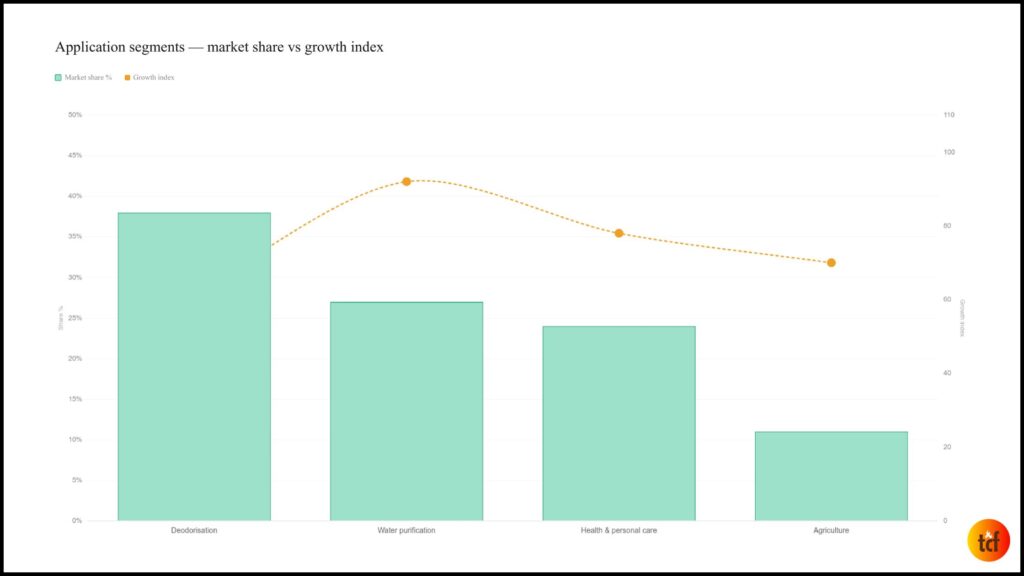
Deodorisation (dominant): Deodorisation is firmly established as the largest application segment. Bamboo charcoal’s effectiveness in absorbing odours and harmful substances from the environment has been proven across a wide range of products, from air purifiers and refrigerator sachets to car deodorisers and shoe inserts. Its biodegradable nature reinforces its strong positioning among environmentally conscious consumers, and its established footprint across both residential and commercial sectors cements its dominance.
Water Purification (fastest-growing): The water purification segment is rising rapidly as consumers and industrial users alike seek natural methods to ensure water quality. Heightened global awareness about clean water access, increasing pollution concerns, and a shift towards natural filtration methods are all driving this expansion. Bamboo charcoal’s effectiveness as a filtration agent for impurities, including heavy metals, chlorine, and other contaminants, positions it competitively in both consumer (pitcher filters, Binchotan sticks) and industrial water treatment applications.
Health & Personal Care: The health and personal care application is one of the market’s most dynamic segments. Activated bamboo charcoal is now a recognised ingredient across toothpastes, facial masks, body scrubs, soaps, and wellness supplements. This segment benefits from high brand premiums and strong consumer storytelling around natural ingredients, making it an attractive area for product innovation and margin expansion.
Agriculture: Agriculture represents an emerging but increasingly significant application for bamboo charcoal. Used as a soil amendment often referred to as biochar, it improves water retention, enhances nutrient absorption, and supports microbial activity in soil. As sustainable and precision agriculture practices scale globally, bamboo charcoal biochar is being evaluated both as a performance-enhancing soil input and as a carbon sequestration tool aligned with climate commitments.
By density: High Density, Medium Density, Low Density
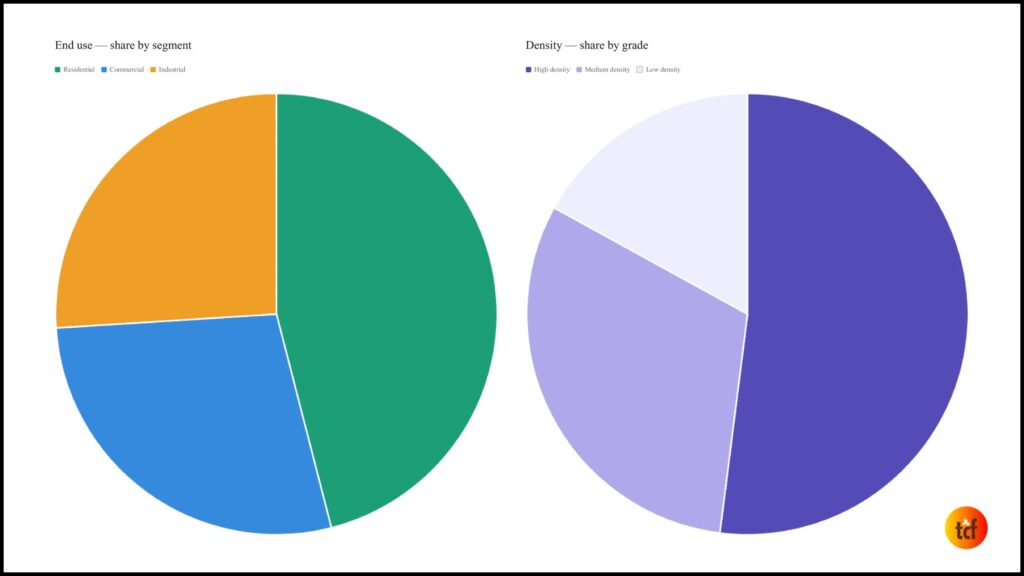
High Density (dominant): High-density bamboo charcoal is the largest segment by market share. Its superior adsorption capabilities and durability make it the preferred choice for industrial applications and long-life air purification systems. It is well-established in applications that demand long-lasting, high-performance results from heavy industrial filtration to premium air purification units.
Medium Density (emerging): Medium-density bamboo charcoal is gaining meaningful traction as an attractive option for consumers seeking a balance between cost and performance. It is increasingly finding its place in the consumer goods space, particularly in home care and personal care products and is growing as a niche among environmentally conscious consumers who want effective, affordable, eco-friendly solutions.
Low Density (fastest-growing): While the smallest segment currently, low-density bamboo charcoal is growing rapidly, particularly within the health and wellness product category. Its lighter format suits certain packaging requirements and product formulation applications, and growing consumer interest in wellness-oriented bamboo charcoal products is accelerating its adoption.
Read before buying the charcoal – charcoal supplier verification checklist
By end use: Residential, Commercial, Industrial
Residential (dominant): The residential segment holds the largest share of the bamboo charcoal market. Increasing consumer awareness about sustainability and eco-friendly products, combined with the rising trend of home gardening and eco-conscious living, has driven strong household adoption of bamboo charcoal in air purifiers, deodorisers, personal care items, and garden applications. As sustainable living shifts from aspiration to mainstream behaviour, residential demand continues to compound year-on-year.
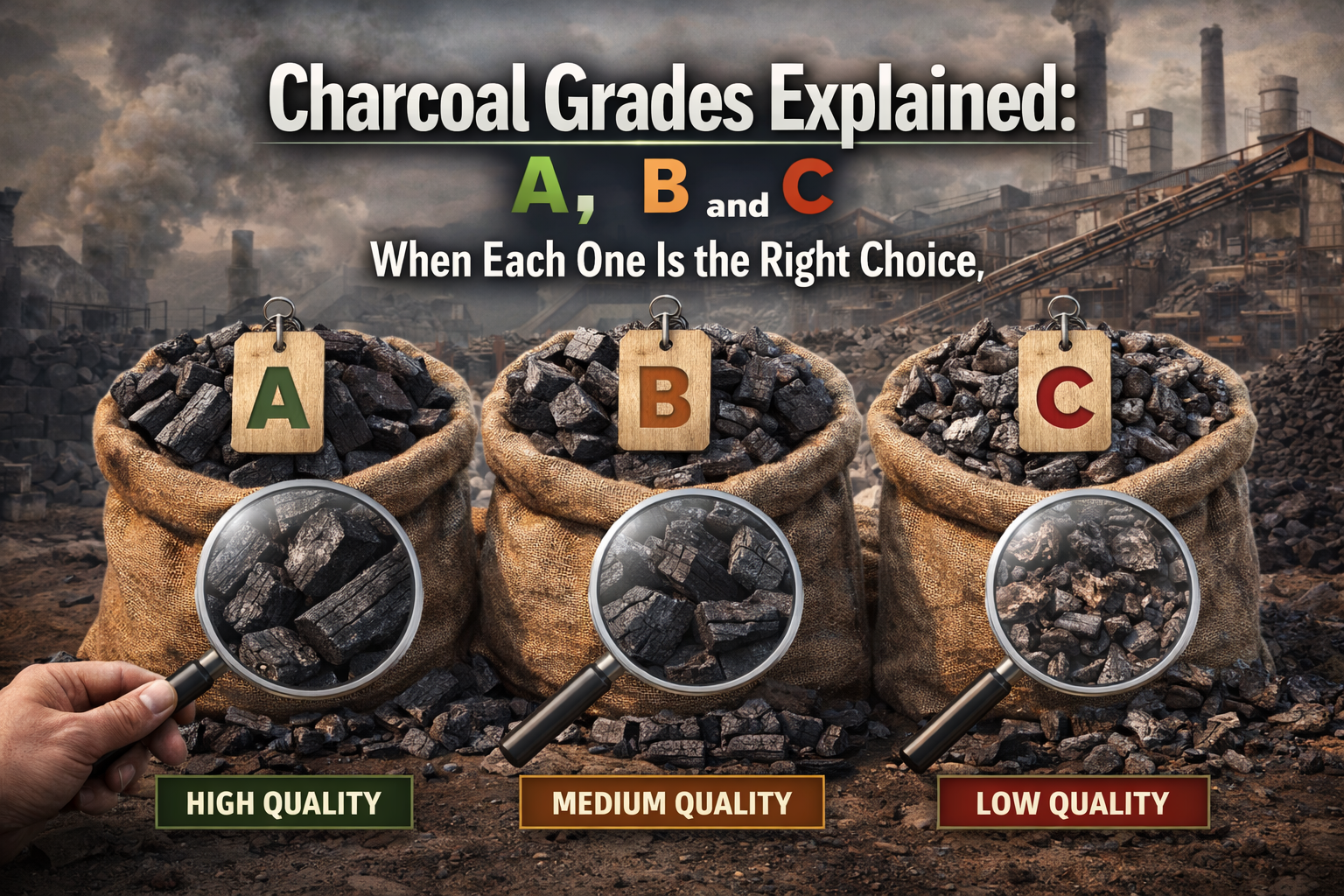
Commercial: The commercial segment represents a significant and growing application base for bamboo charcoal, spanning hospitality, retail, food service, and office environments. Commercial buyers are increasingly incorporating bamboo charcoal in air purification systems, cleaning products, and building materials as part of broader sustainability and indoor air quality commitments. Charcoals such as A grade charcoal and B grade charcoal.
Industrial (fastest-growing): The industrial segment, though emerging relative to residential, is the fastest-growing end-use category. Manufacturers across food processing, pharmaceuticals, and general manufacturing are incorporating bamboo charcoal into filtration systems, energy-efficient solutions, and green manufacturing processes. The growth of this segment is fuelled by corporate sustainability mandates, tightening environmental regulations, and heightened consumer awareness about the environmental impact of industrial production.
Also read – Charcoal grades
Regional insights
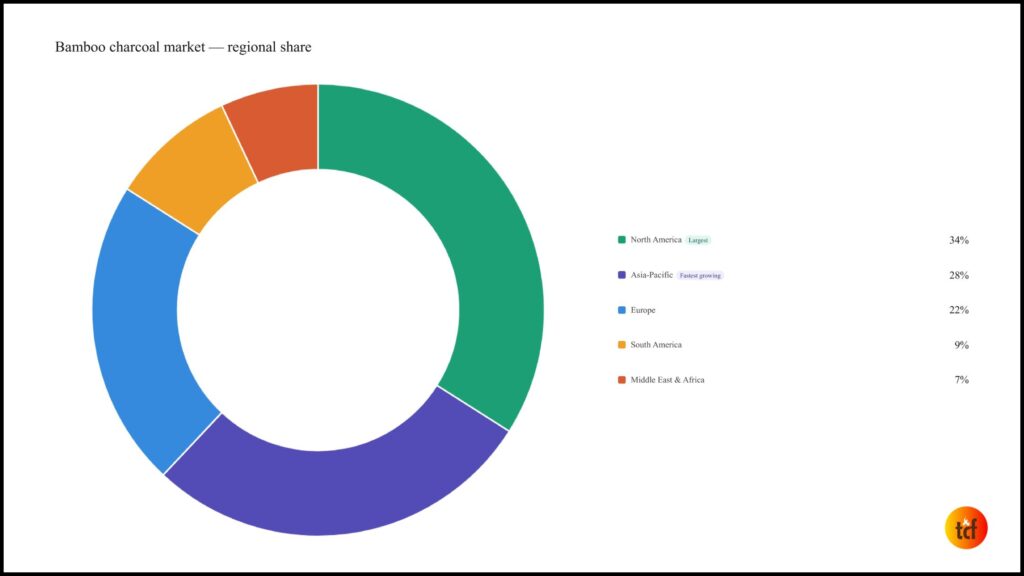
North America the largest market
North America is the largest bamboo charcoal market by value. The United States holds approximately 60% of the regional share, with Canada contributing around 25%. Strong consumer demand for sustainable and organic products, a mature e-commerce ecosystem, and regulatory incentives for green materials have collectively made North America the global market leader. Product innovation is particularly active in this region, with bamboo charcoal-infused personal care items and home goods are expanding rapidly, driven by both established brands and a growing startup ecosystem. Key players active in this market include Bamboo Charcoal Products (US) alongside several specialist enterprises focused on niche consumer segments.
Europe’s eco-innovation hub
Europe is emerging as a significant player in the bamboo charcoal market, with a strong orientation towards sustainability and eco-friendly product development. Germany and the UK are the largest European markets, collectively holding around 55% of the regional share. The European Union’s stringent regulations on carbon emissions and waste management are functioning as structural demand drivers, aligning bamboo charcoal with legislative priorities. France and the Netherlands are also contributing meaningfully to regional growth. Companies including Eco Bamboo (CN) and Bamboo Essence (MY) are actively expanding their European presence through local distribution partnerships. The cosmetics and home care categories are particularly active in driving European market innovation.
Asia-Pacific fastest-growing region
Asia-Pacific is the fastest-growing regional market, driven by increasing urbanisation, rising disposable incomes, and a growing awareness of bamboo charcoal’s health and wellness benefits. China and India are the largest markets within the region, accounting for approximately 70% of the Asia-Pacific share. Government initiatives promoting sustainable agriculture and forestry practices are acting as additional catalysts for expansion. The region benefits from a structural supply advantage, as home to the world’s major bamboo-producing nations, local production capabilities are deep and well-established. Key players, including Bamboo Village (VN) and Bamboo Naturals (IN) are leading regional market development, supported by a mix of established producers and innovative startups focused on new product development and direct-to-consumer strategies.
Middle East and Africa are an untapped opportunity
The Middle East and Africa region presents the most significant untapped opportunity in the global bamboo charcoal market. South Africa and the UAE are the leading markets, collectively holding around 50% of the regional share. Rising awareness of sustainable products, growing interest in natural air purifiers, and government initiatives promoting green products are the primary growth catalysts. Countries including Kenya and Nigeria are emerging as meaningful growth markets, particularly in cosmetics and home care applications. The competitive landscape in MEA is still forming, as international brands are beginning to enter through distribution partnerships, and local players are scaling. This combination of low current penetration and strong structural demand drivers makes MEA one of the most compelling growth vectors for the next decade.
Competitive landscape
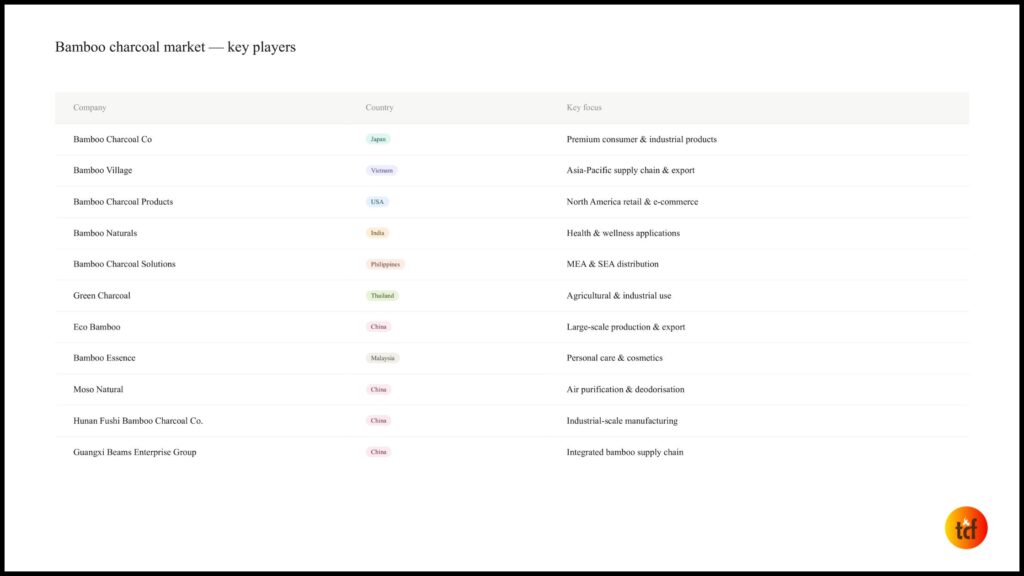
The bamboo charcoal market is moderately concentrated, with a few leading players accounting for a significant share of global revenue. The competitive dynamic is characterised by intense rivalry in product innovation, pricing, and distribution reach.
Key companies profiled in the global bamboo charcoal market include:
- Bamboo Charcoal Co (Japan)
- Bamboo Village (Vietnam)
- Bamboo Charcoal Products (US)
- Bamboo Naturals (India)
- Bamboo Charcoal Solutions (Philippines)
- Green Charcoal (Thailand)
- Eco Bamboo (China)
- Bamboo Essence (Malaysia)
- Moso Natural
- Hunan Fushi Bamboo Charcoal Co., Ltd.
- Guangxi Beams Enterprise Group Co., Ltd.
Leading players are focused on developing new and improved product formulations, investing in marketing and brand awareness, expanding geographic reach through new production facilities and distribution channels in emerging markets, and forming strategic partnerships to gain a competitive advantage. The market is expected to see continued consolidation and innovation as demand from end-use industries scales.
Industry developments
The bamboo charcoal market is registering steady momentum driven by several concurrent industry developments. Technological advancements in charcoal production techniques, particularly improvements in pyrolysis efficiency and quality consistency, are expanding output capacity and improving the performance characteristics of finished products. Strategic partnerships and collaborations between manufacturers and distributors are actively being formed to enhance market reach and accelerate product innovation. The Asia-Pacific region, in particular, is expected to witness significant industry development activity, driven by the presence of major bamboo-producing countries and increasing adoption of bamboo charcoal across industrial end uses.
Future outlook
The bamboo charcoal market is projected to grow at a 7.26% CAGR from 2025 to 2035, reaching $37.76 billion, roughly doubling in size over the forecast period. This trajectory is underpinned by durable structural drivers that are unlikely to reverse: tightening environmental policy, the expanding global wellness economy, and accelerating industrial adoption.
Key growth opportunities identified through 2035 include:
- Biodegradable packaging solutions incorporating bamboo charcoal as a sustainable alternative to petroleum-derived materials
- Bamboo charcoal-based air purification systems for both residential and commercial markets
- Partnerships with wellness brands to develop health-oriented product lines positioned around bamboo charcoal’s natural credentials
- Agricultural biochar programmes aligned with global carbon sequestration and sustainable farming initiatives
By 2035, the bamboo charcoal market is expected to achieve both substantial growth in volume and meaningful diversification across application, end-use, and regional segments — transitioning from a market dominated by consumer deodorisation products into a broad industrial and wellness materials category.
Market segmentation summary
| Dimension | Largest Segment | Fastest-Growing Segment |
| Raw Material | Moso Bamboo | Phyllostachys Pubescens |
| Application | Deodorisation | Water Purification |
| Density | High Density | Low Density |
| End Use | Residential | Industrial |
| Region | North America | Asia-Pacific |
Frequently asked questions
What is the size of the bamboo charcoal market in 2024?
The global bamboo charcoal market was valued at $17.46 billion in 2024, according to Market Research Future analysis.
What will the bamboo charcoal market be worth by 2035?
The market is projected to reach $37.76 billion by 2035, growing at a CAGR of 7.26% from 2025 to 2035.
Which region leads the bamboo charcoal market?
North America is the largest market, with the US accounting for approximately 60% of the regional share. Asia-Pacific is the fastest-growing region, led by China and India.
Which application segment is the largest in the bamboo charcoal market?
Deodorisation is the largest application segment, owing to its widespread use across residential and commercial air purification and odour control products. Water purification is the fastest-growing application.