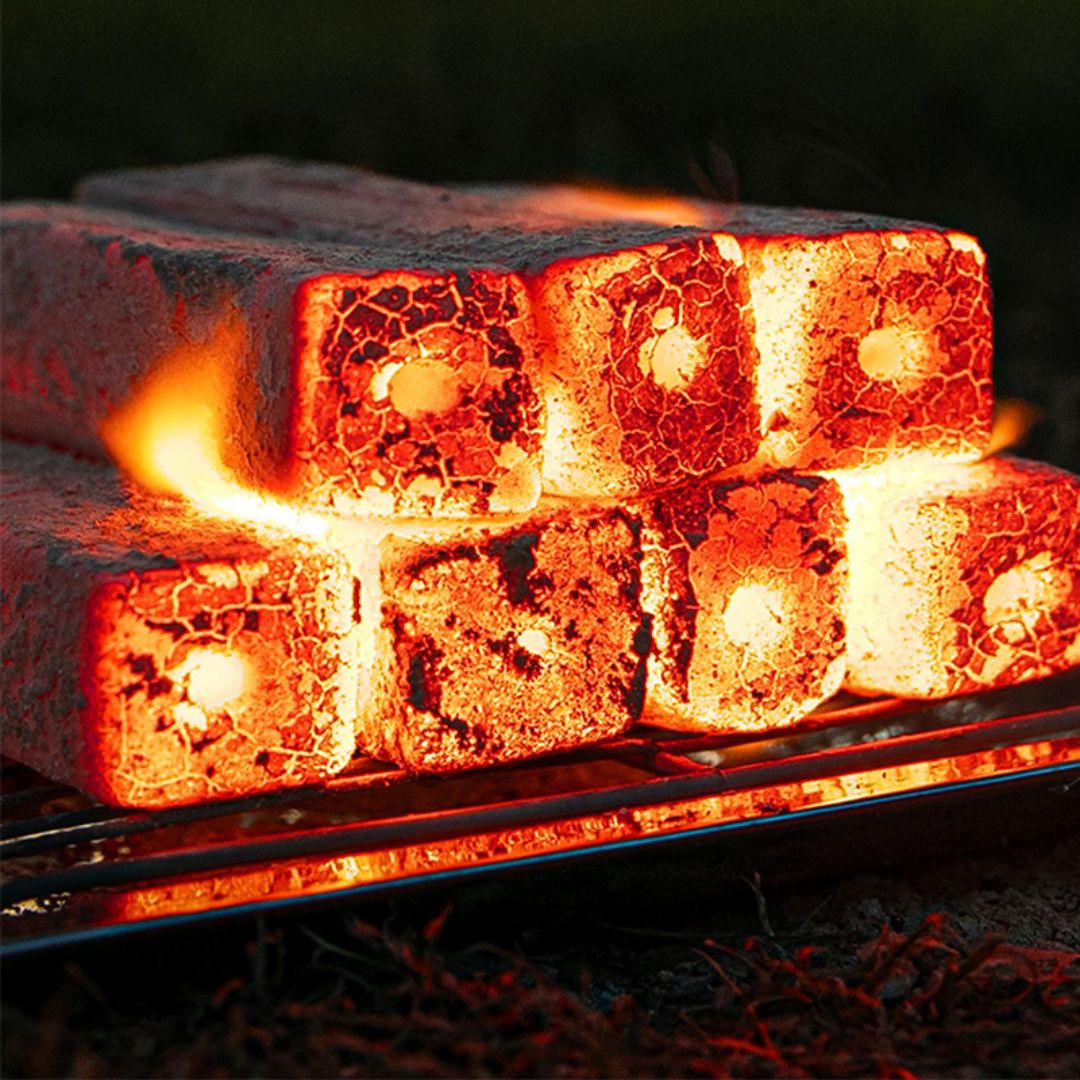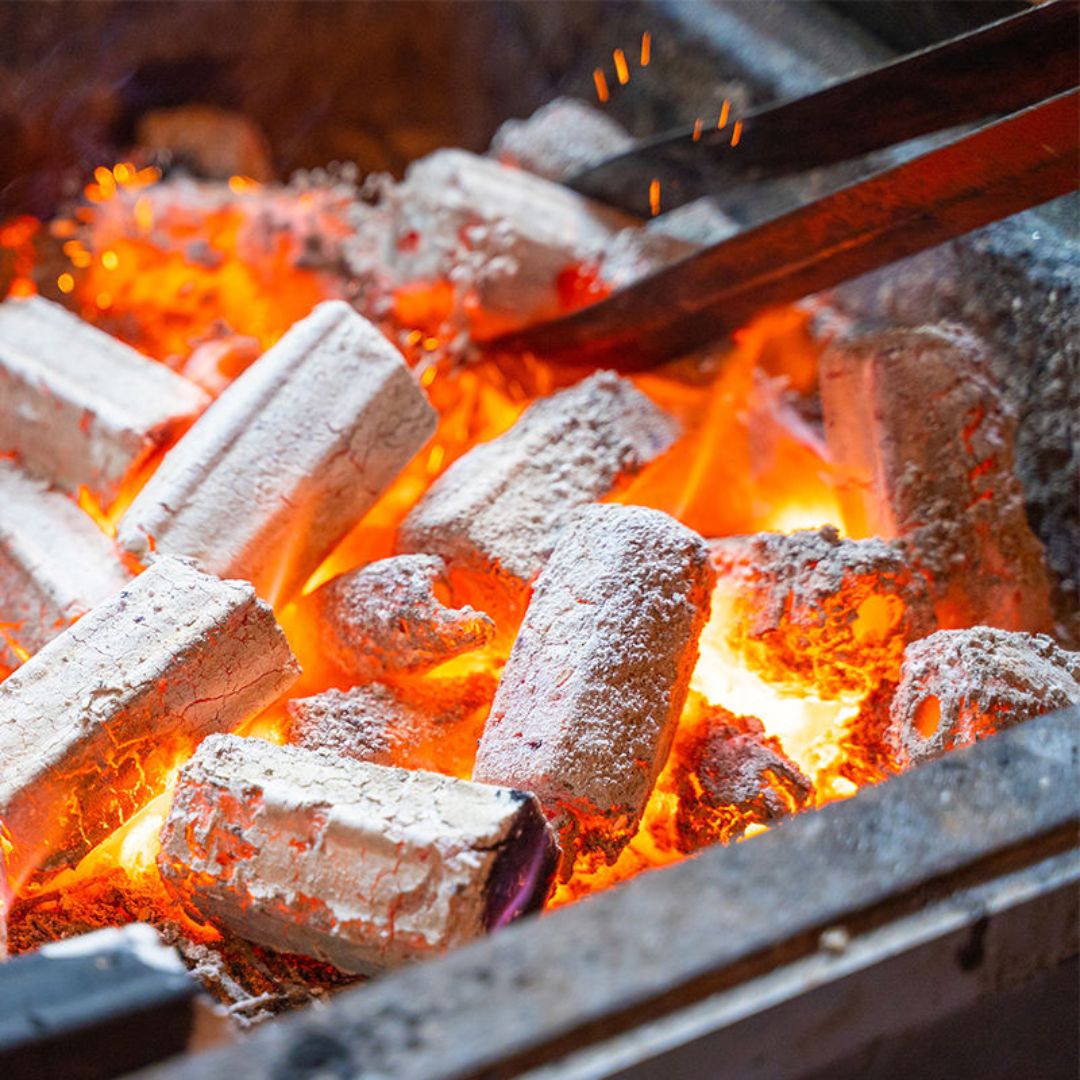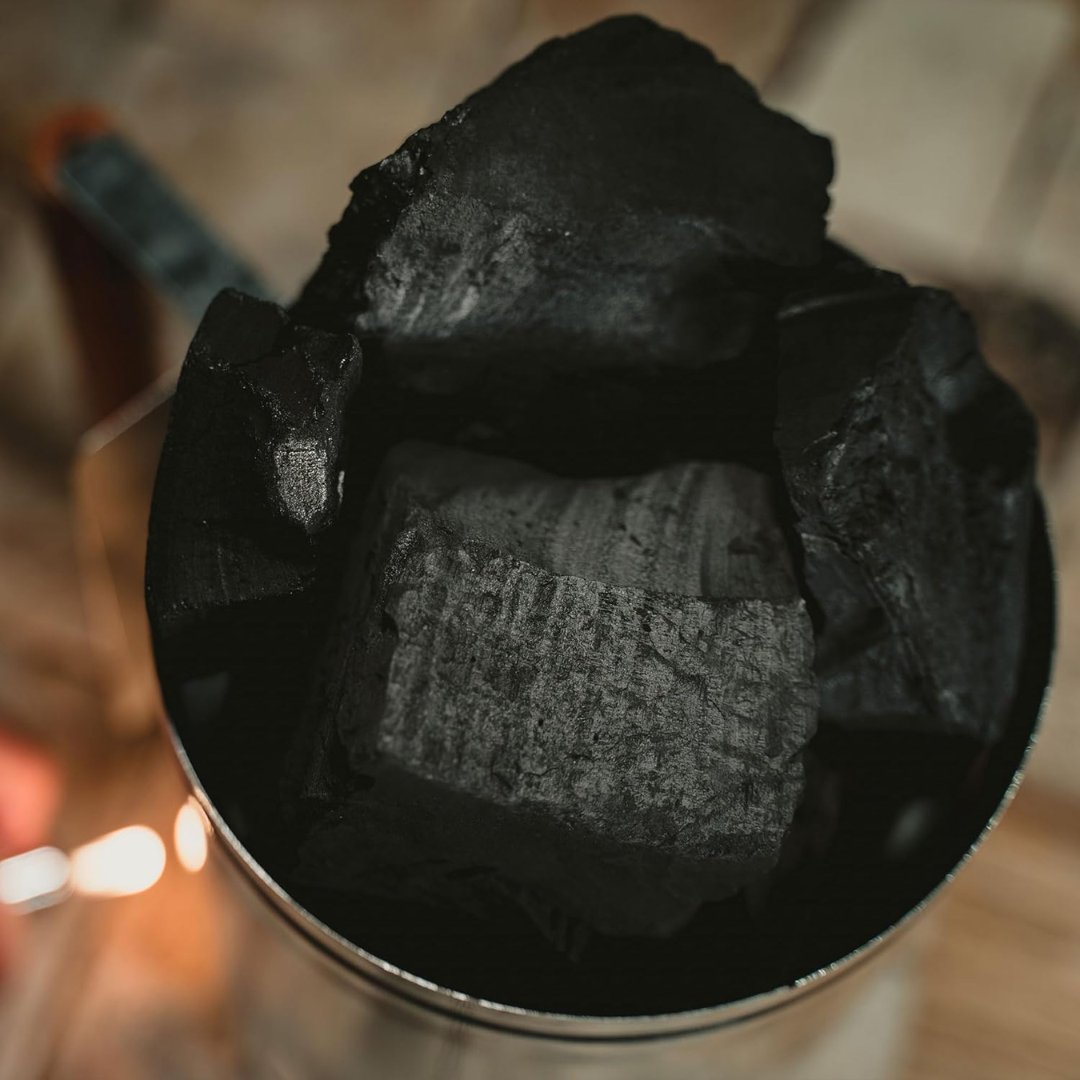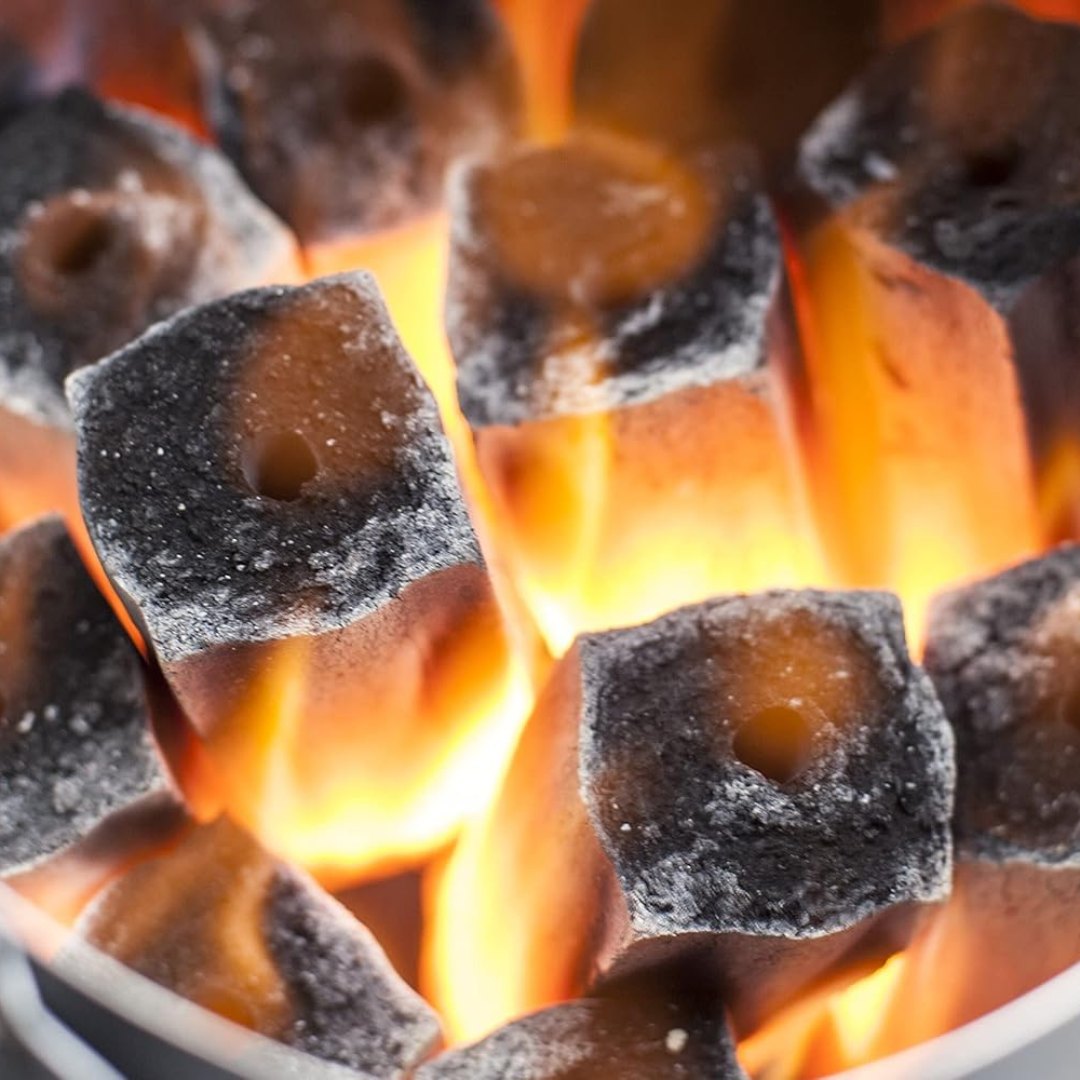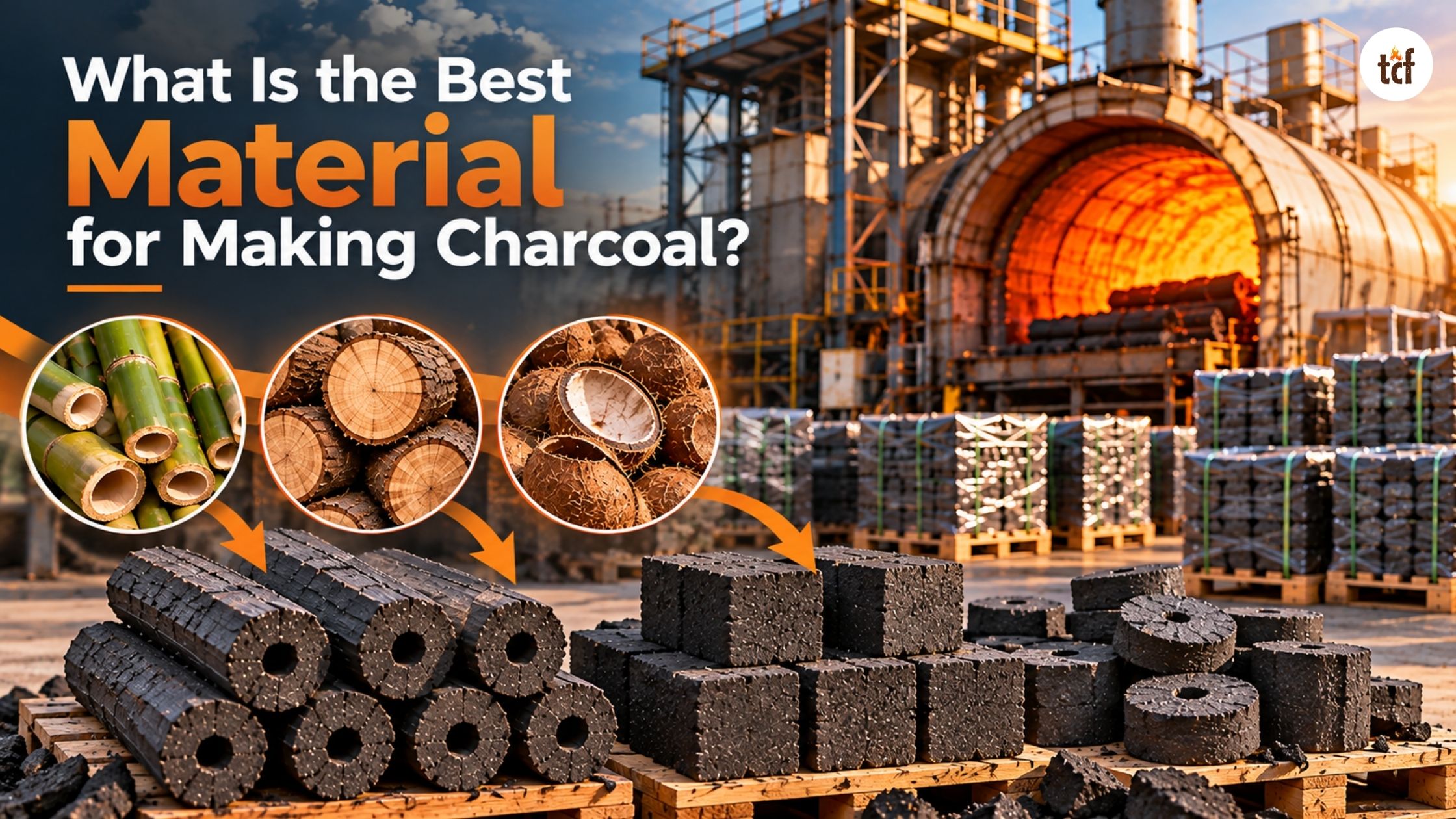



There is a reason charcoal briquettes dominate the shelves of every supermarket, hardware store, and mass-market retailer that sells BBQ supplies. They are cheap to produce, consistent in shape and burn time, easy to package, and simple for casual cooks to use. Pick them up, stack them in a pyramid, light the bottom, wait twenty minutes, spread them out, and cook. The uniformity is the product.
But that uniformity comes from somewhere. Charcoal Briquettes are not a natural product, the way lump charcoal is; they are a manufactured one, engineered from multiple ingredients and shaped under pressure into the recognizable pillow form that most people picture when they think “charcoal.” Understanding how they’re made explains everything about how they perform, why some briquettes are better than others, and what you’re actually burning when you cook over them.
The Invention of the Briquette
Before getting into the manufacturing process, a bit of history is worth knowing because it reveals the original purpose of the briquette — and it wasn’t backyard grilling.
Henry Ford invented the charcoal briquette in the early 1920s, not for cooking but for waste reduction. His automobile plants generated enormous quantities of wood scraps and sawdust from the production of wooden car parts. Ford, who hated waste, worked with E.G. Kingsford (yes, that Kingsford) to build a plant that would carbonize this wood waste and compress the resulting charcoal dust into uniform blocks. The Kingsford Charcoal Company that grew from this enterprise remains the dominant briquette brand in the United States a century later.
Ford’s insight was that charcoal dust — the fine powder left over when lump charcoal is produced and screened — had value if it could be reconstituted into a usable form. A pile of dust burns uncontrollably and can’t be used on a grill. Compress that same dust into a dense, uniform block with a binder and you have a fuel that lights reliably, burns at a predictable rate, and holds its shape throughout the cook. The briquette is fundamentally a recycling innovation.
What Briquettes Are Made Of
The composition of a charcoal briquette varies significantly between manufacturers, price points, and intended markets. But every briquette starts with the same basic logic: take carbonized carbon, bind it together, add whatever else the formula calls for, press it into shape, dry it, and package it.
The Carbon Component
The primary ingredient in any charcoal briquette is carbonized carbon — the fuel itself. In premium products, this is pure charcoal: the fines and dust screened out during the grading of hardwood lump charcoal. These fines are a natural byproduct of lump production, making Charcoal Briquettes a genuine value-chain complement to lump charcoal manufacturing. What can’t be sold as lump charcoal gets compressed into briquettes.
In lower-cost or commodity Charcoal Briquettes, the carbon component is often partially or entirely coal dust — typically anthracite or bituminous coal — blended with charcoal fines. Coal has a higher fixed carbon content than charcoal (85–95% vs. 65–85%) and is considerably cheaper, which makes the economics attractive. The tradeoff is that coal burns hotter and harder but contributes to more sulfurous smells and is a fossil fuel rather than a renewable material. Most premium Western brands avoid coal dust; many economy brands, particularly in developing markets, use it extensively.
The quality of the carbon component is the single most important factor in briquette quality. Charcoal Briquettes made from high-grade hardwood charcoal fines — dense hardwood, properly carbonized at 500°C+ — burn hotter, produce less ash, and have a cleaner flavor profile than those made from softwood charcoal or coal. This upstream quality difference is invisible on the label but completely apparent in performance.
Also read – how is bamboo charcoal made
The Binder
Loose charcoal dust has no structural integrity whatsoever compress it, and it immediately crumbles back into powder. To hold the briquette together through pressing, drying, shipping, handling, and the first phase of burning, a binder is essential.
The choice of binder has a profound effect on the finished product, and this is where briquette manufacturers differentiate most sharply between product tiers.
Starch binders — typically cornstarch, tapioca starch, cassava starch, or wheat starch are the gold standard for food-safe, clean-burning Charcoal Briquettes. Starch forms a strong, water-resistant bond when cooked and mixed with charcoal, holds the briquette together through mechanical handling, and burns off early in the lighting process without contributing meaningful odor or flavor. Every premium briquette brand uses a starch binder. The concentration typically runs 8–15% of the dry mixture weight, enough to bind without leaving a high-moisture product that takes forever to dry.
The starch must be cooked before mixing. Raw starch granules have minimal adhesive properties; it’s only when they are heated in water to 70–85°C, a process called gelatinization, that the starch chains uncoil and become the thick, sticky paste that binds charcoal particles together. Getting this preparation right is one of the more technically demanding aspects of briquette manufacturing. Too thin and the binder doesn’t hold; too thick and it doesn’t distribute evenly through the charcoal mass.
Coal tar pitch and petroleum pitch are used in some industrial and economy briquettes as binders because they are extremely effective in producing very strong, water-resistant Charcoal Briquettes and are cheap. The problem is that they are petroleum derivatives that produce unpleasant chemical smells during burning and are completely inappropriate for cooking applications. These binders are common in heat briquettes for industrial applications but should never appear in food-grade charcoal.
Molasses is used by some manufacturers as a natural, food-safe binder. It is less effective than starch Charcoal Briquettes, bound with molasses and are softer and more fragile, but it adds a slight caramelized character to the smoke and is popular in certain markets.
Explore some of the best-selling Charcoal Briquettes:
The Fillers and Additives
Beyond carbon and binder, Charcoal Briquettes often contain additional ingredients that serve specific functions — some benign, some worth knowing about.
Limestone (calcium carbonate) is added to many standard Charcoal Briquettes to produce the distinctive white-gray ash that consumers associate with “ready to cook.” Pure charcoal ash is a dark gray color. Adding 5–10% limestone produces a brighter white ash that has become the visual signal consumers look for before spreading their coals. It also helps the briquette hold its shape during pressing. The downside is that limestone increases ash volume and slightly dilutes the fuel content.
Borax (sodium tetraborate) is used in small quantities as a processing aid — it helps the starch binder activate properly and makes the wet mixture easier to press in the forming machine. Used at 1–2%, it has no meaningful impact on the burning product.
Sodium nitrate is the ingredient that divides natural briquettes from instant-light products. Sodium nitrate is an oxidizer — it releases oxygen as it decomposes, which sustains combustion even without adequate airflow. Charcoal Briquettes with sodium nitrate light with a standard lighter or match within seconds. The tradeoff is the acrid, chemical smell that every user of instant-light charcoal has experienced. This smell comes from the combustion products of sodium nitrate decomposition, and it takes 60–90 seconds to fully dissipate. Used impatiently — putting food on before the chemical smell clears — it transfers that character directly to the food.
Sawdust is sometimes added as a filler and texture modifier. It reduces the density of the finished briquette slightly, making it lighter and less energy-dense, but also makes pressing easier and reduces raw material cost.
Must read – Charcoal Bulk Buying Guide
The Manufacturing Process, Step by Step
Producing or Sourcing the Charcoal
The first decision for any briquette manufacturer is whether to produce their own charcoal or buy it. Large integrated producers — like Kingsford in the United States or major manufacturers in Southeast Asia and Europe — operate their own carbonization plants that produce charcoal specifically for briquette production, often from wood waste streams (sawdust, chips, offcuts) that are cheaper than logs. Smaller briquette manufacturers often purchase charcoal fines from lump charcoal producers who generate fines as a screening byproduct.
The economics of this decision depend heavily on local feedstock availability and logistics. In Indonesia, where coconut industry waste (shells, husks) is abundant and cheap, building an integrated operation — carbonizing your own coconut shells and pressing them into briquettes — makes strong economic sense. In an urban market with no local biomass, purchasing charcoal fines and focusing on the pressing and packaging operation is more practical.
Grinding and Particle Size Control
Raw charcoal from a kiln comes out in irregular pieces ranging from large lumps to fines. Before it can be pressed into Charcoal Briquettes, it needs to be reduced to a consistent fine powder. This is done in stages.
The first stage uses a jaw crusher or hammer mill to break large pieces down to a centimeter or two. The second stage uses a finer hammer mill or ball mill to reduce this to the target particle size — typically 0.5 to 2 millimeters for standard briquettes, finer for denser or more specialized products. The ground material is then screened to ensure consistency; anything too coarse goes back through the mill.
Particle size has a real effect on briquette quality in ways that aren’t immediately obvious. Finer particles pack more densely under pressure and produce stronger, harder briquettes that hold their shape better under rough handling. But grind too fine and the briquette becomes so dense that it has poor porosity, meaning air has difficulty reaching the interior during burning — the briquette lights unevenly and may have a hard, unburned core. The target particle size represents an optimization between structural strength and burn performance.
Drying the Charcoal Powder
This step is often overlooked but matters significantly. Charcoal fines in storage or fresh from the kiln typically carry 10–20% moisture. When the binder paste is added to moist charcoal, the actual binder ratio becomes unpredictable — wet charcoal dilutes the binder and produces weak, crumbly briquettes. The charcoal powder should be dried to 5–8% moisture before mixing to ensure consistent binder performance.
Also read – How Charcoal Is Manufactured
Preparing the Binder
In a commercial operation, binder preparation runs continuously alongside the mixing and pressing line. Starch is mixed with cold water in a measured ratio, then heated in a jacketed mixing vessel to between 70°C and 85°C with continuous stirring. As the temperature rises, the starch granules swell, burst, and release their amylose and amylopectin chains — this is gelatinization, and it transforms a watery slurry into a thick, viscous paste. The paste is held at temperature until it reaches the right consistency, then cooled to 40–50°C before use.
The quality of this paste preparation step ripples through the entire downstream process. Undercooked starch paste is too thin and watery, producing Charcoal Briquettes that are fragile even after drying. Overcooked paste becomes lumpy and difficult to distribute evenly through the charcoal mass. Getting it right consistently is one of the practical skills that differentiates experienced operators from beginners.
Mixing
Charcoal powder and hot binder paste are combined in a paddle mixer, ribbon mixer, or sigma blade kneader. The goal is complete, homogeneous distribution of binder throughout the carbon mass — every particle of charcoal should be coated with binder, and there should be no dry pockets or binder-rich clumps.
The mixing temperature matters because the starch binder must remain fluid during mixing to distribute properly. Mixing is typically done at 35–55°C, which keeps the starch just fluid enough to coat particles while being cool enough to handle. The resulting mixture should have the consistency of dense, slightly sticky clay — cohesive enough to hold its shape when squeezed, but loose enough to flow into a press mold.
The moisture content of the mixture at this point is critical. Too wet (above 35%) and the Charcoal Briquettes will shrink dramatically during drying and may crack. Too dry (below 20%) and the pressing force required to produce a solid briquette increases dramatically, stressing the equipment and producing denser but often overly hard briquettes. Most operations target 25–32% moisture in the mixed mass before pressing.
Forming the Briquette
The mixed charcoal paste is fed into a pressing machine that compresses it into the target shape. There are three main forming approaches used commercially.
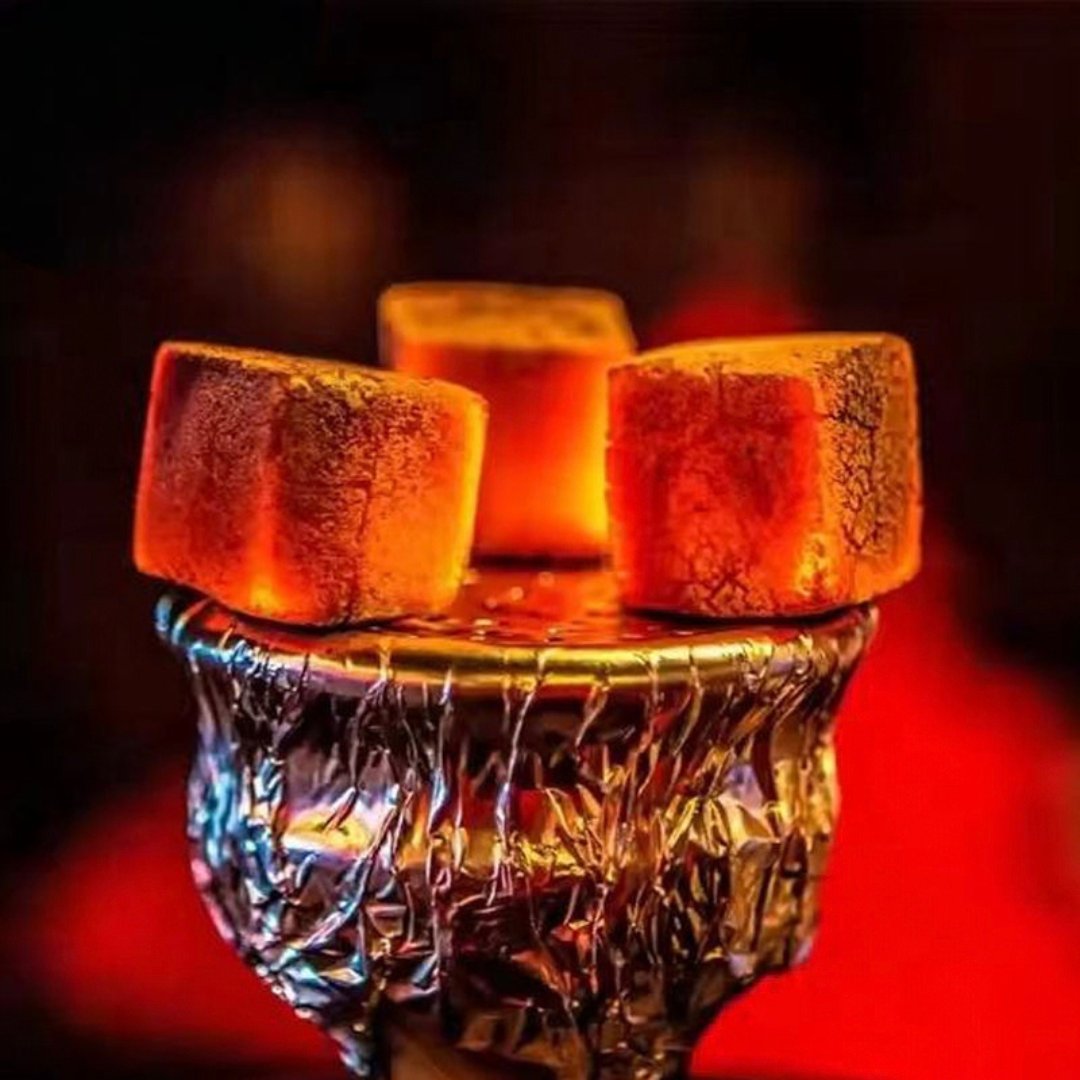
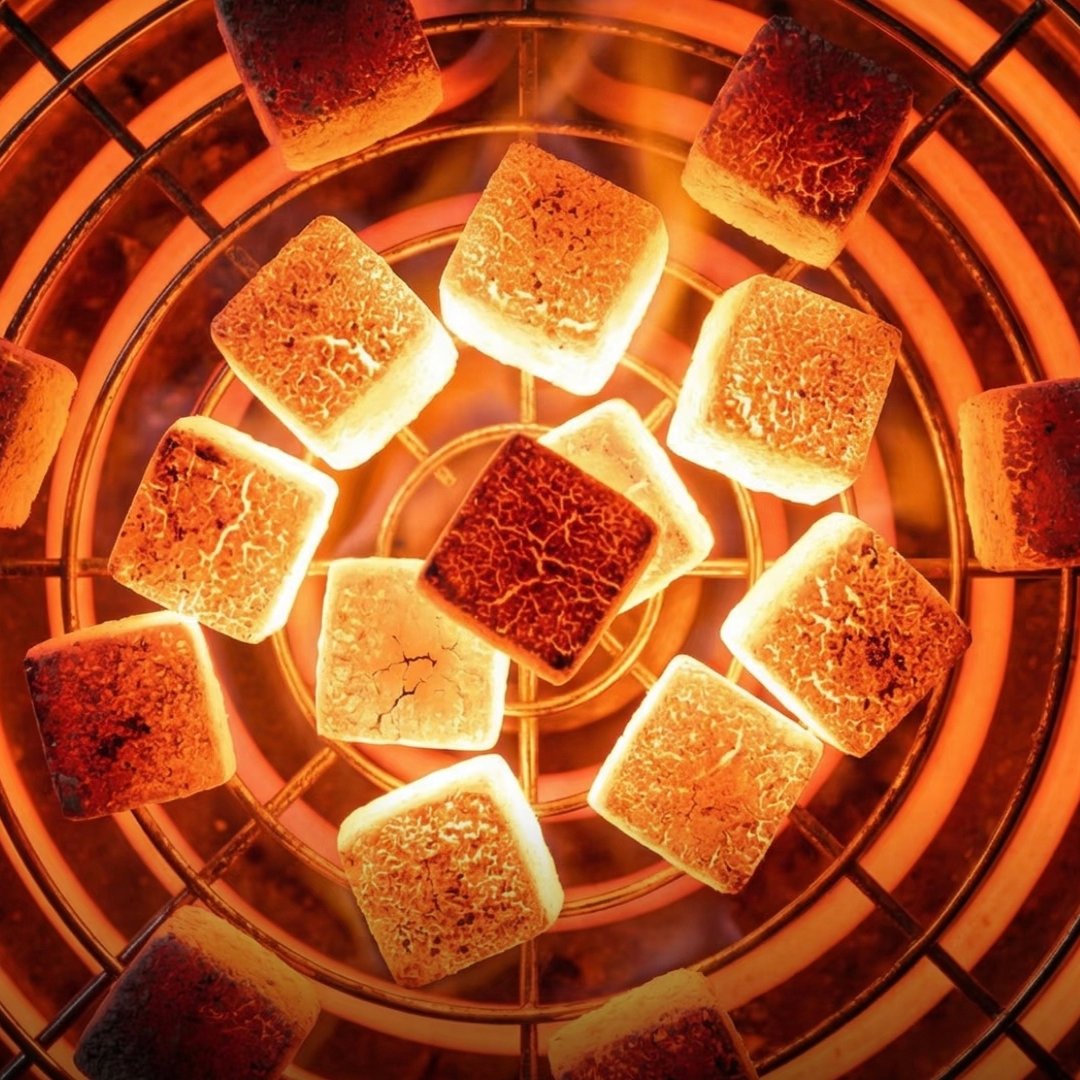
Rotary tablet presses work exactly like pharmaceutical tablet presses — a die cavity is filled with a measured amount of the charcoal mixture, an upper punch descends, and the mixture is compressed to a set pressure, forming a single briquette. The die then opens and ejects the finished briquette onto a conveyor. High-speed machines have multiple punch stations arranged in a rotating carousel, producing several briquettes per second. This method produces extremely uniform, accurately weighed briquettes and is the standard for hookah charcoal and premium BBQ Charcoal Briquettes.
Screw extruders work differently — a rotating screw auger forces the charcoal mixture continuously through a shaped die under pressure. A rotary knife cuts the extruded rod into individual Charcoal Briquettes at a set interval. This is efficient for high-throughput production, particularly for cylindrical or hexagonal shapes. The continuous nature of extrusion means there’s no pause between briquettes, and throughput rates can be very high. The limitation is that extruder pressure is somewhat less controllable than punch-and-die pressing, so density consistency can be slightly lower.
Roller presses pass the charcoal mixture between two counter-rotating rollers that have pocket-shaped depressions machined into their surfaces. As the rollers turn, the depressions come together and the material between them is compressed into the pocket shape. Roller presses work best with slightly drier mixtures and are extremely fast, but the pressure distribution across the pocket is less uniform than punch-and-die pressing, which can produce briquettes with density variations from center to edge.
Regardless of forming method, the compression pressure determines the density of the finished briquette, which in turn affects porosity, burn rate, and structural integrity. Most standard BBQ briquettes are pressed at 5–15 MPa. Higher pressure produces harder, denser briquettes with longer burn times; lower pressure produces softer Charcoal Briquettes that light more easily but burn faster.
Drying
Freshly formed Charcoal Briquettes are structurally weak — the binder is still hydrated and the moisture content is 25–32%. They need to be dried to 5–8% moisture to develop their final strength and become suitable for packaging and use.
Drying must be done carefully. The outer surface of the briquette dries faster than the interior, and if the drying rate is too aggressive, the outer shell can harden and shrink before the interior has had a chance to dry, creating internal stress that cracks the briquette during or after drying. Industrial briquette lines use belt conveyor dryers or tunnel dryers that expose Charcoal Briquettes to moderate temperatures — typically 70–100°C — in controlled airflow conditions that allow moisture to escape uniformly. The residence time in the dryer ranges from 2 to 8 hours depending on briquette size, density, and initial moisture content.
The energy cost of drying is one of the largest operating costs in briquette manufacturing. Operations that can recover waste heat from their carbonization kilns to power the dryer achieve a meaningful efficiency advantage — the pyrolysis gases and hot exhaust from carbonization carry enormous thermal energy that can be redirected to the drying process.
Quality Control and Packaging
Before Charcoal Briquettes are packaged and shipped, they are checked against specifications. The most important quality parameters are moisture content (too high and they smoke heavily; too low and they may be overly brittle), compressive strength (a drop test from 1 meter should produce less than 2–3% breakage), ash content, and burn time under controlled conditions.
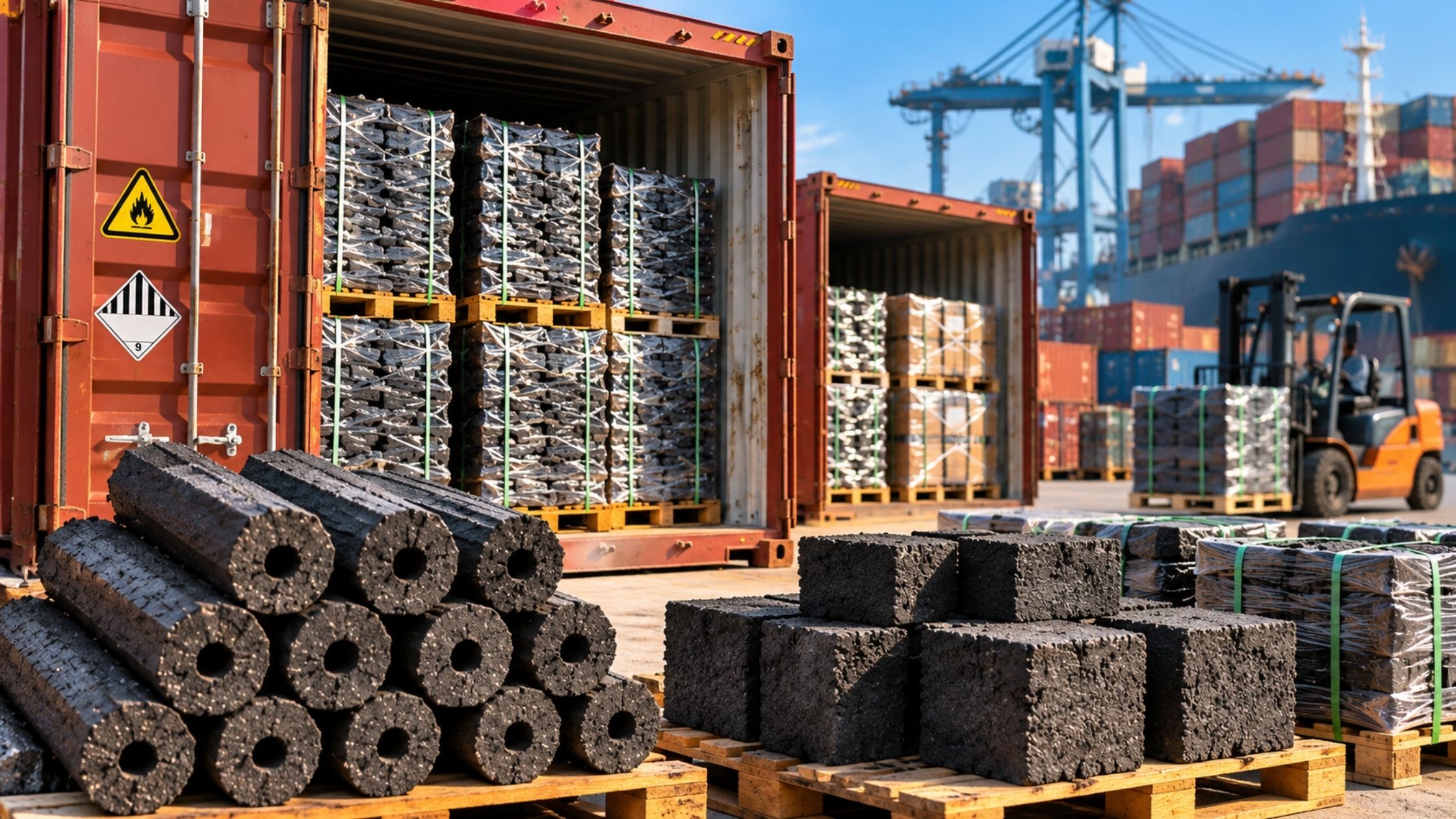
Packaging is largely determined by the target market. Consumer retail products in the US and Europe are typically 3–10 kg in moisture-resistant paper sacks with poly liners. Restaurant and food service customers often use 10–25 kg sacks. Export and industrial buyers purchase in 500 kg or 1,000 kg jumbo bags.
Why Not All Briquettes Perform the Same
After walking through this process, it becomes clear why two briquettes that look identical on the shelf can behave so differently at the grill. The differences begin before the pressing step ever happens.
A briquette made from high-grade hardwood charcoal fines, pressed with a clean starch binder at optimal moisture and density, contains perhaps 70–75% fixed carbon. It produces minimal ash, burns cleanly after a brief lighting phase, and reaches adequate temperature quickly. A briquette made from a blend of softwood charcoal, coal dust, limestone filler, and a cheap binder might carry 50–60% fixed carbon, produce three times as much ash, and never reach the same peak temperature. Both are compressed charcoal. Neither is lying about what it is. The difference is entirely in the quality of inputs and the care of the process.
This is why the price of briquettes — even controlling for brand premium — is a reasonably reliable signal of quality. The inputs to a good briquette cost more. The process to produce a consistent, well-dried, properly bound product takes more care and equipment. Operators who take shortcuts on raw material quality or process control produce cheaper briquettes, and those savings come directly out of performance.
The Environmental Question
Briquettes have a complicated environmental profile that depends almost entirely on what’s in them and where the carbon comes from.
At their best, briquettes made from charcoal fines that are the byproduct of sustainably managed hardwood operations represent genuine waste valorization — material that would otherwise have no economic use gets converted into a useful fuel. When agricultural waste like rice husks, coconut shells, or sugarcane bagasse provides the carbon, briquettes become a way to create fuel from material that would otherwise decompose in the field or be burned openly.
At their worst — coal-dust briquettes produced with fossil carbon and petroleum-based binders — briquettes have a worse environmental profile than almost any alternative cooking fuel.
The consumer has limited visibility into this because ingredient sourcing is rarely disclosed on packaging. The most reliable signals are the presence of a wood species disclosure, the absence of coal dust in the ingredients list, certification logos from organizations like the Rainforest Alliance or FSC (Forest Stewardship Council), and a country of origin with credible sustainable forestry regulations.
Check out the product categories at The Charcoal Factory:
wholesale hookah charcoal
wholesale BBQ charcoal
Charcoal Supplier for Distributors
bulk charcoal for restaurants
private label charcoal for supermarkets
Frequently Asked Questions
Are briquettes bad for you compared to lump charcoal?
For cooking, the relevant question is what’s in the briquette. Premium briquettes made from hardwood charcoal fines with a starch binder are entirely safe for cooking and produce no meaningful flavor impact once fully lit. The concern arises with cheap briquettes that use coal dust (which can produce sulfurous compounds) or chemical accelerants like sodium nitrate (which produce an unpleasant smell and taste during and briefly after lighting). Waiting until briquettes are fully ashed over — no black showing on the surface, consistent gray — before cooking is the best practice regardless of briquette type.
Why do briquettes produce more ash than lump charcoal?
Two reasons. First, briquettes often contain limestone or other mineral fillers that don’t burn and become ash. Second, briquettes frequently use lower-grade carbon inputs (softwood charcoal, sawdust charcoal, sometimes coal) that have higher natural ash content than premium hardwood lump charcoal. Premium briquettes from hardwood with no limestone filler produce significantly less ash than standard products — though still typically more than lump charcoal.
Can you make charcoal briquettes at home or on a small scale?
Yes, and it’s an accessible small business or cottage industry in many parts of the world. The basic equipment — a mixer and a small hydraulic or screw press — can be acquired for a few thousand dollars. The main challenges are producing consistent charcoal fines, sourcing starch binder at reasonable cost, and investing in adequate drying capacity. Small-scale agricultural waste briquette production is a meaningful livelihood activity in parts of Africa and South Asia.
What does “restaurant quality” mean on a briquette bag?
Primarily it means the briquettes are larger, denser, and formulated for longer burn time — typically 90–120 minutes versus 60–75 for standard consumer briquettes. Restaurant users need their coals to last through a service period without refreshing, so burn duration is the primary specification. “Restaurant quality” briquettes also tend to have lower ash content because ash management is a real operational concern in a commercial kitchen context.
Why do briquettes sometimes smell chemical when lighting?
This is almost always sodium nitrate, used as an oxidizer to help the briquettes self-light. The combustion products of sodium nitrate decomposition include nitrogen oxides, which have a sharp, acrid smell. It dissipates within 60–90 seconds once the briquette is fully lit, but it is both unpleasant and a sign that you should not start cooking until the chemical smell is completely gone. Premium briquettes without sodium nitrate do not have this issue.