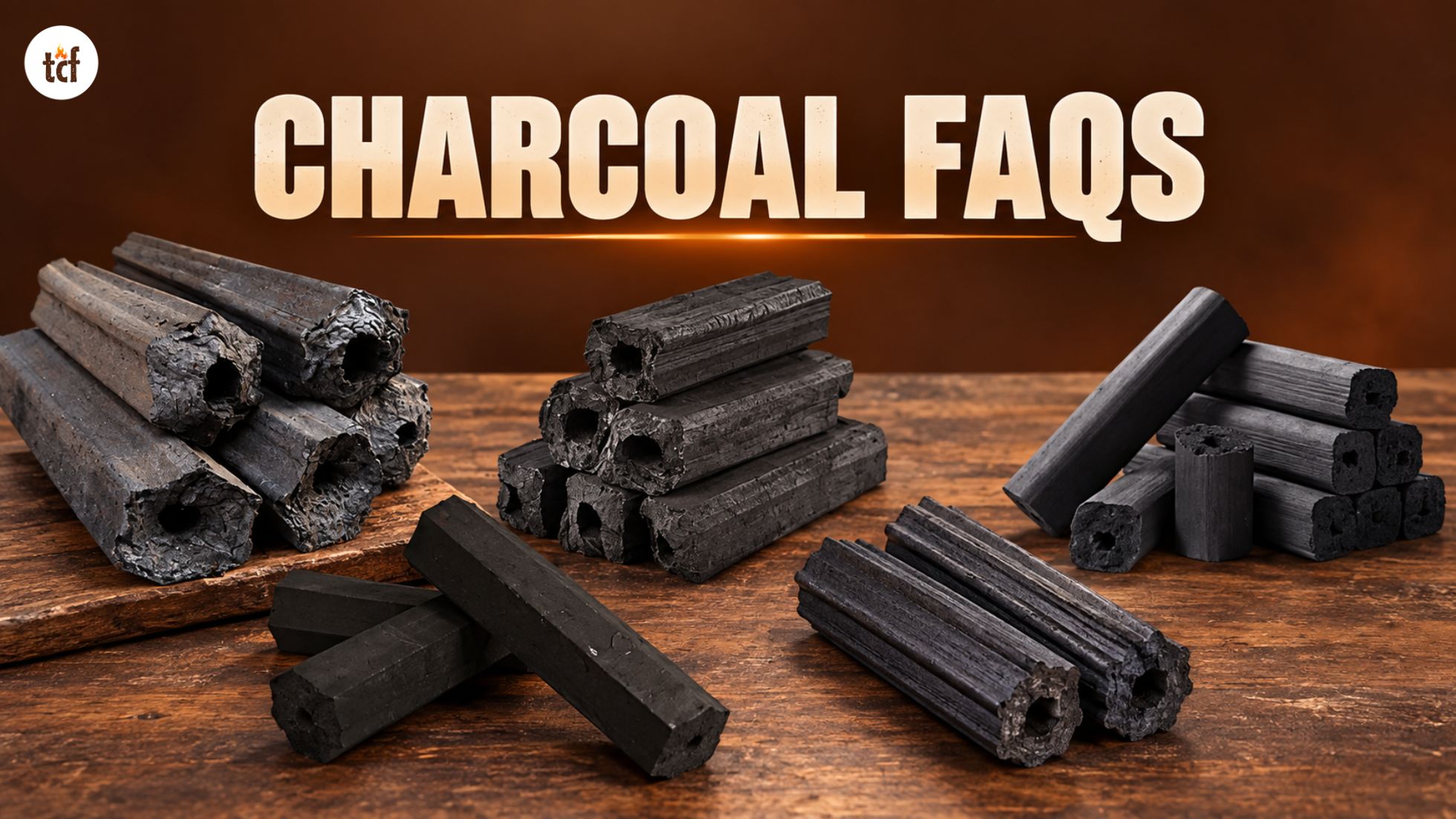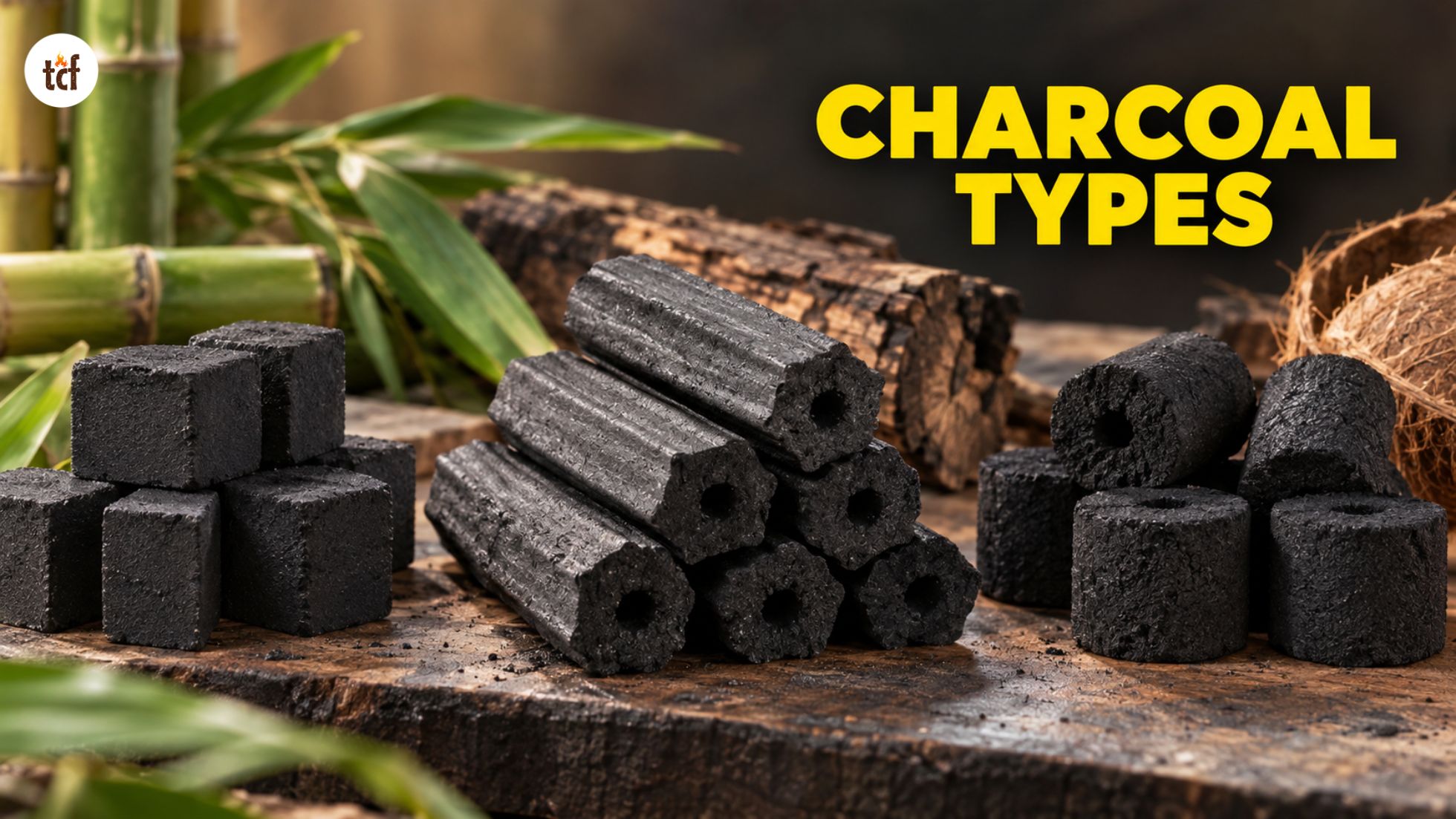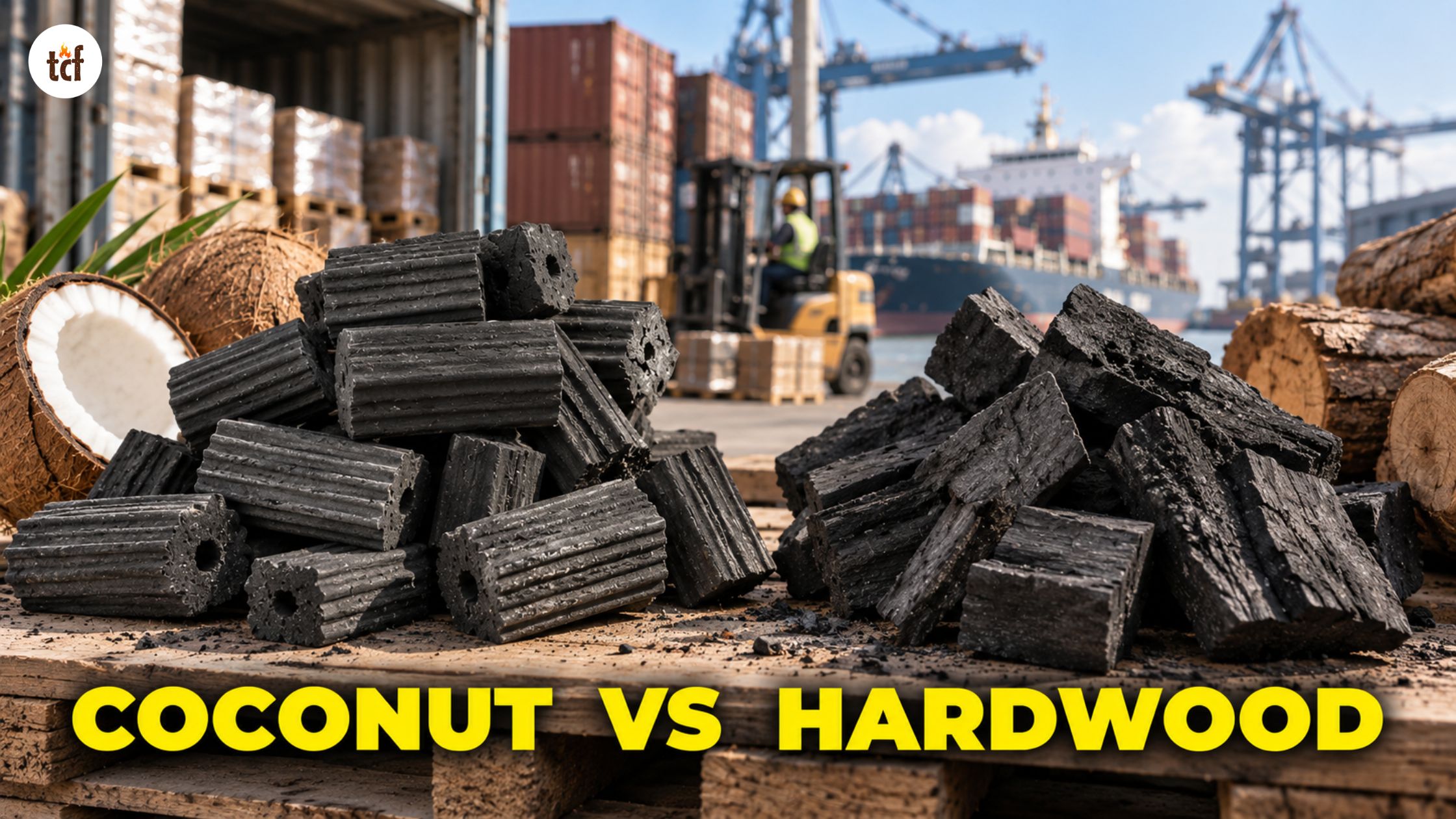


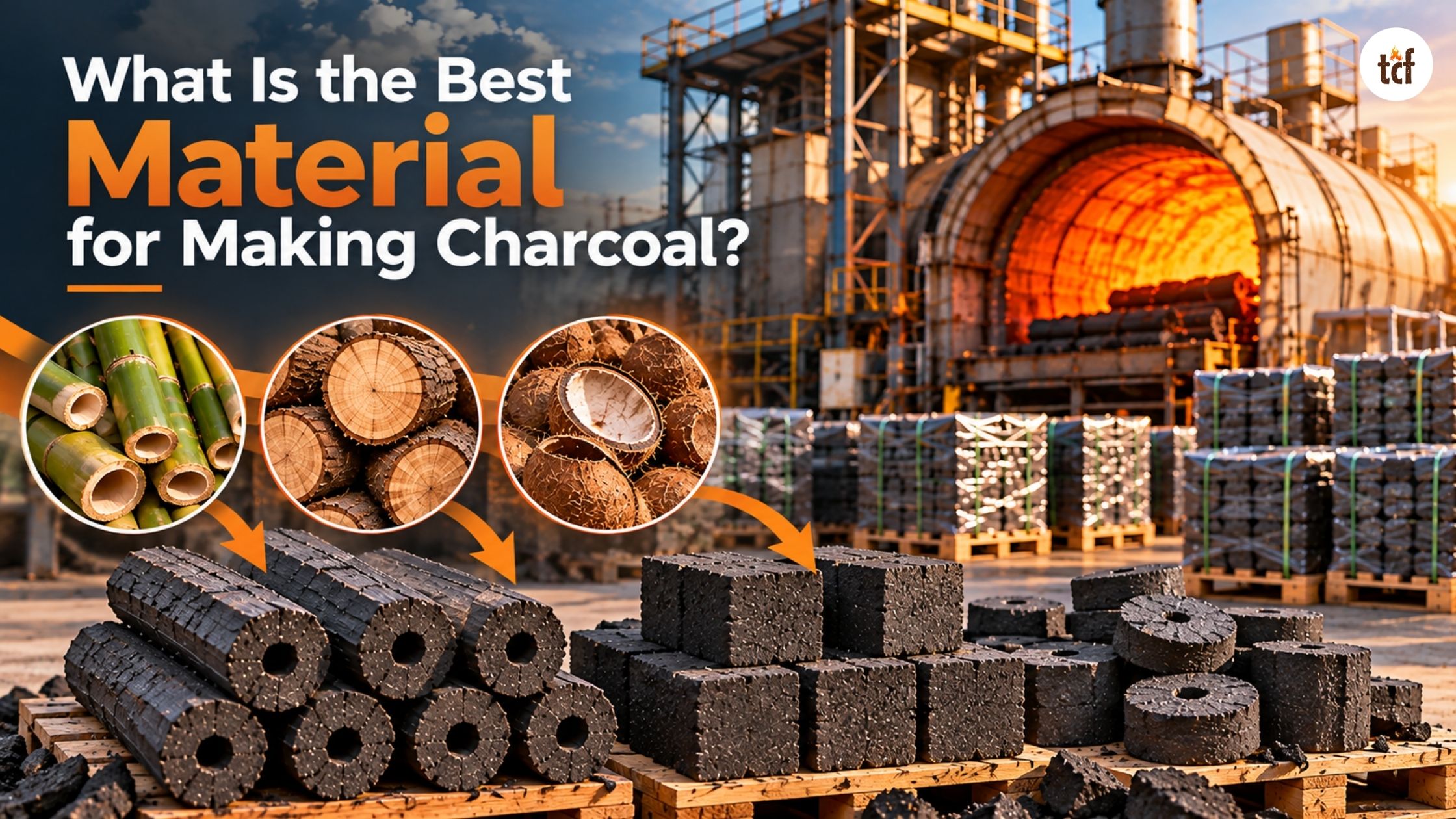
The best material for making charcoal depends on what the charcoal is for. Dense hardwood makes the best lump charcoal for grilling, coconut shell is the standard for shisha, and bamboo or hardwood sawdust makes the most uniform extruded charcoal for restaurants and long cooks.
There is no single winner because each material trades off burn time, lighting speed, ash, price and supply. A material that is perfect for a kamado smoker can be the wrong choice for a hookah lounge.
Key takeaways
- Density comes first. Dense raw material makes dense charcoal that burns longer and holds its shape.
- Dense also means slower to light. The longest-burning charcoals take the most patience to start.
- Hardwood beats softwood for cooking. Softwood charcoal burns fast, sparks more and is better kept for industrial uses.
- Coconut shell suits shisha. It gives a clean, low-ash, low-odour burn when pressed into cubes.
- Bamboo and sawdust give consistency. Pressed into rods before carbonizing, they burn the same way piece after piece.
- Supply and compliance matter too. For EU buyers, the raw material can change what paperwork an import needs.
Table of Contents
What makes a good Material for Making Charcoal?
Five properties decide how good a charcoal a material can make. Carbonization can only work with what the raw material brings in.
- Density. Tightly packed fibres turn into heavy, hard charcoal that burns longer and does not crumble in the bag. This is the single biggest factor.
- Lignin content. Lignin is the natural polymer that binds plant cells together. It converts to carbon more efficiently than cellulose, so high-lignin materials give more charcoal and harder pieces.
- Mineral content. Minerals in the raw material do not burn. They end up as ash, so a high-mineral feedstock makes a high-ash charcoal no matter how well it is fired.
- Resin and sap. Resin-rich materials, mainly softwoods, leave volatile compounds that pop, spark and smoke during burning.
- Moisture and uniformity. Freshly cut wood holds roughly 40 to 60% water by weight, and producers usually dry it to around 10 to 15% before carbonizing. Pieces of similar size and moisture carbonize evenly, so the batch comes out consistent.
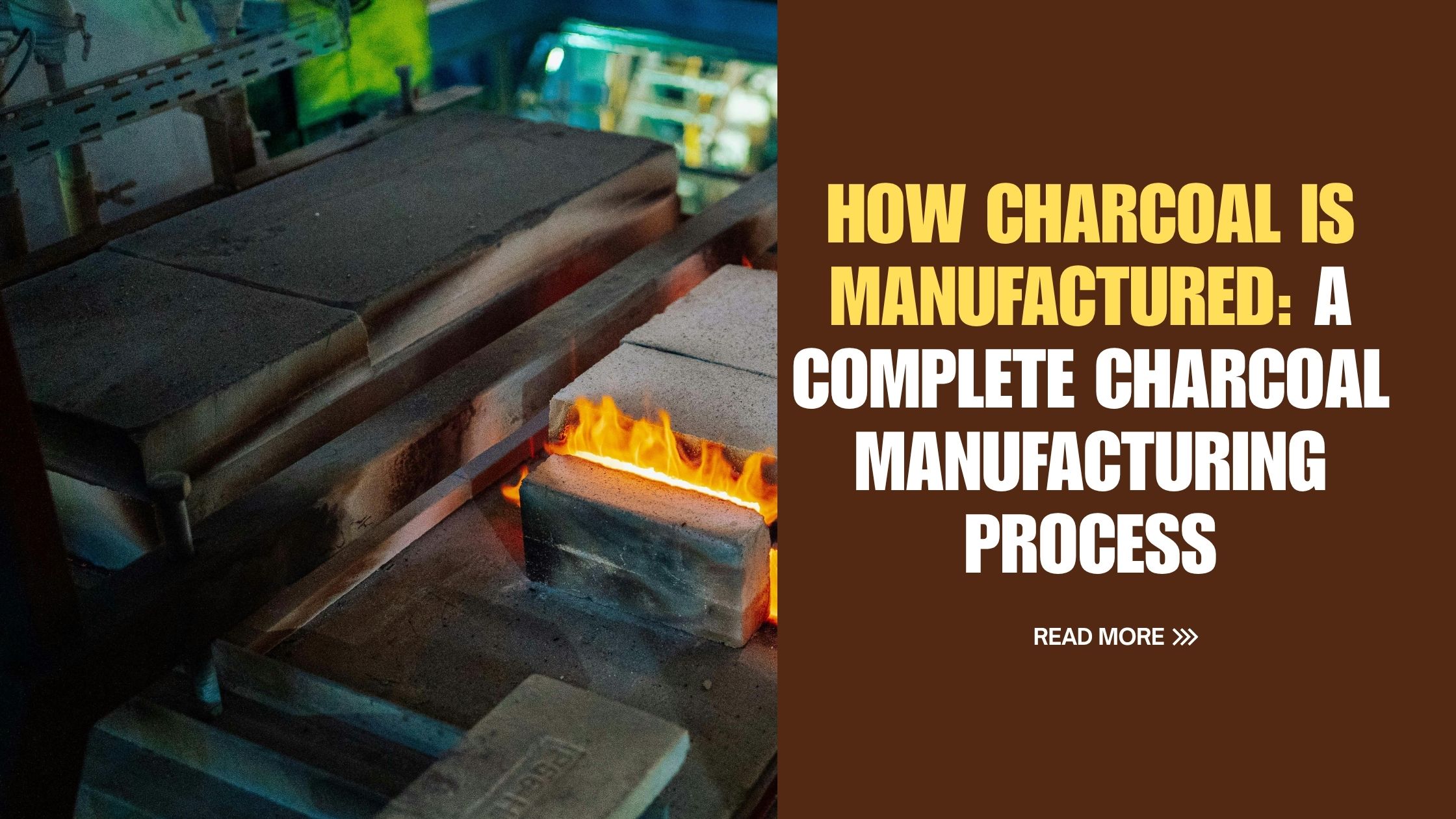
A good factory can get the most out of a material, but it cannot turn a light, resinous feedstock into a dense, low-ash charcoal. For how drying, firing and cooling work, see our guide to charcoal manufacturing.
How do the main charcoal raw materials compare?
The table compares the materials commercial producers use most. Ratings are relative to each other, because actual numbers depend on how well each batch is dried and carbonized.
| Raw material | Burn time | Lighting | Ash | Smoke and sparks | Best used for |
| Dense hardwood (oak, quebracho, marabu) | Long | Slow | Low | Low | Lump charcoal for grilling and smoking |
| Fruitwood (lychee, longan) | Long | Medium | Low | Low, mild aroma | Restaurant grilling, roasting |
| Softwood (pine, spruce) | Short | Fast | Medium | High | Industrial and low-cost fuel |
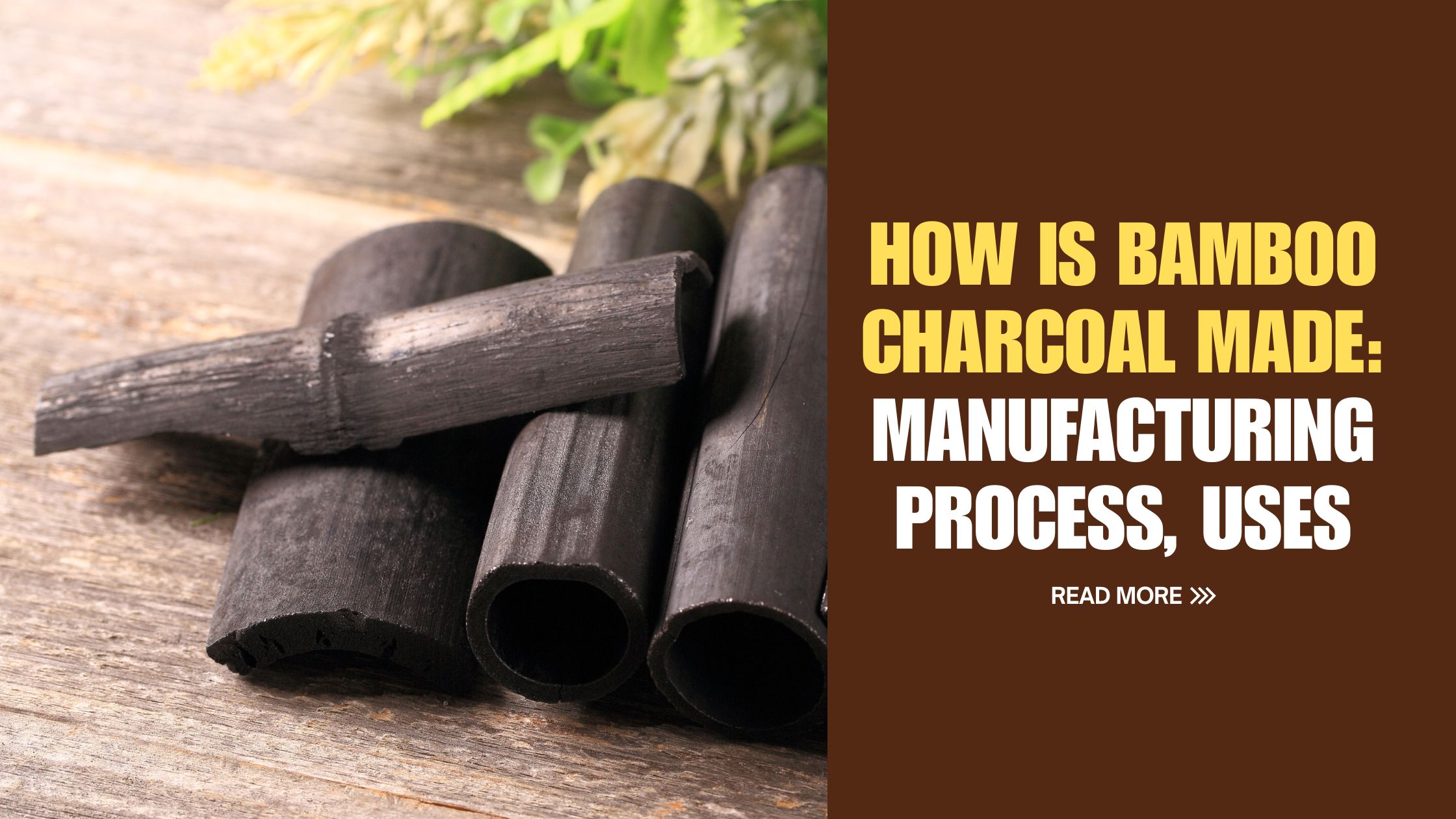
| Bamboo culms | Medium | Medium | Low to medium | Low | Filtration, deodorizing, some fuel |
| Bamboo or hardwood sawdust, extruded | Long | Slow | Low | Very low | Uniform BBQ, hot pot and restaurant charcoal |
| Coconut shell | Long | Slow | Low | Very low, little odour | Shisha cubes, briquettes, activated carbon |
| Agricultural waste (rice husk, bagasse, straw) | Short to medium | Fast | High | Medium | Low-cost briquettes and boiler fuel |
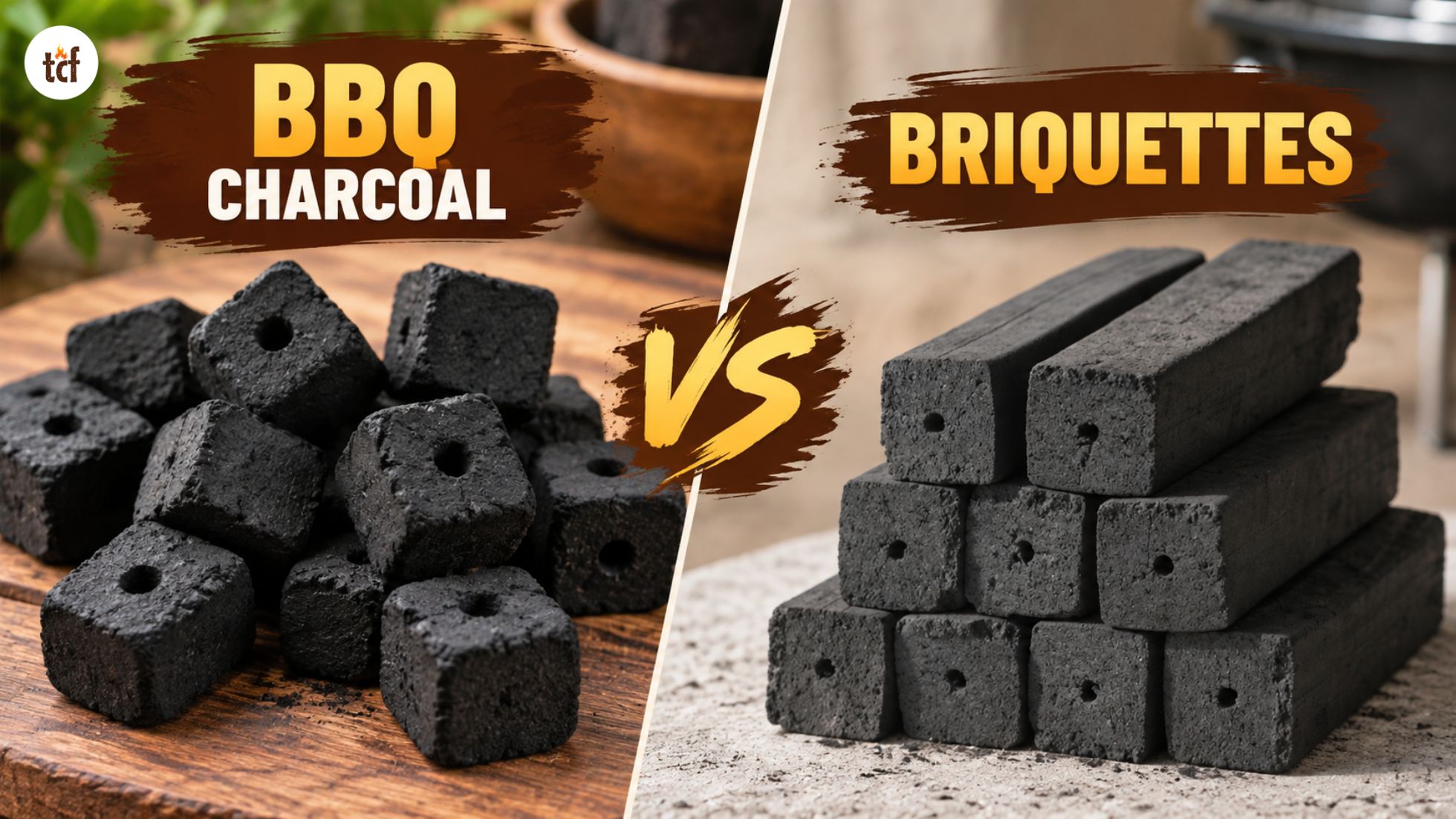
Two materials sit outside simple ranking. Sawdust is a byproduct, not a species, so its quality depends on what it came from: hardwood or bamboo sawdust makes excellent extruded charcoal, while mixed or softwood sawdust does not. Coconut shell is too small to sell as lump, so for fuel it is almost always crushed and pressed into briquettes or cubes.
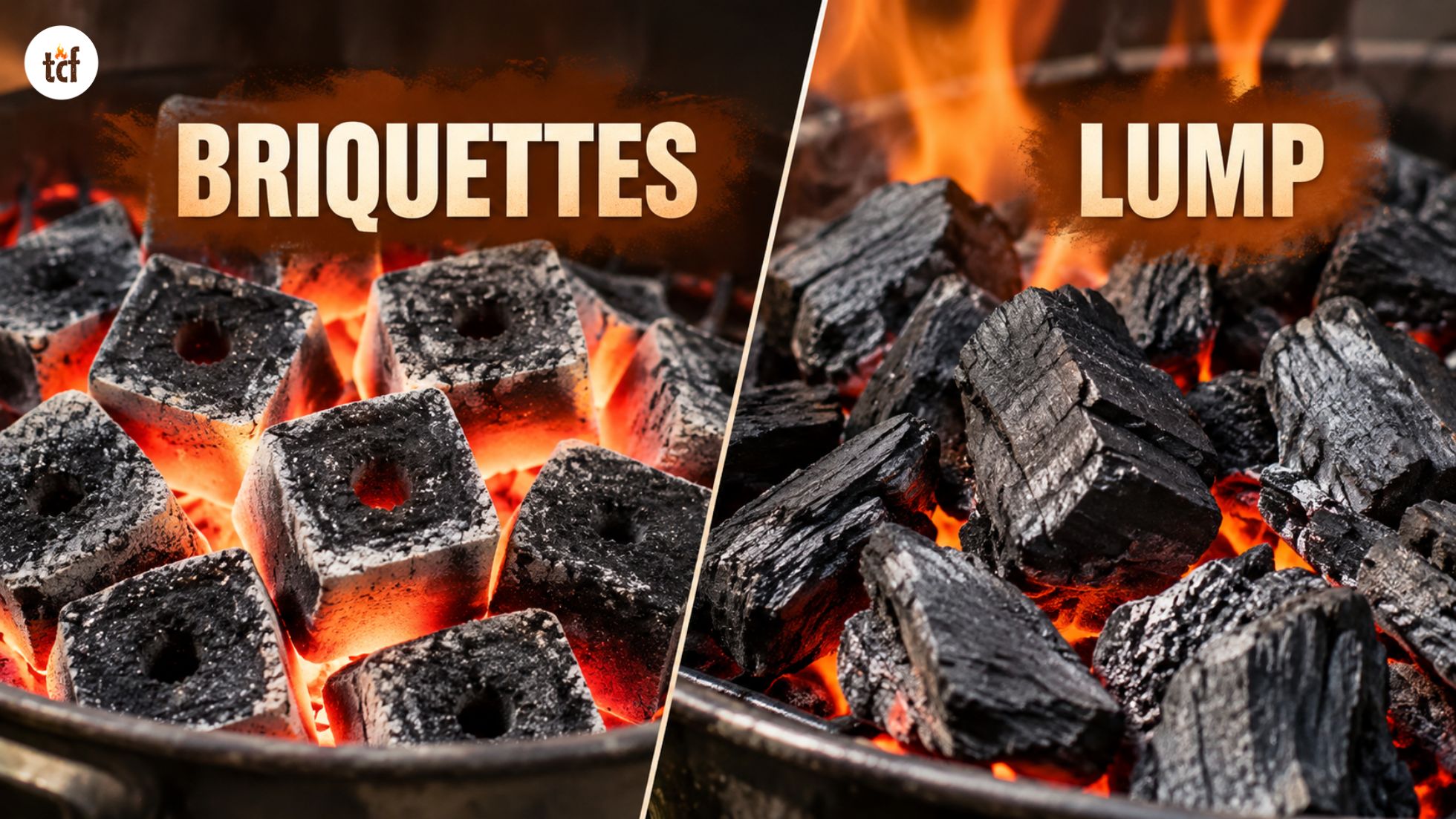
For how these materials become lump, briquettes, binchotan and other formats, see our guide to the types of charcoal.
Which charcoal material is best for each use?
Start from how the charcoal will be burned, then pick the material. These are the matches buyers ask about most:
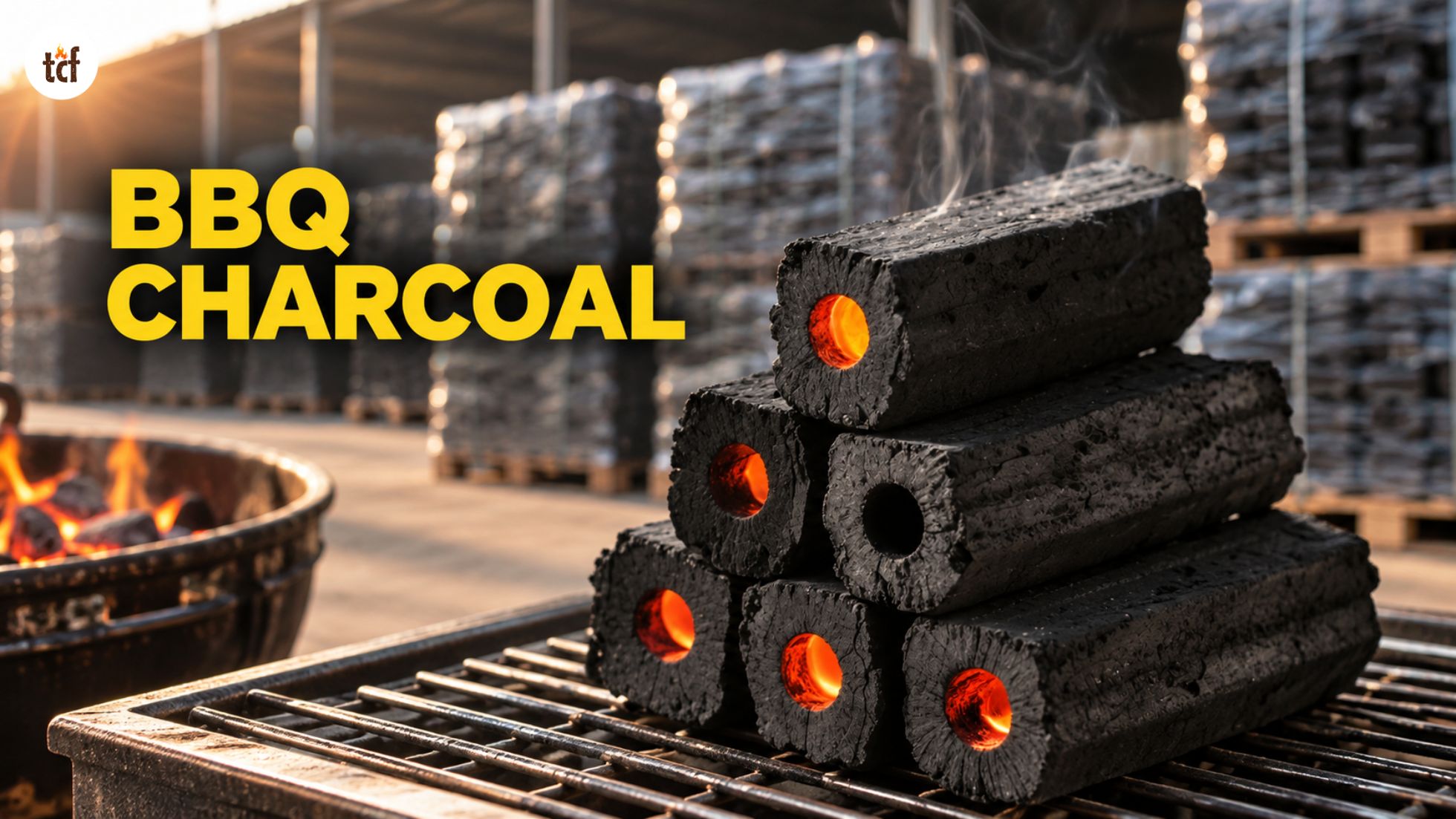
- Kamado and long low-and-slow cooks: very dense hardwood lump such as quebracho or marabu, or extruded hardwood or bamboo charcoal. Both hold a steady temperature for hours.
- Searing steaks and pizza: lighter hardwood lump such as oak or maple. It lights faster and reaches high heat quickly, which matters more than burn length for a short, hot cook.
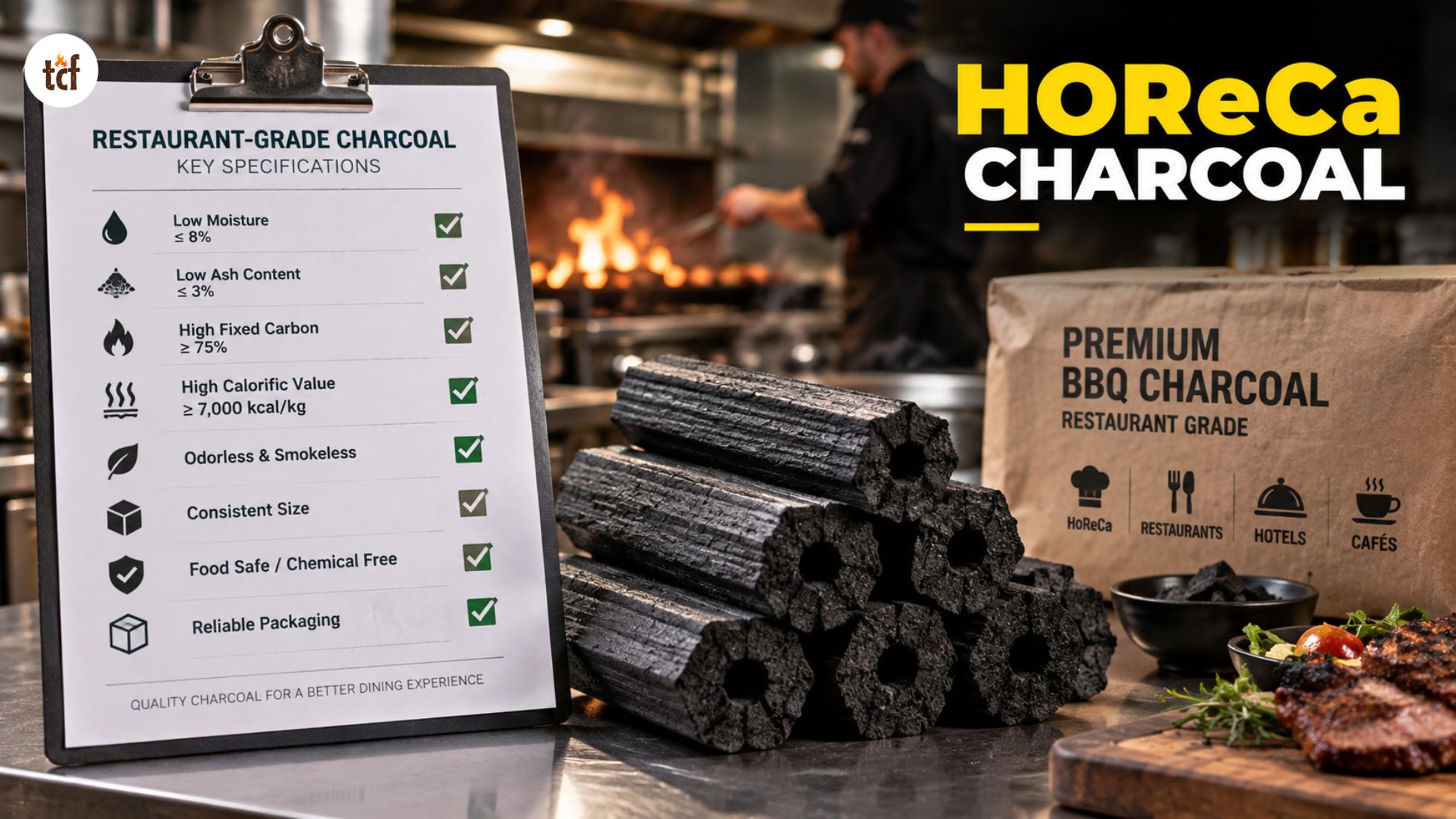
- Restaurant grills and busy services: extruded bamboo or hardwood sawdust charcoal, or a dense fruitwood such as lychee. Uniform pieces mean predictable heat from the first order to the last.
- Yakitori, Korean BBQ and hot pot: high-temperature extruded bamboo charcoal or binchotan. Low smoke and no flare-ups matter at the table.
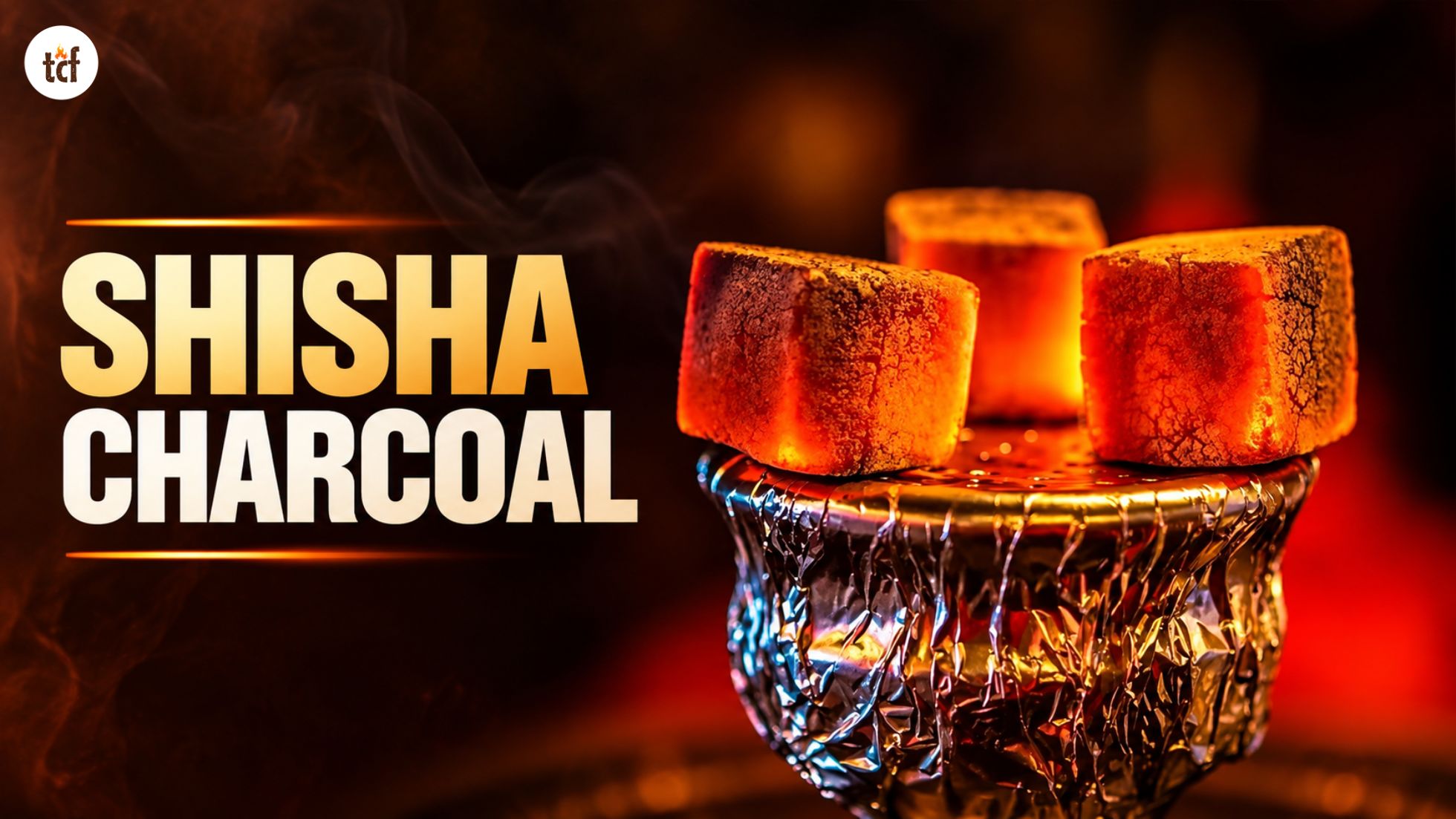
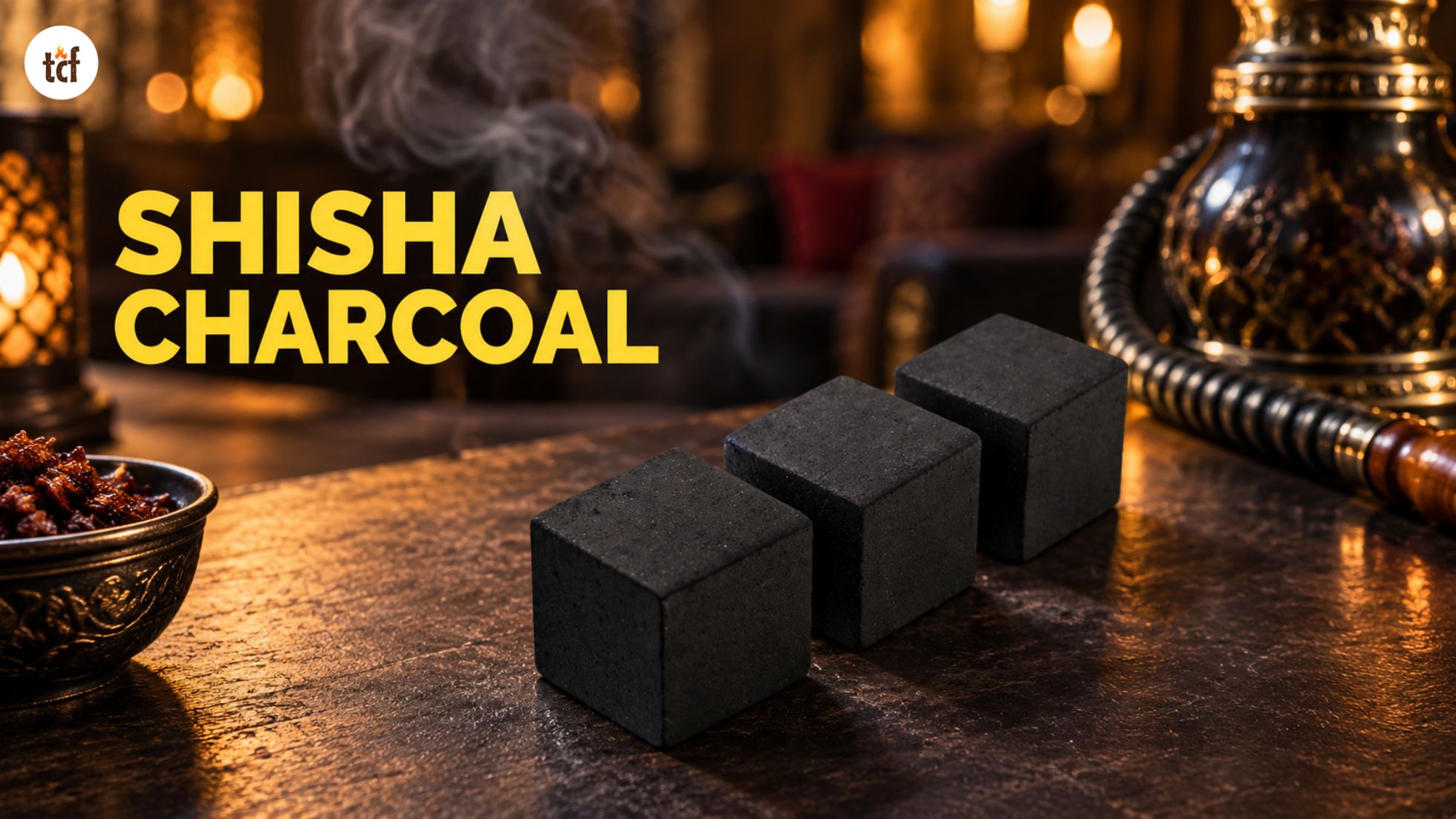
- Shisha and hookah: coconut shell cubes. They burn with little smell or ash, so they do not affect the flavour of the tobacco. Shaped bamboo charcoal is an alternative in some markets.
- Low-cost retail and weekend grilling: mixed hardwood lump or sawdust briquettes. Price per bag matters more here than a 5-hour burn.
- Filtration, deodorizing and activated carbon: coconut shell or bamboo, chosen for their pore structure rather than burn time.
- Industrial heating and boilers: softwood or agricultural-waste charcoal, where cost per unit of heat is the only test.
If you sell to several of these markets, you will likely need more than one material. A dense lump or extruded line for restaurants plus a coconut line for shisha covers most of that demand.
Does the wood species really matter?
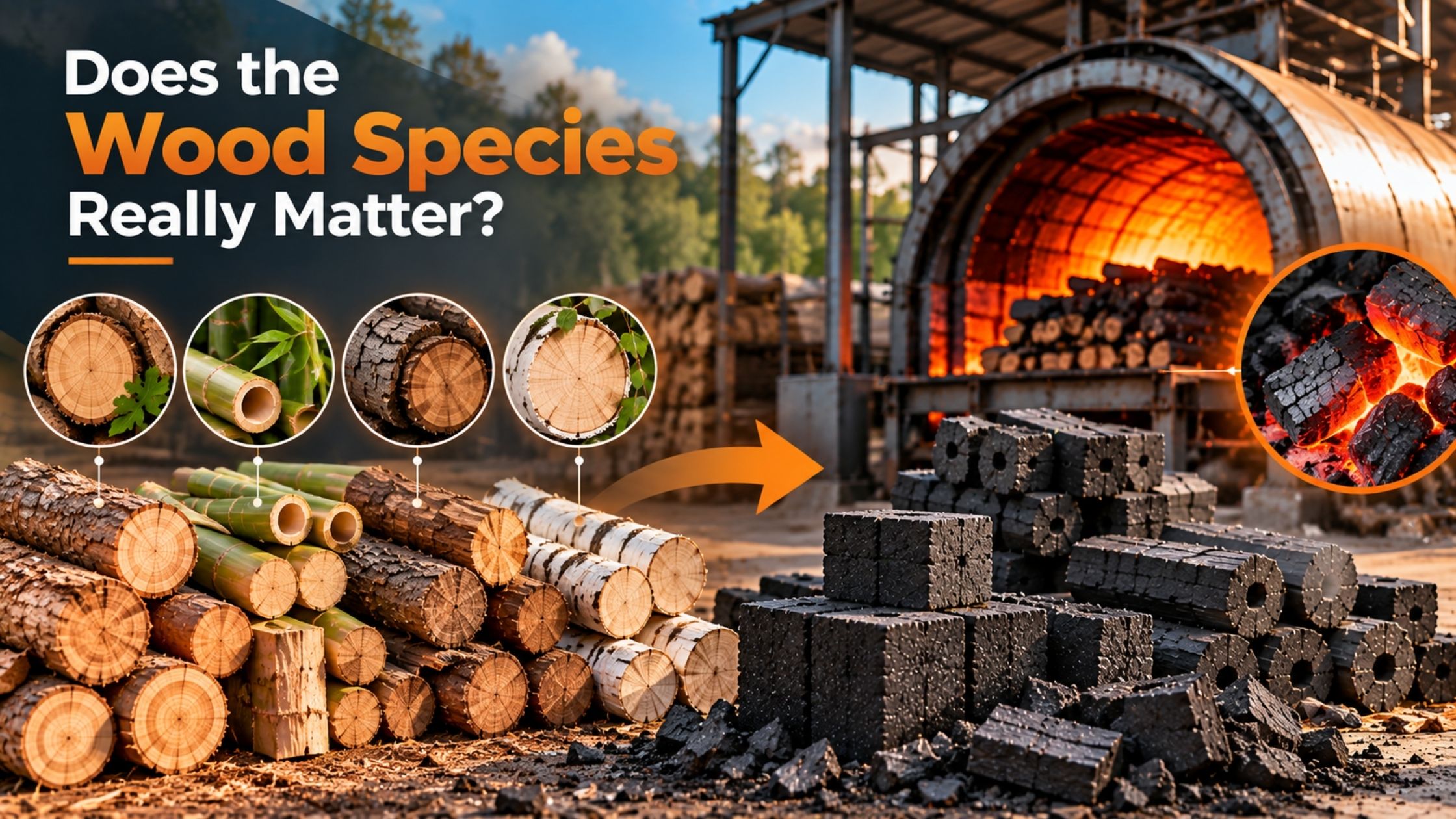
Yes, mostly through density. Among hardwoods, the denser the species, the longer the burn and the slower the start.
- Quebracho (white and red), from South America, is one of the densest charcoal woods sold. It burns very long but needs patience to light. Lump retailers note it takes longer to light than oak blends.
- Marabu is an invasive shrub harvested mainly in Cuba. It burns long with a mild smoke and is often marketed as turning a weed into fuel.
- Oak, hickory and maple are the mainstays of North American and European lump. They light faster than quebracho and give more smoke flavour.
- Fruitwoods such as lychee and longan are dense, burn evenly and carry a light aroma, which is why they are popular for roasting in Asia.
Kamado retailers sum up the trade-off well: dense species such as quebracho or marabu for long sessions, and quicker-lighting woods such as maple or European oak for hot-and-fast cooks (Kamado BBQ).
Species also raises a sourcing question. Some buyers avoid South American lump because of deforestation concerns, and say so openly on grilling forums (Big Green Egg forum). If your customers care about this, ask suppliers where the wood comes from and whether it is plantation wood, offcuts or wild-harvested.
Must read –
Bamboo Charcoal Quality
How to Ship Charcoal in Containers Safely
Is softwood ever worth using for charcoal?
For cooking, rarely. Pine and spruce are light and resin-rich, so their charcoal is soft, crumbles in transport, burns out quickly and sparks from leftover volatiles.
Softwood charcoal still has a place where heat per dollar matters more than performance, such as some industrial heating. It sells for less and serves a narrower market, so it is not a good base for a BBQ or shisha brand.
What should buyers weigh besides burn performance?
For an importer or brand owner, the best material is also the one you can buy consistently, at a stable price, without compliance problems. Four questions help:
- Is supply steady? Hardwood lump depends on logging and land clearing, which change with seasons and local rules. Bamboo regrows from the same root system and Moso bamboo is ready to harvest in a few years, so bamboo charcoal supply tends to be steadier.
- Is quality repeatable? Lump made from mixed wild wood varies bag to bag. Extruded charcoal made from sawdust or bamboo residue starts from a uniform material, so containers match.
- Where does the raw material come from? Byproducts such as sawdust, bamboo offcuts and coconut shells use material that would otherwise be waste. Wild-harvested hardwood faces growing scrutiny from retailers and regulators.
- What paperwork will the import need? This is now different by material for the EU, as explained below.
Does the raw material change EU import rules?
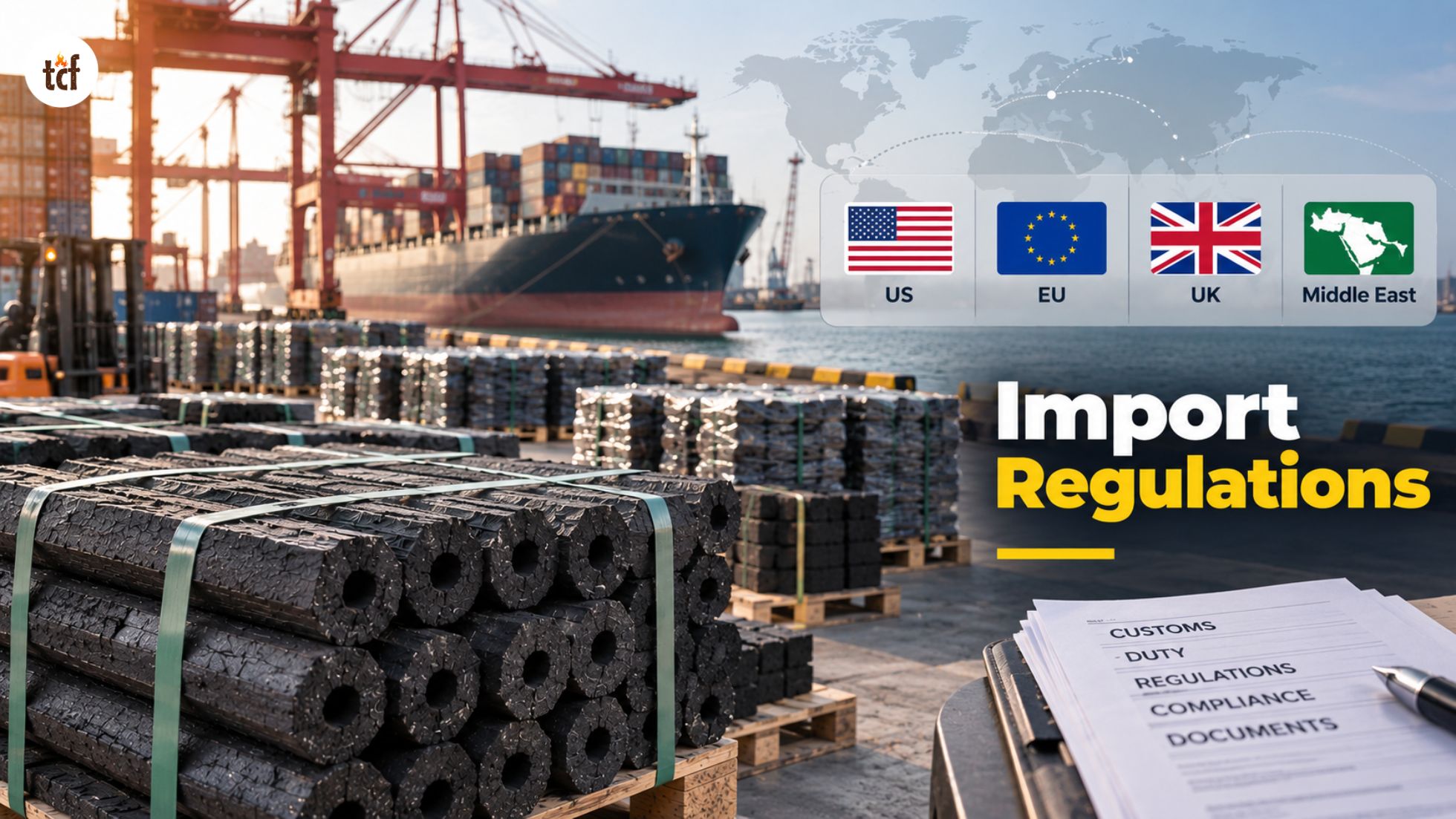
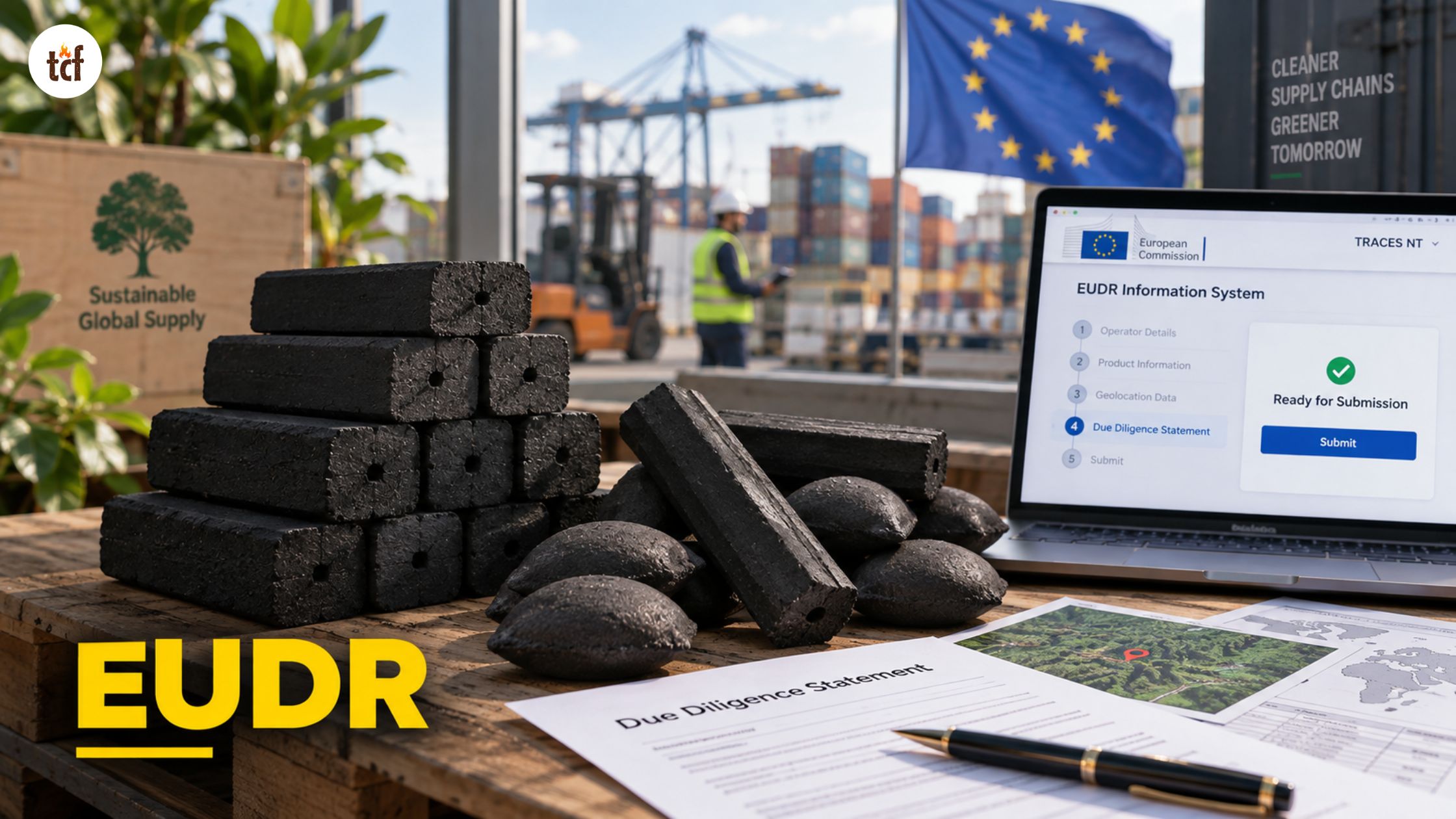
Yes. Under the EU Deforestation Regulation (EUDR), wood charcoal under HS heading 4402 is in scope, but bamboo charcoal no longer is.
Commission Delegated Regulation (EU) 2026/2102 was published in the EU Official Journal on 17 September 2026 and entered into force the next day. It states that the EUDR does not apply to bamboo, rattan and other woody materials, or to products under the “wood” heading to the extent that they are made from them (EUR-Lex).
What that means for charcoal buyers selling into the EU:
- Hardwood lump and wood briquettes: in scope. Large and medium operators must file due diligence statements, with geolocation of where the wood was harvested, from 30 December 2026. Micro and small operators follow from 30 June 2027.
- Bamboo charcoal (HS 4402.10): outside the EUDR, because bamboo is no longer treated as wood. Normal customs and product rules still apply.
- Coconut shell charcoal (HS 4402.20): coconut is not one of the EUDR’s seven commodities, so coconut shell charcoal is generally treated as outside scope. Confirm with your customs broker for your specific product.
- Mixed products: a blend containing wood, such as bamboo with hardwood sawdust, may bring the wood portion back into scope.
For EU buyers, that makes bamboo charcoal the simpler product to import once the EUDR applies. For the HS codes behind each material, see our charcoal HS codes guide.
Which materials does The Charcoal Factory use?
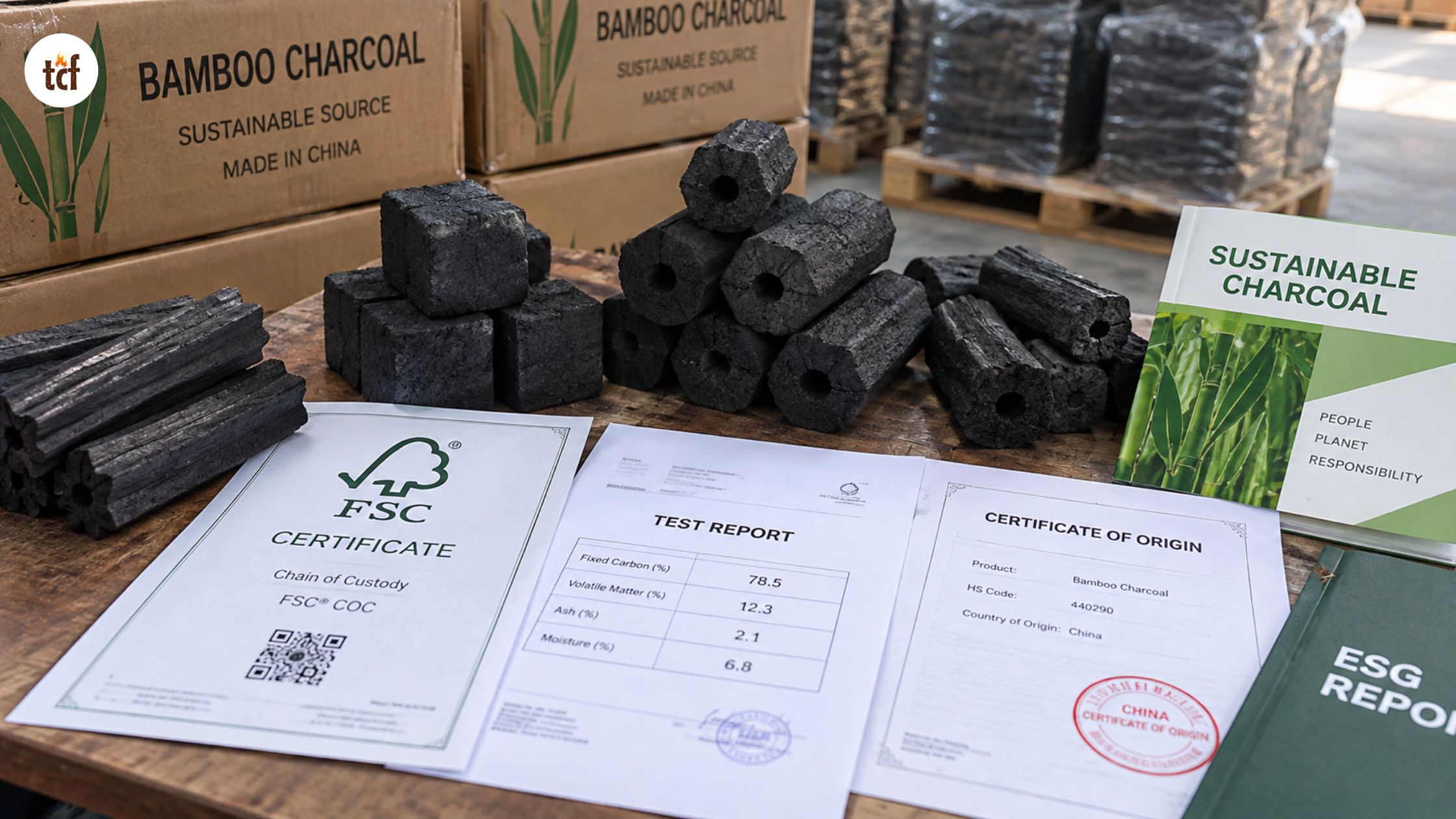
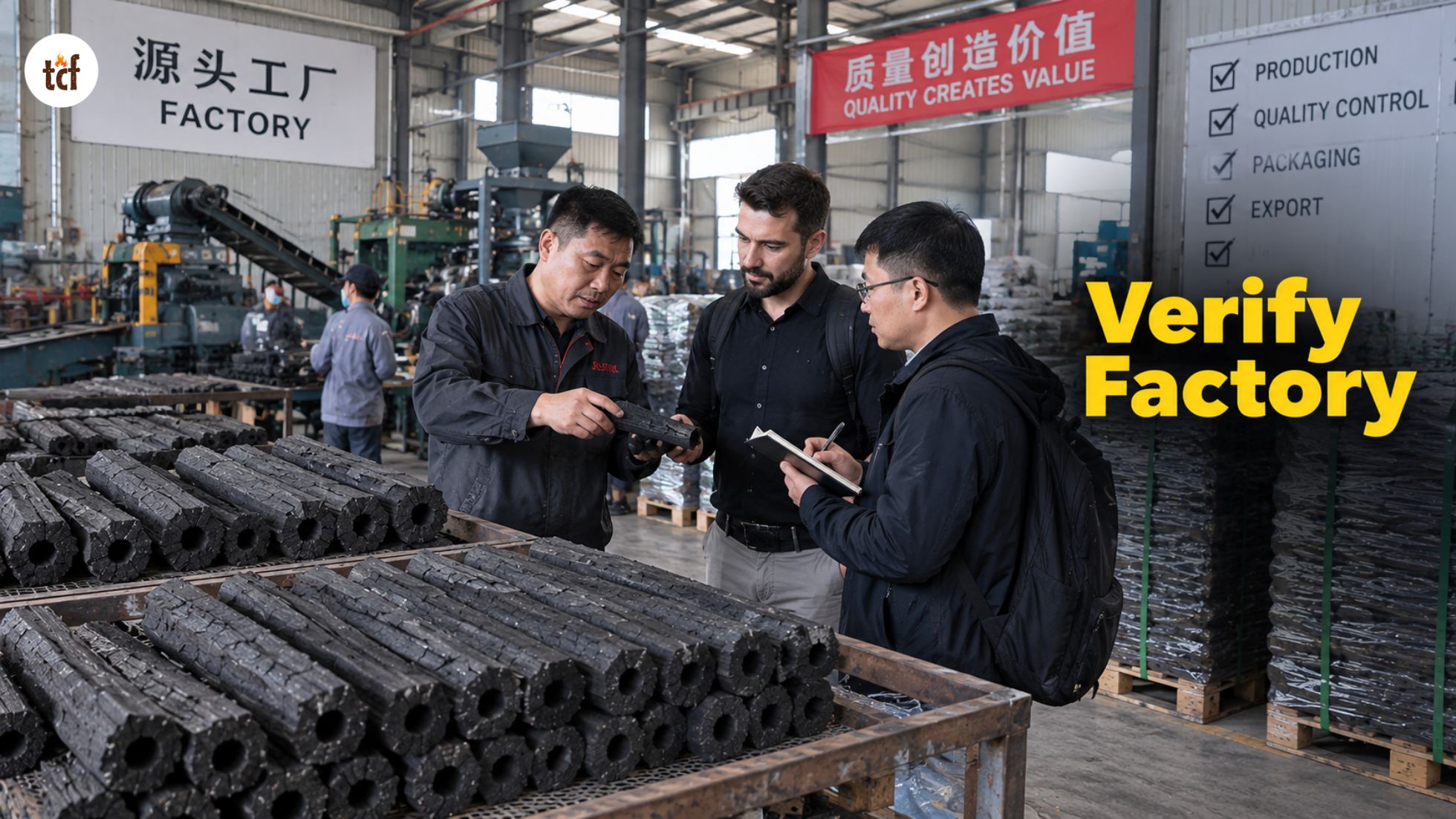
The Charcoal Factory works mainly with bamboo at its factory in Anhui Province, China, a major bamboo-growing region. It also supplies coconut shell charcoal.
We chose bamboo for two reasons. It grows fast and regrows after harvesting. And making bamboo flooring, furniture and other products leaves a steady supply of offcuts and sawdust, which gives us a low-cost, consistent raw material.
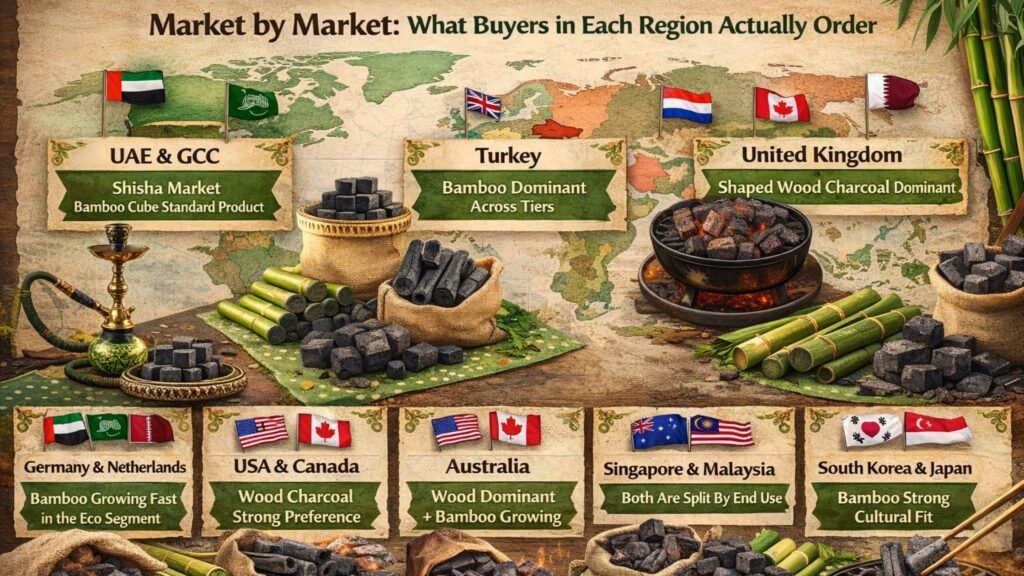
What buyers want from bamboo charcoal differs by market:
- Japan and South Korea: high-temperature machine-made bamboo charcoal, judged closely on quality and environmental standards.
- Middle East: mainly shisha charcoal and fuel-grade charcoal.
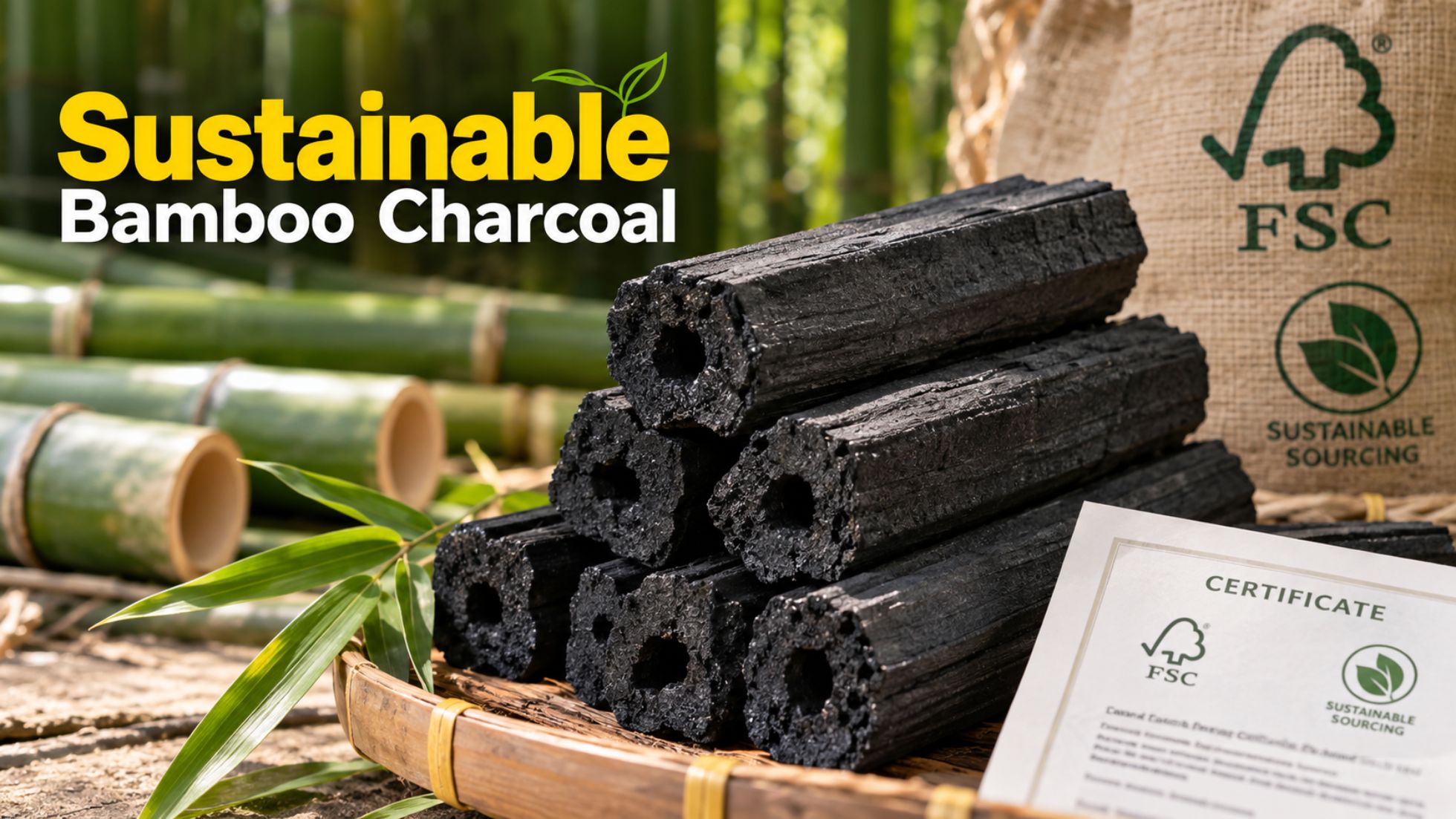
- Europe and the Americas: more interest in bamboo charcoal for purification, and in environmental certifications such as FSC.
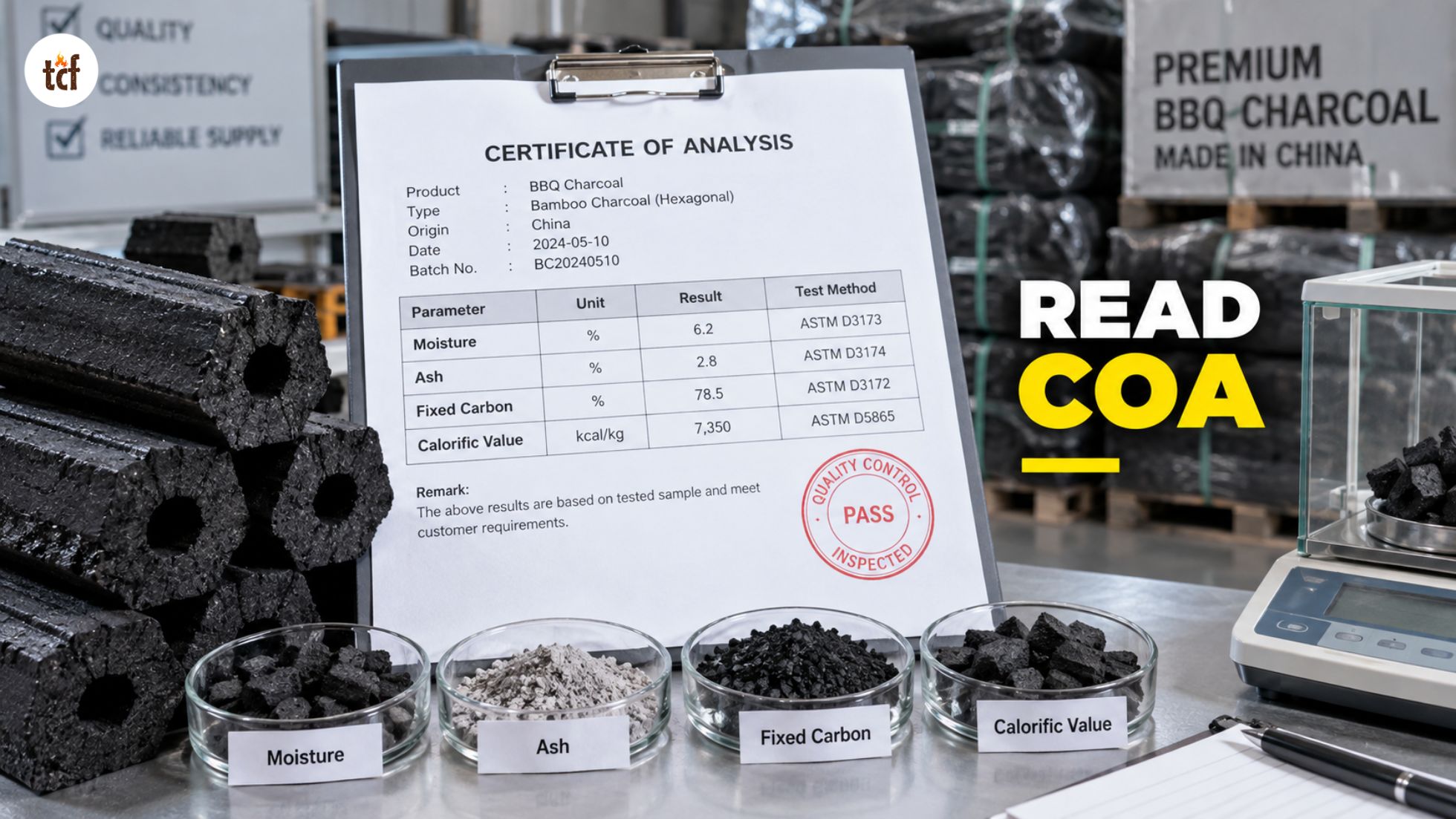
Our bamboo range includes machine-made, A-grade machine-made and shaped bamboo charcoal for BBQ, hot pot and shisha. To see how bamboo is turned into fuel step by step, read how bamboo charcoal is made. To judge a sample before ordering, see our guide to bamboo charcoal quality.
Choose the material that fits your market
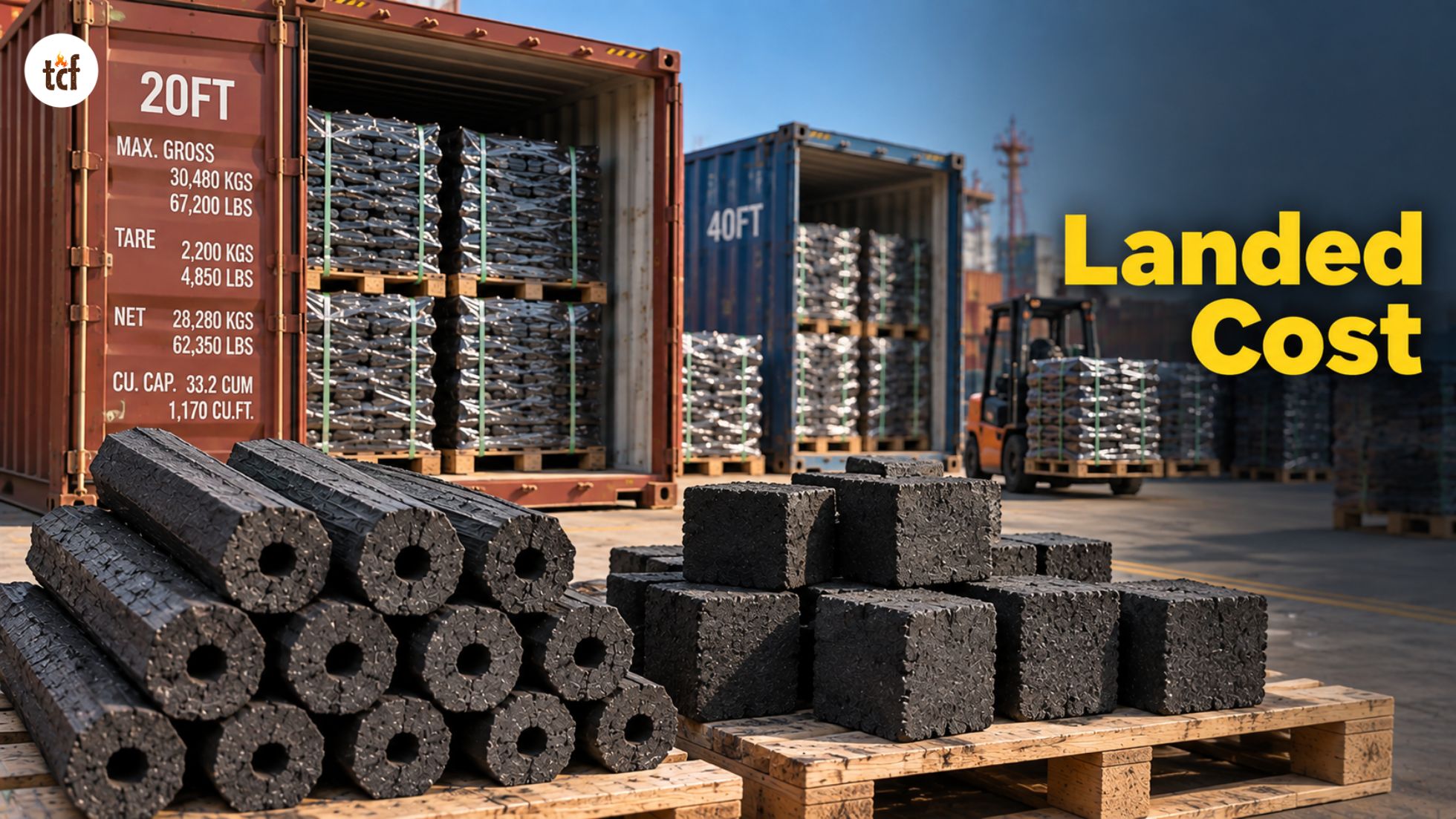
If you are building a charcoal range or switching suppliers, start with your end use, then request samples of two materials and burn them side by side. The Charcoal Factory supplies bamboo charcoal and coconut shell charcoal from one 20GP container, with private-label packaging and export documentation. See our wholesale bamboo charcoal and bulk charcoal pages, or email info@thecharcoalfactory.com for samples.
Frequently asked questions
Can any wood be used to make charcoal?
Almost any untreated wood will carbonize, but not all of it makes good charcoal. Never use painted, varnished, pressure-treated or glued wood such as plywood or MDF. The chemicals in them can end up in the smoke and on food.
Is bamboo charcoal better than wood charcoal?
For uniform, long-burning restaurant fuel, extruded bamboo charcoal is often the better choice. For smoke flavour on a low-and-slow cook, hardwood lump usually wins. It depends on what you are cooking.
Can coconut shell charcoal be used for BBQ?
Yes. Coconut shell briquettes burn long and clean on a grill. They are more often sold for shisha because their low odour suits tobacco.
Why does some charcoal spark and pop?
Usually because of resin-rich wood, leftover moisture or charcoal that was not fully carbonized. Dense, well-carbonized hardwood, bamboo or coconut charcoal sparks far less.